Japan Soil Microbial Market Size & Growth Rate
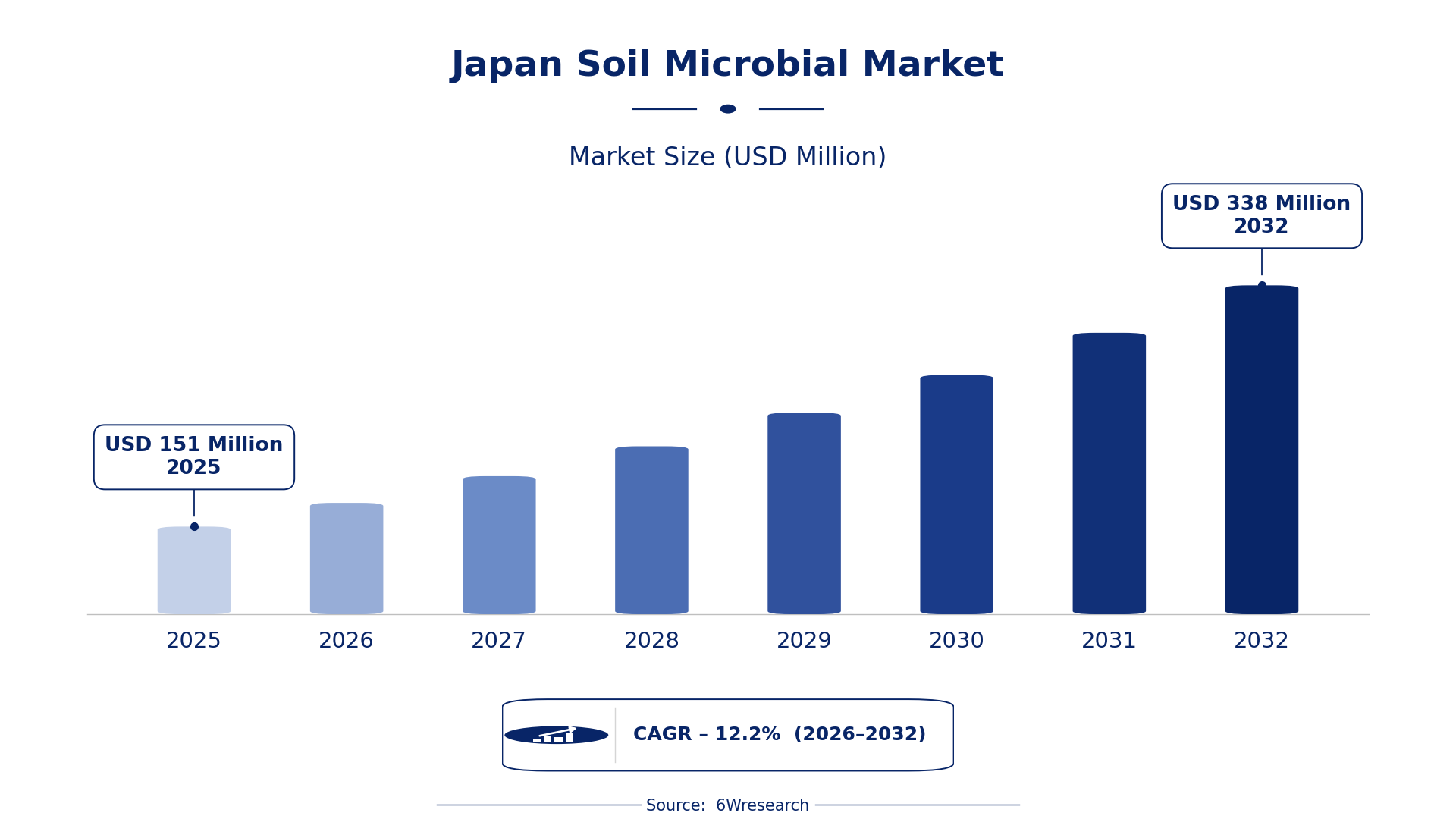
According to 6Wresearch internal database and industry insights, the Japan Soil Microbial Market was valued at USD 151 Million in 2025 and is projected to reach USD 338 Million by 2032, growing at a CAGR of approximately 12.2% during 2026–2032.
Japan Soil Microbial Market Highlights
| Report Metric | Details |
| Report Name | Japan Soil Microbial Market (2026-2032) |
| Market Size 2025 | USD 151 Million |
| Market Size 2032 | USD 338 Million |
| Absolute Growth 2025–2032 | USD 187 Million |
| CAGR 2026–2032 | 12.2% |
| Peak Annual Growth | 13.5% in 2032 |
| Forecast Period | 2026–2032 |
| Historical Data | 2022–2025 |
| Base Year | 2025 |
| Leading Microbe Type, 2025 | Bacteria (52% share) |
| Leading Application Area, 2025 | Nutrient Uptake (43% share) |
| Leading Formulation Type, 2025 | Liquid/Bulk (43% share) |
| Leading End User, 2025 | Greenhouse Operators (41% share) |
| Fastest-Growing Microbe Type | Fungi (17.2% CAGR) |
| Fastest-Growing Application Area | Disease Suppression (14.8% CAGR) |
| Fastest-Growing Formulation Type | Granular (17.5% CAGR) |
| Fastest-Growing End User | Regenerative Farms (16.5% CAGR) |
| Growing Sector | Organic Agriculture |
| Key End Users | Farmers, Greenhouse Operators, Agricultural Cooperatives, Regenerative Farms |
Japan Soil Microbial Market Year-wise Growth Rate and Key Drivers (2022–2032)
This graph illustrates the annual growth rates of the market from 2022 to 2032, highlighting a steady upward trajectory and projected market expansion over the forecast period.
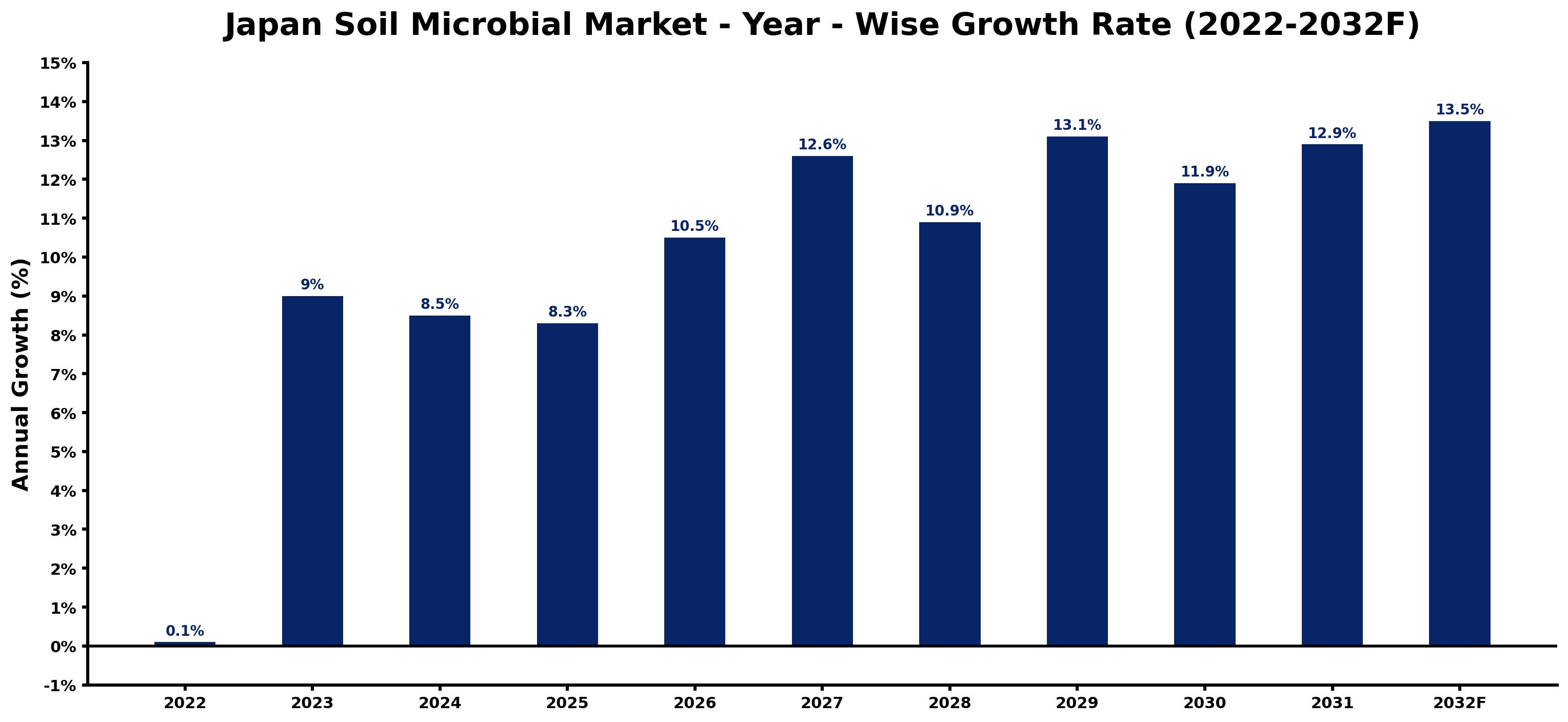
The yearly estimates that follow link every growth rate to its principal driver, so readers can see why the pace changed in each period.
| Year | Estimated Annual Growth (%) | Market Rationale |
| 2022 | 0.1 | The market showed minimal activity with a growth rate reflecting early adoption of microbial solutions. |
| 2023 | 9.0 | Growth accelerated due to increased awareness of soil health among farmers and rising organic farming practices. |
| 2024 | 8.5 | The market continued to grow as more farmers began integrating microbial products into their practices. |
| 2025 | 8.3 | A slight slowdown occurred as market maturity began to set in, but demand remained strong. |
| 2026 | 10.5 | Growth is expected to resume as investments in sustainable agriculture gain momentum and technology improves. |
| 2027 | 12.6 | Demand is projected to rise as regenerative farming practices expand, driven by consumer preferences for organic produce. |
| 2028 | 10.9 | A slowdown in growth is anticipated as market saturation approaches, yet demand will remain positive. |
| 2029 | 13.1 | Growth is expected to accelerate again as the benefits of microbial products become more widely recognised among farmers. |
| 2030 | 11.9 | The market is projected to experience a slight slowdown as competition intensifies and product options increase. |
| 2031 | 12.9 | Demand is expected to surge as more farmers adopt effective microbial solutions to improve soil health. |
| 2032 | 13.5 | The market is projected to peak with significant investments in soil health initiatives and a growing focus on sustainability. |
Note: Market size estimations and growth projections presented in this report are based on 6Wresearch's proprietary forecasting methodology, utilizing the latest available industry data, government publications, and primary research inputs.
Japan Soil Microbial Market Synopsis
Soil microbial products serve as biological amendments that introduce beneficial microorganisms, improving nutrient uptake, suppressing diseases, and enhancing soil structure. In Japan, around 1.2 million hectares of organic farmland exist, with an increasing number of farmers embracing these products. The Japan Soil Microbial Market is growing due to the rise in organic farming practices, government support for sustainable agriculture, and heightened awareness of soil health benefits, which drives demand from domestic users and local agricultural practices. In 2023, the government allocated ¥2 billion for soil health improvement initiatives, further encouraging farmers to adopt these products.
Market Dynamics Impact Analysis (2026–2032)
| Factor | Type | Impact | Primary Segment Affected |
| Rising organic farming practices drive demand for soil microbial products as farmers seek to enhance soil health. | Driver | High | Nutrient Uptake |
| Government initiatives promote sustainable agriculture, increasing the adoption of microbial solutions among farmers. | Driver | High | Disease Suppression |
| The Tokyo region's 15% increase in regenerative farming practices creates opportunities for microbial product suppliers. | Opportunity | High | Moisture Retention |
| The ¥2 billion allocated for soil health improvement initiatives by the government opens avenues for investment. | Opportunity | High | Nutrient Uptake |
| Soil degradation remains a concern, limiting the effectiveness of microbial products in some areas. | Restraint | Medium | Soil Degradation |
| The average age of farmers in Japan, at 67, presents challenges in adopting new agricultural technologies. | Restraint | Medium | Moisture Retention |
| High costs of research and development for new microbial products can deter smaller producers from entering the market. | Challenge | High | Disease Suppression |
| Competition from alternative soil health solutions may limit market share for microbial products. | Challenge | Medium | Nutrient Uptake |
Evaluation of Drivers in Japan Soil Microbial Market (2026–2032)
Demand rests on the following drivers, each shown with the segment it touches most.
| Drivers | Primary Segment Affected | Why It Matters (Evidence) |
| Increased awareness of soil health benefits drives farmers to adopt microbial products, with 30% of farmers using them in 2023. | Nutrient Uptake | This awareness leads to greater purchases of soil microbial products for improved fertility. |
| The rise in organic farmland, now at 1.2 million hectares, boosts demand for microbial solutions. | Disease Suppression | Farmers seek effective solutions to maintain soil health and comply with organic standards. |
| The Tokyo Metropolitan Government's promotion of urban agriculture encourages the use of microbial products. | Moisture Retention | This initiative leads to increased adoption among urban farmers looking to improve soil quality. |
| The Green Food System initiative supports the use of biofertilizers, including soil microbes, among farmers. | Nutrient Uptake | Farmers are motivated to invest in microbial products to meet organic certification requirements. |
| The average rainfall of 1,700 mm influences strategies for soil moisture retention, driving microbial product use. | Moisture Retention | Farmers are more likely to purchase products that help maintain soil moisture levels. |
Much of the new demand stems from the increasing awareness of soil health benefits, with 30% of farmers in 2023 reporting the use of microbial products. The expansion of organic farmland, now approximately 1.2 million hectares, has also stimulated demand as farmers seek effective solutions to enhance soil fertility. The average annual rainfall of about 1,700 mm creates a need for microbial products that help retain soil moisture, resulting in increased purchases among farmers. The growing emphasis on sustainable practices motivates farmers to invest in these products to improve their agricultural output.
Evaluation of Restraints in Japan Soil Microbial Market
The table below lists the restraints and the evidence behind each.
| Market Restraint | Primary Segment Affected | Why It Matters (Evidence) |
| Soil degradation limits the effectiveness of microbial products, with the government targeting a 20% reduction in affected areas by 2025. | Soil Degradation | This concern restricts the market potential for microbial solutions in severely degraded soils. |
| The average age of farmers in Japan, at 67, presents challenges in adopting new agricultural technologies. | Moisture Retention | Older farmers may be less inclined to invest in effective microbial solutions. |
| High research and development costs deter smaller producers from entering the market, limiting competition. | Disease Suppression | This restricts the availability of diverse microbial products for farmers. |
| Competition from alternative soil health solutions may limit market share for microbial products. | Nutrient Uptake | Farmers may opt for other methods, reducing demand for microbial solutions. |
| Limited awareness of the benefits of microbial products among some farmers hinders market growth. | Moisture Retention | This lack of knowledge affects purchasing decisions in certain regions. |
Japan Soil Microbial Market Challenges
In Japan, 30% of farmers currently use microbial products, highlighting a technology gap among producers. This gap arises from limited access to advanced agricultural techniques, which hinders soil health improvements and reduces crop yields. High sourcing costs for effective soil amendments can cut profit margins by up to 20%, placing financial strain on producers. Regulatory hurdles related to the Organic JAS certification complicate market entry for new suppliers, restricting product diversity available to buyers and hindering overall market growth.
Trends in the Japan Soil Microbial Market
Several trends are reshaping the Japan Soil Microbial Market; the most important are set out below.
- Shift in Focus to Regenerative Farming Practices: Regenerative farms are increasingly adopting soil microbial products to improve soil health, with a reported 15% increase in practices in the Tokyo region since 2020. This trend reflects a growing commitment to sustainable agriculture and improved soil management.
- Transition to Organic Farming: The number of organic farms in Japan has reached approximately 1.2 million hectares, driven by consumer demand for organic produce. This shift encourages the use of microbial products to improve soil fertility and sustainability.
- Emergence of Urban Agriculture: Urban agriculture initiatives in Tokyo promote the use of microbial solutions to improve soil health in limited spaces. This trend is supported by local government programs aimed at increasing urban food production.
- Prioritisation of Soil Health Initiatives: The Japanese government allocated ¥2 billion for soil health improvement initiatives in 2023, reflecting a national focus on sustainable agriculture. This funding is expected to drive greater adoption of microbial products among farmers.
Investment Opportunities in the Japan Soil Microbial Market
The following opportunities in the Japan Soil Microbial Market pair current demand with a clear way in.
- Expansion of Regenerative Farming in Tokyo: The Tokyo region's 15% increase in regenerative farming practices presents an opportunity for microbial product suppliers. Investing in local partnerships can facilitate market entry and growth.
- Funding for Soil Health Improvement Initiatives: The ¥2 billion allocated by the government for soil health initiatives creates opportunities for suppliers of microbial products. Collaborating with agricultural cooperatives can enhance market access.
- Growing Demand from Organic Farmers: With 30% of Japanese farmers using microbial products, there is a clear gap for suppliers to meet this demand. Focusing on organic certification can attract more buyers in this sector.
- Urban Agriculture Development: The rise of urban agriculture in Tokyo offers opportunities for microbial product suppliers to cater to this growing market. Establishing joint ventures with local urban farms can facilitate entry.
Government Initiatives in the Japan Soil Microbial Market
The Waste Management and Public Cleansing Act regulates the treatment of agricultural waste, impacting soil microbial product producers by enforcing strict disposal standards. Compliance with these regulations ensures that producers maintain soil health and meet environmental standards, which is critical for market acceptance. The Act also mandates that producers adhere to specific guidelines for waste disposal, affecting their operational processes and costs. In 2023, the government allocated ¥2 billion for soil health improvement initiatives, promoting sustainable practices among farmers.
The Ministry of Agriculture, Forestry and Fisheries oversees the Organic JAS certification, which promotes sustainable practices among farmers. This agency funds initiatives that encourage the adoption of soil microbial products, ensuring that buyers can access certified solutions that improve soil health. In 2023, the ministry allocated ¥2 billion to support these initiatives, fostering greater adoption of microbial solutions among farmers.
Future Insight of the Japan Soil Microbial Market
The Japanese government has allocated ¥2 billion for soil health improvement initiatives, creating a pipeline that drives demand for microbial products. By 2032, organic farming is expected to cover 3% of total farmland, expanding the market for these biological amendments. Research advancements under the national agricultural agenda will lead to more effective solutions for soil health. Urban agriculture initiatives in the Tokyo region will further encourage the adoption of soil microbial products, benefiting both buyers and suppliers.
Market Segmentation Analysis
Japan Soil Microbial Market report covers a detailed analysis of the following market segments:
By Microbe Type – Bacteria Leads, Fungi Expected to Grow Fastest
According to Saurav Kr Singh, Senior Research Analyst at 6Wresearch, with 52% of microbe type revenue in 2025, Bacteria was the largest category. Bacteria hold the largest share in the market because they play a critical role in nutrient cycling and disease suppression, essential for various agricultural practices. Their importance is particularly evident in rice cultivation, which is a staple crop in Japan and relies heavily on these microorganisms for productivity. Fungi is projected to grow fastest, at a CAGR of 17.2% during 2026–2032. Fungi are experiencing rapid growth as they are increasingly recognised for their ability to enhance soil health and nutrient availability, especially in regenerative farming. The notable 15% rise in regenerative farming practices since 2020 highlights the expanding appreciation for the benefits of fungi. Suppliers should focus on developing fungi-based products to cater to the rising interest in regenerative agriculture.
By Application Area – Nutrient Uptake Leads, Disease Suppression Expected to Grow Fastest
The largest application area category in 2025 was Nutrient Uptake, at 43% of revenue. Nutrient Uptake leads the market as it is vital for improving plant nutrient absorption, directly influencing crop yields. This is especially crucial in Japan's organic farming sector, where effective nutrient management is a key to successful cultivation. Disease Suppression is set to record the highest CAGR in this split, 14.8% over 2026–2032. Disease Suppression is growing rapidly due to increased awareness of the harmful effects of soil-borne pathogens on crop health. Government initiatives that promote soil health are further driving the demand for effective disease suppression solutions. Buyers should consider investing in disease suppression technologies to safeguard their crops and enhance soil health.
By Formulation Type – Liquid/Bulk Leads, Granular Expected to Grow Fastest
In 2025, Liquid/Bulk led the formulation type split with a 43% share. Liquid/Bulk formulations dominate the market as they are extensively used for large-scale agricultural applications, making them a preferred option among farmers. Their effectiveness in delivering microbial solutions contributes significantly to their widespread adoption. Over 2026–2032, Granular is expected to post the fastest growth, at a CAGR of 17.5%. Granular formulations are seeing the fastest growth because they offer user-friendly application, appealing to farmers who seek convenient and efficient solutions. This trend aligns with the increasing focus on sustainable agricultural practices. Suppliers should expand their granular product offerings to meet the rising demand for easy-to-use formulations among farmers.
By End User – Greenhouse Operators Lead, Regenerative Farms Expected to Grow Fastest
Greenhouse Operators held 41% of the Japan Soil Microbial Market by end user in 2025. Greenhouse Operators are the largest user segment as they rely on microbial products to maintain optimal growth conditions in controlled environments. Their dependence on these solutions highlights their critical role in modern agricultural practices. The quickest growth will come from Regenerative Farms, forecast to expand at a CAGR of 16.5% between 2026 and 2032. Regenerative Farms represent the fastest-growing segment as they prioritise sustainable farming practices that improve soil health and productivity. The government's backing of organic farming initiatives further accelerates this segment's growth. Suppliers should focus on targeting regenerative farms to capitalise on the increasing trend towards sustainable agriculture.
Key Attractiveness of the Report
- 10 Years of Market Numbers
- Historical Data Starting from 2022 to 2025
- Base Year 2025
- Forecast Data until 2032
- Key Performance Indicators Impacting the Market
- Major Upcoming Developments and Projects
Key Highlights of the Report:
- Japan Soil Microbial Market Outlook
- Market Size of Japan Soil Microbial Market, 2025
- Forecast of Japan Soil Microbial Market, 2032
- Historical Data and Forecast of Japan Soil Microbial Revenues & Volume for the Period 2022-2032F
- Japan Soil Microbial Market Trend Evolution
- Japan Soil Microbial Market Drivers and Challenges
- Japan Soil Microbial Price Trends
- Japan Soil Microbial Porter's Five Forces
- Japan Soil Microbial Industry Life Cycle
- Historical Data and Forecast of Japan Soil Microbial Market Revenues & Volume By Microbe Type for the Period 2022-2032F
- Historical Data and Forecast of Japan Soil Microbial Market Revenues & Volume By Fungi for the Period 2022-2032F
- Historical Data and Forecast of Japan Soil Microbial Market Revenues & Volume By Bacteria for the Period 2022-2032F
- Historical Data and Forecast of Japan Soil Microbial Market Revenues & Volume By Actinomycetes for the Period 2022-2032F
- Historical Data and Forecast of Japan Soil Microbial Market Revenues & Volume By Cyanobacteria for the Period 2022-2032F
- Historical Data and Forecast of Japan Soil Microbial Market Revenues & Volume By Application Area for the Period 2022-2032F
- Historical Data and Forecast of Japan Soil Microbial Market Revenues & Volume By Nutrient Uptake for the Period 2022-2032F
- Historical Data and Forecast of Japan Soil Microbial Market Revenues & Volume By Disease Suppression for the Period 2022-2032F
- Historical Data and Forecast of Japan Soil Microbial Market Revenues & Volume By Soil Degradation for the Period 2022-2032F
- Historical Data and Forecast of Japan Soil Microbial Market Revenues & Volume By Moisture Retention for the Period 2022-2032F
- Historical Data and Forecast of Japan Soil Microbial Market Revenues & Volume By Formulation Type for the Period 2022-2032F
- Historical Data and Forecast of Japan Soil Microbial Market Revenues & Volume By Liquid/Bulk for the Period 2022-2032F
- Historical Data and Forecast of Japan Soil Microbial Market Revenues & Volume By Granular for the Period 2022-2032F
- Historical Data and Forecast of Japan Soil Microbial Market Revenues & Volume By Soluble Powder for the Period 2022-2032F
- Historical Data and Forecast of Japan Soil Microbial Market Revenues & Volume By Sprayable for the Period 2022-2032F
- Historical Data and Forecast of Japan Soil Microbial Market Revenues & Volume By End User for the Period 2022-2032F
- Historical Data and Forecast of Japan Soil Microbial Market Revenues & Volume By Greenhouse Operators for the Period 2022-2032F
- Historical Data and Forecast of Japan Soil Microbial Market Revenues & Volume By Crop Consultants for the Period 2022-2032F
- Historical Data and Forecast of Japan Soil Microbial Market Revenues & Volume By Regenerative Farms for the Period 2022-2032F
- Historical Data and Forecast of Japan Soil Microbial Market Revenues & Volume By Horticulture Centers for the Period 2022-2032F
- Japan Soil Microbial Import Export Trade Statistics
- Market Opportunity Assessment By Microbe Type
- Market Opportunity Assessment By Application Area
- Market Opportunity Assessment By Formulation Type
- Market Opportunity Assessment By End User
- Japan Soil Microbial Top Companies Market Share
- Japan Soil Microbial Competitive Benchmarking By Technical and Operational Parameters
- Japan Soil Microbial Company Profiles
- Japan Soil Microbial Key Strategic Recommendations
Market Covered
Coverage by segment is as follows.
By Microbe Type
- Fungi
- Bacteria
- Actinomycetes
- Cyanobacteria
By Application Area
- Nutrient Uptake
- Disease Suppression
- Soil Degradation
- Moisture Retention
By Formulation Type
- Liquid/Bulk
- Granular
- Soluble Powder
- Sprayable
By End User
- Greenhouse Operators
- Crop Consultants
- Regenerative Farms
- Horticulture Centers































