Japan Space Resource Utilization Market Size & Growth Rate
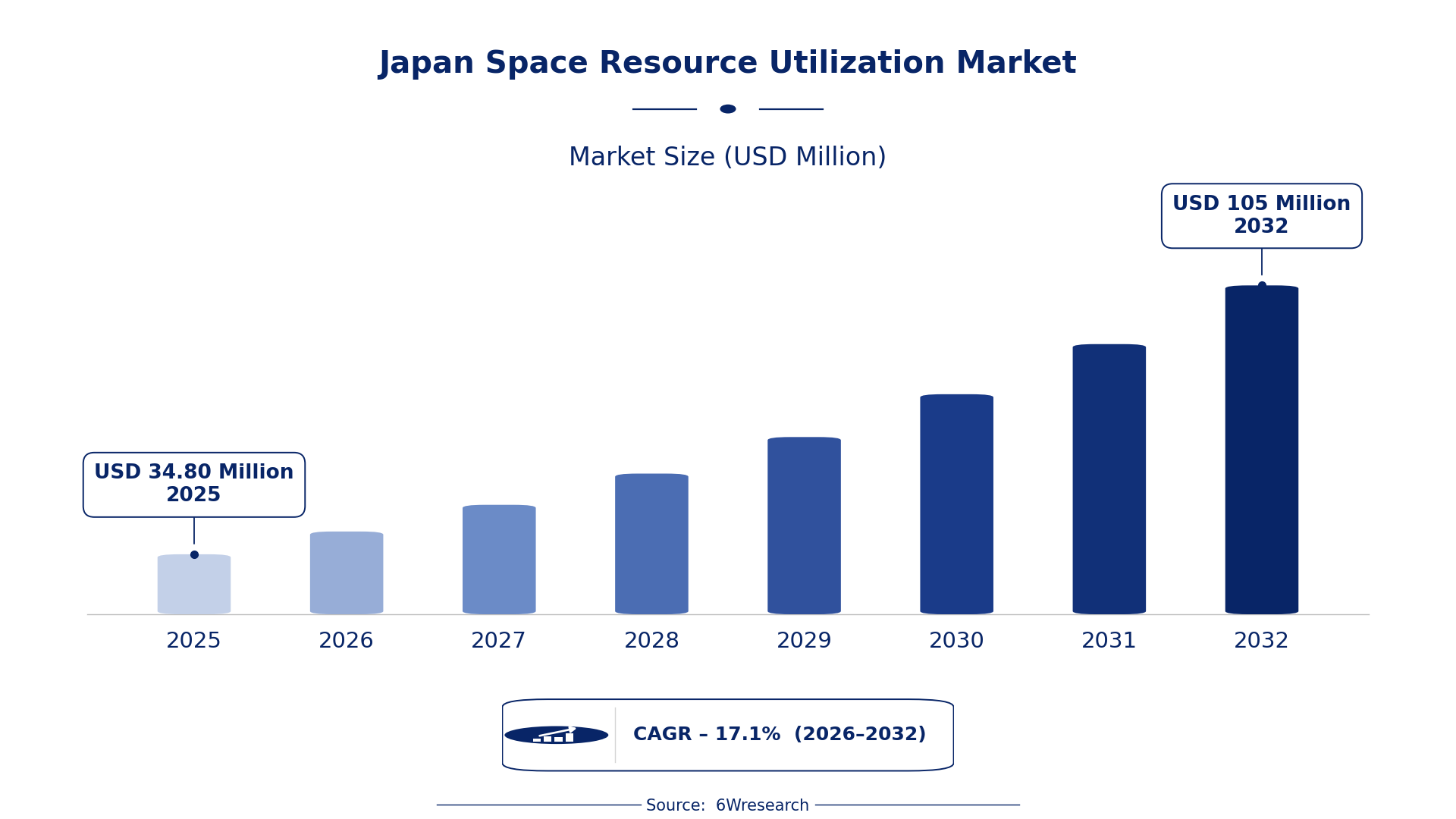
According to 6Wresearch internal database and industry insights, the Japan Space Resource Utilization Market was valued at USD 34.80 Million in 2025 and is projected to reach USD 105 Million by 2032, growing at a CAGR of approximately 17.1% during 2026–2032.
Japan Space Resource Utilization Market Highlights
| Report Metric | Details |
| Report Name | Japan Space Resource Utilization Market (2026-2032) |
| Market Size 2025 | USD 34.80 Million |
| Market Size 2032 | USD 105 Million |
| Absolute Growth 2025–2032 | USD 70.20 Million |
| CAGR 2026–2032 | 17.1% |
| Peak Annual Growth | 18.3% in 2030 |
| Forecast Period | 2026–2032 |
| Historical Data | 2022–2025 |
| Base Year | 2025 |
| Leading Resource Type, 2025 | Water Ice (47% share) |
| Leading Extraction Method, 2025 | Thermal/Vapor Extraction (40% share) |
| Leading Target Body, 2025 | Lunar Poles (43% share) |
| Leading End User, 2025 | ISRU Tech Firms (46% share) |
| Fastest-Growing Resource Type | Rare Earth Elements (24.2% CAGR) |
| Fastest-Growing Extraction Method | Surface Mining (18.9% CAGR) |
| Fastest-Growing Target Body | Asteroids (22.4% CAGR) |
| Fastest-Growing End User | Space Mining Startups (23.1% CAGR) |
| Growing Sector | Space Mining Startups |
| Key End Users | ISRU Tech Firms, Space Mining Startups, Construction Missions, Advanced Propulsion Devs |
Japan Space Resource Utilization Market Year-wise Growth Rate and Key Drivers (2022–2032)
This graph illustrates the annual growth rates of the market from 2022 to 2032, highlighting a steady upward trajectory and projected market expansion over the forecast period.
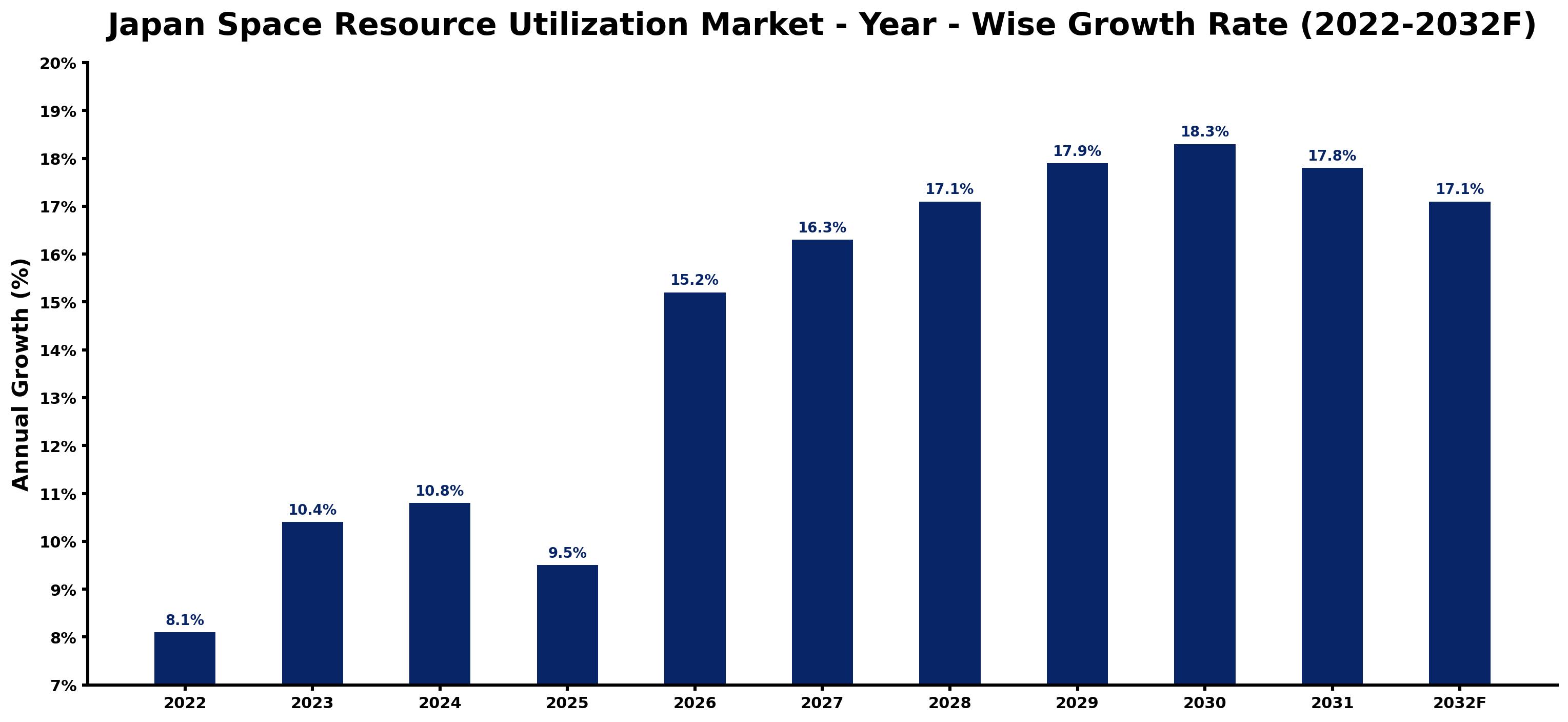
For each year, the table pairs the estimated growth rate with the leading influence on demand, showing how the drivers changed across the period.
| Year | Estimated Annual Growth (%) | Market Rationale |
| 2022 | 8.1 | The market experienced steady growth as Japan's space agency initiated new lunar exploration projects. |
| 2023 | 10.4 | Growth accelerated due to increased funding for lunar resource utilization research and development. |
| 2024 | 10.8 | Demand continued to rise as Japan focused on advancing extraction technologies for lunar resources. |
| 2025 | 9.5 | Growth slowed as projects matured, but interest in resource utilization remained strong. |
| 2026 | 15.2 | Investment surged as new extraction methods gained traction, boosting demand. |
| 2027 | 16.3 | The market expanded further with successful pilot projects demonstrating extraction capabilities. |
| 2028 | 17.1 | Rising interest in asteroid mining contributed to continued growth in resource utilization. |
| 2029 | 17.9 | Demand is expected to increase as international collaborations for lunar missions intensify. |
| 2030 | 18.3 | The peak growth year will see heightened activity in resource extraction projects on the Moon. |
| 2031 | 17.8 | Growth is projected to moderate as the market begins to stabilise after peak activity in the previous year. |
| 2032 | 17.1 | The market continues to grow as Japan aims for a lunar base by the 2030s. |
Note: Market size estimations and growth projections presented in this report are based on 6Wresearch's proprietary forecasting methodology, utilizing the latest available industry data, government publications, and primary research inputs.
Japan Space Resource Utilization Market Synopsis
Space Resource Utilization involves extracting and using extraterrestrial materials, primarily from the Moon and asteroids, through advanced technologies like robotic mining. The Japan Space Resource Utilization Market is expanding due to increased investment in lunar exploration, driven by the country's goals for establishing a lunar base by the 2030s. Key buyer groups include ISRU technology firms and space mining startups, with funding allocated for research and development in this area. The market is set to experience growth as Japan develops its capabilities in extraction technologies.
Market Dynamics Impact Analysis (2026–2032)
| Factor | Type | Impact | Primary Segment Affected |
| Increased funding for lunar exploration projects | Driver | High | ISRU Tech Firms |
| Growing international collaboration in space missions | Driver | High | Space Mining Startups |
| Emerging demand for rare earth elements from space | Opportunity | High | Rare Earth Elements |
| Expansion of robotic mining technologies | Opportunity | Medium | Robotic Mining |
| High initial investment costs for extraction technologies | Restraint | High | Thermal/Vapor Extraction |
| Limited public awareness of space resource benefits | Restraint | Medium | Water Ice |
| Technological challenges in extraction methods | Challenge | High | Surface Mining |
| Regulatory hurdles in space resource utilization | Challenge | Medium | Metals (Iron, Nickel) |
Evaluation of Drivers in Japan Space Resource Utilization Market (2026–2032)
The table below links each growth driver to the segment it affects and the evidence for it.
| Drivers | Primary Segment Affected | Why It Matters (Evidence) |
| Increased funding for lunar exploration initiatives | ISRU Tech Firms | Japan's space agency allocated funding for lunar resource utilization research in 2023, leading to more projects and technologies being developed. |
| Growing international partnerships for collaborative missions | Space Mining Startups | Agreements signed in 2023 with international partners support resource extraction efforts, driving demand for new technologies. |
| Rising interest in rare earth elements for technology | Rare Earth Elements | The demand for advanced technology manufacturing fuels interest in extracting these materials from lunar sources. |
| Advancements in robotic mining capabilities | Robotic Mining | Technological improvements in robotic systems enable more efficient extraction processes, increasing the viability of space mining. |
| Development of advanced propulsion technologies for Mars missions | Advanced Propulsion Devs | Japan's goal to develop propulsion systems by 2030 encourages the need for resources sourced from space. |
The growing interest in rare earth elements drives demand for extraction from lunar sources, as these materials are critical for advanced technology manufacturing. International partnerships support collaborative missions, creating opportunities for space mining startups to innovate. Technological improvements in robotic mining systems enable efficient resource extraction, increasing the viability of lunar mining. The development of propulsion systems for Mars missions by 2030 supports the need for resources sourced from space.
Evaluation of Restraints in Japan Space Resource Utilization Market
These restraints slow adoption and weigh on supplier margins.
| Market Restraint | Primary Segment Affected | Why It Matters (Evidence) |
| High initial investment costs for extraction technologies | Thermal/Vapor Extraction | The capital required for developing extraction technologies limits participation from smaller firms, impacting market growth. |
| Limited public awareness of space resource benefits | Water Ice | A lack of understanding about the advantages of space resources hampers investment and interest from potential buyers. |
| Technological challenges in extraction methods | Surface Mining | Complexity in developing reliable extraction technologies poses risks and delays for companies attempting to enter the market. |
| Regulatory hurdles in space resource utilization | Metals (Iron, Nickel) | Existing regulations create barriers for companies seeking to establish operations in space, affecting market entry. |
| Competition from established space-faring nations | Rare Earth Elements | Japan faces challenges from other countries with advanced space programs, making it harder to secure a competitive edge. |
Japan Space Resource Utilization Market Challenges
High project costs for resource extraction initiatives can delay timelines for producers by up to 18 months, limiting their ability to compete effectively. Intense competition among technology firms arises from the need to develop advanced mining techniques, which can stall lunar mission progress. The expense of creating extraction technologies can exceed several million dollars, deterring smaller firms from entering the market. Supply chain disruptions related to the import of specialised equipment can extend delivery times by three months, causing significant project delays for producers who depend on timely access to resources.
Trends in the Japan Space Resource Utilization Market
The shifts below are changing how Japan Space Resource Utilization Market products are bought and supplied.
- Shift from Lunar Resource Extraction to Asteroid Mining: In 2023, Japan's focus shifted towards asteroid mining, reflecting growing interest in these resources. The country aims to extract valuable metals and rare elements from asteroids, with projected investments of USD 10 million in research.
- Transition from Traditional Mining to Robotic Solutions: The adoption of robotic mining technologies began in 2023, improving extraction efficiency. This shift is evident in pilot projects demonstrating the effectiveness of autonomous systems in resource collection on the Moon.
- Emergence of Collaborative International Missions: Since 2023, Japan has engaged in collaborative lunar exploration missions with international partners. This cooperation is expected to improve resource extraction capabilities and share technological advancements.
- Prioritisation of Sustainable Resource Utilization: Japan's lunar base plans, targeting the 2030s, emphasise sustainable resource utilization. This approach aims to minimise environmental impact while ensuring resource availability for future missions.
Investment Opportunities in the Japan Space Resource Utilization Market
Several openings in the Japan Space Resource Utilization Market merit attention from investors.
- Joint Ventures with International Partners: Now is the time to invest in joint ventures for lunar and asteroid mining, as Japan seeks collaboration with international partners. This approach can lead to shared expertise and resources, particularly in the Kanto region.
- Investment in Robotic Mining Technologies: With the growing demand for efficient extraction methods, investing in robotic mining technologies presents a strong opportunity. Targeting ISRU tech firms can yield fruitful partnerships and projects.
- Focus on Rare Earth Elements Extraction: The current interest in rare earth elements creates an opportunity to supply extraction technologies. Engaging with space mining startups can facilitate entry into this emerging market.
- Development of Infrastructure for Lunar Bases: As Japan aims to establish a lunar base by the 2030s, there is a pressing need for infrastructure development. Collaborating with construction missions can provide essential materials sourced from space.
Government Initiatives in the Japan Space Resource Utilization Market
The Economic Security Promotion Act (2022) supports supply-chain resilience for critical products, strengthening the framework for space resource utilization. This law complements existing regulations by ensuring that companies can operate with more stability in the resource extraction sector.
The Japan Aerospace Exploration Agency (JAXA) oversees funding for space resource projects, approving grants for research and development. In 2023, JAXA allocated USD 5 million to support initiatives aimed at advancing lunar resource extraction technologies.
Future Insight of the Japan Space Resource Utilization Market
The lunar exploration program targeting resource extraction by 2025 will initiate a new era of international collaboration. By 2032, advancements in extraction technologies will improve efficiency, positively impacting both buyers and suppliers. Japan's ambition to establish a lunar base by the 2030s will drive demand for local resources, creating opportunities for growth. The initiative to support space mining startups with grants and mentorship will stimulate innovation and expand the market, potentially increasing investment in the sector by 20%.
Market Segmentation Analysis
Japan Space Resource Utilization Market report covers a detailed analysis of the following market segments:
By Resource Type – Water Ice Leads, Rare Earth Elements Expected to Grow Fastest
According to Saurav Kr Singh, Senior Research Analyst at 6Wresearch, the largest resource type category in 2025 was Water Ice, at 47% of revenue. Water ice holds the largest share due to its essential role in sustaining life and producing fuel for space missions. Japan's lunar exploration programme specifically targets this resource, emphasising its critical importance for future space activities. Over 2026–2032, Rare Earth Elements are expected to post the fastest growth, at a CAGR of 24.2%. Rare earth elements are experiencing rapid growth as they are crucial for manufacturing advanced technologies used in space applications. The increasing focus on these materials within Japan's space industry will drive their market expansion significantly. Suppliers should prioritise the development of technologies related to rare earth elements to meet the rising demand.
By Extraction Method – Thermal/Vapor Extraction Leads, Surface Mining Expected to Grow Fastest
In 2025, Thermal/Vapor Extraction led the extraction method split with a 40% share. Thermal/vapor extraction is the leading method because it effectively extracts water and volatiles from celestial bodies, which are vital for long-term space missions. This method is supported by Japan's ongoing research initiatives in lunar resource utilisation, ensuring its continued relevance. Surface Mining is projected to grow fastest, at a CAGR of 18.9% during 2026–2032. Surface mining is growing quickly due to its efficiency in extracting solid materials from the lunar surface, which is becoming increasingly important for resource extraction. As Japan enhances its extraction capabilities, this method is likely to attract more investment. Buyers should seek partnerships with firms that specialise in surface mining technologies to capitalise on new opportunities.
By Target Body – Lunar Poles Lead, Asteroids Expected to Grow Fastest
Lunar Poles held 43% of the Japan Space Resource Utilization Market by target body in 2025. Lunar poles are the primary focus for resource extraction as they are specifically targeted for water ice, which is essential for supporting future missions. Japan's goal to establish a lunar base by the 2030s highlights the strategic importance of this region. The quickest growth will come from Asteroids, forecast to expand at a CAGR of 22.4% between 2026 and 2032. Asteroids are seeing the fastest growth due to their abundance of metals and rare elements, making them prime candidates for mining operations. As Japan collaborates internationally for lunar exploration, interest in asteroid resources is expected to increase significantly. Suppliers need to investigate partnerships for asteroid mining technologies to maintain competitiveness in the market.
By End User – ISRU Tech Firms Lead, Space Mining Startups Expected to Grow Fastest
ISRU Tech Firms accounted for 46% of the market by end user in 2025. ISRU tech firms dominate the market as they play a crucial role in developing technologies for resource utilisation, driving sector advancements. Their established presence and expertise in the Kanto region contribute to significant progress in space resource extraction. Space Mining Startups are set to record the highest CAGR in this split, 23.1% over 2026–2032. Space mining startups are rapidly emerging as they concentrate on innovative extraction methods, reflecting the growing interest in commercialising space resources. Their agility and fresh perspectives are likely to reshape the market dynamics. Investors should consider supporting space mining startups to leverage new technologies and methodologies in resource extraction.
Key Attractiveness of the Report
- 10 Years of Market Numbers
- Historical Data Starting from 2022 to 2025
- Base Year 2025
- Forecast Data until 2032
- Key Performance Indicators Impacting the Market
- Major Upcoming Developments and Projects
Key Highlights of the Report:
- Japan Space Resource Utilization Market Outlook
- Market Size of Japan Space Resource Utilization Market, 2025
- Forecast of Japan Space Resource Utilization Market, 2032
- Historical Data and Forecast of Japan Space Resource Utilization Revenues & Volume for the Period 2022-2032F
- Japan Space Resource Utilization Market Trend Evolution
- Japan Space Resource Utilization Market Drivers and Challenges
- Japan Space Resource Utilization Price Trends
- Japan Space Resource Utilization Porter's Five Forces
- Japan Space Resource Utilization Industry Life Cycle
- Historical Data and Forecast of Japan Space Resource Utilization Market Revenues & Volume By Resource Type for the Period 2022-2032F
- Historical Data and Forecast of Japan Space Resource Utilization Market Revenues & Volume By Water Ice for the Period 2022-2032F
- Historical Data and Forecast of Japan Space Resource Utilization Market Revenues & Volume By Rare Earth Elements for the Period 2022-2032F
- Historical Data and Forecast of Japan Space Resource Utilization Market Revenues & Volume By Regolith for the Period 2022-2032F
- Historical Data and Forecast of Japan Space Resource Utilization Market Revenues & Volume By Metals (Iron, Nickel) for the Period 2022-2032F
- Historical Data and Forecast of Japan Space Resource Utilization Market Revenues & Volume By Extraction Method for the Period 2022-2032F
- Historical Data and Forecast of Japan Space Resource Utilization Market Revenues & Volume By Thermal/Vapor Extraction for the Period 2022-2032F
- Historical Data and Forecast of Japan Space Resource Utilization Market Revenues & Volume By Surface Mining for the Period 2022-2032F
- Historical Data and Forecast of Japan Space Resource Utilization Market Revenues & Volume By Mechanical Collection for the Period 2022-2032F
- Historical Data and Forecast of Japan Space Resource Utilization Market Revenues & Volume By Robotic Mining for the Period 2022-2032F
- Historical Data and Forecast of Japan Space Resource Utilization Market Revenues & Volume By Target Body for the Period 2022-2032F
- Historical Data and Forecast of Japan Space Resource Utilization Market Revenues & Volume By Lunar Poles for the Period 2022-2032F
- Historical Data and Forecast of Japan Space Resource Utilization Market Revenues & Volume By Asteroids for the Period 2022-2032F
- Historical Data and Forecast of Japan Space Resource Utilization Market Revenues & Volume By Moon/Mars for the Period 2022-2032F
- Historical Data and Forecast of Japan Space Resource Utilization Market Revenues & Volume By NEAs (Near-Earth Ast.) for the Period 2022-2032F
- Historical Data and Forecast of Japan Space Resource Utilization Market Revenues & Volume By End User for the Period 2022-2032F
- Historical Data and Forecast of Japan Space Resource Utilization Market Revenues & Volume By ISRU Tech Firms for the Period 2022-2032F
- Historical Data and Forecast of Japan Space Resource Utilization Market Revenues & Volume By Space Mining Startups for the Period 2022-2032F
- Historical Data and Forecast of Japan Space Resource Utilization Market Revenues & Volume By Construction Missions for the Period 2022-2032F
- Historical Data and Forecast of Japan Space Resource Utilization Market Revenues & Volume By Advanced Propulsion Devs for the Period 2022-2032F
- Japan Space Resource Utilization Import Export Trade Statistics
- Market Opportunity Assessment By Resource Type
- Market Opportunity Assessment By Extraction Method
- Market Opportunity Assessment By Target Body
- Market Opportunity Assessment By End User
- Japan Space Resource Utilization Top Companies Market Share
- Japan Space Resource Utilization Competitive Benchmarking By Technical and Operational Parameters
- Japan Space Resource Utilization Company Profiles
- Japan Space Resource Utilization Key Strategic Recommendations
Market Covered
Segments analysed in this report are listed below.
By Resource Type
- Water Ice
- Rare Earth Elements
- Regolith
- Metals (Iron, Nickel)
By Extraction Method
- Thermal/Vapor Extraction
- Surface Mining
- Mechanical Collection
- Robotic Mining
By Target Body
- Lunar Poles
- Asteroids
- Moon/Mars
- NEAs (Near-Earth Ast.)
By End User
- ISRU Tech Firms
- Space Mining Startups
- Construction Missions
- Advanced Propulsion Devs































