Japan Spare Aircraft Parts Market Size & Growth Rate
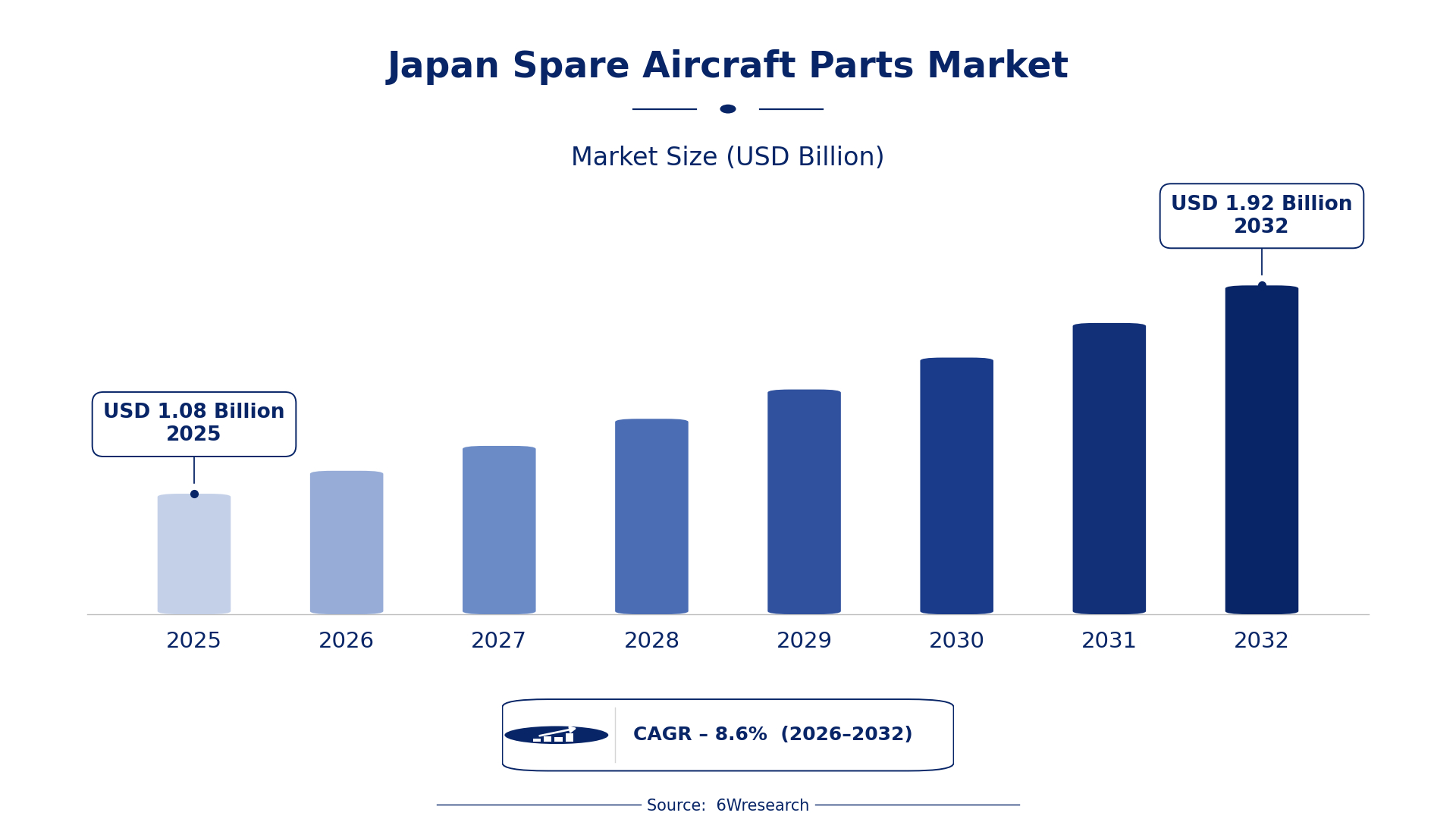
According to 6Wresearch internal database and industry insights, the Japan Spare Aircraft Parts Market was valued at USD 1.08 billion in 2025 and is projected to reach USD 1.92 billion by 2032, growing at a CAGR of approximately 8.6% during 2026–2032.
Japan Spare Aircraft Parts Market Highlights
| Report Metric | Details |
| Report Name | Japan Spare Aircraft Parts Market |
| Market Size 2025 | USD 1.08 billion |
| Market Size 2032 | USD 1.92 billion |
| Absolute Growth 2025–2032 | USD 0.84 billion |
| CAGR 2026–2032 | 8.6% |
| Peak Annual Growth | 11.4% in 2032 |
| Forecast Period | 2026–2032 |
| Historical Data | 2022–2025 |
| Base Year | 2025 |
| Leading Part Type, 2025 | Engine Components (45% share) |
| Leading Aircraft Category, 2025 | Commercial Jets (48% share) |
| Leading Maintenance Level, 2025 | Line/Heavy Maintenance (45% share) |
| Leading End User, 2025 | Airlines (45% share) |
| Fastest-Growing Part Type | Avionics (10.5% CAGR) |
| Fastest-Growing Aircraft Category | Military Aircraft (10.0% CAGR) |
| Fastest-Growing Maintenance Level | Scheduled Inspection (10.7% CAGR) |
| Fastest-Growing End User | Defense Operators (10.6% CAGR) |
| Growing Sector | Military Aircraft |
| Key End Users | Airlines, MRO Providers, Defense Operators |
Japan Spare Aircraft Parts Market Year-wise Growth Rate and Key Drivers (2022–2032)
This graph illustrates the annual growth rates of the market from 2022 to 2032, highlighting a steady upward trajectory and projected market expansion over the forecast period.
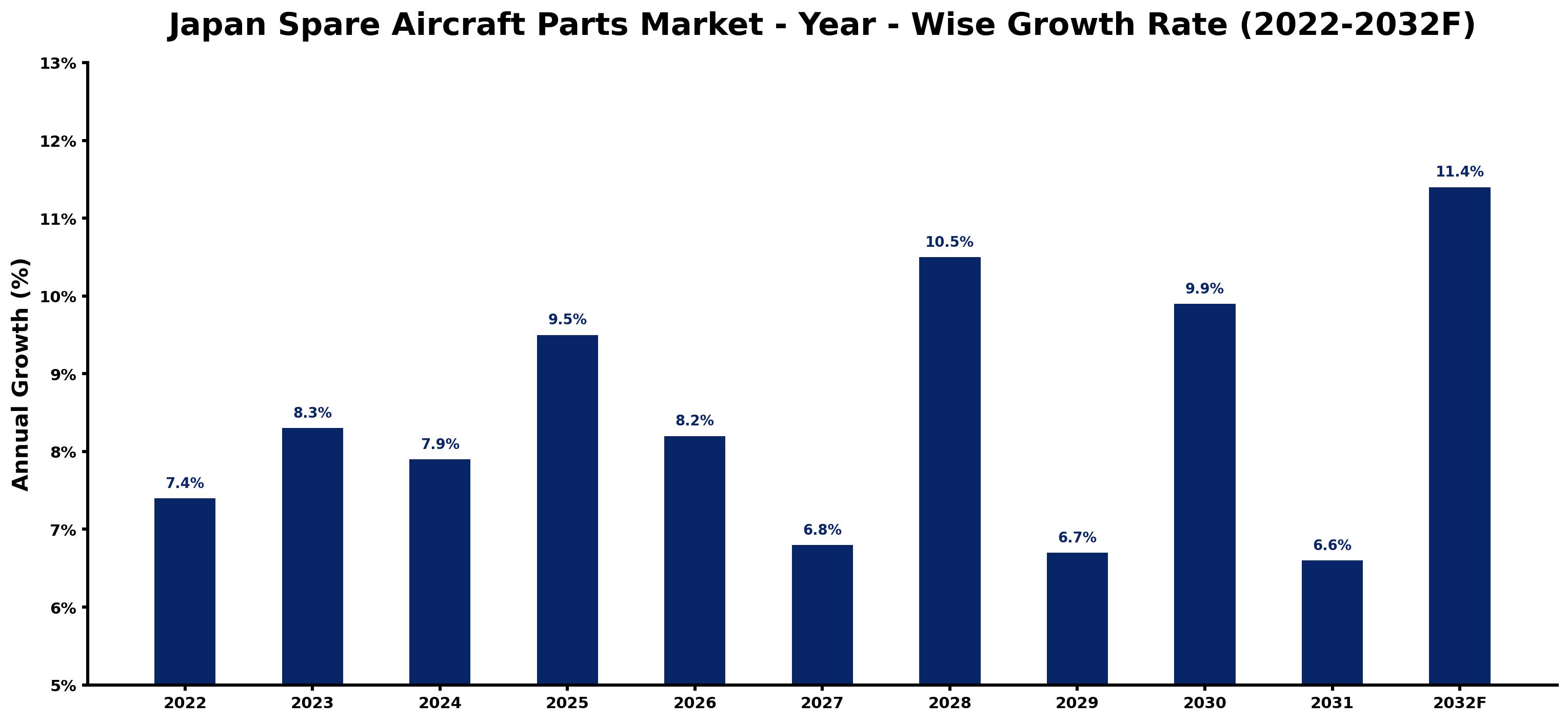
Annual growth estimates for each year appear below with the principal reason behind them, explaining the shifts that set the pace of the market.
| Year | Estimated Annual Growth (%) | Market Rationale |
| 2022 | 7.4 | The aviation market was stable, with ongoing maintenance needs for over 400 commercial aircraft. |
| 2023 | 8.3 | Increased demand for spare parts arose from the growing operational hours of domestic airlines. |
| 2024 | 7.9 | A slowdown occurred as maintenance schedules adjusted, impacting parts replacement frequency. |
| 2025 | 9.5 | The market saw a surge due to heightened military aircraft maintenance amid increased defense budgets. |
| 2026 | 8.2 | Demand is expected to slow as the market adjusts to the previous year's peak maintenance activities. |
| 2027 | 6.8 | The market will continue to slow, reflecting cautious spending amid economic uncertainties. |
| 2028 | 10.5 | A resurgence in demand is projected from advancements in sustainable aviation technologies. |
| 2029 | 6.7 | Growth is expected to slow again as airlines focus on cost management and operational efficiency. |
| 2030 | 9.9 | Demand will increase due to the implementation of new aviation safety regulations. |
| 2031 | 6.6 | A slowdown is projected as the market stabilises after several years of rapid growth. |
| 2032 | 11.4 | The peak growth year will be driven by rising military aircraft maintenance requirements. |
Note: Market size estimations and growth projections presented in this report are based on 6Wresearch's proprietary forecasting methodology, utilizing the latest available industry data, government publications, and primary research inputs.
Japan Spare Aircraft Parts Market Synopsis
The Japan Spare Aircraft Parts Market includes components crucial for the maintenance, repair, and overhaul of aircraft. These parts are crafted through precision engineering to comply with stringent aviation standards. The market is expanding due to rising demand from domestic airlines and MRO providers. Japan's aviation sector operates over 400 commercial aircraft, with the Tokyo region acting as a key hub for maintenance services. Developments in sustainable aviation technologies are driving investment and increasing demand for these components.
Market Dynamics Impact Analysis (2026–2032)
| Factor | Type | Impact | Primary Segment Affected |
| Increasing military aircraft maintenance requirements driven by defense budget allocations. | Driver | High | Military Aircraft |
| Growing demand for sustainable aviation technologies leading to new parts requirements. | Driver | High | Avionics |
| Expansion of MRO services in the Tokyo region presents investment opportunities. | Opportunity | High | MRO Providers |
| The rising need for advanced avionics systems creates a gap in supply. | Opportunity | High | Avionics |
| High costs associated with compliance to aviation safety standards can limit market growth. | Restraint | High | Engine Components |
| Dependence on independent MRO providers for services may restrict access to parts. | Restraint | Medium | MRO Providers |
| Buyers face delays due to stringent regulations affecting parts certification. | Challenge | High | Engine Components |
| Suppliers encounter challenges in sourcing high-quality materials for production. | Challenge | Medium | Engine Components |
Evaluation of Drivers in Japan Spare Aircraft Parts Market (2026–2032)
Below mentioned are some major drivers and their influence on market dynamics.
| Drivers | Primary Segment Affected | Why It Matters (Evidence) |
| Increased defense budget allocations for military aircraft maintenance. | Military Aircraft | Japan's defense budget allocated ¥5.4 trillion for military aircraft maintenance, driving demand for spare parts. |
| Growing operational hours of commercial aircraft leading to higher maintenance needs. | Commercial Jets | With over 400 commercial aircraft in operation, airlines are increasing their maintenance schedules, resulting in higher spare parts demand. |
| Advancements in sustainable aviation technologies necessitating new spare parts. | Avionics | Government support for advanced avionics development drives demand for new components, enhancing operational efficiency in the aviation sector. |
| Expansion of MRO services in the Tokyo region boosting local demand. | MRO Providers | The Tokyo region is a major hub for MRO services, increasing the need for spare parts and maintenance components. |
| Rising military aircraft operations creating urgent parts requirements. | Military Aircraft | Increased military operations lead to higher demand for urgent spare parts and maintenance, particularly for defense operators. |
Growth across the Spare Aircraft Parts market in Japan is anchored in increased defense budget allocations and growing operational hours of commercial aircraft. The defense budget of ¥5.4 trillion for military aircraft maintenance drives demand for spare parts. Airlines are increasing their maintenance schedules, further boosting the market. The Tokyo region, as a major hub for MRO services, increases local demand for spare components.
Evaluation of Restraints in Japan Spare Aircraft Parts Market
The following restraints limit how fast demand can grow.
| Market Restraint | Primary Segment Affected | Why It Matters (Evidence) |
| High costs associated with compliance to aviation safety standards. | Engine Components | Compliance with the national standard JIS Q 9100 can increase production costs for manufacturers, impacting pricing strategies. |
| Dependence on independent MRO providers for services may restrict access to parts. | MRO Providers | Approximately 60% of MRO services are performed by independent providers, limiting direct access to parts for airlines. |
| Delays in parts certification due to stringent regulatory processes. | Engine Components | The Japan Civil Aviation Bureau regulates aviation safety standards, which can slow down parts approval and affect supply chains. |
| Challenges in sourcing high-quality materials for production. | Engine Components | Suppliers face difficulties in obtaining high-quality materials, impacting production timelines and overall efficiency. |
| Market fluctuations due to economic uncertainties affecting spending. | Commercial Jets | Economic uncertainties can lead to cautious spending on aircraft maintenance and spare parts, affecting overall market growth. |
Japan Spare Aircraft Parts Market Challenges
Buyers and suppliers in the Japan Spare Aircraft Parts market encounter a skills shortage, as the number of qualified technicians falls short of the needs of over 400 commercial aircraft, resulting in maintenance delays for airlines. Regulatory challenges stem from strict aviation safety standards enforced by the Japan Civil Aviation Bureau, which can prolong approval times for new components and disrupt MRO providers' operations. Rising costs associated with compliance to the national standard JIS Q 9100 burden buyers, increasing the price of both services and parts. Limited adoption of advanced technologies restricts domestic suppliers, diminishing their competitiveness and the availability of modern spare components.
Trends in the Japan Spare Aircraft Parts Market
Below mentioned are some of the trends shaping the Japan Spare Aircraft Parts Market growth.
- Shift towards Sustainable Aviation Technologies: Japan's aviation industry is increasingly embracing sustainable aviation technologies, with government subsidies encouraging these advancements. In 2022, the government allocated ¥5 billion to support eco-friendly initiatives, prompting airlines to invest in sustainable spare parts.
- Increase in Military Aircraft Maintenance: The military aircraft sector is experiencing a rise in maintenance activities, driven by heightened defence operations. In 2022, the defence budget allocated ¥5.4 trillion for military aircraft maintenance, boosting demand for spare parts.
- Expansion of MRO Services in Tokyo: The Tokyo region is emerging as a central hub for MRO services, reflecting a growing trend in the aviation market. The number of registered general aviation aircraft in Japan is around 3,000, increasing the need for local MRO services.
- Growing Demand for Avionics: There is a notable rise in demand for advanced avionics systems in Japan's aviation market. The government supports the development of advanced avionics through subsidies, which is expected to improve parts procurement.
Investment Opportunities in the Japan Spare Aircraft Parts Market
Investors looking at the Japan Spare Aircraft Parts Market should consider the following areas.
- Tokyo as a Major MRO Hub: The Tokyo region serves as a key facility for MRO services, presenting investment opportunities. With over 400 commercial aircraft in operation, there is a growing need for spare parts in this area.
- Defense Operators Seeking Advanced Components: Defense operators are increasingly pursuing advanced components to support military aircraft. With a defence budget of ¥5.4 trillion, suppliers can penetrate this market through local partnerships.
- Gap in Avionics Supply: There is a notable gap in the supply of avionics components, driven by the government's push for sustainable technologies. Suppliers can take advantage of this by forming joint ventures with local manufacturers.
- Investment in Scheduled Inspections: The rising need for scheduled inspections creates opportunities for parts suppliers. With a projected CAGR of 10.7% for this segment, navigating regulatory approvals can facilitate market entry.
Government Initiatives in the Japan Spare Aircraft Parts Market
The Electrical Appliance and Material Safety Act of 1961 regulates the safety standards for electrical appliances and materials sold in Japan. This law ensures that spare aircraft parts meet safety requirements, protecting both producers and consumers. The Building Energy Efficiency Act, amended in 2022, mandates compliance with energy efficiency standards, impacting the manufacturing processes of aviation components. The GX Basic Policy, adopted in 2023, aims for substantial public-private investment in decarbonisation, influencing the production of sustainable aviation technologies.
The Ministry of Land, Infrastructure, Transport and Tourism oversees aviation regulations, ensuring compliance with safety standards. This agency funds various initiatives to improve aviation safety and efficiency. The Japan Civil Aviation Bureau is responsible for regulating aviation safety standards, approving manufacturers and ensuring that all spare parts meet required specifications. This regulatory framework supports the development of a reliable supply chain for spare aircraft parts, with a focus on enhancing operational standards.
Future Insight of the Japan Spare Aircraft Parts Market
By 2032, buyers and suppliers in the Japan Spare Aircraft Parts market can expect a shift towards sustainable aviation technologies, driven by government incentives for the development of advanced avionics. The Tokyo region will likely see an increase in MRO service capacity, facilitating the maintenance of a growing fleet of commercial aircraft. The integration of digital technologies in maintenance processes will boost operational efficiency and reduce turnaround times. Increased investment in military aircraft maintenance, with a defence budget allocation of ¥5.4 trillion, will further stimulate demand for high-quality spare components.
Market Segmentation Analysis
The report offers a comprehensive study of the following market segments and their leading categories in the market.
By Part Type – Engine Components Dominated, Avionics Expected to Grow Fastest
According to Summon Dutta, Assistant Manager at 6Wresearch, in 2025, Engine Components led the part type split with a 45% share. Engine components dominate the market share as they are critical for aircraft operation and safety. The extensive maintenance, repair, and overhaul services in the Tokyo region rely heavily on these components to support the operational fleet of over 400 commercial aircraft. Avionics are set to record the highest CAGR in this split, 10.5% over 2026–2032. Avionics is rapidly expanding due to its essential role in navigation and communication systems for modern aircraft. The push for sustainable aviation technologies is significantly contributing to this segment's growth, particularly within the Tokyo area. Suppliers should focus on enhancing their avionics product lines to effectively capture the growing market share.
By Aircraft Category – Commercial Jets Dominated, Military Aircraft Expected to Grow Fastest
With a 48% revenue share in 2025, Commercial Jets was the largest aircraft category category. Commercial jets account for the largest share of the market, serving as the primary mode of passenger transport in Japan. The presence of over 400 commercial aircraft in operation highlights the strong demand for spare parts in this category. Over 2026–2032, Military Aircraft is expected to post the fastest growth, at a CAGR of 10.0%. Military aircraft are the fastest-growing segment, driven by their essential role in defense operations. The defence budget allocation of ¥5.4 trillion for military aircraft maintenance in 2022 underscores the importance of this sector. Buyers in the military sector need to prepare for increased competition among suppliers as this segment continues to expand.
By Maintenance Level – Line/Heavy Maintenance Dominated, Scheduled Inspection Expected to Grow Fastest
Line/Heavy Maintenance held a 45% share of the Japan Spare Aircraft Parts Market by maintenance level in 2025. Line/heavy maintenance leads the market share due to its critical role in routine and extensive aircraft repairs. The mandatory nature of these services ensures consistent demand for spare parts across Japan's aviation sector. Scheduled Inspection is projected to grow fastest, at a CAGR of 10.7% during 2026–2032. Scheduled inspections are rapidly gaining traction as they are mandatory for compliance with safety regulations. This requirement ensures that aircraft adhere to the stringent aviation safety standards established by the Japan Civil Aviation Bureau, driving growth in this area. Suppliers must prioritise their scheduled inspection offerings to align with regulatory requirements and meet market demands.
By End User – Airlines Dominated, Defense Operators Expected to Grow Fastest
Airlines took a 45% share of end user in 2025, more than any other category. Airlines represent the largest end-user segment, generating substantial demand for spare aircraft parts that are vital for operational efficiency. The high number of commercial aircraft in operation reinforces this segment's significant market share. The quickest growth will come from Defense Operators, forecast to expand at a CAGR of 10.6% between 2026 and 2032. Defense operators are the fastest-growing segment, driven by increased military spending and the need for reliable aircraft maintenance. This growth reflects the critical importance of military readiness in Japan's aviation strategy. Suppliers should tailor their offerings to meet the specific needs of defense operators to capitalise on this growth opportunity.
Key Attractiveness of the Report
- 10 Years of Market Numbers
- Historical Data Starting from 2022 to 2025
- Base Year 2025
- Forecast Data until 2032
- Key Performance Indicators Impacting the Market
- Major Upcoming Developments and Projects
Key Highlights of the Report:
- Japan Spare Aircraft Parts Market Outlook
- Market Size of Japan Spare Aircraft Parts Market, 2025
- Forecast of Japan Spare Aircraft Parts Market, 2032
- Historical Data and Forecast of Japan Spare Aircraft Parts Revenues & Volume for the Period 2022 - 2032F
- Japan Spare Aircraft Parts Market Trend Evolution
- Japan Spare Aircraft Parts Market Drivers and Challenges
- Japan Spare Aircraft Parts Price Trends
- Japan Spare Aircraft Parts Porter's Five Forces
- Japan Spare Aircraft Parts Industry Life Cycle
- Historical Data and Forecast of Japan Spare Aircraft Parts Market Revenues & Volume By Part Type for the Period 2022 - 2032F
- Historical Data and Forecast of Japan Spare Aircraft Parts Market Revenues & Volume By Engine Components for the Period 2022 - 2032F
- Historical Data and Forecast of Japan Spare Aircraft Parts Market Revenues & Volume By Avionics for the Period 2022 - 2032F
- Historical Data and Forecast of Japan Spare Aircraft Parts Market Revenues & Volume By Flight Control Systems for the Period 2022 - 2032F
- Historical Data and Forecast of Japan Spare Aircraft Parts Market Revenues & Volume By Landing Gear Systems for the Period 2022 - 2032F
- Historical Data and Forecast of Japan Spare Aircraft Parts Market Revenues & Volume By Aircraft Category for the Period 2022 - 2032F
- Historical Data and Forecast of Japan Spare Aircraft Parts Market Revenues & Volume By Commercial Jets for the Period 2022 - 2032F
- Historical Data and Forecast of Japan Spare Aircraft Parts Market Revenues & Volume By Military Aircraft for the Period 2022 - 2032F
- Historical Data and Forecast of Japan Spare Aircraft Parts Market Revenues & Volume By General Aviation for the Period 2022 - 2032F
- Historical Data and Forecast of Japan Spare Aircraft Parts Market Revenues & Volume By Cargo Aircraft for the Period 2022 - 2032F
- Historical Data and Forecast of Japan Spare Aircraft Parts Market Revenues & Volume By Maintenance Level for the Period 2022 - 2032F
- Historical Data and Forecast of Japan Spare Aircraft Parts Market Revenues & Volume By Line/Heavy Maintenance for the Period 2022 - 2032F
- Historical Data and Forecast of Japan Spare Aircraft Parts Market Revenues & Volume By Scheduled Inspection for the Period 2022 - 2032F
- Historical Data and Forecast of Japan Spare Aircraft Parts Market Revenues & Volume By AOG (Urgent) for the Period 2022 - 2032F
- Historical Data and Forecast of Japan Spare Aircraft Parts Market Revenues & Volume By Preventive Replacement for the Period 2022 - 2032F
- Historical Data and Forecast of Japan Spare Aircraft Parts Market Revenues & Volume By End User for the Period 2022 - 2032F
- Historical Data and Forecast of Japan Spare Aircraft Parts Market Revenues & Volume By Airlines for the Period 2022 - 2032F
- Historical Data and Forecast of Japan Spare Aircraft Parts Market Revenues & Volume By Defense Operators for the Period 2022 - 2032F
- Historical Data and Forecast of Japan Spare Aircraft Parts Market Revenues & Volume By Charter Services for the Period 2022 - 2032F
- Historical Data and Forecast of Japan Spare Aircraft Parts Market Revenues & Volume By MRO Providers for the Period 2022 - 2032F
- Japan Spare Aircraft Parts Import Export Trade Statistics
- Market Opportunity Assessment By Part Type
- Market Opportunity Assessment By Aircraft Category
- Market Opportunity Assessment By Maintenance Level
- Market Opportunity Assessment By End User
- Japan Spare Aircraft Parts Top Companies Market Share
- Japan Spare Aircraft Parts Competitive Benchmarking By Technical and Operational Parameters
- Japan Spare Aircraft Parts Company Profiles
- Japan Spare Aircraft Parts Key Strategic Recommendations
Market Covered
The report offers an extensive study of the following market segments.
By Part Type
- Engine Components
- Avionics
- Flight Control Systems
- Landing Gear Systems
By Aircraft Category
- Commercial Jets
- Military Aircraft
- General Aviation
- Cargo Aircraft
By Maintenance Level
- Line/Heavy Maintenance
- Scheduled Inspection
- AOG (Urgent)
- Preventive Replacement
By End User
- Airlines
- Defense Operators
- Charter Services
- MRO Providers































