Japan Specialty Healthcare Market Size & Growth Rate
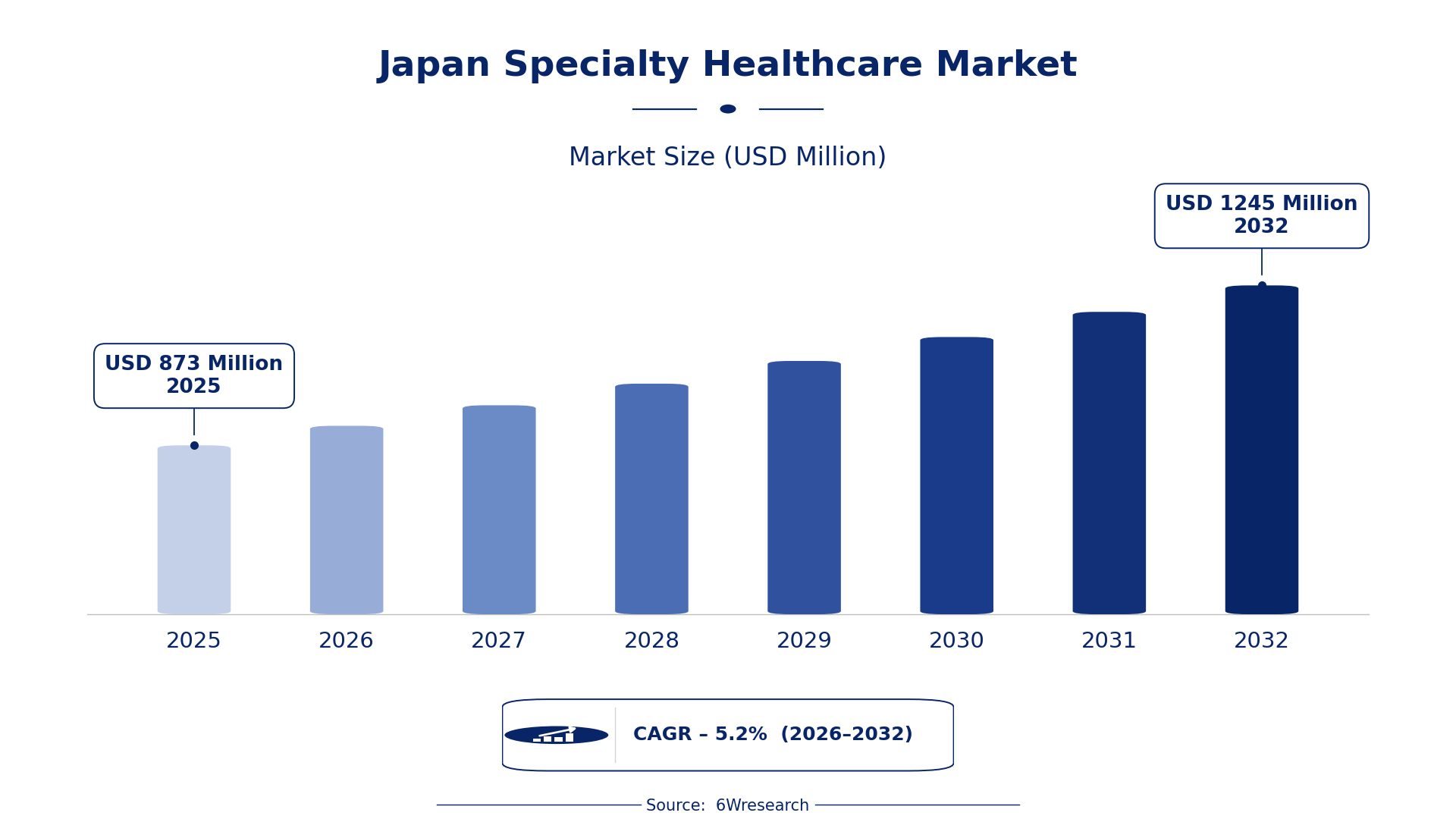
According to 6Wresearch internal database and industry insights, the Japan Specialty Healthcare Market was valued at USD 873 Million in 2025 and is projected to reach USD 1,245 Million by 2032, growing at a CAGR of approximately 5.2% during 2026–2032.
Japan Specialty Healthcare Market Highlights
| Report Metric | Details |
| Report Name | Japan Specialty Healthcare Market (2026-2032) |
| Market Size 2025 | USD 873 Million |
| Market Size 2032 | USD 1,245 Million |
| Absolute Growth 2025–2032 | USD 372 Million |
| CAGR 2026–2032 | 5.2% |
| Peak Annual Growth | 6.1% in 2026 |
| Forecast Period | 2026–2032 |
| Historical Data | 2022–2025 |
| Base Year | 2025 |
| Leading Service Type, 2025 | Oncology Care (39% share) |
| Leading Disease Category, 2025 | Cancer (39% share) |
| Leading Delivery Model, 2025 | Outpatient Clinics (35% share) |
| Leading End User, 2025 | Hospitals & Specialists (47% share) |
| Fastest-Growing Service Type | Rare Disease Services (6.9% CAGR) |
| Fastest-Growing Disease Category | Genetic Disorders (7.3% CAGR) |
| Fastest-Growing Delivery Model | Virtual/In-Person (6.8% CAGR) |
| Fastest-Growing End User | Specialty Clinics (7.1% CAGR) |
| Growing Sector | Specialty Clinics |
| Key End Users | Hospitals & Specialists, Multispecialty Hospitals, Specialty Clinics, Transplant Institutions |
Japan Specialty Healthcare Market Year-wise Growth Rate and Key Drivers (2022–2032)
This graph illustrates the annual growth rates of the market from 2022 to 2032, highlighting a steady upward trajectory and projected market expansion over the forecast period.
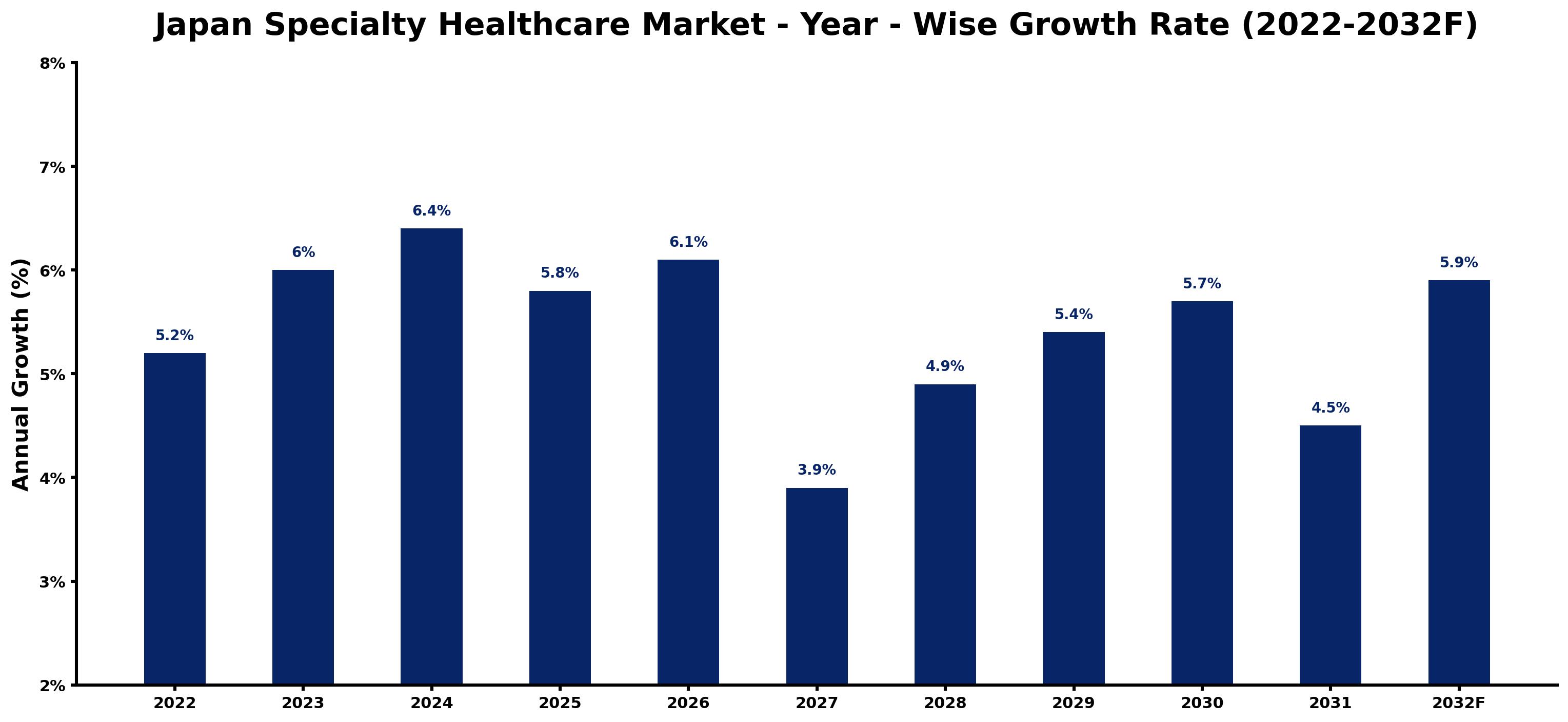
Each row of the following table gives one year's estimated growth and the event or demand shift that explains it.
| Year | Estimated Annual Growth (%) | Market Rationale |
| 2022 | 5.2 | The market experienced steady demand from chronic disease management and specialty clinics. |
| 2023 | 6.0 | Growth was driven by increased patient awareness and advancements in treatment technologies. |
| 2024 | 6.4 | The rise in cancer cases and organ transplant needs supported further market expansion. |
| 2025 | 5.8 | Demand stabilised as the market adjusted to healthcare spending and resource allocation. |
| 2026 | 6.1 | The introduction of new therapies and technologies is expected to spur renewed growth in specialty healthcare. |
| 2027 | 3.9 | A slowdown is projected as healthcare providers face capacity constraints and resource limitations. |
| 2028 | 4.9 | Growth is anticipated with increased investments in outpatient services and specialty clinics. |
| 2029 | 5.4 | The market is expected to see further expansion due to rising patient populations and treatment options. |
| 2030 | 5.7 | Technological advancements in diagnostics and treatment methods will continue to drive demand. |
| 2031 | 4.5 | A slowdown is anticipated as competition intensifies among specialty healthcare providers. |
| 2032 | 5.9 | Growth is projected to accelerate again with the introduction of new treatment protocols and facilities. |
Note: Market size estimations and growth projections presented in this report are based on 6Wresearch's proprietary forecasting methodology, utilizing the latest available industry data, government publications, and primary research inputs.
Japan Specialty Healthcare Market Synopsis
Specialty healthcare in Japan encompasses advanced medical services focused on specific diseases, including cancer treatment and organ transplants. The Japan Specialty Healthcare Market is expanding due to an aging population, with 29.3% aged 65 or older, and national medical expenditure reaching JPY 46.7 trillion in fiscal 2022. Demand arises from chronic disease management, international collaborations in research, and the establishment of specialized clinics and hospitals equipped with advanced technology and expertise. This growth reflects the increasing need for tailored medical solutions in a rapidly evolving healthcare environment.
Market Dynamics Impact Analysis (2026–2032)
| Factor | Type | Impact | Primary Segment Affected |
| Aging population increases demand for chronic disease management and specialty services. | Driver | High | Oncology Care |
| Technological advancements in treatment protocols enhance patient outcomes. | Driver | High | Organ Transplant |
| Growing prevalence of chronic diseases creates a need for specialized care facilities. | Opportunity | High | Rare Disease Services |
| Expansion of outpatient clinics allows for better patient access to specialty services. | Opportunity | Medium | Outpatient Clinics |
| Limited availability of specialized healthcare professionals constrains service delivery. | Restraint | High | Pain Management |
| High operational costs for advanced medical equipment limit clinic expansions. | Restraint | Medium | Specialty Clinics |
| Competition among healthcare providers may lead to pricing pressures. | Challenge | High | Hospitals & Specialists |
| Regulatory hurdles can delay the introduction of new treatment protocols. | Challenge | Medium | Transplant Institutions |
Evaluation of Drivers in Japan Specialty Healthcare Market (2026–2032)
The main growth drivers and the segments they affect most are set out below.
| Drivers | Primary Segment Affected | Why It Matters (Evidence) |
| Increasing cancer cases drive demand for specialized oncology care. | Oncology Care | Japan has over 8 million cancer patients, leading to higher service demand. |
| Advancements in organ transplant technologies enhance treatment success rates. | Organ Transplant | With 170 accredited centers, the focus on organ transplants is intensifying. |
| Rising patient populations with chronic diseases necessitate specialized services. | Rare Disease Services | The population with chronic pain is estimated at 10 million, boosting service needs. |
| Growth in outpatient clinics improves patient access to specialty healthcare. | Outpatient Clinics | Japan has over 100,000 outpatient clinics providing essential specialty services. |
| Technological innovations in healthcare improve treatment protocols and outcomes. | Pain Management | ISO 9001 standards are applied in facilities, enhancing service quality. |
Much of the new demand traces back to the increasing number of cancer patients, which exceeds 8 million in Japan. This trend drives the need for specialized oncology care, as evidenced by the 170 accredited organ transplant centres that improve treatment success rates. The population suffering from chronic pain, estimated at 10 million, necessitates specialized services. The growth of outpatient clinics, numbering over 8,100, improves access to essential healthcare services. Standards such as ISO 9001 in facilities ensure higher quality and efficiency in treatment protocols, resulting in increased patient satisfaction and service uptake.
Evaluation of Restraints in Japan Specialty Healthcare Market
These are the pressures that could keep growth below its potential.
| Market Restraint | Primary Segment Affected | Why It Matters (Evidence) |
| Shortage of trained healthcare professionals impacts service availability. | Pain Management | The limited number of specialists constrains the delivery of effective pain management services. |
| High costs of advanced medical technologies limit clinic expansions. | Specialty Clinics | Investment in advanced medical equipment is often beyond the budget of smaller clinics. |
| Regulatory requirements can delay the approval of new treatments. | Transplant Institutions | Stringent regulations slow down the introduction of new transplant procedures. |
| Intense competition among providers leads to price wars, affecting profitability. | Hospitals & Specialists | Providers may need to lower prices to remain competitive, impacting service quality. |
| Limited funding for rare disease research restricts treatment options. | Rare Disease Services | The government allocated ¥50 billion for research, which may not meet growing needs. |
Japan Specialty Healthcare Market Challenges
About 10 million patients with chronic pain struggle to find specialised care, leading to treatment delays that frustrate buyers seeking timely solutions. A lack of skilled professionals constrains suppliers' ability to deliver advanced medical services, resulting in higher operational costs and reduced service availability. Regulatory hurdles imposed by the Ministry of Health, Labour and Welfare complicate the approval processes for new treatments, causing significant delays in patient access to necessary care. Outdated technology in many clinics limits efficiency, which negatively impacts patient outcomes and increases the workload for healthcare providers.
Trends in the Japan Specialty Healthcare Market
Several trends are reshaping the Japan Specialty Healthcare Market; the most important are set out below.
- Shift to Virtual Consultations: The healthcare sector is increasingly adopting virtual consultations, with around 30% of patients now preferring remote services. This shift improves access to specialty care across Japan.
- Expansion of Outpatient Clinics: The number of outpatient clinics has surged, with over 100,000 facilities now available. This expansion facilitates easier access to specialty healthcare services for patients across Japan.
- Increased Focus on Rare Disease Treatments: The enactment of the Rare Disease Act in 2016 has spurred interest in developing treatments. This has led to a 20% increase in research initiatives targeting rare conditions.
- Growth of Pain Management Services: The Japan Society of Pain Clinicians reports a growing emphasis on pain management practices. This focus is reflected in the increase of pain management clinics by 15% since 2020.
Investment Opportunities in the Japan Specialty Healthcare Market
Where to invest in the Japan Specialty Healthcare Market: the main openings are set out below.
- Partnering with Specialty Clinics: Investing in specialty clinics is timely, as Japan has over 1,000 facilities. Collaborating with local healthcare providers can improve service offerings and patient access.
- Supplying Advanced Medical Equipment: With high costs limiting clinic expansions, there is a gap for affordable medical technologies. Engaging with outpatient clinics can facilitate entry into this sector.
- Investing in Rare Disease Research: The government allocated ¥50 billion for rare disease research, creating opportunities for partnerships. Investing in research initiatives can lead to new treatment developments and market presence.
- Enhancing Telehealth Services: The increasing preference for virtual consultations presents an opportunity to invest in telehealth technologies. Collaborating with healthcare providers can improve service delivery and patient satisfaction.
Government Initiatives in the Japan Specialty Healthcare Market
The Medical Care Act (1948) sets standards for hospitals and clinics, including facilities and staffing, which directly impacts specialty healthcare providers. Compliance with these standards ensures quality service delivery and patient safety, building trust in the healthcare system.
The Pharmaceuticals and Medical Devices Agency (PMDA) oversees specialty healthcare regulations, approving new treatments and funding initiatives. This includes the allocation of ¥50 billion for rare disease research, supporting the development of new therapies and enhancing patient care options.
Future Insight of the Japan Specialty Healthcare Market
New specialty clinics will emerge by 2032, driven by government initiatives to improve access to advanced medical services. Telemedicine platforms will proliferate, enabling buyers in rural areas to receive timely consultations without travelling long distances. The Rare Disease Act will facilitate research and development of treatments, benefiting patients and healthcare providers alike. As the number of surgical centres rises, the average wait time for surgeries is expected to decrease, leading to improved patient satisfaction and health outcomes.
Market Segmentation Analysis
Japan Specialty Healthcare Market report covers a detailed analysis of the following market segments:
By Service Type – Oncology Care Leads, Rare Disease Services Expected to Grow Fastest
According to Saurav Kr Singh, Senior Research Analyst at 6Wresearch, with 39% of service type revenue in 2025, Oncology Care was the largest category. Oncology care holds the largest share due to the high prevalence of cancer in Japan, with over 8 million cancer patients as of 2023. The National Cancer Center serves as a key institution, providing advanced cancer treatment services across the country. Rare Disease Services are projected to grow fastest, at a CAGR of 6.9% during 2026–2032. Rare disease services are experiencing rapid growth as the government allocated ¥50 billion for rare disease research in 2023. This focus on unique medical needs is likely to attract more patients seeking specialised treatment. Suppliers should prioritise investments in rare disease services to align with government funding and patient demand.
By Disease Category – Cancer Leads, Genetic Disorders Expected to Grow Fastest
Cancer held 39% of the Japan Specialty Healthcare Market by disease category in 2025. Cancer represents the largest segment in specialty healthcare as it is the primary focus for treatment in Japan, with over 8 million patients affected. The extensive network of oncology facilities, including the National Cancer Center, is vital in addressing this prevalent health issue. The quickest growth will come from Genetic Disorders, forecast to expand at a CAGR of 7.3% between 2026 and 2032. The growth of genetic disorders is accelerating due to heightened awareness and advancements in treatment protocols, particularly following the enactment of the Genetic Testing Act. This segment is becoming increasingly important for healthcare providers, reflecting a shift towards personalised approaches in treatment. Suppliers must focus on developing specialised solutions for genetic disorders to meet the rising demand for targeted therapies.
By Delivery Model – Outpatient Clinics Lead, Virtual/In-Person Expected to Grow Fastest
Outpatient Clinics took 35% of delivery model revenue in 2025, more than any other category. Outpatient clinics dominate the delivery model as they are commonly used for follow-up care, facilitating easier access for patients. This model supports the high volume of patients requiring ongoing management for chronic conditions. Over 2026–2032, Virtual/In-Person is expected to post the fastest growth, at a CAGR of 6.8%. The virtual/in-person model is rapidly gaining traction as a convenient option for consultations, reflecting changing patient preferences for healthcare delivery. This trend is likely to continue as technology becomes more integrated into healthcare services. Suppliers must adapt to the growing demand for virtual consultation options to remain competitive in the market.
By End User – Hospitals & Specialists Lead, Specialty Clinics Expected to Grow Fastest
The largest end user category in 2025 was Hospitals & Specialists, at 47% of revenue. Hospitals and specialists lead the specialty healthcare market as they are the primary providers of complex medical services. Their established infrastructure and expertise enable them to effectively manage a broad range of specialty healthcare needs. Specialty Clinics are set to record the highest CAGR in this split, 7.1% over 2026–2032. Specialty clinics are experiencing the fastest growth as they focus on specific health issues, allowing for tailored patient care. This trend indicates a move towards more concentrated healthcare solutions that directly address patient requirements. Buyers should consider partnerships with specialty clinics to enhance access to targeted healthcare services.
Key Attractiveness of the Report
- 10 Years of Market Numbers
- Historical Data Starting from 2022 to 2025
- Base Year 2025
- Forecast Data until 2032
- Key Performance Indicators Impacting the Market
- Major Upcoming Developments and Projects
Key Highlights of the Report:
- Japan Specialty Healthcare Market Outlook
- Market Size of Japan Specialty Healthcare Market, 2025
- Forecast of Japan Specialty Healthcare Market, 2032
- Historical Data and Forecast of Japan Specialty Healthcare Revenues & Volume for the Period 2022-2032F
- Japan Specialty Healthcare Market Trend Evolution
- Japan Specialty Healthcare Market Drivers and Challenges
- Japan Specialty Healthcare Price Trends
- Japan Specialty Healthcare Porter's Five Forces
- Japan Specialty Healthcare Industry Life Cycle
- Historical Data and Forecast of Japan Specialty Healthcare Market Revenues & Volume By Service Type for the Period 2022-2032F
- Historical Data and Forecast of Japan Specialty Healthcare Market Revenues & Volume By Oncology Care for the Period 2022-2032F
- Historical Data and Forecast of Japan Specialty Healthcare Market Revenues & Volume By Rare Disease Services for the Period 2022-2032F
- Historical Data and Forecast of Japan Specialty Healthcare Market Revenues & Volume By Organ Transplant for the Period 2022-2032F
- Historical Data and Forecast of Japan Specialty Healthcare Market Revenues & Volume By Pain Management for the Period 2022-2032F
- Historical Data and Forecast of Japan Specialty Healthcare Market Revenues & Volume By Disease Category for the Period 2022-2032F
- Historical Data and Forecast of Japan Specialty Healthcare Market Revenues & Volume By Cancer for the Period 2022-2032F
- Historical Data and Forecast of Japan Specialty Healthcare Market Revenues & Volume By Genetic Disorders for the Period 2022-2032F
- Historical Data and Forecast of Japan Specialty Healthcare Market Revenues & Volume By Chronic Organ Failures for the Period 2022-2032F
- Historical Data and Forecast of Japan Specialty Healthcare Market Revenues & Volume By Chronic Pain for the Period 2022-2032F
- Historical Data and Forecast of Japan Specialty Healthcare Market Revenues & Volume By Delivery Model for the Period 2022-2032F
- Historical Data and Forecast of Japan Specialty Healthcare Market Revenues & Volume By Outpatient Clinics for the Period 2022-2032F
- Historical Data and Forecast of Japan Specialty Healthcare Market Revenues & Volume By Virtual/In-Person for the Period 2022-2032F
- Historical Data and Forecast of Japan Specialty Healthcare Market Revenues & Volume By Surgical Center for the Period 2022-2032F
- Historical Data and Forecast of Japan Specialty Healthcare Market Revenues & Volume By Rehabilitation Centers for the Period 2022-2032F
- Historical Data and Forecast of Japan Specialty Healthcare Market Revenues & Volume By End User for the Period 2022-2032F
- Historical Data and Forecast of Japan Specialty Healthcare Market Revenues & Volume By Hospitals & Specialists for the Period 2022-2032F
- Historical Data and Forecast of Japan Specialty Healthcare Market Revenues & Volume By Specialty Clinics for the Period 2022-2032F
- Historical Data and Forecast of Japan Specialty Healthcare Market Revenues & Volume By Transplant Institutions for the Period 2022-2032F
- Historical Data and Forecast of Japan Specialty Healthcare Market Revenues & Volume By Multispecialty Hospitals for the Period 2022-2032F
- Japan Specialty Healthcare Import Export Trade Statistics
- Market Opportunity Assessment By Service Type
- Market Opportunity Assessment By Disease Category
- Market Opportunity Assessment By Delivery Model
- Market Opportunity Assessment By End User
- Japan Specialty Healthcare Top Companies Market Share
- Japan Specialty Healthcare Competitive Benchmarking By Technical and Operational Parameters
- Japan Specialty Healthcare Company Profiles
- Japan Specialty Healthcare Key Strategic Recommendations
Market Covered
Coverage by segment is as follows.
By Service Type
- Oncology Care
- Rare Disease Services
- Organ Transplant
- Pain Management
By Disease Category
- Cancer
- Genetic Disorders
- Chronic Organ Failures
- Chronic Pain
By Delivery Model
- Outpatient Clinics
- Virtual/In-Person
- Surgical Center
- Rehabilitation Centers
By End User
- Hospitals & Specialists
- Specialty Clinics
- Transplant Institutions
- Multispecialty Hospitals































