Japan Specialty Industry Chemicals Market Size & Growth Rate
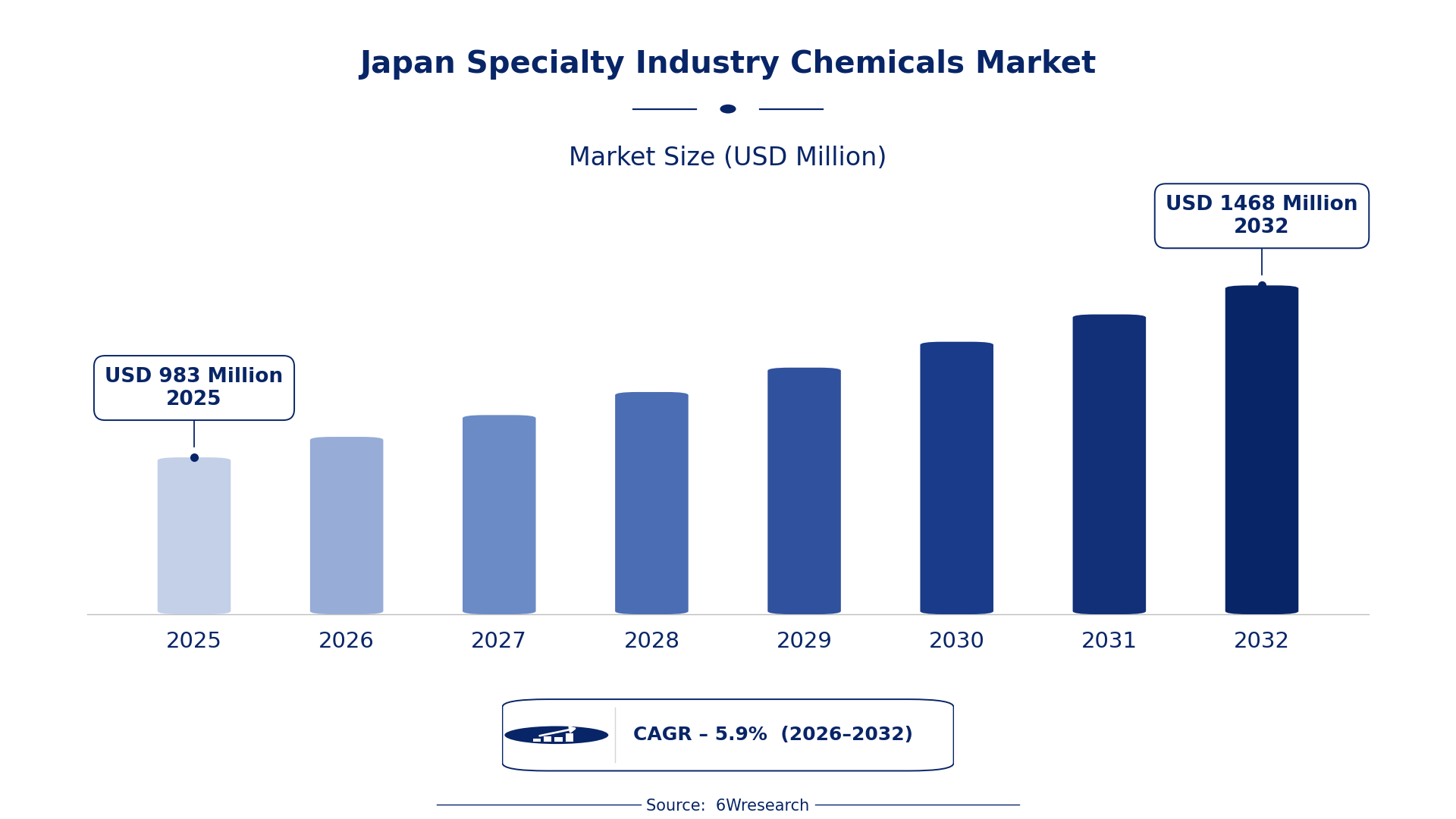
According to 6Wresearch internal database and industry insights, the Japan Specialty Industry Chemicals Market was valued at USD 983 Million in 2025 and is projected to reach USD 1,468 Million by 2032, growing at a CAGR of approximately 5.9% during 2026–2032.
Japan Specialty Industry Chemicals Market Highlights
| Report Metric | Details |
| Report Name | Japan Specialty Industry Chemicals Market (2026-2032) |
| Market Size 2025 | USD 983 Million |
| Market Size 2032 | USD 1,468 Million |
| Absolute Growth 2025–2032 | USD 485 Million |
| CAGR 2026–2032 | 5.9% |
| Peak Annual Growth | 6.5% in 2027 |
| Forecast Period | 2026–2032 |
| Historical Data | 2022–2025 |
| Base Year | 2025 |
| Leading Chemical Type, 2025 | Biocides (49% share) |
| Leading Functionality, 2025 | Microbial Control (44% share) |
| Leading Target Sector, 2025 | Water Treatment (40% share) |
| Leading End User, 2025 | Industrial Plants (47% share) |
| Fastest-Growing Chemical Type | Complexing Agents (8.6% CAGR) |
| Fastest-Growing Functionality | Mineral Processing (7.6% CAGR) |
| Fastest-Growing Target Sector | Mining (7.7% CAGR) |
| Fastest-Growing End User | Mineral Separation Units (7.8% CAGR) |
| Growing Sector | Mining |
| Key End Users | Water Treatment, Food Processing, Oil & Gas, Mining |
Japan Specialty Industry Chemicals Market Year-wise Growth Rate and Key Drivers (2022–2032)
This graph illustrates the annual growth rates of the market from 2022 to 2032, highlighting a steady upward trajectory and projected market expansion over the forecast period.
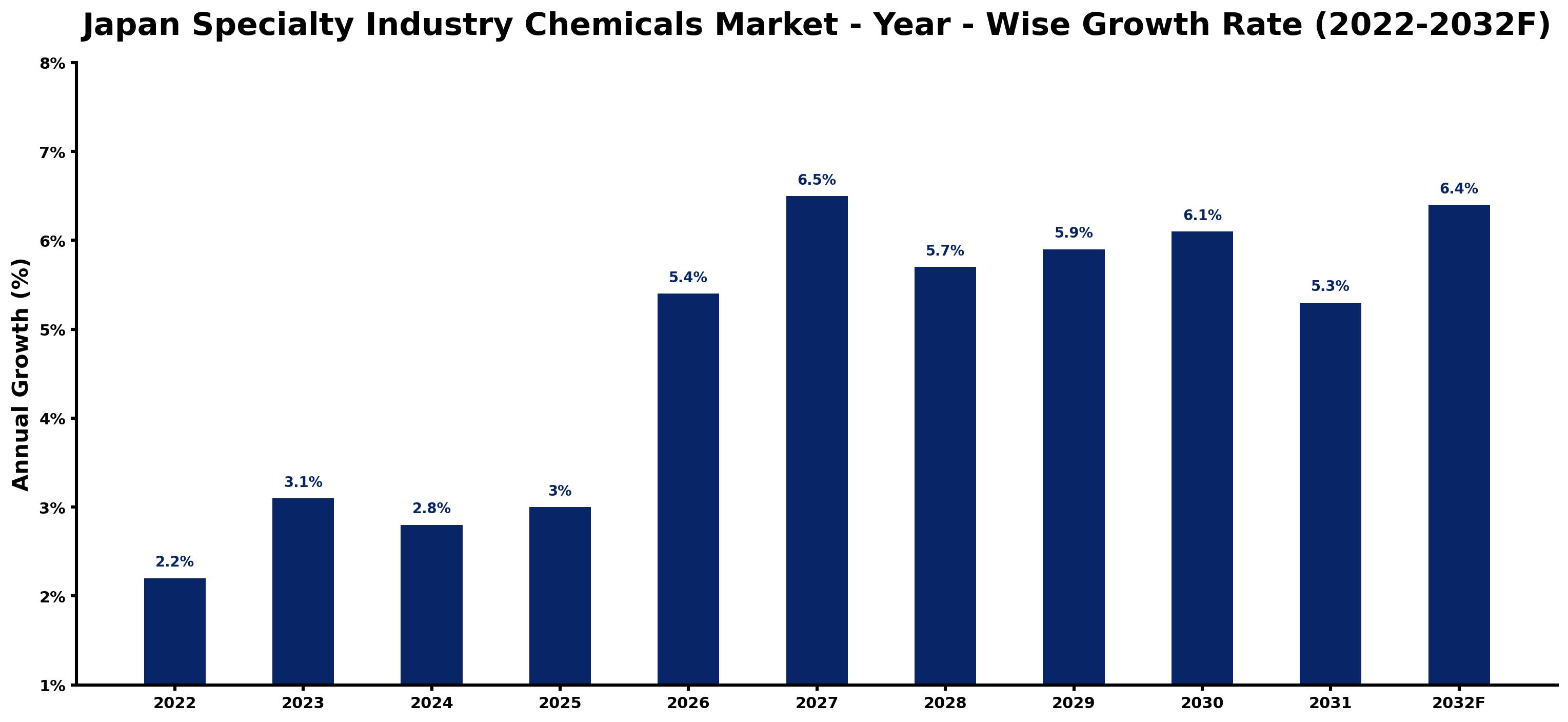
Annual growth estimates for each year appear below with the principal reason behind them, explaining the shifts that set the pace of the market.
| Year | Estimated Annual Growth (%) | Market Rationale |
| 2022 | 2.2 | The market experienced steady growth due to ongoing demand from industrial plants. |
| 2023 | 3.1 | Growth accelerated as the food processing sector expanded its use of specialty chemicals. |
| 2024 | 2.8 | A slight slowdown occurred as market conditions stabilised after a strong previous year. |
| 2025 | 3.0 | Demand increased again as investments in water treatment technologies gained momentum. |
| 2026 | 5.4 | Growth is expected to surge as the mining sector adopts advanced mineral processing techniques. |
| 2027 | 6.5 | The market is projected to peak due to heightened demand for biocides in food and beverage applications. |
| 2028 | 5.7 | A slowdown is anticipated as growth rates normalise after reaching a peak. |
| 2029 | 5.9 | Demand will rise again as industrial plants seek to improve operational efficiency. |
| 2030 | 6.1 | Growth is expected to continue as the oil and gas sector increases its use of corrosion inhibitors. |
| 2031 | 5.3 | A slowdown will occur as market growth stabilises after several years of rapid expansion. |
| 2032 | 6.4 | Demand is projected to rebound as investments in sustainable practices gain traction. |
Note: Market size estimations and growth projections presented in this report are based on 6Wresearch's proprietary forecasting methodology, utilizing the latest available industry data, government publications, and primary research inputs.
Japan Specialty Industry Chemicals Market Synopsis
Specialty industry chemicals play a crucial role in improving product performance and ensuring safety across various sectors. The Japan Specialty Industry Chemicals Market is growing due to strong demand from the food processing sector, valued at approximately 20 trillion JPY, and increased investments in advanced water treatment technologies that serve over 126 million residents. The emphasis on sustainability and advancements in production processes are propelling this growth, particularly within industrial plants and the water treatment sector.
Market Dynamics Impact Analysis (2026–2032)
| Factor | Type | Impact | Primary Segment Affected |
| Growing demand for biocides in food processing and beverage production | Driver | High | Biocides |
| Increased investment in water treatment technologies | Driver | High | Water Treatment |
| Expansion of the food processing sector | Opportunity | High | Food Processing |
| Rising need for sustainable chemical solutions | Opportunity | Medium | Biocides |
| Strict regulations under the Chemical Substances Control Law | Restraint | High | Biocides |
| High R&D costs in specialty chemicals production | Restraint | Medium | Biocides |
| Compliance with environmental regulations | Challenge | High | Water Treatment |
| Capacity constraints in production facilities | Challenge | Medium | Industrial Plants |
Evaluation of Drivers in Japan Specialty Industry Chemicals Market (2026–2032)
Below are the drivers that matter most for revenue growth, with supporting evidence.
| Drivers | Primary Segment Affected | Why It Matters (Evidence) |
| Increased hygiene standards in food processing | Biocides | This drives demand as biocides are essential for maintaining product safety in food production, with the sector valued at approximately 20 trillion JPY. |
| Technological advancements in water treatment | Water Treatment | These advancements lead to higher demand for specialty chemicals, as the industry serves over 126 million residents. |
| Growing investments in mining technologies | Mineral Processing | Investment in advanced extraction methods boosts demand for specialty chemicals, supporting Japan's focus on mineral processing technologies. |
| Rising environmental regulations | Corrosion Inhibitors | Regulations necessitate the use of corrosion inhibitors in the oil and gas sector, which extensively utilises these chemicals. |
| Focus on sustainable manufacturing practices | Biocides | This focus drives innovation and investment, with the government targeting JPY 150 trillion in decarbonisation investment over 10 years. |
What keeps demand rising is the heightened hygiene standards in food processing, which drives the need for biocides that are critical for maintaining product safety in a sector valued at approximately 20 trillion JPY. Progress in water treatment contributes to this demand, as the industry caters to over 126 million residents, requiring specialty chemicals for effective treatment. Investment in mining technologies further elevates demand, in line with Japan's focus on mineral processing. The focus on sustainable manufacturing practices encourages innovation and investment in the specialty chemicals sector, supporting long-term growth.
Evaluation of Restraints in Japan Specialty Industry Chemicals Market
Several factors work against faster growth; the main ones are summarised below.
| Market Restraint | Primary Segment Affected | Why It Matters (Evidence) |
| Strict regulations under the Chemical Substances Control Law complicate production for many producers. | Biocides | These regulations lead to delays in product approvals that can extend timelines by up to six months. |
| Supply chain disruptions caused by fluctuating raw material availability affect importers. | Corrosion Inhibitors | This can result in a 20% increase in lead times for essential chemicals. |
| Rising production costs due to compliance with environmental standards impact pricing. | Water Treatment | This can inflate prices by 15%, affecting buyers in the food processing sector. |
| Sourcing biocides that meet hygiene standards poses challenges for buyers. | Food Processing | Regulatory hurdles can delay procurement processes by several weeks, affecting production schedules. |
| Market competition pressures producers to lower prices while maintaining quality. | Mineral Processing | This can lead to reduced profit margins and impact investment in R&D. |
Japan Specialty Industry Chemicals Market Challenges
Strict regulations under the Chemical Substances Control Law create lengthy approval processes for producers, leading to delays of up to six months for new product launches. Importers encounter supply chain disruptions due to inconsistent availability of raw materials, which can extend lead times by 20%. Rising compliance costs associated with environmental regulations may inflate prices by 15%, directly affecting buyers in the food processing sector. Buyers face challenges in sourcing biocides that comply with stringent hygiene standards, as regulatory delays can prolong procurement timelines by several weeks, disrupting production schedules.
Trends in the Japan Specialty Industry Chemicals Market
Buyers and suppliers in the Japan Specialty Industry Chemicals Market are adjusting to the following trends.
- Shift towards Sustainable Practices in Chemical Manufacturing: Tokyo is at the forefront of a shift towards sustainable practices in chemical manufacturing, driven by the government's Green Growth Strategy. This initiative aims for a 46% reduction in greenhouse gas emissions by 2030, promoting eco-friendly production methods.
- Transition from Traditional to Advanced Water Treatment Technologies: The water treatment sector is moving towards advanced technologies to ensure safe drinking water for over 126 million residents. This transition is backed by substantial investments in innovative treatment solutions.
- Emergence of Green Chemistry Standards: The Japan Chemical Industry Association is advocating for green chemistry standards, enhancing sustainability in chemical production. This initiative aligns with the national target of JPY 150 trillion in decarbonisation investments over the next decade.
- Prioritisation of Biocides in Food Safety Regulations: Food processing plants are focusing on biocides to comply with stringent hygiene standards. The sector's value, approximately 20 trillion JPY, highlights the importance of maintaining product safety through effective chemical use.
Investment Opportunities in the Japan Specialty Industry Chemicals Market
Several openings in the Japan Specialty Industry Chemicals Market merit attention from investors.
- Investment in Biocides for Food Safety: With the food processing sector valued at approximately 20 trillion JPY, there is an opportunity to supply biocides. Collaborating with local manufacturers can facilitate market entry and compliance with regulations.
- Supply of Advanced Water Treatment Chemicals: The projected growth in the water treatment market presents an opportunity to supply advanced chemicals. Partnering with municipal water authorities can enhance market access and align with sustainability goals.
- Expansion into Mineral Processing Chemicals: Investment in mineral processing technologies is rising, creating a demand for specialty chemicals. Establishing joint ventures with mining companies can provide entry into this growing sector.
- Development of Corrosion Inhibitors for Oil and Gas: The oil and gas sector's extensive use of corrosion inhibitors presents a lucrative opportunity. Focusing on innovative formulations can attract interest from pipeline manufacturers and energy companies.
Government Initiatives in the Japan Specialty Industry Chemicals Market
The Chemical Substances Control Law (1973) mandates the evaluation and regulation of new and existing chemical substances in production and import. This law is complemented by the PRTR Law (1999), which requires businesses to report releases and transfers of designated chemicals, ensuring transparency and safety in chemical production processes.
The Ministry of the Environment oversees the implementation of these laws, ensuring compliance among producers. The agency also supports initiatives that promote sustainable practices, funding projects aimed at reducing environmental impact in the specialty chemicals sector.
Future Insight of the Japan Specialty Industry Chemicals Market
Innovations in sustainable chemical processes will reshape demand for specialty chemicals by 2032, as industries adopt greener alternatives. A projected investment of JPY 500 billion in R&D will drive advancements, benefiting both buyers and suppliers. Improved ISO 9001 standards will raise quality assurance across the sector, building greater trust among stakeholders. The growth of the water treatment market will open new avenues for specialty chemicals, influenced by heightened environmental regulations and the demand for enhanced hygiene.
Market Segmentation Analysis
Japan Specialty Industry Chemicals Market report covers a detailed analysis of the following market segments:
By Chemical Type – Biocides Lead, Complexing Agents Expected to Grow Fastest
According to Saurav Kr Singh, Senior Research Analyst at 6Wresearch, Biocides took 49% of chemical type revenue in 2025, more than any other category. Biocides hold the largest share due to their critical role in controlling harmful microorganisms, particularly in water treatment applications that serve over 126 million residents in Japan. This essential function drives stable demand across various industries, ensuring hygiene standards are met consistently. Complexing Agents are set to record the highest CAGR in this split, 8.6% over 2026–2032. Complexing agents are witnessing rapid growth as they play a vital role in facilitating mineral processing, which is increasingly important for the mining sector focused on advanced extraction techniques. This trend aligns with Japan's commitment to improving efficiency in mineral processing operations. Suppliers should focus on enhancing their product lines in complexing agents to address the increasing demand in mineral processing.
By Functionality – Microbial Control Leads, Mineral Processing Expected to Grow Fastest
The largest functionality category in 2025 was Microbial Control, at 44% of revenue. Microbial control leads the market primarily due to its importance in maintaining hygiene standards in food processing, a sector valued at approximately 20 trillion JPY. This critical function ensures that food safety regulations are met, driving consistent demand. Over 2026–2032, Mineral Processing is expected to post the fastest growth, at a CAGR of 7.6%. The mineral processing functionality is growing quickly as it aids in the extraction of valuable minerals, aligning with Japan's focus on advancing its mining technologies. This trend reflects the industry's need for efficient chemical solutions in mineral extraction. Buyers in the mineral processing sector should seek suppliers that offer advanced solutions to meet their efficiency requirements.
By Target Sector – Water Treatment Leads, Mining Expected to Grow Fastest
With 40% of target sector revenue in 2025, Water Treatment was the largest category. Water treatment leads the market as it is essential for providing safe drinking water to Japan's population of approximately 126 million. The sector's importance is underscored by stringent regulations and the need for effective chemical solutions to maintain water quality. Mining is projected to grow fastest, at a CAGR of 7.7% during 2026–2032. The mining sector is experiencing the fastest growth as it supports mineral extraction and processing, driven by advancements in processing technologies. This trend highlights the growing necessity for specialty chemicals that enhance operational efficiency in mining activities. Suppliers should concentrate on the mining sector to leverage the increasing demand for specialty chemicals in mineral extraction processes.
By End User – Industrial Plants Lead, Mineral Separation Units Expected to Grow Fastest
Industrial Plants accounted for 47% of the market by end user in 2025. Industrial plants are the primary end users as they are extensively utilised across various manufacturing processes, ensuring a consistent demand for specialty chemicals. This wide-ranging application base solidifies their leading position in the market. The quickest growth will come from Mineral Separation Units, forecast to expand at a CAGR of 7.8% between 2026 and 2032. Mineral separation units are growing rapidly as they enhance efficiency in mineral extraction, reflecting the industry's shift towards advanced processing technologies. This indicates a trend towards more specialised chemical applications within the mining sector. Buyers in industrial plants should seek collaborations with suppliers that provide tailored solutions to meet their specific manufacturing requirements.
Key Attractiveness of the Report
- 10 Years of Market Numbers
- Historical Data Starting from 2022 to 2025
- Base Year 2025
- Forecast Data until 2032
- Key Performance Indicators Impacting the Market
- Major Upcoming Developments and Projects
Key Highlights of the Report:
- Japan Specialty Industry Chemicals Market Outlook
- Market Size of Japan Specialty Industry Chemicals Market, 2025
- Forecast of Japan Specialty Industry Chemicals Market, 2032
- Historical Data and Forecast of Japan Specialty Industry Chemicals Revenues & Volume for the Period 2022-2032F
- Japan Specialty Industry Chemicals Market Trend Evolution
- Japan Specialty Industry Chemicals Market Drivers and Challenges
- Japan Specialty Industry Chemicals Price Trends
- Japan Specialty Industry Chemicals Porter's Five Forces
- Japan Specialty Industry Chemicals Industry Life Cycle
- Historical Data and Forecast of Japan Specialty Industry Chemicals Market Revenues & Volume By Chemical Type for the Period 2022-2032F
- Historical Data and Forecast of Japan Specialty Industry Chemicals Market Revenues & Volume By Antifoaming Agents for the Period 2022-2032F
- Historical Data and Forecast of Japan Specialty Industry Chemicals Market Revenues & Volume By Corrosion Inhibitors for the Period 2022-2032F
- Historical Data and Forecast of Japan Specialty Industry Chemicals Market Revenues & Volume By Biocides for the Period 2022-2032F
- Historical Data and Forecast of Japan Specialty Industry Chemicals Market Revenues & Volume By Complexing Agents for the Period 2022-2032F
- Historical Data and Forecast of Japan Specialty Industry Chemicals Market Revenues & Volume By Functionality for the Period 2022-2032F
- Historical Data and Forecast of Japan Specialty Industry Chemicals Market Revenues & Volume By Surfactant Control for the Period 2022-2032F
- Historical Data and Forecast of Japan Specialty Industry Chemicals Market Revenues & Volume By Metal Protection for the Period 2022-2032F
- Historical Data and Forecast of Japan Specialty Industry Chemicals Market Revenues & Volume By Microbial Control for the Period 2022-2032F
- Historical Data and Forecast of Japan Specialty Industry Chemicals Market Revenues & Volume By Mineral Processing for the Period 2022-2032F
- Historical Data and Forecast of Japan Specialty Industry Chemicals Market Revenues & Volume By Target Sector for the Period 2022-2032F
- Historical Data and Forecast of Japan Specialty Industry Chemicals Market Revenues & Volume By Food Processing for the Period 2022-2032F
- Historical Data and Forecast of Japan Specialty Industry Chemicals Market Revenues & Volume By Oil & Gas for the Period 2022-2032F
- Historical Data and Forecast of Japan Specialty Industry Chemicals Market Revenues & Volume By Water Treatment for the Period 2022-2032F
- Historical Data and Forecast of Japan Specialty Industry Chemicals Market Revenues & Volume By Mining for the Period 2022-2032F
- Historical Data and Forecast of Japan Specialty Industry Chemicals Market Revenues & Volume By End User for the Period 2022-2032F
- Historical Data and Forecast of Japan Specialty Industry Chemicals Market Revenues & Volume By Beverage Plants for the Period 2022-2032F
- Historical Data and Forecast of Japan Specialty Industry Chemicals Market Revenues & Volume By Pipeline Manufacturers for the Period 2022-2032F
- Historical Data and Forecast of Japan Specialty Industry Chemicals Market Revenues & Volume By Industrial Plants for the Period 2022-2032F
- Historical Data and Forecast of Japan Specialty Industry Chemicals Market Revenues & Volume By Mineral Separation Units for the Period 2022-2032F
- Japan Specialty Industry Chemicals Import Export Trade Statistics
- Market Opportunity Assessment By Chemical Type
- Market Opportunity Assessment By Functionality
- Market Opportunity Assessment By Target Sector
- Market Opportunity Assessment By End User
- Japan Specialty Industry Chemicals Top Companies Market Share
- Japan Specialty Industry Chemicals Competitive Benchmarking By Technical and Operational Parameters
- Japan Specialty Industry Chemicals Company Profiles
- Japan Specialty Industry Chemicals Key Strategic Recommendations
Market Covered
The report covers the following segments.
By Chemical Type
- Antifoaming Agents
- Corrosion Inhibitors
- Biocides
- Complexing Agents
By Functionality
- Surfactant Control
- Metal Protection
- Microbial Control
- Mineral Processing
By Target Sector
- Food Processing
- Oil & Gas
- Water Treatment
- Mining
By End User
- Beverage Plants
- Pipeline Manufacturers
- Industrial Plants
- Mineral Separation Units































