Japan Specialty Injectable Drugs Market Size & Growth Rate
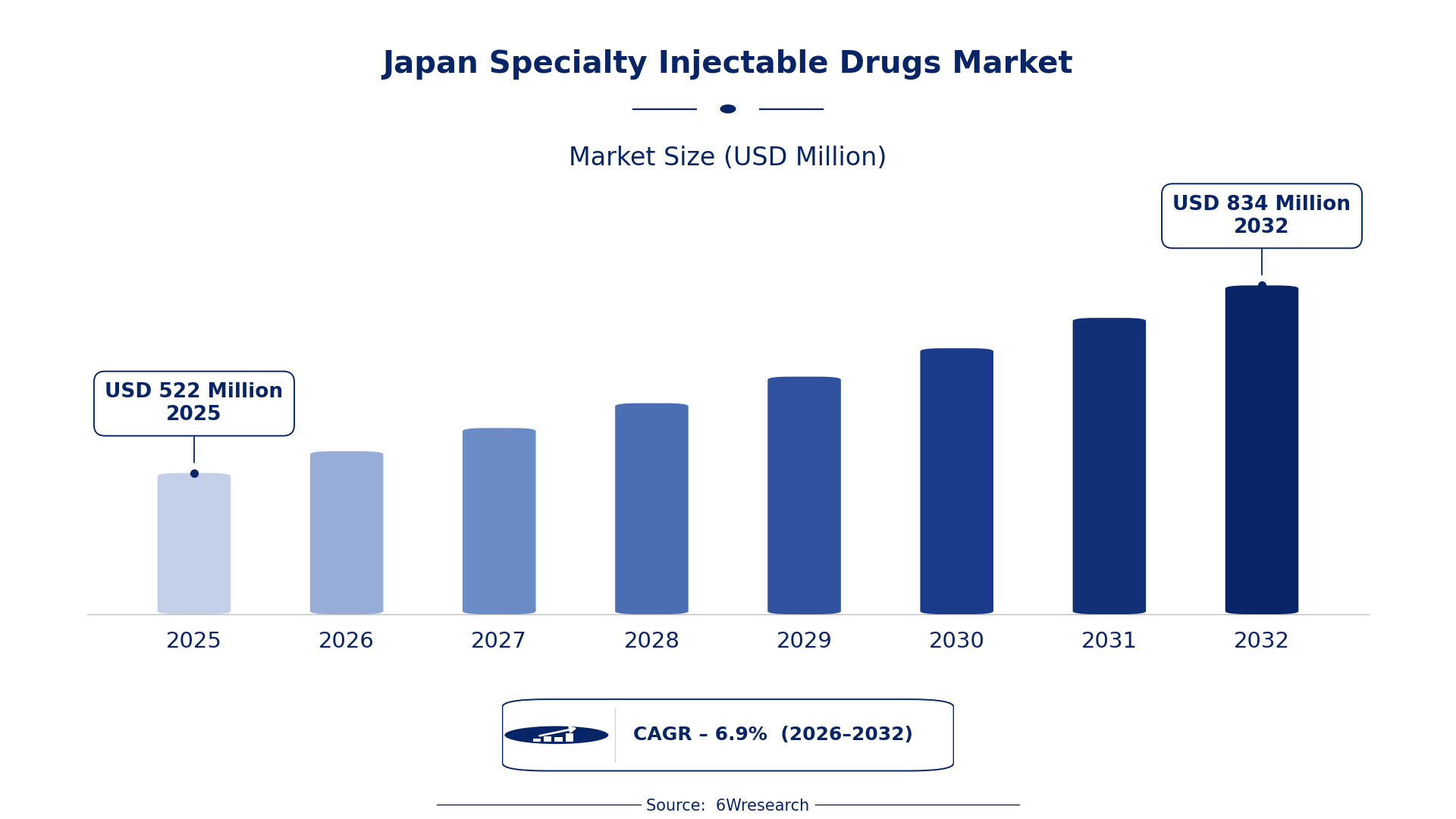
According to 6Wresearch internal database and industry insights, the Japan Specialty Injectable Drugs Market was valued at USD 522 Million in 2025 and is projected to reach USD 834 Million by 2032, growing at a CAGR of approximately 6.9% during 2026–2032.
Japan Specialty Injectable Drugs Market Highlights
| Report Metric | Details |
| Report Name | Japan Specialty Injectable Drugs Market (2026-2032) |
| Market Size 2025 | USD 522 Million |
| Market Size 2032 | USD 834 Million |
| Absolute Growth 2025–2032 | USD 312 Million |
| CAGR 2026–2032 | 6.9% |
| Peak Annual Growth | 7.4% in 2026 |
| Forecast Period | 2026–2032 |
| Historical Data | 2022–2025 |
| Base Year | 2025 |
| Leading Drug Class, 2025 | Biologics (44% share) |
| Leading Delivery Type, 2025 | IV Infusion (42% share) |
| Leading Therapy Area, 2025 | Oncology (41% share) |
| Leading End User, 2025 | Hospitals (46% share) |
| Fastest-Growing Drug Class | Hormonal Injectables (9.0% CAGR) |
| Fastest-Growing Delivery Type | Subcutaneous (9.6% CAGR) |
| Fastest-Growing Therapy Area | Endocrine Disorders (8.2% CAGR) |
| Fastest-Growing End User | Clinics (8.8% CAGR) |
| Growing Sector | Specialty Injectable Drugs |
| Key End Users | Hospitals, Clinics, Cancer Care Centers |
Japan Specialty Injectable Drugs Market Year-wise Growth Rate and Key Drivers (2022–2032)
This graph illustrates the annual growth rates of the market from 2022 to 2032, highlighting a steady upward trajectory and projected market expansion over the forecast period.
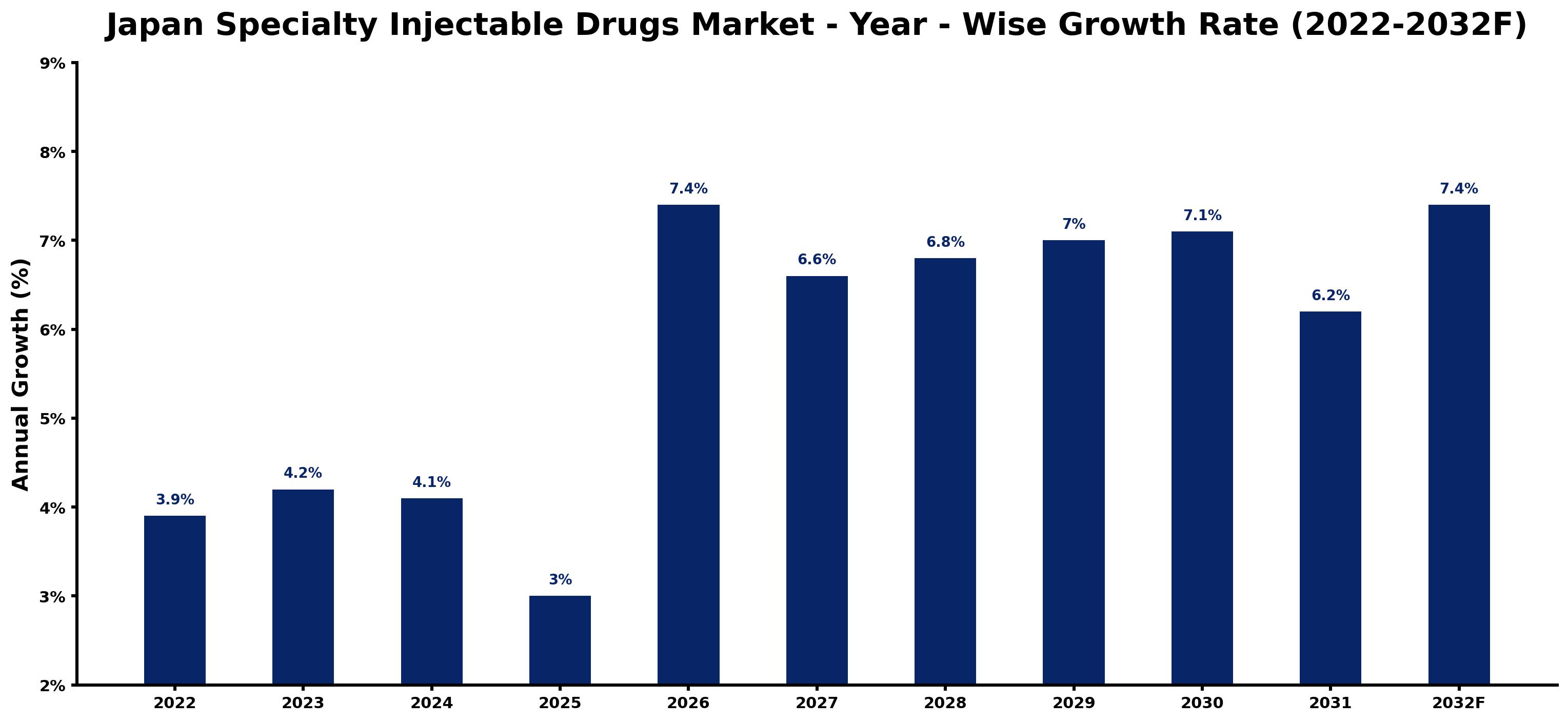
The table below sets out the estimated growth rate for each year and the main factor behind it.
| Year | Estimated Annual Growth (%) | Market Rationale |
| 2022 | 3.9 | The market experienced steady growth, supported by a strong demand for specialty injectable drugs. |
| 2023 | 4.2 | Demand increased as hospitals expanded their use of specialty injectables for various treatments. |
| 2024 | 4.1 | Growth slowed slightly as market saturation began to affect purchasing patterns. |
| 2025 | 3.0 | The market continued to grow, though at a reduced rate due to competitive pressures. |
| 2026 | 7.4 | A surge in investment in healthcare innovations is projected to lead to increased demand. |
| 2027 | 6.6 | Growth will moderate as the market adjusts to new supply chain challenges and pricing. |
| 2028 | 6.8 | Demand is expected to rise again, supported by advancements in drug formulations and delivery methods. |
| 2029 | 7.0 | The market is anticipated to expand further as patient populations requiring specialty injectables increase. |
| 2030 | 7.1 | Continued growth is projected as healthcare facilities upgrade their treatment protocols. |
| 2031 | 6.2 | The market will see a slowdown as some segments reach maturity and face saturation. |
| 2032 | 7.4 | Investment in new biologics and therapies is expected to drive renewed growth. |
Note: Market size estimations and growth projections presented in this report are based on 6Wresearch's proprietary forecasting methodology, utilizing the latest available industry data, government publications, and primary research inputs.
Japan Specialty Injectable Drugs Market Synopsis
Specialty injectable drugs are important pharmaceutical products administered via injection, primarily for complex medical conditions such as cancers and autoimmune disorders. In Japan, the healthcare sector includes approximately 8,500 hospitals that drive demand for these drugs. The government allocated ¥1 trillion in 2023 for healthcare innovations, including specialty injectables, while the increasing elderly population and prevalence of chronic illnesses further fuel demand. This combination of factors is projected to boost market growth considerably.
Market Dynamics Impact Analysis (2026–2032)
| Factor | Type | Impact | Primary Segment Affected |
| Growing elderly population increasing the prevalence of chronic conditions | Driver | High | Pain Relief Drugs |
| Rising number of cancer care centers focusing on advanced treatments | Driver | High | Anti-Cancer Injectables |
| Increasing demand for hormone replacement therapies among patients | Opportunity | High | Hormonal Injectables |
| Expansion of clinics seeking to enhance their injectable drug offerings | Opportunity | High | Clinics |
| Regulatory hurdles in drug approval processes may delay market entry | Restraint | Medium | Biologics |
| High costs associated with specialty injectable drugs limit accessibility | Restraint | High | Biologics |
| Supply chain disruptions affecting timely delivery of injectables | Challenge | High | Biologics |
| Intense competition among suppliers may lead to price wars | Challenge | Medium | Biologics |
Evaluation of Drivers in Japan Specialty Injectable Drugs Market (2026–2032)
The main growth drivers and the segments they affect most are set out below.
| Drivers | Primary Segment Affected | Why It Matters (Evidence) |
| Investment in healthcare innovations | Biologics | The Japanese government allocated ¥1 trillion in 2023 to support healthcare innovations, leading to increased demand for specialty injectable drugs. |
| Rising prevalence of chronic illnesses | Pain Relief Drugs | With an average lifespan increasing, the demand for pain relief injectables is growing, especially among the elderly population. |
| Growth in cancer care centers | Anti-Cancer Injectables | The number of cancer care centers in Japan exceeded 1,000 in 2022, increasing the demand for anti-cancer injectables. |
| Preference for subcutaneous delivery methods | Hormonal Injectables | Subcutaneous methods are gaining popularity for their convenience, prompting hospitals to increase their use of hormonal injectables. |
| Focus on oncology treatments | Oncology | The Japanese Society of Clinical Oncology promotes the use of specialty injectables, driving demand in oncology. |
The increasing prevalence of chronic illnesses, particularly among the elderly, drives higher purchases of pain relief injectables. The growth of cancer care centers in Japan is increasing demand for anti-cancer injectables. The preference for subcutaneous delivery methods is prompting hospitals to adopt more hormonal injectables. The focus on oncology treatments further supports this trend.
Evaluation of Restraints in Japan Specialty Injectable Drugs Market
The main factors holding the market back are set out below.
| Market Restraint | Primary Segment Affected | Why It Matters (Evidence) |
| High costs associated with specialty injectable drugs | Biologics | The high price of specialty injectables limits patient access, impacting overall market demand. |
| Supply chain disruptions affecting timely delivery of injectables | Biologics | Disruptions can lead to stock shortages, impacting the availability of essential drugs. |
| Intense competition among suppliers | Biologics | Price wars among suppliers can erode profit margins and affect market stability. |
| Regulatory hurdles in drug approval processes | Anti-Cancer Injectables | Stringent regulations can delay the introduction of new anti-cancer injectables, limiting market growth. |
| Limited access to specialty injectable therapies in rural areas | Hormonal Injectables | Patients in rural regions may face challenges in accessing hormonal injectables, reducing overall demand. |
Japan Specialty Injectable Drugs Market Challenges
High production costs for specialty injectables stem from complex manufacturing processes, which can delay product availability for hospitals and clinics. Price competition among suppliers in Japan compresses profit margins, resulting in a projected 15% decline in R&D investment for new drug development. Rapid technological advancements necessitate frequent upgrades to manufacturing facilities, straining budgets and extending production timelines for producers. Stringent regulatory requirements from the Japanese Pharmaceutical and Medical Devices Agency can prolong approval times by an average of six months, affecting patient access to essential therapies.
Trends in the Japan Specialty Injectable Drugs Market
Four trends stand out in the Japan Specialty Injectable Drugs Market.
- Shift in Treatment Focus Towards Chronic Illnesses: Healthcare facilities are increasingly prioritising the treatment of chronic illnesses, reflecting a shift in healthcare focus. With approximately 125 million people in Japan, the demand for specialty injectables is growing, particularly for pain relief drugs.
- Increase in Subcutaneous Delivery Methods: Subcutaneous delivery methods are becoming more popular among clinics, improving patient convenience. This trend is evident as facilities adopt these methods, with a notable increase in their usage across Japan.
- Expansion of Cancer Care Facilities: The number of cancer care centers in Japan is rising, with over 1,000 facilities focusing on advanced treatment options. This expansion is driving the demand for anti-cancer injectables significantly.
- Growing Adoption of ISO 9001 Certification: Facilities handling specialty injectables are increasingly pursuing ISO 9001 certification to ensure quality management. This trend is vital for maintaining high standards in drug administration.
Investment Opportunities in the Japan Specialty Injectable Drugs Market
Investors looking at the Japan Specialty Injectable Drugs Market should consider the following areas.
- Clinics Seeking Enhanced Injectable Offerings: Clinics are increasingly looking to expand their injectable offerings, especially in hormone therapies. With the growing elderly population, there is a significant opportunity to supply hormonal injectables, particularly in urban areas.
- Investment in Biologics Supply Chain Improvements: The recent government allocation of ¥1 trillion for healthcare innovations presents a unique opportunity to invest in biologics supply chains. Collaborating with hospitals can facilitate entry into this expanding market.
- Rising Demand for Pain Management Solutions: With the increasing average lifespan of patients with chronic illnesses, there is a growing need for pain relief injectables. Targeting hospitals and rehabilitation centres can create lucrative opportunities.
- Expansion of Oncology Treatment Options: The focus on oncology treatments is creating opportunities for suppliers of anti-cancer injectables. Partnering with cancer care centres can improve market entry and access.
Government Initiatives in the Japan Specialty Injectable Drugs Market
The NHI drug price standard, regularly revised by the Ministry of Health, Labour and Welfare, sets reimbursement prices for specialty injectables, ensuring affordability for patients and healthcare facilities. This measure directly impacts the pricing strategies of producers and the accessibility of these drugs for end-users.
In 2023, the Japanese government allocated ¥1 trillion for healthcare innovations, overseen by the Japan Agency for Medical Research and Development. This funding supports advancements in specialty injectables, improving the supply chain and enhancing patient access to essential therapies.
Future Insight of the Japan Specialty Injectable Drugs Market
The upcoming programme focused on improving the supply chain for biologics will streamline production processes, benefiting suppliers and ensuring timely delivery of specialty injectables. By 2032, innovations in delivery methods will improve patient convenience and adherence, positively affecting clinics and hospitals. The increasing focus on ISO 9001 certification will elevate quality standards across facilities, building trust among buyers. With Japan's elderly population projected to reach 38 million, the demand for pain relief injectables will create new opportunities for producers to innovate.
Market Segmentation Analysis
Japan Specialty Injectable Drugs Market report covers a detailed analysis of the following market segments:
By Drug Class – Biologics Lead, Hormonal Injectables Expected to Grow Fastest
According to Saurav Kr Singh, Senior Research Analyst at 6Wresearch, the largest drug class category in 2025 was Biologics, at 44% of revenue. Biologics hold the largest share as they are essential for treating complex medical conditions, with a significant installed base in hospitals across Japan. Their critical role in oncology and autoimmune treatments is underscored by the guidelines set forth by the Japanese Society of Clinical Oncology. Hormonal Injectables are set to record the highest CAGR in this split, 9.0% over 2026–2032. Hormonal injectables are experiencing rapid growth due to their necessity in hormone replacement therapies, particularly as the elderly population increases. The rising number of patients requiring these therapies is a key factor contributing to this segment's swift expansion. Suppliers must ensure a robust supply of hormonal injectables to meet the surging demand in the market.
By Delivery Type – IV Infusion Leads, Subcutaneous Expected to Grow Fastest
In 2025, IV Infusion led the delivery type split with a 42% share. IV infusion dominates the market because it is the standard method for delivering high doses of specialty injectables quickly, particularly in hospital settings. Many hospitals in Japan utilise IV infusion to ensure patients receive immediate and effective treatment. The quickest growth will come from Subcutaneous, forecast to expand at a CAGR of 9.6% between 2026 and 2032. The subcutaneous delivery method is gaining traction as it allows for self-administration, making it more convenient for patients. This shift towards patient-friendly administration methods is expected to accelerate the growth of this segment. Manufacturers must invest in developing and promoting subcutaneous delivery systems to cater to patient preferences.
By Therapy Area – Oncology Leads, Endocrine Disorders Expected to Grow Fastest
Oncology took 41% of therapy area revenue in 2025, more than any other category. Oncology is the leading therapy area for specialty injectables, largely driven by the high cancer prevalence and a strong focus on advanced treatment options in Japan. The presence of over 1,000 cancer care centres highlights the ongoing demand for oncology-related injectable therapies. Over 2026–2032, Endocrine Disorders are expected to post the fastest growth, at a CAGR of 8.2%. Endocrine disorders are witnessing the fastest growth as the management of hormonal therapies becomes increasingly critical with the ageing population. The rising number of patients needing these treatments is a significant factor propelling this segment forward. Providers should consider expanding their product lines to include more treatments for endocrine disorders to leverage this growing market.
By End User – Hospitals Lead, Clinics Expected to Grow Fastest
Hospitals held 46% of the Japan Specialty Injectable Drugs Market by end user in 2025. Hospitals represent the largest end user group for specialty injectable drugs, utilising them extensively for various treatments across multiple therapy areas. With around 8,500 hospitals in Japan, their substantial demand plays a pivotal role in shaping market trends. Clinics are projected to grow fastest, at a CAGR of 8.8% during 2026–2032. Clinics are rapidly increasing their administration of injectable therapies, reflecting a shift towards outpatient care that prioritises patient convenience. This trend indicates that clinics will play a more prominent role in the specialty injectable market moving forward. Suppliers should develop targeted strategies to engage clinics and ensure they have access to a comprehensive range of injectable therapies.
Key Attractiveness of the Report
- 10 Years of Market Numbers
- Historical Data Starting from 2022 to 2025
- Base Year 2025
- Forecast Data until 2032
- Key Performance Indicators Impacting the Market
- Major Upcoming Developments and Projects
Key Highlights of the Report:
- Japan Specialty Injectable Drugs Market Outlook
- Market Size of Japan Specialty Injectable Drugs Market, 2025
- Forecast of Japan Specialty Injectable Drugs Market, 2032
- Historical Data and Forecast of Japan Specialty Injectable Drugs Revenues & Volume for the Period 2022-2032F
- Japan Specialty Injectable Drugs Market Trend Evolution
- Japan Specialty Injectable Drugs Market Drivers and Challenges
- Japan Specialty Injectable Drugs Price Trends
- Japan Specialty Injectable Drugs Porter's Five Forces
- Japan Specialty Injectable Drugs Industry Life Cycle
- Historical Data and Forecast of Japan Specialty Injectable Drugs Market Revenues & Volume By Drug Class for the Period 2022-2032F
- Historical Data and Forecast of Japan Specialty Injectable Drugs Market Revenues & Volume By Biologics for the Period 2022-2032F
- Historical Data and Forecast of Japan Specialty Injectable Drugs Market Revenues & Volume By Hormonal Injectables for the Period 2022-2032F
- Historical Data and Forecast of Japan Specialty Injectable Drugs Market Revenues & Volume By Anti-Cancer Injectables for the Period 2022-2032F
- Historical Data and Forecast of Japan Specialty Injectable Drugs Market Revenues & Volume By Pain Relief Drugs for the Period 2022-2032F
- Historical Data and Forecast of Japan Specialty Injectable Drugs Market Revenues & Volume By Delivery Type for the Period 2022-2032F
- Historical Data and Forecast of Japan Specialty Injectable Drugs Market Revenues & Volume By Subcutaneous for the Period 2022-2032F
- Historical Data and Forecast of Japan Specialty Injectable Drugs Market Revenues & Volume By Intramuscular for the Period 2022-2032F
- Historical Data and Forecast of Japan Specialty Injectable Drugs Market Revenues & Volume By IV Infusion for the Period 2022-2032F
- Historical Data and Forecast of Japan Specialty Injectable Drugs Market Revenues & Volume By Depot Injections for the Period 2022-2032F
- Historical Data and Forecast of Japan Specialty Injectable Drugs Market Revenues & Volume By Therapy Area for the Period 2022-2032F
- Historical Data and Forecast of Japan Specialty Injectable Drugs Market Revenues & Volume By Autoimmune Disorders for the Period 2022-2032F
- Historical Data and Forecast of Japan Specialty Injectable Drugs Market Revenues & Volume By Endocrine Disorders for the Period 2022-2032F
- Historical Data and Forecast of Japan Specialty Injectable Drugs Market Revenues & Volume By Oncology for the Period 2022-2032F
- Historical Data and Forecast of Japan Specialty Injectable Drugs Market Revenues & Volume By Neurological Disorders for the Period 2022-2032F
- Historical Data and Forecast of Japan Specialty Injectable Drugs Market Revenues & Volume By End User for the Period 2022-2032F
- Historical Data and Forecast of Japan Specialty Injectable Drugs Market Revenues & Volume By Hospitals for the Period 2022-2032F
- Historical Data and Forecast of Japan Specialty Injectable Drugs Market Revenues & Volume By Clinics for the Period 2022-2032F
- Historical Data and Forecast of Japan Specialty Injectable Drugs Market Revenues & Volume By Cancer Care Centers for the Period 2022-2032F
- Historical Data and Forecast of Japan Specialty Injectable Drugs Market Revenues & Volume By Rehabilitation Centers for the Period 2022-2032F
- Japan Specialty Injectable Drugs Import Export Trade Statistics
- Market Opportunity Assessment By Drug Class
- Market Opportunity Assessment By Delivery Type
- Market Opportunity Assessment By Therapy Area
- Market Opportunity Assessment By End User
- Japan Specialty Injectable Drugs Top Companies Market Share
- Japan Specialty Injectable Drugs Competitive Benchmarking By Technical and Operational Parameters
- Japan Specialty Injectable Drugs Company Profiles
- Japan Specialty Injectable Drugs Key Strategic Recommendations
Market Covered
Segments analysed in this report are listed below.
By Drug Class
- Biologics
- Hormonal Injectables
- Anti-Cancer Injectables
- Pain Relief Drugs
By Delivery Type
- Subcutaneous
- Intramuscular
- IV Infusion
- Depot Injections
By Therapy Area
- Autoimmune Disorders
- Endocrine Disorders
- Oncology
- Neurological Disorders
By End User
- Hospitals
- Clinics
- Cancer Care Centers
- Rehabilitation Centers































