Japan Sport Aircraft Market Size & Growth Rate
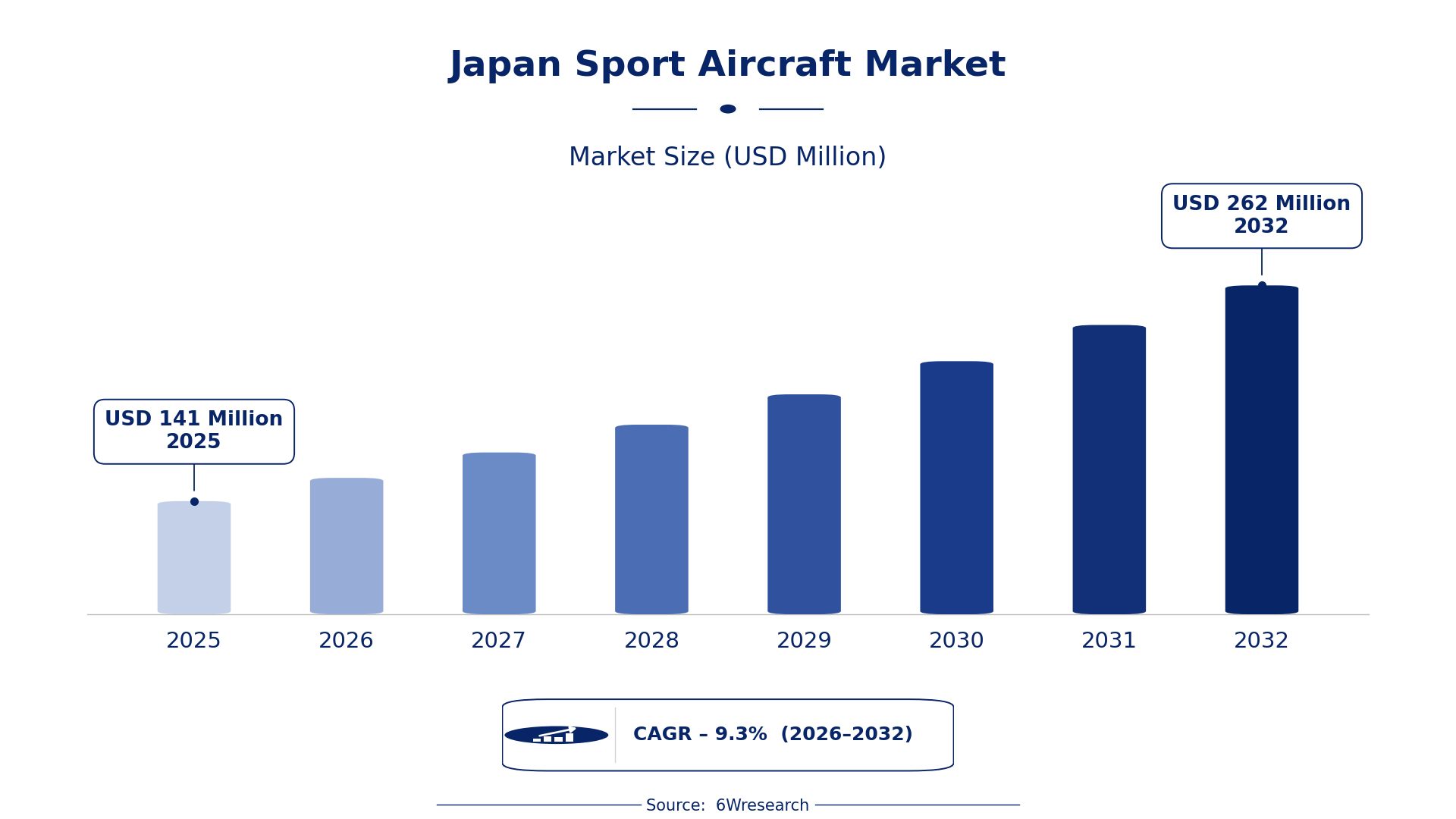
According to 6Wresearch internal database and industry insights, the Japan Sport Aircraft Market was valued at USD 141 Million in 2025 and is projected to reach USD 262 Million by 2032, growing at a CAGR of approximately 9.3% during 2026–2032.
Japan Sport Aircraft Market Highlights
| Report Metric | Details |
| Report Name | Japan Sport Aircraft Market (2026-2032) |
| Market Size 2025 | USD 141 Million |
| Market Size 2032 | USD 262 Million |
| Absolute Growth 2025–2032 | USD 121 Million |
| CAGR 2026–2032 | 9.3% |
| Peak Annual Growth | 10.0% in 2032 |
| Forecast Period | 2026–2032 |
| Historical Data | 2022–2025 |
| Base Year | 2025 |
| Leading Aircraft Type, 2025 | Light Sport Aircraft (38% share) |
| Leading Engine Type, 2025 | Piston Engine (49% share) |
| Leading Wing Configuration, 2025 | Fixed Wing (47% share) |
| Leading End User, 2025 | Private Pilots (45% share) |
| Fastest-Growing Aircraft Type | Ultralight Aircraft (13.6% CAGR) |
| Fastest-Growing Engine Type | Single Engine (13.3% CAGR) |
| Fastest-Growing Wing Configuration | High-Wing (12.0% CAGR) |
| Fastest-Growing End User | Aviation Clubs (11.9% CAGR) |
| Growing Sector | recreational flying |
| Key End Users | private pilots, aviation clubs, tourism operators, aeronautical institutions |
Japan Sport Aircraft Market Year-wise Growth Rate and Key Drivers (2022–2032)
This graph illustrates the annual growth rates of the market from 2022 to 2032, highlighting a steady upward trajectory and projected market expansion over the forecast period.
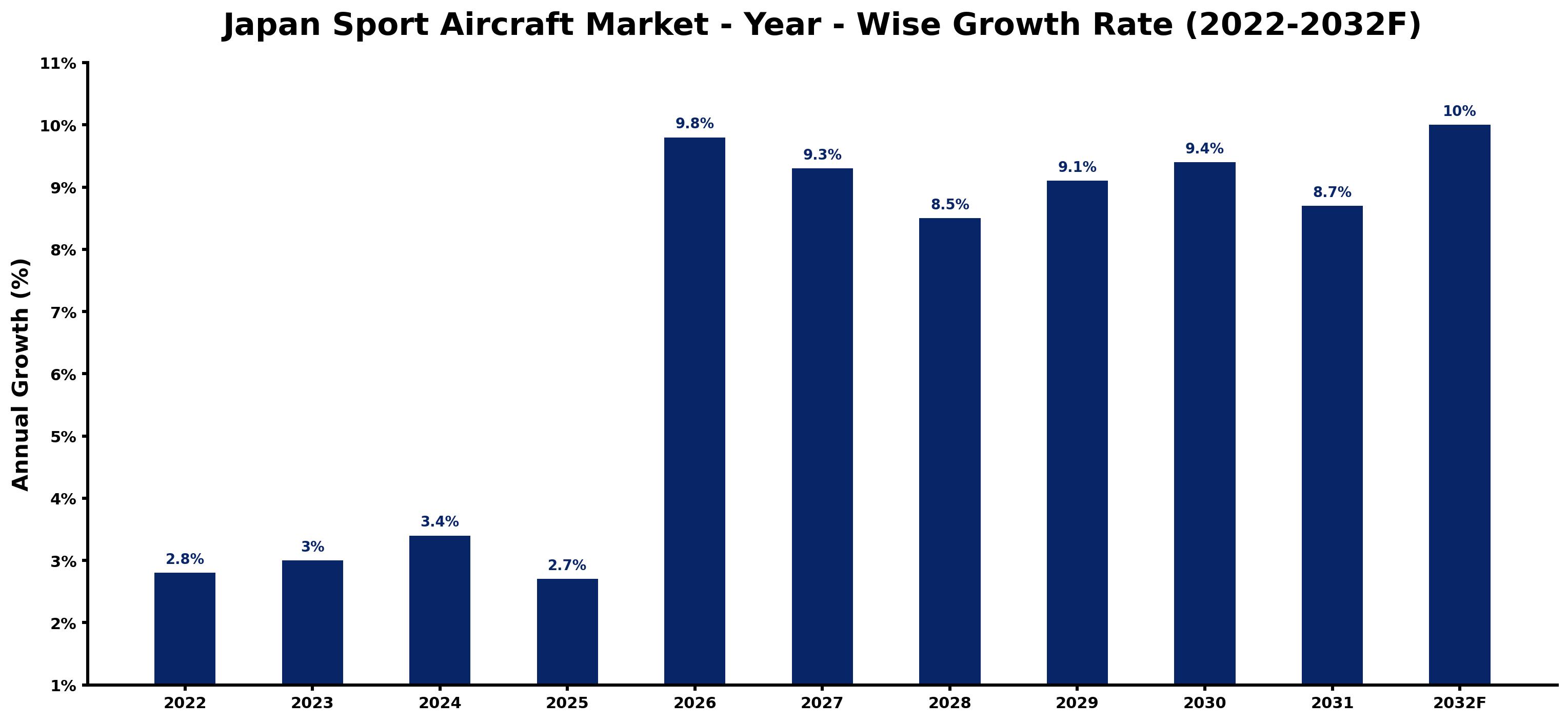
The following figures match every annual growth estimate with the main market development of that year, giving the reasoning behind each rise or slowdown.
| Year | Estimated Annual Growth (%) | Market Rationale |
| 2022 | 2.8 | The market maintained steady activity with 15,000 active private pilots. |
| 2023 | 3.0 | Demand increased as aviation clubs hosted over 50 annual events for sport flying. |
| 2024 | 3.4 | Growth was supported by a 30% rise in scenic flight bookings by tourism operators. |
| 2025 | 2.7 | The market experienced a slowdown as private pilot registrations stabilised. |
| 2026 | 9.8 | Demand surged with a growing interest in recreational flying and training. |
| 2027 | 9.3 | Aviation clubs expanded their offerings, sustaining market growth. |
| 2028 | 8.5 | Tourism initiatives boosted the appeal of aerial tours and scenic flights. |
| 2029 | 9.1 | Increased participation in aviation clubs drove demand for light sport aircraft. |
| 2030 | 9.4 | The market continued to grow as safety standards improved and attracted new pilots. |
| 2031 | 8.7 | Interest in sport aviation remained strong, with ongoing training and events. |
| 2032 | 10.0 | Demand peaked as new tourism initiatives expanded aerial tour offerings. |
Note: Market size estimations and growth projections presented in this report are based on 6Wresearch's proprietary forecasting methodology, utilizing the latest available industry data, government publications, and primary research inputs.
Japan Sport Aircraft Market Synopsis
Sport aircraft are lightweight aircraft designed for recreational flying, including light sport aircraft and ultralights. The Japan Sport Aircraft Market is experiencing growth driven by a strong base of private pilots and active aviation clubs. In 2023, there were over 200 registered light sport aircraft, and a 30% increase in scenic flight bookings has further stimulated demand. Factors such as tourism initiatives and an expanding network of aviation clubs contribute to the positive outlook for the market.
Market Dynamics Impact Analysis (2026–2032)
| Factor | Type | Impact | Primary Segment Affected |
| Growing interest in recreational flying among private pilots | Driver | High | Light Sport Aircraft |
| Increase in scenic flight bookings by tourism operators | Driver | High | Ultralight Aircraft |
| Expansion of aviation clubs in the Tokyo area | Opportunity | Medium | Aviation Clubs |
| Rising demand for flight training programs | Opportunity | Medium | Aeronautical Institutions |
| High costs associated with aircraft maintenance | Restraint | High | Gliders |
| Regulatory compliance costs for new aircraft | Restraint | Medium | Amphibious Aircraft |
| Limited availability of qualified flight instructors | Challenge | High | Private Pilots |
| Increasing competition from alternative recreational activities | Challenge | Medium | Tourism Operators |
Evaluation of Drivers in Japan Sport Aircraft Market (2026–2032)
The table below links each growth driver to the segment it affects and the evidence for it.
| Drivers | Primary Segment Affected | Why It Matters (Evidence) |
| Rising number of active private pilots | Light Sport Aircraft | The total population of registered pilots in Japan is approximately 15,000, leading to increased purchases of light sport aircraft. |
| Increase in tourism demand for aerial tours | Ultralight Aircraft | Tourism operators reported a 30% rise in scenic flight bookings, driving demand for ultralight aircraft. |
| Expansion of aviation clubs and training events | Aviation Clubs | Aviation clubs in Japan host over 50 annual events for sport flying, encouraging growth in sport aircraft usage. |
| Growing interest in flight training programs | Aeronautical Institutions | Aeronautical institutions offer specialized courses in sport aviation, attracting more individuals to pursue this field. |
| Government initiatives promoting light aircraft manufacturing | Gliders | The government has allocated funds for aviation safety improvements, increasing the supply of gliders. |
Volumes grow on the back of a rising number of active private pilots, with approximately 15,000 registered in 2023. The demand for light sport aircraft is bolstered by tourism operators reporting a 30% increase in scenic flight bookings. Aviation clubs host numerous events, which attract new participants to recreational flying.
Evaluation of Restraints in Japan Sport Aircraft Market
These restraints slow adoption and weigh on supplier margins.
| Market Restraint | Primary Segment Affected | Why It Matters (Evidence) |
| High costs associated with aircraft maintenance | Gliders | Maintenance costs for gliders can deter potential buyers, limiting market growth. |
| Regulatory compliance costs for new aircraft | Amphibious Aircraft | Compliance with aviation regulations increases costs, affecting buyer decisions. |
| Limited availability of qualified flight instructors | Private Pilots | The shortage of qualified instructors restricts training opportunities for new pilots. |
| Increasing competition from alternative recreational activities | Tourism Operators | Competition from other leisure activities can divert potential customers away from aerial tours. |
| Aging fleet of sport aircraft | Light Sport Aircraft | The average age of sport aircraft in Japan is around 15 years, which may affect safety perceptions. |
Japan Sport Aircraft Market Challenges
High marketing costs pose challenges for producers, as competition among aviation clubs forces them to invest heavily to attract members, costing thousands annually. Limited access to modern training tools restricts technology adoption, delaying pilot training and reducing the active private pilot pool, which stands at 15,000. Supply chain issues arise from dependence on imported components, extending lead times by up to six months and hindering manufacturers' ability to deliver new aircraft. Regulatory complexities from the Ministry of Land, Infrastructure, Transport and Tourism increase compliance costs for producers, stifling innovation and raising overall operational expenses.
Trends in the Japan Sport Aircraft Market
The trends below show where the Japan Sport Aircraft Market is heading.
- Shift from Traditional to Recreational Flying: In 2022, the trend towards recreational flying gained momentum, particularly among private pilots. The Tokyo area saw a rise in aviation clubs, which increased participation in sport flying events.
- Emergence of Aerial Tourism: Since 2023, aerial tourism has become a growing sector, with tourism operators reporting a 30% increase in scenic flight bookings. This trend encourages investment in light sport aircraft for scenic tours.
- Growing Popularity of Flight Training Programs: Aviation clubs have expanded their training offerings, attracting more individuals to pursue sport aviation. In 2023, the Japan Aeronautical Association held workshops for aspiring pilots, increasing training opportunities.
- Increased Focus on Safety Standards: The Japan Civil Aviation Bureau regulates all aspects of aviation safety, which is expected to drive growth in the ultralight aircraft segment as confidence among potential buyers rises.
Investment Opportunities in the Japan Sport Aircraft Market
Below are the investment opportunities with the strongest case in the Japan Sport Aircraft Market.
- Investment in Flight Training Facilities: With 15,000 active pilots, there is a strong opportunity for investment in flight training facilities. The Tokyo area, home to numerous aviation clubs, is ideal for establishing new training centres.
- Expansion of Scenic Flight Offerings: Tourism operators can capitalise on the 30% increase in scenic flight bookings by expanding their aerial tour offerings. Collaborating with local aviation clubs can improve service delivery.
- Development of Ultralight Aircraft: The ultralight aircraft segment is projected to grow significantly. Manufacturers can focus on developing new models to meet rising consumer demand in this category.
- Partnerships with Aviation Clubs: Forming partnerships with aviation clubs can facilitate access to a broader customer base. This approach is particularly relevant now as interest in recreational flying is increasing.
Government Initiatives in the Japan Sport Aircraft Market
The Water Supply Act of 1957 and the Sewerage Act of 1958 established essential standards that indirectly affect aviation through infrastructure development. More recent measures, like the Long-Term Care Insurance Act of 1997, have focused on funding support services, while the Next-Generation Medical Infrastructure Act of 2017 allows for anonymised medical data use, indirectly benefiting aeronautical research and development.
Policy affects sport aircraft buyers as the Japan Civil Aviation Bureau oversees aviation regulations, ensuring compliance with safety standards. The Japan Aeronautical Association promotes safety and training standards, hosting workshops for aspiring pilots and facilitating access to necessary certifications, benefiting both buyers and producers.
Future Insight of the Japan Sport Aircraft Market
Private pilots will benefit from enhanced training programmes by 2032, as aeronautical institutions expand their offerings to accommodate growing interest. Suppliers will see improved manufacturing efficiency due to government initiatives promoting light aircraft production. The Tokyo Metropolitan Government's tourism initiative for aerial tours will increase demand for sport aircraft, leading to investments in new models. By 2032, the total number of registered light sport aircraft is expected to exceed 300, driven by rising recreational flying and increased scenic flight bookings.
Market Segmentation Analysis
Japan Sport Aircraft Market report covers a detailed analysis of the following market segments:
By Aircraft Type – Light Sport Aircraft Leads, Ultralight Aircraft Expected to Grow Fastest
According to Saurav Kr Singh, Senior Research Analyst at 6Wresearch, Light Sport Aircraft accounted for 38% of the market by aircraft type in 2025. Light sport aircraft command the largest market share as they are widely used by private pilots for both recreational flying and training. Their presence is particularly notable in the Nagoya region, which serves as a hub for numerous aviation clubs. Ultralight Aircraft is set to record the highest CAGR in this split, 13.6% over 2026–2032. Ultralight aircraft are experiencing rapid growth due to their appeal among personal users seeking simplicity and affordability. The Japan Ultralight Aircraft Association, with over 1,000 members, highlights the increasing interest in this segment, indicating potential for further expansion. Suppliers should focus on ultralight aircraft to meet the rising demand from personal users.
By Engine Type – Piston Engine Leads, Single Engine Expected to Grow Fastest
With 49% of engine type revenue in 2025, Piston Engine was the largest category. Piston engines lead the market as they are the preferred choice for light sport aircraft, offering reliability and performance. This trend is reflected in the activities of approximately 15,000 active private pilots in Japan who utilise these engines for their flying needs. Over 2026–2032, Single Engine is expected to post the fastest growth, at a CAGR of 13.3%. Single engine types are becoming increasingly popular due to their suitability for many sport aircraft, appealing to new pilots. As more individuals aspire to become pilots, the demand for single engine aircraft is anticipated to rise significantly. Buyers should consider single engine aircraft as they gain traction among new pilots.
By Wing Configuration – Fixed Wing Leads, High-Wing Expected to Grow Fastest
The largest wing configuration category in 2025 was Fixed Wing, at 47% of revenue. Fixed wing configurations are the standard for most sport aircraft, ensuring stability and performance during flight. This design is particularly favoured by private pilots, solidifying its leading position in the market. The quickest growth will come from High-Wing, forecast to expand at a CAGR of 12.0% between 2026 and 2032. High-wing configurations are becoming increasingly sought after due to their improved visibility, appealing to pilots who prioritise sightlines during flight. The growing number of events hosted by aviation clubs suggests a rising demand for high-wing aircraft. Suppliers should consider developing high-wing models to meet the changing preferences of pilots.
By End User – Private Pilots Lead, Aviation Clubs Expected to Grow Fastest
In 2025, Private Pilots led the end user split with a 45% share. Private pilots represent the largest user group for sport aircraft, primarily using them for personal recreation and training. With around 15,000 active private pilots, their demand plays a crucial role in shaping the market. Aviation Clubs are projected to grow fastest, at a CAGR of 11.9% during 2026–2032. Aviation clubs are rapidly growing as they promote training and recreational flying, drawing in more participants to the sport. The organisation of over 50 annual events by these clubs signifies a lively community that is likely to expand further. Suppliers should connect with aviation clubs to reach the increasing number of recreational flyers.
Key Attractiveness of the Report
- 10 Years of Market Numbers
- Historical Data Starting from 2022 to 2025
- Base Year 2025
- Forecast Data until 2032
- Key Performance Indicators Impacting the Market
- Major Upcoming Developments and Projects
Key Highlights of the Report:
- Japan Sport Aircraft Market Outlook
- Market Size of Japan Sport Aircraft Market, 2025
- Forecast of Japan Sport Aircraft Market, 2032
- Historical Data and Forecast of Japan Sport Aircraft Revenues & Volume for the Period 2022-2032F
- Japan Sport Aircraft Market Trend Evolution
- Japan Sport Aircraft Market Drivers and Challenges
- Japan Sport Aircraft Price Trends
- Japan Sport Aircraft Porter's Five Forces
- Japan Sport Aircraft Industry Life Cycle
- Historical Data and Forecast of Japan Sport Aircraft Market Revenues & Volume By Aircraft Type for the Period 2022-2032F
- Historical Data and Forecast of Japan Sport Aircraft Market Revenues & Volume By Light Sport Aircraft for the Period 2022-2032F
- Historical Data and Forecast of Japan Sport Aircraft Market Revenues & Volume By Ultralight Aircraft for the Period 2022-2032F
- Historical Data and Forecast of Japan Sport Aircraft Market Revenues & Volume By Gliders for the Period 2022-2032F
- Historical Data and Forecast of Japan Sport Aircraft Market Revenues & Volume By Amphibious Aircraft for the Period 2022-2032F
- Historical Data and Forecast of Japan Sport Aircraft Market Revenues & Volume By Engine Type for the Period 2022-2032F
- Historical Data and Forecast of Japan Sport Aircraft Market Revenues & Volume By Piston Engine for the Period 2022-2032F
- Historical Data and Forecast of Japan Sport Aircraft Market Revenues & Volume By Single Engine for the Period 2022-2032F
- Historical Data and Forecast of Japan Sport Aircraft Market Revenues & Volume By Motorless/Assisted for the Period 2022-2032F
- Historical Data and Forecast of Japan Sport Aircraft Market Revenues & Volume By Dual Use (Water/Land) for the Period 2022-2032F
- Historical Data and Forecast of Japan Sport Aircraft Market Revenues & Volume By Wing Configuration for the Period 2022-2032F
- Historical Data and Forecast of Japan Sport Aircraft Market Revenues & Volume By Fixed Wing for the Period 2022-2032F
- Historical Data and Forecast of Japan Sport Aircraft Market Revenues & Volume By High-Wing for the Period 2022-2032F
- Historical Data and Forecast of Japan Sport Aircraft Market Revenues & Volume By Long Wing Span for the Period 2022-2032F
- Historical Data and Forecast of Japan Sport Aircraft Market Revenues & Volume By Convertible for the Period 2022-2032F
- Historical Data and Forecast of Japan Sport Aircraft Market Revenues & Volume By End User for the Period 2022-2032F
- Historical Data and Forecast of Japan Sport Aircraft Market Revenues & Volume By Private Pilots for the Period 2022-2032F
- Historical Data and Forecast of Japan Sport Aircraft Market Revenues & Volume By Aviation Clubs for the Period 2022-2032F
- Historical Data and Forecast of Japan Sport Aircraft Market Revenues & Volume By Aeronautical Institutions for the Period 2022-2032F
- Historical Data and Forecast of Japan Sport Aircraft Market Revenues & Volume By Tourism Operators for the Period 2022-2032F
- Japan Sport Aircraft Import Export Trade Statistics
- Market Opportunity Assessment By Aircraft Type
- Market Opportunity Assessment By Engine Type
- Market Opportunity Assessment By Wing Configuration
- Market Opportunity Assessment By End User
- Japan Sport Aircraft Top Companies Market Share
- Japan Sport Aircraft Competitive Benchmarking By Technical and Operational Parameters
- Japan Sport Aircraft Company Profiles
- Japan Sport Aircraft Key Strategic Recommendations
Market Covered
This report examines the market across the segments below.
By Aircraft Type
- Light Sport Aircraft
- Ultralight Aircraft
- Gliders
- Amphibious Aircraft
By Engine Type
- Piston Engine
- Single Engine
- Motorless/Assisted
- Dual Use (Water/Land)
By Wing Configuration
- Fixed Wing
- High-Wing
- Long Wing Span
- Convertible
By End User
- Private Pilots
- Aviation Clubs
- Aeronautical Institutions
- Tourism Operators































