Japan SSRI and SNRI Market Size & Growth Rate
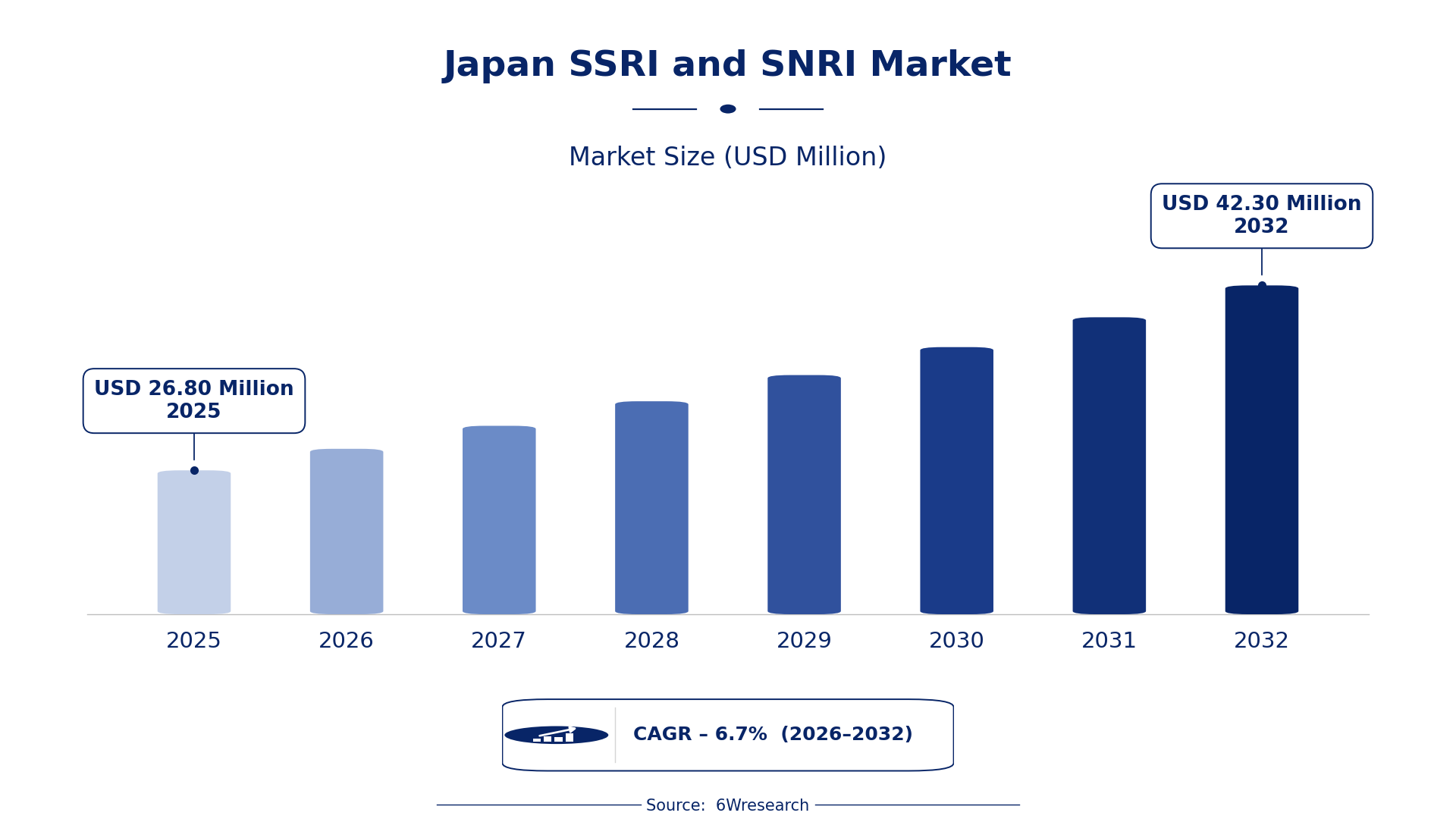
According to 6Wresearch internal database and industry insights, the Japan SSRI and SNRI Market was valued at USD 26.80 Million in 2025 and is projected to reach USD 42.30 Million by 2032, growing at a CAGR of approximately 6.7% during 2026–2032.
Japan SSRI and SNRI Market Highlights
| Report Metric | Details |
| Report Name | Japan SSRI and SNRI Market (2026-2032) |
| Market Size 2025 | USD 26.80 Million |
| Market Size 2032 | USD 42.30 Million |
| Absolute Growth 2025–2032 | USD 15.50 Million |
| CAGR 2026–2032 | 6.7% |
| Peak Annual Growth | 7.2% in 2028 |
| Forecast Period | 2026–2032 |
| Historical Data | 2022–2025 |
| Base Year | 2025 |
| Leading Drug Type, 2025 | SSRI (e.g., Fluoxetine) (44% share) |
| Leading Treatment Focus, 2025 | Depression/Anxiety (47% share) |
| Leading Administration Route, 2025 | Oral Tablets (38% share) |
| Leading End User, 2025 | Psychiatric Hospitals (41% share) |
| Fastest-Growing Drug Type | SNRI (e.g., Duloxetine) (9.5% CAGR) |
| Fastest-Growing Treatment Focus | Depression/Neuropathy (9.0% CAGR) |
| Fastest-Growing Administration Route | Oral Capsules (8.5% CAGR) |
| Fastest-Growing End User | General Practitioners (8.6% CAGR) |
| Growing Sector | Mental Health Services |
| Key End Users | Psychiatric Hospitals, General Practitioners, Mental Health Clinics |
Japan SSRI and SNRI Market Year-wise Growth Rate and Key Drivers (2022–2032)
This graph illustrates the annual growth rates of the market from 2022 to 2032, highlighting a steady upward trajectory and projected market expansion over the forecast period.
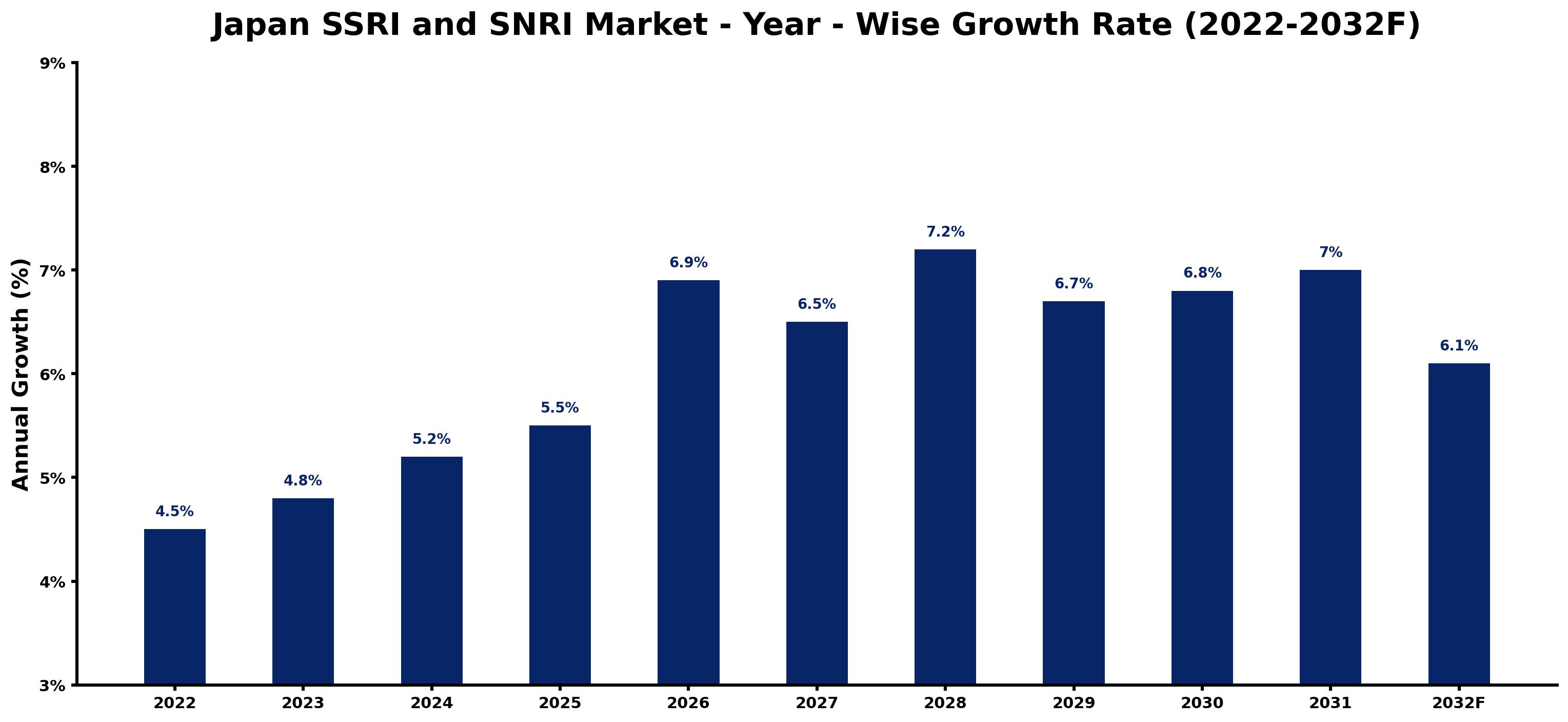
Year by year, the estimates below pair each growth rate with the development that shaped it.
| Year | Estimated Annual Growth (%) | Market Rationale |
| 2022 | 4.5 | The market showed steady growth with approximately 1.2 million patients receiving treatment for depression and anxiety. |
| 2023 | 4.8 | Awareness of mental health issues increased, leading to a rise in patient consultations. |
| 2024 | 5.2 | New treatment protocols for anxiety disorders contributed to an increase in prescriptions. |
| 2025 | 5.5 | Demand peaked as psychiatric hospitals sought more SSRIs and SNRIs for their patients. |
| 2026 | 6.9 | Growth is expected to continue as mental health initiatives enhance access to care. |
| 2027 | 6.5 | A slight slowdown is projected as the market adjusts to previous growth rates. |
| 2028 | 7.2 | Demand will surge, reaching its peak annual growth rate due to expanded mental health services. |
| 2029 | 6.7 | Growth is expected to slow as market saturation begins to take effect in urban areas. |
| 2030 | 6.8 | The aging population will drive an increase in prescriptions for mental health medications. |
| 2031 | 7.0 | Steady growth is projected as combination therapies gain acceptance among healthcare providers. |
| 2032 | 6.1 | A slowdown in growth is expected as the market stabilises after rapid expansion. |
Note: Market size estimations and growth projections presented in this report are based on 6Wresearch's proprietary forecasting methodology, utilizing the latest available industry data, government publications, and primary research inputs.
Japan SSRI and SNRI Market Synopsis
SSRIs and SNRIs are classes of medications primarily used to treat depression and anxiety disorders. In Japan, the pharmaceutical industry is active, with demand driven by hospitals, clinics, and a growing awareness of mental health issues. The Japan SSRI and SNRI Market is expanding due to increased patient consultations, new treatment protocols, and support for mental health initiatives. The Tokyo metropolitan area accounts for 30% of the total prescriptions of these medications, reflecting urban demand.
Market Dynamics Impact Analysis (2026–2032)
| Factor | Type | Impact | Primary Segment Affected |
| Increasing patient consultations for anxiety-related disorders | Driver | High | Depression/Anxiety |
| Growing adoption of combination therapy for treatment-resistant cases | Driver | High | Depression/Neuropathy |
| Rising elderly population requiring mental health medications | Opportunity | Medium | SNRI (e.g., Duloxetine) |
| Expansion of mental health clinics offering specialized care | Opportunity | Medium | Psychiatric Hospitals |
| Regulatory hurdles for new drug approvals | Restraint | High | SSRI (e.g., Fluoxetine) |
| Limited awareness of mental health issues in rural areas | Restraint | Medium | General Practitioners |
| High costs associated with mental health treatment | Challenge | High | Mental Health Clinics |
| Competition from alternative therapies and treatments | Challenge | Medium | Oral Tablets |
Evaluation of Drivers in Japan SSRI and SNRI Market (2026–2032)
Below are the drivers that matter most for revenue growth, with supporting evidence.
| Drivers | Primary Segment Affected | Why It Matters (Evidence) |
| Rising patient numbers seeking mental health treatment | Depression/Anxiety | In 2022, approximately 1.2 million patients were treated, increasing demand for SSRIs and SNRIs. |
| Increased awareness of mental health issues | Depression/Neuropathy | The prevalence of mood disorders in Japan is estimated at 7% of the adult population. |
| Support from mental health initiatives | SNRI (e.g., Duloxetine) | In 2023, a new mental health initiative aimed to improve access to psychiatric care. |
| Growing elderly population with mental health needs | Psychiatric Hospitals | The average age of patients prescribed these medications is around 45 years old. |
| Guidelines from professional associations | Oral Tablets | The Japanese Society of Psychiatry and Neurology provides guidelines for the use of SSRIs and SNRIs. |
Most of the extra volume comes from rising patient numbers seeking mental health treatment, with approximately 1.2 million patients receiving SSRIs and SNRIs in 2022. Awareness of mental health issues is growing, as the prevalence of mood disorders in Japan is estimated at 7% of the adult population. The aging population, with many patients over 45, creates additional demand for these medications. Professional guidelines increase the credibility and usage of SSRIs and SNRIs in clinical settings.
Evaluation of Restraints in Japan SSRI and SNRI Market
The following restraints limit how fast demand can grow.
| Market Restraint | Primary Segment Affected | Why It Matters (Evidence) |
| Regulatory hurdles for new drug approvals | SSRI (e.g., Fluoxetine) | The Japanese Pharmaceutical Association oversees regulations, which can delay market entry for new treatments. |
| Limited awareness of mental health issues in rural areas | General Practitioners | This lack of awareness restricts access to necessary treatments for patients in less populated regions. |
| High costs associated with mental health treatment | Mental Health Clinics | Patients often face out-of-pocket expenses, limiting their access to SSRIs and SNRIs. |
| Competition from alternative therapies and treatments | Oral Tablets | The rise of alternative therapies may divert patients away from conventional medication. |
| Insufficient funding for mental health initiatives | Psychiatric Hospitals | Budget constraints can limit the resources available for mental health services. |
Japan SSRI and SNRI Market Challenges
High costs for buyers stem from supply chain disruptions, as 30% of prescriptions come from the Tokyo metropolitan area, leading to delays in medication availability for 1.2 million patients. Skills gaps among healthcare providers hinder timely treatment, as specialised training can take months to complete, affecting patient outcomes for those around 45 years. Slow technological adoption creates barriers; new treatment protocols approved in 2023 require system updates, delaying effective therapy access for patients. Financial pressures mount for buyers, as the National Health Insurance only partially covers costs, forcing many to pay out-of-pocket for necessary medications.
Trends in the Japan SSRI and SNRI Market
Four trends stand out in the Japan SSRI and SNRI Market.
- Shift in Treatment Focus to Combination Therapy: Psychiatric hospitals are increasingly adopting combination therapy for treatment-resistant depression, with a reported 15% increase in patient consultations for anxiety-related disorders in 2023.
- Transition from Traditional to Digital Mental Health Services: Mental health clinics in urban areas are integrating digital platforms for consultations, reflecting a 30% rise in remote therapy sessions since 2022.
- Emergence of New Treatment Protocols: In 2023, new treatment protocols for anxiety disorders were approved, improving patient care and access to SSRIs and SNRIs.
- Growing Demand for Extended Release Formulations: Extended release formulations are gaining popularity, with a notable increase in prescriptions as patients seek prolonged therapeutic effects.
Investment Opportunities in the Japan SSRI and SNRI Market
Below are the investment opportunities with the strongest case in the Japan SSRI and SNRI Market.
- Elderly Population Seeking Mental Health Care: With a growing elderly population, Japan's mental health clinics are seeing a 15% increase in consultations, creating a need for more SSRIs and SNRIs.
- Expansion of Mental Health Clinics: The number of mental health clinics is increasing, with over 3,000 registered facilities in Japan, indicating a demand for medications and services.
- Investment in Digital Mental Health Solutions: The rise of digital platforms for mental health consultations presents an opportunity to supply solutions to clinics and hospitals.
- Focus on Combination Therapy: As combination therapy becomes more common, suppliers can invest in providing a wider range of treatment options for complex cases.
Government Initiatives in the Japan SSRI and SNRI Market
The Medical Care Act of 1948 established standards for hospitals and clinics, ensuring quality care in psychiatric services. This framework has evolved, with the Ministry of Health allocating ¥5 billion for mental health initiatives in 2023 to improve access and reduce stigma around mental health treatment.
In 2023, new treatment protocols for anxiety disorders were implemented, overseen by the Japanese Pharmaceutical Association. This initiative aims to improve the quality of care and ensure that patients receive appropriate medication for their conditions.
Future Insight of the Japan SSRI and SNRI Market
By 2032, hospitals will see improved patient engagement as mental health initiatives enhance access to psychiatric care, benefiting buyers needing timely treatments. Advanced treatment protocols will streamline service delivery, enabling suppliers to better meet patient demands. Increased awareness of mental health issues will lead to a 15% rise in consultations for anxiety disorders. Training programmes for healthcare practitioners will develop a more skilled workforce, ultimately elevating the quality of treatment for patients.
Market Segmentation Analysis
Japan SSRI and SNRI Market report covers a detailed analysis of the following market segments:
By Drug Type – SSRI (e.g., Fluoxetine) Leads, SNRI (e.g., Duloxetine) Expected to Grow Fastest
According to Saurav Kr Singh, Senior Research Analyst at 6Wresearch, with 44% of drug type revenue in 2025, SSRI (e.g., Fluoxetine) was the largest category. SSRIs, particularly Fluoxetine, hold the largest share due to their widespread prescription for treating depression and anxiety disorders. With approximately 1.2 million patients in Japan receiving these medications, their established efficacy contributes to their dominance in the market. SNRI (e.g., Duloxetine) is projected to grow fastest, at a CAGR of 9.5% during 2026–2032. SNRIs, such as Duloxetine, are experiencing rapid growth as they effectively address both depression and neuropathic pain, particularly in elderly patients. This dual application is increasingly recognised, leading to a notable rise in prescriptions. Suppliers should focus on expanding their offerings of SNRIs to capitalise on this growing demand.
By Treatment Focus – Depression/Anxiety Leads, Depression/Neuropathy Expected to Grow Fastest
Depression/Anxiety accounted for 47% of the market by treatment focus in 2025. Depression and Anxiety are the primary focus of treatment in mental health, with around 1.2 million patients in Japan receiving SSRIs and SNRIs. This extensive patient population solidifies the segment's leading position in the market. Depression/Neuropathy is set to record the highest CAGR in this split, 9.0% over 2026–2032. The emphasis on Depression and Neuropathy is increasing due to a growing recognition of patients with dual diagnoses, highlighted by a 15% rise in consultations for anxiety-related disorders. This trend indicates a need for more comprehensive treatment approaches. Providers must adjust their offerings to meet the increasing complexity of patient needs in mental health.
By Administration Route – Oral Tablets Lead, Oral Capsules Expected to Grow Fastest
Oral Tablets took 38% of administration route revenue in 2025, more than any other category. Oral Tablets are the most prevalent form of administration, favoured for their simplicity and familiarity among patients. This widespread acceptance ensures they maintain a significant share of the market. The quickest growth will come from Oral Capsules, forecast to expand at a CAGR of 8.5% between 2026 and 2032. Oral Capsules are experiencing rapid growth as an alternative administration method, appealing to patients who prefer varied options for medication intake. Their convenience and potential advantages are driving this segment's swift expansion. Manufacturers should explore diversifying their product lines to include more oral capsule options to meet changing patient preferences.
By End User – Psychiatric Hospitals Lead, General Practitioners Expected to Grow Fastest
The largest end user category in 2025 was Psychiatric Hospitals, at 41% of revenue. Psychiatric Hospitals serve as the primary facilities for managing severe cases, providing specialised care and intensive treatment for patients. Their established infrastructure and expertise in mental health reinforce their dominant market position. Over 2026–2032, General Practitioners are expected to post the fastest growth, at a CAGR of 8.6%. General Practitioners are witnessing the fastest growth as they serve as the first point of contact for patients, particularly following new initiatives aimed at enhancing access to psychiatric care. Their increasing involvement in mental health treatment signifies a shift towards more integrated healthcare. Suppliers should strengthen their relationships with General Practitioners to improve access to SSRIs and SNRIs.
Key Attractiveness of the Report
- 10 Years of Market Numbers
- Historical Data Starting from 2022 to 2025
- Base Year 2025
- Forecast Data until 2032
- Key Performance Indicators Impacting the Market
- Major Upcoming Developments and Projects
Key Highlights of the Report:
- Japan SSRI and SNRI Market Outlook
- Market Size of Japan SSRI and SNRI Market, 2025
- Forecast of Japan SSRI and SNRI Market, 2032
- Historical Data and Forecast of Japan SSRI and SNRI Revenues & Volume for the Period 2022-2032F
- Japan SSRI and SNRI Market Trend Evolution
- Japan SSRI and SNRI Market Drivers and Challenges
- Japan SSRI and SNRI Price Trends
- Japan SSRI and SNRI Porter's Five Forces
- Japan SSRI and SNRI Industry Life Cycle
- Historical Data and Forecast of Japan SSRI and SNRI Market Revenues & Volume By Drug Type for the Period 2022-2032F
- Historical Data and Forecast of Japan SSRI and SNRI Market Revenues & Volume By SSRI (e.g., Fluoxetine) for the Period 2022-2032F
- Historical Data and Forecast of Japan SSRI and SNRI Market Revenues & Volume By SNRI (e.g., Duloxetine) for the Period 2022-2032F
- Historical Data and Forecast of Japan SSRI and SNRI Market Revenues & Volume By Extended Release for the Period 2022-2032F
- Historical Data and Forecast of Japan SSRI and SNRI Market Revenues & Volume By Combination Therapy for the Period 2022-2032F
- Historical Data and Forecast of Japan SSRI and SNRI Market Revenues & Volume By Treatment Focus for the Period 2022-2032F
- Historical Data and Forecast of Japan SSRI and SNRI Market Revenues & Volume By Depression/Anxiety for the Period 2022-2032F
- Historical Data and Forecast of Japan SSRI and SNRI Market Revenues & Volume By Depression/Neuropathy for the Period 2022-2032F
- Historical Data and Forecast of Japan SSRI and SNRI Market Revenues & Volume By Mood Disorders for the Period 2022-2032F
- Historical Data and Forecast of Japan SSRI and SNRI Market Revenues & Volume By Anxiety & Depression for the Period 2022-2032F
- Historical Data and Forecast of Japan SSRI and SNRI Market Revenues & Volume By Administration Route for the Period 2022-2032F
- Historical Data and Forecast of Japan SSRI and SNRI Market Revenues & Volume By Oral Tablets for the Period 2022-2032F
- Historical Data and Forecast of Japan SSRI and SNRI Market Revenues & Volume By Oral Capsules for the Period 2022-2032F
- Historical Data and Forecast of Japan SSRI and SNRI Market Revenues & Volume By Daily Use for the Period 2022-2032F
- Historical Data and Forecast of Japan SSRI and SNRI Market Revenues & Volume By Prescribed Packages for the Period 2022-2032F
- Historical Data and Forecast of Japan SSRI and SNRI Market Revenues & Volume By End User for the Period 2022-2032F
- Historical Data and Forecast of Japan SSRI and SNRI Market Revenues & Volume By Psychiatric Hospitals for the Period 2022-2032F
- Historical Data and Forecast of Japan SSRI and SNRI Market Revenues & Volume By General Practitioners for the Period 2022-2032F
- Historical Data and Forecast of Japan SSRI and SNRI Market Revenues & Volume By Pharmacies for the Period 2022-2032F
- Historical Data and Forecast of Japan SSRI and SNRI Market Revenues & Volume By Mental Health Clinics for the Period 2022-2032F
- Japan SSRI and SNRI Import Export Trade Statistics
- Market Opportunity Assessment By Drug Type
- Market Opportunity Assessment By Treatment Focus
- Market Opportunity Assessment By Administration Route
- Market Opportunity Assessment By End User
- Japan SSRI and SNRI Top Companies Market Share
- Japan SSRI and SNRI Competitive Benchmarking By Technical and Operational Parameters
- Japan SSRI and SNRI Company Profiles
- Japan SSRI and SNRI Key Strategic Recommendations
Market Covered
The report covers the following segments.
By Drug Type
- SSRI (e.g., Fluoxetine)
- SNRI (e.g., Duloxetine)
- Extended Release
- Combination Therapy
By Treatment Focus
- Depression/Anxiety
- Depression/Neuropathy
- Mood Disorders
- Anxiety & Depression
By Administration Route
- Oral Tablets
- Oral Capsules
- Daily Use
- Prescribed Packages
By End User
- Psychiatric Hospitals
- General Practitioners
- Pharmacies
- Mental Health Clinics































