Japan Stem Cell Therapy for Immunodeficiencies Market Size & Growth Rate
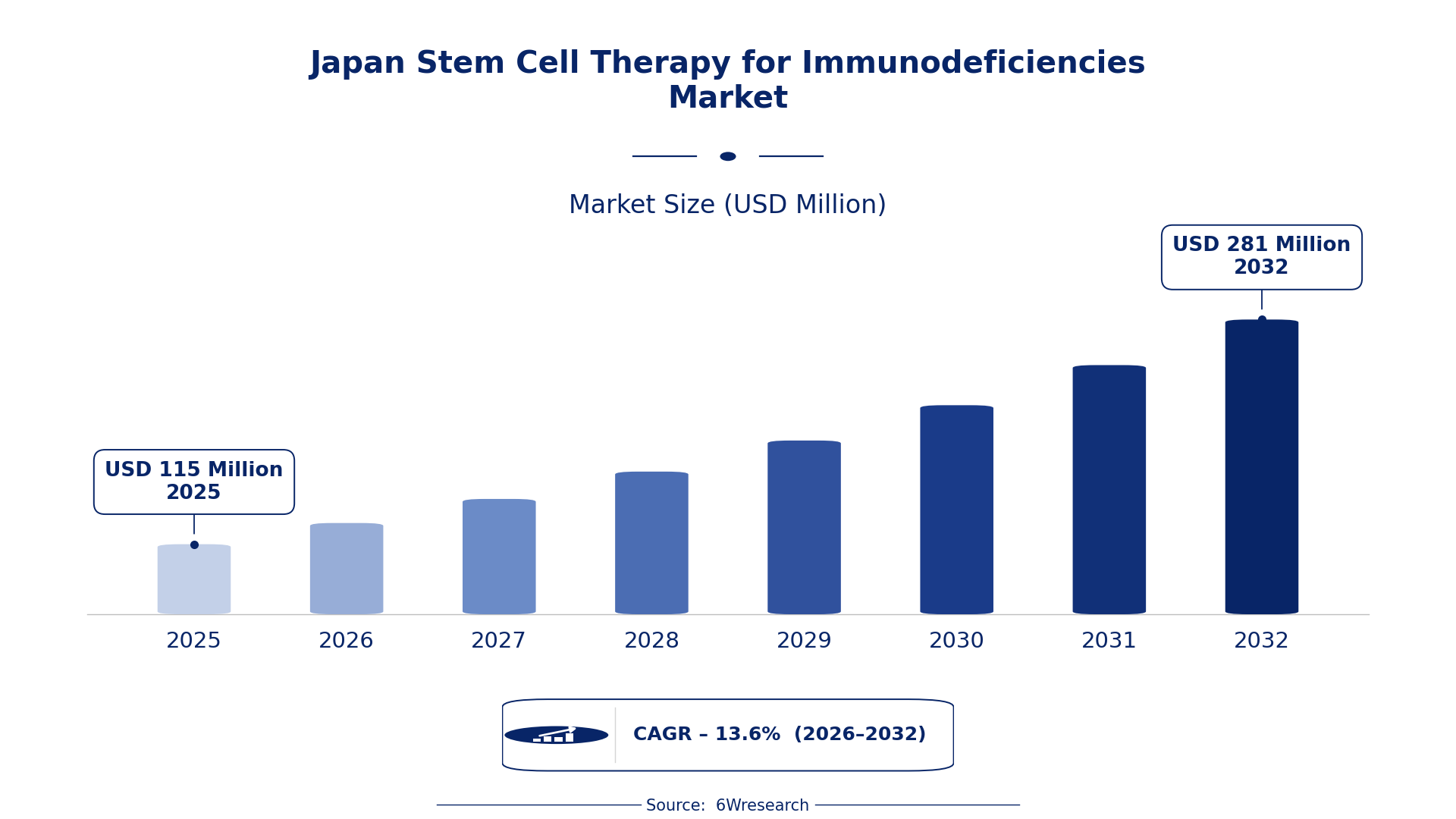
According to 6Wresearch internal database and industry insights, the Japan Stem Cell Therapy for Immunodeficiencies Market was valued at USD 115 Million in 2025 and is projected to reach USD 281 Million by 2032, growing at a CAGR of approximately 13.6% during 2026–2032.
Japan Stem Cell Therapy for Immunodeficiencies Market Highlights
| Report Metric | Details |
| Report Name | Japan Stem Cell Therapy for Immunodeficiencies Market (2026-2032) |
| Market Size 2025 | USD 115 Million |
| Market Size 2032 | USD 281 Million |
| Absolute Growth 2025–2032 | USD 166 Million |
| CAGR 2026–2032 | 13.6% |
| Peak Annual Growth | 15.6% in 2028 |
| Forecast Period | 2026–2032 |
| Historical Data | 2022–2025 |
| Base Year | 2025 |
| Leading Therapy Type, 2025 | Allogeneic Transplant (37% share) |
| Leading Cell Source, 2025 | Donor Bone Marrow (44% share) |
| Leading Delivery Method, 2025 | Intravenous Injection (39% share) |
| Leading Target Disease, 2025 | Severe Combined Immunodeficiency (SCID) (45% share) |
| Fastest-Growing Therapy Type | Autologous Transplant (19.3% CAGR) |
| Fastest-Growing Cell Source | Patient-Derived Cells (19.2% CAGR) |
| Fastest-Growing Delivery Method | Infusion (19.4% CAGR) |
| Fastest-Growing Target Disease | Primary Immunodeficiency (18.3% CAGR) |
| Growing Sector | healthcare |
| Key End Users | hospitals, specialized clinics, healthcare providers |
Japan Stem Cell Therapy for Immunodeficiencies Market Year-wise Growth Rate and Key Drivers (2022–2032)
This graph illustrates the annual growth rates of the market from 2022 to 2032, highlighting a steady upward trajectory and projected market expansion over the forecast period.
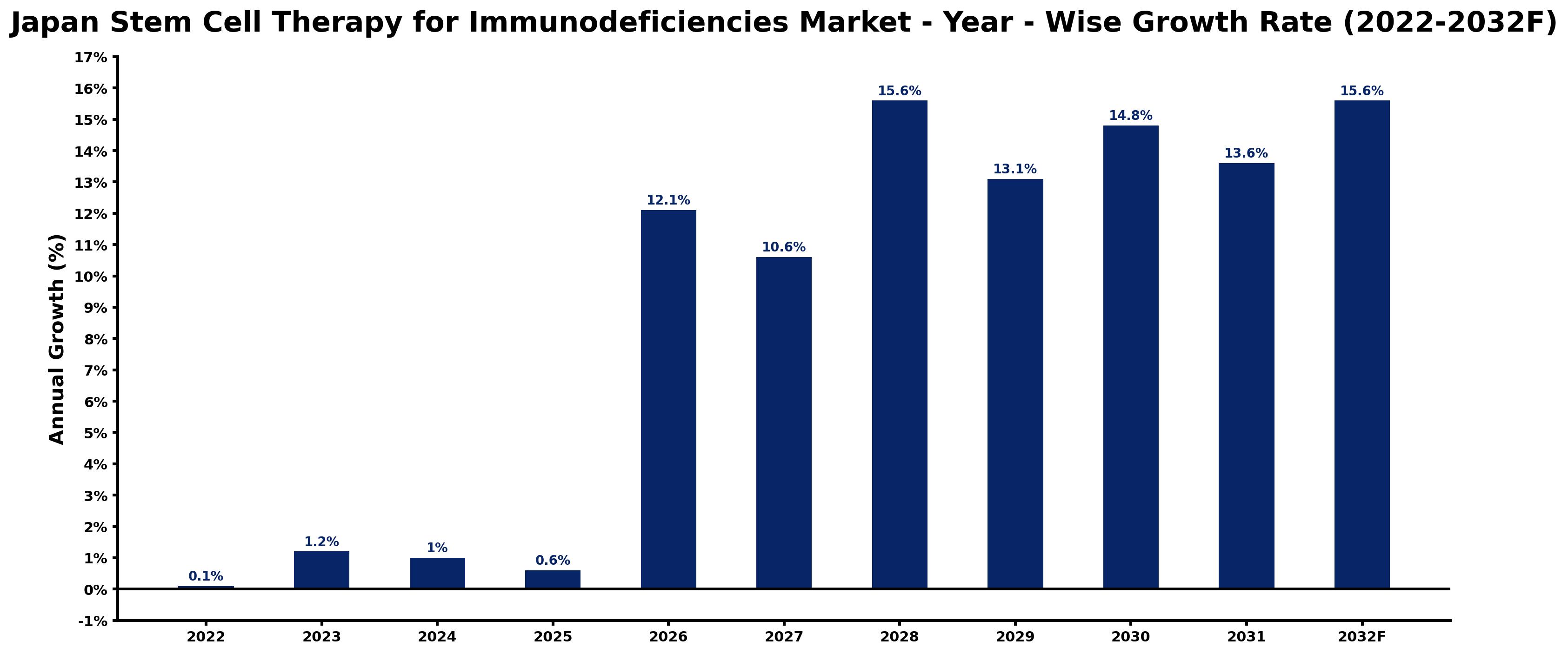
Below, each year's estimated growth is shown next to the factor that most influenced it.
| Year | Estimated Annual Growth (%) | Market Rationale |
| 2022 | 0.1 | The market experienced minimal growth as awareness of therapies was still developing. |
| 2023 | 1.2 | Growth accelerated due to increased patient awareness and hospital adoption of therapies. |
| 2024 | 1.0 | Growth slowed as the market adjusted to new treatment protocols and guidelines. |
| 2025 | 0.6 | A further slowdown occurred as hospitals focused on established therapies rather than new protocols. |
| 2026 | 12.1 | Demand surged as new protocols for genetically modified stem cells were introduced. |
| 2027 | 10.6 | Growth moderated as the market stabilised following the initial surge in demand. |
| 2028 | 15.6 | The market peaked with advancements in treatment options and patient access. |
| 2029 | 13.1 | Growth slowed slightly as the market began to mature and standardise treatment practices. |
| 2030 | 14.8 | Demand increased again as new research initiatives gained traction in clinical settings. |
| 2031 | 13.6 | Growth moderated as the market adapted to evolving treatment standards and practices. |
| 2032 | 15.6 | The market is expected to peak again as new therapies become widely accepted. |
Note: Market size estimations and growth projections presented in this report are based on 6Wresearch's proprietary forecasting methodology, utilizing the latest available industry data, government publications, and primary research inputs.
Japan Stem Cell Therapy for Immunodeficiencies Market Synopsis
Stem cell therapy for immunodeficiencies utilises stem cells to treat various immune disorders, primarily sourced from bone marrow or cord blood. This therapy is vital for conditions like severe combined immunodeficiency (SCID). In Japan, the market is expanding due to rising patient numbers and advancements in treatment protocols. Approximately 200 patients received therapy for SCID in 2022, and the government allocated ¥2 billion for stem cell research in 2023, driving further growth in this sector.
Market Dynamics Impact Analysis (2026–2032)
| Factor | Type | Impact | Primary Segment Affected |
| Increasing patient awareness and hospital adoption of stem cell therapies | Driver | High | Allogeneic Transplant |
| Growing number of accredited cord blood banks supporting treatment options | Driver | High | Cord Blood Transplant |
| Emerging demand for personalized treatment approaches in immunodeficiencies | Opportunity | High | Patient-Derived Cells |
| Expansion of clinical trials for ADA deficiency treatments across hospitals | Opportunity | High | ADA Deficiency |
| Limited public awareness about the benefits of stem cell therapies | Restraint | Medium | Primary Immunodeficiency |
| Regulatory complexities surrounding genetically modified stem cell therapies | Restraint | Medium | Genetically Modified Stem Cells |
| High costs associated with advanced stem cell treatments | Challenge | High | Autologous Transplant |
| Insufficient infrastructure for widespread stem cell therapy implementation | Challenge | High | Intravenous Injection |
Evaluation of Drivers in Japan Stem Cell Therapy for Immunodeficiencies Market (2026–2032)
The following drivers explain most of the expected growth.
| Drivers | Primary Segment Affected | Why It Matters (Evidence) |
| Rising patient numbers with primary immunodeficiency | Severe Combined Immunodeficiency (SCID) | The Japanese population with primary immunodeficiency is estimated at 1 in 10,000, increasing demand for therapies. |
| Advancements in treatment protocols for SCID | Allogeneic Transplant | In 2023, new protocols were approved, leading to greater hospital adoption of stem cell therapies. |
| Increased funding for stem cell research initiatives | Cord Blood Transplant | The government allocated ¥2 billion for stem cell research in 2023, boosting treatment capabilities. |
| Growing number of accredited cord blood banks | Cord Blood Units | Japan has over 10 accredited cord blood banks, ensuring a steady supply for transplants. |
| Expansion of clinical trials for ADA deficiency | ADA Deficiency | Clinical trials for ADA deficiency treatments are ongoing in multiple hospitals, increasing awareness and demand for new treatments. |
Several shifts outside the market lift sales. The estimated prevalence of primary immunodeficiency in Japan is 1 in 10,000, leading to increased patient numbers seeking treatment. New protocols for genetically modified stem cells were approved, encouraging hospitals to adopt advanced therapies. The presence of over 10 accredited cord blood banks ensures a steady supply, driving demand for cord blood transplants.
Evaluation of Restraints in Japan Stem Cell Therapy for Immunodeficiencies Market
The key brakes on demand, and where they bite hardest, are shown below.
| Market Restraint | Primary Segment Affected | Why It Matters (Evidence) |
| Limited public awareness about stem cell therapy benefits | Primary Immunodeficiency | Despite the estimated prevalence of 1 in 10,000, many patients remain unaware of available treatments. |
| Regulatory complexities surrounding genetically modified stem cell therapies | Genetically Modified Stem Cells | New regulations introduced in 2023 create hurdles for rapid approval and implementation. |
| High costs associated with advanced stem cell treatments | Autologous Transplant | The average treatment cost can be prohibitive, with expenses reaching ¥5 million, limiting access for many patients. |
| Insufficient infrastructure for widespread therapy implementation | Intravenous Injection | Many facilities lack the necessary resources to offer stem cell therapies effectively, affecting patient access. |
| Slow adoption of new treatment protocols by hospitals | Cord Blood Transplant | Hospitals often prefer established therapies over newer protocols, delaying patient access. |
Japan Stem Cell Therapy for Immunodeficiencies Market Challenges
Patients face delays in receiving stem cell therapies due to stringent regulations from the National Institute of Health Sciences, which can extend approval times by six months. Providers encounter high operational costs as maintaining ISO 9001 standards in processing facilities requires significant investment, reducing their financial flexibility. Technological constraints hinder the development of new therapies, with only 30% of necessary research funding currently allocated, limiting treatment options for patients. Competition intensifies among clinics as new protocols for genetically modified stem cells emerge, forcing them to increase marketing expenditures to attract patients.
Trends in the Japan Stem Cell Therapy for Immunodeficiencies Market
Four trends stand out in the Japan Stem Cell Therapy for Immunodeficiencies Market.
- Shift towards Genetically Modified Stem Cells: In 2023, new protocols for genetically modified stem cells were approved, increasing treatment options in Japan. This shift is anticipated to improve patient access and drive demand for advanced therapies.
- Growing Use of Cord Blood in Treatments: Tokyo is emerging as a major hub for cord blood collection and therapy, with over 10 accredited banks supporting treatment options. This trend is projected to boost the availability of cord blood transplants.
- Increased Focus on Clinical Trials: Since 2023, clinical trials for ADA deficiency treatments have expanded across multiple hospitals in Japan. This focus is likely to lead to more effective therapies and increased patient enrolment.
- Expansion of Stem Cell Research Initiatives: The Japanese government allocated ¥2 billion for stem cell research in 2023, promoting innovation in treatment protocols. This funding is expected to facilitate the development of new therapies.
Investment Opportunities in the Japan Stem Cell Therapy for Immunodeficiencies Market
Several openings in the Japan Stem Cell Therapy for Immunodeficiencies Market merit attention from investors.
- Tokyo as a Hub for Stem Cell Research: Tokyo is a major centre for stem cell research, with ongoing initiatives to improve treatment options. The government allocated ¥2 billion for research in 2023, creating opportunities for collaboration.
- Investment in Patient-Derived Cells: The growing demand for personalized treatment approaches presents opportunities for investment in patient-derived cells. Hospitals are increasingly adopting these therapies to cater to individual patient needs.
- Expansion of Cord Blood Banks: With over 10 accredited cord blood banks, there is an opportunity to expand collection and processing facilities. Partnering with local health institutions can improve accessibility to therapies.
- Focus on ADA Deficiency Treatments: The ongoing clinical trials for ADA deficiency treatments represent a key investment opportunity. Collaborating with hospitals involved in these trials can facilitate entry into the market.
Government Initiatives in the Japan Stem Cell Therapy for Immunodeficiencies Market
The NHI drug price standard, revised regularly, sets reimbursement prices for stem cell therapies, ensuring that patients can access necessary treatments without prohibitive costs. This framework supports healthcare providers in offering advanced therapies while maintaining affordability for patients.
The Japan Agency for Medical Research and Development funds various stem cell research initiatives, promoting the development of new therapies. Hospitals involved in these initiatives benefit from financial support, allowing them to implement advanced treatments more effectively.
Future Insight of the Japan Stem Cell Therapy for Immunodeficiencies Market
Policy changes will enhance access to stem cell therapies, benefiting hospitals and clinics. Government investments in stem cell research will catalyse advancements in treatment options. Streamlined approval processes will allow suppliers to introduce therapies more swiftly. Increased collaboration among research institutions, including the Japan Agency for Medical Research and Development, will facilitate breakthroughs in methodologies, ultimately improving patient care.
Market Segmentation Analysis
Japan Stem Cell Therapy for Immunodeficiencies Market report covers a detailed analysis of the following market segments:
By Therapy Type – Allogeneic Transplant Leads, Autologous Transplant Expected to Grow Fastest
According to Saurav Kr Singh, Senior Research Analyst at 6Wresearch, Allogeneic Transplant held 37% of the Japan Stem Cell Therapy for Immunodeficiencies Market by therapy type in 2025. Allogeneic transplants are preferred for treating severe combined immunodeficiency and other immunodeficiencies, thanks to established protocols and a strong clinical foundation. In Japan, over 50% of stem cell transplants are allogeneic, indicating widespread acceptance among healthcare providers. Autologous Transplant is set to record the highest CAGR in this split, 19.3% over 2026–2032. The autologous transplant segment is rapidly expanding as it provides personalised treatment options, appealing to both patients and clinicians. With ongoing clinical trials and advancements in technology, the demand for therapies derived from patient cells is expected to increase significantly. Suppliers should focus on enhancing their offerings in autologous transplants to meet the growing demand.
By Cell Source – Donor Bone Marrow Leads, Patient-Derived Cells Expected to Grow Fastest
In 2025, Donor Bone Marrow led the cell source split with a 44% share. Donor bone marrow serves as the primary source for stem cell transplants, particularly for treating severe combined immunodeficiency. The established network of accredited cord blood banks and the support from the Japan Society of Hematology further solidify its leading position. Over 2026–2032, Patient-Derived Cells are expected to post the fastest growth, at a CAGR of 19.2%. Patient-derived cells are gaining traction as they provide tailored treatment solutions, which are increasingly preferred by patients. The ongoing research initiatives and government support for personalised therapies are likely to accelerate this segment's growth. Buyers may benefit from exploring options involving patient-derived cells for more customised treatment experiences.
By Delivery Method – Intravenous Injection Leads, Infusion Expected to Grow Fastest
Intravenous Injection accounted for 39% of the market by delivery method in 2025. Intravenous injection is the most common method for administering stem cell therapies, ensuring efficient delivery and high patient compliance. Its extensive use in clinical practice solidifies its position as the leading delivery method in Japan. Infusion is projected to grow fastest, at a CAGR of 19.4% during 2026–2032. Infusion is becoming increasingly popular due to its potential to enhance patient comfort and improve therapeutic outcomes. As more healthcare facilities adopt this method, its growth rate is projected to rise significantly. Suppliers should consider investing in infusion technologies to align with the shifting preferences in delivery methods.
By Target Disease – Severe Combined Immunodeficiency (SCID) Leads, Primary Immunodeficiency Expected to Grow Fastest
With 45% of target disease revenue in 2025, Severe Combined Immunodeficiency (SCID) was the largest category. Severe combined immunodeficiency (SCID) is the primary focus for stem cell therapies, with approximately 200 patients receiving treatment annually in Japan. This focus is reinforced by guidelines from the Japan Society of Hematology, ensuring a robust market for SCID therapies. The quickest growth will come from Primary Immunodeficiency, forecast to expand at a CAGR of 18.3% between 2026 and 2032. The primary immunodeficiency segment is experiencing rapid growth as awareness and diagnosis of these conditions improve. With an estimated prevalence of 1 in 10,000 in the Japanese population, the demand for treatments is likely to increase. Suppliers should prepare for heightened demand in therapies targeting primary immunodeficiencies as awareness continues to grow.
Key Attractiveness of the Report
- 10 Years of Market Numbers
- Historical Data Starting from 2022 to 2025
- Base Year 2025
- Forecast Data until 2032
- Key Performance Indicators Impacting the Market
- Major Upcoming Developments and Projects
Key Highlights of the Report:
- Japan Stem Cell Therapy for Immunodeficiencies Market Outlook
- Market Size of Japan Stem Cell Therapy for Immunodeficiencies Market, 2025
- Forecast of Japan Stem Cell Therapy for Immunodeficiencies Market, 2032
- Historical Data and Forecast of Japan Stem Cell Therapy for Immunodeficiencies Revenues & Volume for the Period 2022-2032F
- Japan Stem Cell Therapy for Immunodeficiencies Market Trend Evolution
- Japan Stem Cell Therapy for Immunodeficiencies Market Drivers and Challenges
- Japan Stem Cell Therapy for Immunodeficiencies Price Trends
- Japan Stem Cell Therapy for Immunodeficiencies Porter's Five Forces
- Japan Stem Cell Therapy for Immunodeficiencies Industry Life Cycle
- Historical Data and Forecast of Japan Stem Cell Therapy for Immunodeficiencies Market Revenues & Volume By Therapy Type for the Period 2022-2032F
- Historical Data and Forecast of Japan Stem Cell Therapy for Immunodeficiencies Market Revenues & Volume By Allogeneic Transplant for the Period 2022-2032F
- Historical Data and Forecast of Japan Stem Cell Therapy for Immunodeficiencies Market Revenues & Volume By Autologous Transplant for the Period 2022-2032F
- Historical Data and Forecast of Japan Stem Cell Therapy for Immunodeficiencies Market Revenues & Volume By Cord Blood Transplant for the Period 2022-2032F
- Historical Data and Forecast of Japan Stem Cell Therapy for Immunodeficiencies Market Revenues & Volume By Genetically Modified Stem Cells for the Period 2022-2032F
- Historical Data and Forecast of Japan Stem Cell Therapy for Immunodeficiencies Market Revenues & Volume By Cell Source for the Period 2022-2032F
- Historical Data and Forecast of Japan Stem Cell Therapy for Immunodeficiencies Market Revenues & Volume By Donor Bone Marrow for the Period 2022-2032F
- Historical Data and Forecast of Japan Stem Cell Therapy for Immunodeficiencies Market Revenues & Volume By Patient-Derived Cells for the Period 2022-2032F
- Historical Data and Forecast of Japan Stem Cell Therapy for Immunodeficiencies Market Revenues & Volume By Cord Blood Units for the Period 2022-2032F
- Historical Data and Forecast of Japan Stem Cell Therapy for Immunodeficiencies Market Revenues & Volume By Edited Stem Cells for the Period 2022-2032F
- Historical Data and Forecast of Japan Stem Cell Therapy for Immunodeficiencies Market Revenues & Volume By Delivery Method for the Period 2022-2032F
- Historical Data and Forecast of Japan Stem Cell Therapy for Immunodeficiencies Market Revenues & Volume By Intravenous Injection for the Period 2022-2032F
- Historical Data and Forecast of Japan Stem Cell Therapy for Immunodeficiencies Market Revenues & Volume By Infusion for the Period 2022-2032F
- Historical Data and Forecast of Japan Stem Cell Therapy for Immunodeficiencies Market Revenues & Volume By Central Line Delivery for the Period 2022-2032F
- Historical Data and Forecast of Japan Stem Cell Therapy for Immunodeficiencies Market Revenues & Volume By Targeted Delivery for the Period 2022-2032F
- Historical Data and Forecast of Japan Stem Cell Therapy for Immunodeficiencies Market Revenues & Volume By Target Disease for the Period 2022-2032F
- Historical Data and Forecast of Japan Stem Cell Therapy for Immunodeficiencies Market Revenues & Volume By Severe Combined Immunodeficiency (SCID) for the Period 2022-2032F
- Historical Data and Forecast of Japan Stem Cell Therapy for Immunodeficiencies Market Revenues & Volume By Primary Immunodeficiency for the Period 2022-2032F
- Historical Data and Forecast of Japan Stem Cell Therapy for Immunodeficiencies Market Revenues & Volume By Congenital Immune Disorders for the Period 2022-2032F
- Historical Data and Forecast of Japan Stem Cell Therapy for Immunodeficiencies Market Revenues & Volume By ADA Deficiency for the Period 2022-2032F
- Japan Stem Cell Therapy for Immunodeficiencies Import Export Trade Statistics
- Market Opportunity Assessment By Therapy Type
- Market Opportunity Assessment By Cell Source
- Market Opportunity Assessment By Delivery Method
- Market Opportunity Assessment By Target Disease
- Japan Stem Cell Therapy for Immunodeficiencies Top Companies Market Share
- Japan Stem Cell Therapy for Immunodeficiencies Competitive Benchmarking By Technical and Operational Parameters
- Japan Stem Cell Therapy for Immunodeficiencies Company Profiles
- Japan Stem Cell Therapy for Immunodeficiencies Key Strategic Recommendations
Market Covered
Coverage by segment is as follows.
By Therapy Type
- Allogeneic Transplant
- Autologous Transplant
- Cord Blood Transplant
- Genetically Modified Stem Cells
By Cell Source
- Donor Bone Marrow
- Patient-Derived Cells
- Cord Blood Units
- Edited Stem Cells
By Delivery Method
- Intravenous Injection
- Infusion
- Central Line Delivery
- Targeted Delivery
By Target Disease
- Severe Combined Immunodeficiency (SCID)
- Primary Immunodeficiency
- Congenital Immune Disorders
- ADA Deficiency































