Japan Stent Systems Market Size & Growth Rate
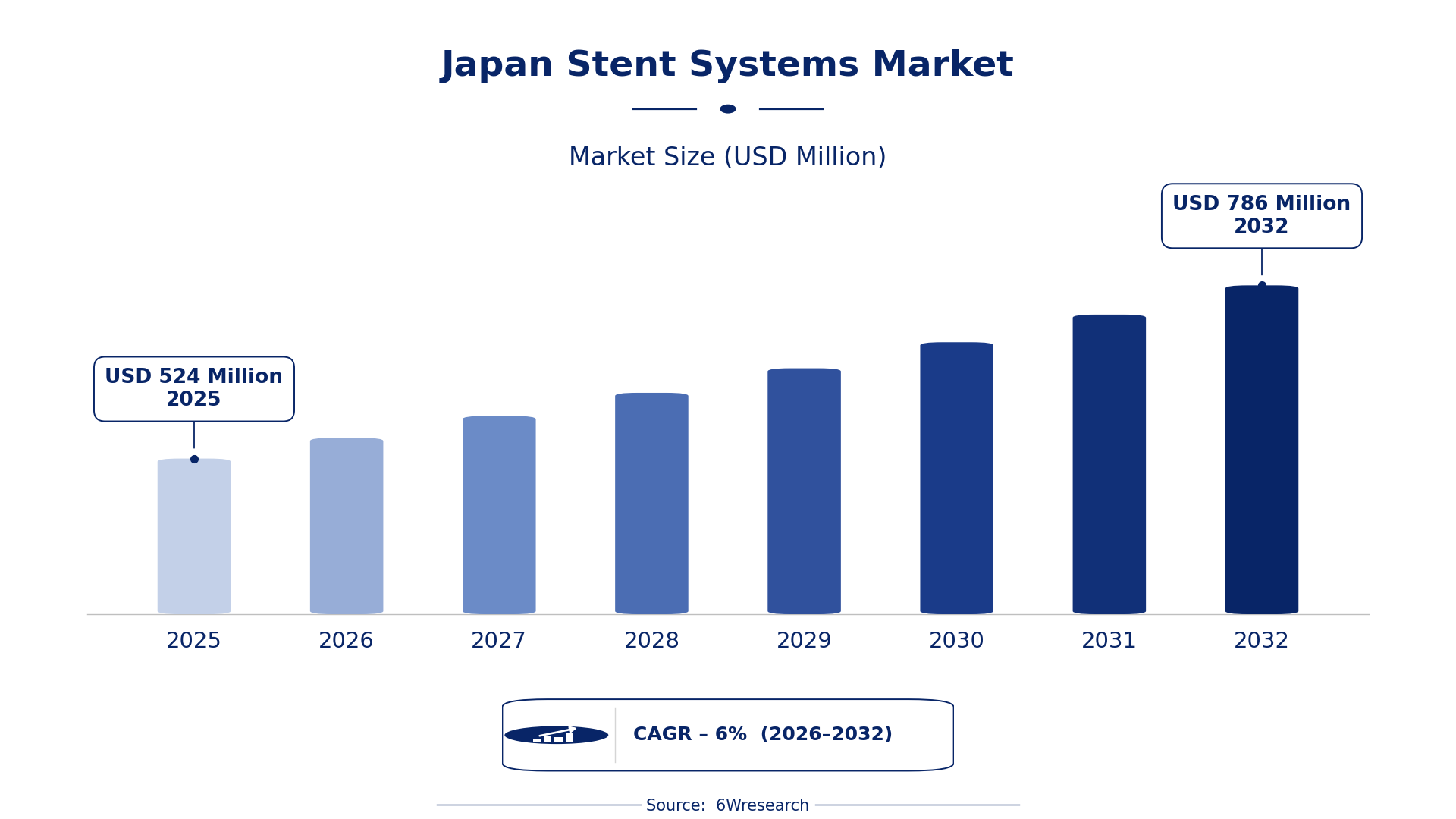
According to 6Wresearch internal database and industry insights, the Japan Stent Systems Market was valued at USD 524 Million in 2025 and is projected to reach USD 786 Million by 2032, growing at a CAGR of approximately 6% during 2026–2032.
Japan Stent Systems Market Highlights
| Report Metric | Details |
| Report Name | Japan Stent Systems Market (2026-2032) |
| Market Size 2025 | USD 524 Million |
| Market Size 2032 | USD 786 Million |
| Absolute Growth 2025–2032 | USD 262 Million |
| CAGR 2026–2032 | 6% |
| Peak Annual Growth | 6.8% in 2032 |
| Forecast Period | 2026–2032 |
| Historical Data | 2022–2025 |
| Base Year | 2025 |
| Leading System Type, 2025 | Balloon Expandable (42% share) |
| Leading Technology Type, 2025 | Drug-Coated (37% share) |
| Leading Implant Site, 2025 | Coronary Arteries (41% share) |
| Leading End User, 2025 | Interventional Cardiologists (36% share) |
| Fastest-Growing System Type | Self-Expanding Systems (8.5% CAGR) |
| Fastest-Growing Technology Type | Bare Metal (8.7% CAGR) |
| Fastest-Growing Implant Site | Peripheral Arteries (7.8% CAGR) |
| Fastest-Growing End User | Vascular Surgeons (7.9% CAGR) |
| Growing Sector | Cardiovascular interventions |
| Key End Users | Hospitals, Interventional Cardiologists, Nephrology Departments, Vascular Surgeons |
Japan Stent Systems Market Year-wise Growth Rate and Key Drivers (2022–2032)
This graph illustrates the annual growth rates of the market from 2022 to 2032, highlighting a steady upward trajectory and projected market expansion over the forecast period.
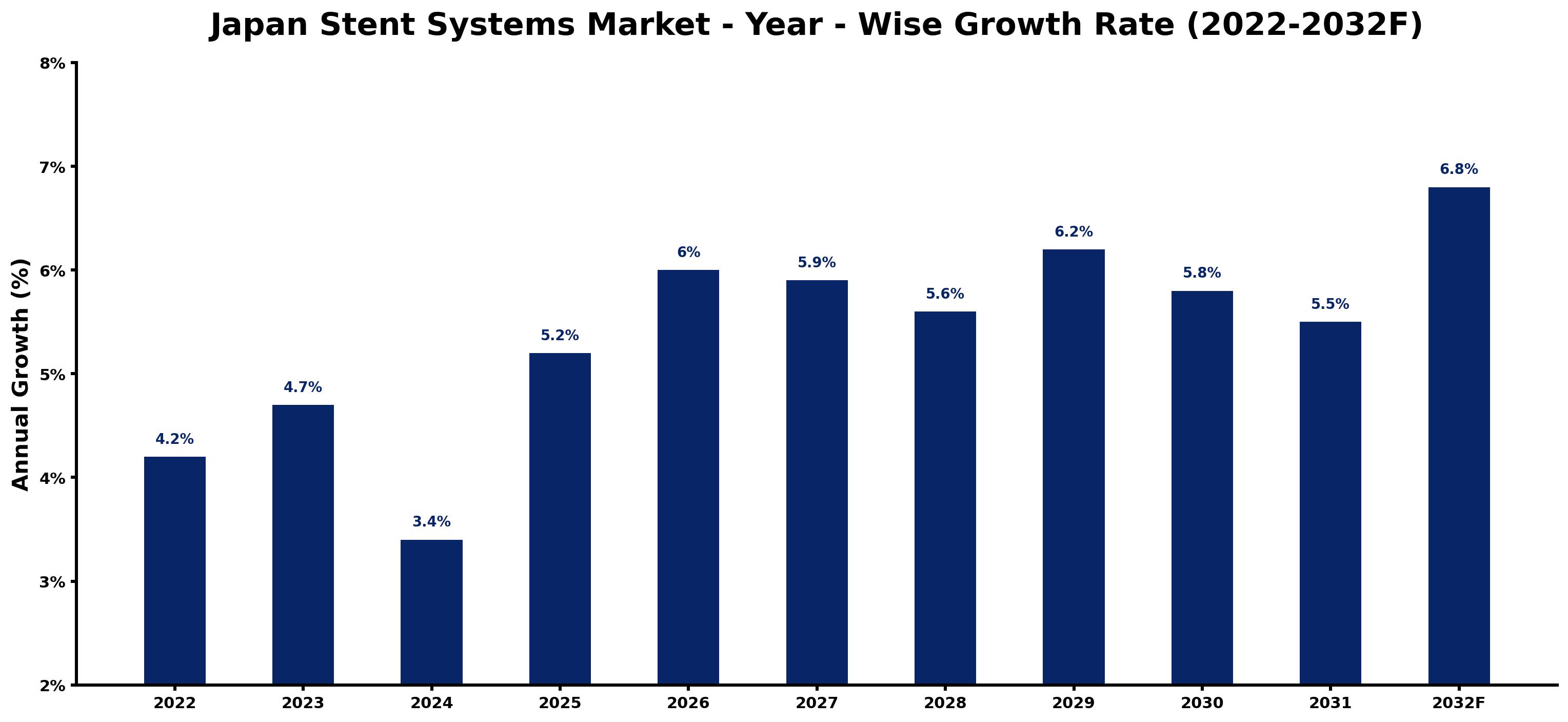
The following figures match every annual growth estimate with the main market development of that year, giving the reasoning behind each rise or slowdown.
| Year | Estimated Annual Growth (%) | Market Rationale |
| 2022 | 4.2 | The market showed steady growth, reflecting ongoing demand for stent systems in healthcare. |
| 2023 | 4.7 | Growth accelerated due to increasing coronary interventions and advancements in stent technology. |
| 2024 | 3.4 | Growth slowed as market saturation began to impact new stent adoption rates. |
| 2025 | 5.2 | The introduction of new drug-coated stents spurred faster growth in the market. |
| 2026 | 6.0 | Demand is expected to increase as hospitals expand cardiovascular treatment capabilities and facilities. |
| 2027 | 5.9 | Growth is projected to slow slightly as competition intensifies among stent manufacturers. |
| 2028 | 5.6 | Market expansion is expected to continue, driven by a rising elderly population requiring interventions. |
| 2029 | 6.2 | Demand will surge with technological advancements in stent systems improving patient outcomes. |
| 2030 | 5.8 | Growth is projected to slow as the market matures and new entrants face established competition. |
| 2031 | 5.5 | The market will maintain growth due to an increase in renal interventions and stent applications. |
| 2032 | 6.8 | The peak growth rate will be attributed to heightened awareness and education on cardiovascular health. |
Note: Market size estimations and growth projections presented in this report are based on 6Wresearch's proprietary forecasting methodology, utilizing the latest available industry data, government publications, and primary research inputs.
Japan Stent Systems Market Synopsis
Stent systems are medical devices designed to treat narrowed arteries, primarily made from metal or polymer and often drug-coated to prevent restenosis. The Japan Stent Systems Market is growing due to a high volume of coronary interventions, with over 100,000 procedures performed annually. Key buyers include hospitals and medical facilities, especially in regions like Tokyo, which accounts for 30% of stent procedures. An ageing population and advancements in stent technology are driving market expansion, with drug-coated stents making up a substantial share of the market.
Market Dynamics Impact Analysis (2026–2032)
| Factor | Type | Impact | Primary Segment Affected |
| Increasing number of coronary interventions annually | Driver | High | Balloon Expandable |
| Technological advancements in stent systems | Driver | High | Drug-Coated |
| Growing elderly population requiring stent procedures | Opportunity | High | Coronary Arteries |
| Expansion of interventional cardiology training programs | Opportunity | Medium | Interventional Cardiologists |
| Market saturation in urban areas | Restraint | High | Self-Expanding Systems |
| High costs associated with advanced stent technologies | Restraint | Medium | Drug-Coated |
| Regulatory compliance challenges for new entrants | Challenge | High | Covered Stent Systems |
| Limited manufacturing capacity for specialized stents | Challenge | Medium | Renal Artery Systems |
Evaluation of Drivers in Japan Stent Systems Market (2026–2032)
The factors lifting demand, and the evidence behind each, are summarised below.
| Drivers | Primary Segment Affected | Why It Matters (Evidence) |
| High volume of coronary interventions | Balloon Expandable | With over 100,000 procedures annually, hospitals are increasingly purchasing balloon expandable stents to meet demand. |
| Rising adoption of drug-coated stents | Drug-Coated | Representing 70% of the market, hospitals prefer these for their effectiveness in preventing restenosis. |
| Technological improvements in stent designs | Self-Expanding Systems | Innovations in design encourage hospitals to invest in these systems. |
| Growing focus on cardiovascular health education | Coronary Arteries | Awareness campaigns by medical associations drive higher demand for stent procedures. |
| Increased funding for cardiovascular research | Nephrology Departments | In 2023, ¥5 billion was allocated for research, boosting the development of renal stents. |
Purchasing is picking up as hospitals respond to the high volume of coronary interventions, with over 100,000 procedures performed annually. The preference for drug-coated stents drives demand as they effectively prevent restenosis, representing a large portion of the market. Enhanced designs encourage hospitals to invest in advanced systems. Increased focus on cardiovascular health education raises awareness, leading to higher demand for stent procedures. Funding for cardiovascular research, amounting to ¥5 billion in 2023, supports the development of renal stents, further boosting market growth.
Evaluation of Restraints in Japan Stent Systems Market
The main factors holding the market back are set out below.
| Market Restraint | Primary Segment Affected | Why It Matters (Evidence) |
| Market saturation in urban areas limits growth potential | Self-Expanding Systems | In regions like Tokyo, high competition reduces the ability to introduce new products. |
| High costs of advanced stent technologies deter some hospitals | Drug-Coated | Budget constraints in healthcare facilities limit their ability to invest in expensive options. |
| Regulatory compliance challenges for new entrants slow market access | Covered Stent Systems | Stringent regulations create barriers for companies trying to introduce new stent types. |
| Limited availability of specialized manufacturing capacity | Renal Artery Systems | Manufacturers face challenges in scaling production for niche stent applications. |
| Inconsistent reimbursement policies affect purchasing decisions | Balloon Expandable | Variability in insurance coverage leads to uncertainty in hospital procurement strategies. |
Japan Stent Systems Market Challenges
In Japan, lengthy approval processes for medical devices often delay the introduction of new stent systems, causing hospitals to face procurement delays that can extend patient wait times by up to 20%. Intense competition among suppliers drives down prices, leading some producers to compromise on quality, which can increase complications for patients. Buyers, particularly hospitals, encounter high costs for advanced drug-coated stents, which constitute 70% of the market, straining their budgets. A shortage of skilled interventional cardiologists creates bottlenecks in procedure availability, limiting timely access to treatments for patients.
Trends in the Japan Stent Systems Market
Several trends are reshaping the Japan Stent Systems Market; the most important are set out below.
- Shift from Bare Metal to Drug-Coated Stents: Since 2022, hospitals have increasingly adopted drug-coated stents, which now represent a large portion of the market. This shift improves patient outcomes and reduces the risk of restenosis, prompting hospitals to invest more in these options.
- Transition towards Self-Expanding Systems: Interventional cardiologists are increasingly favouring self-expanding stents for peripheral artery treatments, reflecting a growing trend in their use. This segment is projected to grow at a CAGR of 8.5%, driven by advancements in design and functionality.
- Emergence of Renal Artery Stenting: In recent years, nephrology departments have seen a rise in renal artery interventions, with around 20,000 procedures performed annually. This trend highlights the increasing recognition of stenting as a viable treatment option for kidney artery diseases.
- Focus on Patient Education and Awareness: The Japanese Society of Interventional Cardiology has been promoting education on stent procedures since 2022. This initiative has led to increased patient awareness, resulting in a higher demand for stent placements across the country.
Investment Opportunities in the Japan Stent Systems Market
The following opportunities in the Japan Stent Systems Market pair current demand with a clear way in.
- Tokyo Hospitals Expanding Cardiovascular Services: Hospitals in Tokyo are investing in advanced stent technologies, with a projected increase in procedures due to a growing elderly population. This creates opportunities for suppliers to provide effective stent solutions.
- Interventional Cardiologists Seeking New Technologies: Interventional cardiologists are looking for advanced stent systems to improve patient outcomes. Suppliers can enter this market by forming partnerships with local medical facilities.
- Investment in Renal Stenting Solutions: With nephrology departments performing around 20,000 renal interventions yearly, there is an opportunity for suppliers to provide specialized renal artery stents. Collaborating with healthcare providers can facilitate market entry.
- Expansion of Training Programs for Cardiologists: As training programs for interventional cardiologists expand, there is a growing demand for stent systems. Suppliers can engage with educational institutions to ensure their products are included in training.
Government Initiatives in the Japan Stent Systems Market
The Economic Security Promotion Act, enacted in 2022, supports supply-chain resilience for critical medical products, including stent systems. This law mandates that manufacturers ensure a steady supply of essential materials, which is vital for maintaining production levels in the stent market. Additionally, the Chemical Substances Control Law requires manufacturers to evaluate and control chemical substances used in stent production, ensuring compliance with safety standards.
The PRTR Law mandates reporting of chemical substances, allowing hospitals to be aware of the materials used in stents. This ensures informed decisions regarding patient safety. The Ministry of Health, Labour and Welfare oversees compliance with these regulations, ensuring that stent systems meet the necessary safety and efficacy standards.
Future Insight of the Japan Stent Systems Market
Innovative stent designs will reshape demand patterns by 2032, enabling more efficient procedures and reducing average hospital stays to 2 days. Stricter adherence to ISO 13485 standards will elevate quality management among suppliers, ensuring devices meet higher safety benchmarks. Increased government funding for cardiovascular disease research will drive advancements in stent materials and coatings. Enhanced training programmes for medical professionals will address workforce gaps, improving procedural efficiency and leading to better patient outcomes.
Market Segmentation Analysis
Japan Stent Systems Market report covers a detailed analysis of the following market segments:
By System Type – Balloon Expandable Leads, Self-Expanding Systems Expected to Grow Fastest
According to Saurav Kr Singh, Senior Research Analyst at 6Wresearch, Balloon Expandable held 42% of the Japan Stent Systems Market by system type in 2025. Balloon expandable stents dominate the market due to their widespread use in over 100,000 coronary interventions annually, making them essential for treating coronary artery disease. Their established presence in major hospitals, particularly in the Tokyo region, reinforces their leading position. Self-Expanding Systems are set to record the highest CAGR in this split, 8.5% over 2026–2032. Self-expanding systems are experiencing rapid growth as they are increasingly utilised for peripheral artery treatments, addressing the rising incidence of peripheral artery disease. This trend is driven by a growing number of vascular surgeons adopting these systems, which will further widen the lead of balloon expandable stents. Suppliers should enhance their offerings in self-expanding systems to cater to the increasing demand for peripheral artery treatments.
By Technology Type – Drug-Coated Leads, Bare Metal Expected to Grow Fastest
Drug-Coated took 37% of technology type revenue in 2025, more than any other category. Drug-coated stents hold the largest market share because they significantly reduce the risk of re-narrowing after placement, making them the preferred choice among healthcare providers. Their effectiveness in coronary interventions has solidified their position in Japan's advanced medical framework. Bare Metal is projected to grow fastest, at a CAGR of 8.7% during 2026–2032. Bare metal stents are witnessing rapid growth as they provide a necessary alternative when drug-coated options are not suitable, addressing specific patient needs. This expansion indicates a sustained demand for versatile stenting solutions within the healthcare sector. Buyers should recognise the growing availability of bare metal stents as essential alternatives in certain clinical situations.
By Implant Site – Coronary Arteries Lead, Peripheral Arteries Expected to Grow Fastest
With 41% of implant site revenue in 2025, Coronary Arteries was the largest category. Coronary arteries are the primary focus for stent applications, driven by the high volume of coronary interventions conducted annually in Japan. This concentration on coronary artery treatment ensures that this segment retains its leading market share. The quickest growth will come from Peripheral Arteries, forecast to expand at a CAGR of 7.8% between 2026 and 2032. Peripheral arteries are experiencing the fastest growth due to the increasing prevalence of peripheral vascular disease, leading to more stent placements in this area. As treatment awareness expands, this segment is likely to accelerate further. Suppliers should invest in educational initiatives to inform healthcare providers about the advantages of stenting in peripheral arteries.
By End User – Interventional Cardiologists Lead, Vascular Surgeons Expected to Grow Fastest
The largest end user category in 2025 was Interventional Cardiologists, at 36% of revenue. Interventional cardiologists are the primary users of stent systems, largely due to their critical role in performing coronary interventions. Their specialised expertise in cardiovascular procedures establishes them as the leading end user in this market. Over 2026–2032, Vascular Surgeons are expected to post the fastest growth, at a CAGR of 7.9%. Vascular surgeons are experiencing the fastest growth in stent usage as they increasingly participate in peripheral interventions, which are becoming more common. This shift highlights a change in treatment approaches, leading to a higher demand for stents in their practices. Suppliers must adjust their marketing strategies to effectively target vascular surgeons, who are gaining importance in the stent market.
Key Attractiveness of the Report
- 10 Years of Market Numbers
- Historical Data Starting from 2022 to 2025
- Base Year 2025
- Forecast Data until 2032
- Key Performance Indicators Impacting the Market
- Major Upcoming Developments and Projects
Key Highlights of the Report:
- Japan Stent Systems Market Outlook
- Market Size of Japan Stent Systems Market, 2025
- Forecast of Japan Stent Systems Market, 2032
- Historical Data and Forecast of Japan Stent Systems Revenues & Volume for the Period 2022-2032F
- Japan Stent Systems Market Trend Evolution
- Japan Stent Systems Market Drivers and Challenges
- Japan Stent Systems Price Trends
- Japan Stent Systems Porter's Five Forces
- Japan Stent Systems Industry Life Cycle
- Historical Data and Forecast of Japan Stent Systems Market Revenues & Volume By System Type for the Period 2022-2032F
- Historical Data and Forecast of Japan Stent Systems Market Revenues & Volume By Balloon Expandable for the Period 2022-2032F
- Historical Data and Forecast of Japan Stent Systems Market Revenues & Volume By Self-Expanding Systems for the Period 2022-2032F
- Historical Data and Forecast of Japan Stent Systems Market Revenues & Volume By Covered Stent Systems for the Period 2022-2032F
- Historical Data and Forecast of Japan Stent Systems Market Revenues & Volume By Renal Artery Systems for the Period 2022-2032F
- Historical Data and Forecast of Japan Stent Systems Market Revenues & Volume By Technology Type for the Period 2022-2032F
- Historical Data and Forecast of Japan Stent Systems Market Revenues & Volume By Drug-Coated for the Period 2022-2032F
- Historical Data and Forecast of Japan Stent Systems Market Revenues & Volume By Bare Metal for the Period 2022-2032F
- Historical Data and Forecast of Japan Stent Systems Market Revenues & Volume By PTFE Covered for the Period 2022-2032F
- Historical Data and Forecast of Japan Stent Systems Market Revenues & Volume By Small-Diameter Design for the Period 2022-2032F
- Historical Data and Forecast of Japan Stent Systems Market Revenues & Volume By Implant Site for the Period 2022-2032F
- Historical Data and Forecast of Japan Stent Systems Market Revenues & Volume By Coronary Arteries for the Period 2022-2032F
- Historical Data and Forecast of Japan Stent Systems Market Revenues & Volume By Peripheral Arteries for the Period 2022-2032F
- Historical Data and Forecast of Japan Stent Systems Market Revenues & Volume By Aortic Aneurysms for the Period 2022-2032F
- Historical Data and Forecast of Japan Stent Systems Market Revenues & Volume By Kidney Arteries for the Period 2022-2032F
- Historical Data and Forecast of Japan Stent Systems Market Revenues & Volume By End User for the Period 2022-2032F
- Historical Data and Forecast of Japan Stent Systems Market Revenues & Volume By Interventional Cardiologists for the Period 2022-2032F
- Historical Data and Forecast of Japan Stent Systems Market Revenues & Volume By Vascular Surgeons for the Period 2022-2032F
- Historical Data and Forecast of Japan Stent Systems Market Revenues & Volume By Critical Care Units for the Period 2022-2032F
- Historical Data and Forecast of Japan Stent Systems Market Revenues & Volume By Nephrology Departments for the Period 2022-2032F
- Japan Stent Systems Import Export Trade Statistics
- Market Opportunity Assessment By System Type
- Market Opportunity Assessment By Technology Type
- Market Opportunity Assessment By Implant Site
- Market Opportunity Assessment By End User
- Japan Stent Systems Top Companies Market Share
- Japan Stent Systems Competitive Benchmarking By Technical and Operational Parameters
- Japan Stent Systems Company Profiles
- Japan Stent Systems Key Strategic Recommendations
Market Covered
Coverage by segment is as follows.
By System Type
- Balloon Expandable
- Self-Expanding Systems
- Covered Stent Systems
- Renal Artery Systems
By Technology Type
- Drug-Coated
- Bare Metal
- PTFE Covered
- Small-Diameter Design
By Implant Site
- Coronary Arteries
- Peripheral Arteries
- Aortic Aneurysms
- Kidney Arteries
By End User
- Interventional Cardiologists
- Vascular Surgeons
- Critical Care Units
- Nephrology Departments































