Japan Stomach Acid Deficiency Treatment Market Size & Growth Rate
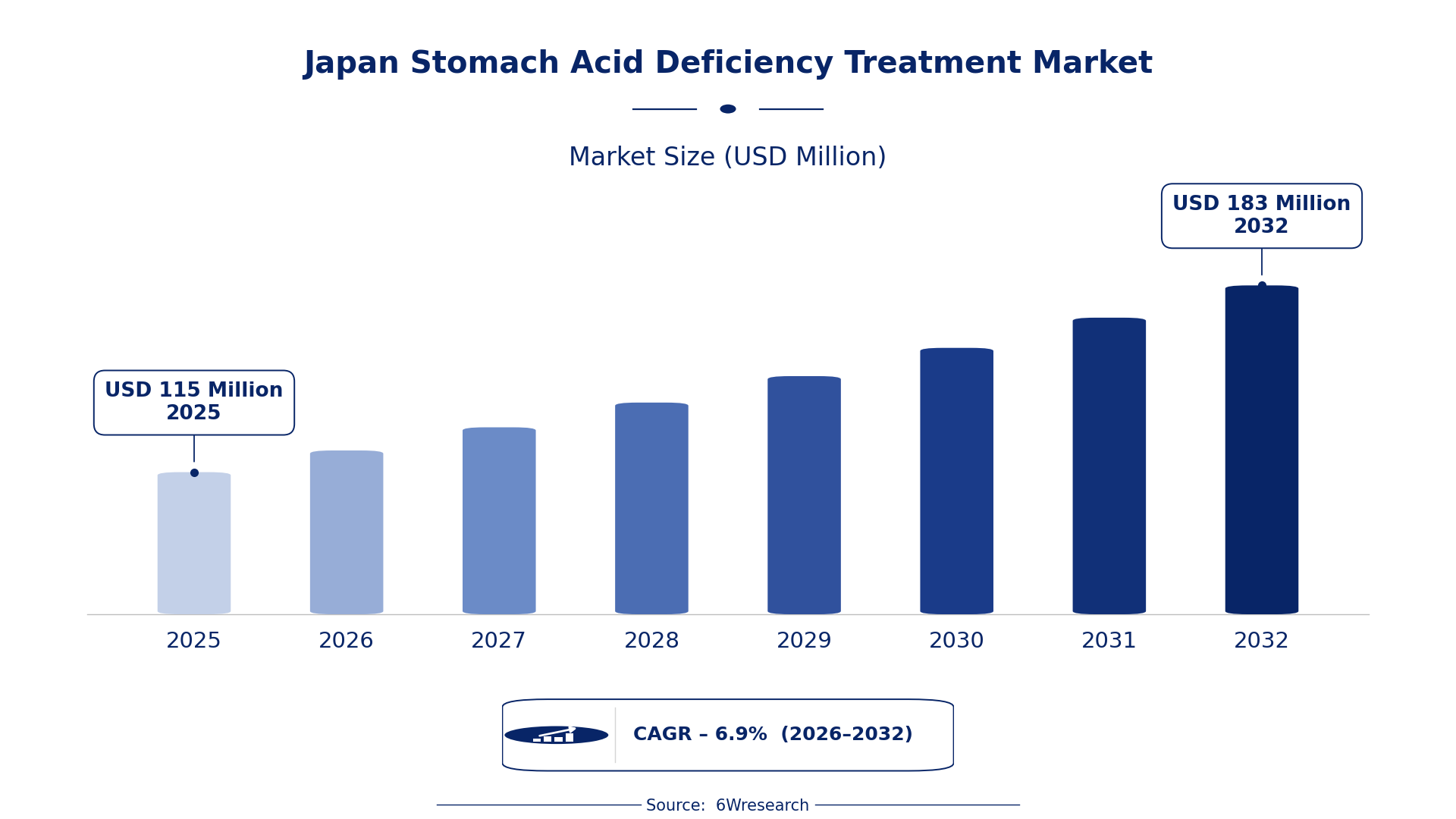
According to 6Wresearch internal database and industry insights, the Japan Stomach Acid Deficiency Treatment Market was valued at USD 115 Million in 2025 and is projected to reach USD 183 Million by 2032, growing at a CAGR of approximately 6.9% during 2026–2032.
Japan Stomach Acid Deficiency Treatment Market Highlights
| Report Metric | Details |
| Report Name | Japan Stomach Acid Deficiency Treatment Market (2026-2032) |
| Market Size 2025 | USD 115 Million |
| Market Size 2032 | USD 183 Million |
| Absolute Growth 2025–2032 | USD 68 Million |
| CAGR 2026–2032 | 6.9% |
| Peak Annual Growth | 8.0% in 2029 |
| Forecast Period | 2026–2032 |
| Historical Data | 2022–2025 |
| Base Year | 2025 |
| Leading Treatment Type, 2025 | Prescription Antacids (34% share) |
| Leading Drug Form, 2025 | Capsule (45% share) |
| Leading Sales Channel, 2025 | Pharmacies (41% share) |
| Leading End User, 2025 | Chronic GERD Patients (53% share) |
| Fastest-Growing Treatment Type | Digestive Enzyme Blends (9.5% CAGR) |
| Fastest-Growing Drug Form | Liquid (9.8% CAGR) |
| Fastest-Growing Sales Channel | Online Stores (8.6% CAGR) |
| Fastest-Growing End User | Gastroenterology Clinics (8.7% CAGR) |
| Growing Sector | Digestive Health Supplements |
| Key End Users | Chronic GERD Patients, Nutraceutical Consumers, Gastroenterology Clinics |
Japan Stomach Acid Deficiency Treatment Market Year-wise Growth Rate and Key Drivers (2022–2032)
This graph illustrates the annual growth rates of the market from 2022 to 2032, highlighting a steady upward trajectory and projected market expansion over the forecast period.
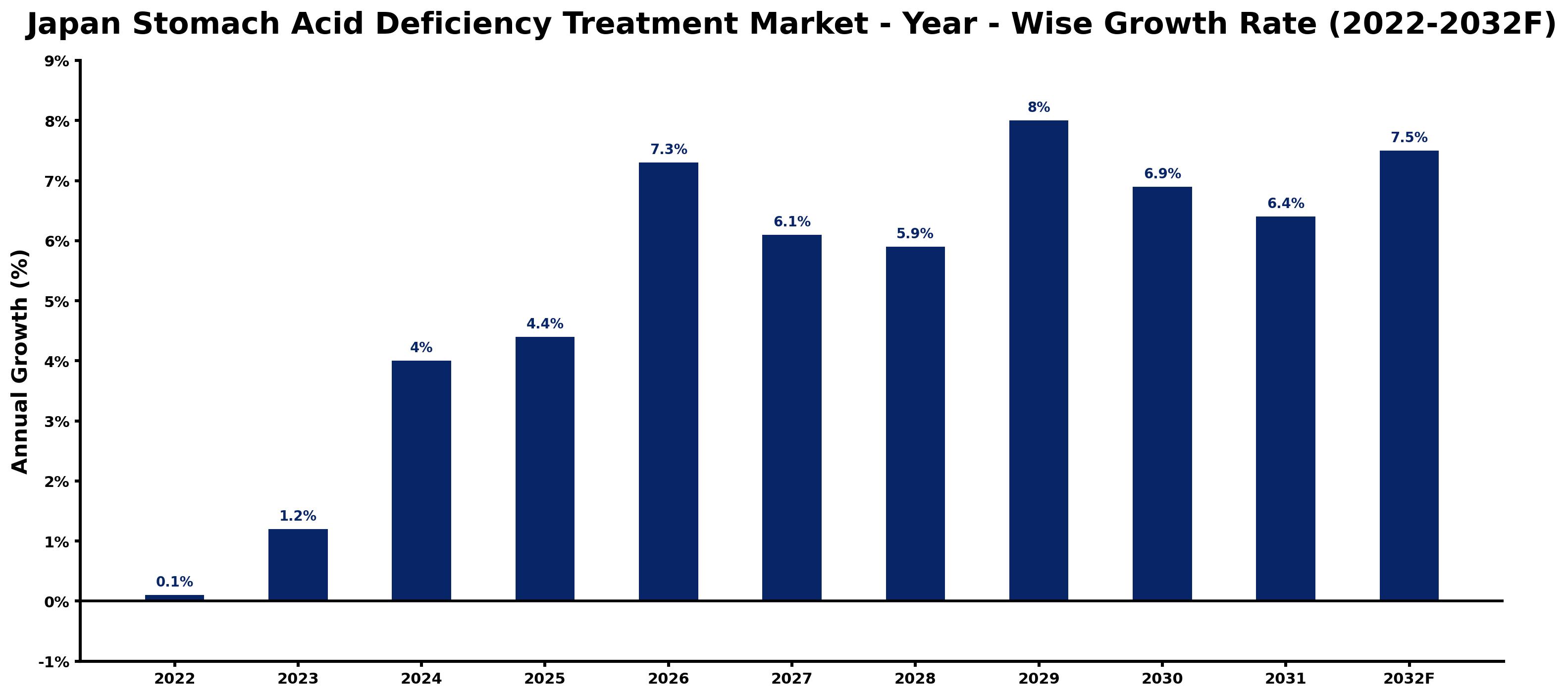
The following figures match every annual growth estimate with the main market development of that year, giving the reasoning behind each rise or slowdown.
| Year | Estimated Annual Growth (%) | Market Rationale |
| 2022 | 0.1 | The market showed minimal growth as awareness of treatments began to rise. |
| 2023 | 1.2 | Growth accelerated due to increased consumer interest in digestive health supplements. |
| 2024 | 4.0 | The introduction of new products contributed to a faster growth rate. |
| 2025 | 4.4 | Demand surged as the prevalence of GERD became more widely recognized. |
| 2026 | 7.3 | The market is expected to expand with more healthcare facilities focusing on digestive health. |
| 2027 | 6.1 | Growth is projected to slow slightly as the market begins to stabilise after rapid expansion. |
| 2028 | 5.9 | A continued focus on health awareness will lead to further growth, albeit at a slower pace. |
| 2029 | 8.0 | The peak growth will be driven by a surge in demand for digestive enzyme blends. |
| 2030 | 6.9 | Growth is anticipated to moderate as the market adjusts to the peak demand levels. |
| 2031 | 6.4 | A slight slowdown in growth rate is expected as competition intensifies in the sector. |
| 2032 | 7.5 | Demand is expected to rise again as new health initiatives are launched. |
Note: Market size estimations and growth projections presented in this report are based on 6Wresearch's proprietary forecasting methodology, utilizing the latest available industry data, government publications, and primary research inputs.
Japan Stomach Acid Deficiency Treatment Market Synopsis
Stomach Acid Deficiency Treatment includes various supplements and medications aimed at increasing stomach acid levels, primarily formulated from natural compounds and synthetic ingredients. The Japan Stomach Acid Deficiency Treatment Market is growing due to rising awareness of gastrointestinal health, particularly among chronic GERD patients, who represent a key buyer group. A 15% rise in sales of digestive supplements in health food stores and campaigns launched by the Ministry of Health are driving demand for these treatments.
Market Dynamics Impact Analysis (2026–2032)
| Factor | Type | Impact | Primary Segment Affected |
| Increasing prevalence of GERD among adults | Driver | High | Prescription Antacids |
| Growing consumer preference for natural remedies | Driver | High | Digestive Enzyme Blends |
| Rising sales of digestive health products | Opportunity | High | Health Food Stores |
| Expansion of online sales channels | Opportunity | High | Online Stores |
| Limited awareness of treatment options | Restraint | Medium | Betaine HCL Supplements |
| High competition among supplement providers | Restraint | Medium | Digestive Enzyme Blends |
| Inconsistent quality standards for supplements | Challenge | High | Herbal Remedies |
| Regulatory hurdles for new product approvals | Challenge | Medium | Prescription Antacids |
Evaluation of Drivers in Japan Stomach Acid Deficiency Treatment Market (2026–2032)
The main growth drivers and the segments they affect most are set out below.
| Drivers | Primary Segment Affected | Why It Matters (Evidence) |
| Rising prevalence of GERD among adults | Prescription Antacids | Approximately 10% of the adult population in Japan suffers from GERD, increasing demand for effective treatments. |
| Consumer preference for natural remedies | Digestive Enzyme Blends | Health food stores reported a 15% increase in sales of digestive supplements, reflecting a shift towards natural solutions. |
| Growth in online sales channels | Online Stores | Online sales of stomach acid treatments increased by 20% last year, indicating a shift in purchasing behaviour. |
| Increased awareness of digestive health | Health Food Stores | A campaign promoting digestive health awareness has stimulated interest in related products. |
| Rising number of gastroenterology clinics | Gastroenterology Clinics | Tokyo is a major hub for specialized clinics, leading to higher consultations for acid-related disorders. |
Purchasing is picking up as the prevalence of GERD in Japan reaches around 10% of the adult population. This condition has led to increased demand for prescription antacids, particularly in urban areas like Tokyo, where specialized clinics are thriving. Health food stores have reported a 15% rise in sales of digestive enzyme blends, reflecting consumer interest in natural remedies. A campaign promoting digestive health awareness has further stimulated interest in stomach acid treatments. Online sales channels have seen a 20% increase, indicating a shift in purchasing preferences among consumers.
Evaluation of Restraints in Japan Stomach Acid Deficiency Treatment Market
The following restraints limit how fast demand can grow.
| Market Restraint | Primary Segment Affected | Why It Matters (Evidence) |
| Limited awareness of treatment options | Betaine HCL Supplements | Many consumers are unaware of the benefits of Betaine HCL, limiting its market potential. |
| High competition among supplement providers | Digestive Enzyme Blends | The influx of new brands has created a saturated market, making differentiation challenging. |
| Inconsistent quality standards for supplements | Herbal Remedies | Variability in product quality affects consumer trust and can limit market growth. |
| Regulatory hurdles for new product approvals | Prescription Antacids | Stringent regulations can delay the introduction of new products to the market. |
| Limited distribution channels for certain products | Liquid | Liquid forms of supplements are less commonly found in pharmacies, restricting consumer access. |
Japan Stomach Acid Deficiency Treatment Market Challenges
Tokyo's gastroenterology clinics report a 20% increase in patient consultations for acid-related disorders, which strains resources and raises healthcare costs for patients. Regulatory guidelines from the Japanese Society of Gastroenterology can delay the approval of new supplements, limiting choices for consumers and reducing revenue for suppliers. Health food stores face heightened competition, evidenced by a 15% rise in sales of digestive supplements in 2023, compelling producers to reduce prices and squeeze profit margins. Many suppliers are hindered by outdated technology, resulting in lost revenue opportunities as online sales surge by 20%.
Trends in the Japan Stomach Acid Deficiency Treatment Market
Buyers and suppliers in the Japan Stomach Acid Deficiency Treatment Market are adjusting to the following trends.
- Shift towards Online Sales: The trend towards online sales of stomach acid treatments began in 2022, with a 20% increase noted last year. This shift is driven by changing consumer preferences for convenience and accessibility, particularly among younger demographics.
- Rise of Natural Remedies: The popularity of natural remedies is reflected in the growing sales of digestive enzyme blends, which have increased by 15% in health food stores. This trend indicates a broader consumer shift towards holistic health solutions.
- Increased Focus on Digestive Health: In 2023, a campaign promoting digestive health awareness resulted in heightened consumer interest in stomach acid deficiency treatments. This initiative is likely to lead to increased sales across various channels.
- Growing Demand in Urban Areas: Tokyo has seen a rise in consultations for acid-related disorders, with over 30% of gastroenterology clinics reporting increased patient numbers in 2023. This trend indicates a growing demand for effective treatment options in urban settings.
Investment Opportunities in the Japan Stomach Acid Deficiency Treatment Market
The following areas offer the clearest openings for investors and suppliers in the Japan Stomach Acid Deficiency Treatment Market.
- Expansion of Online Retail: Online stores are experiencing a surge in demand, with a 20% increase in sales last year. Investing in e-commerce platforms can help suppliers reach a broader audience, particularly among younger consumers.
- Targeting Health-Conscious Consumers: With over 30% of gastroenterology clinics reporting increased consultations, there is an opportunity to supply specialized treatments. Collaborating with clinics can improve market penetration.
- Growing Interest in Natural Supplements: The rise in sales of digestive enzyme blends by 15% indicates a gap in the market for natural supplements. Suppliers can capitalise on this trend by developing new products that align with consumer preferences.
- Health Food Store Partnerships: Health food stores are becoming key distribution points, with a 15% rise in sales reported. Establishing partnerships with these retailers can improve product visibility and accessibility.
Government Initiatives in the Japan Stomach Acid Deficiency Treatment Market
The Water Supply Act (1957) and the Sewerage Act (1958) set standards for health and safety in water supply and wastewater treatment, indirectly impacting the quality of supplements produced in Japan. Compliance with these regulations ensures that manufacturers maintain high standards in their products, benefiting consumers seeking effective stomach acid deficiency treatments.
The Pharmaceuticals and Medical Devices Agency oversees the approval of health supplements, ensuring they meet safety and efficacy standards. This agency also funds initiatives aimed at promoting digestive health, which can increase awareness and demand for stomach acid deficiency treatments.
Future Insight of the Japan Stomach Acid Deficiency Treatment Market
New health initiatives by the Ministry of Health will raise public awareness of stomach acid deficiency treatments by 2032, significantly boosting supplement demand. The adoption of ISO 9001 standards will improve product quality and build consumer trust, benefiting suppliers. Advances in telemedicine will enable remote consultations, broadening access to gastroenterology services for buyers. By 2032, over 30% of clinics are projected to implement digital platforms for patient management, streamlining operations and enhancing service delivery.
Market Segmentation Analysis
Japan Stomach Acid Deficiency Treatment Market report covers a detailed analysis of the following market segments:
By Treatment Type – Prescription Antacids Lead, Digestive Enzyme Blends Expected to Grow Fastest
According to Saurav Kr Singh, Senior Research Analyst at 6Wresearch, Prescription Antacids held 34% of the Japan Stomach Acid Deficiency Treatment Market by treatment type in 2025. Prescription Antacids hold the largest share due to their critical role in managing severe cases of GERD, which affects around 10% of the adult population. The National Health Insurance covers these medications, ensuring accessibility for patients who require them. Digestive Enzyme Blends are set to record the highest CAGR in this split, 9.5% over 2026–2032. Digestive Enzyme Blends are experiencing rapid growth as they are increasingly marketed as natural remedies, appealing to health-conscious consumers. The rise in sales of digestive supplements by 15% in 2023 indicates a growing preference for these products. Suppliers should focus on expanding their offerings in digestive enzyme blends to capture the increasing consumer demand.
By Drug Form – Capsule Leads, Liquid Expected to Grow Fastest
Capsule accounted for 45% of the market by drug form in 2025. Capsules dominate the market as they are preferred by 60% of consumers for their convenience and dosage accuracy, making them a popular choice among patients. This preference is reflected in pharmacies, which serve as the primary distribution point for these products. The quickest growth will come from Liquid, forecast to expand at a CAGR of 9.8% between 2026 and 2032. Liquid forms are gaining traction, albeit at a slower pace, as they provide an alternative for those who may have difficulty swallowing capsules. Their availability in pharmacies is gradually increasing, catering to a niche market. Manufacturers should consider diversifying their product lines to include liquid forms to meet the needs of a broader consumer base.
By Sales Channel – Pharmacies Lead, Online Stores Expected to Grow Fastest
The largest sales channel category in 2025 was Pharmacies, at 41% of revenue. Pharmacies hold the largest share as they serve as the primary distribution point for stomach acid treatments, often recommended by healthcare professionals. This established connection ensures patients have reliable access to necessary medications, particularly in urban areas like Tokyo. Over 2026–2032, Online Stores are expected to post the fastest growth, at a CAGR of 8.6%. Online Stores are experiencing rapid growth, with a 20% increase in sales over the last year, largely due to the convenience of home delivery options. This trend indicates a shift in consumer preferences towards digital platforms for purchasing health products. Suppliers should focus on strengthening their online sales channels to effectively meet the increasing demand for convenient purchasing options.
By End User – Chronic GERD Patients Lead, Gastroenterology Clinics Expected to Grow Fastest
Chronic GERD Patients took 53% of end user revenue in 2025, more than any other category. Chronic GERD Patients represent the largest user group, as they require ongoing treatment for their condition, making them a key target for suppliers. The average age of GERD patients in Japan is around 50 years, highlighting a specific demographic that relies on these treatments. Gastroenterology Clinics are projected to grow fastest, at a CAGR of 8.7% during 2026–2032. Gastroenterology Clinics are seeing increased consultations, with over 30% reporting a rise in patient visits for acid-related disorders. This trend indicates a growing recognition of the need for specialized care in digestive health. Providers should strengthen partnerships with gastroenterology clinics to ensure their products are recommended to patients seeking treatment.
Key Attractiveness of the Report
- 10 Years of Market Numbers
- Historical Data Starting from 2022 to 2025
- Base Year 2025
- Forecast Data until 2032
- Key Performance Indicators Impacting the Market
- Major Upcoming Developments and Projects
Key Highlights of the Report:
- Japan Stomach Acid Deficiency Treatment Market Outlook
- Market Size of Japan Stomach Acid Deficiency Treatment Market, 2025
- Forecast of Japan Stomach Acid Deficiency Treatment Market, 2032
- Historical Data and Forecast of Japan Stomach Acid Deficiency Treatment Revenues & Volume for the Period 2022-2032F
- Japan Stomach Acid Deficiency Treatment Market Trend Evolution
- Japan Stomach Acid Deficiency Treatment Market Drivers and Challenges
- Japan Stomach Acid Deficiency Treatment Price Trends
- Japan Stomach Acid Deficiency Treatment Porter's Five Forces
- Japan Stomach Acid Deficiency Treatment Industry Life Cycle
- Historical Data and Forecast of Japan Stomach Acid Deficiency Treatment Market Revenues & Volume By Treatment Type for the Period 2022-2032F
- Historical Data and Forecast of Japan Stomach Acid Deficiency Treatment Market Revenues & Volume By Betaine HCL Supplements for the Period 2022-2032F
- Historical Data and Forecast of Japan Stomach Acid Deficiency Treatment Market Revenues & Volume By Digestive Enzyme Blends for the Period 2022-2032F
- Historical Data and Forecast of Japan Stomach Acid Deficiency Treatment Market Revenues & Volume By Prescription Antacids for the Period 2022-2032F
- Historical Data and Forecast of Japan Stomach Acid Deficiency Treatment Market Revenues & Volume By Herbal Remedies for the Period 2022-2032F
- Historical Data and Forecast of Japan Stomach Acid Deficiency Treatment Market Revenues & Volume By Drug Form for the Period 2022-2032F
- Historical Data and Forecast of Japan Stomach Acid Deficiency Treatment Market Revenues & Volume By Tablet for the Period 2022-2032F
- Historical Data and Forecast of Japan Stomach Acid Deficiency Treatment Market Revenues & Volume By Capsule for the Period 2022-2032F
- Historical Data and Forecast of Japan Stomach Acid Deficiency Treatment Market Revenues & Volume By Liquid for the Period 2022-2032F
- Historical Data and Forecast of Japan Stomach Acid Deficiency Treatment Market Revenues & Volume By Powder for the Period 2022-2032F
- Historical Data and Forecast of Japan Stomach Acid Deficiency Treatment Market Revenues & Volume By Sales Channel for the Period 2022-2032F
- Historical Data and Forecast of Japan Stomach Acid Deficiency Treatment Market Revenues & Volume By Online Stores for the Period 2022-2032F
- Historical Data and Forecast of Japan Stomach Acid Deficiency Treatment Market Revenues & Volume By Pharmacies for the Period 2022-2032F
- Historical Data and Forecast of Japan Stomach Acid Deficiency Treatment Market Revenues & Volume By Hospitals for the Period 2022-2032F
- Historical Data and Forecast of Japan Stomach Acid Deficiency Treatment Market Revenues & Volume By Health Food Stores for the Period 2022-2032F
- Historical Data and Forecast of Japan Stomach Acid Deficiency Treatment Market Revenues & Volume By End User for the Period 2022-2032F
- Historical Data and Forecast of Japan Stomach Acid Deficiency Treatment Market Revenues & Volume By Nutraceutical Consumers for the Period 2022-2032F
- Historical Data and Forecast of Japan Stomach Acid Deficiency Treatment Market Revenues & Volume By Gastroenterology Clinics for the Period 2022-2032F
- Historical Data and Forecast of Japan Stomach Acid Deficiency Treatment Market Revenues & Volume By Chronic GERD Patients for the Period 2022-2032F
- Historical Data and Forecast of Japan Stomach Acid Deficiency Treatment Market Revenues & Volume By Functional Medicine Users for the Period 2022-2032F
- Japan Stomach Acid Deficiency Treatment Import Export Trade Statistics
- Market Opportunity Assessment By Treatment Type
- Market Opportunity Assessment By Drug Form
- Market Opportunity Assessment By Sales Channel
- Market Opportunity Assessment By End User
- Japan Stomach Acid Deficiency Treatment Top Companies Market Share
- Japan Stomach Acid Deficiency Treatment Competitive Benchmarking By Technical and Operational Parameters
- Japan Stomach Acid Deficiency Treatment Company Profiles
- Japan Stomach Acid Deficiency Treatment Key Strategic Recommendations
Market Covered
This report examines the market across the segments below.
By Treatment Type
- Betaine HCL Supplements
- Digestive Enzyme Blends
- Prescription Antacids
- Herbal Remedies
By Drug Form
- Tablet
- Capsule
- Liquid
- Powder
By Sales Channel
- Online Stores
- Pharmacies
- Hospitals
- Health Food Stores
By End User
- Nutraceutical Consumers
- Gastroenterology Clinics
- Chronic GERD Patients
- Functional Medicine Users































