Japan Stretchable Fabrics Market Size & Growth Rate
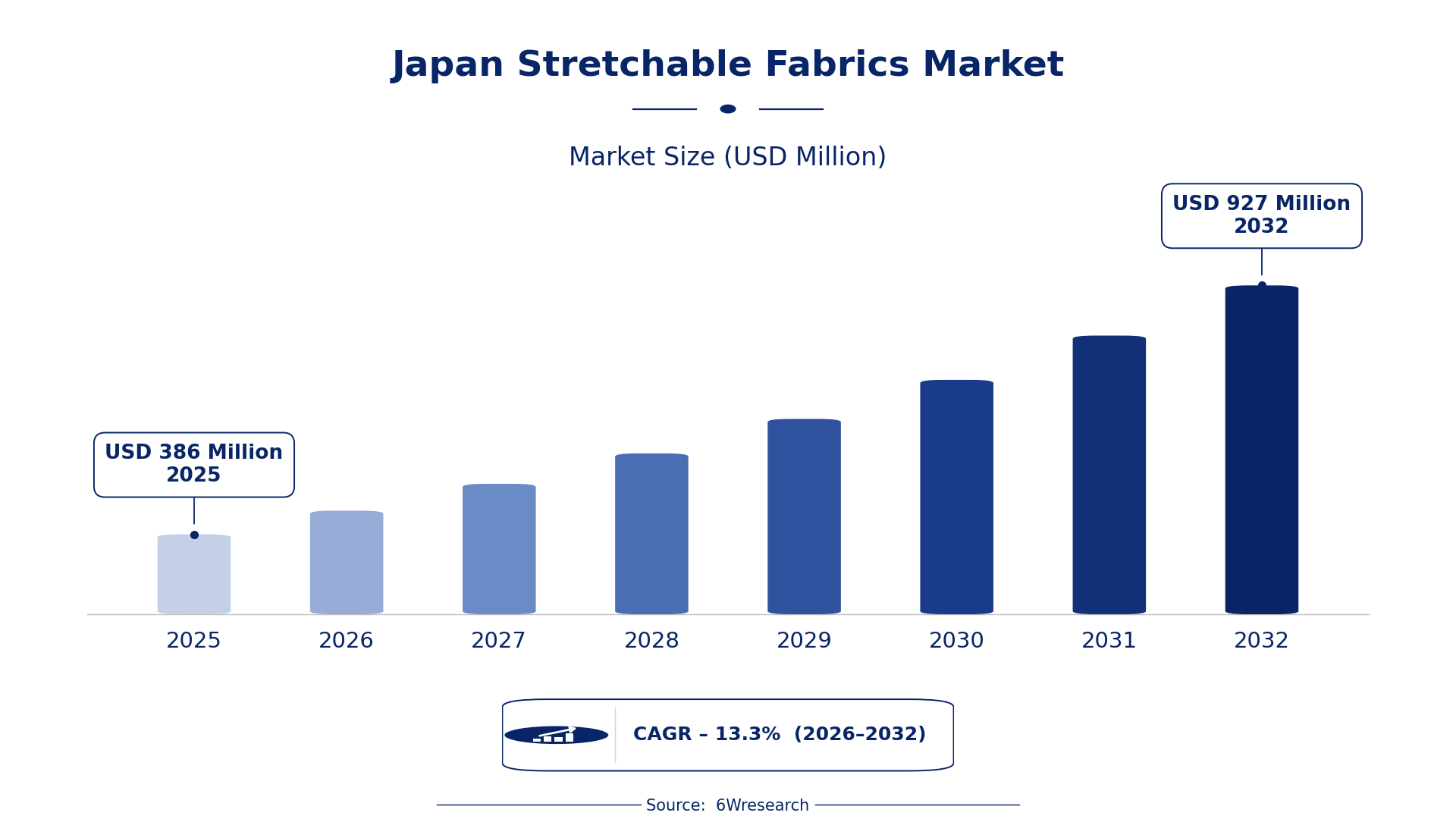
According to 6Wresearch internal database and industry insights, the Japan Stretchable Fabrics Market was valued at USD 386 Million in 2025 and is projected to reach USD 927 Million by 2032, growing at a CAGR of approximately 13.3% during 2026–2032.
Japan Stretchable Fabrics Market Highlights
| Report Metric | Details |
| Report Name | Japan Stretchable Fabrics Market (2026-2032) |
| Market Size 2025 | USD 386 Million |
| Market Size 2032 | USD 927 Million |
| Absolute Growth 2025–2032 | USD 541 Million |
| CAGR 2026–2032 | 13.3% |
| Peak Annual Growth | 14.2% in 2030 |
| Forecast Period | 2026–2032 |
| Historical Data | 2022–2025 |
| Base Year | 2025 |
| Leading Fabric Type, 2025 | 2-Way Stretch (41% share) |
| Leading Material Blend, 2025 | Cotton + Elastane (42% share) |
| Leading Application Area, 2025 | Fashion Apparel (35% share) |
| Leading End User, 2025 | Clothing Brands (39% share) |
| Fastest-Growing Fabric Type | 4-Way Stretch (18.5% CAGR) |
| Fastest-Growing Material Blend | Nylon + Spandex (18.7% CAGR) |
| Fastest-Growing Application Area | Sportswear (15.8% CAGR) |
| Fastest-Growing End User | Athletic Brands (17.0% CAGR) |
| Growing Sector | Sportswear |
| Key End Users | Fashion Apparel, Sportswear, Medical Textiles, Loungewear |
Japan Stretchable Fabrics Market Year-wise Growth Rate and Key Drivers (2022–2032)
This graph illustrates the annual growth rates of the market from 2022 to 2032, highlighting a steady upward trajectory and projected market expansion over the forecast period.
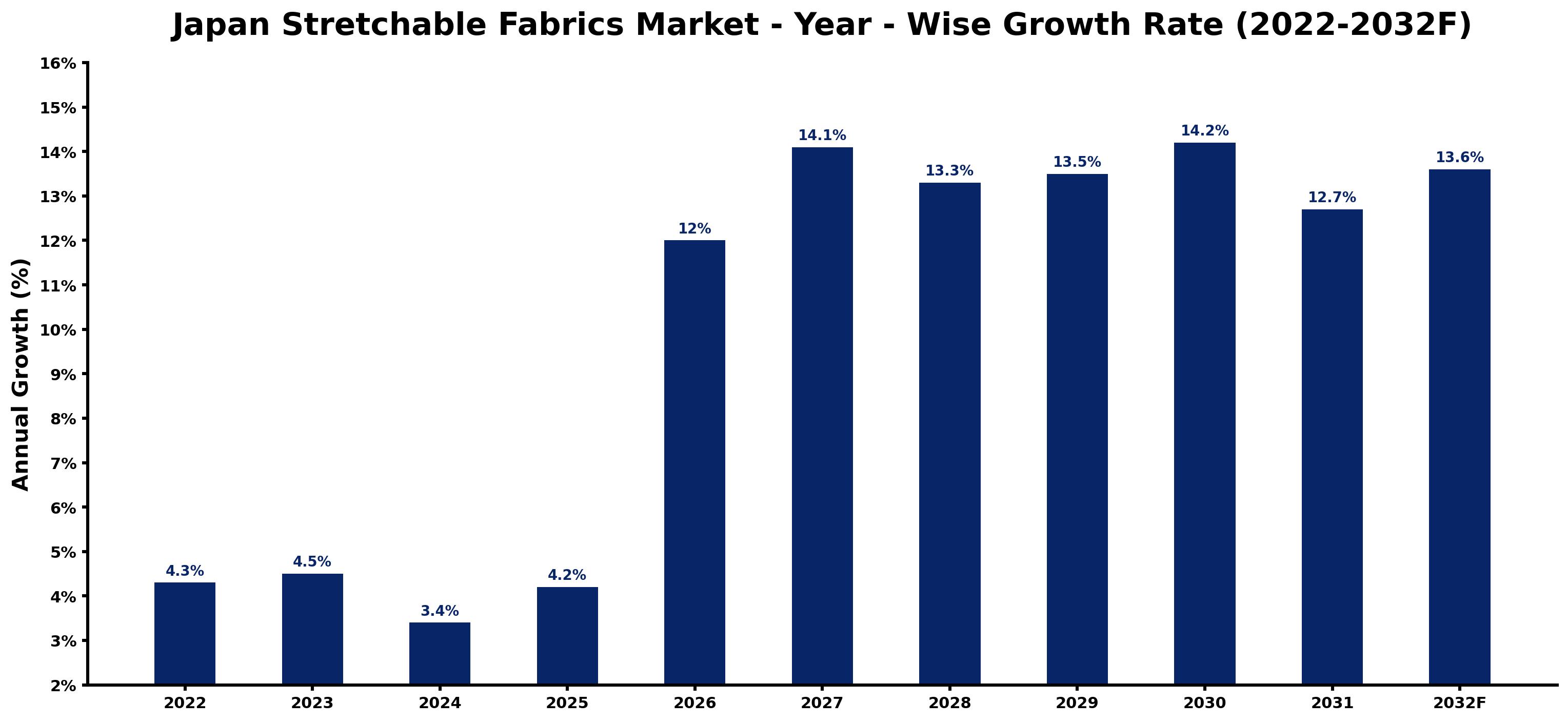
Each row of the following table gives one year's estimated growth and the event or demand shift that explains it.
| Year | Estimated Annual Growth (%) | Market Rationale |
| 2022 | 4.3 | The market showed steady growth due to consistent consumer interest in apparel. |
| 2023 | 4.5 | Demand for stretchable fabrics rose as sportswear became increasingly popular among consumers. |
| 2024 | 3.4 | Growth slowed as the market adjusted to changing consumer preferences and economic conditions. |
| 2025 | 4.2 | The market rebounded with renewed interest in fashion apparel and loungewear. |
| 2026 | 12.0 | Demand is expected to surge as buyers invest in high-performance fabrics for sportswear and activewear. |
| 2027 | 14.1 | Growth is projected to accelerate further as athletic brands expand their product lines. |
| 2028 | 13.3 | The market is expected to experience a slight slowdown as competition intensifies among fabric producers. |
| 2029 | 13.5 | Demand is anticipated to pick up again as innovation in fabric technology attracts new buyers. |
| 2030 | 14.2 | The market is projected to peak as fashion trends heavily favour stretchable fabrics for various applications. |
| 2031 | 12.7 | Growth is expected to moderate as market saturation begins to affect purchasing decisions. |
| 2032 | 13.6 | Demand will remain strong as consumer preferences continue to evolve towards comfort and versatility. |
Note: Market size estimations and growth projections presented in this report are based on 6Wresearch's proprietary forecasting methodology, utilizing the latest available industry data, government publications, and primary research inputs.
Japan Stretchable Fabrics Market Synopsis
Stretchable fabrics are textiles designed to stretch and recover their shape, made from blends like elastane or spandex. Key factors include the expansion of athletic brands and the growing popularity of loungewear, which are pushing the market forward.
Market Dynamics Impact Analysis (2026–2032)
| Factor | Type | Impact | Primary Segment Affected |
| Rising consumer interest in sportswear and activewear | Driver | High | Sportswear |
| Growing demand for comfortable loungewear | Driver | High | Loungewear |
| Increased investment in sustainable fabric production | Opportunity | High | Fashion Apparel |
| Expansion of athletic brands into new markets | Opportunity | High | Athletic Brands |
| Intense competition among fabric manufacturers | Restraint | Medium | 2-Way Stretch |
| Fluctuations in raw material prices affecting production costs | Restraint | Medium | Cotton + Elastane |
| Limited awareness of advanced fabric technologies | Challenge | Medium | 4-Way Stretch |
| Dependence on traditional manufacturing processes | Challenge | Medium | Warp Knit Stretch |
Evaluation of Drivers in Japan Stretchable Fabrics Market (2026–2032)
The main growth drivers and the segments they affect most are set out below.
| Drivers | Primary Segment Affected | Why It Matters (Evidence) |
| Increased consumer spending on active lifestyles | Sportswear | The average Japanese consumer spends about ¥10,000 annually on apparel, boosting demand for high-performance fabrics. |
| Growing trend towards casual and comfortable clothing | Loungewear | The popularity of loungewear has led to increased purchases of stretchable fabrics for home use. |
| Technological advancements in fabric production | 4-Way Stretch | Innovation in textile manufacturing processes improves elasticity, attracting buyers from athletic and fashion sectors. |
| Rising participation in fitness activities | Athletic Brands | The demand for performance apparel has surged, with a notable increase in sportswear fabric consumption. |
| Expansion of e-commerce platforms for apparel | Fashion Apparel | Online shopping growth facilitates wider access to stretchable fabrics, driving market demand. |
Buyers are adding capacity as consumer spending on apparel rises, with the average Japanese consumer spending about ¥10,000 annually. The growing trend towards casual clothing has led to increased purchases of stretchable fabrics for home use. Advancements in fabric production are improving elasticity, attracting buyers from athletic and fashion sectors. The rising participation in fitness activities has also spurred demand for performance apparel, while e-commerce growth facilitates wider access to stretchable fabrics, further driving market expansion.
Evaluation of Restraints in Japan Stretchable Fabrics Market
The main factors holding the market back are set out below.
| Market Restraint | Primary Segment Affected | Why It Matters (Evidence) |
| Intense competition leading to price wars | 2-Way Stretch | Increased competition among manufacturers has resulted in price reductions, impacting profit margins. |
| Fluctuations in the cost of raw materials | Cotton + Elastane | Variability in raw material prices affects production costs, posing challenges for manufacturers. |
| Limited consumer awareness of advanced stretchable fabrics | 4-Way Stretch | Many consumers remain unaware of the benefits of advanced fabrics, limiting market growth. |
| Dependence on traditional manufacturing processes | Warp Knit Stretch | Manufacturers relying on outdated techniques may struggle to meet modern demand for new fabrics. |
| Regulatory compliance costs for textile production | Breathable Stretch Fabric | Adhering to quality standards such as ISO 9001 increases operational costs for producers. |
Japan Stretchable Fabrics Market Challenges
Japan's textile industry employs approximately 300,000 people, yet many workers lack advanced skills in modern fabric technology, causing production delays for manufacturers. Outdated machinery limits innovation, compelling suppliers to miss market trends and resulting in lost sales opportunities estimated at ¥50 billion annually. Supply chain disruptions arise from limited local sourcing, forcing buyers to depend on imports that can delay product launches by up to three months. Rising consumer demand for sustainable fabrics pressures producers to adapt quickly, risking a loss of market share to more agile competitors.
Trends in the Japan Stretchable Fabrics Market
The shifts below are changing how Japan Stretchable Fabrics Market products are bought and supplied.
- Shift Towards Sustainable Fabrics: The textile industry is moving towards sustainable practices, with local textile fairs promoting eco-friendly materials. This shift is gaining traction as consumers demand environmentally conscious options, creating opportunities for suppliers.
- Emergence of Smart Textiles: Smart textiles are becoming more prevalent, integrating technology into fabric design. The Tokyo region is leading this trend, showcasing advancements that cater to tech-savvy consumers.
- Transition from Traditional to Modern Manufacturing: Manufacturers are increasingly adopting modern techniques to improve production efficiency. The shift is evident in the Tokyo region, where facilities are upgrading to meet contemporary market demands.
- Growth in Athletic Wear: The athletic wear segment is expanding rapidly, driven by increased fitness participation. This trend is reflected in the rising demand for performance-oriented stretchable fabrics.
Investment Opportunities in the Japan Stretchable Fabrics Market
Below are the investment opportunities with the strongest case in the Japan Stretchable Fabrics Market.
- Tokyo Fashion Week: Tokyo Fashion Week is a prime venue for showcasing stretchable fabrics, with a notable increase in attendance. This event highlights the growing demand for unique fabric blends, presenting opportunities for suppliers.
- Healthcare Sector Growth: With the aging population, the healthcare textile market is projected to grow. Investing in stretchable fabrics for medical textiles can meet the rising demand for comfortable healthcare garments.
- Sustainable Fabric Production: Local textile fairs are promoting sustainable fabric innovations, creating a demand for eco-friendly materials. Suppliers can tap into this trend by offering sustainable stretchable fabrics.
- Expansion of Athletic Brands: Athletic brands are expanding their product lines, increasing their need for high-performance stretchable fabrics. Suppliers can enter this market through partnerships with local manufacturers.
Government Initiatives in the Japan Stretchable Fabrics Market
The textile recycling initiative launched in 2023 encourages sustainable practices among producers, aiming to reduce waste and promote the use of recycled materials in fabric production. This complements existing laws by enhancing environmental responsibility in the industry.
Funding for textile innovation programs by the Ministry of Economy, Trade and Industry supports projects that improve production capabilities and quality standards. This backing is crucial for manufacturers aiming to enhance their competitiveness.
Future Insight of the Japan Stretchable Fabrics Market
Buyers in the apparel sector will experience a transition towards sustainable practices by 2032, influenced by government initiatives and rising consumer preference for eco-friendly products. The healthcare textile market will expand, reflecting the aging population's needs, with projections indicating a growth of over 20% in specialized medical textiles. Advancements in fabric recycling technology will empower suppliers to innovate and minimise waste, while adherence to JIS standards will improve quality assurance across the industry.
Market Segmentation Analysis
Japan Stretchable Fabrics Market report covers a detailed analysis of the following market segments:
By Fabric Type – 2-Way Stretch Leads, 4-Way Stretch Expected to Grow Fastest
According to Saurav Kr Singh, Senior Research Analyst at 6Wresearch, in 2025, 2-Way Stretch led the fabric type split with a 41% share. The 2-Way Stretch segment holds the largest share as it is widely used for basic stretch needs in apparel, appealing to a diverse consumer base. This fabric type is essential for everyday clothing, making it a staple in the Japanese market. 4-Way Stretch is set to record the highest CAGR in this split, 18.5% over 2026–2032. The 4-Way Stretch segment is growing rapidly due to its importance in high-mobility clothing, which caters to the rising demand for versatile activewear. As fitness trends continue to gain traction, this segment is poised to capture an increasing market share. Suppliers should focus on expanding their 4-Way Stretch offerings to meet the growing demand for performance-oriented fabrics.
By Material Blend – Cotton + Elastane Leads, Nylon + Spandex Expected to Grow Fastest
Cotton + Elastane took 42% of material blend revenue in 2025, more than any other category. Cotton + Elastane holds the largest share as it is extensively used in both casual and formal wear, appealing to a wide demographic of consumers. This blend's comfort and versatility make it a preferred choice among clothing brands in Japan. Nylon + Spandex is projected to grow fastest, at a CAGR of 18.7% during 2026–2032. Nylon + Spandex is the fastest-growing blend, driven by its popularity in active and swimwear, which is increasingly sought after by consumers prioritising performance. The fitness industry’s expansion is propelling this material blend's growth. Buyers should consider sourcing more Nylon + Spandex fabrics to align with the rising trend towards activewear.
By Application Area – Fashion Apparel Leads, Sportswear Expected to Grow Fastest
Fashion Apparel accounted for 35% of the market by application area in 2025. Fashion Apparel leads the market as it represents a substantial portion of stretchable fabric usage, catering to a wide range of consumer preferences in clothing. This area thrives within Japan's vibrant fashion industry, particularly in urban centres like Tokyo, where trends are set. Over 2026–2032, Sportswear is expected to post the fastest growth, at a CAGR of 15.8%. Sportswear is the fastest-growing application area, driven by a surge in demand for performance and comfort in athletic clothing. The increasing participation in sports and fitness activities is propelling this segment's rapid expansion. Suppliers must enhance their sportswear fabric offerings to capitalise on the growing trend towards active lifestyles.
By End User – Clothing Brands Lead, Athletic Brands Expected to Grow Fastest
Clothing Brands held 39% of the Japan Stretchable Fabrics Market by end user in 2025. Clothing Brands are the primary consumers of stretchable fabrics, extensively utilising them across various apparel lines. Their significant purchasing power and influence in the market solidify their leading position, making them key players in the textile industry. The quickest growth will come from Athletic Brands, forecast to expand at a CAGR of 17.0% between 2026 and 2032. Athletic Brands are experiencing the fastest growth as they increasingly seek high-performance materials for their apparel lines. The surge in fitness culture is driving these brands to innovate with stretchable fabrics, further expanding their market presence. Suppliers should strengthen relationships with Athletic Brands to leverage the increasing demand for performance-driven textiles.
Key Attractiveness of the Report
- 10 Years of Market Numbers
- Historical Data Starting from 2022 to 2025
- Base Year 2025
- Forecast Data until 2032
- Key Performance Indicators Impacting the Market
- Major Upcoming Developments and Projects
Key Highlights of the Report:
- Japan Stretchable Fabrics Market Outlook
- Market Size of Japan Stretchable Fabrics Market, 2025
- Forecast of Japan Stretchable Fabrics Market, 2032
- Historical Data and Forecast of Japan Stretchable Fabrics Revenues & Volume for the Period 2022-2032F
- Japan Stretchable Fabrics Market Trend Evolution
- Japan Stretchable Fabrics Market Drivers and Challenges
- Japan Stretchable Fabrics Price Trends
- Japan Stretchable Fabrics Porter's Five Forces
- Japan Stretchable Fabrics Industry Life Cycle
- Historical Data and Forecast of Japan Stretchable Fabrics Market Revenues & Volume By Fabric Type for the Period 2022-2032F
- Historical Data and Forecast of Japan Stretchable Fabrics Market Revenues & Volume By 2-Way Stretch for the Period 2022-2032F
- Historical Data and Forecast of Japan Stretchable Fabrics Market Revenues & Volume By 4-Way Stretch for the Period 2022-2032F
- Historical Data and Forecast of Japan Stretchable Fabrics Market Revenues & Volume By Warp Knit Stretch for the Period 2022-2032F
- Historical Data and Forecast of Japan Stretchable Fabrics Market Revenues & Volume By Breathable Stretch Fabric for the Period 2022-2032F
- Historical Data and Forecast of Japan Stretchable Fabrics Market Revenues & Volume By Material Blend for the Period 2022-2032F
- Historical Data and Forecast of Japan Stretchable Fabrics Market Revenues & Volume By Cotton + Elastane for the Period 2022-2032F
- Historical Data and Forecast of Japan Stretchable Fabrics Market Revenues & Volume By Nylon + Spandex for the Period 2022-2032F
- Historical Data and Forecast of Japan Stretchable Fabrics Market Revenues & Volume By Polyester Mix for the Period 2022-2032F
- Historical Data and Forecast of Japan Stretchable Fabrics Market Revenues & Volume By Modal + Lycra for the Period 2022-2032F
- Historical Data and Forecast of Japan Stretchable Fabrics Market Revenues & Volume By Application Area for the Period 2022-2032F
- Historical Data and Forecast of Japan Stretchable Fabrics Market Revenues & Volume By Fashion Apparel for the Period 2022-2032F
- Historical Data and Forecast of Japan Stretchable Fabrics Market Revenues & Volume By Sportswear for the Period 2022-2032F
- Historical Data and Forecast of Japan Stretchable Fabrics Market Revenues & Volume By Medical Textiles for the Period 2022-2032F
- Historical Data and Forecast of Japan Stretchable Fabrics Market Revenues & Volume By Loungewear for the Period 2022-2032F
- Historical Data and Forecast of Japan Stretchable Fabrics Market Revenues & Volume By End User for the Period 2022-2032F
- Historical Data and Forecast of Japan Stretchable Fabrics Market Revenues & Volume By Clothing Brands for the Period 2022-2032F
- Historical Data and Forecast of Japan Stretchable Fabrics Market Revenues & Volume By Athletic Brands for the Period 2022-2032F
- Historical Data and Forecast of Japan Stretchable Fabrics Market Revenues & Volume By Healthcare Garment Makers for the Period 2022-2032F
- Historical Data and Forecast of Japan Stretchable Fabrics Market Revenues & Volume By Sleepwear Manufacturers for the Period 2022-2032F
- Japan Stretchable Fabrics Import Export Trade Statistics
- Market Opportunity Assessment By Fabric Type
- Market Opportunity Assessment By Material Blend
- Market Opportunity Assessment By Application Area
- Market Opportunity Assessment By End User
- Japan Stretchable Fabrics Top Companies Market Share
- Japan Stretchable Fabrics Competitive Benchmarking By Technical and Operational Parameters
- Japan Stretchable Fabrics Company Profiles
- Japan Stretchable Fabrics Key Strategic Recommendations
Market Covered
Segments analysed in this report are listed below.
By Fabric Type
- 2-Way Stretch
- 4-Way Stretch
- Warp Knit Stretch
- Breathable Stretch Fabric
By Material Blend
- Cotton + Elastane
- Nylon + Spandex
- Polyester Mix
- Modal + Lycra
By Application Area
- Fashion Apparel
- Sportswear
- Medical Textiles
- Loungewear
By End User
- Clothing Brands
- Athletic Brands
- Healthcare Garment Makers
- Sleepwear Manufacturers































