Japan Stroke Prevention Drugs Market Size & Growth Rate
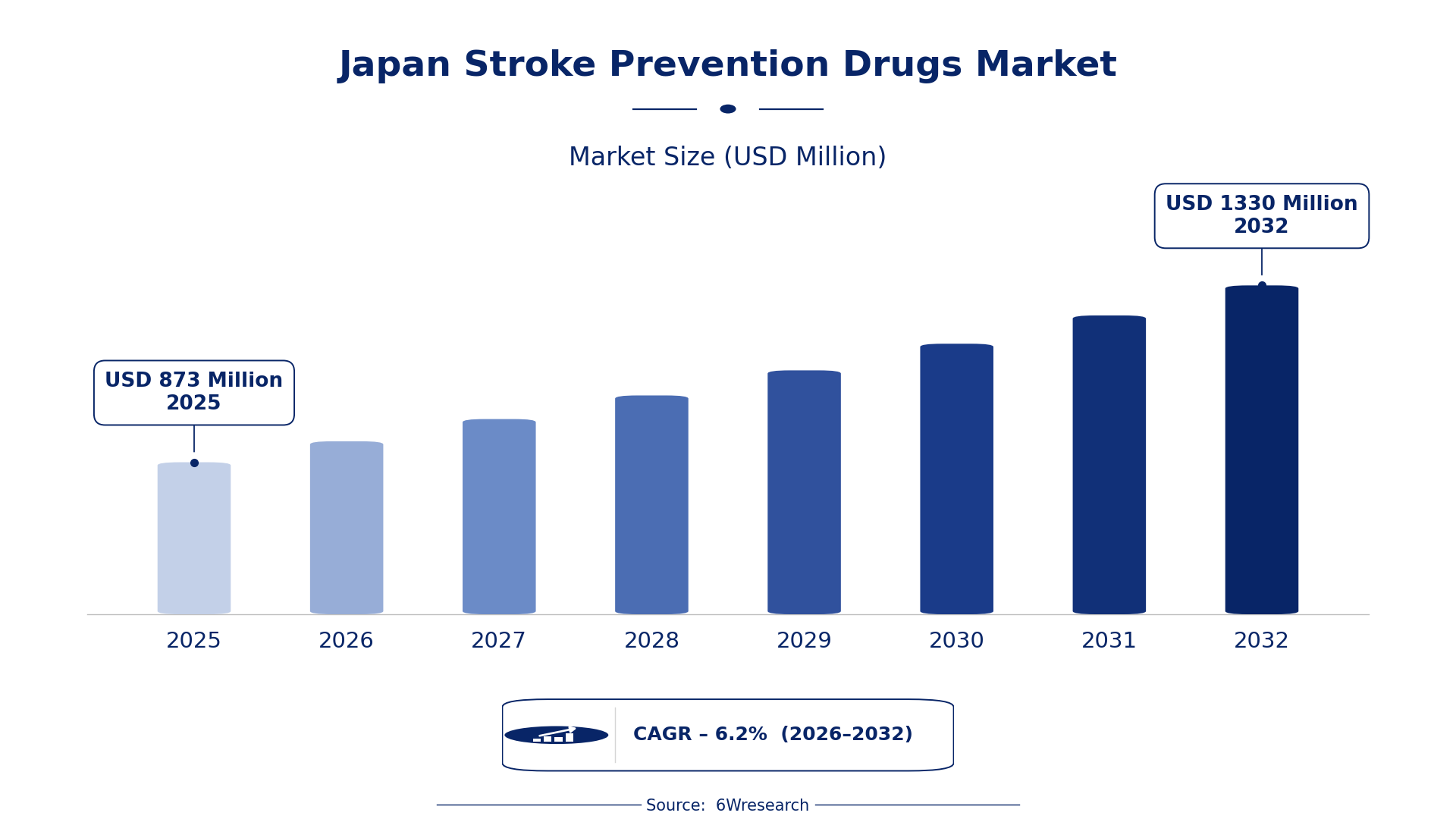
According to 6Wresearch internal database and industry insights, the Japan Stroke Prevention Drugs Market was valued at USD 873 Million in 2025 and is projected to reach USD 1,330 Million by 2032, growing at a CAGR of approximately 6.2% during 2026–2032.
Japan Stroke Prevention Drugs Market Highlights
| Report Metric | Details |
| Report Name | Japan Stroke Prevention Drugs Market (2026-2032) |
| Market Size 2025 | USD 873 Million |
| Market Size 2032 | USD 1,330 Million |
| Absolute Growth 2025–2032 | USD 457 Million |
| CAGR 2026–2032 | 6.2% |
| Peak Annual Growth | 7.0% in 2028 |
| Forecast Period | 2026–2032 |
| Historical Data | 2022–2025 |
| Base Year | 2025 |
| Leading Drug Class, 2025 | Anticoagulants (45% share) |
| Leading Route of Administration, 2025 | Oral (41% share) |
| Leading Prescription Type, 2025 | Prescription Only (41% share) |
| Leading End User, 2025 | Hospitals (39% share) |
| Fastest-Growing Drug Class | Antiplatelets (8.1% CAGR) |
| Fastest-Growing Route of Administration | Injectable (8.3% CAGR) |
| Fastest-Growing Prescription Type | Hospital Dispensed (9.3% CAGR) |
| Fastest-Growing End User | Cardiology Clinics (8.0% CAGR) |
| Growing Sector | Healthcare services for stroke prevention |
| Key End Users | Hospitals, Cardiology Clinics, Stroke Risk Patients |
Japan Stroke Prevention Drugs Market Year-wise Growth Rate and Key Drivers (2022–2032)
This graph illustrates the annual growth rates of the market from 2022 to 2032, highlighting a steady upward trajectory and projected market expansion over the forecast period.
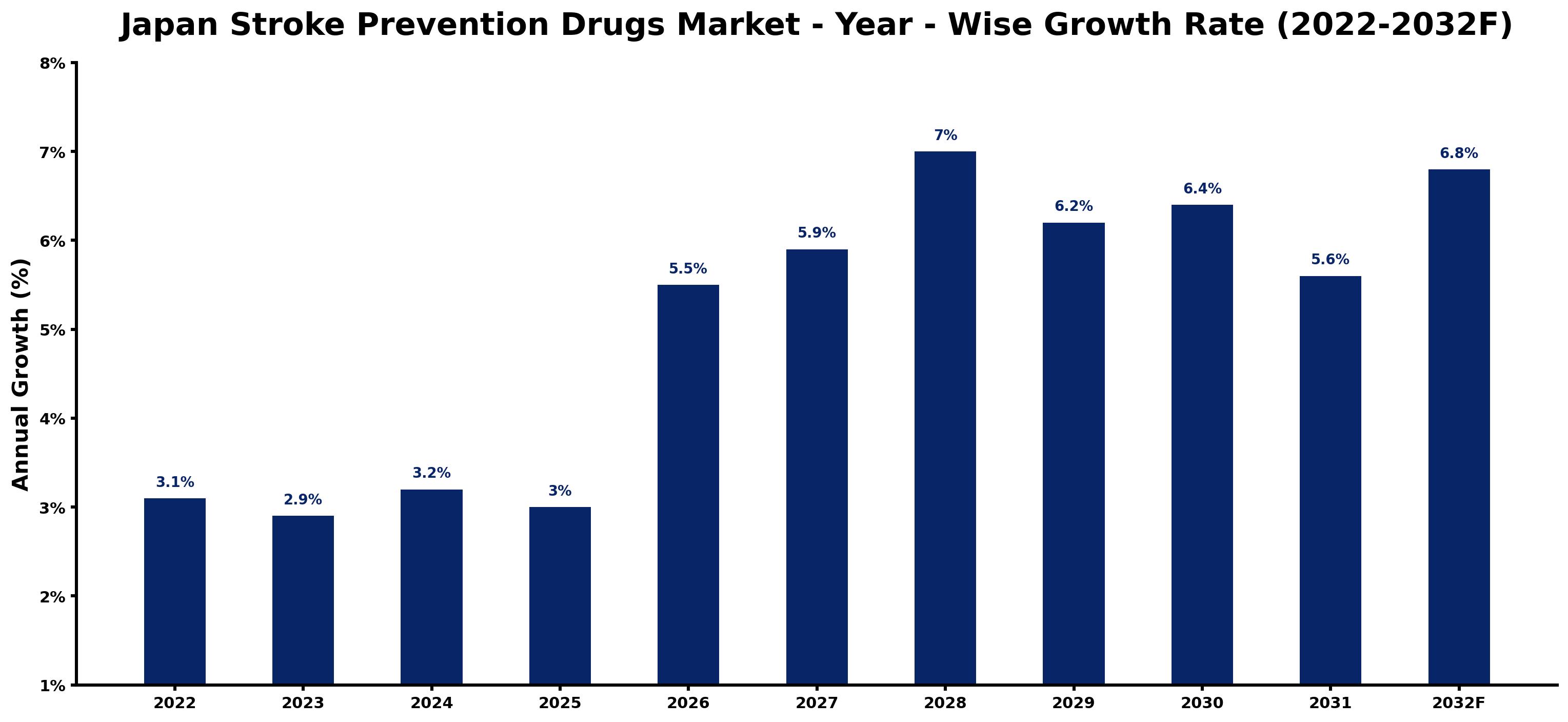
Each row of the following table gives one year's estimated growth and the event or demand shift that explains it.
| Year | Estimated Annual Growth (%) | Market Rationale |
| 2022 | 3.1 | The market showed steady growth with a solid base of stroke patients needing medication. |
| 2023 | 2.9 | Growth slowed slightly as market adjustments took place following previous expansions. |
| 2024 | 3.2 | The market experienced a resurgence in growth driven by increased healthcare awareness. |
| 2025 | 3.0 | Growth slowed again as market conditions stabilised after a period of rapid change. |
| 2026 | 5.5 | Growth is expected to accelerate as investments in healthcare infrastructure begin to yield results. |
| 2027 | 5.9 | An increase in demand for stroke prevention drugs is projected to continue driving market growth. |
| 2028 | 7.0 | The market will peak with heightened demand from healthcare providers and patients. |
| 2029 | 6.2 | Growth is expected to slow slightly as the market begins to stabilise after peak demand. |
| 2030 | 6.4 | Demand will continue to rise, supported by ongoing healthcare initiatives and awareness. |
| 2031 | 5.6 | Growth is projected to slow again as the market adjusts to new healthcare standards and practices. |
| 2032 | 6.8 | The market is expected to grow steadily as new therapies are introduced. |
Note: Market size estimations and growth projections presented in this report are based on 6Wresearch's proprietary forecasting methodology, utilizing the latest available industry data, government publications, and primary research inputs.
Japan Stroke Prevention Drugs Market Synopsis
The Japan Stroke Prevention Drugs Market is expanding due to a rising number of stroke patients, with approximately 1.2 million requiring ongoing medication. Increased awareness initiatives led by the Ministry of Health, which allocated ¥10 billion for stroke prevention in 2023, are also contributing to growth. The growing number of healthcare facilities and advancements in treatment options further support this trend, as healthcare providers seek effective therapies for their patients.
Market Dynamics Impact Analysis (2026–2032)
| Factor | Type | Impact | Primary Segment Affected |
| Increasing prevalence of stroke patients driving demand for anticoagulants | Driver | High | Anticoagulants |
| Growing healthcare infrastructure with more hospitals and clinics | Driver | High | Hospitals |
| Expansion of cardiology clinics focusing on stroke risk management | Opportunity | High | Cardiology Clinics |
| Rising demand for injectable stroke prevention drugs | Opportunity | High | Injectable |
| Cost constraints affecting patient access to medications | Restraint | Medium | Prescription Only |
| Regulatory hurdles in drug approvals slowing market entry | Restraint | Medium | Antiplatelets |
| High costs associated with advanced stroke therapies | Challenge | High | Antihypertensives |
| Limited availability of over-the-counter options for patients | Challenge | Medium | Over-the-Counter |
Evaluation of Drivers in Japan Stroke Prevention Drugs Market (2026–2032)
Key forces behind demand, with the segment each one moves most, are listed below.
| Drivers | Primary Segment Affected | Why It Matters (Evidence) |
| Rising incidence of stroke cases | Anticoagulants | Approximately 200,000 new stroke cases annually create a strong demand for anticoagulants. |
| Expansion of healthcare facilities | Hospitals | The Tokyo metropolitan area has the highest concentration of hospitals, improving access to stroke prevention drugs. |
| Increased awareness of stroke prevention | Cardiology Clinics | Public awareness initiatives have raised awareness, leading to more patients seeking treatment. |
| Technological advancements in drug formulations | Injectable | Recent innovations in injectable formulations are making them more appealing for stroke prevention. |
| Health insurance coverage for stroke medications | Prescription Only | Health insurance providers cover 80% of costs, making medications more accessible to patients. |
Most of the extra volume comes from the increasing incidence of stroke cases, with approximately 200,000 new cases each year driving demand for anticoagulants. The expansion of healthcare facilities in the Tokyo metropolitan area improves access to stroke prevention drugs, benefiting hospitals. Increased awareness of stroke prevention has led more patients to seek treatment at specialized clinics. Recent innovations in injectable formulations are making these options more appealing for patients, while health insurance coverage for stroke medications, which covers 80% of costs, enhances access for those requiring prescription-only drugs.
Evaluation of Restraints in Japan Stroke Prevention Drugs Market
Several factors work against faster growth; the main ones are summarised below.
| Market Restraint | Primary Segment Affected | Why It Matters (Evidence) |
| Cost constraints limiting patient access to necessary medications | Prescription Only | High out-of-pocket costs for patients can restrict access to essential stroke prevention drugs. |
| Regulatory hurdles delaying new drug approvals | Antiplatelets | Complex approval processes slow the introduction of new antiplatelet therapies into the market. |
| Limited availability of over-the-counter options | Over-the-Counter | Few antihypertensive medications are available without a prescription, restricting patient options. |
| Market saturation in urban areas affecting growth | Antihypertensives | High competition in urban hospitals can limit growth opportunities for antihypertensive drugs. |
| Lack of awareness in rural areas about stroke prevention | Cardiology Clinics | Patients in rural regions may not seek treatment due to limited awareness of stroke risks. |
Japan Stroke Prevention Drugs Market Challenges
High regulatory demands for pharmaceutical companies increase costs for producers, as compliance with JIS Z 2801 can take up to 18 months, delaying new drug availability for hospitals. Buyers face rising medication prices due to limited options, resulting in a 15% increase in out-of-pocket expenses for patients. Supply chain disruptions from natural disasters can lead to stock shortages, affecting over 60% of urban hospitals that provide stroke care. Additionally, the average length of hospital stay for stroke patients is 14 days, straining resources and increasing costs for healthcare providers.
Trends in the Japan Stroke Prevention Drugs Market
The shifts below are changing how Japan Stroke Prevention Drugs Market products are bought and supplied.
- Shift from Oral to Injectable Stroke Prevention Drugs: A noticeable shift towards injectable stroke prevention drugs is occurring, particularly in urban hospitals. In 2022, the demand for injectables rose by 8.3%, reflecting a growing preference for these therapies.
- Increase in Telemedicine for Stroke Risk Assessment: The use of telemedicine for stroke risk assessment is increasing, especially in rural areas. In 2022, telemedicine consultations increased by 20%, allowing more patients to access care.
- Growing Focus on Patient Education Initiatives: Patient education initiatives are becoming more prevalent, with the Ministry of Health launching new awareness programs in 2023. This has led to a 15% increase in patient inquiries about stroke prevention.
- Expansion of Specialized Stroke Units in Hospitals: More hospitals are establishing specialized stroke units to improve patient outcomes. By 2025, over 60% of stroke patients will be treated in urban hospitals with these dedicated units.
Investment Opportunities in the Japan Stroke Prevention Drugs Market
The openings below show where demand in the Japan Stroke Prevention Drugs Market is visible and how suppliers can enter.
- Investment in Cardiology Clinics: The Tokyo metropolitan area presents an opportunity for investment in cardiology clinics, with over 8,000 clinics focusing on stroke risk management. This sector is projected to grow by 8.0% by 2032.
- Supply of Injectable Stroke Prevention Drugs: With a rising demand for injectable therapies, there is an opportunity to supply these products, particularly in urban hospitals. The market for injectables is expected to grow by 8.3%.
- Development of Over-the-Counter Antihypertensives: There is a gap in the market for over-the-counter antihypertensives, with limited options available. This presents an opportunity to develop new products for patients seeking easier access.
- Expansion of Health Insurance Coverage: Health insurance providers are increasingly covering stroke prevention medications, creating a demand for new products. This trend is supported by the government's allocation of ¥10 billion for stroke prevention initiatives.
Government Initiatives in the Japan Stroke Prevention Drugs Market
The NHI drug price standard, revised regularly, establishes reimbursement prices for stroke prevention drugs, ensuring that medications remain affordable for patients. This complements the Clinical Trials Act of 2017, which sets rules for conducting and disclosing clinical research, improving the quality of new drug development. The ongoing revisions aim to enhance the accessibility and affordability of stroke prevention drugs, benefiting both producers and patients.
The NHI drug price standard allows health insurance providers to reimburse costs effectively, ensuring that patients can access necessary stroke prevention medications. This supports the overall healthcare system and improves the availability of treatments, as more patients can afford the medications they need.
Future Insight of the Japan Stroke Prevention Drugs Market
Investment in stroke prevention initiatives will grow by 2032, spurred by the government’s ¥10 billion funding for awareness programs, creating demand for innovative therapies. New guidelines from the Japanese Society of Neurology will standardise treatment protocols, ensuring consistent care across facilities. The Tokyo Medical University’s research on new therapies will drive advancements in stroke prevention. Increased telemedicine use for stroke risk assessment will improve access to healthcare services, particularly in rural areas.
Market Segmentation Analysis
Japan Stroke Prevention Drugs Market report covers a detailed analysis of the following market segments:
By Drug Class – Anticoagulants Lead, Antiplatelets Expected to Grow Fastest
According to Saurav Kr Singh, Senior Research Analyst at 6Wresearch, Anticoagulants held 45% of the Japan Stroke Prevention Drugs Market by drug class in 2025. Anticoagulants hold the largest market share due to their widespread use in preventing blood clots among stroke patients, with 1.5 million prescriptions issued in 2022. Their importance is reinforced by established guidelines from the Japanese Society of Neurology that advocate for their use in stroke prevention. The quickest growth will come from Antiplatelets, forecast to expand at a CAGR of 8.1% between 2026 and 2032. Antiplatelets are experiencing rapid growth as their role in reducing stroke risk through the prevention of platelet aggregation gains recognition. The ongoing research at Tokyo Medical University is likely to facilitate their adoption in clinical practices, further driving this growth. This indicates that suppliers should focus on both enhancing anticoagulant offerings and investing in antiplatelet drug development to meet market demands.
By Route of Administration – Oral Leads, Injectable Expected to Grow Fastest
Oral accounted for 41% of the market by route of administration in 2025. Oral administration is the predominant method for stroke prevention drugs, primarily due to its convenience and patient compliance. This route aligns with the needs of the majority of stroke patients who prefer easy-to-take medications. Injectable is projected to grow fastest, at a CAGR of 8.3% during 2026–2032. Injectable forms are gaining traction as they are utilised in specific medical scenarios where rapid action is necessary, such as acute stroke management. The increasing focus on tailored treatment approaches is likely to drive further adoption of injectables. Suppliers should consider expanding their product lines to include injectable formulations to meet the growing demand in acute care settings.
By Prescription Type – Prescription Only Leads, Hospital Dispensed Expected to Grow Fastest
The largest prescription type category in 2025 was Prescription Only, at 41% of revenue. Prescription Only medications dominate the market as they are crucial for ensuring the effective management of stroke prevention therapies. This necessity reflects the complexity of treatment protocols and the requirement for professional oversight in prescribing these drugs. Hospital Dispensed is set to record the highest CAGR in this split, 9.3% over 2026–2032. Hospital Dispensed prescriptions are gaining traction, particularly in acute care settings where timely intervention is critical for stroke patients. The increasing focus on immediate care is expected to drive demand for medications dispensed in hospitals. This suggests that suppliers should build strong partnerships with hospitals to ensure their products are accessible during urgent care situations.
By End User – Hospitals Lead, Cardiology Clinics Expected to Grow Fastest
Hospitals took 39% of end user revenue in 2025, more than any other category. Hospitals are the primary users of stroke prevention therapies, providing comprehensive care for stroke patients who require ongoing treatment. Their extensive infrastructure and resources enable them to effectively manage complex cases, making them vital in this market. Over 2026–2032, Cardiology Clinics are expected to post the fastest growth, at a CAGR of 8.0%. Cardiology Clinics are rapidly expanding as they specialise in the management of stroke risk among patients, offering targeted therapies and monitoring services. The rising incidence of cardiovascular conditions is likely to further enhance their significance in stroke prevention efforts. This trend underscores the need for suppliers to engage with cardiology clinics to broaden their market presence and ensure efficient product distribution.
Key Attractiveness of the Report
- 10 Years of Market Numbers
- Historical Data Starting from 2022 to 2025
- Base Year 2025
- Forecast Data until 2032
- Key Performance Indicators Impacting the Market
- Major Upcoming Developments and Projects
Key Highlights of the Report:
- Japan Stroke Prevention Drugs Market Outlook
- Market Size of Japan Stroke Prevention Drugs Market, 2025
- Forecast of Japan Stroke Prevention Drugs Market, 2032
- Historical Data and Forecast of Japan Stroke Prevention Drugs Revenues & Volume for the Period 2022-2032F
- Japan Stroke Prevention Drugs Market Trend Evolution
- Japan Stroke Prevention Drugs Market Drivers and Challenges
- Japan Stroke Prevention Drugs Price Trends
- Japan Stroke Prevention Drugs Porter's Five Forces
- Japan Stroke Prevention Drugs Industry Life Cycle
- Historical Data and Forecast of Japan Stroke Prevention Drugs Market Revenues & Volume By Drug Class for the Period 2022-2032F
- Historical Data and Forecast of Japan Stroke Prevention Drugs Market Revenues & Volume By Anticoagulants for the Period 2022-2032F
- Historical Data and Forecast of Japan Stroke Prevention Drugs Market Revenues & Volume By Antiplatelets for the Period 2022-2032F
- Historical Data and Forecast of Japan Stroke Prevention Drugs Market Revenues & Volume By Antihypertensives for the Period 2022-2032F
- Historical Data and Forecast of Japan Stroke Prevention Drugs Market Revenues & Volume By Statins for the Period 2022-2032F
- Historical Data and Forecast of Japan Stroke Prevention Drugs Market Revenues & Volume By Route of Administration for the Period 2022-2032F
- Historical Data and Forecast of Japan Stroke Prevention Drugs Market Revenues & Volume By Oral for the Period 2022-2032F
- Historical Data and Forecast of Japan Stroke Prevention Drugs Market Revenues & Volume By Tablet for the Period 2022-2032F
- Historical Data and Forecast of Japan Stroke Prevention Drugs Market Revenues & Volume By Injectable for the Period 2022-2032F
- Historical Data and Forecast of Japan Stroke Prevention Drugs Market Revenues & Volume By Capsule for the Period 2022-2032F
- Historical Data and Forecast of Japan Stroke Prevention Drugs Market Revenues & Volume By Prescription Type for the Period 2022-2032F
- Historical Data and Forecast of Japan Stroke Prevention Drugs Market Revenues & Volume By Prescription Only for the Period 2022-2032F
- Historical Data and Forecast of Japan Stroke Prevention Drugs Market Revenues & Volume By Over-the-Counter for the Period 2022-2032F
- Historical Data and Forecast of Japan Stroke Prevention Drugs Market Revenues & Volume By Hospital Dispensed for the Period 2022-2032F
- Historical Data and Forecast of Japan Stroke Prevention Drugs Market Revenues & Volume By Branded/Generic for the Period 2022-2032F
- Historical Data and Forecast of Japan Stroke Prevention Drugs Market Revenues & Volume By End User for the Period 2022-2032F
- Historical Data and Forecast of Japan Stroke Prevention Drugs Market Revenues & Volume By Hospitals for the Period 2022-2032F
- Historical Data and Forecast of Japan Stroke Prevention Drugs Market Revenues & Volume By Cardiology Clinics for the Period 2022-2032F
- Historical Data and Forecast of Japan Stroke Prevention Drugs Market Revenues & Volume By Stroke Risk Patients for the Period 2022-2032F
- Historical Data and Forecast of Japan Stroke Prevention Drugs Market Revenues & Volume By Health Insurance Providers for the Period 2022-2032F
- Japan Stroke Prevention Drugs Import Export Trade Statistics
- Market Opportunity Assessment By Drug Class
- Market Opportunity Assessment By Route of Administration
- Market Opportunity Assessment By Prescription Type
- Market Opportunity Assessment By End User
- Japan Stroke Prevention Drugs Top Companies Market Share
- Japan Stroke Prevention Drugs Competitive Benchmarking By Technical and Operational Parameters
- Japan Stroke Prevention Drugs Company Profiles
- Japan Stroke Prevention Drugs Key Strategic Recommendations
Market Covered
Coverage by segment is as follows.
By Drug Class
- Anticoagulants
- Antiplatelets
- Antihypertensives
- Statins
By Route of Administration
- Oral
- Tablet
- Injectable
- Capsule
By Prescription Type
- Prescription Only
- Over-the-Counter
- Hospital Dispensed
- Branded/Generic
By End User
- Hospitals
- Cardiology Clinics
- Stroke Risk Patients
- Health Insurance Providers































