Japan Stroke Prevention Market Size & Growth Rate
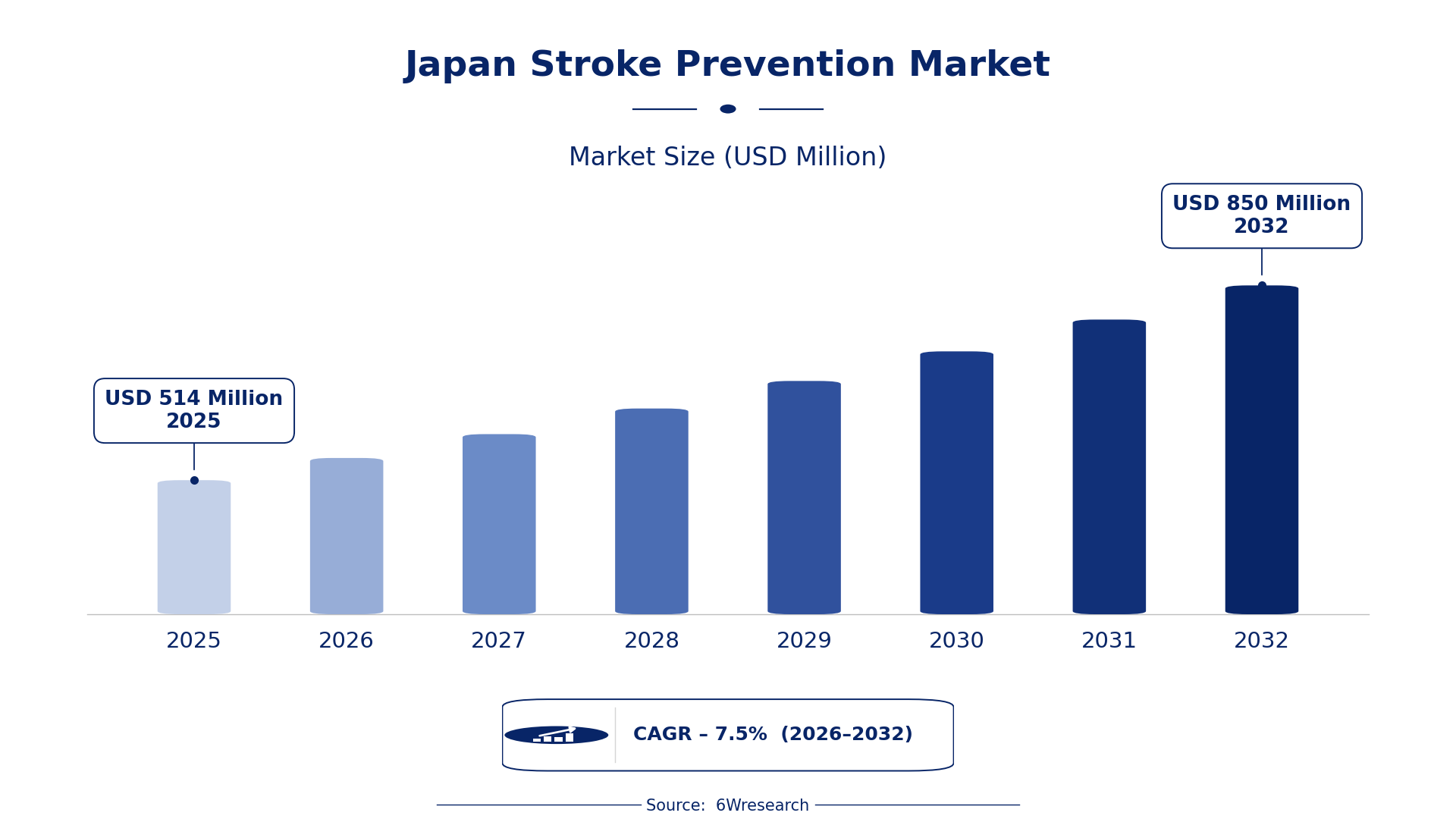
According to 6Wresearch internal database and industry insights, the Japan Stroke Prevention Market was valued at USD 514 Million in 2025 and is projected to reach USD 850 Million by 2032, growing at a CAGR of approximately 7.5% during 2026–2032.
Japan Stroke Prevention Market Highlights
| Report Metric | Details |
| Report Name | Japan Stroke Prevention Market (2026-2032) |
| Market Size 2025 | USD 514 Million |
| Market Size 2032 | USD 850 Million |
| Absolute Growth 2025–2032 | USD 336 Million |
| CAGR 2026–2032 | 7.5% |
| Peak Annual Growth | 8.4% in 2029 |
| Forecast Period | 2026–2032 |
| Historical Data | 2022–2025 |
| Base Year | 2025 |
| Leading Intervention Type, 2025 | Lifestyle Management (44% share) |
| Leading Risk Group, 2025 | High Blood Pressure (43% share) |
| Leading Delivery Channel, 2025 | Public Health Programs (40% share) |
| Leading End User, 2025 | Wellness Centers (49% share) |
| Fastest-Growing Intervention Type | Medication Therapy (10.9% CAGR) |
| Fastest-Growing Risk Group | Atrial Fibrillation (9.8% CAGR) |
| Fastest-Growing Delivery Channel | Hospitals (9.9% CAGR) |
| Fastest-Growing End User | Cardiologists (9.7% CAGR) |
| Growing Sector | Preventive Health Services |
| Key End Users | Public Health Programs, Wellness Centers, Research Institutions, Hospitals |
Japan Stroke Prevention Market Year-wise Growth Rate and Key Drivers (2022–2032)
This graph illustrates the annual growth rates of the market from 2022 to 2032, highlighting a steady upward trajectory and projected market expansion over the forecast period.
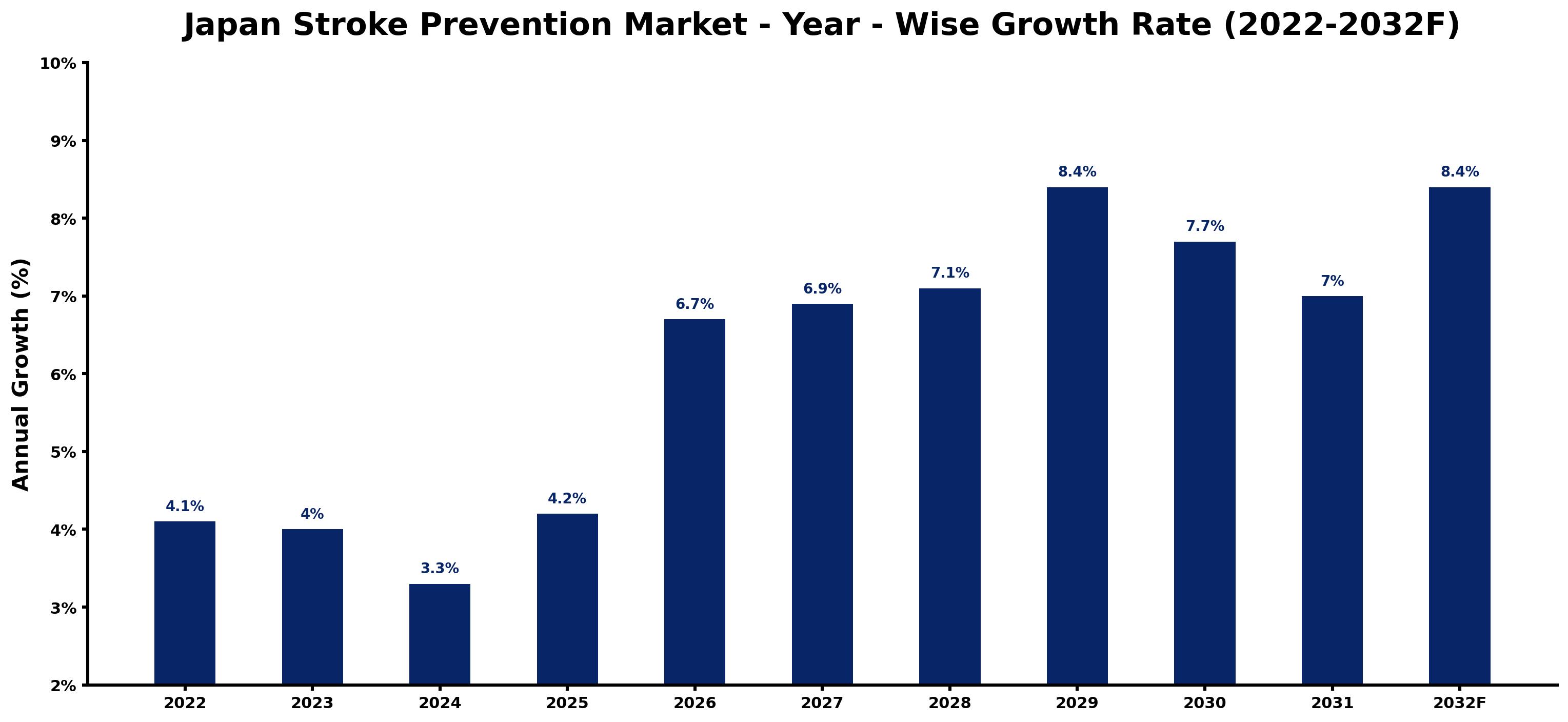
Annual growth estimates for each year appear below with the principal reason behind them, explaining the shifts that set the pace of the market.
| Year | Estimated Annual Growth (%) | Market Rationale |
| 2022 | 4.1 | The market exhibited steady growth due to increased awareness of stroke risks. |
| 2023 | 4.0 | Growth slowed as the market adjusted to previous high demand levels. |
| 2024 | 3.3 | The market experienced a further slowdown as lifestyle changes took time to implement. |
| 2025 | 4.2 | Growth accelerated as public health initiatives gained traction among high-risk groups. |
| 2026 | 6.7 | Demand surged as more individuals adopted wearable monitoring technologies. |
| 2027 | 6.9 | Growth continued with increased investment in preventive health programs. |
| 2028 | 7.1 | The market expanded as awareness campaigns reached broader demographics. |
| 2029 | 8.4 | Growth peaked as innovative therapies and technologies became widely available. |
| 2030 | 7.7 | Growth moderated slightly as market saturation began to occur in urban areas. |
| 2031 | 7.0 | The market continued to grow, supported by ongoing public health efforts. |
| 2032 | 8.4 | Demand surged again as the elderly population increased significantly. |
Note: Market size estimations and growth projections presented in this report are based on 6Wresearch's proprietary forecasting methodology, utilizing the latest available industry data, government publications, and primary research inputs.
Japan Stroke Prevention Market Synopsis
Stroke prevention in Japan combines lifestyle management, medication therapy, and wearable monitoring technologies to reduce stroke incidence, particularly among high-risk populations. The Japan Stroke Prevention Market is expanding due to a high prevalence of high blood pressure and atrial fibrillation, affecting millions. Public Health Programs aim to lower stroke incidence by 25% by 2030, while the elderly population is projected to reach 36 million by 2040, creating new demand for stroke prevention solutions.
Market Dynamics Impact Analysis (2026–2032)
| Factor | Type | Impact | Primary Segment Affected |
| Increased prevalence of high blood pressure | Driver | High | High Blood Pressure |
| Growing adoption of wearable monitoring technologies | Driver | High | Wearable Monitoring |
| Expansion of public health initiatives | Opportunity | High | Public Health Programs |
| Rising elderly population requiring preventive measures | Opportunity | High | Elderly Population |
| Limited access to preventive health resources in rural areas | Restraint | Medium | Public Health Programs |
| High costs of advanced medication therapies | Restraint | Medium | Medication Therapy |
| Challenges in integrating new technologies into existing systems | Challenge | High | Wearable Monitoring |
| Competition among healthcare providers for patient engagement | Challenge | High | Hospitals |
Evaluation of Drivers in Japan Stroke Prevention Market (2026–2032)
The table below links each growth driver to the segment it affects and the evidence for it.
| Drivers | Primary Segment Affected | Why It Matters (Evidence) |
| High prevalence of high blood pressure | High Blood Pressure | Approximately 30% of adults in Japan are affected, increasing demand for effective management solutions. |
| Adoption of wearable health technologies | Wearable Monitoring | With over 1,000 wellness centers established, real-time health tracking is gaining traction among consumers. |
| Government initiatives targeting stroke awareness | Public Health Programs | Public Health Programs aim to reduce stroke incidence by 25% by 2030, driving increased participation. |
| Increased funding for stroke research | Research Institutions | Government funding supports studies that lead to new prevention methods and technologies for stroke management. |
| Growing elderly population | Elderly Population | By 2040, the elderly population is projected to reach 36 million, increasing the demand for stroke prevention. |
Volumes grow on the back of the high prevalence of high blood pressure, affecting around 30% of adults in Japan. This condition drives demand for effective management solutions, particularly among high-risk adults. The adoption of wearable health technologies is increasing, with numerous wellness centers established to promote preventive health. Increased funding for stroke research supports studies that lead to new prevention methods catering to the aging population, projected to reach 36 million by 2040.
Evaluation of Restraints in Japan Stroke Prevention Market
The main factors holding the market back are set out below.
| Market Restraint | Primary Segment Affected | Why It Matters (Evidence) |
| Limited access to preventive health resources in rural areas | Public Health Programs | Rural populations often lack access to health facilities, limiting the effectiveness of stroke prevention efforts. |
| High costs of advanced medication therapies | Medication Therapy | Expensive treatments can deter patients from seeking necessary management options, impacting overall health outcomes. |
| Integration challenges with existing healthcare systems | Wearable Monitoring | Healthcare providers face difficulties in adopting new technologies within established frameworks, delaying implementation. |
| Insufficient public awareness in certain demographics | Public Health Programs | Some populations remain unaware of stroke risks, limiting the effectiveness of prevention initiatives. |
| Competition among healthcare providers for patient engagement | Hospitals | Intense competition can lead to fragmented efforts in stroke prevention initiatives, reducing overall impact. |
Japan Stroke Prevention Market Challenges
In 2023, Japan faces a shortage of over 100,000 skilled healthcare professionals, which delays patient care and raises costs for hospitals. Rapid technological advancements in monitoring devices are not fully integrated into existing healthcare systems, resulting in inefficiencies that can increase treatment expenses by 15% for clinics. The cost of medications for managing stroke risk factors has risen by 10% in the past year, placing financial pressure on patients and health insurance providers. Stringent regulations imposed by the Ministry of Health, Labour and Welfare can extend the approval process for new treatments by an average of six months, causing delays in access for high-risk populations.
Trends in the Japan Stroke Prevention Market
These developments are changing demand patterns in the Japan Stroke Prevention Market.
- Shift towards Wearable Health Technologies: The adoption of wearable health technologies is increasing, with a 40% rise in user engagement on online health platforms focusing on preventive health. This shift supports real-time health tracking, improving patient engagement in stroke prevention.
- Focus on Public Health Initiatives: Japan's Public Health Programs are expanding, aiming to reduce stroke incidence by 25% by 2030. This initiative encourages community involvement and raises awareness about stroke prevention.
- Growing Demand for Lifestyle Management: There is a rising emphasis on lifestyle management as a preventive measure against stroke. Cardiologists recommend lifestyle changes, reflecting a shift in patient care strategies.
- Increased Funding for Stroke Research: Government funding for stroke research is on the rise, supporting studies in prevention methods. Research Institutions are receiving increased financial backing to explore new solutions.
Investment Opportunities in the Japan Stroke Prevention Market
Several openings in the Japan Stroke Prevention Market merit attention from investors.
- Investment in Wearable Health Technologies: The demand for wearable health technologies is growing, with a 40% increase in user engagement on online health platforms. Investing in these technologies can cater to high-risk populations and improve health outcomes.
- Expansion of Public Health Programs: With the aim to reduce stroke incidence by 25% by 2030, investing in Public Health Programs presents a strong opportunity. Collaborating with local health authorities can improve outreach and effectiveness.
- Development of Advanced Medication Therapies: The high costs of existing medication therapies create a gap for affordable alternatives. Targeting high-risk adults can lead to substantial market entry opportunities for new treatments.
- Focus on Elderly Health Services: The projected increase of the elderly population to 36 million by 2040 presents a significant opportunity for services targeting stroke prevention. Establishing partnerships with wellness centres can facilitate market entry.
Government Initiatives in the Japan Stroke Prevention Market
The Next-Generation Medical Infrastructure Act (2017) facilitates the use of anonymised medical data for research, promoting the development of new stroke prevention methods. This measure encourages collaboration between research institutions and healthcare providers, driving innovation in treatment approaches. The Act supports the integration of advanced technologies into stroke management, improving patient outcomes.
The Ministry of Health, Labour and Welfare (MHLW) oversees stroke prevention initiatives and funds various programs. MHLW approves projects aimed at increasing public awareness and improving healthcare infrastructure for stroke management, ensuring effective resource allocation and community engagement.
Future Insight of the Japan Stroke Prevention Market
Investment in advanced monitoring technologies will reach $500 million by 2032, creating demand for new solutions in stroke prevention. Public health initiatives will focus on enhancing awareness and education among the elderly, who represent a growing segment of the population. As wellness centres expand, they will significantly contribute to community outreach and support. Increased government funding for research will drive advancements in prevention methods, benefiting both buyers and suppliers in the healthcare market.
Market Segmentation Analysis
Japan Stroke Prevention Market report covers a detailed analysis of the following market segments:
By Intervention Type – Lifestyle Management Leads, Medication Therapy Expected to Grow Fastest
According to Saurav Kr Singh, Senior Research Analyst at 6Wresearch, Lifestyle Management accounted for 44% of the market by intervention type in 2025. Lifestyle management holds the largest share as it directly promotes healthier living, essential for reducing stroke risk among Japan's aging population. Public health programmes actively support these lifestyle changes, making them a cornerstone of stroke prevention strategies. Medication Therapy is set to record the highest CAGR in this split, 10.9% over 2026–2032. Medication therapy is experiencing rapid growth due to its critical role in managing stroke risk factors like high blood pressure and atrial fibrillation. The increasing prevalence of these conditions among the population is driving demand for effective medication solutions, ensuring lifestyle management remains a strong foundation. Suppliers should focus on developing targeted medication therapies to meet the rising demand.
By Risk Group – High Blood Pressure Leads, Atrial Fibrillation Expected to Grow Fastest
High Blood Pressure took 43% of risk group revenue in 2025, more than any other category. High blood pressure is the primary risk factor for stroke, affecting around 30% of adults in Japan. This widespread prevalence underscores the urgent need for effective management strategies to prevent strokes in the population. Atrial Fibrillation is projected to grow fastest, at a CAGR of 9.8% during 2026–2032. Atrial fibrillation is emerging as a rapidly growing risk factor, impacting approximately 1.5 million people and significantly increasing stroke risk. The heightened awareness and diagnosis of this condition are accelerating its growth in the market, reinforcing the need for effective management. Buyers need to prioritise management strategies for atrial fibrillation to mitigate stroke risks effectively.
By Delivery Channel – Public Health Programs Lead, Hospitals Expected to Grow Fastest
Public Health Programs held 40% of the Japan Stroke Prevention Market by delivery channel in 2025. Public health programmes lead the market as they are government initiatives focused on raising awareness and promoting stroke prevention. These programmes play a vital role in educating the population about stroke risks and preventive measures. The quickest growth will come from Hospitals, forecast to expand at a CAGR of 9.9% between 2026 and 2032. Hospitals are the fastest-growing delivery channel as they provide immediate care and management for stroke patients. The establishment of more specialised stroke care facilities, particularly in regions like Tokyo, is driving their growth in the market. Suppliers should enhance partnerships with hospitals to ensure better access to stroke prevention resources.
By End User – Wellness Centers Lead, Cardiologists Expected to Grow Fastest
In 2025, Wellness Centers led the end user split with a 49% share. Wellness centers dominate the market as they are instrumental in supporting lifestyle changes crucial for stroke prevention among high-risk populations. Their involvement in community health initiatives is essential for effectively promoting preventive measures. Over 2026–2032, Cardiologists are expected to post the fastest growth, at a CAGR of 9.7%. Cardiologists are experiencing the fastest growth as they specialise in managing stroke risk factors such as high blood pressure and atrial fibrillation. Their expertise is increasingly sought after as awareness of stroke prevention rises among patients, ensuring their role becomes more prominent. Suppliers should engage with cardiologists to align their offerings with the needs of stroke risk management.
Key Attractiveness of the Report
- 10 Years of Market Numbers
- Historical Data Starting from 2022 to 2025
- Base Year 2025
- Forecast Data until 2032
- Key Performance Indicators Impacting the Market
- Major Upcoming Developments and Projects
Key Highlights of the Report:
- Japan Stroke Prevention Market Outlook
- Market Size of Japan Stroke Prevention Market, 2025
- Forecast of Japan Stroke Prevention Market, 2032
- Historical Data and Forecast of Japan Stroke Prevention Revenues & Volume for the Period 2022-2032F
- Japan Stroke Prevention Market Trend Evolution
- Japan Stroke Prevention Market Drivers and Challenges
- Japan Stroke Prevention Price Trends
- Japan Stroke Prevention Porter's Five Forces
- Japan Stroke Prevention Industry Life Cycle
- Historical Data and Forecast of Japan Stroke Prevention Market Revenues & Volume By Intervention Type for the Period 2022-2032F
- Historical Data and Forecast of Japan Stroke Prevention Market Revenues & Volume By Lifestyle Management for the Period 2022-2032F
- Historical Data and Forecast of Japan Stroke Prevention Market Revenues & Volume By Medication Therapy for the Period 2022-2032F
- Historical Data and Forecast of Japan Stroke Prevention Market Revenues & Volume By Wearable Monitoring for the Period 2022-2032F
- Historical Data and Forecast of Japan Stroke Prevention Market Revenues & Volume By Vaccination Research for the Period 2022-2032F
- Historical Data and Forecast of Japan Stroke Prevention Market Revenues & Volume By Risk Group for the Period 2022-2032F
- Historical Data and Forecast of Japan Stroke Prevention Market Revenues & Volume By High Blood Pressure for the Period 2022-2032F
- Historical Data and Forecast of Japan Stroke Prevention Market Revenues & Volume By Atrial Fibrillation for the Period 2022-2032F
- Historical Data and Forecast of Japan Stroke Prevention Market Revenues & Volume By Elderly Population for the Period 2022-2032F
- Historical Data and Forecast of Japan Stroke Prevention Market Revenues & Volume By High-Risk Adults for the Period 2022-2032F
- Historical Data and Forecast of Japan Stroke Prevention Market Revenues & Volume By Delivery Channel for the Period 2022-2032F
- Historical Data and Forecast of Japan Stroke Prevention Market Revenues & Volume By Public Health Programs for the Period 2022-2032F
- Historical Data and Forecast of Japan Stroke Prevention Market Revenues & Volume By Hospitals for the Period 2022-2032F
- Historical Data and Forecast of Japan Stroke Prevention Market Revenues & Volume By Online Retailers for the Period 2022-2032F
- Historical Data and Forecast of Japan Stroke Prevention Market Revenues & Volume By Research Institutions for the Period 2022-2032F
- Historical Data and Forecast of Japan Stroke Prevention Market Revenues & Volume By End User for the Period 2022-2032F
- Historical Data and Forecast of Japan Stroke Prevention Market Revenues & Volume By Wellness Centers for the Period 2022-2032F
- Historical Data and Forecast of Japan Stroke Prevention Market Revenues & Volume By Cardiologists for the Period 2022-2032F
- Historical Data and Forecast of Japan Stroke Prevention Market Revenues & Volume By Preventive Health Providers for the Period 2022-2032F
- Historical Data and Forecast of Japan Stroke Prevention Market Revenues & Volume By Clinical Labs for the Period 2022-2032F
- Japan Stroke Prevention Import Export Trade Statistics
- Market Opportunity Assessment By Intervention Type
- Market Opportunity Assessment By Risk Group
- Market Opportunity Assessment By Delivery Channel
- Market Opportunity Assessment By End User
- Japan Stroke Prevention Top Companies Market Share
- Japan Stroke Prevention Competitive Benchmarking By Technical and Operational Parameters
- Japan Stroke Prevention Company Profiles
- Japan Stroke Prevention Key Strategic Recommendations
Market Covered
The report covers the following segments.
By Intervention Type
- Lifestyle Management
- Medication Therapy
- Wearable Monitoring
- Vaccination Research
By Risk Group
- High Blood Pressure
- Atrial Fibrillation
- Elderly Population
- High-Risk Adults
By Delivery Channel
- Public Health Programs
- Hospitals
- Online Retailers
- Research Institutions
By End User
- Wellness Centers
- Cardiologists
- Preventive Health Providers
- Clinical Labs































