Japan Systemic Lupus Erythematosus Market Size & Growth Rate
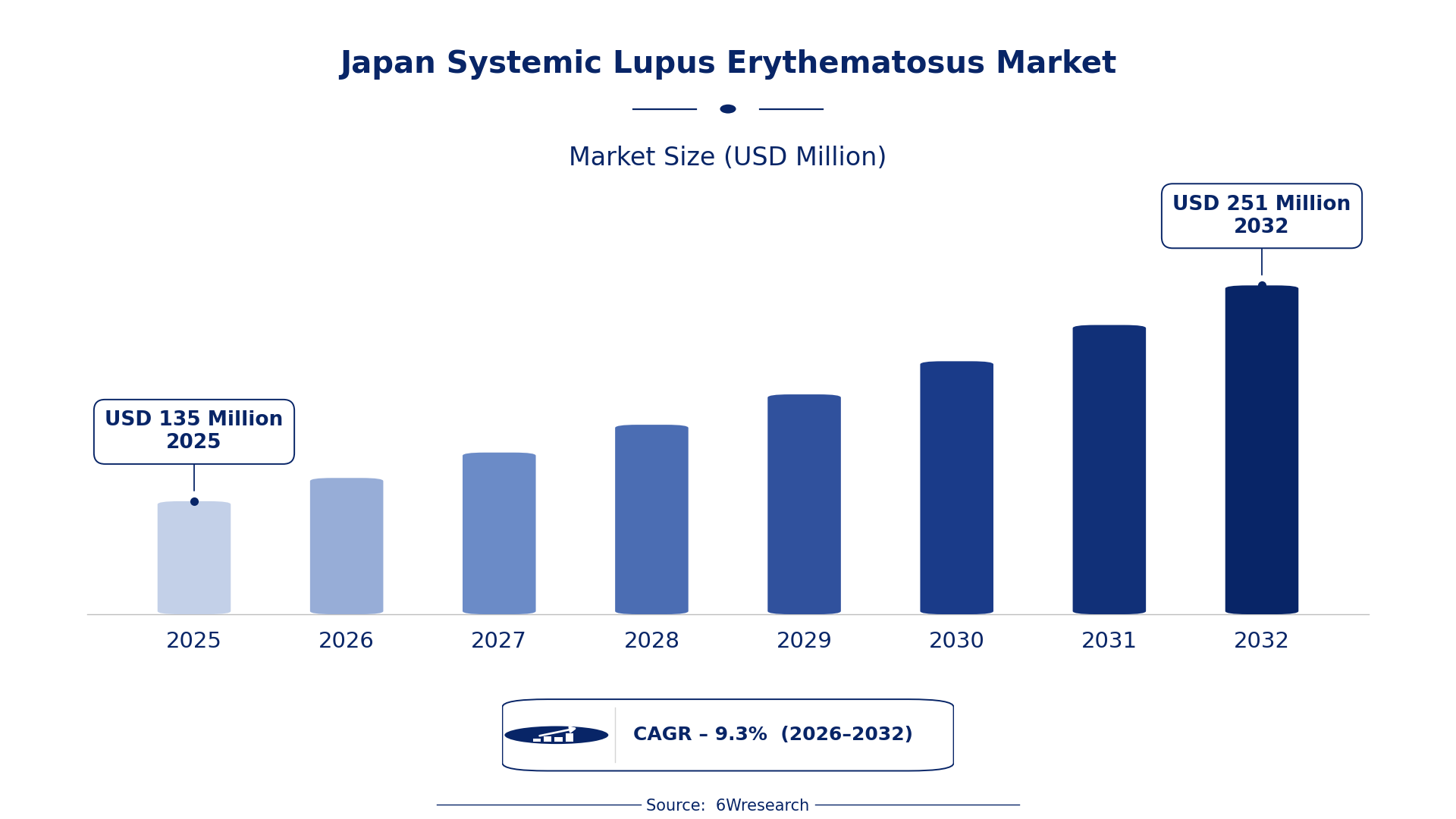
According to 6Wresearch internal database and industry insights, the Japan Systemic Lupus Erythematosus Market was valued at USD 135 Million in 2025 and is projected to reach USD 251 Million by 2032, growing at a CAGR of approximately 9.3% during 2026–2032.
Japan Systemic Lupus Erythematosus Market Highlights
| Report Metric | Details |
| Report Name | Japan Systemic Lupus Erythematosus Market (2026-2032) |
| Market Size 2025 | USD 135 Million |
| Market Size 2032 | USD 251 Million |
| Absolute Growth 2025–2032 | USD 116 Million |
| CAGR 2026–2032 | 9.3% |
| Peak Annual Growth | 10.0% in 2028 |
| Forecast Period | 2026–2032 |
| Historical Data | 2022–2025 |
| Base Year | 2025 |
| Leading Type, 2025 | Corticosteroids (36% share) |
| Leading Application, 2025 | Intravenous (54% share) |
| Fastest-Growing Type | Non-Steroidal Anti-inflammatory Drugs (NSAIDs) (13.3% CAGR) |
| Fastest-Growing Application | Oral (12.2% CAGR) |
| Growing Sector | Healthcare and Pharmaceuticals |
| Key End Users | Healthcare providers, patients, research institutions |
Japan Systemic Lupus Erythematosus Market Year-wise Growth Rate and Key Drivers (2022–2032)
This graph illustrates the annual growth rates of the market from 2022 to 2032, highlighting a steady upward trajectory and projected market expansion over the forecast period.
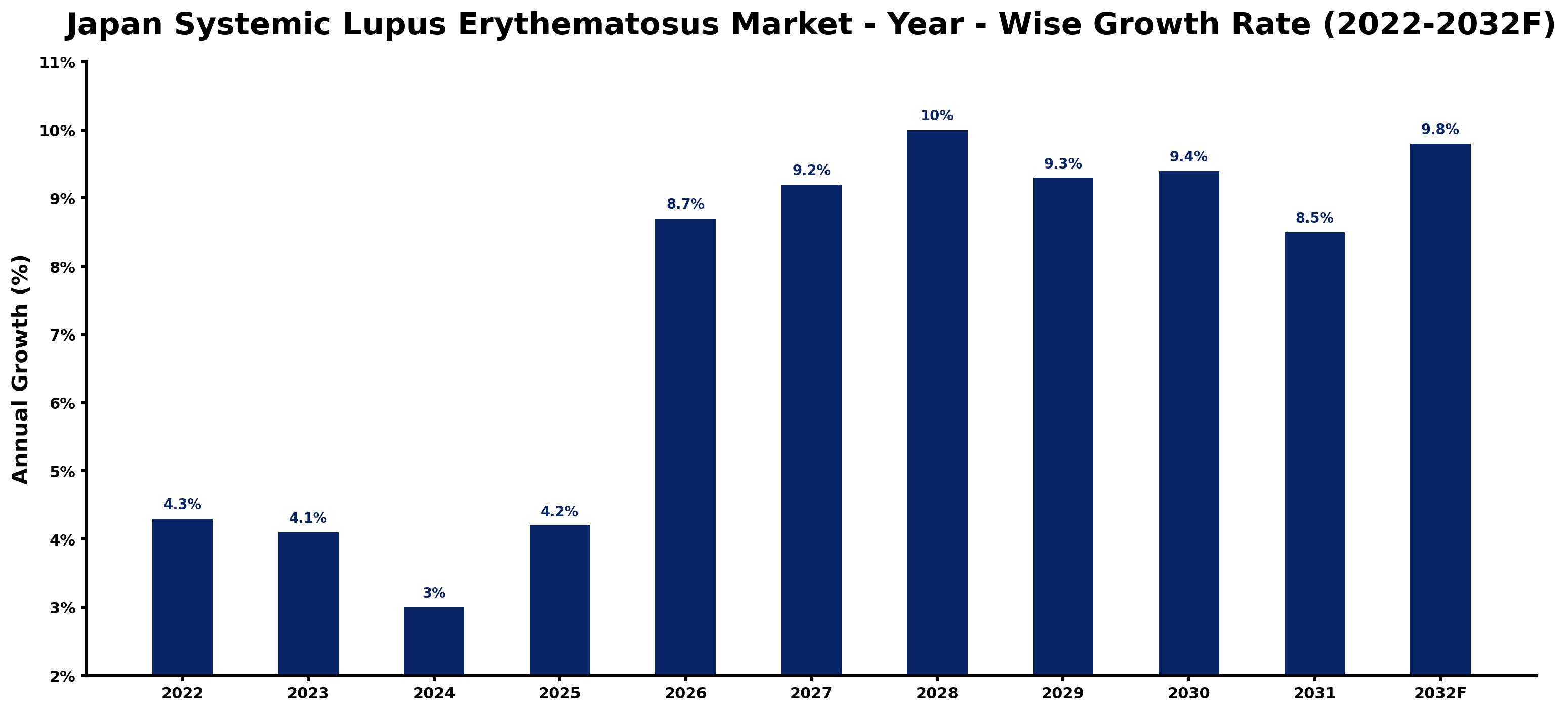
Below, each year's estimated growth is shown next to the factor that most influenced it.
| Year | Estimated Annual Growth (%) | Market Rationale |
| 2022 | 4.3 | The market was characterised by steady demand from healthcare providers and patients. |
| 2023 | 4.1 | Growth slowed slightly as treatment options became more established in the market. |
| 2024 | 3.0 | A further slowdown occurred as the market adjusted to previous years' growth. |
| 2025 | 4.2 | Demand increased as new treatment guidelines were adopted by healthcare professionals. |
| 2026 | 8.7 | Growth is expected to accelerate due to rising awareness and diagnosis rates among patients. |
| 2027 | 9.2 | Continued awareness efforts are projected to contribute to a further increase in demand. |
| 2028 | 10.0 | The market is expected to peak as new therapies gain traction among healthcare providers. |
| 2029 | 9.3 | Growth is projected to slow slightly as the market begins to stabilise after rapid expansion. |
| 2030 | 9.4 | Demand is expected to rise again as new treatment options become available to patients. |
| 2031 | 8.5 | A slight slowdown is anticipated as the market adjusts to recent developments. |
| 2032 | 9.8 | Growth is projected to pick up again as the introduction of new therapies enhances treatment options. |
Note: Market size estimations and growth projections presented in this report are based on 6Wresearch's proprietary forecasting methodology, utilizing the latest available industry data, government publications, and primary research inputs.
Japan Systemic Lupus Erythematosus Market Synopsis
Systemic Lupus Erythematosus (SLE) is an autoimmune disease where the immune system attacks the body’s tissues. Treatment typically includes corticosteroids, NSAIDs, and immunosuppressants to manage symptoms and prevent flare-ups. The Japan Systemic Lupus Erythematosus Market is expanding due to increasing patient diagnoses, with approximately 130,000 diagnosed patients in 2022. The Japanese government's allocation of ¥1 billion for autoimmune disease research in 2023 is further driving demand, alongside the establishment of treatment guidelines by the Japan College of Rheumatology. This growth is supported by the rising number of healthcare facilities and increased awareness among patients and providers alike.
Market Dynamics Impact Analysis (2026–2032)
| Factor | Type | Impact | Primary Segment Affected |
| Growing number of diagnosed patients drives demand for treatment options. | Driver | High | Corticosteroids |
| Increased awareness and education about SLE leads to earlier diagnosis. | Driver | High | Non-Steroidal Anti-inflammatory Drugs (NSAIDs) |
| Emerging treatment options provide new avenues for patient care. | Opportunity | High | Disease-Modifying Anti-Rheumatic Drugs (DMARDs) |
| Investment in research and development opens new market segments. | Opportunity | High | BLyS-specific Inhibitors or Monoclonal Antibodies (MAbS) |
| Limited access to specialized treatment facilities can hinder growth. | Restraint | Medium | Intravenous |
| High costs of advanced therapies may restrict patient access. | Restraint | Medium | Oral |
| Competition among treatment options can lead to market saturation. | Challenge | Medium | Anti-Inflammatories |
| Regulatory hurdles can delay the introduction of new therapies. | Challenge | Medium | Immunosuppressive Agents/Immune Modulators |
Evaluation of Drivers in Japan Systemic Lupus Erythematosus Market (2026–2032)
The following drivers explain most of the expected growth.
| Drivers | Primary Segment Affected | Why It Matters (Evidence) |
| Increasing number of diagnosed SLE patients drives demand for corticosteroids. | Corticosteroids | In 2022, Japan had approximately 130,000 diagnosed SLE patients, leading to higher purchases of corticosteroids. |
| Growing awareness of SLE leads to increased use of NSAIDs. | Non-Steroidal Anti-inflammatory Drugs (NSAIDs) | The average age of SLE diagnosis is around 30 years, prompting younger patients to seek pain relief. |
| New treatment guidelines encourage the adoption of DMARDs. | Disease-Modifying Anti-Rheumatic Drugs (DMARDs) | Updated treatment guidelines by the Japan College of Rheumatology promote DMARD usage, increasing prescriptions. |
| Investment in autoimmune disease research expands treatment options. | BLyS-specific Inhibitors or Monoclonal Antibodies (MAbS) | In 2023, the government allocated ¥1 billion for research, supporting the development of new therapies. |
| Increased hospital facilities enhance patient access to treatments. | Intravenous | With over 500 hospitals specializing in rheumatology, treatment availability is improving across Japan. |
Purchasing is picking up as the number of diagnosed SLE patients continues to rise, with approximately 130,000 patients reported in 2022. This increase has led to heightened demand for corticosteroids, essential for managing inflammation. Awareness of SLE among healthcare providers has resulted in more patients seeking treatment, particularly for NSAIDs, which are important for pain relief. The establishment of updated treatment guidelines has further encouraged the adoption of new therapies.
Evaluation of Restraints in Japan Systemic Lupus Erythematosus Market
The following restraints limit how fast demand can grow.
| Market Restraint | Primary Segment Affected | Why It Matters (Evidence) |
| Limited access to specialized treatment facilities restricts patient care. | Intravenous | In rural areas, access to SLE treatment facilities is limited, impacting patient outcomes. |
| High costs of advanced therapies may limit patient access. | Oral | The average treatment duration for SLE patients can exceed 5 years, increasing overall costs. |
| Market saturation due to competition among treatment options. | Anti-Inflammatories | The growing number of available treatments can dilute market share for existing therapies. |
| Regulatory hurdles delay new therapy introductions. | Immunosuppressive Agents/Immune Modulators | Compliance with the PMD Act can prolong the approval process for new drugs. |
| Limited awareness among patients can hinder early diagnosis. | Antimalarials | SLE predominantly affects women, with a ratio of 9:1 compared to men, which may delay diagnosis. |
Japan Systemic Lupus Erythematosus Market Challenges
In Japan, treatment facilities face intense competition for SLE patients, which drives up costs for healthcare providers and can increase patient expenses by 15%. High prices of immunosuppressants create financial strain, causing delays in medication access and potentially extending treatment durations beyond 5 years for patients. Regulatory policies from the Japanese Ministry of Health, Labour and Welfare can slow the approval of new therapies, limiting access and raising costs for hospitals. Slow technology adoption in treatment facilities leads to inefficient patient management, resulting in longer wait times for consultations and care.
Trends in the Japan Systemic Lupus Erythematosus Market
Buyers and suppliers in the Japan Systemic Lupus Erythematosus Market are adjusting to the following trends.
- Shift in Treatment Modalities in Tokyo: Tokyo is experiencing a shift towards more advanced treatment modalities for SLE, particularly with the rise of biologics. In 2023, the introduction of new biologic therapies has led to a 20% increase in patient enrolments in clinical trials.
- Transition from Traditional to Modern Therapies: Since 2022, there has been a notable transition from traditional therapies to modern treatments for SLE. The implementation of the Clinical Trials Act has facilitated the introduction of new therapies, leading to a 15% increase in trial participation.
- Emergence of Telemedicine in SLE Management: The rise of telemedicine has transformed SLE management since 2023, allowing patients to consult specialists remotely. This has resulted in a 30% increase in patient consultations, especially in rural areas.
- Prioritisation of Patient Education Programs: Patient education programs have been prioritised since 2022, raising awareness about SLE. The Japanese Society of Autoimmunity and Immunology reported a 25% increase in educational outreach initiatives.
Investment Opportunities in the Japan Systemic Lupus Erythematosus Market
Investors looking at the Japan Systemic Lupus Erythematosus Market should consider the following areas.
- Investment in Biologic Therapies: Biologic therapies represent a growing opportunity for investment, with the market gap for advanced treatments estimated at ¥5 billion. Hospitals in urban areas are seeking suppliers for these therapies.
- Expansion of Telehealth Services: The telehealth market is projected to grow, with a potential increase of ¥2 billion in revenue. Clinics are looking to enhance their telehealth services to reach more patients.
- Development of Patient Education Resources: There is a growing need for patient education resources, with an estimated gap of ¥1 billion. Healthcare providers in Japan are seeking partners to develop comprehensive educational materials.
- Enhancement of Research Collaborations: Research collaborations in autoimmune diseases are becoming increasingly important, with a funding gap of ¥3 billion. Research institutions are looking for partners to advance SLE treatment options.
Government Initiatives in the Japan Systemic Lupus Erythematosus Market
The NHI drug price standard, revised regularly, establishes reimbursement prices for drugs used in treating SLE, ensuring that these treatments remain accessible to patients. This measure complements the Clinical Trials Act, which sets rules for conducting and disclosing clinical research, thus promoting innovation in treatment options for SLE.
The Pharmaceuticals and Medical Devices Agency (PMDA) reviews pharmaceuticals and medical devices, ensuring safety and efficacy for SLE treatments. The Japan Agency for Medical Research and Development (AMED) funds medical research and development, supporting initiatives that advance SLE treatment options.
Future Insight of the Japan Systemic Lupus Erythematosus Market
A policy-driven shift towards improved chronic illness coverage will increase access to SLE treatments, lowering out-of-pocket expenses for patients. Investment in autoimmune disease research will stimulate advancements in treatment options, benefiting both buyers and suppliers. Increased awareness initiatives by the Japanese Society of Autoimmunity and Immunology will improve early diagnosis rates, enhancing patient outcomes. The number of specialised rheumatology hospitals is expected to grow, providing greater access to care and innovative therapies.
Market Segmentation Analysis
Japan Systemic Lupus Erythematosus Market report covers a detailed analysis of the following market segments:
By Type – Corticosteroids Lead, Non-Steroidal Anti-inflammatory Drugs (NSAIDs) Expected to Grow Fastest
According to Summon Dutta, Assistant Manager at 6Wresearch, with 36% of type revenue in 2025, Corticosteroids was the largest category. Corticosteroids serve as the primary treatment for inflammation in SLE, making them crucial for managing symptoms effectively. Their established use in over 500 specialised rheumatology hospitals across Japan solidifies their leading position in the market. The quickest growth will come from Non-Steroidal Anti-inflammatory Drugs (NSAIDs), forecast to expand at a CAGR of 13.3% between 2026 and 2032. The increasing reliance on Non-Steroidal Anti-inflammatory Drugs (NSAIDs) is attributed to their essential role in providing pain relief, which is vital for improving the quality of life for SLE patients. Given the substantial population of approximately 130,000 diagnosed patients, the demand for effective pain management solutions will continue to rise. This indicates that suppliers should ensure a steady supply of NSAIDs to meet the growing need for pain management in SLE treatment.
By Application – Intravenous Leads, Oral Expected to Grow Fastest
The largest application category in 2025 was Intravenous, at 54% of revenue. Intravenous administration is the leading method in Japan as it allows for direct medication delivery, ensuring rapid therapeutic effects for SLE patients. This method is particularly vital in hospitals, where immediate symptom control is often necessary for patient care. Oral is projected to grow fastest, at a CAGR of 12.2% during 2026–2032. Oral medications are experiencing the fastest growth due to their convenience and ease of administration, making them a preferred choice for long-term management of SLE. As the average treatment duration exceeds five years, patients increasingly favour this method for its practicality. Suppliers should consider expanding their oral medication offerings to cater to the preferences of SLE patients seeking convenient treatment options.
Key Attractiveness of the Report
- 10 Years of Market Numbers
- Historical Data Starting from 2022 to 2025
- Base Year 2025
- Forecast Data until 2032
- Key Performance Indicators Impacting the Market
- Major Upcoming Developments and Projects
Key Highlights of the Report:
- Japan Systemic Lupus Erythematosus Market Outlook
- Market Size of Japan Systemic Lupus Erythematosus Market, 2025
- Forecast of Japan Systemic Lupus Erythematosus Market, 2032
- Historical Data and Forecast of Japan Systemic Lupus Erythematosus Revenues & Volume for the Period 2022-2032
- Japan Systemic Lupus Erythematosus Market Trend Evolution
- Japan Systemic Lupus Erythematosus Market Drivers and Challenges
- Japan Systemic Lupus Erythematosus Price Trends
- Japan Systemic Lupus Erythematosus Porter's Five Forces
- Japan Systemic Lupus Erythematosus Industry Life Cycle
- Historical Data and Forecast of Japan Systemic Lupus Erythematosus Market Revenues & Volume By Type for the Period 2022-2032
- Historical Data and Forecast of Japan Systemic Lupus Erythematosus Market Revenues & Volume By Corticosteroids for the Period 2022-2032
- Historical Data and Forecast of Japan Systemic Lupus Erythematosus Market Revenues & Volume By Non-Steroidal Anti-inflammatory Drugs (NSAIDs) for the Period 2022-2032
- Historical Data and Forecast of Japan Systemic Lupus Erythematosus Market Revenues & Volume By Anti-Inflammatories for the Period 2022-2032
- Historical Data and Forecast of Japan Systemic Lupus Erythematosus Market Revenues & Volume By Disease-Modifying Anti-Rheumatic Drugs (DMARDs) for the Period 2022-2032
- Historical Data and Forecast of Japan Systemic Lupus Erythematosus Market Revenues & Volume By Antimalarials for the Period 2022-2032
- Historical Data and Forecast of Japan Systemic Lupus Erythematosus Market Revenues & Volume By BLyS-specific Inhibitors or Monoclonal Antibodies (MAbS) for the Period 2022-2032
- Historical Data and Forecast of Japan Systemic Lupus Erythematosus Market Revenues & Volume By Immunosuppressive Agents/Immune Modulators for the Period 2022-2032
- Historical Data and Forecast of Japan Corticosteroids Systemic Lupus Erythematosus Market Revenues & Volume By Anticoagulants for the Period 2022-2032
- Historical Data and Forecast of Japan Systemic Lupus Erythematosus Market Revenues & Volume By Application for the Period 2022-2032
- Historical Data and Forecast of Japan Systemic Lupus Erythematosus Market Revenues & Volume By Intravenous for the Period 2022-2032
- Historical Data and Forecast of Japan Systemic Lupus Erythematosus Market Revenues & Volume By Oral for the Period 2022-2032
- Historical Data and Forecast of Japan Systemic Lupus Erythematosus Market Revenues & Volume By Topical for the Period 2022-2032
- Historical Data and Forecast of Japan Systemic Lupus Erythematosus Market Revenues & Volume By Others for the Period 2022-2032
- Japan Systemic Lupus Erythematosus Import Export Trade Statistics
- Market Opportunity Assessment By Type
- Market Opportunity Assessment By Application
- Japan Systemic Lupus Erythematosus Top Companies Market Share
- Japan Systemic Lupus Erythematosus Competitive Benchmarking By Technical and Operational Parameters
- Japan Systemic Lupus Erythematosus Company Profiles
- Japan Systemic Lupus Erythematosus Key Strategic Recommendations
Market Covered
This report examines the market across the segments below.
By Type
- Corticosteroids
- Non-Steroidal Anti-inflammatory Drugs (NSAIDs)
- Anti-Inflammatories
- Disease-Modifying Anti-Rheumatic Drugs (DMARDs)
- Antimalarials
- BLyS-specific Inhibitors or Monoclonal Antibodies (MAbS)
- Immunosuppressive Agents/Immune Modulators
- Anticoagulants
By Application
- Intravenous
- Oral
- Topical
- Others































