Japan Tardive Dyskinesia Market Size & Growth Rate
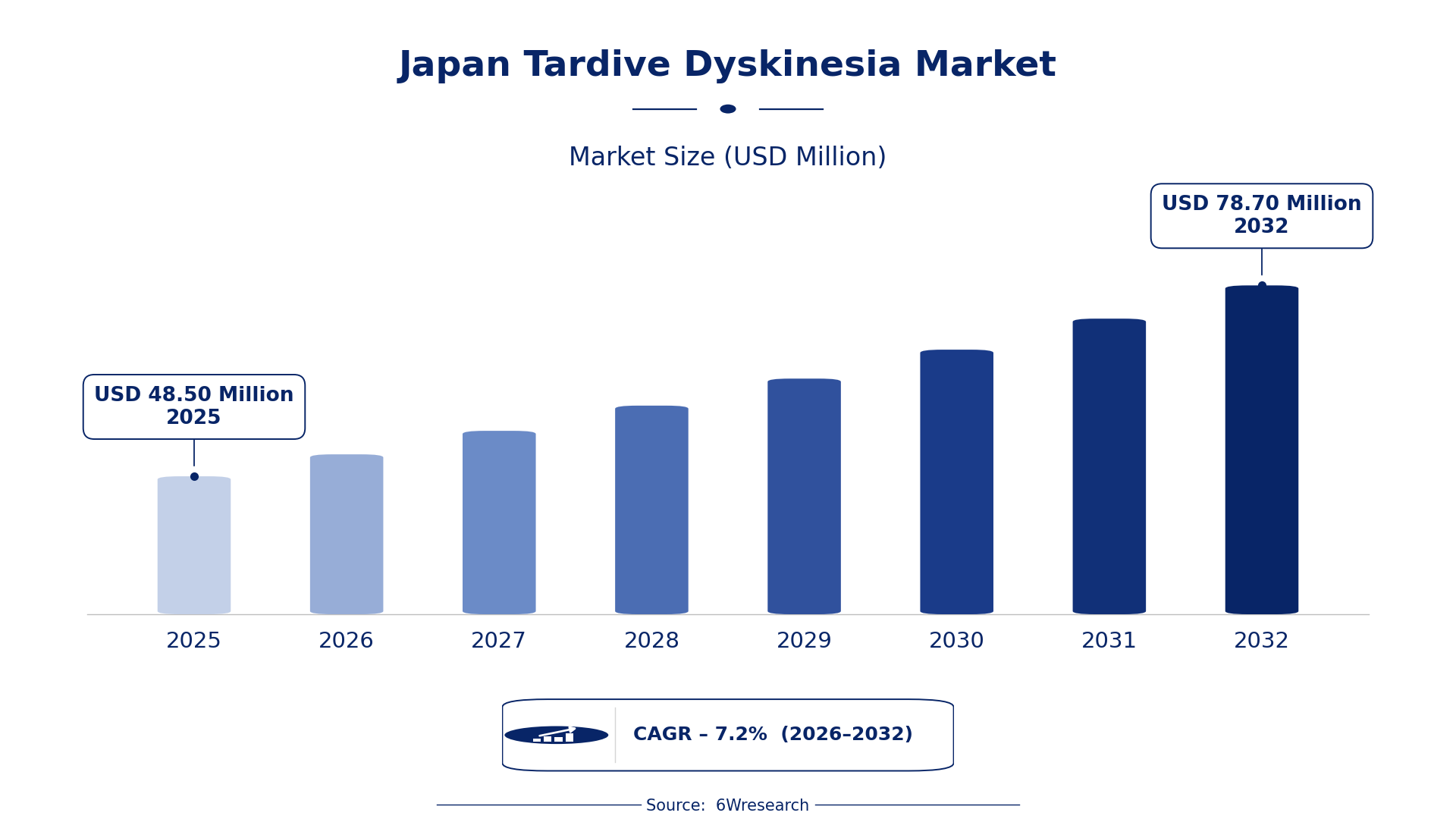
According to 6Wresearch internal database and industry insights, the Japan Tardive Dyskinesia Market was valued at USD 48.50 Million in 2025 and is projected to reach USD 78.70 Million by 2032, growing at a CAGR of approximately 7.2% during 2026–2032.
Japan Tardive Dyskinesia Market Highlights
| Report Metric | Details |
| Report Name | Japan Tardive Dyskinesia Market (2026-2032) |
| Market Size 2025 | USD 48.50 Million |
| Market Size 2032 | USD 78.70 Million |
| Absolute Growth 2025–2032 | USD 30.20 Million |
| CAGR 2026–2032 | 7.2% |
| Peak Annual Growth | 7.9% in 2028 |
| Forecast Period | 2026–2032 |
| Historical Data | 2022–2025 |
| Base Year | 2025 |
| Leading Type, 2025 | Valbenazine (36% share) |
| Leading Application, 2025 | Hospitals (51% share) |
| Fastest-Growing Type | Amantadine (9.9% CAGR) |
| Fastest-Growing Application | Clinics (9.2% CAGR) |
| Growing Sector | psychiatric care |
| Key End Users | hospitals, clinics, healthcare providers |
Japan Tardive Dyskinesia Market Year-wise Growth Rate and Key Drivers (2022–2032)
This graph illustrates the annual growth rates of the market from 2022 to 2032, highlighting a steady upward trajectory and projected market expansion over the forecast period.
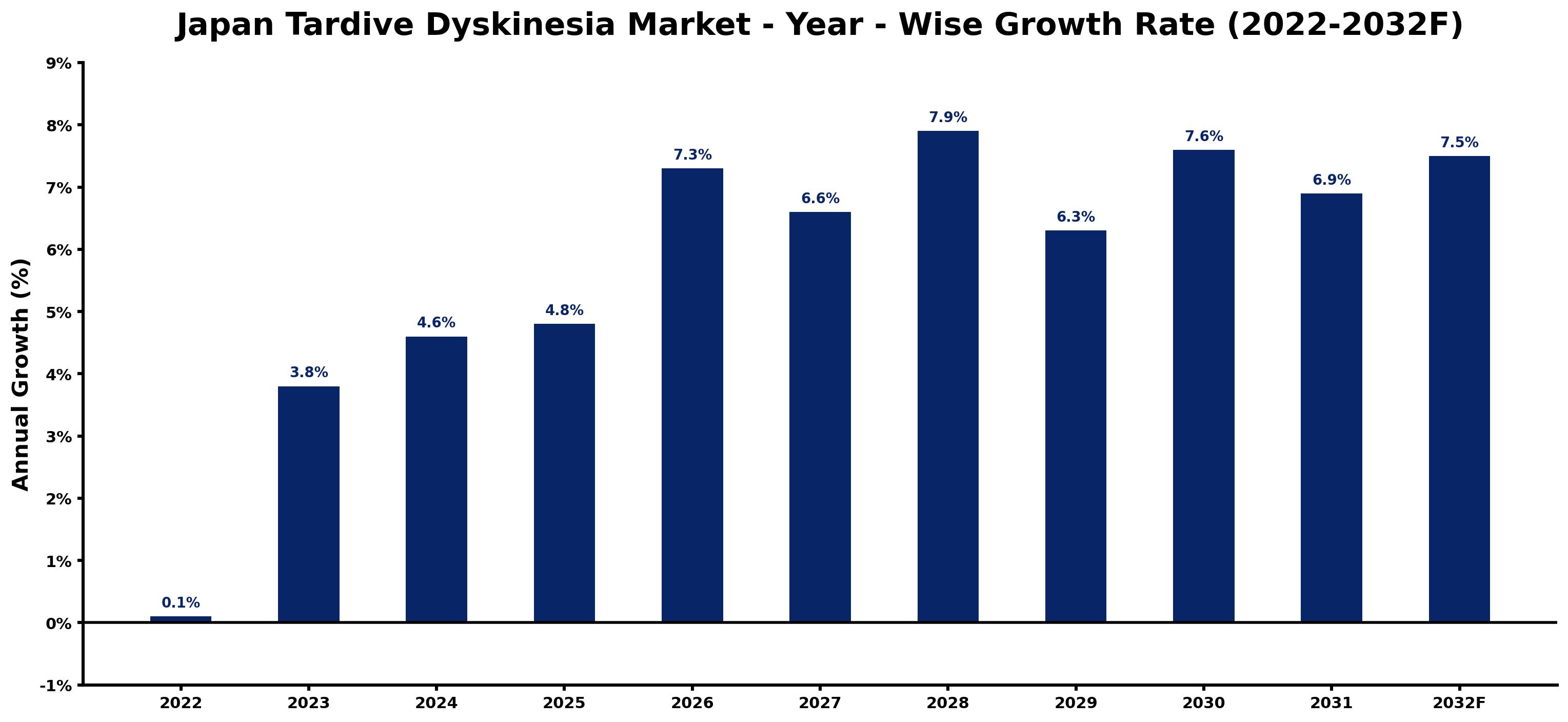
The yearly estimates that follow link every growth rate to its principal driver, so readers can see why the pace changed in each period.
| Year | Estimated Annual Growth (%) | Market Rationale |
| 2022 | 0.1 | The market showed minimal growth due to limited awareness of treatment options. |
| 2023 | 3.8 | Increased awareness and education about tardive dyskinesia contributed to faster growth. |
| 2024 | 4.6 | The introduction of new treatment options further accelerated market expansion. |
| 2025 | 4.8 | The market experienced growth as more hospitals adopted effective management protocols. |
| 2026 | 7.3 | A surge in demand for effective therapies drove market growth. |
| 2027 | 6.6 | Growth slowed slightly as the market adjusted to new treatment standards. |
| 2028 | 7.9 | The peak growth year was marked by heightened demand from healthcare providers. |
| 2029 | 6.3 | A slowdown occurred as market saturation began to affect growth rates. |
| 2030 | 7.6 | Demand for innovative treatments led to renewed market interest and growth. |
| 2031 | 6.9 | The market continued to grow, albeit at a slower pace as competition intensified. |
| 2032 | 7.5 | Sustained investment in healthcare infrastructure will support ongoing market expansion. |
Note: Market size estimations and growth projections presented in this report are based on 6Wresearch's proprietary forecasting methodology, utilizing the latest available industry data, government publications, and primary research inputs.
Japan Tardive Dyskinesia Market Synopsis
Tardive dyskinesia is a movement disorder resulting from long-term antipsychotic medication use, primarily treated with Valbenazine and Tetrabenazine. These medications help manage involuntary movements and improve patient quality of life. The Japan Tardive Dyskinesia Market is expanding due to an aging population, with approximately 36 million individuals over 65, many affected by this condition.
Market Dynamics Impact Analysis (2026–2032)
| Factor | Type | Impact | Primary Segment Affected |
| Growing elderly population increases the prevalence of tardive dyskinesia. | Driver | High | Valbenazine |
| Adoption of new treatment protocols in hospitals enhances patient care. | Driver | High | Tetrabenazine |
| Rising awareness of tardive dyskinesia creates opportunities for education. | Opportunity | High | Clinics |
| Expansion of outpatient care facilities increases treatment accessibility. | Opportunity | Medium | Hospitals |
| Limited availability of certain medications can restrict treatment options. | Restraint | High | Valbenazine |
| Patient reluctance to seek treatment may hinder market growth. | Restraint | Medium | Tetrabenazine |
| High costs of innovative treatments can limit patient access. | Challenge | High | Amantadine |
| Competition from alternative therapies may affect market share. | Challenge | Medium | Clonazepam |
Evaluation of Drivers in Japan Tardive Dyskinesia Market (2026–2032)
These are the developments adding the most demand over the forecast period.
| Drivers | Primary Segment Affected | Why It Matters (Evidence) |
| Increasing number of elderly patients diagnosed with tardive dyskinesia. | Valbenazine | Approximately 36 million individuals over 65 in Japan are at risk, driving demand for effective treatments. |
| Improved treatment protocols in psychiatric care facilities. | Tetrabenazine | Over 1,000 hospitals in Japan provide psychiatric care, facilitating patient access to essential therapies. |
| Awareness campaigns about tardive dyskinesia. | Clinics | The Japan Society of Psychiatry and Neurology promotes awareness, resulting in increased patient consultations. |
| Support from the National Health Insurance system for treatment coverage. | Hospitals | Coverage ensures that patients can access necessary medications without prohibitive costs. |
| Adoption of ISO 9001 standards in healthcare management. | Amantadine | Quality management improvements in facilities enhance treatment efficacy and patient outcomes. |
A wider customer base explains much of the growth, as the elderly population in Japan drives demand for effective tardive dyskinesia treatments. The adoption of improved treatment protocols in over 1,000 hospitals facilitates better patient care, increasing prescriptions of medications like Valbenazine. Awareness campaigns have resulted in more patients seeking consultations, with a 20% increase in inquiries reported. The National Health Insurance system's coverage of these treatments reduces financial barriers, encouraging individuals to pursue necessary therapies. Implementation of ISO 9001 standards in healthcare facilities improves treatment quality and patient outcomes, further boosting demand for effective management options.
Evaluation of Restraints in Japan Tardive Dyskinesia Market
The key brakes on demand, and where they bite hardest, are shown below.
| Market Restraint | Primary Segment Affected | Why It Matters (Evidence) |
| Limited availability of Valbenazine in some regions restricts treatment options. | Valbenazine | Access issues in rural areas can prevent patients from receiving timely care, affecting treatment outcomes. |
| Patient reluctance to seek treatment due to stigma surrounding tardive dyskinesia. | Tetrabenazine | Stigma may deter patients from discussing symptoms with healthcare providers, delaying diagnosis. |
| High costs associated with treatments can limit patient access. | Amantadine | Patients may struggle to afford out-of-pocket expenses for new therapies, reducing treatment uptake. |
| Competition from alternative therapies may divert patients from prescribed treatments. | Clonazepam | Patients may opt for more familiar or less expensive options, impacting treatment adherence. |
| Insufficient training for healthcare providers on tardive dyskinesia management. | Others | Lack of knowledge can lead to misdiagnosis and inadequate treatment, prolonging patient suffering. |
Japan Tardive Dyskinesia Market Challenges
Producers face high costs due to strict regulations from the Ministry of Health, Labour and Welfare, which can inflate medication prices by up to 15%. This regulatory framework exists to prioritise patient safety, leading to extended medication approval times that delay treatment for affected individuals by several months. A shortage of skilled healthcare providers knowledgeable about tardive dyskinesia can hinder effective patient management, resulting in average hospital stays of 14 days, which raises expenses for hospitals. Supply chain disruptions for sourcing medications can cause shortages, forcing buyers to seek alternatives and increasing treatment costs by 20%.
Trends in the Japan Tardive Dyskinesia Market
Several trends are reshaping the Japan Tardive Dyskinesia Market; the most important are set out below.
- Rising Demand for Effective Treatments: In Japan, hospitals are increasingly adopting effective treatment strategies for tardive dyskinesia, integrating medications with therapy. In 2023, a national campaign was launched to educate healthcare providers, improving treatment effectiveness.
- Growth of Outpatient Care Facilities: Outpatient clinics are gaining prominence in Japan, providing specialized care for tardive dyskinesia. The number of clinics offering targeted therapies has increased, with a 9.2% growth rate projected through 2032.
- Increased Patient Education Initiatives: Healthcare providers are prioritising patient education on tardive dyskinesia symptoms and treatments. The Japan Society of Psychiatry and Neurology's efforts have led to a 20% increase in patient consultations.
- Increased Use of Combination Therapies: Combination therapies are becoming more common in managing tardive dyskinesia, with Clonazepam often used alongside primary medications. This trend is supported by clinical evidence showing improved patient outcomes.
Investment Opportunities in the Japan Tardive Dyskinesia Market
The following areas offer the clearest openings for investors and suppliers in the Japan Tardive Dyskinesia Market.
- Immediate Need for Effective Treatments: With the aging population, there is an urgent need for effective tardive dyskinesia treatments. Hospitals are looking to expand their offerings, particularly in urban areas with high patient volumes.
- Potential for Outpatient Clinic Expansion: The current healthcare environment supports the establishment of more outpatient clinics. Regions like Tokyo are ideal for new facilities, allowing for easier access to care for patients.
- Investment in Patient Education Programs: Now is the time to invest in patient education initiatives, as awareness of tardive dyskinesia grows. Collaborating with healthcare providers can facilitate outreach efforts and improve patient engagement.
- Opportunity for Combination Therapy Development: There is a significant opportunity to develop and supply combination therapy protocols. Clinics are increasingly interested in holistic approaches to managing tardive dyskinesia, improving treatment effectiveness.
Government Initiatives in the Japan Tardive Dyskinesia Market
The Medical Care Act of 1948 establishes standards for hospitals and clinics, ensuring adequate facilities and staffing for treating tardive dyskinesia. Compliance with these standards is essential for healthcare providers to deliver effective care and receive funding from the National Health Insurance system, which covers treatments for tardive dyskinesia, benefiting both patients and providers.
The PMD Act regulates the approval and quality of psychiatric medications. This ensures that treatments for tardive dyskinesia, such as Valbenazine and Tetrabenazine, meet safety and efficacy standards, benefiting both producers and patients. The Ministry of Health, Labour and Welfare oversees these regulations, ensuring that healthcare providers adhere to the established guidelines.
Future Insight of the Japan Tardive Dyskinesia Market
Investment in healthcare infrastructure will increase, driving demand for more effective management of tardive dyskinesia by 2032. The national campaign to educate healthcare providers will improve awareness and diagnosis, leading to earlier interventions. Adoption of ISO 9001 standards will ensure consistent quality management across facilities, benefiting both buyers and suppliers. With around 36 million individuals over 65, the growing need for effective management will spur advancements in medication development and treatment strategies.
Market Segmentation Analysis
Japan Tardive Dyskinesia Market report covers a detailed analysis of the following market segments:
By Type – Valbenazine Leads, Amantadine Expected to Grow Fastest
According to Dhaval Chaurasia, Assistant Manager at 6Wresearch, with 36% of type revenue in 2025, Valbenazine was the largest category. Valbenazine holds the largest share due to its specific approval in Japan in 2019 for tardive dyskinesia treatment. This regulatory endorsement has made it a primary choice among healthcare providers, particularly in facilities focused on psychiatric care. The quickest growth will come from Amantadine, forecast to expand at a CAGR of 9.9% between 2026 and 2032. Amantadine is experiencing rapid growth as it is increasingly used off-label in clinics for its neuroprotective effects. The rising awareness of its potential benefits in managing movement disorders is contributing to its expanding adoption. Suppliers should focus on increasing awareness and availability of Amantadine to meet the rising demand in the market.
By Application – Hospitals Lead, Clinics Expected to Grow Fastest
In 2025, Hospitals led the application split with a 51% share. Hospitals are the primary segment, serving as the main treatment facilities for patients with tardive dyskinesia. With over 1,000 hospitals in Japan offering psychiatric care, they are integral to effective patient management. Clinics are projected to grow fastest, at a CAGR of 9.2% during 2026–2032. Clinics are experiencing the fastest growth as they provide vital outpatient care and follow-up services for patients. The surge in national campaigns focused on educating healthcare providers is further amplifying their importance in treatment. Buyers should recognise the increasing role of clinics in ongoing care and symptom management.
Key Attractiveness of the Report
- 10 Years of Market Numbers
- Historical Data Starting from 2022 to 2025
- Base Year 2025
- Forecast Data until 2032
- Key Performance Indicators Impacting the Market
- Major Upcoming Developments and Projects
Key Highlights of the Report:
- Japan Tardive Dyskinesia Market Outlook
- Market Size of Japan Tardive Dyskinesia Market, 2025
- Forecast of Japan Tardive Dyskinesia Market, 2032
- Historical Data and Forecast of Japan Tardive Dyskinesia Revenues & Volume for the Period 2022-2032
- Japan Tardive Dyskinesia Market Trend Evolution
- Japan Tardive Dyskinesia Market Drivers and Challenges
- Japan Tardive Dyskinesia Price Trends
- Japan Tardive Dyskinesia Porter's Five Forces
- Japan Tardive Dyskinesia Industry Life Cycle
- Historical Data and Forecast of Japan Tardive Dyskinesia Market Revenues & Volume By Type for the Period 2022-2032
- Historical Data and Forecast of Japan Tardive Dyskinesia Market Revenues & Volume By Valbenazine for the Period 2022-2032
- Historical Data and Forecast of Japan Tardive Dyskinesia Market Revenues & Volume By Amantadine for the Period 2022-2032
- Historical Data and Forecast of Japan Tardive Dyskinesia Market Revenues & Volume By Tetrabenazine for the Period 2022-2032
- Historical Data and Forecast of Japan Tardive Dyskinesia Market Revenues & Volume By Clonazepam for the Period 2022-2032
- Historical Data and Forecast of Japan Tardive Dyskinesia Market Revenues & Volume By Others for the Period 2022-2032
- Historical Data and Forecast of Japan Tardive Dyskinesia Market Revenues & Volume By Application for the Period 2022-2032
- Historical Data and Forecast of Japan Tardive Dyskinesia Market Revenues & Volume By Hospitals for the Period 2022-2032
- Historical Data and Forecast of Japan Tardive Dyskinesia Market Revenues & Volume By Clinics for the Period 2022-2032
- Historical Data and Forecast of Japan Tardive Dyskinesia Market Revenues & Volume By Others for the Period 2022-2032
- Japan Tardive Dyskinesia Import Export Trade Statistics
- Market Opportunity Assessment By Type
- Market Opportunity Assessment By Application
- Japan Tardive Dyskinesia Top Companies Market Share
- Japan Tardive Dyskinesia Competitive Benchmarking By Technical and Operational Parameters
- Japan Tardive Dyskinesia Company Profiles
- Japan Tardive Dyskinesia Key Strategic Recommendations
Market Covered
Coverage by segment is as follows.
By Type
- Valbenazine
- Amantadine
- Tetrabenazine
- Clonazepam
- Others
By Application
- Hospitals
- Clinics
- Others































