Japan Thrombocytopenia Market Size & Growth Rate
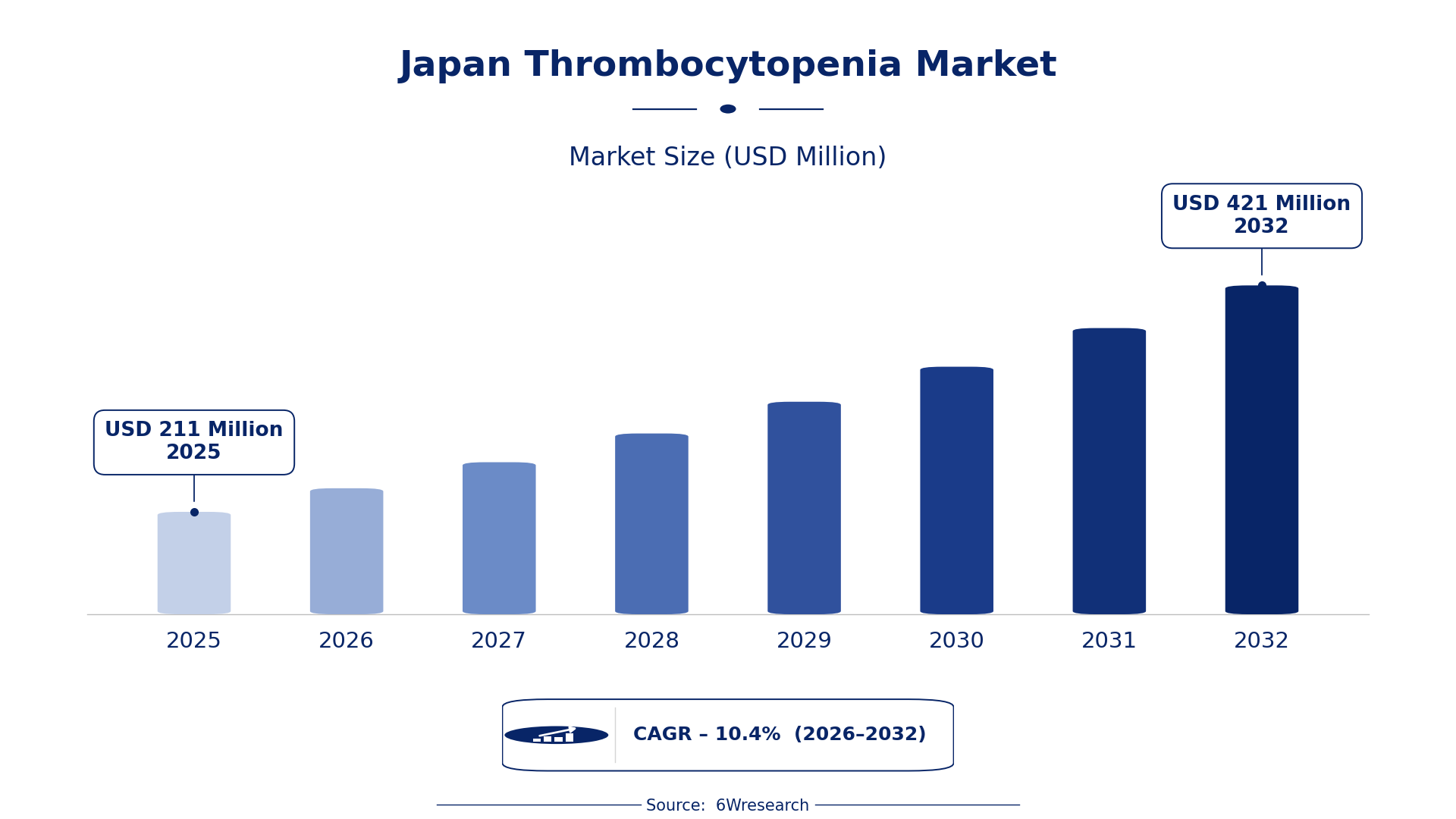
According to 6Wresearch internal database and industry insights, the Japan Thrombocytopenia Market was valued at USD 211 Million in 2025 and is projected to reach USD 421 Million by 2032, growing at a CAGR of approximately 10.4% during 2026–2032.
Japan Thrombocytopenia Market Highlights
| Report Metric | Details |
| Report Name | Japan Thrombocytopenia Market (2026-2032) |
| Market Size 2025 | USD 211 Million |
| Market Size 2032 | USD 421 Million |
| Absolute Growth 2025–2032 | USD 210 Million |
| CAGR 2026–2032 | 10.4% |
| Peak Annual Growth | 11.0% in 2028 |
| Forecast Period | 2026–2032 |
| Historical Data | 2022–2025 |
| Base Year | 2025 |
| Leading Drug, 2025 | Eltrombopag (33% share) |
| Leading Route of Administration, 2025 | Parenteral (53% share) |
| Leading End User, 2025 | Hospitals (45% share) |
| Leading Distribution Channel, 2025 | Hospital Pharmacy (43% share) |
| Fastest-Growing Drug | Rituximab (13.9% CAGR) |
| Fastest-Growing Route of Administration | Oral (12.7% CAGR) |
| Fastest-Growing End User | Specialty Clinics (13.4% CAGR) |
| Fastest-Growing Distribution Channel | Online Pharmacy (13.3% CAGR) |
| Growing Sector | Healthcare |
| Key End Users | Hospitals, Specialty Clinics, Homecare |
Japan Thrombocytopenia Market Year-wise Growth Rate and Key Drivers (2022–2032)
This graph illustrates the annual growth rates of the market from 2022 to 2032, highlighting a steady upward trajectory and projected market expansion over the forecast period.
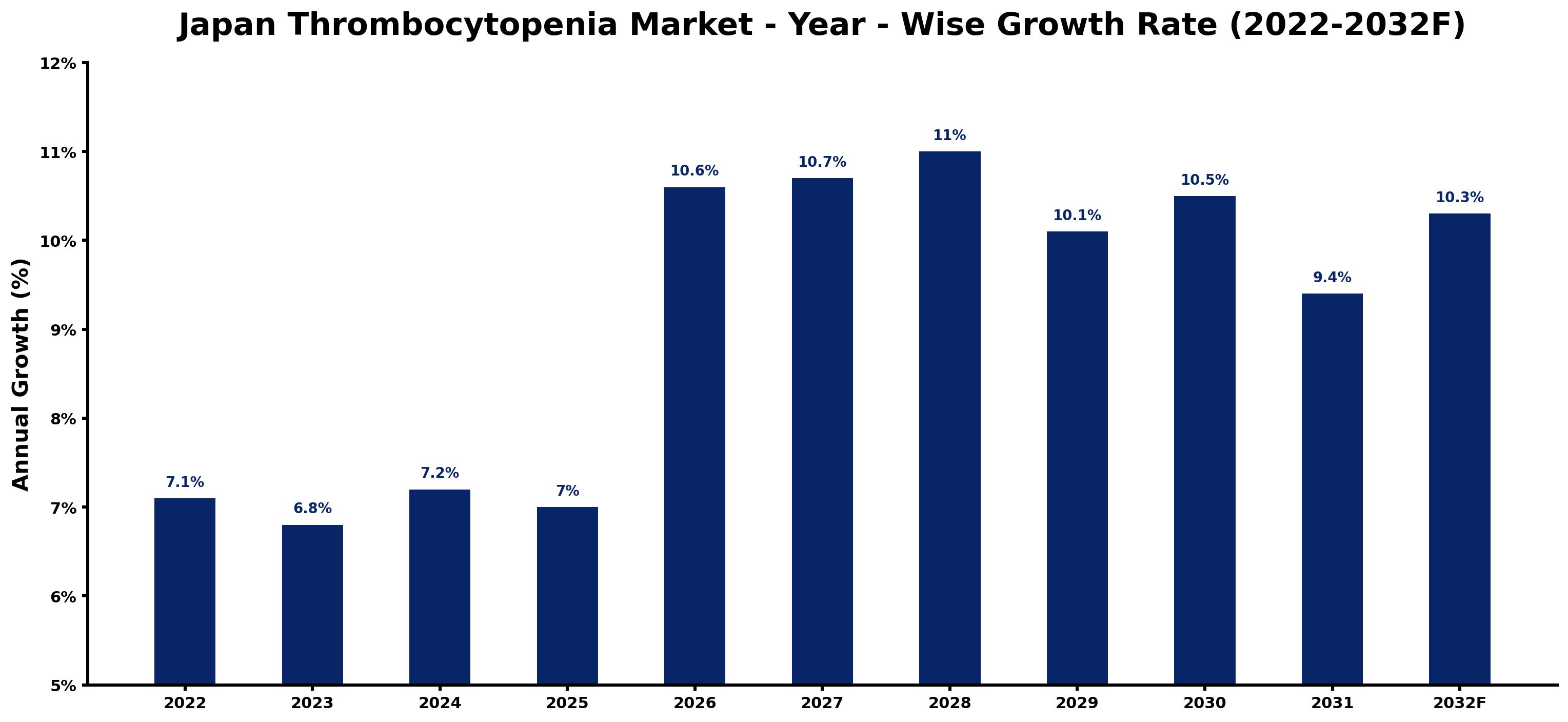
The yearly estimates that follow link every growth rate to its principal driver, so readers can see why the pace changed in each period.
| Year | Estimated Annual Growth (%) | Market Rationale |
| 2022 | 7.1 | The market showed steady growth due to increased awareness of blood disorders. |
| 2023 | 6.8 | Demand growth slowed as hospitals adapted to new treatment protocols and guidelines. |
| 2024 | 7.2 | The introduction of new therapies led to faster growth as hospitals expanded treatment options. |
| 2025 | 7.0 | Growth slowed slightly as market saturation began to affect new patient intake. |
| 2026 | 10.6 | Demand is expected to surge with the launch of new medications and increased hospital capacities. |
| 2027 | 10.7 | The market will continue to grow as specialty clinics expand their treatment offerings. |
| 2028 | 11.0 | Growth is projected to peak due to heightened awareness campaigns about thrombocytopenia. |
| 2029 | 10.1 | Demand growth is expected to slow as the market matures and competition intensifies. |
| 2030 | 10.5 | New treatment options will revitalise interest, leading to a rebound in growth. |
| 2031 | 9.4 | Growth is projected to slow as the market stabilises with established treatment protocols. |
| 2032 | 10.3 | Demand is expected to rise again as new technologies and treatments emerge. |
Note: Market size estimations and growth projections presented in this report are based on 6Wresearch's proprietary forecasting methodology, utilizing the latest available industry data, government publications, and primary research inputs.
Japan Thrombocytopenia Market Synopsis
Thrombocytopenia is a condition marked by low platelet levels in the blood, often requiring treatments such as Eltrombopag and Romiplostim. The Japan Thrombocytopenia Market is expanding, driven by a growing elderly population and an incidence rate of 1 in 10,000 individuals. The Ministry of Health, Labour and Welfare's awareness campaign and the Japan Society of Hematology's guidelines are improving treatment accessibility and driving demand within hospitals and specialty clinics. With approximately 126 million people in Japan, the need for effective treatments is increasing, particularly among the elderly.
Market Dynamics Impact Analysis (2026–2032)
| Factor | Type | Impact | Primary Segment Affected |
| Growing elderly population increasing the incidence of thrombocytopenia | Driver | High | Hospitals |
| Increased investment in research for blood disorders | Driver | High | Specialty Clinics |
| Emerging therapies creating gaps in treatment options | Opportunity | High | Eltrombopag |
| Rising awareness of blood disorders among healthcare providers | Opportunity | High | Eltrombopag |
| Limited availability of specialized treatments in rural areas | Restraint | High | Eltrombopag |
| High costs associated with advanced therapies limiting access | Restraint | Medium | Eltrombopag |
| Competition among suppliers leading to price wars | Challenge | Medium | Eltrombopag |
| Regulatory hurdles delaying new product approvals | Challenge | High | Eltrombopag |
Evaluation of Drivers in Japan Thrombocytopenia Market (2026–2032)
The following drivers explain most of the expected growth.
| Drivers | Primary Segment Affected | Why It Matters (Evidence) |
| Increased incidence of thrombocytopenia among the elderly | Hospitals | With an aging population, hospitals are seeing more patients requiring treatment, leading to higher demand for therapies. |
| Launch of new therapies like Eltrombopag and Romiplostim | Eltrombopag | The introduction of these medications has expanded treatment options, encouraging hospitals to adopt them. |
| Growing investment in hematology research | Specialty Clinics | Increased funding for blood disorder research has led to advancements in treatment protocols, boosting clinic demand. |
| Awareness campaigns by health authorities | Eltrombopag | Campaigns by health authorities have increased public knowledge, driving more patients to seek treatment. |
| Expansion of hospital facilities and capacities | Hospitals | Investment in hospital infrastructure has improved treatment access, allowing for more patients to be treated. |
Much of the new demand traces back to the increasing elderly population, with approximately 126 million people in Japan. The incidence of thrombocytopenia is estimated at 1 in 10,000 individuals, prompting hospitals to expand their capabilities. The launch of new therapies has broadened treatment options, driving hospitals to adopt these medications. Increased funding for blood disorder research, with allocations exceeding ¥500 million, has led to advancements in treatment protocols, further boosting demand within specialty clinics. Awareness campaigns have raised public knowledge about blood disorders, encouraging more patients to seek treatment.
Evaluation of Restraints in Japan Thrombocytopenia Market
The main factors holding the market back are set out below.
| Market Restraint | Primary Segment Affected | Why It Matters (Evidence) |
| Limited access to specialized treatments in rural areas | Eltrombopag | Patients in rural regions face challenges accessing specialized thrombocytopenia treatments, which restricts overall market growth. |
| High costs associated with advanced therapies | Eltrombopag | The financial burden of new therapies limits patient access, particularly for those without adequate insurance coverage. |
| Regulatory hurdles delaying product approvals | Eltrombopag | Lengthy approval processes for new treatments can slow market entry, affecting availability for patients. |
| Intense competition leading to price wars among suppliers | Eltrombopag | Fierce competition can drive down prices, affecting profitability for suppliers and potentially limiting investment in new therapies. |
| Market saturation affecting new patient intake | Hospitals | As treatment options become established, hospitals may struggle to attract new patients, which slows growth. |
Japan Thrombocytopenia Market Challenges
Hospitals in Tokyo face treatment delays due to stringent regulations from the Ministry of Health, Labour and Welfare, which can extend patient wait times by three months. Specialty clinics encounter fierce competition, leading to aggressive pricing that diminishes profit margins, making it challenging to invest in new treatment options. Slow uptake of advanced technologies in clinics results in missed opportunities for enhanced patient outcomes, negatively impacting their reputation and patient retention. Rising research and development costs, exceeding ¥500 million, exert financial pressure on suppliers, restricting the availability of effective therapies for clinics and hospitals.
Trends in the Japan Thrombocytopenia Market
Four trends stand out in the Japan Thrombocytopenia Market.
- Shift towards Specialty Clinics for Treatment: A shift is occurring towards specialty clinics for thrombocytopenia treatment, particularly in urban areas. In 2023, the number of specialty clinics focusing on hematological disorders increased by 15%, improving patient access.
- Increase in Oral Treatment Options: The market is experiencing a rise in oral treatment options for thrombocytopenia, with oral medications expected to grow significantly. This shift allows for more convenient patient administration.
- Focus on Patient Awareness Campaigns: In 2023, a campaign to raise awareness about blood disorders was launched, impacting patient engagement and treatment uptake. This initiative is expected to boost patient inquiries and treatment requests.
- Integration of Digital Health Solutions: The establishment of the Digital Agency in 2021 has led to the integration of digital health solutions in thrombocytopenia management. As a result, telemedicine consultations have increased, improving patient access to specialists.
Investment Opportunities in the Japan Thrombocytopenia Market
Where to invest in the Japan Thrombocytopenia Market: the main openings are set out below.
- Gap in Treatment Options for Rural Areas: With 1 in 10,000 individuals affected, there is an opportunity to supply specialized treatments in rural Japan. Partnering with local healthcare providers can facilitate access to these therapies.
- Growing Demand for Specialty Clinic Services: Specialty clinics focusing on hematological disorders are expanding rapidly, presenting an investment opportunity for suppliers of thrombocytopenia treatments. Engaging with these clinics can improve distribution channels.
- Timing for New Drug Approvals: The Japanese government allocated ¥500 million for research on blood disorders, creating a favorable environment for new drug approvals. Collaborating with research institutions can expedite market entry.
- Entry into Online Distribution Channels: The rise of online pharmacies, with a projected growth rate of 13.3%, offers an opportunity for suppliers to reach a broader audience. Establishing partnerships with online platforms can strengthen market presence.
Government Initiatives in the Japan Thrombocytopenia Market
The Medical Care Act of 1948 established standards for hospitals and clinics, ensuring adequate facilities and staffing for thrombocytopenia treatment. This law has shaped the healthcare framework, promoting patient safety and care quality. The Long-Term Care Insurance Act, revised in 1997, provides funding for nursing care and support services for older individuals, indirectly benefiting patients with thrombocytopenia by improving overall healthcare access.
In 2023, the Japanese government allocated ¥500 million for research on blood disorders, administered by the Ministry of Health, Labour and Welfare. This funding supports advancements in treatment options and improves healthcare infrastructure, benefiting both producers and patients by facilitating the development of new therapies.
Future Insight of the Japan Thrombocytopenia Market
Advanced treatment technologies will reshape thrombocytopenia management by 2032, enhancing patient care. The Ministry of Health, Labour and Welfare's awareness campaign will drive demand for new therapies, prompting clinics to adopt modern solutions. Changes in the Japanese Pharmacopoeia will establish rigorous safety standards for emerging treatments, boosting confidence among healthcare providers. Increased government funding for blood disorder research is expected to facilitate the introduction of additional therapies, broadening options for patients and improving treatment accessibility.
Market Segmentation Analysis
Japan Thrombocytopenia Market report covers a detailed analysis of the following market segments:
By Drug – Eltrombopag Leads, Rituximab Expected to Grow Fastest
According to Dhaval Chaurasia, Assistant Manager at 6Wresearch, with 33% of drug revenue in 2025, Eltrombopag was the largest category. Eltrombopag leads the market due to its specific approval for chronic immune thrombocytopenic purpura, making it a preferred choice among healthcare providers. Its established use in hospitals across Japan highlights its critical role in effectively managing thrombocytopenia. Rituximab is projected to grow fastest, at a CAGR of 13.9% during 2026–2032. Rituximab is experiencing rapid growth as it addresses thrombocytopenia related to autoimmune disorders, which are increasingly recognised in clinical settings. The heightened awareness of these conditions has accelerated its adoption in treatment protocols. Suppliers should focus on ensuring the availability of Eltrombopag while also considering the rising interest in Rituximab for future opportunities.
By Route of Administration – Parenteral Leads, Oral Expected to Grow Fastest
Parenteral took 53% of route of administration revenue in 2025, more than any other category. Parenteral administration leads the market as it includes intravenous treatments that provide immediate effects for patients with severe thrombocytopenia. This method is preferred in hospitals where rapid intervention is critical for patient outcomes. Over 2026–2032, Oral is expected to post the fastest growth, at a CAGR of 12.7%. Oral administration is growing swiftly due to the convenience it offers to patients, allowing for easier adherence to treatment regimens. The increasing number of oral treatment options is likely to attract more patients seeking manageable solutions. Suppliers must invest in developing and promoting oral formulations to meet the rising demand for convenient treatment options.
By End User – Hospitals Lead, Specialty Clinics Expected to Grow Fastest
The largest end user category in 2025 was Hospitals, at 45% of revenue. Hospitals serve as the main venue for thrombocytopenia treatment, possessing the required infrastructure and medical expertise. Facilities in major cities like Tokyo and Osaka exemplify the concentration of resources available for patient care. The quickest growth will come from Specialty Clinics, forecast to expand at a CAGR of 13.4% between 2026 and 2032. Specialty clinics are expanding rapidly due to their dedicated focus on hematological disorders, offering personalised treatment options. This targeted care model attracts patients seeking specific management strategies for their conditions. This trend indicates that suppliers must engage with specialty clinics to effectively reach and serve this expanding patient population.
By Distribution Channel – Hospital Pharmacy Leads, Online Pharmacy Expected to Grow Fastest
In 2025, Hospital Pharmacy led the distribution channel split with a 43% share. Hospital pharmacies are the main distribution point for thrombocytopenia medications, ensuring that treatments are readily available in critical care settings. Their integral role in hospital operations solidifies their leading position in the market. Online Pharmacy is set to record the highest CAGR in this split, 13.3% over 2026–2032. Online pharmacies are growing quickly, driven by the increasing demand for convenient access to medications, especially for patients in remote areas. The shift towards digital solutions in healthcare is likely to accelerate this trend further. Suppliers should explore online distribution strategies to expand their reach and cater to the evolving preferences of patients.
Key Attractiveness of the Report
- 10 Years of Market Numbers
- Historical Data Starting from 2022 to 2025
- Base Year 2025
- Forecast Data until 2032
- Key Performance Indicators Impacting the Market
- Major Upcoming Developments and Projects
Key Highlights of the Report:
- Japan Thrombocytopenia Market Outlook
- Market Size of Japan Thrombocytopenia Market, 2025
- Forecast of Japan Thrombocytopenia Market, 2032
- Historical Data and Forecast of Japan Thrombocytopenia Revenues & Volume for the Period 2022-2032
- Japan Thrombocytopenia Market Trend Evolution
- Japan Thrombocytopenia Market Drivers and Challenges
- Japan Thrombocytopenia Price Trends
- Japan Thrombocytopenia Porter's Five Forces
- Japan Thrombocytopenia Industry Life Cycle
- Historical Data and Forecast of Japan Thrombocytopenia Market Revenues & Volume By Drug for the Period 2022-2032
- Historical Data and Forecast of Japan Thrombocytopenia Market Revenues & Volume By Danazol for the Period 2022-2032
- Historical Data and Forecast of Japan Thrombocytopenia Market Revenues & Volume By Intravenous Immune Globulin for the Period 2022-2032
- Historical Data and Forecast of Japan Thrombocytopenia Market Revenues & Volume By Rituximab for the Period 2022-2032
- Historical Data and Forecast of Japan Thrombocytopenia Market Revenues & Volume By Eltrombopag for the Period 2022-2032
- Historical Data and Forecast of Japan Thrombocytopenia Market Revenues & Volume By Romiplostim for the Period 2022-2032
- Historical Data and Forecast of Japan Thrombocytopenia Market Revenues & Volume By Splenectomy for the Period 2022-2032
- Historical Data and Forecast of Japan Thrombocytopenia Market Revenues & Volume By Corticosteroid for the Period 2022-2032
- Historical Data and Forecast of Japan Danazol Thrombocytopenia Market Revenues & Volume By Others for the Period 2022-2032
- Historical Data and Forecast of Japan Thrombocytopenia Market Revenues & Volume By Route of Administration for the Period 2022-2032
- Historical Data and Forecast of Japan Thrombocytopenia Market Revenues & Volume By Oral for the Period 2022-2032
- Historical Data and Forecast of Japan Thrombocytopenia Market Revenues & Volume By Parenteral for the Period 2022-2032
- Historical Data and Forecast of Japan Thrombocytopenia Market Revenues & Volume By Others for the Period 2022-2032
- Historical Data and Forecast of Japan Thrombocytopenia Market Revenues & Volume By End User for the Period 2022-2032
- Historical Data and Forecast of Japan Thrombocytopenia Market Revenues & Volume By Hospitals for the Period 2022-2032
- Historical Data and Forecast of Japan Thrombocytopenia Market Revenues & Volume By Specialty Clinics for the Period 2022-2032
- Historical Data and Forecast of Japan Thrombocytopenia Market Revenues & Volume By Homecare for the Period 2022-2032
- Historical Data and Forecast of Japan Thrombocytopenia Market Revenues & Volume By Others for the Period 2022-2032
- Historical Data and Forecast of Japan Thrombocytopenia Market Revenues & Volume By Distribution Channel for the Period 2022-2032
- Historical Data and Forecast of Japan Thrombocytopenia Market Revenues & Volume By Hospital Pharmacy for the Period 2022-2032
- Historical Data and Forecast of Japan Thrombocytopenia Market Revenues & Volume By Retail Pharmacy for the Period 2022-2032
- Historical Data and Forecast of Japan Thrombocytopenia Market Revenues & Volume By Online Pharmacy for the Period 2022-2032
- Historical Data and Forecast of Japan Thrombocytopenia Market Revenues & Volume By Others for the Period 2022-2032
- Japan Thrombocytopenia Import Export Trade Statistics
- Market Opportunity Assessment By Drug
- Market Opportunity Assessment By Route of Administration
- Market Opportunity Assessment By End User
- Market Opportunity Assessment By Distribution Channel
- Japan Thrombocytopenia Top Companies Market Share
- Japan Thrombocytopenia Competitive Benchmarking By Technical and Operational Parameters
- Japan Thrombocytopenia Company Profiles
- Japan Thrombocytopenia Key Strategic Recommendations
Market Covered
The following segment groups are covered in the report.
By Drug
- Danazol
- Intravenous Immune Globulin
- Rituximab
- Eltrombopag
- Romiplostim
- Splenectomy
- Corticosteroid
- Others
By Route of Administration
- Oral
- Parenteral
- Others
By End User
- Hospitals
- Specialty Clinics
- Homecare
- Others
By Distribution Channel
- Hospital Pharmacy
- Retail Pharmacy
- Online Pharmacy
- Others































