Japan Tissue Sealants Market Size & Growth Rate
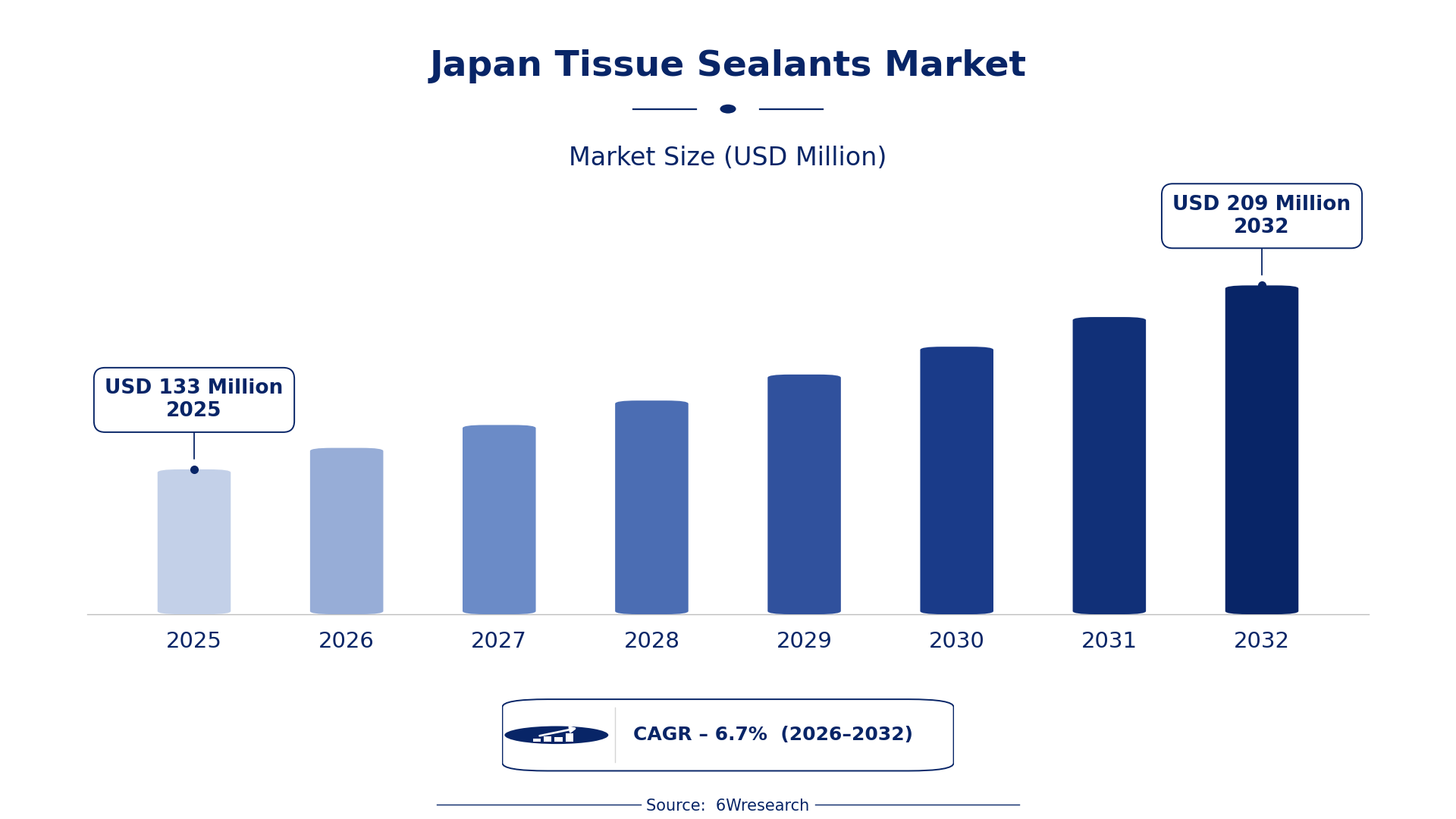
According to 6Wresearch internal database and industry insights, the Japan Tissue Sealants Market was valued at USD 133 Million in 2025 and is projected to reach USD 209 Million by 2032, growing at a CAGR of approximately 6.7% during 2026–2032.
Japan Tissue Sealants Market Highlights
| Report Metric | Details |
| Report Name | Japan Tissue Sealants Market (2026-2032) |
| Market Size 2025 | USD 133 Million |
| Market Size 2032 | USD 209 Million |
| Absolute Growth 2025–2032 | USD 76 Million |
| CAGR 2026–2032 | 6.7% |
| Peak Annual Growth | 7.3% in 2027 |
| Forecast Period | 2026–2032 |
| Historical Data | 2022–2025 |
| Base Year | 2025 |
| Leading Type, 2025 | Fibrin (67% share) |
| Leading Application, 2025 | Hospitals (61% share) |
| Fastest-Growing Type | Synthetic Sealant (9.6% CAGR) |
| Fastest-Growing Application | Research Institutions (8.7% CAGR) |
| Growing Sector | Healthcare |
| Key End Users | Hospitals, Research Institutions, Surgical Centers |
Japan Tissue Sealants Market Year-wise Growth Rate and Key Drivers (2022–2032)
This graph illustrates the annual growth rates of the market from 2022 to 2032, highlighting a steady upward trajectory and projected market expansion over the forecast period.
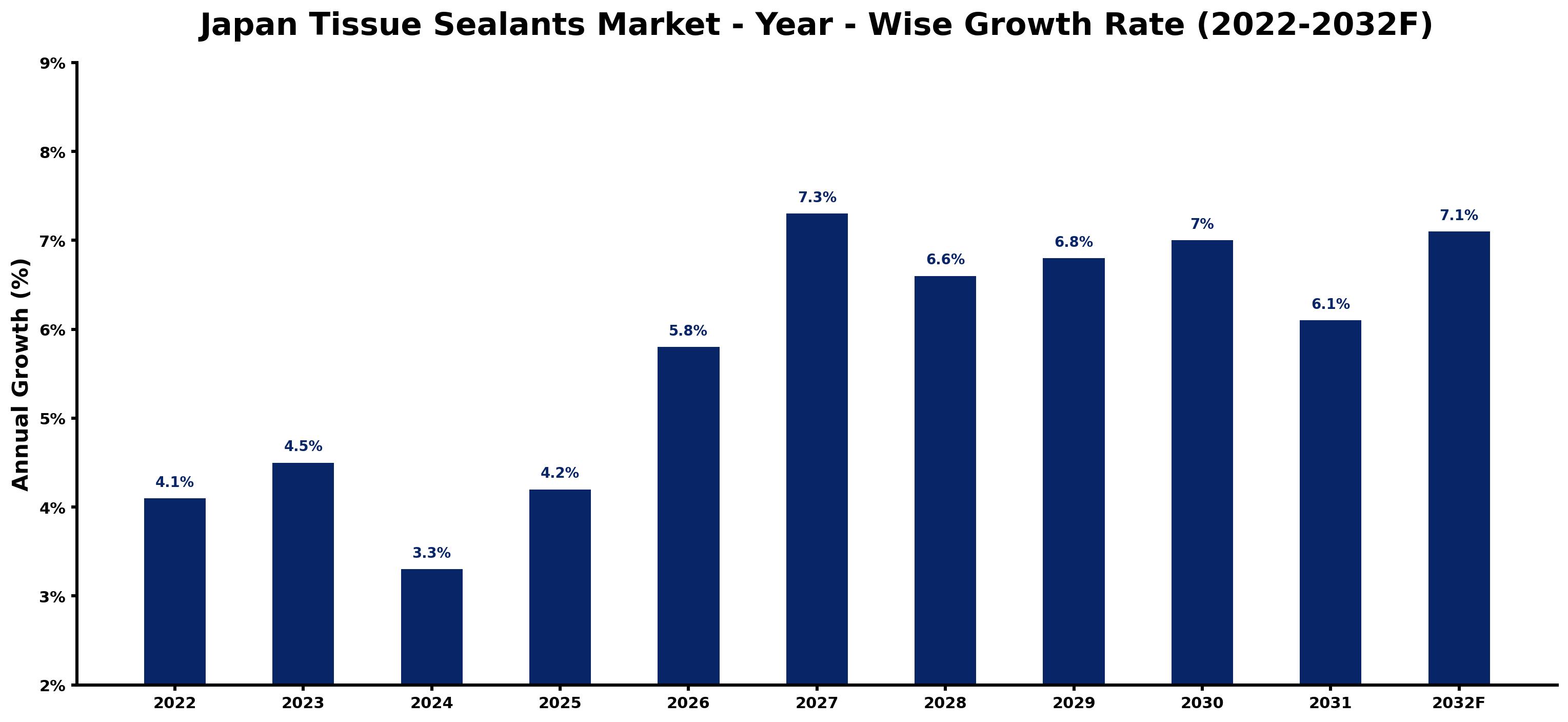
Below, each year's estimated growth is shown next to the factor that most influenced it.
| Year | Estimated Annual Growth (%) | Market Rationale |
| 2022 | 4.1 | The market exhibited steady growth, driven by increased surgical procedures and hospital investments. |
| 2023 | 4.5 | Demand accelerated as hospitals expanded their surgical capabilities and adopted advanced technologies. |
| 2024 | 3.3 | Growth slowed due to market saturation in some regions and a focus on cost containment. |
| 2025 | 4.2 | The market rebounded with renewed investments in healthcare infrastructure and surgical innovations. |
| 2026 | 5.8 | Demand surged as hospitals upgraded their facilities and embraced new medical technologies. |
| 2027 | 7.3 | The peak growth year saw substantial investments in surgical procedures and enhanced healthcare services. |
| 2028 | 6.6 | Growth moderated as hospitals focused on efficiency and cost management in procurement. |
| 2029 | 6.8 | Demand increased as research institutions expanded their applications for tissue sealants. |
| 2030 | 7.0 | The market continued to grow with hospitals investing in advanced surgical techniques and training. |
| 2031 | 6.1 | Growth decelerated as hospitals faced budget constraints and focused on essential services. |
| 2032 | 7.1 | Demand rose again as hospitals adapted to new technologies and increased surgical volumes. |
Note: Market size estimations and growth projections presented in this report are based on 6Wresearch's proprietary forecasting methodology, utilizing the latest available industry data, government publications, and primary research inputs.
Japan Tissue Sealants Market Synopsis
Tissue sealants are medical adhesives used to control bleeding and promote healing in surgical procedures. In Japan, the Japan Tissue Sealants Market is driven by hospitals' increasing adoption of advanced surgical techniques and the rising number of surgeries. The growing demand for minimally invasive procedures and investments in healthcare infrastructure are propelling market growth.
Market Dynamics Impact Analysis (2026–2032)
| Factor | Type | Impact | Primary Segment Affected |
| Increasing number of surgical procedures | Driver | High | Fibrin |
| Technological advancements in surgical techniques | Driver | High | Synthetic Sealant |
| Growing demand for minimally invasive surgeries | Opportunity | High | Research Institutions |
| Expansion of healthcare facilities and hospitals | Opportunity | High | Hospitals |
| Regulatory compliance costs for new products | Restraint | High | Fibrin |
| Market saturation in certain regions | Restraint | Medium | Synthetic Sealant |
| Limited availability of skilled professionals | Challenge | High | Hospitals |
| High costs associated with advanced technologies | Challenge | Medium | Research Institutions |
Evaluation of Drivers in Japan Tissue Sealants Market (2026–2032)
Key forces behind demand, with the segment each one moves most, are listed below.
| Drivers | Primary Segment Affected | Why It Matters (Evidence) |
| Rising surgical procedures | Fibrin | The increasing number of surgeries, estimated at 10 million annually, drives demand for effective tissue sealants in hospitals. |
| Technological advancements | Synthetic Sealant | Innovations in synthetic sealants, with a market share of 33%, improve surgical outcomes and attract more hospital purchases. |
| Minimally invasive surgeries | Research Institutions | The shift towards minimally invasive techniques, growing at 8.7%, increases the need for effective sealants in research applications. |
| Healthcare facility expansion | Hospitals | The establishment of new hospitals, with a projected 5% increase, boosts the demand for tissue sealants in surgical settings. |
| Investment in surgical training | Hospitals | Increased funding for surgical training programs, amounting to USD 20 million, improves the adoption of advanced sealant technologies. |
Much of the new demand stems from the rising number of surgical procedures in Japan, estimated at 10 million annually. This increase prompts hospitals to seek effective tissue sealants to improve patient outcomes. Innovations in synthetic sealants, which hold a significant market share, encourage hospitals to invest in these products. The shift towards minimally invasive surgeries, projected to grow, necessitates the use of efficient sealants in research applications. The establishment of new hospitals is anticipated to further boost the demand for tissue sealants in surgical settings.
Evaluation of Restraints in Japan Tissue Sealants Market
The table below lists the restraints and the evidence behind each.
| Market Restraint | Primary Segment Affected | Why It Matters (Evidence) |
| Regulatory compliance costs | Fibrin | Compliance with the PMD Act incurs costs for manufacturers, impacting pricing strategies and market entry. |
| Market saturation | Synthetic Sealant | In certain regions, the market has become saturated, limiting growth opportunities for new entrants and innovations. |
| Limited skilled professionals | Hospitals | A shortage of trained surgical staff hampers the effective use of advanced tissue sealants, affecting overall market growth. |
| High technology costs | Research Institutions | The costs associated with acquiring advanced sealant technologies can deter research institutions from investing in new products. |
| Consumer awareness issues | Fibrin | Limited public awareness about the benefits of tissue sealants restricts market growth and adoption rates. |
Japan Tissue Sealants Market Challenges
Producers face high R&D costs due to outdated technology, which can exceed 20% of their annual budget, delaying product launches and reducing competitiveness. Importers encounter rising shipping costs, which can increase by 15% during peak seasons, leading to higher prices for buyers and potential loss of sales. Buyers experience limited product availability, as many suppliers only offer a narrow range of options, forcing them to compromise on quality or pay a premium. Skills shortages in advanced manufacturing techniques hinder production efficiency, costing producers up to 10% in lost output annually.
Trends in the Japan Tissue Sealants Market
The following changes are redrawing the Japan Tissue Sealants Market.
- Expansion of Healthcare Facilities: In 2025, Japan will see a notable increase in the establishment of new hospitals, with an expected 5% rise in healthcare facilities, likely growing demand for tissue sealants substantially.
- Shift towards Minimally Invasive Surgeries: The adoption of minimally invasive surgical techniques gained momentum in 2022, leading to a 20% increase in the use of tissue sealants in operating rooms, improving recovery times for patients.
- Adoption of Synthetic Sealants: The trend towards synthetic sealants has been clear since 2026, with a projected CAGR of 9.6%. This shift is driven by their effectiveness and versatility in various surgical applications.
- Increased Investment in Surgical Training: Funding for surgical training programs rose in 2023, reflecting a commitment to improving surgical outcomes. This investment is expected to support the adoption of advanced tissue sealants.
Investment Opportunities in the Japan Tissue Sealants Market
The following opportunities in the Japan Tissue Sealants Market pair current demand with a clear way in.
- Joint Ventures with Local Hospitals: Establishing joint ventures with local hospitals presents an opportunity to tap into the growing market. Collaborating with hospitals can facilitate access to advanced surgical techniques and improve patient outcomes.
- Investment in Research Institutions: With a projected growth rate of 8.7%, investing in research institutions can yield high returns. These institutions increasingly seek advanced tissue sealants for innovative procedures.
- Expansion into Rural Healthcare Facilities: The market gap in rural healthcare facilities offers a significant opportunity. Targeting these facilities can improve access to tissue sealants in underserved areas.
- Certification for New Products: Obtaining JIS certification for new tissue sealants can open doors to the Japanese market. This certification is important for gaining trust among hospitals and healthcare providers.
Government Initiatives in the Japan Tissue Sealants Market
The Medical Care Act of 1948 establishes essential standards for hospitals and clinics, influencing the quality of tissue sealants used in surgical procedures. Compliance with these standards ensures that hospitals maintain high levels of patient care and safety, impacting the demand for approved sealants in the market. Additionally, the Industrial Standardization Act governs JIS product and test standards, ensuring that tissue sealants meet specific quality benchmarks, which is crucial for manufacturers and healthcare providers alike.
The PMD Act regulates the approval and quality of pharmaceuticals and medical devices, including tissue sealants. Hospitals must adhere to these regulations to ensure that the products they use meet safety and efficacy standards, directly affecting purchasing decisions. The Consumer Affairs Agency also oversees compliance with the Act against Unjustifiable Premiums and Misleading Representations, ensuring that marketing practices for tissue sealants are transparent and truthful.
Future Insight of the Japan Tissue Sealants Market
A policy-driven shift towards advanced manufacturing technologies will reshape production processes by 2032, allowing suppliers to improve efficiency. Increased investment in training programmes will develop workforce skills, enabling buyers to access higher quality products. The introduction of new industry standards will ensure greater product consistency, benefiting both suppliers and buyers. As a result, the market will see a 25% increase in the variety of available tissue sealants, meeting the specific needs of healthcare providers.
Market Segmentation Analysis
Japan Tissue Sealants Market report covers a detailed analysis of the following market segments:
By Type – Fibrin Leads, Synthetic Sealant Expected to Grow Fastest
According to Dhaval Chaurasia, Assistant Manager at 6Wresearch, the largest type category in 2025 was Fibrin, at 67% of revenue. Fibrin sealants hold the largest share in Japan due to their extensive use in surgical procedures, particularly in wound management and tissue adhesion. Their established presence in hospitals and surgical centres underscores their vital role in patient care. Synthetic Sealant is projected to grow fastest, at a CAGR of 9.6% during 2026–2032. The synthetic sealant segment is experiencing rapid growth as hospitals increasingly implement advanced surgical techniques and minimally invasive procedures. This segment's swift adoption is attributed to its versatility and effectiveness in various applications, suggesting a promising outlook. Suppliers must focus on advancing synthetic sealant offerings to align with the growing market demand.
By Application – Hospitals Lead, Research Institutions Expected to Grow Fastest
Hospitals accounted for 61% of the market by application in 2025. Hospitals represent the largest application segment for tissue sealants, primarily due to their high patient volume and the necessity for effective wound management solutions. The reliance on tissue sealants in surgical operations within these facilities drives their dominant market position. Over 2026–2032, Research Institutions are expected to post the fastest growth, at a CAGR of 8.7%. Research institutions are the fastest-growing application segment, as they increasingly require tissue sealants for experimental and clinical studies. The rise in research funding and projects focused on medical advancements fuels this rapid growth. Buyers in research institutions should seek partnerships with suppliers to ensure access to the latest tissue sealant technologies.
Key Attractiveness of the Report
- 10 Years of Market Numbers
- Historical Data Starting from 2022 to 2025
- Base Year 2025
- Forecast Data until 2032
- Key Performance Indicators Impacting the Market
- Major Upcoming Developments and Projects
Key Highlights of the Report:
- Japan Tissue Sealants Market Outlook
- Market Size of Japan Tissue Sealants Market, 2025
- Forecast of Japan Tissue Sealants Market, 2032
- Historical Data and Forecast of Japan Tissue Sealants Revenues & Volume for the Period 2022-2032
- Japan Tissue Sealants Market Trend Evolution
- Japan Tissue Sealants Market Drivers and Challenges
- Japan Tissue Sealants Price Trends
- Japan Tissue Sealants Porter's Five Forces
- Japan Tissue Sealants Industry Life Cycle
- Historical Data and Forecast of Japan Tissue Sealants Market Revenues & Volume By Type for the Period 2022-2032
- Historical Data and Forecast of Japan Tissue Sealants Market Revenues & Volume By Fibrin for the Period 2022-2032
- Historical Data and Forecast of Japan Tissue Sealants Market Revenues & Volume By Synthetic Sealant for the Period 2022-2032
- Historical Data and Forecast of Japan Tissue Sealants Market Revenues & Volume By Application for the Period 2022-2032
- Historical Data and Forecast of Japan Tissue Sealants Market Revenues & Volume By Hospitals for the Period 2022-2032
- Historical Data and Forecast of Japan Tissue Sealants Market Revenues & Volume By Research Institutions for the Period 2022-2032
- Japan Tissue Sealants Import Export Trade Statistics
- Market Opportunity Assessment By Type
- Market Opportunity Assessment By Application
- Japan Tissue Sealants Top Companies Market Share
- Japan Tissue Sealants Competitive Benchmarking By Technical and Operational Parameters
- Japan Tissue Sealants Company Profiles
- Japan Tissue Sealants Key Strategic Recommendations
Market Covered
The study includes the following segmentation.
By Type
- Fibrin
- Synthetic Sealant
By Application
- Hospitals
- Research Institutions































