Japan Upholstery Fabric Market Size & Growth Rate
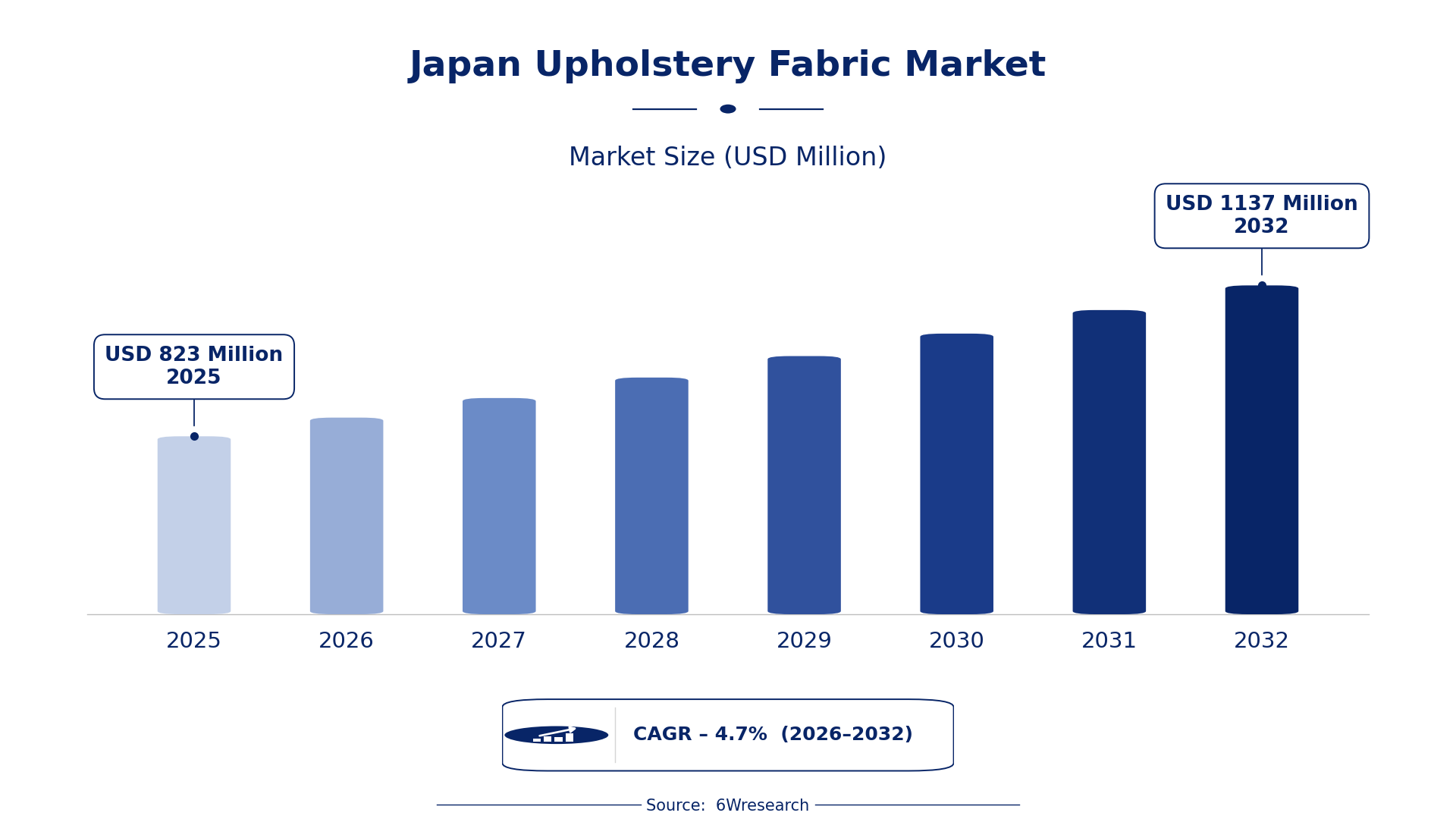
According to 6Wresearch internal database and industry insights, the Japan Upholstery Fabric Market was valued at USD 823 Million in 2025 and is projected to reach USD 1,137 Million by 2032, growing at a CAGR of approximately 4.7% during 2026–2032.
Japan Upholstery Fabric Market Highlights
| Report Metric | Details |
| Report Name | Japan Upholstery Fabric Market (2026-2032) |
| Market Size 2025 | USD 823 Million |
| Market Size 2032 | USD 1,137 Million |
| Absolute Growth 2025–2032 | USD 314 Million |
| CAGR 2026–2032 | 4.7% |
| Peak Annual Growth | 5.4% in 2028 |
| Forecast Period | 2026–2032 |
| Historical Data | 2022–2025 |
| Base Year | 2025 |
| Leading Type, 2025 | Synthesis Fabrics (63% share) |
| Leading Application, 2025 | Automobile Upholstery (48% share) |
| Fastest-Growing Type | Natural Fabrics (6.2% CAGR) |
| Fastest-Growing Application | Traditional Upholstery (6.3% CAGR) |
| Growing Sector | Traditional Upholstery |
| Key End Users | Automobile Upholstery, Traditional Upholstery, Marine Upholstery |
Japan Upholstery Fabric Market Year-wise Growth Rate and Key Drivers (2022–2032)
This graph illustrates the annual growth rates of the market from 2022 to 2032, highlighting a steady upward trajectory and projected market expansion over the forecast period.
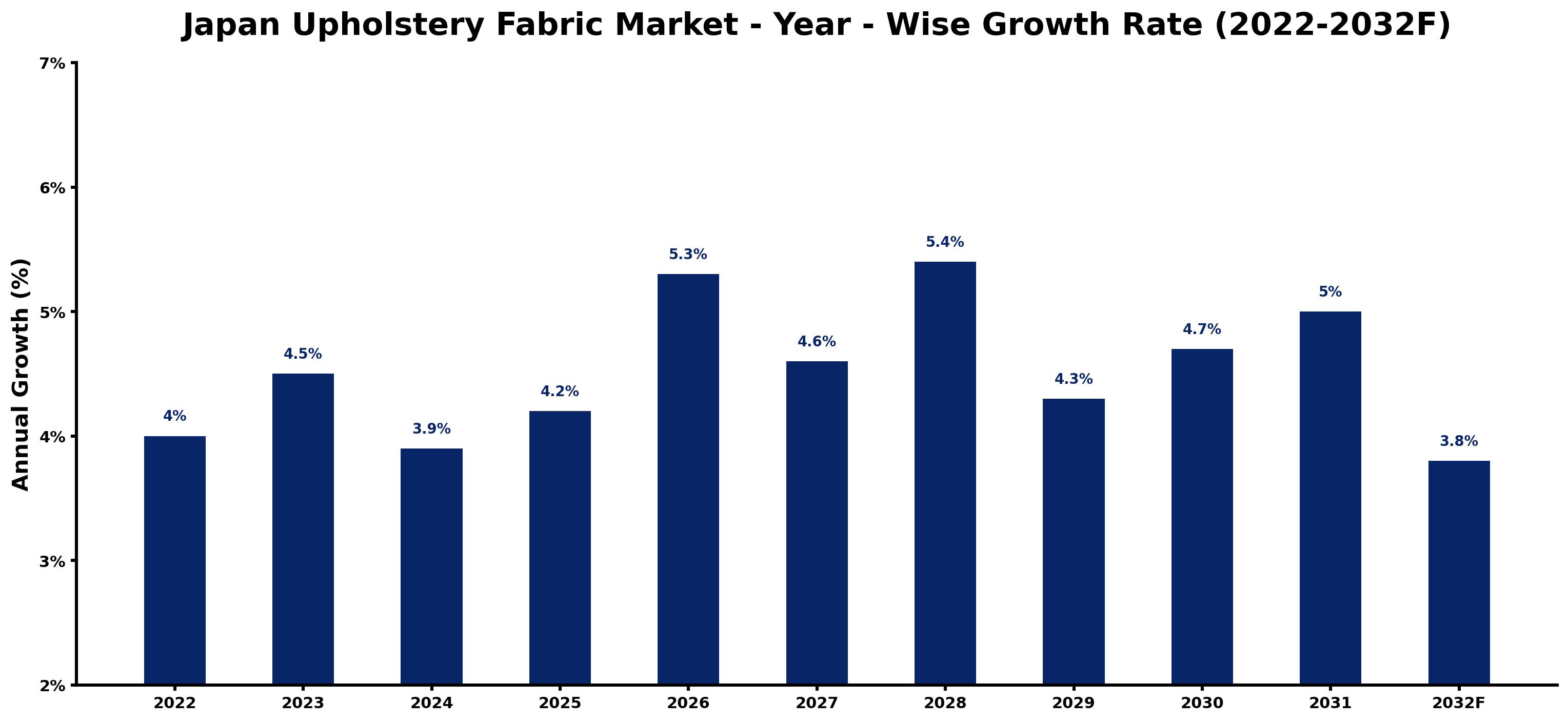
The yearly estimates that follow link every growth rate to its principal driver, so readers can see why the pace changed in each period.
| Year | Estimated Annual Growth (%) | Market Rationale |
| 2022 | 4.0 | Demand was driven by the strong performance of the furniture and automotive sectors. |
| 2023 | 4.5 | The automotive industry produced about 8 million vehicles, significantly boosting fabric needs. |
| 2024 | 3.9 | Growth slowed as the market adjusted to previous high levels of production. |
| 2025 | 4.2 | Increased production in the furniture sector led to higher consumption of upholstery fabric. |
| 2026 | 5.3 | Demand is expected to surge due to rising automotive production and furniture sales. |
| 2027 | 4.6 | Growth is projected to slow as the market stabilises after rapid increases in prior years. |
| 2028 | 5.4 | A peak in demand is anticipated, driven by robust automotive sector performance. |
| 2029 | 4.3 | The market will experience a slowdown as demand begins to normalise after peak levels. |
| 2030 | 4.7 | Increased focus on sustainable materials is expected to support growth in upholstery fabric. |
| 2031 | 5.0 | Demand will rise as furniture manufacturers adapt to evolving consumer preferences. |
| 2032 | 3.8 | Growth is projected to slow as the market matures and faces heightened competition. |
Note: Market size estimations and growth projections presented in this report are based on 6Wresearch's proprietary forecasting methodology, utilizing the latest available industry data, government publications, and primary research inputs.
Japan Upholstery Fabric Market Synopsis
Upholstery fabric is a textile material used for covering furniture and other items, made from various fibres including cotton, linen, and polyester. The Japan Upholstery Fabric Market is growing, driven by strong demand from the automotive sector and furniture manufacturers. The production of approximately 8 million vehicles in 2022 and the popularity of natural fabrics for traditional Japanese furniture are key factors contributing to this growth.
Market Dynamics Impact Analysis (2026–2032)
| Factor | Type | Impact | Primary Segment Affected |
| Growing demand from the automotive sector for vehicle interiors drives upholstery fabric consumption. | Driver | High | Automobile Upholstery |
| Increased residential furniture production leads to higher demand for upholstery materials. | Driver | High | Traditional Upholstery |
| The shift towards sustainable materials presents opportunities for suppliers of natural fabrics. | Opportunity | High | Natural Fabrics |
| Rising interest in marine applications creates demand for durable upholstery materials. | Opportunity | Medium | Marine Upholstery |
| Compliance with JIS standards for marine upholstery can limit material choices for manufacturers. | Restraint | High | Marine Upholstery |
| The high cost of natural fabrics may deter some buyers from choosing them. | Restraint | Medium | Natural Fabrics |
| Cost pressures from rising raw material prices affect profit margins for producers. | Challenge | High | Synthesis Fabrics |
| Capacity constraints in production facilities may delay supply to meet rising demand. | Challenge | Medium | Automobile Upholstery |
Evaluation of Drivers in Japan Upholstery Fabric Market (2026–2032)
The table below links each growth driver to the segment it affects and the evidence for it.
| Drivers | Primary Segment Affected | Why It Matters (Evidence) |
| Strong automotive production | Automobile Upholstery | The automotive industry produced about 8 million vehicles in 2022, increasing upholstery fabric needs for vehicle interiors. |
| Rising furniture production | Traditional Upholstery | The furniture sector's growth in Tokyo drove upholstery fabric usage in residential and commercial applications, contributing to increased demand. |
| Popularity of natural fabrics | Natural Fabrics | Natural fabrics like cotton and linen are preferred for traditional Japanese furniture, boosting their market presence. |
| Growth in marine applications | Marine Upholstery | Compliance with JIS standards for marine upholstery ensures safety and durability, leading to increased purchases in that segment. |
| Increased focus on sustainability | Synthesis Fabrics | The Japan Furniture Industry Association promotes sustainable practices, encouraging the use of eco-friendly upholstery materials. |
What keeps demand rising is the strong production levels in the automotive sector, which produced about 8 million vehicles in 2022, increasing upholstery fabric requirements for vehicle interiors. The growth in furniture production, particularly in Tokyo, is driving the need for high-quality upholstery materials in both residential and commercial applications. The preference for natural fabrics, such as cotton and linen, is reflected in traditional Japanese furniture, further boosting demand. Compliance with JIS standards for marine upholstery ensures safety and durability, prompting increased purchases in that segment. The promotion of sustainable practices by industry associations encourages the adoption of eco-friendly upholstery materials, expanding the market further.
Evaluation of Restraints in Japan Upholstery Fabric Market
These restraints slow adoption and weigh on supplier margins.
| Market Restraint | Primary Segment Affected | Why It Matters (Evidence) |
| Compliance with JIS standards limits material options for marine upholstery. | Marine Upholstery | Adhering to JIS standards restricts choices for manufacturers, affecting product variety. |
| High costs of natural fabrics deter some buyers from selecting them. | Natural Fabrics | The premium pricing of natural fabrics may lead buyers to choose more affordable synthetic alternatives. |
| Rising raw material prices pressure profit margins for upholstery producers. | Synthesis Fabrics | Increased costs of raw materials affect the pricing strategies of upholstery fabric manufacturers. |
| Capacity constraints in production facilities delay supply to meet rising demand. | Automobile Upholstery | Limited production capacity may hinder the ability to fulfil orders in the growing automotive sector. |
| Market competition may limit pricing flexibility for upholstery fabric suppliers. | Traditional Upholstery | Intense competition among suppliers can restrict the ability to raise prices, impacting profitability. |
Japan Upholstery Fabric Market Challenges
Technological limitations hinder production efficiency, resulting in delays that raise costs for furniture manufacturers. A lack of skilled workers restricts innovation, compelling producers to depend on outdated methods that reduce their market competitiveness. Buyers face price fluctuations in synthetic fabrics, with costs potentially increasing by 15% within a year due to supply chain disruptions. Compliance with stringent JIS standards for marine upholstery can extend certification timelines, delaying product launches and negatively affecting revenue for producers required to meet these regulations.
Trends in the Japan Upholstery Fabric Market
The following changes are redrawing the Japan Upholstery Fabric Market.
- Launch of Sustainable Practices Initiative: The Japan Furniture Industry Association promotes sustainable practices in upholstery, influencing manufacturers to adopt eco-friendly materials. This initiative aims to increase the market share of sustainable upholstery fabrics by 15% by 2025.
- Shift Towards Natural Fabrics: A growing preference for natural fabrics in traditional Japanese furniture has emerged, with natural fabrics projected to grow at a CAGR of 6.2% through 2032. This trend reflects a cultural shift towards sustainability and aesthetics.
- Increased Demand for Marine Upholstery: The marine upholstery sector is seeing heightened demand as boat manufacturers seek durable materials that comply with JIS standards. This segment is expected to grow by 10% annually, reflecting a shift in consumer preferences.
- Expansion of Automotive Upholstery Market: The automotive upholstery market is expanding rapidly, driven by the production of 8 million vehicles in 2022. This growth indicates a strong recovery and increasing consumer demand for vehicle interiors.
Investment Opportunities in the Japan Upholstery Fabric Market
The following opportunities in the Japan Upholstery Fabric Market pair current demand with a clear way in.
- Gap in Sustainable Upholstery Materials: With a projected increase in demand for sustainable upholstery materials, suppliers can target the growing market for eco-friendly fabrics, estimated to rise by 15% by 2025. Collaborating with local textile manufacturers can facilitate market entry.
- Entry into Marine Upholstery Sector: The marine upholstery market presents opportunities for suppliers of water-resistant materials, with a 10% annual growth rate. Partnering with boat manufacturers in coastal regions can improve market presence.
- Investment in Natural Fabrics: The increasing preference for natural fabrics offers a significant opportunity for suppliers to invest in this segment, which is projected to grow at a CAGR of 6.2%. Engaging with traditional furniture manufacturers can drive sales.
- Expansion of Automotive Upholstery Offerings: The automotive sector's growth creates opportunities for suppliers to provide innovative upholstery solutions. Establishing joint ventures with automotive manufacturers can enhance product offerings and market reach.
Government Initiatives in the Japan Upholstery Fabric Market
The GX Promotion Act (2023) serves as the legal framework for promoting sustainable practices in the upholstery fabric industry. This policy encourages manufacturers to adopt eco-friendly materials and processes, ensuring compliance with environmental standards. The government allocated a budget of ¥1 billion in 2023 to support the textile industry, aiming to improve production capabilities and sustainability efforts among local manufacturers.
Local textile manufacturers benefit from subsidies provided by the Tokyo Metropolitan Government aimed at modernising production facilities. This initiative helps buyers access high-quality upholstery fabrics while encouraging manufacturers to innovate and improve efficiency, ultimately benefiting the upholstery fabric market.
Future Insight of the Japan Upholstery Fabric Market
A policy shift towards modernising textile technology will transform the industry by 2032, enabling suppliers to reduce production costs significantly. The adoption of ISO 9001 standards will elevate quality assurance, instilling greater buyer confidence in upholstery products. Increased funding for sustainable practices will meet the rising demand from eco-conscious consumers. Support from the Tokyo Metropolitan Government for local manufacturers will improve access to quality materials, thereby fortifying the supply chain.
Market Segmentation Analysis
Japan Upholstery Fabric Market report covers a detailed analysis of the following market segments:
By Type – Synthesis Fabrics Lead, Natural Fabrics Expected to Grow Fastest
According to Ravi Bhandari, Research Head at 6Wresearch, Synthesis Fabrics held 63% of the Japan Upholstery Fabric Market by type in 2025. Synthesis fabrics dominate the market owing to their durability and low maintenance, making them suitable for diverse applications. Their extensive use in sectors like automotive interiors and commercial furniture, particularly in urban areas such as Tokyo, solidifies their leading position. The quickest growth will come from Natural Fabrics, forecast to expand at a CAGR of 6.2% between 2026 and 2032. Natural fabrics are witnessing rapid growth as consumers increasingly seek sustainable options for traditional upholstery. This trend is bolstered by government initiatives promoting eco-friendly practices in the textile industry, appealing to environmentally conscious buyers. Suppliers should consider expanding their natural fabric offerings to meet the rising consumer demand for sustainability.
By Application – Automobile Upholstery Leads, Traditional Upholstery Expected to Grow Fastest
With 48% of application revenue in 2025, Automobile Upholstery was the largest category. Automobile upholstery holds the largest share as it is vital for vehicle interiors, providing comfort and style for millions of vehicles produced annually. The automotive industry's output of approximately 8 million vehicles in 2022 significantly drives the demand for this upholstery type. Traditional Upholstery is set to record the highest CAGR in this split, 6.3% over 2026–2032. Traditional upholstery is seeing the fastest growth as consumers invest more in home and office furniture, reflecting a preference for comfort and aesthetics. This trend is influenced by the average lifespan of upholstery fabric, prompting more frequent replacements and upgrades. Buyers should prioritise traditional upholstery options to meet the growing demand for comfort and style in residential and commercial settings.
Key Attractiveness of the Report
- 10 Years of Market Numbers
- Historical Data Starting from 2022 to 2025
- Base Year 2025
- Forecast Data until 2032
- Key Performance Indicators Impacting the Market
- Major Upcoming Developments and Projects
Key Highlights of the Report:
- Japan Upholstery Fabric Market Outlook
- Market Size of Japan Upholstery Fabric Market, 2025
- Forecast of Japan Upholstery Fabric Market, 2032
- Historical Data and Forecast of Japan Upholstery Fabric Revenues & Volume for the Period 2022-2032
- Japan Upholstery Fabric Market Trend Evolution
- Japan Upholstery Fabric Market Drivers and Challenges
- Japan Upholstery Fabric Price Trends
- Japan Upholstery Fabric Porter's Five Forces
- Japan Upholstery Fabric Industry Life Cycle
- Historical Data and Forecast of Japan Upholstery Fabric Market Revenues & Volume By Type for the Period 2022-2032
- Historical Data and Forecast of Japan Upholstery Fabric Market Revenues & Volume By Natural Fabrics for the Period 2022-2032
- Historical Data and Forecast of Japan Upholstery Fabric Market Revenues & Volume By Synthesis Fabrics for the Period 2022-2032
- Historical Data and Forecast of Japan Upholstery Fabric Market Revenues & Volume By Application for the Period 2022-2032
- Historical Data and Forecast of Japan Upholstery Fabric Market Revenues & Volume By Traditional Upholstery for the Period 2022-2032
- Historical Data and Forecast of Japan Upholstery Fabric Market Revenues & Volume By Automobile Upholstery for the Period 2022-2032
- Historical Data and Forecast of Japan Upholstery Fabric Market Revenues & Volume By Marine Upholstery for the Period 2022-2032
- Historical Data and Forecast of Japan Upholstery Fabric Market Revenues & Volume By Other for the Period 2022-2032
- Japan Upholstery Fabric Import Export Trade Statistics
- Market Opportunity Assessment By Type
- Market Opportunity Assessment By Application
- Japan Upholstery Fabric Top Companies Market Share
- Japan Upholstery Fabric Competitive Benchmarking By Technical and Operational Parameters
- Japan Upholstery Fabric Company Profiles
- Japan Upholstery Fabric Key Strategic Recommendations
Market Covered
The study includes the following segmentation.
By Type
- Natural Fabrics
- Synthesis Fabrics
By Application
- Traditional Upholstery
- Automobile Upholstery
- Marine Upholstery
- Other































