Japan Urinary Catheters Market Size & Growth Rate
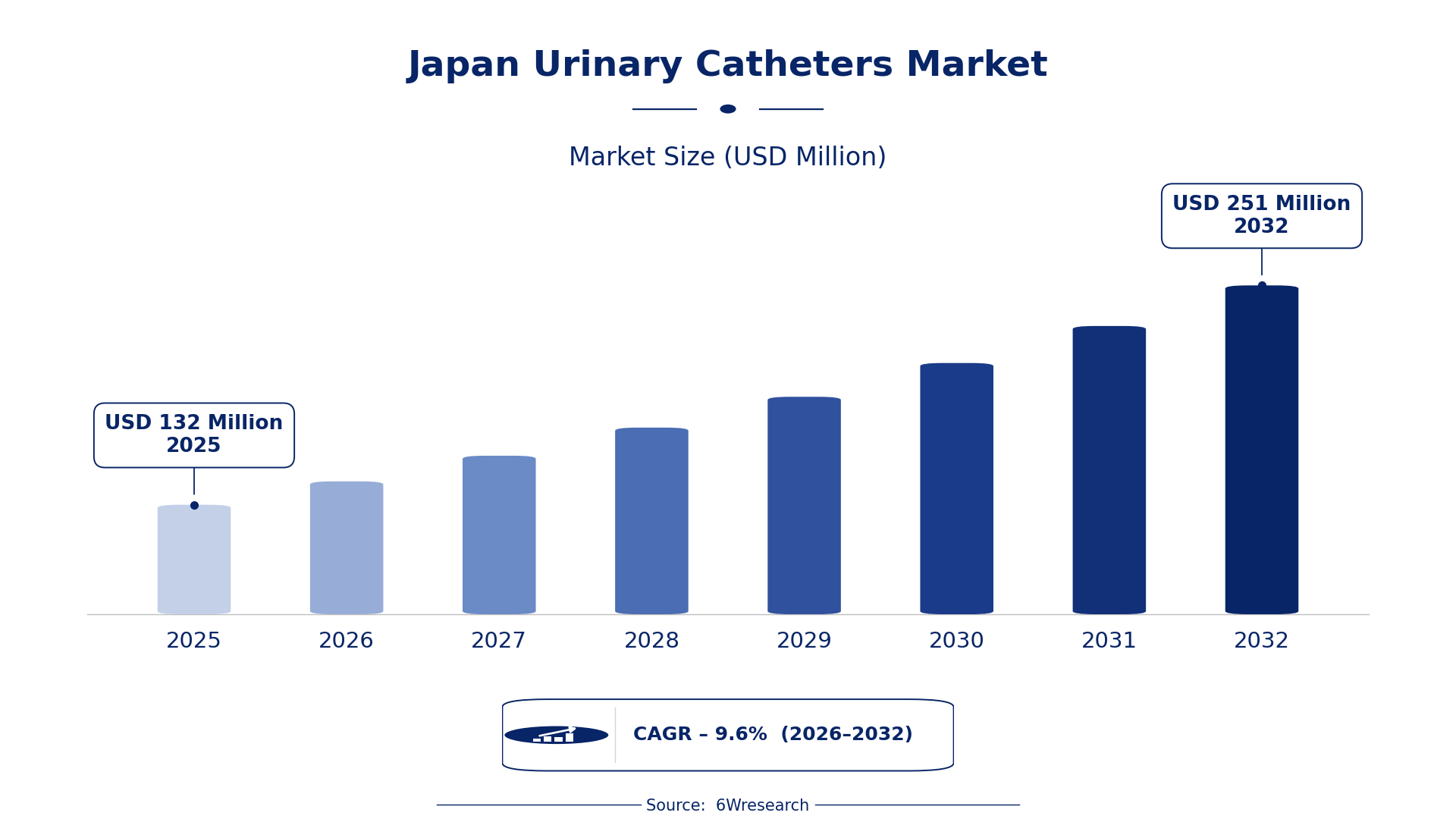
According to 6Wresearch internal database and industry insights, the Japan Urinary Catheters Market was valued at USD 132 Million in 2025 and is projected to reach USD 251 Million by 2032, growing at a CAGR of approximately 9.6% during 2026–2032.
Japan Urinary Catheters Market Highlights
| Report Metric | Details |
| Report Name | Japan Urinary Catheters Market (2026-2032) |
| Market Size 2025 | USD 132 Million |
| Market Size 2032 | USD 251 Million |
| Absolute Growth 2025–2032 | USD 119 Million |
| CAGR 2026–2032 | 9.6% |
| Peak Annual Growth | 10.4% in 2032 |
| Forecast Period | 2026–2032 |
| Historical Data | 2022–2025 |
| Base Year | 2025 |
| Leading Product Type, 2025 | Intermittent Catheters (47% share) |
| Leading Application, 2025 | Benign Prostate Hyperplasia & Prostate Surgeries (46% share) |
| Leading Type, 2025 | Coated Catheters (63% share) |
| Fastest-Growing Product Type | Foley/ Indwelling Catheters (13.5% CAGR) |
| Fastest-Growing Application | Urinary Incontinence (13.0% CAGR) |
| Fastest-Growing Type | Uncoated Catheters (13.1% CAGR) |
| Growing Sector | Healthcare |
| Key End Users | Hospitals, healthcare facilities, elderly care providers |
Japan Urinary Catheters Market Year-wise Growth Rate and Key Drivers (2022–2032)
This graph illustrates the annual growth rates of the market from 2022 to 2032, highlighting a steady upward trajectory and projected market expansion over the forecast period.
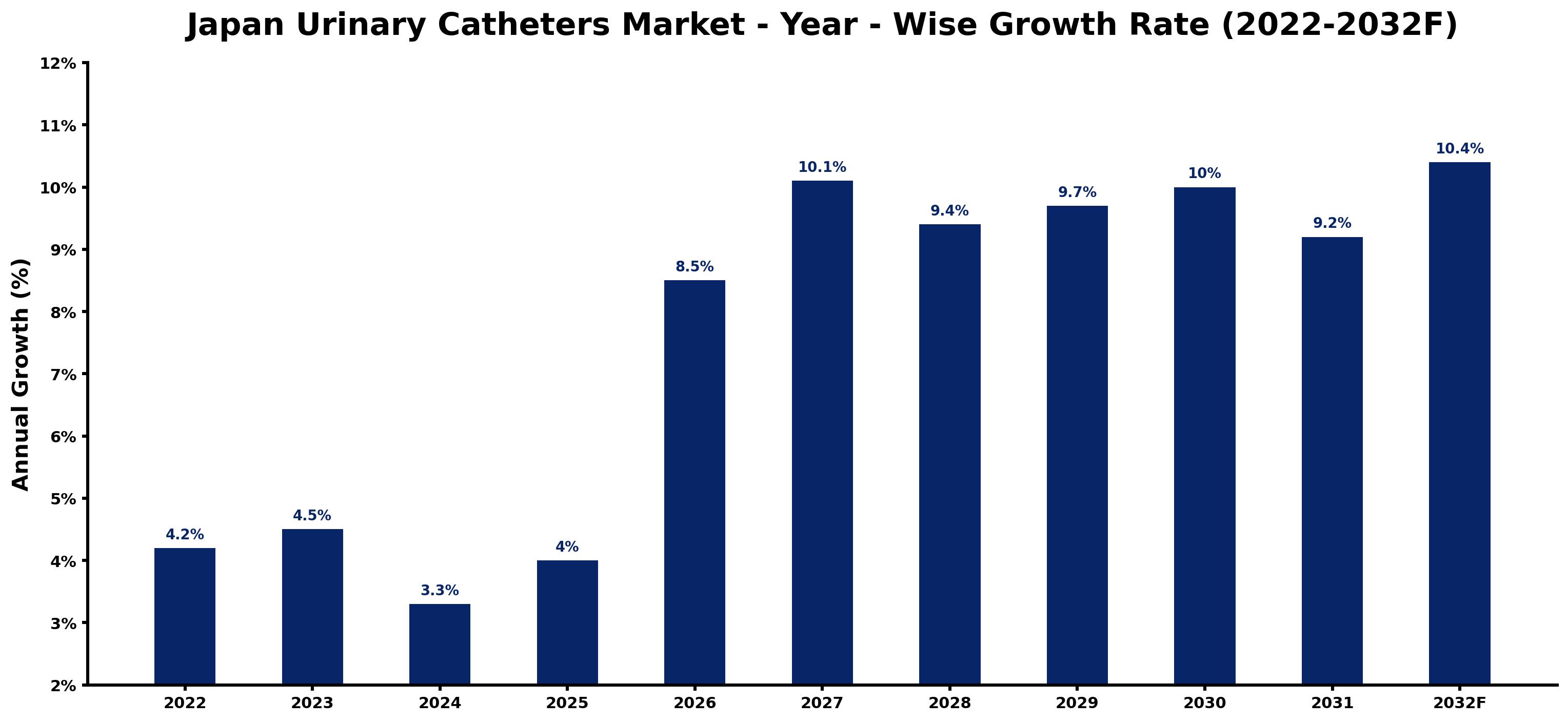
Annual growth estimates for each year appear below with the principal reason behind them, explaining the shifts that set the pace of the market.
| Year | Estimated Annual Growth (%) | Market Rationale |
| 2022 | 4.2 | Demand was stable as healthcare facilities maintained operations amidst ongoing challenges. |
| 2023 | 4.5 | Growth accelerated due to increased hospital admissions and surgical procedures. |
| 2024 | 3.3 | Growth slowed as hospitals faced budget constraints and resource allocation issues. |
| 2025 | 4.0 | Demand rose again as healthcare providers improved patient management strategies. |
| 2026 | 8.5 | Investment in healthcare technology is expected to drive demand increases. |
| 2027 | 10.1 | The introduction of new catheter designs will improve patient comfort and safety. |
| 2028 | 9.4 | Demand growth is projected to slow slightly as market saturation approaches. |
| 2029 | 9.7 | Increased awareness of urinary health will boost demand for catheters. |
| 2030 | 10.0 | Technological advancements are expected to sustain growth in catheter usage. |
| 2031 | 9.2 | Market growth will slow as competition intensifies among suppliers. |
| 2032 | 10.4 | The rising elderly population will drive demand for urinary catheters. |
Note: Market size estimations and growth projections presented in this report are based on 6Wresearch's proprietary forecasting methodology, utilizing the latest available industry data, government publications, and primary research inputs.
Japan Urinary Catheters Market Synopsis
Urinary catheters are vital medical devices for draining urine from the bladder, primarily constructed from latex, silicone, or PVC. In Japan, over 1 million urinary catheters are used annually, with hospitals being the primary consumers. The Japan Urinary Catheters Market is expanding due to an aging population, increasing prevalence of urinary incontinence, and advancements in catheter technology. The Tokyo metropolitan area shows the highest demand, supported by government initiatives aimed at improving access to urinary care for the elderly.
Market Dynamics Impact Analysis (2026–2032)
| Factor | Type | Impact | Primary Segment Affected |
| Increasing elderly population driving demand for urinary management solutions. | Driver | High | Urinary Incontinence |
| Growing adoption of coated catheters due to lower infection rates. | Driver | High | Coated Catheters |
| Rising prevalence of urinary incontinence among the elderly creates a need for more products. | Opportunity | High | Urinary Incontinence |
| Government programs to improve access to urinary care for the elderly. | Opportunity | High | Benign Prostate Hyperplasia & Prostate Surgeries |
| Budget constraints in hospitals limiting procurement of medical devices. | Restraint | Medium | Foley/ Indwelling Catheters |
| High costs associated with advanced catheter technologies may deter adoption. | Restraint | Medium | Coated Catheters |
| Competition among suppliers leading to price wars affecting margins. | Challenge | High | Intermittent Catheters |
| Regulatory compliance challenges for new catheter designs delaying market entry. | Challenge | Medium | Foley/ Indwelling Catheters |
Evaluation of Drivers in Japan Urinary Catheters Market (2026–2032)
Demand rests on the following drivers, each shown with the segment it touches most.
| Drivers | Primary Segment Affected | Why It Matters (Evidence) |
| Aging population increasing the need for urinary management solutions. | Urinary Incontinence | The average age of patients requiring urinary catheters is 65 years, leading to higher demand. |
| Technological advancements in catheter design improving patient comfort. | Coated Catheters | The adoption rate of coated catheters is increasing due to lower infection rates. |
| Growing hospital admissions for surgeries requiring catheterisation. | Foley/ Indwelling Catheters | Over 2,000 hospitals in Japan perform prostate surgeries annually, necessitating catheters. |
| Increased awareness of urinary health issues among the elderly. | Benign Prostate Hyperplasia & Prostate Surgeries | The prevalence of urinary incontinence in Japan is estimated at 17% among the elderly. |
| Government initiatives to improve access to urinary care. | Urinary Incontinence | Government programs aim to improve access to urinary care for the elderly. |
Spending rises because the aging population is increasing the need for urinary management solutions, with over 1 million urinary catheters used annually. Innovations in catheter design are improving patient comfort, as seen with the rising adoption of coated catheters, which reduce infection rates. Growing hospital admissions for surgeries requiring catheterisation drive demand, with over 2,000 hospitals performing prostate surgeries annually. Awareness of urinary health issues among the elderly, with a prevalence of urinary incontinence estimated at 17%, is further boosting the market.
Evaluation of Restraints in Japan Urinary Catheters Market
These restraints slow adoption and weigh on supplier margins.
| Market Restraint | Primary Segment Affected | Why It Matters (Evidence) |
| Budget constraints in hospitals limiting procurement of medical devices. | Foley/ Indwelling Catheters | Hospitals face financial pressures, impacting their ability to purchase necessary catheters. |
| High costs associated with advanced catheter technologies may deter adoption. | Coated Catheters | The average cost of a Foley catheter in Japan is around 1,500 yen, affecting procurement. |
| Regulatory compliance challenges for new catheter designs delaying market entry. | Foley/ Indwelling Catheters | Strict regulations require extensive testing, delaying product launches. |
| Limited awareness among healthcare providers about new catheter technologies. | Intermittent Catheters | Training programs for catheter management are still developing, affecting adoption rates. |
| Competition among suppliers resulting in price wars that impact margins. | Coated Catheters | Intense competition can lead to reduced prices, impacting supplier profitability. |
Japan Urinary Catheters Market Challenges
Regulatory complexities from the Ministry of Health, Labour and Welfare hinder the swift approval of new catheter technologies, delaying market entry by up to six months for suppliers. Low technological integration in hospitals stems from risk-averse practices, resulting in operational costs increasing by 15% for healthcare providers. The 17% prevalence of urinary incontinence among the elderly creates a surge in demand, which can lead to stock shortages for buyers. The average cost of a Foley catheter at 1,500 yen imposes financial pressure on hospitals, forcing them to make difficult budgetary decisions that may compromise patient care.
Trends in the Japan Urinary Catheters Market
Several trends are reshaping the Japan Urinary Catheters Market; the most important are set out below.
- Increase in Coated Catheter Adoption: The adoption rate of coated catheters is on the rise, with approximately 40% of the market share now attributed to these products, driven by their lower infection rates.
- Shift Towards Home Care Solutions: A trend is emerging towards the use of external catheters in home care settings, particularly for elderly patients. This shift is particularly noticeable in the Tokyo metropolitan area, where demand for home care products is growing.
- Enhanced Training for Healthcare Providers: The Tokyo Medical Association actively supports training initiatives for catheter management among healthcare providers. This effort aims to improve patient outcomes and is part of a broader strategy to refine urinary care.
- Focus on Regulatory Compliance: With the introduction of the JIS standard for urinary catheters, manufacturers are prioritising compliance to ensure safety and efficacy. This standardisation is crucial for maintaining product quality in the market.
Investment Opportunities in the Japan Urinary Catheters Market
The openings below show where demand in the Japan Urinary Catheters Market is visible and how suppliers can enter.
- Supply of Coated Catheters: The increasing adoption of coated catheters presents an opportunity for suppliers to meet growing demand. With a market share of approximately 40%, manufacturers can focus on improving product features.
- Investment in Home Care Products: The shift towards home care solutions creates an opportunity for suppliers. The aging population requires more accessible urinary management options, particularly in urban areas like Tokyo.
- Expansion of Training Programs: Investment in training programs for healthcare providers is essential now, as it can improve catheter management practices. Collaborating with associations can facilitate this expansion.
- Development of Innovative Catheter Designs: The demand for innovative catheter designs is increasing, particularly in the context of post-surgical care. Suppliers can invest in R&D to create products that cater to specific patient needs.
Government Initiatives in the Japan Urinary Catheters Market
The GX Basic Policy adopted in 2023 aims for about JPY 150 trillion of public-private decarbonisation investment over 10 years, which includes healthcare innovations. This policy builds on previous regulations by integrating sustainability into medical device development, ensuring that urinary catheters meet modern environmental standards.
In 2023, the Ministry of Health, Labour and Welfare oversees the implementation of medical device regulations, with a budget of 500 million yen for medical device research. This funding supports initiatives that improve access to urinary care, particularly for the elderly, ensuring compliance with safety standards.
Future Insight of the Japan Urinary Catheters Market
Investment in medical device research, with a budget of 500 million yen from the Ministry of Health, will drive advancements in urinary catheter technology, creating new demand for suppliers. By 2032, the adoption of ISO 13485 standards will improve product quality, benefiting hospitals and patients. Increased government initiatives will broaden access to urinary care for the elderly, providing more opportunities for providers. The growing elderly population will sustain demand, prompting suppliers to innovate their offerings to meet specific healthcare needs.
Market Segmentation Analysis
Japan Urinary Catheters Market report covers a detailed analysis of the following market segments:
By Product Type – Intermittent Catheters Lead, Foley/ Indwelling Catheters Expected to Grow Fastest
According to Sumit Sagar, AM at 6Wresearch, Intermittent Catheters took 47% of product type revenue in 2025, more than any other category. Intermittent catheters hold the largest share due to their critical role in managing temporary drainage needs, particularly in outpatient settings. Their widespread use in hospitals across the Tokyo metropolitan area for post-surgical care highlights their importance in the market. Foley/ Indwelling Catheters are projected to grow fastest, at a CAGR of 13.5% during 2026–2032. Foley catheters are experiencing rapid growth as they are essential for long-term urinary management, especially among surgical patients. The annual performance of over 2,000 prostate surgeries significantly contributes to the increasing demand for these catheters. This trend indicates that suppliers must ensure a steady supply of Foley catheters to meet the growing requirements of healthcare facilities.
By Application – Benign Prostate Hyperplasia & Prostate Surgeries Lead, Urinary Incontinence Expected to Grow Fastest
Benign Prostate Hyperplasia & Prostate Surgeries accounted for 46% of the market by application in 2025. Benign prostate hyperplasia and prostate surgeries hold the largest share as these procedures often require catheterisation for efficient urine drainage post-surgery. This is particularly prevalent in hospitals where such surgeries are routinely conducted, ensuring a steady demand. Over 2026–2032, Urinary Incontinence is expected to post the fastest growth, at a CAGR of 13.0%. Urinary incontinence is the fastest-growing application due to its rising prevalence, particularly among the elderly, estimated at 17%. This demographic trend is leading to an increase in prescriptions for managing this condition, indicating a growing market. Buyers must anticipate a rise in demand for products that address urinary incontinence as the elderly population continues to expand.
By Type – Coated Catheters Lead, Uncoated Catheters Expected to Grow Fastest
Coated Catheters held 63% of the Japan Urinary Catheters Market by type in 2025. Coated catheters dominate the market because they are specifically designed to reduce friction and discomfort, making them preferable for both patients and healthcare providers. Their adoption is particularly high in facilities focusing on patient comfort and safety. Uncoated Catheters are set to record the highest CAGR in this split, 13.1% over 2026–2032. Uncoated catheters are growing at the fastest rate as they are being considered for use in specific cases despite their higher risk of complications. This trend indicates a potential shift in preferences based on cost considerations or specific patient needs. Suppliers must ensure a balanced portfolio that includes both coated and uncoated catheters to cater to diverse market needs.
Key Attractiveness of the Report
- 10 Years of Market Numbers
- Historical Data Starting from 2022 to 2025
- Base Year 2025
- Forecast Data until 2032
- Key Performance Indicators Impacting the Market
- Major Upcoming Developments and Projects
Key Highlights of the Report:
- Japan Urinary Catheters Market Outlook
- Market Size of Japan Urinary Catheters Market, 2025
- Forecast of Japan Urinary Catheters Market, 2032
- Historical Data and Forecast of Japan Urinary Catheters Revenues & Volume for the Period 2022-2032
- Japan Urinary Catheters Market Trend Evolution
- Japan Urinary Catheters Market Drivers and Challenges
- Japan Urinary Catheters Price Trends
- Japan Urinary Catheters Porter's Five Forces
- Japan Urinary Catheters Industry Life Cycle
- Historical Data and Forecast of Japan Urinary Catheters Market Revenues & Volume By Product Type for the Period 2022-2032
- Historical Data and Forecast of Japan Urinary Catheters Market Revenues & Volume By Intermittent Catheters for the Period 2022-2032
- Historical Data and Forecast of Japan Urinary Catheters Market Revenues & Volume By Foley/ Indwelling Catheters for the Period 2022-2032
- Historical Data and Forecast of Japan Urinary Catheters Market Revenues & Volume By External Catheters for the Period 2022-2032
- Historical Data and Forecast of Japan Urinary Catheters Market Revenues & Volume By Application for the Period 2022-2032
- Historical Data and Forecast of Japan Urinary Catheters Market Revenues & Volume By Benign Prostate Hyperplasia & Prostate Surgeries for the Period 2022-2032
- Historical Data and Forecast of Japan Urinary Catheters Market Revenues & Volume By Urinary Incontinence for the Period 2022-2032
- Historical Data and Forecast of Japan Urinary Catheters Market Revenues & Volume By Spinal Cord Injury for the Period 2022-2032
- Historical Data and Forecast of Japan Urinary Catheters Market Revenues & Volume By Others for the Period 2022-2032
- Historical Data and Forecast of Japan Urinary Catheters Market Revenues & Volume By Type for the Period 2022-2032
- Historical Data and Forecast of Japan Urinary Catheters Market Revenues & Volume By Coated Catheters for the Period 2022-2032
- Historical Data and Forecast of Japan Urinary Catheters Market Revenues & Volume By Uncoated Catheters for the Period 2022-2032
- Japan Urinary Catheters Import Export Trade Statistics
- Market Opportunity Assessment By Product Type
- Market Opportunity Assessment By Application
- Market Opportunity Assessment By Type
- Japan Urinary Catheters Top Companies Market Share
- Japan Urinary Catheters Competitive Benchmarking By Technical and Operational Parameters
- Japan Urinary Catheters Company Profiles
- Japan Urinary Catheters Key Strategic Recommendations
Market Covered
The following segment groups are covered in the report.
By Product Type
- Intermittent Catheters
- Foley/ Indwelling Catheters
- External Catheters
By Application
- Benign Prostate Hyperplasia & Prostate Surgeries
- Urinary Incontinence
- Spinal Cord Injury
- Others
By Type
- Coated Catheters
- Uncoated Catheters































