Japan Urticaria Market Size & Growth Rate
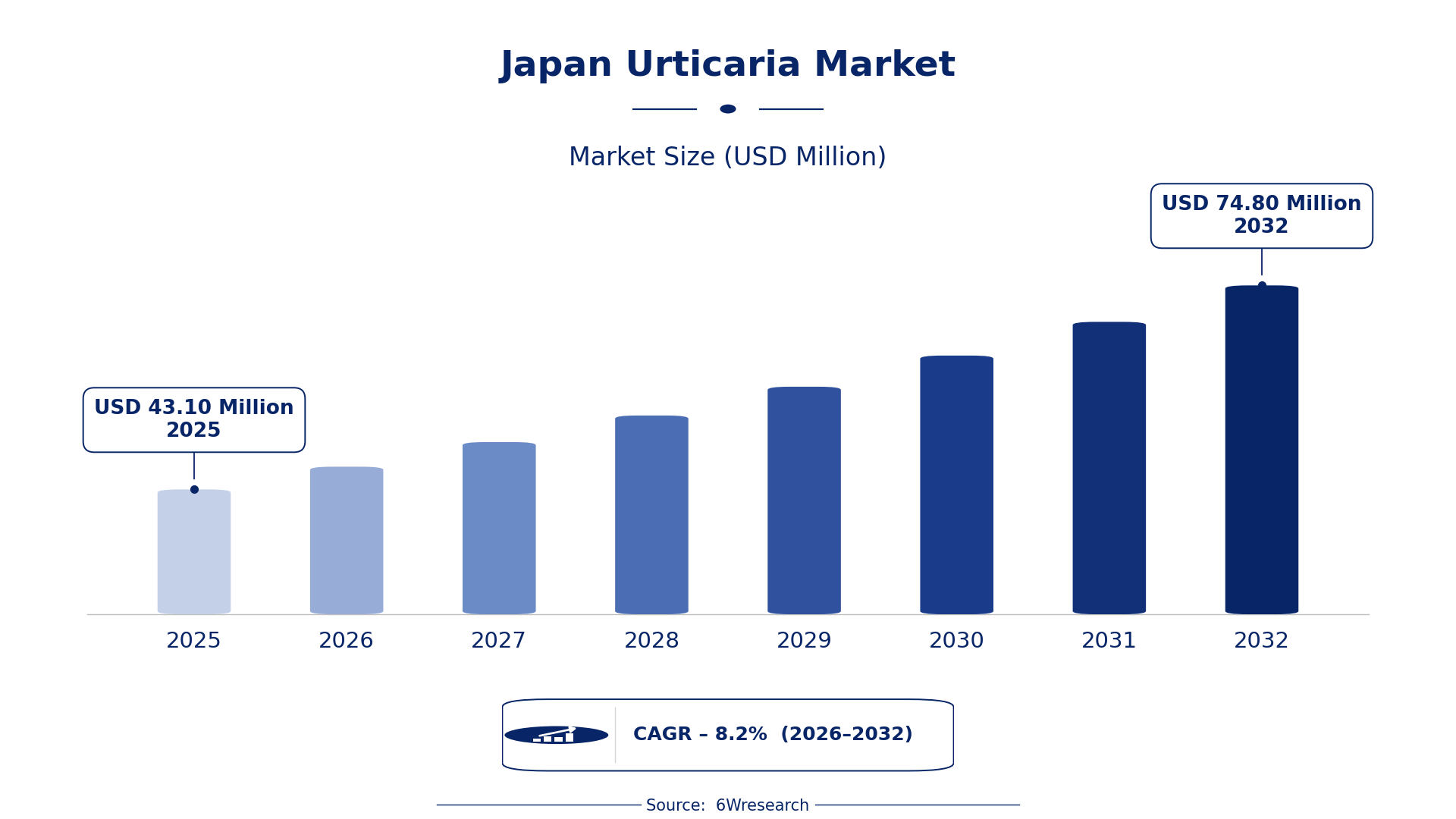
According to 6Wresearch internal database and industry insights, the Japan Urticaria Market was valued at USD 43.10 Million in 2025 and is projected to reach USD 74.80 Million by 2032, growing at a CAGR of approximately 8.2% during 2026–2032.
Japan Urticaria Market Highlights
| Report Metric | Details |
| Report Name | Japan Urticaria Market (2026-2032) |
| Market Size 2025 | USD 43.10 Million |
| Market Size 2032 | USD 74.80 Million |
| Absolute Growth 2025–2032 | USD 31.70 Million |
| CAGR 2026–2032 | 8.2% |
| Peak Annual Growth | 9.4% in 2028 |
| Forecast Period | 2026–2032 |
| Historical Data | 2022–2025 |
| Base Year | 2025 |
| Leading Urticaria Type, 2025 | Chronic Spontaneous (39% share) |
| Leading Treatment Type, 2025 | Antihistamines (39% share) |
| Leading Formulation, 2025 | Tablets (46% share) |
| Leading End User, 2025 | Dermatology Clinics (42% share) |
| Fastest-Growing Urticaria Type | Acute Urticaria (11.2% CAGR) |
| Fastest-Growing Treatment Type | Corticosteroids (12.1% CAGR) |
| Fastest-Growing Formulation | Oral/Topical Creams (11.4% CAGR) |
| Fastest-Growing End User | Primary Care (10.5% CAGR) |
| Growing Sector | Dermatology |
| Key End Users | Dermatology Clinics, Allergy Specialists, Primary Care, Consumers |
Japan Urticaria Market Year-wise Growth Rate and Key Drivers (2022–2032)
This graph illustrates the annual growth rates of the market from 2022 to 2032, highlighting a steady upward trajectory and projected market expansion over the forecast period.
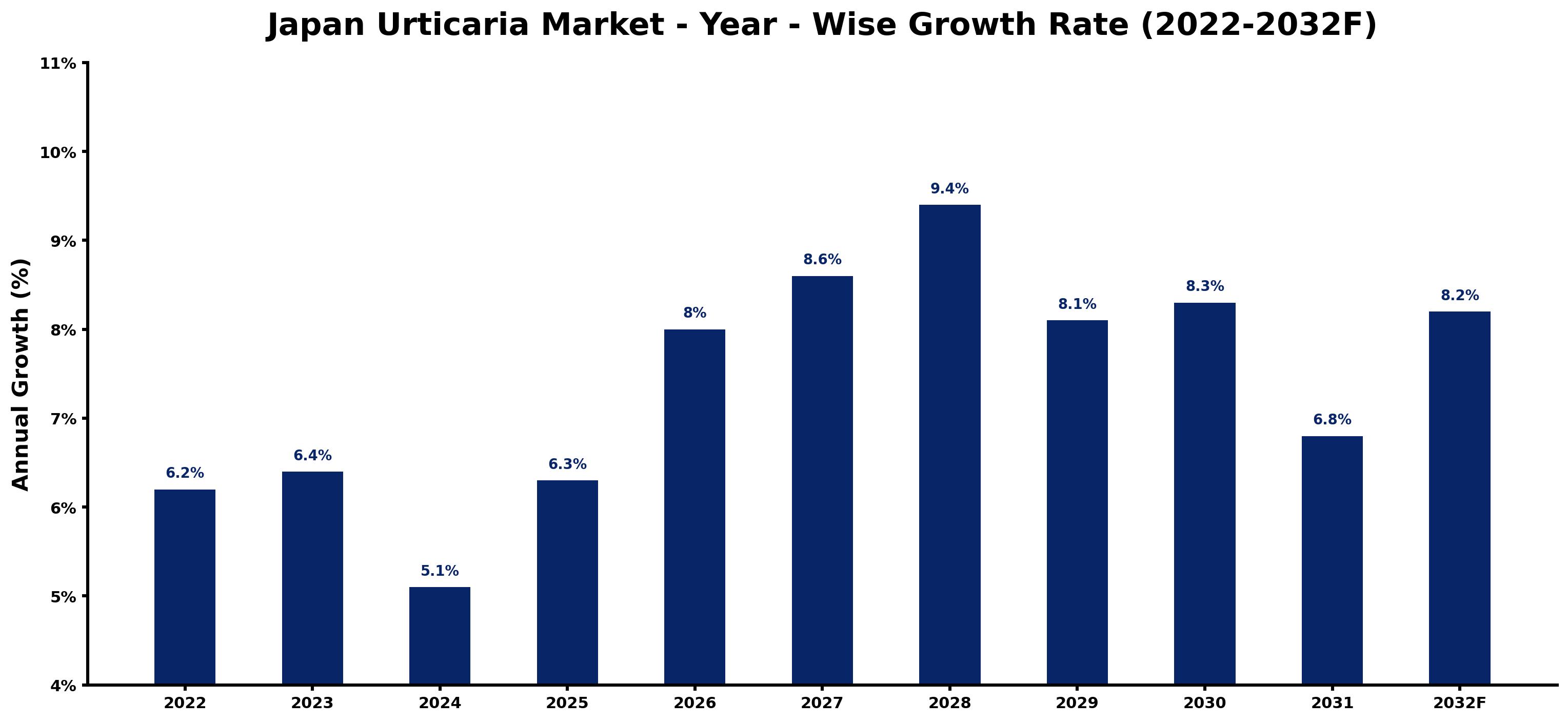
The yearly estimates that follow link every growth rate to its principal driver, so readers can see why the pace changed in each period.
| Year | Estimated Annual Growth (%) | Market Rationale |
| 2022 | 6.2 | The market experienced steady growth with a notable number of chronic urticaria cases reported. |
| 2023 | 6.4 | Demand increased as healthcare providers focused on improving allergy management strategies. |
| 2024 | 5.1 | Growth slowed due to temporary fluctuations in treatment availability and patient access. |
| 2025 | 6.3 | A resurgence in demand was noted as more patients sought treatment for chronic conditions. |
| 2026 | 8.0 | The introduction of new treatment options is expected to stimulate further market expansion. |
| 2027 | 8.6 | Increased awareness of urticaria will lead to a rise in patient consultations and treatments. |
| 2028 | 9.4 | The market is projected to peak as advancements in biologics become widely adopted for chronic cases. |
| 2029 | 8.1 | Growth will slow as the market begins to stabilise after reaching its peak. |
| 2030 | 8.3 | Demand is expected to continue rising as dermatology clinics expand their service offerings. |
| 2031 | 6.8 | Growth will moderate as the market adjusts to new treatment protocols and guidelines. |
| 2032 | 8.2 | The market is expected to maintain a healthy growth rate driven by ongoing patient needs. |
Note: Market size estimations and growth projections presented in this report are based on 6Wresearch's proprietary forecasting methodology, utilizing the latest available industry data, government publications, and primary research inputs.
Japan Urticaria Market Synopsis
Urticaria is a skin condition characterised by hives or welts, primarily treated with antihistamines, corticosteroids, and biologics. In 2023, over 1 million cases of chronic urticaria were reported in Japan, highlighting the demand for effective treatments. The Japan Urticaria Market is expanding due to increased awareness of allergy management, advancements in treatment options, and a strong focus on patient care in dermatology clinics, particularly in urban areas.
Market Dynamics Impact Analysis (2026–2032)
| Factor | Type | Impact | Primary Segment Affected |
| Rising prevalence of chronic urticaria | Driver | High | Chronic Spontaneous |
| Growing adoption of biologics for treatment | Driver | High | Biologics (e.g., Omalizumab) |
| Increasing demand for effective allergy management solutions | Opportunity | High | Dermatology Clinics |
| Expansion of treatment options for acute cases | Opportunity | Medium | Acute Urticaria |
| Limited access to allergy specialists in rural areas | Restraint | High | Allergy Specialists |
| Increased competition among treatment providers | Restraint | Medium | Dermatology Clinics |
| High costs associated with biologic treatments | Challenge | High | Biologics (e.g., Omalizumab) |
| Long wait times for dermatology appointments | Challenge | Medium | Dermatology Clinics |
Evaluation of Drivers in Japan Urticaria Market (2026–2032)
The main growth drivers and the segments they affect most are set out below.
| Drivers | Primary Segment Affected | Why It Matters (Evidence) |
| Increasing number of chronic urticaria cases | Chronic Spontaneous | Over 1 million cases reported in 2023 drive demand for ongoing treatment. |
| Widespread use of antihistamines | Antihistamines | Prescribed frequently in dermatology clinics, they are essential for managing symptoms. |
| Growing awareness of allergy symptoms | Primary Care | Public awareness campaigns have led to more patients seeking consultations for treatment. |
| Emerging treatment options for severe cases | Corticosteroids | Short-term management is essential for severe urticaria, increasing prescriptions significantly. |
| Improved access to OTC medications | OTC | Widespread availability in pharmacies increases self-treatment options for patients. |
Spending rises because the increasing prevalence of chronic urticaria, with over 1 million cases reported in 2023, drives demand for effective treatments. Dermatology clinics are responding by expanding their services and increasing prescriptions of antihistamines, the most commonly used treatment. Awareness campaigns have successfully educated patients on allergy symptoms, leading to a surge in consultations at primary care facilities. The introduction of new corticosteroid options for severe cases is prompting more patients to seek immediate care. The availability of OTC antihistamines in pharmacies further supports self-treatment, contributing to overall market growth.
Evaluation of Restraints in Japan Urticaria Market
Several factors work against faster growth; the main ones are summarised below.
| Market Restraint | Primary Segment Affected | Why It Matters (Evidence) |
| Limited access to allergy specialists in rural areas | Allergy Specialists | Approximately 3,000 specialists exist, making access challenging for rural patients. |
| Long wait times for dermatology appointments | Dermatology Clinics | The average wait time of 2-4 weeks can delay necessary treatment for patients. |
| High costs associated with biologic treatments | Biologics (e.g., Omalizumab) | The expense of biologics limits their accessibility for many patients. |
| Increased competition among treatment providers | Dermatology Clinics | More providers in urban areas can dilute patient volumes for individual clinics. |
| Variability in treatment guidelines across clinics | Dermatology Clinics | Different approaches to management can confuse patients and affect treatment consistency. |
Japan Urticaria Market Challenges
Buyers experience delays due to long wait times for dermatology appointments, averaging 2-4 weeks, which prolongs access to necessary care. Producers face challenges with outdated treatment technologies, as the slow adoption of innovations within the healthcare system limits the development of effective therapies. Importers encounter high costs associated with stringent regulations, inflating prices for biologics and impacting affordability for clinics. Buyers also struggle with limited access to effective treatments for refractory urticaria, as only a small percentage of patients can obtain biologics like Omalizumab, restricting optimal care options.
Trends in the Japan Urticaria Market
Buyers and suppliers in the Japan Urticaria Market are adjusting to the following trends.
- Shift Towards Biologics in Treatment: In 2023, the Japanese Dermatological Association revised guidelines to recommend biologics like Omalizumab for chronic urticaria. This shift is expected to improve treatment effectiveness for patients who do not respond to traditional therapies.
- Increase in OTC Antihistamine Sales: The availability of OTC antihistamines in pharmacies nationwide has surged, with a reported increase of 15% in sales. This trend reflects a growing preference for self-treatment among consumers.
- Expansion of Allergy Management Programs: In 2023, the Ministry of Health, Labour and Welfare launched a program to improve allergy management, allocating ¥500 million for research initiatives. This investment aims to improve treatment accessibility and effectiveness.
- Rising Demand for Dermatology Services: The Tokyo metropolitan area has seen a 20% increase in dermatology clinic openings, driven by rising patient demand for urticaria treatment. This trend highlights the growing recognition of skin conditions in urban healthcare.
Investment Opportunities in the Japan Urticaria Market
The following opportunities in the Japan Urticaria Market pair current demand with a clear way in.
- Partnerships with Dermatology Clinics: Establishing partnerships with dermatology clinics is timely as they expand services. The Tokyo metropolitan area, with its high clinic concentration, offers a prime entry point for collaboration.
- Investing in Allergy Research: With the government allocating ¥500 million for allergy research in 2023, investing in treatment solutions presents a strong opportunity for growth in this sector.
- Expansion of OTC Product Lines: The increase in OTC antihistamine sales indicates a gap in the market for new products. Targeting pharmacies in urban areas can facilitate entry into this growing segment.
- Development of Telehealth Services: The rising demand for dermatology services creates an opportunity for telehealth solutions. Implementing virtual consultations can improve access for patients in rural areas.
Government Initiatives in the Japan Urticaria Market
The NHI drug price standard, revised regularly, sets reimbursement prices for medications, ensuring that treatments for urticaria remain accessible to patients. Additionally, the Long-Term Care Insurance Act, enacted in 1997, provides funding for necessary nursing care and support services, indirectly benefiting patients with chronic conditions like urticaria.
In 2023, the Ministry of Health, Labour and Welfare allocated ¥500 million for allergy research initiatives, administered by the ministry itself. This funding aims to improve treatment options and management strategies for conditions such as urticaria, improving patient care across the country.
Future Insight of the Japan Urticaria Market
By 2032, patients will benefit from increased funding for allergy research, projected to exceed ¥1 billion, which will lead to more effective therapies. New guidelines from the Japanese Dermatological Association will streamline treatment protocols, improving patient management. Advanced biologics will become more accessible, enhancing options for chronic urticaria cases. Public awareness campaigns will continue to educate the population about allergy symptoms, encouraging early diagnosis and treatment, while collaboration among dermatology clinics will facilitate better resource sharing.
Market Segmentation Analysis
Japan Urticaria Market report covers a detailed analysis of the following market segments:
By Urticaria Type – Chronic Spontaneous Leads, Acute Urticaria Expected to Grow Fastest
According to Vasu Joshi, Associate Consultant at 6Wresearch, Chronic Spontaneous held 39% of the Japan Urticaria Market by urticaria type in 2025. Chronic spontaneous urticaria is prevalent among individuals, particularly those around 30 years old, leading to a significant demand for ongoing treatment. The presence of over 1 million reported cases in Japan underscores its prominence as the leading sub-segment. Acute Urticaria is projected to grow fastest, at a CAGR of 11.2% during 2026–2032. Acute urticaria is experiencing notable growth due to a rise in allergic reactions that require immediate intervention. The government's public awareness campaign has contributed to increased recognition and treatment of acute cases, further driving this growth. Suppliers should focus on developing solutions specifically for acute urticaria to address the increasing patient demand.
By Treatment Type – Antihistamines Lead, Corticosteroids Expected to Grow Fastest
In 2025, Antihistamines led the treatment type split with a 39% share. Antihistamines serve as the first-line treatment for urticaria, widely prescribed in dermatology clinics across Japan. Their effectiveness and ready availability in pharmacies solidify their leading position in the market, appealing to both patients and healthcare providers. Corticosteroids are set to record the highest CAGR in this split, 12.1% over 2026–2032. Corticosteroids are gaining importance as they are essential for managing severe urticaria episodes, especially in acute situations. Their recommended short-term use for severe cases is accelerating their adoption among healthcare professionals. Buyers may benefit from a broader range of corticosteroid treatments to effectively address severe urticaria cases.
By Formulation – Tablets Lead, Oral/Topical Creams Expected to Grow Fastest
Tablets accounted for 46% of the market by formulation in 2025. Tablets are the most common formulation for treating urticaria, offering convenience and ease of use for patients. This widespread acceptance in treatment protocols solidifies their leading position in the market. The quickest growth will come from Oral/Topical Creams, forecast to expand at a CAGR of 11.4% between 2026 and 2032. Oral and topical creams are becoming increasingly popular as they provide direct symptom relief, appealing to patients seeking immediate comfort. Their growing availability in pharmacies is further propelling their rapid growth. Suppliers should consider expanding their product lines to include more oral and topical formulations to cater to patient preferences.
By End User – Dermatology Clinics Lead, Primary Care Expected to Grow Fastest
The largest end user category in 2025 was Dermatology Clinics, at 42% of revenue. Dermatology clinics serve as the primary treatment setting for urticaria, where specialists can provide targeted care for this condition. The high concentration of such clinics, particularly in urban areas, reinforces their dominant role in the market. Over 2026–2032, Primary Care is expected to post the fastest growth, at a CAGR of 10.5%. Primary care is emerging as the fastest-growing segment, as patients often consult general practitioners for initial symptoms. This trend reflects a shift towards more accessible healthcare options for managing urticaria. Suppliers should engage with primary care providers to ensure effective distribution and awareness of urticaria treatments.
Key Attractiveness of the Report
- 10 Years of Market Numbers
- Historical Data Starting from 2022 to 2025
- Base Year 2025
- Forecast Data until 2032
- Key Performance Indicators Impacting the Market
- Major Upcoming Developments and Projects
Key Highlights of the Report:
- Japan Urticaria Market Outlook
- Market Size of Japan Urticaria Market, 2025
- Forecast of Japan Urticaria Market, 2032
- Historical Data and Forecast of Japan Urticaria Revenues & Volume for the Period 2022-2032F
- Japan Urticaria Market Trend Evolution
- Japan Urticaria Market Drivers and Challenges
- Japan Urticaria Price Trends
- Japan Urticaria Porter's Five Forces
- Japan Urticaria Industry Life Cycle
- Historical Data and Forecast of Japan Urticaria Market Revenues & Volume By Urticaria Type for the Period 2022-2032F
- Historical Data and Forecast of Japan Urticaria Market Revenues & Volume By Chronic Spontaneous for the Period 2022-2032F
- Historical Data and Forecast of Japan Urticaria Market Revenues & Volume By Acute Urticaria for the Period 2022-2032F
- Historical Data and Forecast of Japan Urticaria Market Revenues & Volume By Physical Urticaria for the Period 2022-2032F
- Historical Data and Forecast of Japan Urticaria Market Revenues & Volume By Refractory Cases for the Period 2022-2032F
- Historical Data and Forecast of Japan Urticaria Market Revenues & Volume By Treatment Type for the Period 2022-2032F
- Historical Data and Forecast of Japan Urticaria Market Revenues & Volume By Antihistamines for the Period 2022-2032F
- Historical Data and Forecast of Japan Urticaria Market Revenues & Volume By Corticosteroids for the Period 2022-2032F
- Historical Data and Forecast of Japan Urticaria Market Revenues & Volume By Avoidance/Antihistamines for the Period 2022-2032F
- Historical Data and Forecast of Japan Urticaria Market Revenues & Volume By Biologics (e.g., Omalizumab) for the Period 2022-2032F
- Historical Data and Forecast of Japan Urticaria Market Revenues & Volume By Formulation for the Period 2022-2032F
- Historical Data and Forecast of Japan Urticaria Market Revenues & Volume By Tablets for the Period 2022-2032F
- Historical Data and Forecast of Japan Urticaria Market Revenues & Volume By Oral/Topical Creams for the Period 2022-2032F
- Historical Data and Forecast of Japan Urticaria Market Revenues & Volume By OTC for the Period 2022-2032F
- Historical Data and Forecast of Japan Urticaria Market Revenues & Volume By Injectable for the Period 2022-2032F
- Historical Data and Forecast of Japan Urticaria Market Revenues & Volume By End User for the Period 2022-2032F
- Historical Data and Forecast of Japan Urticaria Market Revenues & Volume By Dermatology Clinics for the Period 2022-2032F
- Historical Data and Forecast of Japan Urticaria Market Revenues & Volume By Primary Care, ER for the Period 2022-2032F
- Historical Data and Forecast of Japan Urticaria Market Revenues & Volume By Consumers for the Period 2022-2032F
- Historical Data and Forecast of Japan Urticaria Market Revenues & Volume By Allergy Specialists for the Period 2022-2032F
- Japan Urticaria Import Export Trade Statistics
- Market Opportunity Assessment By Urticaria Type
- Market Opportunity Assessment By Treatment Type
- Market Opportunity Assessment By Formulation
- Market Opportunity Assessment By End User
- Japan Urticaria Top Companies Market Share
- Japan Urticaria Competitive Benchmarking By Technical and Operational Parameters
- Japan Urticaria Company Profiles
- Japan Urticaria Key Strategic Recommendations
Market Covered
Segments analysed in this report are listed below.
By Urticaria Type
- Chronic Spontaneous
- Acute Urticaria
- Physical Urticaria
- Refractory Cases
By Treatment Type
- Antihistamines
- Corticosteroids
- Avoidance/Antihistamines
- Biologics (e.g., Omalizumab)
By Formulation
- Tablets
- Oral/Topical Creams
- OTC
- Injectable
By End User
- Dermatology Clinics
- Primary Care
- ER
- Consumers
- Allergy Specialists































