Japan Vehicle Fleet Rental Market Size & Growth Rate
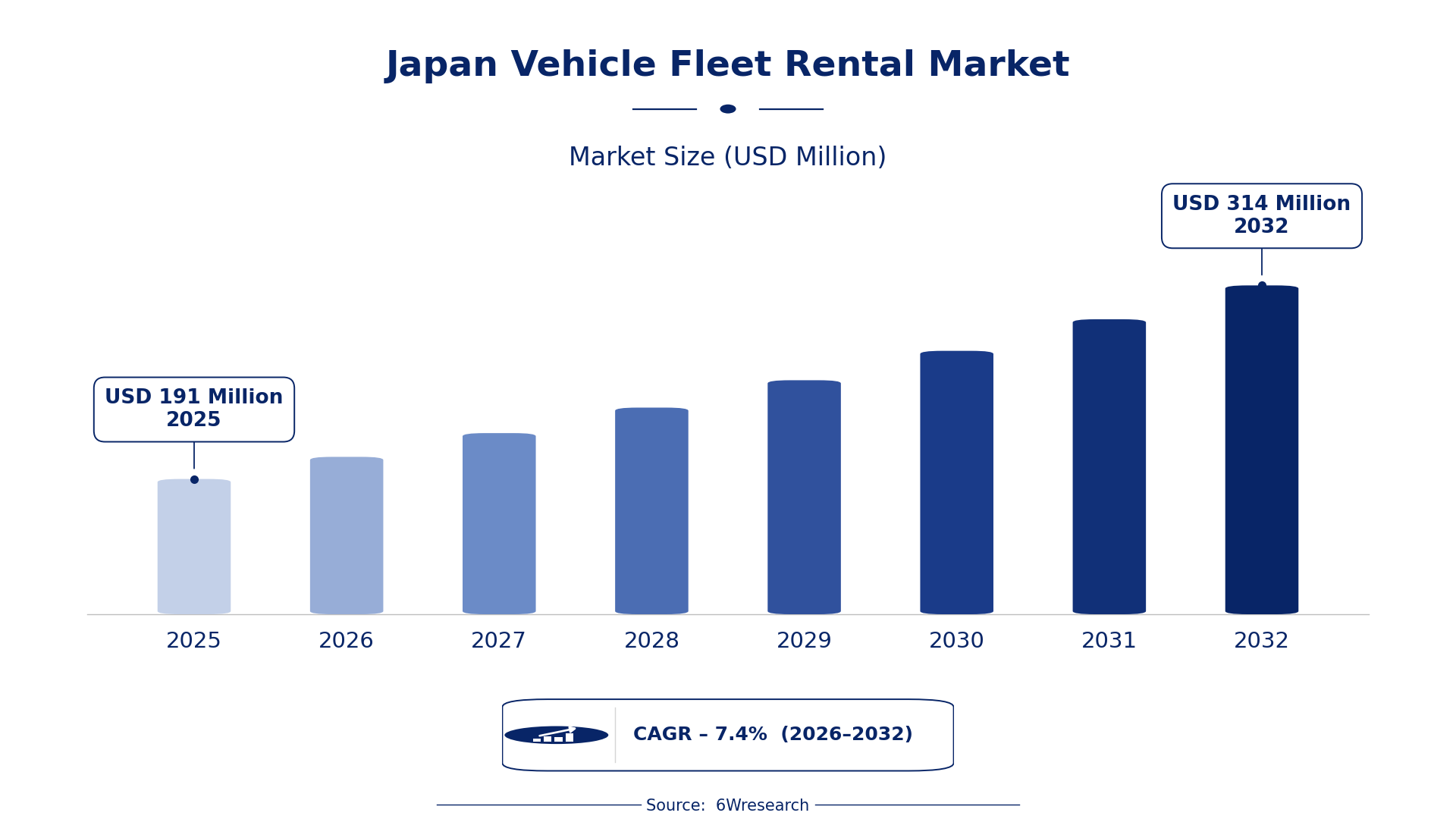
According to 6Wresearch internal database and industry insights, the Japan Vehicle Fleet Rental Market was valued at USD 191 Million in 2025 and is projected to reach USD 314 Million by 2032, growing at a CAGR of approximately 7.4% during 2026–2032.
Japan Vehicle Fleet Rental Market Highlights
| Report Metric | Details |
| Report Name | Japan Vehicle Fleet Rental Market (2026-2032) |
| Market Size 2025 | USD 191 Million |
| Market Size 2032 | USD 314 Million |
| Absolute Growth 2025–2032 | USD 123 Million |
| CAGR 2026–2032 | 7.4% |
| Peak Annual Growth | 8.7% in 2027 |
| Forecast Period | 2026–2032 |
| Historical Data | 2022–2025 |
| Base Year | 2025 |
| Leading Rental Type, 2025 | Short-Term Rental (54% share) |
| Leading Vehicle Type, 2025 | Passenger Cars (48% share) |
| Leading Distribution Channel, 2025 | Rental Agencies (47% share) |
| Leading End User, 2025 | Corporate Clients (40% share) |
| Fastest-Growing Rental Type | Subscription Models (10.5% CAGR) |
| Fastest-Growing Vehicle Type | Commercial Vans (10.1% CAGR) |
| Fastest-Growing Distribution Channel | Mobile Apps (9.6% CAGR) |
| Fastest-Growing End User | Tourists (9.3% CAGR) |
| Growing Sector | vehicle rentals |
| Key End Users | tourists, corporate clients, urban commuters, business travelers |
Japan Vehicle Fleet Rental Market Year-wise Growth Rate and Key Drivers (2022–2032)
This graph illustrates the annual growth rates of the market from 2022 to 2032, highlighting a steady upward trajectory and projected market expansion over the forecast period.
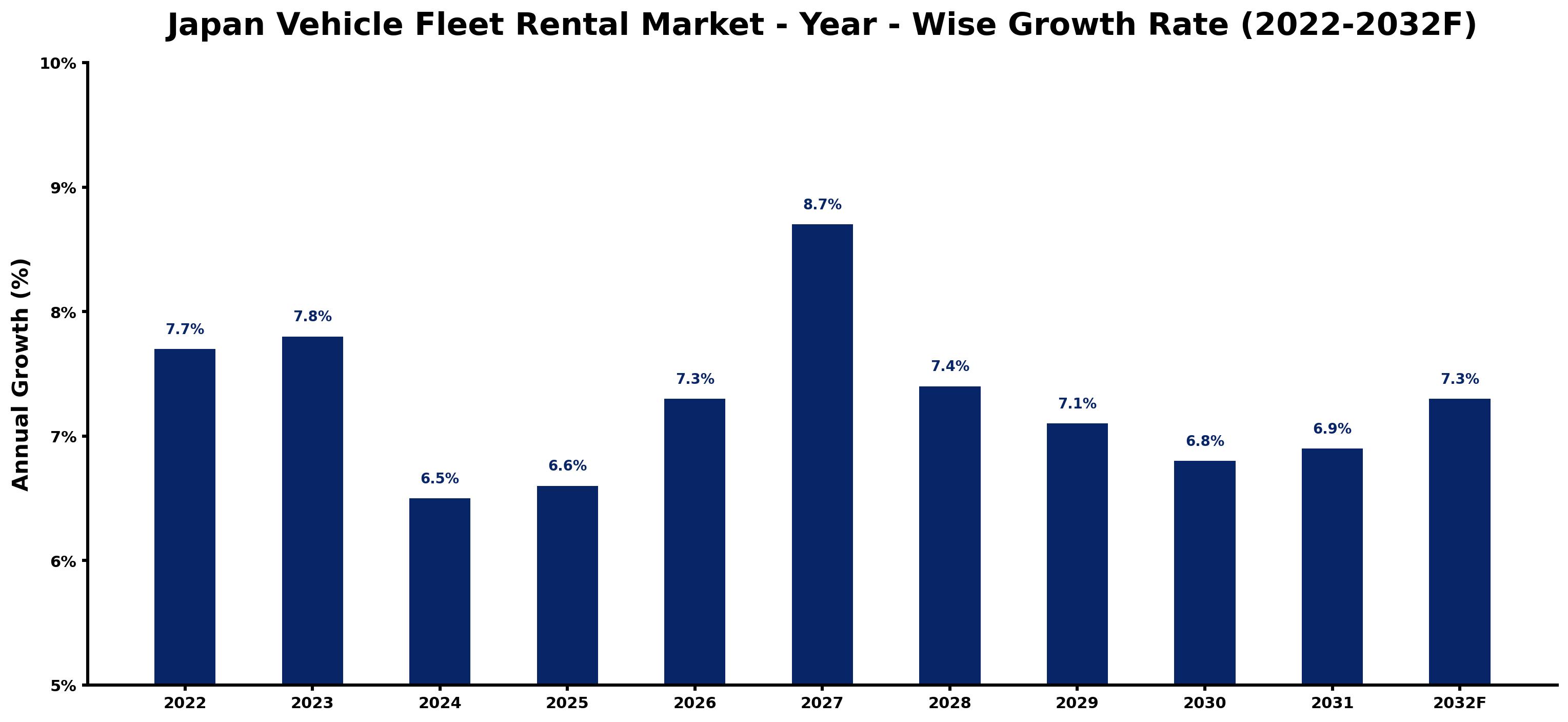
For each year, the table pairs the estimated growth rate with the leading influence on demand, showing how the drivers changed across the period.
| Year | Estimated Annual Growth (%) | Market Rationale |
| 2022 | 7.7 | The market showed steady growth with increasing demand from urban commuters and tourists. |
| 2023 | 7.8 | Demand continued to rise, supported by a strong tourism sector and corporate travel. |
| 2024 | 6.5 | Growth slowed slightly as the market adjusted to previous peaks and changing consumer preferences. |
| 2025 | 6.6 | The market rebounded with renewed interest in rentals for both business and leisure purposes. |
| 2026 | 7.3 | Growth is expected to accelerate as more businesses adopt rental services for fleet management needs. |
| 2027 | 8.7 | The peak growth year will see a surge in orders driven by technological advancements and eco-friendly options. |
| 2028 | 7.4 | Growth is projected to slow again as the market stabilises after the peak, yet demand will remain strong. |
| 2029 | 7.1 | A further slowdown is expected as market saturation begins to impact growth rates. |
| 2030 | 6.8 | Growth will continue to decelerate as competition intensifies among rental agencies. |
| 2031 | 6.9 | A slight uptick in growth is projected as new services begin to attract customers. |
| 2032 | 7.3 | The market is expected to maintain a steady growth rate as electric vehicle rentals gain popularity. |
Note: Market size estimations and growth projections presented in this report are based on 6Wresearch's proprietary forecasting methodology, utilizing the latest available industry data, government publications, and primary research inputs.
Japan Vehicle Fleet Rental Market Synopsis
Vehicle fleet rental in Japan involves leasing vehicles for personal or business use, including passenger cars and commercial vans. The Japan Vehicle Fleet Rental Market is growing due to rising demand from urban commuters, tourists, and corporate clients, with online bookings now accounting for over 60% of transactions. The shift towards eco-friendly rentals, supported by government initiatives, is driving new demand, particularly for electric vehicles, as the country aims for a 46% reduction in greenhouse gas emissions by 2030. This evolving market presents numerous opportunities for rental agencies to adapt and thrive.
Market Dynamics Impact Analysis (2026–2032)
| Factor | Type | Impact | Primary Segment Affected |
| Increasing preference for short-term rentals among tourists | Driver | High | Short-Term Rental |
| Growth in corporate clients seeking flexible fleet management solutions | Driver | High | Long-Term Leasing |
| Rising demand for electric vehicle rentals due to government subsidies | Opportunity | High | Short-Term Rental |
| Expansion of online booking platforms enhancing customer access | Opportunity | Medium | Rental Agencies |
| High competition among rental agencies leading to price wars | Restraint | High | Rental Agencies |
| Regulatory challenges in maintaining fleet standards and certifications | Restraint | Medium | Rental Agencies |
| Need for significant investment in electric vehicle infrastructure | Challenge | High | Short-Term Rental |
| Fluctuating fuel prices impacting operational costs for rental agencies | Challenge | Medium | Long-Term Leasing |
Evaluation of Drivers in Japan Vehicle Fleet Rental Market (2026–2032)
The main growth drivers and the segments they affect most are set out below.
| Drivers | Primary Segment Affected | Why It Matters (Evidence) |
| Growth in urban population increasing demand for rentals | Short-Term Rental | Tokyo's high tourist traffic has led to a 7% increase in short-term rentals. |
| Corporate clients seeking cost-effective fleet solutions | Long-Term Leasing | Corporate clients account for approximately 50% of long-term leasing demand. |
| Government subsidies for electric vehicle rentals | Short-Term Rental | The government promotes eco-friendly options, targeting a 46% cut in emissions by 2030. |
| Technological advancements in online booking systems | Rental Agencies | Over 60% of transactions are now conducted through online platforms. |
| Rising popularity of subscription models among consumers | Subscription Models | Subscription models are growing at a CAGR of 10.5%, appealing to flexible users. |
Behind the steady rise in orders is a growing urban population, particularly in Tokyo, where demand for short-term rentals has increased. Corporate clients, who account for about 50% of long-term leasing, are seeking cost-effective fleet management solutions. Technological advancements in online booking systems have led to a substantial increase in digital transactions, with over 60% of rentals booked online. Subscription models are emerging as a flexible alternative, appealing to consumers seeking options without ownership commitments. Increased demand for commercial vans for logistics is also contributing to market growth.
Evaluation of Restraints in Japan Vehicle Fleet Rental Market
The key brakes on demand, and where they bite hardest, are shown below.
| Market Restraint | Primary Segment Affected | Why It Matters (Evidence) |
| Intense competition leading to price wars among agencies | Rental Agencies | In 2023, over 1,500 registered rental agencies increased competitive pressure. |
| Regulatory compliance costs for maintaining fleet standards | Rental Agencies | Agencies must adhere to ISO 9001 certification standards, increasing operational costs. |
| Limited availability of eco-friendly vehicles in the market | Short-Term Rental | The transition to electric vehicles is hindered by supply chain challenges, limiting options for consumers. |
| High operational costs due to fluctuating fuel prices | Long-Term Leasing | Fuel price volatility affects profitability for rental agencies, impacting rental rates. |
| Consumer preference for ownership over rental options | Subscription Models | Some consumers still prefer owning vehicles, limiting subscription growth. |
Japan Vehicle Fleet Rental Market Challenges
Buyers face high costs due to outdated technology, as upgrading fleet management systems can exceed 10 million yen, delaying access to efficient services. Suppliers struggle with a shortage of eco-friendly vehicles caused by stringent regulations, which can inflate costs by 20%, impacting their ability to meet market needs. Rising operational costs, driven by fuel price increases and maintenance, can elevate rental rates by 15%, making it challenging for buyers to secure affordable options. Seasonal demand fluctuations lead to revenue drops of up to 25% for rental agencies during off-peak months, limiting their capacity to invest in fleet enhancements.
Trends in the Japan Vehicle Fleet Rental Market
Several trends are reshaping the Japan Vehicle Fleet Rental Market; the most important are set out below.
- Support for Electric Vehicle Rentals: The Tokyo Metropolitan Government initiated a programme in 2023 to support electric vehicle rentals, promoting eco-friendly transport options. This aligns with Japan's goal to achieve net-zero emissions by 2050, encouraging rental agencies to adapt their fleets.
- Digital Booking Platforms on the Rise: Tourists are increasingly using online booking portals for vehicle rentals, with over 60% of transactions occurring digitally. This trend reflects the growing demand for convenience and efficiency in the rental process.
- Shift to Subscription Models: Since 2025, consumers have shown a preference for subscription models, which offer flexibility without the commitment of ownership. This shift is evident in the increasing popularity of subscription rentals.
- Corporate Fleet Rentals Expanding: Corporate clients have increasingly turned to rental agencies for fleet management solutions, accounting for 50% of long-term leasing demand. This trend highlights the need for flexibility and cost-effectiveness in business operations.
Investment Opportunities in the Japan Vehicle Fleet Rental Market
Where to invest in the Japan Vehicle Fleet Rental Market: the main openings are set out below.
- Eco-Friendly Rentals Timing: With Japan targeting a 46% reduction in emissions by 2030, there is a strong opportunity for electric vehicle rentals. Rental agencies can invest in eco-friendly fleets to attract environmentally conscious consumers.
- Online Booking Services Expansion: The increasing preference for digital transactions presents an opportunity for rental agencies to improve their online booking platforms. Agencies can invest in technology to streamline the reservation process and enhance customer experience.
- Tourist Demand Growth: The tourism sector is rebounding, creating a demand for rental vehicles. Agencies in tourist-heavy regions like Tokyo should expand their fleets to accommodate this influx, particularly in short-term rentals.
- Investment in Subscription Services: The rise of subscription models offers a notable opportunity for rental agencies. By partnering with technology firms, agencies can develop attractive subscription packages for consumers seeking flexibility.
Government Initiatives in the Japan Vehicle Fleet Rental Market
The Battery Industry Strategy, introduced by the Ministry of Economy, Trade and Industry in August 2022, aims to establish 150 GWh of domestic battery manufacturing capacity by 2030, supporting the vehicle rental sector's shift towards electric vehicles. The Green Growth Strategy Through Achieving Carbon Neutrality in 2050, updated in December 2021, identifies growth sectors that include eco-friendly vehicle rentals, encouraging rental agencies to invest in sustainable practices and technologies.
In 2023, the Tokyo Metropolitan Government launched a programme allocating JPY 1 billion to support electric vehicle rentals, managed by the Japan Automobile Rental and Leasing Association. This initiative aims to incentivise rental agencies to upgrade their fleets, making electric vehicles more accessible to consumers and reducing overall emissions in the transportation sector.
Future Insight of the Japan Vehicle Fleet Rental Market
Corporate clients will increasingly favour electric vehicle rentals by 2032, driven by government subsidies and eco-friendly initiatives. The Tokyo Metropolitan Government's support programme for electric vehicles will encourage rental agencies to modernise their fleets, improving service offerings. Online booking platforms will evolve, streamlining the rental process and enhancing user convenience. By 2032, the average age of rental vehicles is expected to remain around 2.5 years, ensuring that buyers have access to contemporary models equipped with advanced technology.
Market Segmentation Analysis
Japan Vehicle Fleet Rental Market report covers a detailed analysis of the following market segments:
By Rental Type – Short-Term Rental Leads, Subscription Models Expected to Grow Fastest
According to Saurav Kr Singh, Senior Research Analyst at 6Wresearch, the largest rental type category in 2025 was Short-Term Rental, at 54% of revenue. Short-term rentals hold the largest share as they cater to tourists and business travellers needing temporary transport solutions. This segment thrives particularly in urban centres like Tokyo, where high visitor numbers significantly boost demand. The quickest growth will come from Subscription Models, forecast to expand at a CAGR of 10.5% between 2026 and 2032. Subscription models are rapidly gaining traction as consumers increasingly seek flexible transport options without the burden of ownership. The growth is evident as rental agencies expand their subscription services to meet changing user preferences. Suppliers must consider diversifying their offerings to include subscription models to align with consumer preferences.
By Vehicle Type – Passenger Cars Lead, Commercial Vans Expected to Grow Fastest
Passenger Cars held 48% of the Japan Vehicle Fleet Rental Market by vehicle type in 2025. Passenger cars dominate the market as the most rented vehicle type, appealing to a wide range of users from tourists to corporate clients. Their availability and versatility make them the preferred choice for various transportation needs in urban environments. Commercial Vans are set to record the highest CAGR in this split, 10.1% over 2026–2032. Commercial vans are experiencing rapid growth, particularly among businesses that require vehicles for logistics and transport. This surge is driven by the increasing demand for efficient delivery solutions in urban areas. Suppliers should enhance their commercial van offerings to take advantage of the rising demand from businesses.
By Distribution Channel – Rental Agencies Lead, Mobile Apps Expected to Grow Fastest
Rental Agencies took 47% of distribution channel revenue in 2025, more than any other category. Rental agencies are the primary providers of rental services in Japan, with a vast network that supports both short and long-term rentals. Their established presence and customer trust contribute to their leading position in the market. Over 2026–2032, Mobile Apps are expected to post the fastest growth, at a CAGR of 9.6%. Mobile apps are becoming increasingly popular as they offer convenience and ease of access for consumers booking rentals. This shift towards digital solutions aligns with the broader trend of mobile usage in various sectors. Suppliers must invest in mobile app development to improve customer engagement and streamline the booking process.
By End User – Corporate Clients Lead, Tourists Expected to Grow Fastest
Corporate Clients accounted for 40% of the market by end user in 2025. Corporate clients constitute the largest segment of the market, extensively utilising rentals for business activities. Their significant share is attributed to the need for dependable transportation solutions for employees and operations. Tourists are projected to grow fastest, at a CAGR of 9.3% during 2026–2032. Tourists represent the fastest-growing user group, heavily relying on vehicle rentals for their travel needs. This growth is particularly noticeable during peak travel seasons, underscoring the importance of tourism in the rental market. Suppliers should adjust their marketing strategies to effectively target tourists, especially during peak travel periods.
Key Attractiveness of the Report
- 10 Years of Market Numbers
- Historical Data Starting from 2022 to 2025
- Base Year 2025
- Forecast Data until 2032
- Key Performance Indicators Impacting the Market
- Major Upcoming Developments and Projects
Key Highlights of the Report:
- Japan Vehicle Fleet Rental Market Outlook
- Market Size of Japan Vehicle Fleet Rental Market, 2025
- Forecast of Japan Vehicle Fleet Rental Market, 2032
- Historical Data and Forecast of Japan Vehicle Fleet Rental Revenues & Volume for the Period 2022-2032F
- Japan Vehicle Fleet Rental Market Trend Evolution
- Japan Vehicle Fleet Rental Market Drivers and Challenges
- Japan Vehicle Fleet Rental Price Trends
- Japan Vehicle Fleet Rental Porter's Five Forces
- Japan Vehicle Fleet Rental Industry Life Cycle
- Historical Data and Forecast of Japan Vehicle Fleet Rental Market Revenues & Volume By Rental Type for the Period 2022-2032F
- Historical Data and Forecast of Japan Vehicle Fleet Rental Market Revenues & Volume By Short-Term Rental for the Period 2022-2032F
- Historical Data and Forecast of Japan Vehicle Fleet Rental Market Revenues & Volume By Long-Term Leasing for the Period 2022-2032F
- Historical Data and Forecast of Japan Vehicle Fleet Rental Market Revenues & Volume By Subscription Models for the Period 2022-2032F
- Historical Data and Forecast of Japan Vehicle Fleet Rental Market Revenues & Volume By Chauffeur Services for the Period 2022-2032F
- Historical Data and Forecast of Japan Vehicle Fleet Rental Market Revenues & Volume By Vehicle Type for the Period 2022-2032F
- Historical Data and Forecast of Japan Vehicle Fleet Rental Market Revenues & Volume By Passenger Cars for the Period 2022-2032F
- Historical Data and Forecast of Japan Vehicle Fleet Rental Market Revenues & Volume By Commercial Vans for the Period 2022-2032F
- Historical Data and Forecast of Japan Vehicle Fleet Rental Market Revenues & Volume By SUVs for the Period 2022-2032F
- Historical Data and Forecast of Japan Vehicle Fleet Rental Market Revenues & Volume By Luxury Sedans for the Period 2022-2032F
- Historical Data and Forecast of Japan Vehicle Fleet Rental Market Revenues & Volume By Distribution Channel for the Period 2022-2032F
- Historical Data and Forecast of Japan Vehicle Fleet Rental Market Revenues & Volume By Rental Agencies for the Period 2022-2032F
- Historical Data and Forecast of Japan Vehicle Fleet Rental Market Revenues & Volume By Online Booking Portals for the Period 2022-2032F
- Historical Data and Forecast of Japan Vehicle Fleet Rental Market Revenues & Volume By OEM Platforms for the Period 2022-2032F
- Historical Data and Forecast of Japan Vehicle Fleet Rental Market Revenues & Volume By Mobile Apps for the Period 2022-2032F
- Historical Data and Forecast of Japan Vehicle Fleet Rental Market Revenues & Volume By End User for the Period 2022-2032F
- Historical Data and Forecast of Japan Vehicle Fleet Rental Market Revenues & Volume By Tourists for the Period 2022-2032F
- Historical Data and Forecast of Japan Vehicle Fleet Rental Market Revenues & Volume By Corporate Clients for the Period 2022-2032F
- Historical Data and Forecast of Japan Vehicle Fleet Rental Market Revenues & Volume By Urban Commuters for the Period 2022-2032F
- Historical Data and Forecast of Japan Vehicle Fleet Rental Market Revenues & Volume By Business Travelers for the Period 2022-2032F
- Japan Vehicle Fleet Rental Import Export Trade Statistics
- Market Opportunity Assessment By Rental Type
- Market Opportunity Assessment By Vehicle Type
- Market Opportunity Assessment By Distribution Channel
- Market Opportunity Assessment By End User
- Japan Vehicle Fleet Rental Top Companies Market Share
- Japan Vehicle Fleet Rental Competitive Benchmarking By Technical and Operational Parameters
- Japan Vehicle Fleet Rental Company Profiles
- Japan Vehicle Fleet Rental Key Strategic Recommendations
Market Covered
Coverage by segment is as follows.
By Rental Type
- Short-Term Rental
- Long-Term Leasing
- Subscription Models
- Chauffeur Services
By Vehicle Type
- Passenger Cars
- Commercial Vans
- SUVs
- Luxury Sedans
By Distribution Channel
- Rental Agencies
- Online Booking Portals
- OEM Platforms
- Mobile Apps
By End User
- Tourists
- Corporate Clients
- Urban Commuters
- Business Travelers































