Japan Vehicle Inventory Software Market Size & Growth Rate
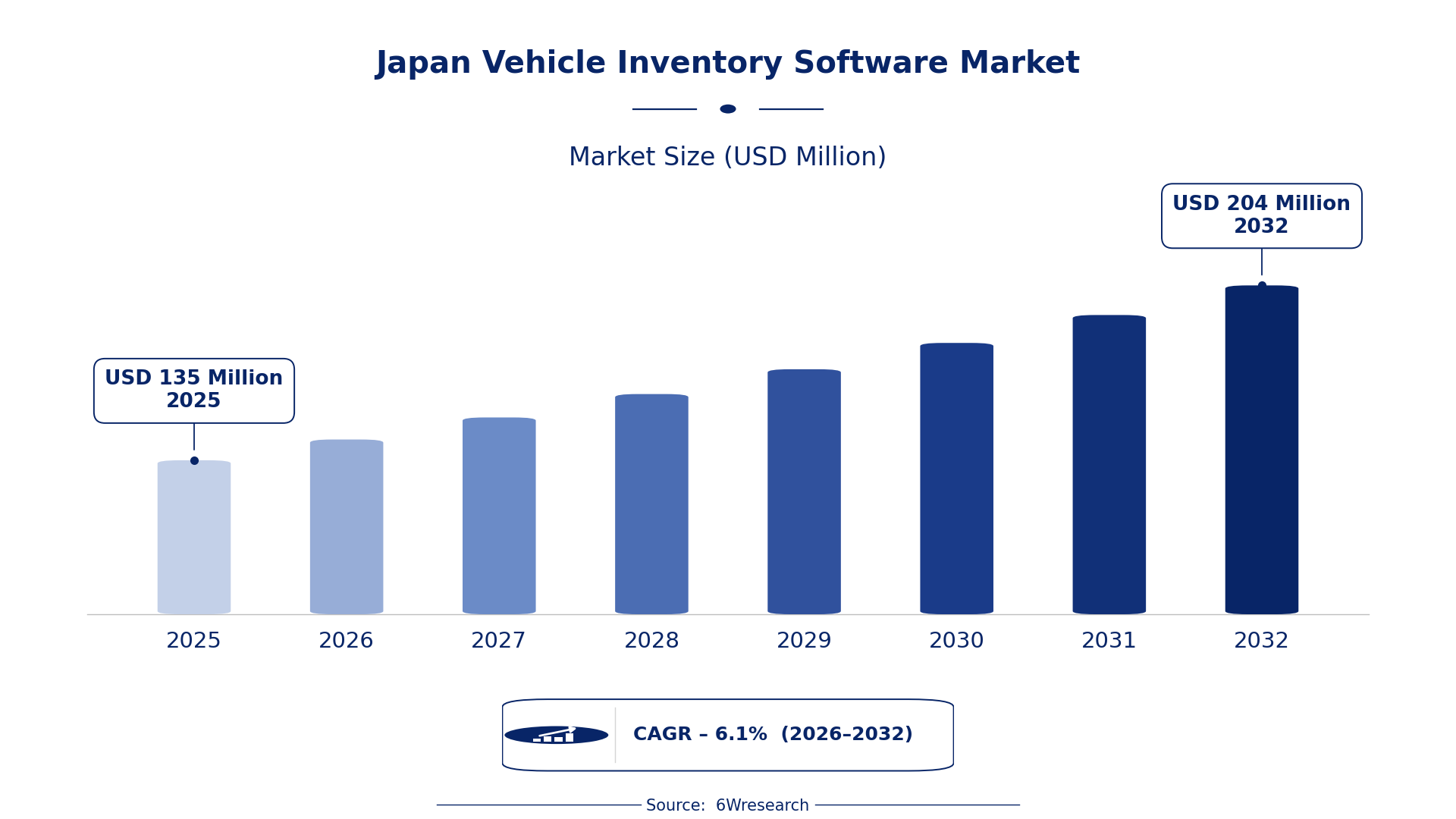
According to 6Wresearch internal database and industry insights, the Japan Vehicle Inventory Software Market was valued at USD 135 Million in 2025 and is projected to reach USD 204 Million by 2032, growing at a CAGR of approximately 6.1% during 2026–2032.
Japan Vehicle Inventory Software Market Highlights
| Report Metric | Details |
| Report Name | Japan Vehicle Inventory Software Market (2026-2032) |
| Market Size 2025 | USD 135 Million |
| Market Size 2032 | USD 204 Million |
| Absolute Growth 2025–2032 | USD 69 Million |
| CAGR 2026–2032 | 6.1% |
| Peak Annual Growth | 7.0% in 2028 |
| Forecast Period | 2026–2032 |
| Historical Data | 2022–2025 |
| Base Year | 2025 |
| Leading Software Type, 2025 | Dealership Management (49% share) |
| Leading Hosting Type, 2025 | Cloud-Based (36% share) |
| Leading Distribution Channel, 2025 | SaaS Providers (45% share) |
| Leading End User, 2025 | Automotive Dealerships (46% share) |
| Fastest-Growing Software Type | Fleet Tracking Software (8.8% CAGR) |
| Fastest-Growing Hosting Type | On-Premise (8.7% CAGR) |
| Fastest-Growing Distribution Channel | Software Vendors (8.1% CAGR) |
| Fastest-Growing End User | Rental Companies (7.9% CAGR) |
| Growing Sector | automotive sector |
| Key End Users | automotive dealerships, rental companies, vehicle resellers |
Japan Vehicle Inventory Software Market Year-wise Growth Rate and Key Drivers (2022–2032)
This graph illustrates the annual growth rates of the market from 2022 to 2032, highlighting a steady upward trajectory and projected market expansion over the forecast period.
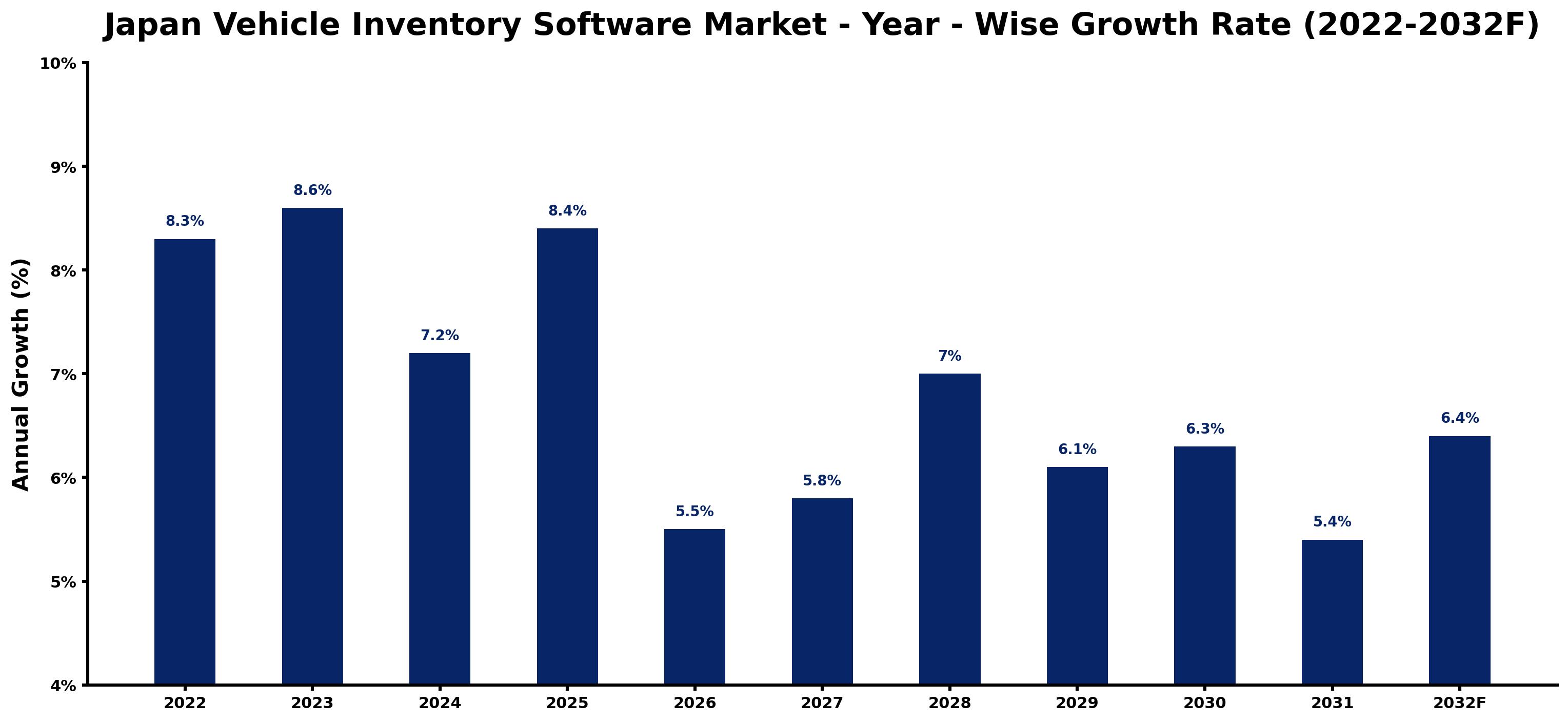
The table below sets out the estimated growth rate for each year and the main factor behind it.
| Year | Estimated Annual Growth (%) | Market Rationale |
| 2022 | 8.3 | The market exhibited strong growth due to increased adoption of digital solutions. |
| 2023 | 8.6 | Demand surged as automotive dealerships sought more efficient inventory management tools. |
| 2024 | 7.2 | Growth slowed as some dealerships faced challenges in software integration. |
| 2025 | 8.4 | An uptick in automotive sales boosted demand for inventory software solutions. |
| 2026 | 5.5 | Growth is expected to decelerate as market saturation begins to impact new software deployments. |
| 2027 | 5.8 | Demand is projected to increase again as rental companies expand their fleet tracking capabilities. |
| 2028 | 7.0 | The market is expected to experience a resurgence driven by advancements in cloud technology. |
| 2029 | 6.1 | Growth is projected to slow as competition intensifies among software vendors. |
| 2030 | 6.3 | Demand will rise as dealerships upgrade to more sophisticated inventory management systems. |
| 2031 | 5.4 | A slowdown is expected as economic conditions prompt cautious spending on software. |
| 2032 | 6.4 | Growth will accelerate as the automotive sector invests heavily in digital technologies. |
Note: Market size estimations and growth projections presented in this report are based on 6Wresearch's proprietary forecasting methodology, utilizing the latest available industry data, government publications, and primary research inputs.
Japan Vehicle Inventory Software Market Synopsis
Vehicle Inventory Software is a technology solution that helps automotive businesses manage and track their vehicle inventory efficiently. In Japan, over 4,500 automotive dealerships utilise such software to optimise inventory management and improve sales processes. The market is growing due to rising automotive sales, which reached 4.2 million units in 2022, and investments in digital technologies, with the automotive sector expected to invest ¥1 trillion by 2025. The increasing preference for cloud-based solutions, which accounted for over 60% of new deployments in 2023, further fuels this growth.
Market Dynamics Impact Analysis (2026–2032)
| Factor | Type | Impact | Primary Segment Affected |
| Increased automotive sales drive demand for inventory management solutions. | Driver | High | Dealership Management |
| Growing preference for cloud-based solutions enhances accessibility for users. | Driver | High | Cloud-Based |
| High investment in digital technologies creates opportunities for software providers. | Opportunity | High | Fleet Tracking Software |
| The expansion of rental companies creates demand for efficient fleet management tools. | Opportunity | Medium | Rental Companies |
| Integration challenges with existing systems can hinder software adoption. | Restraint | High | Dealership Management |
| Market saturation may limit growth potential for new entrants. | Restraint | Medium | SaaS Providers |
| High costs of advanced software solutions may deter small dealerships. | Challenge | High | Automotive Dealerships |
| Intense competition among software vendors can lead to price wars. | Challenge | Medium | Software Vendors |
Evaluation of Drivers in Japan Vehicle Inventory Software Market (2026–2032)
Key forces behind demand, with the segment each one moves most, are listed below.
| Drivers | Primary Segment Affected | Why It Matters (Evidence) |
| Rising automotive sales increase the need for effective inventory management. | Dealership Management | In 2022, Japan's automotive sales reached 4.2 million units, prompting dealerships to invest in software. |
| Cloud-based solutions provide better accessibility and scalability for users. | Cloud-Based | Over 60% of new software deployments in 2023 were cloud-based, reflecting user preferences. |
| Digital transformation initiatives boost investment in inventory software. | Fleet Tracking Software | The automotive sector is expected to invest ¥1 trillion in digital technologies by 2025. |
| Rental companies increasingly adopt fleet tracking software for efficiency. | Rental Companies | Fleet tracking software adoption has risen as rental companies seek better management tools. |
| Integration with existing systems improves functionality and user satisfaction. | SaaS Providers | Many dealerships are looking for solutions that seamlessly integrate with their current systems. |
The strongest pull on demand comes from rising automotive sales, which reached 4.2 million units in 2022, prompting dealerships to invest in effective inventory management solutions. The automotive sector's planned investment of ¥1 trillion in digital technologies by 2025 supports demand for inventory software. In 2023, cloud-based software accounted for over 60% of new deployments, driving user adoption due to its accessibility. Rental companies are increasingly adopting fleet tracking software to improve management efficiency, while the need for integration with existing systems drives providers to enhance their offerings.
Evaluation of Restraints in Japan Vehicle Inventory Software Market
These restraints slow adoption and weigh on supplier margins.
| Market Restraint | Primary Segment Affected | Why It Matters (Evidence) |
| Integration challenges with existing systems can hinder software adoption. | Dealership Management | Many dealerships struggle with integrating new software, limiting their ability to upgrade. |
| Market saturation may limit growth potential for new entrants. | SaaS Providers | As the market matures, new software solutions face stiff competition from established providers. |
| High costs of advanced software solutions may deter small dealerships. | Automotive Dealerships | Smaller dealerships often lack the budget to invest in effective inventory management tools. |
| User resistance to change can slow down software implementation. | Fleet Tracking Software | Some rental companies are hesitant to transition from traditional methods to digital solutions. |
| Limited awareness of software benefits among smaller players can restrict market growth. | Rental Companies | Many smaller rental companies are unaware of the advantages of modern inventory software. |
Japan Vehicle Inventory Software Market Challenges
Automotive businesses encounter strict regulations as Japan aims for a 46% reduction in greenhouse-gas emissions by 2030, compelling producers to invest in costly upgrades to vehicle inventory systems. Supply chain disruptions caused by outdated technology delay vehicle sales and affect over 4,500 automotive dealerships. High implementation costs for modern software deter many producers from adopting essential technology, resulting in missed opportunities for optimising inventory management. Buyers face challenges in integrating new systems, leading to slower sales processes that can reduce profitability for dealerships.
Trends in the Japan Vehicle Inventory Software Market
These developments are changing demand patterns in the Japan Vehicle Inventory Software Market.
- Shift from On-Premise to Cloud-Based Solutions: Since 2023, the automotive sector has increasingly favoured cloud-based inventory software, with over 60% of new deployments adopting this model. This shift allows dealerships to manage inventory remotely and efficiently.
- Transition to Fleet Tracking Software: In 2023, rental companies began prioritising fleet tracking software as a key tool for operational efficiency. This trend is evidenced by a notable increase in adoption rates, essential for managing rental fleets effectively.
- Emergence of Integrated CRM Systems: Starting in 2023, integrated CRM systems have gained traction among automotive dealerships, supporting better customer relationship management. This shift is driven by the need to improve sales processes and customer engagement.
- Prioritisation of Digital Transformation Initiatives: In 2023, the automotive industry prioritised digital transformation initiatives, with a government program launched to enhance IT infrastructure. This initiative will drive investments in inventory software solutions.
Investment Opportunities in the Japan Vehicle Inventory Software Market
The openings below show where demand in the Japan Vehicle Inventory Software Market is visible and how suppliers can enter.
- Timing for Investment in Cloud Solutions: With over 60% of new software deployments in 2023 being cloud-based, now is the perfect time for investment in cloud solutions. Automotive dealerships seeking scalable options can take advantage of this trend.
- Gap in Fleet Management Solutions: As rental companies increasingly adopt fleet tracking software, a notable gap in the market for efficient solutions exists. The anticipated investment of ¥1 trillion in digital technologies by 2025 presents a prime opportunity for suppliers.
- Expansion of Automotive Dealerships: The Tokyo region, a major hub for automotive dealerships, is experiencing growth. This area's demand for effective inventory management solutions creates opportunities for software providers.
- Supply of Integrated CRM Solutions: With the rise of integrated CRM systems, there is a growing need for suppliers to provide these solutions. Automotive dealerships are seeking ways to improve customer engagement and streamline sales processes.
Government Initiatives in the Japan Vehicle Inventory Software Market
The AI Promotion Act, established in 2025, sets a national framework for AI research and development, influencing vehicle inventory software by encouraging the integration of AI technologies. The Digital Agency, established in September 2021, spearheads the government's digital transformation efforts, promoting common system standards that benefit software providers and users alike.
The Ministry of Economy, Trade and Industry supports technology adoption in automotive businesses through initiatives like the 2023 programme aimed at improving IT infrastructure. This programme offers funding to dealerships for upgrading their systems, ensuring they remain competitive in the evolving market.
Future Insight of the Japan Vehicle Inventory Software Market
By 2032, automotive dealerships will increasingly adopt advanced software solutions, driven by a government programme aimed at enhancing IT infrastructure. Cloud-based solutions will dominate new software deployments, streamlining inventory management processes. The adoption of ISO 9001 standards will enhance software quality and reliability, benefiting both buyers and suppliers. As the automotive sector invests in digital technologies, operational efficiency will improve, driving growth and competitiveness in the market.
Market Segmentation Analysis
Japan Vehicle Inventory Software Market report covers a detailed analysis of the following market segments:
By Software Type – Dealership Management Leads, Fleet Tracking Software Expected to Grow Fastest
According to Saurav Kr Singh, Senior Research Analyst at 6Wresearch, with 49% of software type revenue in 2025, Dealership Management was the largest category. Dealership Management holds the largest share as it is essential for managing dealership operations, with over 4,500 automotive dealerships in Japan relying on this software. The average dealership manages around 300 vehicles, underscoring the critical need for effective inventory solutions. The quickest growth will come from Fleet Tracking Software, forecast to expand at a CAGR of 8.8% between 2026 and 2032. Fleet Tracking Software is experiencing rapid growth as rental companies increasingly adopt it for efficient fleet management, reflecting a shift towards digital solutions in the automotive sector. This trend is further supported by government initiatives aimed at enhancing IT infrastructure in the automotive industry. Suppliers should focus on developing advanced features for Fleet Tracking Software to meet the rising demand from rental companies.
By Hosting Type – Cloud-Based Leads, On-Premise Expected to Grow Fastest
In 2025, Cloud-Based led the hosting type split with a 36% share. Cloud-Based solutions dominate the market due to their preference for accessibility and scalability, aligning with the automotive industry's shift towards digital transformation. The adoption of cloud solutions, which accounted for over 60% of new software deployments in 2023, underscores this trend. On-Premise is projected to grow fastest, at a CAGR of 8.7% during 2026–2032. On-Premise hosting is experiencing growth as some businesses prioritise data control and security, especially in sensitive environments like automotive dealerships. This cautious approach to data management reflects the industry's response to increasing digitalisation efforts. Buyers may seek hybrid solutions that combine the benefits of both Cloud-Based and On-Premise hosting for optimal performance.
By Distribution Channel – SaaS Providers Lead, Software Vendors Expected to Grow Fastest
SaaS Providers held 45% of the Japan Vehicle Inventory Software Market by distribution channel in 2025. SaaS Providers lead the market as they are key suppliers of vehicle inventory solutions, catering directly to the needs of automotive dealerships. Their crucial role facilitates the transition to digital inventory management systems across the industry. Over 2026–2032, Software Vendors are expected to post the fastest growth, at a CAGR of 8.1%. Software Vendors are witnessing rapid growth as they supply a variety of software solutions for inventory management, responding to the increasing demand for specialised tools. This trend aligns with the automotive sector's projected investment in digital technologies, expected to reach ¥1 trillion by 2025. Suppliers should enhance their offerings to meet the diverse needs of automotive businesses seeking effective inventory management solutions.
By End User – Automotive Dealerships Lead, Rental Companies Expected to Grow Fastest
The largest end user category in 2025 was Automotive Dealerships, at 46% of revenue. Automotive Dealerships represent the largest user group for inventory software, driven by the necessity to manage extensive vehicle inventories efficiently. With 4.2 million automotive sales recorded in 2022, the demand for effective inventory management is paramount. Rental Companies are set to record the highest CAGR in this split, 7.9% over 2026–2032. Rental Companies are rapidly adopting inventory software to manage their fleets more effectively, reflecting a shift in operational efficiency priorities. This growth is supported by the increasing adoption of fleet tracking solutions in the market. Suppliers must tailor their products to address the unique requirements of rental companies, which are becoming an important segment in the market.
Key Attractiveness of the Report
- 10 Years of Market Numbers
- Historical Data Starting from 2022 to 2025
- Base Year 2025
- Forecast Data until 2032
- Key Performance Indicators Impacting the Market
- Major Upcoming Developments and Projects
Key Highlights of the Report:
- Japan Vehicle Inventory Software Market Outlook
- Market Size of Japan Vehicle Inventory Software Market, 2025
- Forecast of Japan Vehicle Inventory Software Market, 2032
- Historical Data and Forecast of Japan Vehicle Inventory Software Revenues & Volume for the Period 2022-2032F
- Japan Vehicle Inventory Software Market Trend Evolution
- Japan Vehicle Inventory Software Market Drivers and Challenges
- Japan Vehicle Inventory Software Price Trends
- Japan Vehicle Inventory Software Porter's Five Forces
- Japan Vehicle Inventory Software Industry Life Cycle
- Historical Data and Forecast of Japan Vehicle Inventory Software Market Revenues & Volume By Software Type for the Period 2022-2032F
- Historical Data and Forecast of Japan Vehicle Inventory Software Market Revenues & Volume By Dealership Management for the Period 2022-2032F
- Historical Data and Forecast of Japan Vehicle Inventory Software Market Revenues & Volume By Fleet Tracking Software for the Period 2022-2032F
- Historical Data and Forecast of Japan Vehicle Inventory Software Market Revenues & Volume By Integrated CRM for the Period 2022-2032F
- Historical Data and Forecast of Japan Vehicle Inventory Software Market Revenues & Volume By Inventory Audit Tools for the Period 2022-2032F
- Historical Data and Forecast of Japan Vehicle Inventory Software Market Revenues & Volume By Hosting Type for the Period 2022-2032F
- Historical Data and Forecast of Japan Vehicle Inventory Software Market Revenues & Volume By Cloud-Based for the Period 2022-2032F
- Historical Data and Forecast of Japan Vehicle Inventory Software Market Revenues & Volume By On-Premise for the Period 2022-2032F
- Historical Data and Forecast of Japan Vehicle Inventory Software Market Revenues & Volume By Multi-Device Support for the Period 2022-2032F
- Historical Data and Forecast of Japan Vehicle Inventory Software Market Revenues & Volume By API Enabled for the Period 2022-2032F
- Historical Data and Forecast of Japan Vehicle Inventory Software Market Revenues & Volume By Distribution Channel for the Period 2022-2032F
- Historical Data and Forecast of Japan Vehicle Inventory Software Market Revenues & Volume By SaaS Providers for the Period 2022-2032F
- Historical Data and Forecast of Japan Vehicle Inventory Software Market Revenues & Volume By Software Vendors for the Period 2022-2032F
- Historical Data and Forecast of Japan Vehicle Inventory Software Market Revenues & Volume By Online Platforms for the Period 2022-2032F
- Historical Data and Forecast of Japan Vehicle Inventory Software Market Revenues & Volume By Software Marketplaces for the Period 2022-2032F
- Historical Data and Forecast of Japan Vehicle Inventory Software Market Revenues & Volume By End User for the Period 2022-2032F
- Historical Data and Forecast of Japan Vehicle Inventory Software Market Revenues & Volume By Automotive Dealerships for the Period 2022-2032F
- Historical Data and Forecast of Japan Vehicle Inventory Software Market Revenues & Volume By Rental Companies for the Period 2022-2032F
- Historical Data and Forecast of Japan Vehicle Inventory Software Market Revenues & Volume By Vehicle Resellers for the Period 2022-2032F
- Historical Data and Forecast of Japan Vehicle Inventory Software Market Revenues & Volume By Franchise Owners for the Period 2022-2032F
- Japan Vehicle Inventory Software Import Export Trade Statistics
- Market Opportunity Assessment By Software Type
- Market Opportunity Assessment By Hosting Type
- Market Opportunity Assessment By Distribution Channel
- Market Opportunity Assessment By End User
- Japan Vehicle Inventory Software Top Companies Market Share
- Japan Vehicle Inventory Software Competitive Benchmarking By Technical and Operational Parameters
- Japan Vehicle Inventory Software Company Profiles
- Japan Vehicle Inventory Software Key Strategic Recommendations
Market Covered
The study includes the following segmentation.
By Software Type
- Dealership Management
- Fleet Tracking Software
- Integrated CRM
- Inventory Audit Tools
By Hosting Type
- Cloud-Based
- On-Premise
- Multi-Device Support
- API Enabled
By Distribution Channel
- SaaS Providers
- Software Vendors
- Online Platforms
- Software Marketplaces
By End User
- Automotive Dealerships
- Rental Companies
- Vehicle Resellers
- Franchise Owners































