Japan Veterinary Parasiticides Market Size & Growth Rate
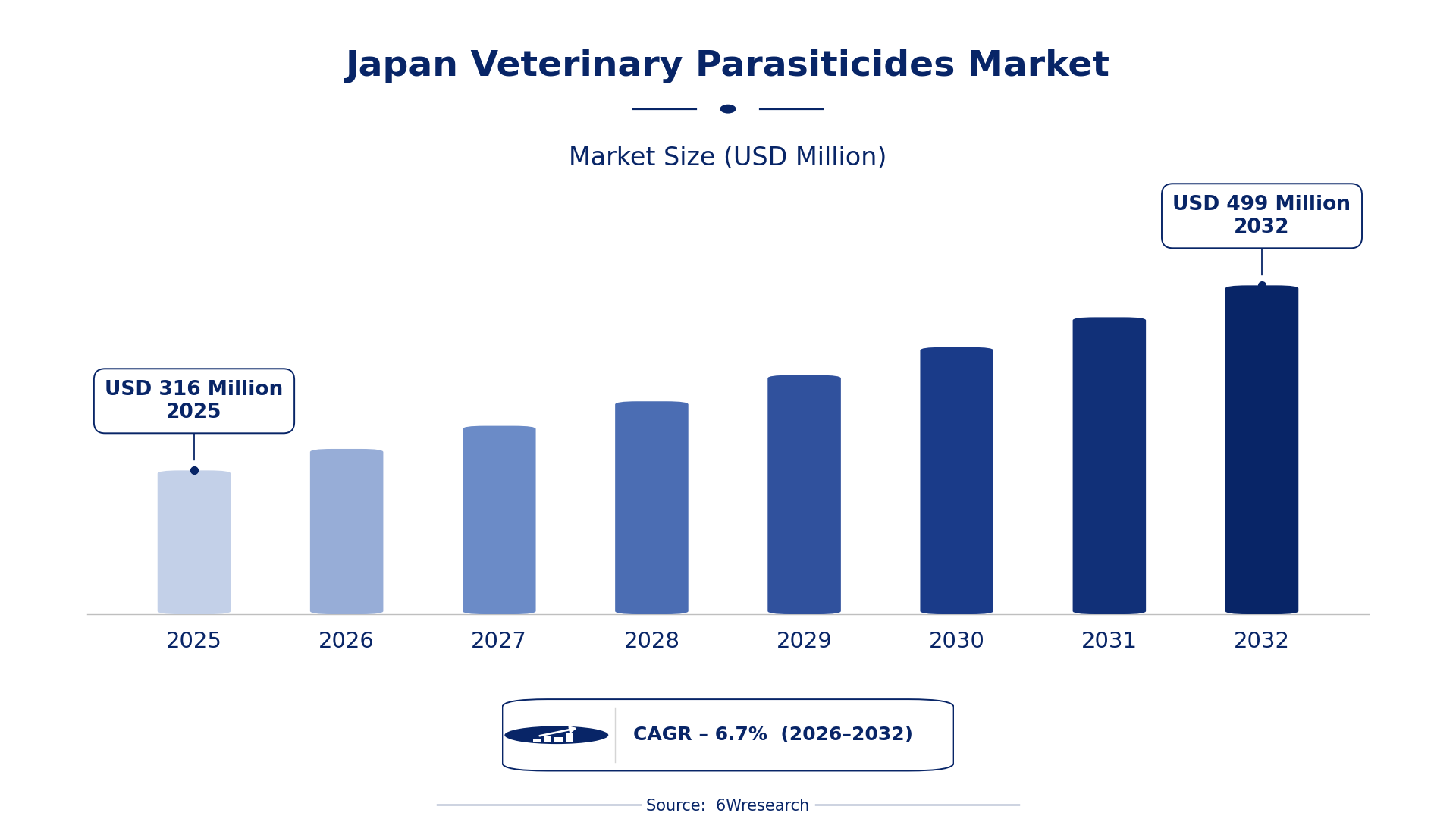
According to 6Wresearch internal database and industry insights, the Japan Veterinary Parasiticides Market was valued at USD 316 Million in 2025 and is projected to reach USD 499 Million by 2032, growing at a CAGR of approximately 6.7% during 2026–2032.
Japan Veterinary Parasiticides Market Highlights
| Report Metric | Details |
| Report Name | Japan Veterinary Parasiticides Market (2026-2032) |
| Market Size 2025 | USD 316 Million |
| Market Size 2032 | USD 499 Million |
| Absolute Growth 2025–2032 | USD 183 Million |
| CAGR 2026–2032 | 6.7% |
| Peak Annual Growth | 8.6% in 2026 |
| Forecast Period | 2026–2032 |
| Historical Data | 2022–2025 |
| Base Year | 2025 |
| Leading Type, 2025 | Injectables (39% share) |
| Leading Application, 2025 | Companion Animals (56% share) |
| Fastest-Growing Type | Oral Liquids (9.0% CAGR) |
| Growing Sector | Companion Animals |
| Key End Users | Pet owners, livestock producers, veterinary clinics, animal health professionals |
Japan Veterinary Parasiticides Market Year-wise Growth Rate and Key Drivers (2022–2032)
This graph illustrates the annual growth rates of the market from 2022 to 2032, highlighting a steady upward trajectory and projected market expansion over the forecast period.
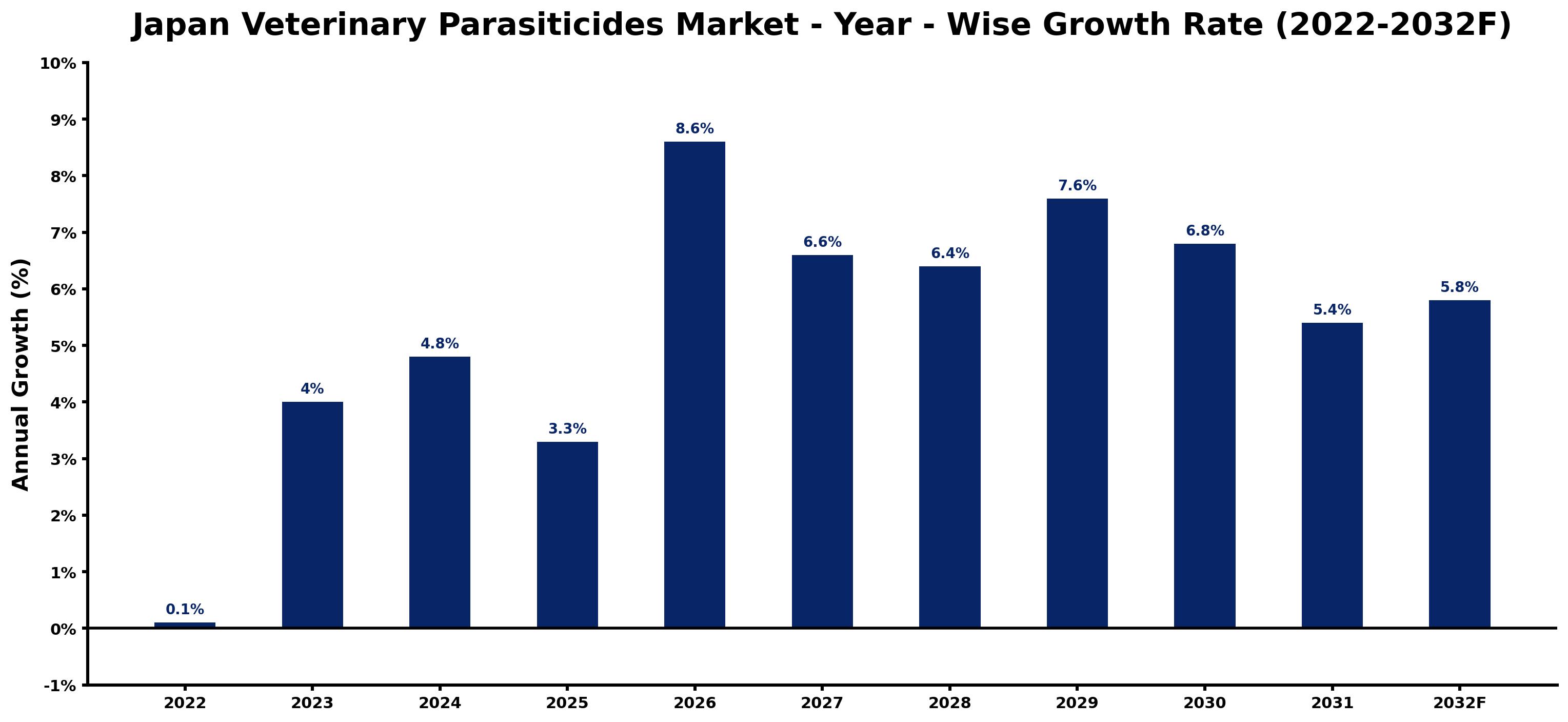
Below, each year's estimated growth is shown next to the factor that most influenced it.
| Year | Estimated Annual Growth (%) | Market Rationale |
| 2022 | 0.1 | The market experienced minimal growth due to stable demand in veterinary care. |
| 2023 | 4.0 | Growth accelerated as pet ownership increased, driving higher demand for veterinary products. |
| 2024 | 4.8 | Demand continued to rise with more focus on animal health and welfare standards. |
| 2025 | 3.3 | Growth slowed as the market adjusted to previous years' rapid expansion. |
| 2026 | 8.6 | A surge in demand is anticipated with the introduction of new veterinary programs. |
| 2027 | 6.6 | Growth is projected to decelerate slightly as the market stabilises after the peak in 2026. |
| 2028 | 6.4 | Demand is expected to remain steady, supported by ongoing investments in veterinary care. |
| 2029 | 7.6 | An increase in demand is projected as awareness of parasite control grows. |
| 2030 | 6.8 | Growth is anticipated to slow again as the market faces saturation in certain segments. |
| 2031 | 5.4 | Demand is expected to continue moderating as competition intensifies among suppliers. |
| 2032 | 5.8 | A slight increase in growth is anticipated due to rising awareness of organic products. |
Note: Market size estimations and growth projections presented in this report are based on 6Wresearch's proprietary forecasting methodology, utilizing the latest available industry data, government publications, and primary research inputs.
Japan Veterinary Parasiticides Market Synopsis
Veterinary parasiticides are chemical agents designed to treat and prevent parasitic infections in animals, available in various forms such as oral liquids, tablets, injectables, and sprays. The Japan Veterinary Parasiticides Market is growing due to rising pet ownership, with about 48% of households having pets. The livestock sector, which includes over 4 million cattle and 9 million pigs, also contributes to demand.
Market Dynamics Impact Analysis (2026–2032)
| Factor | Type | Impact | Primary Segment Affected |
| Growing pet ownership rates drive demand for veterinary parasiticides in companion animals. | Driver | High | Companion Animals |
| The livestock industry's need for effective parasite control boosts sales of veterinary products. | Driver | High | Farm Animals |
| Increasing demand for organic veterinary parasiticides presents a market opportunity. | Opportunity | High | Injectables |
| The rise in veterinary clinics in urban areas creates demand for innovative products. | Opportunity | Medium | Companion Animals |
| Stringent regulations on veterinary drug residues may limit product availability. | Restraint | High | Injectables |
| The high cost of veterinary care may deter some pet owners from seeking treatment. | Restraint | Medium | Companion Animals |
| Supply chain disruptions can affect the availability of veterinary products. | Challenge | High | Injectables |
| Competition among manufacturers can lead to pricing pressures in the market. | Challenge | Medium | Injectables |
Evaluation of Drivers in Japan Veterinary Parasiticides Market (2026–2032)
Below are the drivers that matter most for revenue growth, with supporting evidence.
| Drivers | Primary Segment Affected | Why It Matters (Evidence) |
| Increased pet ownership leads to higher demand for veterinary care and products. | Companion Animals | In 2022, approximately 48% of households owned pets, driving sales of parasiticides. |
| The livestock sector's growth necessitates effective parasite management solutions. | Farm Animals | Japan has over 4 million cattle and 9 million pigs, increasing demand for veterinary products. |
| The rising average lifespan of companion animals boosts the need for ongoing veterinary care. | Companion Animals | As lifespans increase, pet owners invest more in health products, including parasiticides. |
| Government support for animal health initiatives encourages investment in veterinary care. | Injectables | In 2023, ¥1 billion was allocated for animal health initiatives, promoting market growth. |
| The popularity of oral liquid formulations is increasing due to ease of administration. | Oral Liquids | The growing preference for convenient treatment options is driving sales in this segment. |
The strongest pull on demand comes from the increasing pet ownership rate, which reached approximately 48% of households in 2022, leading to greater spending on veterinary products. The livestock sector, with over 4 million cattle and 9 million pigs, also drives the need for effective parasite management solutions. The average lifespan of companion animals is rising, resulting in higher demand for ongoing veterinary care and parasiticides. The popularity of oral liquid formulations is rising, as they are easier to administer, which boosts sales in this segment.
Evaluation of Restraints in Japan Veterinary Parasiticides Market
The following restraints limit how fast demand can grow.
| Market Restraint | Primary Segment Affected | Why It Matters (Evidence) |
| Stringent regulations on veterinary drug residues can limit product availability. | Injectables | Japan has strict regulations to ensure food safety, impacting the approval of veterinary products. |
| The high cost of veterinary care may deter some pet owners from seeking treatment. | Companion Animals | With an average annual cost of ¥30,000 for veterinary care, some owners may opt for less frequent treatments. |
| Supply chain disruptions can affect the availability of veterinary products. | Injectables | Global supply chain issues have led to delays in product availability for veterinary clinics. |
| Limited awareness of organic veterinary parasiticides may restrict market growth. | Injectables | Despite rising consumer interest, many pet owners remain unaware of organic options. |
| Competition among manufacturers can lead to pricing pressures in the market. | Injectables | As more players enter the market, price competition may affect profit margins for suppliers. |
Japan Veterinary Parasiticides Market Challenges
Veterinary clinics are experiencing a shortage of skilled veterinarians, with only about 60,000 registered professionals available, leading to longer wait times for pet owners seeking care. Suppliers are hindered by outdated manufacturing technologies, limiting their capacity to produce advanced veterinary parasiticides and causing production delays that affect availability. Strict regulations on veterinary drug residues in food products require thorough testing, resulting in extended approval times for manufacturers and delaying access to new treatments. Supply chain disruptions, stemming from reliance on specific raw materials, can increase costs for clinics, making veterinary care less affordable for pet owners.
Trends in the Japan Veterinary Parasiticides Market
Buyers and suppliers in the Japan Veterinary Parasiticides Market are adjusting to the following trends.
- Rise in Organic Veterinary Products: The demand for organic veterinary parasiticides is increasing as consumers become more health-conscious. In 2023, the market saw a rise in organic product inquiries, reflecting changing preferences among pet owners.
- Growth of Veterinary Clinics in Urban Areas: The number of veterinary clinics in urban regions is rising, particularly in the Tokyo area, which has the highest concentration of clinics. This trend supports better access to veterinary care for pet owners.
- Shift Towards Oral Liquid Formulations: There is a noticeable shift towards oral liquid formulations due to their ease of administration, with a reported increase in usage among pet owners in 2023.
- Expansion of Animal Health Initiatives: The Japanese government launched a new program in 2023 to improve parasite control in livestock, allocating resources to enhance animal health management.
Investment Opportunities in the Japan Veterinary Parasiticides Market
The openings below show where demand in the Japan Veterinary Parasiticides Market is visible and how suppliers can enter.
- Expansion of Urban Veterinary Clinics: The Tokyo region, with its high concentration of veterinary clinics, presents an opportunity for suppliers to expand their product offerings, especially with an increase in clinic numbers expected by 2025.
- Rising Demand for Organic Products: With an increase in inquiries for organic veterinary parasiticides, suppliers can invest in organic formulations to meet consumer demand, particularly among health-conscious pet owners.
- Investment in Veterinary Research: The Japanese government's allocation of ¥1 billion for animal health initiatives creates opportunities for research and development in veterinary parasiticides, encouraging innovation in product offerings.
- Increased Awareness of Animal Health: As pet ownership increases, the demand for effective veterinary products rises, particularly in urban areas where pet ownership is projected to reach 60% by 2025.
Government Initiatives in the Japan Veterinary Parasiticides Market
The Veterinary Drug Control Law regulates the approval of veterinary medicines, ensuring safety and efficacy for buyers in Japan. This law mandates rigorous testing and reporting requirements for manufacturers, impacting product availability in the market. Additionally, the Industrial Standardization Act governs product standards, ensuring quality in veterinary pharmaceuticals, which benefits consumers seeking reliable products.
In 2023, the government allocated ¥1 billion for animal health initiatives, administered by the Ministry of Agriculture, Forestry and Fisheries. This funding supports research and development in veterinary parasiticides, improving the market's capacity to meet growing demand.
Future Insight of the Japan Veterinary Parasiticides Market
Investment in animal health initiatives will drive demand for improved parasite control programmes, creating opportunities for suppliers and enhancing service offerings for clinics. The increase in pet ownership to approximately 48% of households will elevate the need for veterinary services, prompting clinics to expand their capabilities. Government support for research, with ¥1 billion allocated for animal health, will facilitate the development of more effective parasiticides. Rising consumer demand for organic products will push suppliers to innovate, aligning their offerings with evolving market preferences.
Market Segmentation Analysis
Japan Veterinary Parasiticides Market report covers a detailed analysis of the following market segments:
By Type – Injectables Lead, Oral Liquids Expected to Grow Fastest
According to Sumit Sagar, AM at 6Wresearch, with 39% of type revenue in 2025, Injectables was the largest category. Injectables hold the largest share due to their effectiveness in treating severe parasitic infections quickly. For instance, the high prevalence of livestock, including over 4 million cattle, necessitates reliable treatment options for veterinarians. Oral Liquids are set to record the highest CAGR in this split, 9.0% over 2026–2032. The oral liquids segment is experiencing rapid growth as they are preferred for their ease of administration, particularly in companion animals. This trend is supported by the increasing pet ownership rate, which was approximately 48% of households in 2022. Suppliers should focus on developing and marketing oral liquid formulations to meet the rising demand.
By Application – Companion Animals Lead and Record the Fastest Growth
The largest application category in 2025 was Companion Animals, at 56% of revenue. The companion animals segment leads the market as pet ownership continues to rise, with approximately 48% of households in Japan owning pets. This growing trend drives the demand for effective veterinary parasiticides tailored for companion animals. Companion Animals are also forecast to expand faster than any other category, at a CAGR of 8.3% over 2026–2032. As the companion animal market expands, the demand for veterinary parasiticides specifically for these animals is also increasing. The average lifespan of pets is rising, which further fuels the need for ongoing veterinary care and treatments. Suppliers must prioritise products for companion animals to capitalise on this growing market.
Key Attractiveness of the Report
- 10 Years of Market Numbers
- Historical Data Starting from 2022 to 2025
- Base Year 2025
- Forecast Data until 2032
- Key Performance Indicators Impacting the Market
- Major Upcoming Developments and Projects
Key Highlights of the Report:
- Japan Veterinary Parasiticides Market Outlook
- Market Size of Japan Veterinary Parasiticides Market, 2025
- Forecast of Japan Veterinary Parasiticides Market, 2032
- Historical Data and Forecast of Japan Veterinary Parasiticides Revenues & Volume for the Period 2022-2032
- Japan Veterinary Parasiticides Market Trend Evolution
- Japan Veterinary Parasiticides Market Drivers and Challenges
- Japan Veterinary Parasiticides Price Trends
- Japan Veterinary Parasiticides Porter's Five Forces
- Japan Veterinary Parasiticides Industry Life Cycle
- Historical Data and Forecast of Japan Veterinary Parasiticides Market Revenues & Volume By Type for the Period 2022-2032
- Historical Data and Forecast of Japan Veterinary Parasiticides Market Revenues & Volume By Oral Liquids for the Period 2022-2032
- Historical Data and Forecast of Japan Veterinary Parasiticides Market Revenues & Volume By Tablets for the Period 2022-2032
- Historical Data and Forecast of Japan Veterinary Parasiticides Market Revenues & Volume By Injectables for the Period 2022-2032
- Historical Data and Forecast of Japan Veterinary Parasiticides Market Revenues & Volume By Sprays for the Period 2022-2032
- Historical Data and Forecast of Japan Veterinary Parasiticides Market Revenues & Volume By Others for the Period 2022-2032
- Historical Data and Forecast of Japan Veterinary Parasiticides Market Revenues & Volume By Application for the Period 2022-2032
- Historical Data and Forecast of Japan Veterinary Parasiticides Market Revenues & Volume By Farm Animals for the Period 2022-2032
- Historical Data and Forecast of Japan Veterinary Parasiticides Market Revenues & Volume By Companion Animals for the Period 2022-2032
- Japan Veterinary Parasiticides Import Export Trade Statistics
- Market Opportunity Assessment By Type
- Market Opportunity Assessment By Application
- Japan Veterinary Parasiticides Top Companies Market Share
- Japan Veterinary Parasiticides Competitive Benchmarking By Technical and Operational Parameters
- Japan Veterinary Parasiticides Company Profiles
- Japan Veterinary Parasiticides Key Strategic Recommendations
Market Covered
Coverage by segment is as follows.
By Type
- Oral Liquids
- Tablets
- Injectables
- Sprays
- Others
By Application
- Farm Animals
- Companion Animals































