Japan Virtual Care Market Size & Growth Rate
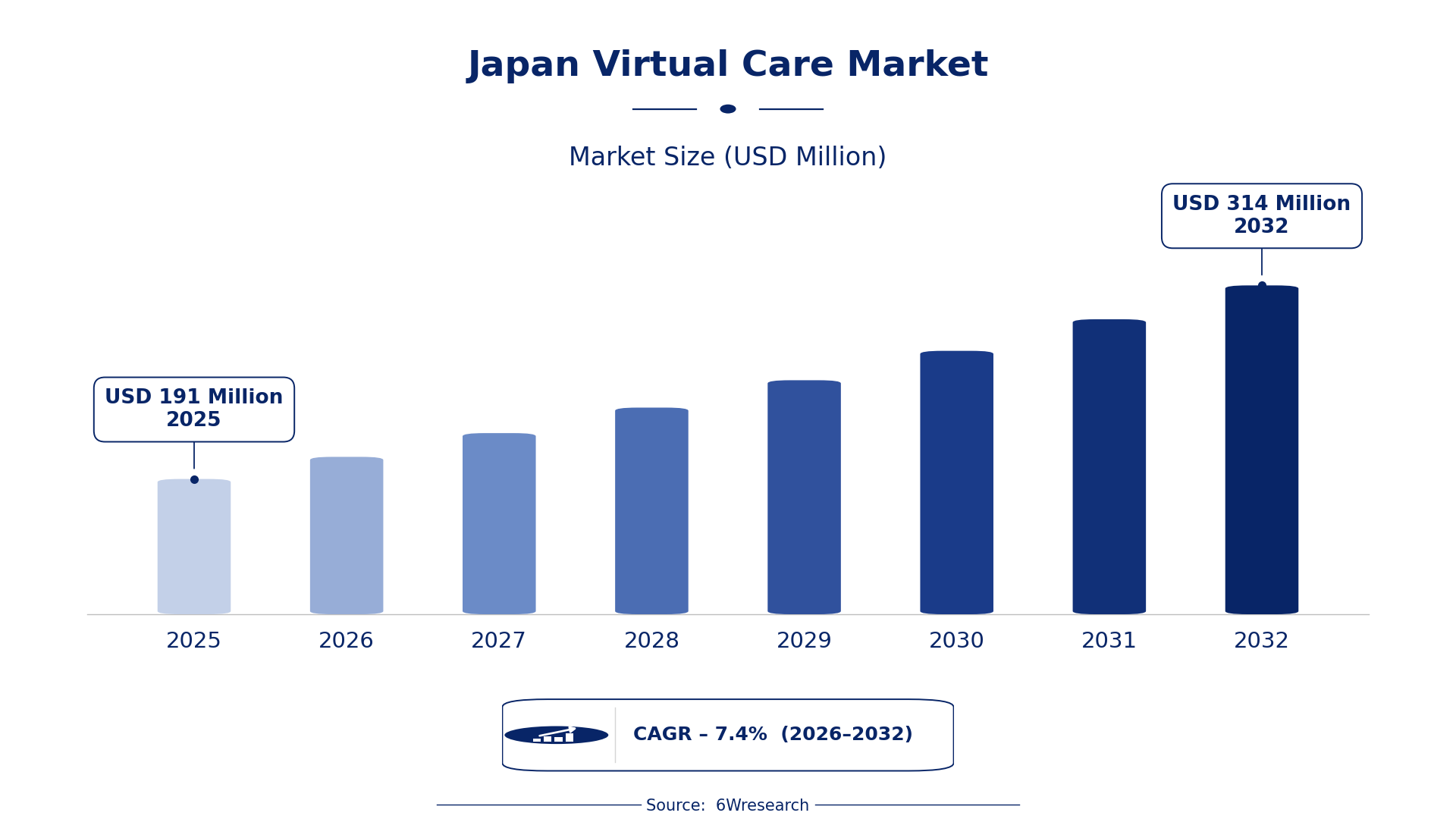
According to 6Wresearch internal database and industry insights, the Japan Virtual Care Market was valued at USD 191 Million in 2025 and is projected to reach USD 314 Million by 2032, growing at a CAGR of approximately 7.4% during 2026–2032.
Japan Virtual Care Market Highlights
| Report Metric | Details |
| Report Name | Japan Virtual Care Market (2026-2032) |
| Market Size 2025 | USD 191 Million |
| Market Size 2032 | USD 314 Million |
| Absolute Growth 2025–2032 | USD 123 Million |
| CAGR 2026–2032 | 7.4% |
| Peak Annual Growth | 8.0% in 2026 |
| Forecast Period | 2026–2032 |
| Historical Data | 2022–2025 |
| Base Year | 2025 |
| Leading Type, 2025 | Video Consultation (44% share) |
| Leading Application, 2025 | Family Medicine (54% share) |
| Leading End User, 2025 | Hospital (44% share) |
| Fastest-Growing Type | Audio Consultation (9.8% CAGR) |
| Fastest-Growing Application | Internal Medicine (9.3% CAGR) |
| Fastest-Growing End User | Medical Center (9.4% CAGR) |
| Growing Sector | Family Medicine |
| Key End Users | Hospitals, Medical Centers, Physician Groups, Insurance Companies |
Japan Virtual Care Market Year-wise Growth Rate and Key Drivers (2022–2032)
This graph illustrates the annual growth rates of the market from 2022 to 2032, highlighting a steady upward trajectory and projected market expansion over the forecast period.
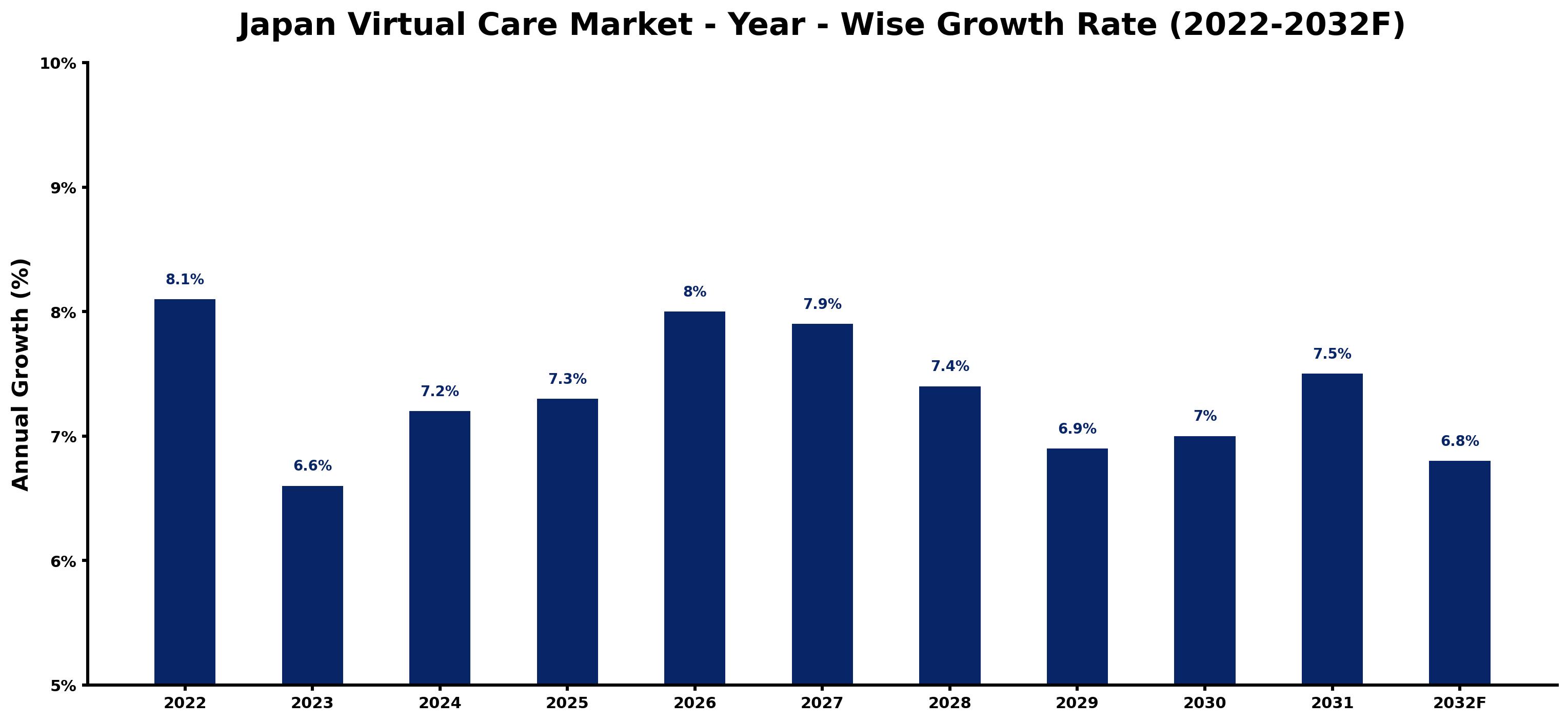
The table below sets out the estimated growth rate for each year and the main factor behind it.
| Year | Estimated Annual Growth (%) | Market Rationale |
| 2022 | 8.1 | The market experienced strong demand from urban populations seeking accessible healthcare solutions. |
| 2023 | 6.6 | Growth slowed due to market saturation and increased competition among service providers. |
| 2024 | 7.2 | A rise in telemedicine adoption contributed to faster growth as more patients engaged with virtual care. |
| 2025 | 7.3 | Increased insurance coverage for virtual consultations spurred further demand from various patient demographics. |
| 2026 | 8.0 | The market is expected to peak as technology adoption accelerates and more healthcare providers offer remote services. |
| 2027 | 7.9 | Growth is projected to slow as the market stabilises with established players dominating the sector. |
| 2028 | 7.4 | The introduction of new telehealth technologies is expected to contribute to a slight slowdown in growth rates. |
| 2029 | 6.9 | Market growth is anticipated to slow as competition intensifies and patient preferences begin to shift. |
| 2030 | 7.0 | An increase in the elderly population will boost demand for virtual care services once again. |
| 2031 | 7.5 | Growth is expected to accelerate as healthcare providers expand their virtual care offerings to meet rising needs. |
| 2032 | 6.8 | A slight slowdown is projected as the market reaches maturity and competition stabilises. |
Note: Market size estimations and growth projections presented in this report are based on 6Wresearch's proprietary forecasting methodology, utilizing the latest available industry data, government publications, and primary research inputs.
Japan Virtual Care Market Synopsis
Virtual care encompasses remote healthcare services delivered through technology, primarily via video and audio consultations. It is increasingly adopted in Japan, particularly among urban populations and the aging demographic. The Japan Virtual Care Market is expanding due to rising medical expenditure, broader insurance coverage for telehealth, and a push from the Ministry of Health, Labour and Welfare to increase telemedicine adoption by 30% by 2025. With over 60% of interactions being video consultations, demand for accessible healthcare solutions continues to grow, reflecting the needs of a changing population.
Market Dynamics Impact Analysis (2026–2032)
| Factor | Type | Impact | Primary Segment Affected |
| Growing elderly population seeking accessible healthcare solutions | Driver | High | Family Medicine |
| Expansion of insurance coverage for telehealth services | Driver | High | Hospital |
| Increasing demand for chronic disease management solutions | Opportunity | High | Internal Medicine |
| Emergence of new telehealth technologies enhancing patient experience | Opportunity | Medium | Video Consultation |
| Market saturation leading to intense competition among service providers | Restraint | High | Medical Center |
| Limited awareness and understanding of virtual care among some demographics | Restraint | Medium | Audio Consultation |
| Challenges in integrating virtual care with existing healthcare systems | Challenge | High | Physician Group |
| Potential regulatory hurdles affecting telehealth implementation | Challenge | Medium | KIOSKS |
Evaluation of Drivers in Japan Virtual Care Market (2026–2032)
These are the developments adding the most demand over the forecast period.
| Drivers | Primary Segment Affected | Why It Matters (Evidence) |
| Aging population requiring regular health check-ups and consultations | Family Medicine | 29.3% of Japan's population was aged 65 or older in September 2024, increasing demand for routine health services. |
| Increased healthcare expenditure supporting telehealth initiatives | Hospital | Japan's national medical care expenditure was about JPY 46.7 trillion in fiscal 2022, facilitating investments in virtual care. |
| Support for telehealth initiatives under the Medical Care Act | Internal Medicine | The Medical Care Act sets standards that promote the integration of telehealth services, improving chronic disease management. |
| Expansion of virtual care services in urban areas | Video Consultation | Video consultations accounted for over 60% of virtual care interactions in urban areas in 2023, reflecting high demand. |
| Growing preference for convenient healthcare solutions among patients | Medical Center | The Tokyo metropolitan area is a major hub for virtual care services, driving demand for accessible healthcare. |
Purchasing is picking up as the elderly population in Japan increasingly seeks remote healthcare services. In 2023, over 1,500 medical centers offered virtual consultations, indicating a growing market. The integration of telehealth services under established medical standards has encouraged the adoption of virtual consultations, particularly in urban areas. The average age of patients using these services is around 65 years, highlighting the demand for accessible healthcare solutions. Consequently, healthcare providers are expanding their virtual care offerings to meet rising patient demand.
Evaluation of Restraints in Japan Virtual Care Market
Several factors work against faster growth; the main ones are summarised below.
| Market Restraint | Primary Segment Affected | Why It Matters (Evidence) |
| Intense competition limiting profit margins for service providers | Medical Center | The growing number of providers in urban areas has led to price wars, affecting profitability. |
| Limited understanding of virtual care among older populations | Audio Consultation | Approximately 29.3% of Japan's population is aged 65 or older, many of whom remain unfamiliar with technology, hindering engagement with virtual services. |
| Integration challenges with existing healthcare systems | Physician Group | Healthcare providers face difficulties in aligning virtual care with traditional practices, delaying implementation. |
| Regulatory hurdles affecting telehealth adoption | KIOSKS | Strict regulations can slow down the deployment of telehealth kiosks in public health settings. |
| Saturation in urban markets leading to slower growth | Video Consultation | As more providers enter the market, growth rates are stabilising due to increased competition. |
Japan Virtual Care Market Challenges
Producers of virtual care platforms struggle with intense competition, resulting in profit margins declining by up to 15%. Importers face delays in securing compliant medical device software due to regulatory hurdles, which can postpone product launches by six months. Distributors encounter skills shortages among healthcare providers trained in telemedicine, limiting effective service delivery and potentially delaying consultations for patients by two weeks. Regulatory compliance with standards like ISO 13485 raises operational costs for producers, which can increase service prices for consumers by 10%.
Trends in the Japan Virtual Care Market
The trends below show where the Japan Virtual Care Market is heading.
- Shift from In-Person to Virtual Consultations: In 2023, over 60% of consultations in urban areas were conducted virtually, reflecting a shift towards remote healthcare. This trend is reshaping how patients interact with healthcare providers, making services more accessible.
- Emergence of Telehealth Technologies: The introduction of advanced telehealth technologies is improving patient experiences, particularly in urban centres. In 2023, the Tokyo metropolitan area saw a rise in video consultations, accounting for over 60% of interactions.
- Growing Adoption of Family Medicine in Virtual Care: Family medicine accounted for 40% of virtual care consultations in 2023, highlighting its importance in managing general health inquiries. This trend is expected to continue as more patients seek accessible healthcare solutions.
- Increased Insurance Coverage for Telehealth Services: Since 2022, insurance coverage for virtual consultations has expanded, improving accessibility for patients. This change is encouraging more individuals to engage with virtual care options.
Investment Opportunities in the Japan Virtual Care Market
Investors looking at the Japan Virtual Care Market should consider the following areas.
- Investment in Telehealth Technologies: Investing in advanced telehealth technologies is essential as urban populations increasingly demand virtual care solutions. In 2023, over 1,500 medical centers offered virtual consultations, indicating a growing market.
- Expansion of Virtual Care Services in Rural Areas: With a significant portion of the population aged 65 or older, there is an opportunity to expand virtual care services in rural regions. Collaborating with local healthcare providers can facilitate market entry.
- Development of User-Friendly Platforms: Creating user-friendly platforms for virtual consultations can address the needs of older patients. The average age of patients using these services is around 65 years, highlighting the demand for simplicity.
- Enhancing Insurance Coverage for Virtual Care: Expanding insurance coverage for virtual consultations presents a timely opportunity. The Ministry of Health, Labour and Welfare aims to increase telehealth adoption by 30% by 2025.
Government Initiatives in the Japan Virtual Care Market
The Long-Term Care Insurance Act of 1997, enforced in 2000, provides funding for nursing care and support services for older individuals, facilitating access to virtual care by ensuring that elderly patients can receive necessary healthcare remotely. The Medical Care Act of 1948 establishes standards for hospitals and clinics, including provisions for telehealth services, thereby promoting the integration of virtual care into the healthcare system.
The Japan Telemedicine Association supports healthcare facilities in adopting telemedicine practices, ensuring compliance with regulations. The association provides guidelines and standards for virtual care providers. The National Health Insurance program includes provisions for telehealth services, which have been in place since 2021, allowing patients to access virtual consultations without significant out-of-pocket expenses.
Future Insight of the Japan Virtual Care Market
Advancements in secure communication technology will transform virtual care demand by 2032, particularly through improved video consultation platforms. The government aims to boost telehealth adoption by 30% by 2025, which will enhance accessibility for urban populations. With over 1,500 medical centers offering virtual consultations, the infrastructure will support increased patient engagement. The average age of patients using these services will remain around 65 years, indicating sustained demand from the aging demographic.
Market Segmentation Analysis
Japan Virtual Care Market report covers a detailed analysis of the following market segments:
By Type – Video Consultation Leads, Audio Consultation Expected to Grow Fastest
According to Summon Dutta, Assistant Manager at 6Wresearch, in 2025, Video Consultation led the type split with a 44% share. Video consultations hold the largest share as they effectively facilitate remote consultations and follow-ups, appealing to a wide demographic. In urban regions, over 60% of virtual care interactions are conducted through video, indicating its prevalent use. Audio Consultation is set to record the highest CAGR in this split, 9.8% over 2026–2032. Audio consultations are growing rapidly, providing a convenient option for patients who may not need video interaction. This segment's expansion is particularly driven by the increasing demand for accessible healthcare solutions among the elderly population. Suppliers should prioritise the development of audio consultation features to align with the rising demand.
By Application – Family Medicine Leads, Internal Medicine Expected to Grow Fastest
The largest application category in 2025 was Family Medicine, at 54% of revenue. Family medicine holds the largest share due to its focus on general health inquiries and ongoing management, catering to a broad demographic. This application is vital, accounting for 40% of virtual care consultations, reflecting its importance in the healthcare system. Internal Medicine is projected to grow fastest, at a CAGR of 9.3% during 2026–2032. Internal medicine is rapidly expanding as it plays a key role in managing chronic conditions remotely, which is increasingly essential for the ageing population. The rising emphasis on chronic disease management will continue to accelerate this segment's growth. Suppliers should enhance their offerings in internal medicine to align with the increasing demand for virtual care.
By End User – Hospital Leads, Medical Center Expected to Grow Fastest
Hospital took 44% of end user revenue in 2025, more than any other category. Hospitals are the leading end users, crucial for patient management and follow-up care, which ensures continuity in healthcare services. Their established infrastructure supports the effective integration of virtual care technologies across various departments. The quickest growth will come from Medical Center, forecast to expand at a CAGR of 9.4% between 2026 and 2032. Medical centers are experiencing the fastest growth as they are often utilised for patient consultations and triaging, addressing the rising demand for accessible healthcare solutions. This trend is likely to continue as more centres adopt virtual care practices. Suppliers must target medical centres to capitalise on the growing trend of virtual consultations.
Key Attractiveness of the Report
- 10 Years of Market Numbers
- Historical Data Starting from 2022 to 2025
- Base Year 2025
- Forecast Data until 2032
- Key Performance Indicators Impacting the Market
- Major Upcoming Developments and Projects
Key Highlights of the Report:
- Japan Virtual Care Market Outlook
- Market Size of Japan Virtual Care Market, 2025
- Forecast of Japan Virtual Care Market, 2032
- Historical Data and Forecast of Japan Virtual Care Revenues & Volume for the Period 2022-2032
- Japan Virtual Care Market Trend Evolution
- Japan Virtual Care Market Drivers and Challenges
- Japan Virtual Care Price Trends
- Japan Virtual Care Porter's Five Forces
- Japan Virtual Care Industry Life Cycle
- Historical Data and Forecast of Japan Virtual Care Market Revenues & Volume By Type for the Period 2022-2032
- Historical Data and Forecast of Japan Virtual Care Market Revenues & Volume By Video Consultation for the Period 2022-2032
- Historical Data and Forecast of Japan Virtual Care Market Revenues & Volume By Audio Consultation for the Period 2022-2032
- Historical Data and Forecast of Japan Virtual Care Market Revenues & Volume By KIOSKS for the Period 2022-2032
- Historical Data and Forecast of Japan Virtual Care Market Revenues & Volume By Application for the Period 2022-2032
- Historical Data and Forecast of Japan Virtual Care Market Revenues & Volume By Family Medicine for the Period 2022-2032
- Historical Data and Forecast of Japan Virtual Care Market Revenues & Volume By Internal Medicine for the Period 2022-2032
- Historical Data and Forecast of Japan Virtual Care Market Revenues & Volume By Cardiology for the Period 2022-2032
- Historical Data and Forecast of Japan Virtual Care Market Revenues & Volume By End User for the Period 2022-2032
- Historical Data and Forecast of Japan Virtual Care Market Revenues & Volume By Hospital for the Period 2022-2032
- Historical Data and Forecast of Japan Virtual Care Market Revenues & Volume By Insurance Company for the Period 2022-2032
- Historical Data and Forecast of Japan Virtual Care Market Revenues & Volume By Medical Center for the Period 2022-2032
- Historical Data and Forecast of Japan Virtual Care Market Revenues & Volume By Pharmacies for the Period 2022-2032
- Historical Data and Forecast of Japan Virtual Care Market Revenues & Volume By Physician Group for the Period 2022-2032
- Japan Virtual Care Import Export Trade Statistics
- Market Opportunity Assessment By Type
- Market Opportunity Assessment By Application
- Market Opportunity Assessment By End User
- Japan Virtual Care Top Companies Market Share
- Japan Virtual Care Competitive Benchmarking By Technical and Operational Parameters
- Japan Virtual Care Company Profiles
- Japan Virtual Care Key Strategic Recommendations
Market Covered
Coverage by segment is as follows.
By Type
- Video Consultation
- Audio Consultation
- KIOSKS
By Application
- Family Medicine
- Internal Medicine
- Cardiology
By End User
- Hospital
- Insurance Company
- Medical Center
- Pharmacies
- Physician Group































