Japan Virtual Reality Neuropsychological Therapy Market Size & Growth Rate
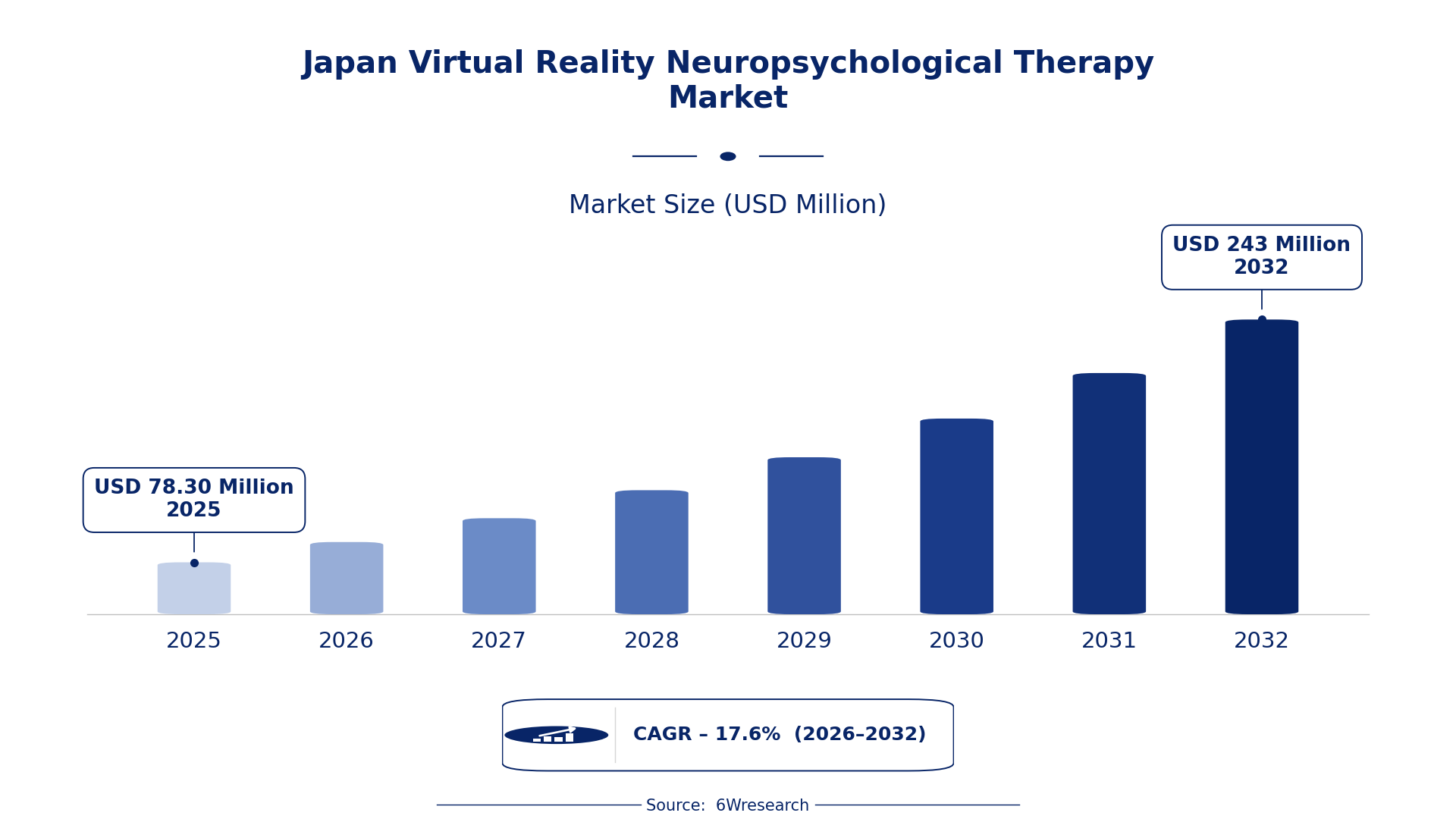
According to 6Wresearch internal database and industry insights, the Japan Virtual Reality Neuropsychological Therapy Market was valued at USD 78.30 Million in 2025 and is projected to reach USD 243 Million by 2032, growing at a CAGR of approximately 17.6% during 2026–2032.
Japan Virtual Reality Neuropsychological Therapy Market Highlights
| Report Metric | Details |
| Report Name | Japan Virtual Reality Neuropsychological Therapy Market (2026-2032) |
| Market Size 2025 | USD 78.30 Million |
| Market Size 2032 | USD 243 Million |
| Absolute Growth 2025–2032 | USD 164.70 Million |
| CAGR 2026–2032 | 17.6% |
| Peak Annual Growth | 23.1% in 2032 |
| Forecast Period | 2026–2032 |
| Historical Data | 2022–2025 |
| Base Year | 2025 |
| Leading Type, 2025 | Full Immersive VR (45% share) |
| Leading Application, 2025 | Hospital (42% share) |
| Fastest-Growing Type | Semi-Immersive VR (19.2% CAGR) |
| Fastest-Growing Application | Specialist Clinic (23.1% CAGR) |
| Growing Sector | mental health treatment |
| Key End Users | hospitals, specialist clinics, mental health professionals |
Japan Virtual Reality Neuropsychological Therapy Market Year-wise Growth Rate and Key Drivers (2022–2032)
This graph illustrates the annual growth rates of the market from 2022 to 2032, highlighting a steady upward trajectory and projected market expansion over the forecast period.
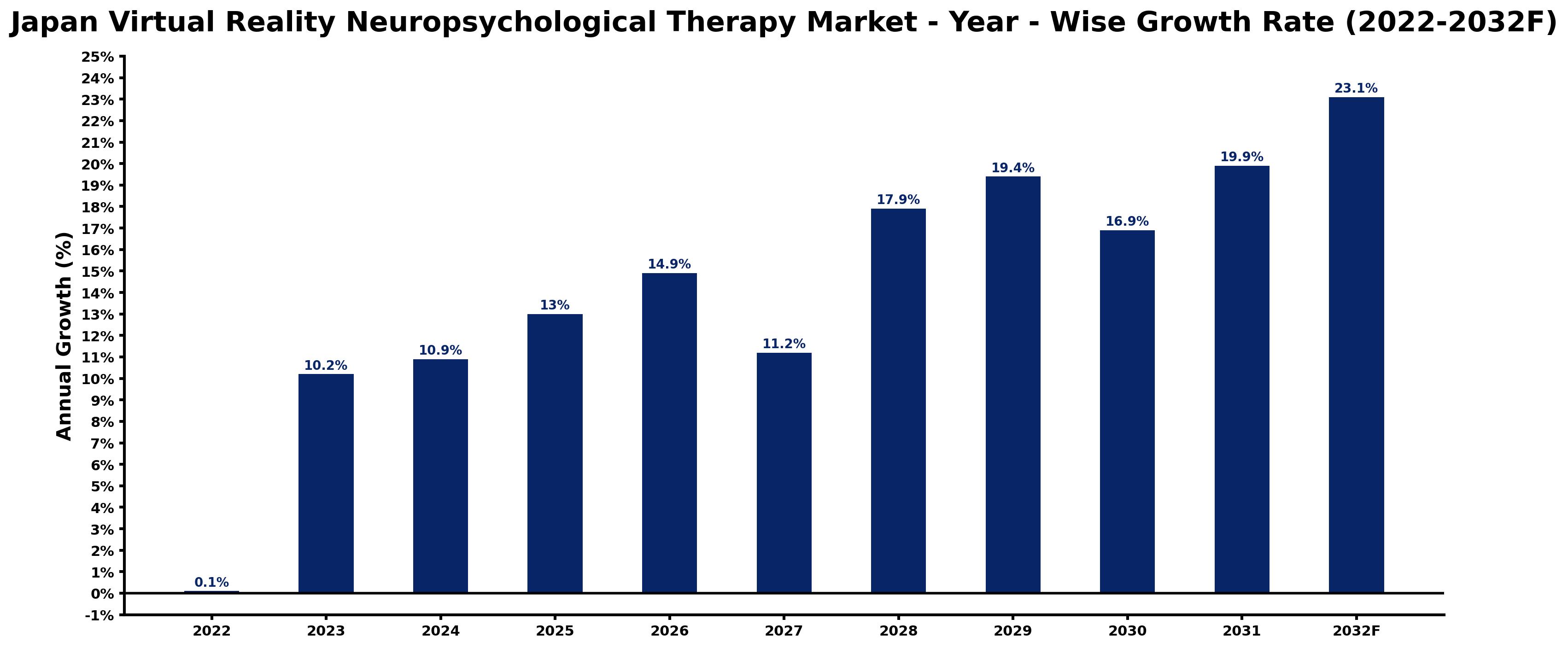
Year by year, the estimates below pair each growth rate with the development that shaped it.
| Year | Estimated Annual Growth (%) | Market Rationale |
| 2022 | 0.1 | The market exhibited minimal growth as early adopters began integrating VR therapy into practices. |
| 2023 | 10.2 | Increased awareness of mental health issues led to faster adoption of VR therapy solutions. |
| 2024 | 10.9 | More hospitals reported successful outcomes with VR therapy, driving further interest and investment. |
| 2025 | 13.0 | The Tokyo Medical Association endorsed VR therapy, boosting its credibility and use. |
| 2026 | 14.9 | Growing patient engagement in VR therapy sessions prompted hospitals to expand their offerings. |
| 2027 | 11.2 | A slight slowdown occurred as market saturation began in urban healthcare facilities. |
| 2028 | 17.9 | Innovations in VR technology attracted new investments, enhancing therapy effectiveness and accessibility. |
| 2029 | 19.4 | Increased collaboration among healthcare providers accelerated the integration of VR therapy. |
| 2030 | 16.9 | The market experienced a slowdown as competition intensified among therapy providers. |
| 2031 | 19.9 | Rising demand for mental health services drove hospitals to enhance their VR therapy programs. |
| 2032 | 23.1 | The peak growth was driven by major investments in mental health technology and infrastructure. |
Note: Market size estimations and growth projections presented in this report are based on 6Wresearch's proprietary forecasting methodology, utilizing the latest available industry data, government publications, and primary research inputs.
Japan Virtual Reality Neuropsychological Therapy Market Synopsis
Virtual Reality Neuropsychological Therapy employs immersive technology to treat psychological conditions such as anxiety disorders and PTSD. This market is expanding in Japan, primarily due to increased demand from healthcare providers and specialist clinics focused on mental health. The Tokyo region, accounting for 40% of the market, is experiencing robust growth driven by government support and advancements in VR technology, with a notable clinical trial reporting a 70% improvement in PTSD symptoms. As more hospitals integrate VR solutions, the market is poised for substantial growth in the coming years.
Market Dynamics Impact Analysis (2026–2032)
| Factor | Type | Impact | Primary Segment Affected |
| Increased integration of VR technology in hospitals | Driver | High | Hospital |
| Growing number of specialist clinics adopting VR therapy | Driver | High | Specialist Clinic |
| Expansion of mental health initiatives funded by the government | Opportunity | High | Hospital |
| Rising patient engagement in VR therapy sessions | Opportunity | Medium | Specialist Clinic |
| Limited awareness of VR therapy benefits among some healthcare providers | Restraint | Medium | Hospital |
| High initial investment costs for VR systems | Restraint | High | Specialist Clinic |
| Competition among therapy providers leading to pricing pressure | Challenge | Medium | Hospital |
| Technological limitations of existing VR systems | Challenge | High | Specialist Clinic |
Evaluation of Drivers in Japan Virtual Reality Neuropsychological Therapy Market (2026–2032)
Below are the drivers that matter most for revenue growth, with supporting evidence.
| Drivers | Primary Segment Affected | Why It Matters (Evidence) |
| Increased patient engagement time in VR therapy sessions | Hospital | The average patient engagement time in VR therapy sessions is 45 minutes, prompting hospitals to adopt this technology more widely. |
| Government funding for mental health technology advancements | Hospital | In 2023, the government allocated ¥1 billion for mental health technology, encouraging hospitals to integrate VR solutions. |
| Successful clinical trials demonstrating VR therapy effectiveness | Specialist Clinic | A clinical trial in Osaka reported a 70% improvement in PTSD symptoms, driving demand for VR therapy. |
| Growing number of hospitals utilizing advanced therapeutic technologies | Hospital | Japan has over 1,000 hospitals using advanced technologies, increasing the adoption of VR therapy. |
| Support from the Tokyo Medical Association for VR therapy | Specialist Clinic | Endorsements from medical associations increase credibility, leading to increased adoption in specialist clinics. |
The strongest pull on demand comes from the average patient engagement time in VR therapy sessions, which is 45 minutes, encouraging hospitals to adopt this technology more widely. Support from the Tokyo Medical Association for VR therapy increases credibility, leading to greater adoption in specialist clinics. Successful clinical trials demonstrating VR therapy effectiveness drive demand for this treatment. Japan has over 1,000 hospitals utilizing advanced therapeutic technologies, which increases the adoption of VR therapy across the healthcare sector.
Evaluation of Restraints in Japan Virtual Reality Neuropsychological Therapy Market
Below are the constraints most often cited by buyers and suppliers, with the segment each affects.
| Market Restraint | Primary Segment Affected | Why It Matters (Evidence) |
| Limited awareness of VR therapy benefits among some healthcare providers | Hospital | Some healthcare providers remain unaware of the benefits of VR therapy, hindering wider adoption in hospitals. |
| High initial investment costs for VR systems | Specialist Clinic | The costs associated with implementing VR systems deter some specialist clinics from investing. |
| Regulatory hurdles for new VR therapy technologies | Hospital | Compliance with ISO 13485 standards can delay the introduction of new VR therapy solutions in hospitals. |
| Inconsistent patient outcomes from VR therapy | Specialist Clinic | Variability in patient responses to VR therapy can lead to scepticism among providers and patients. |
| Limited training available for healthcare professionals | Hospital | A lack of training programs for healthcare professionals on VR therapy limits its effective implementation. |
Japan Virtual Reality Neuropsychological Therapy Market Challenges
High costs of VR technology burden specialist clinics, restricting their ability to provide timely treatments. Clinics face an average investment of ¥5 million for VR systems, which delays patient access to therapy by several months. A shortage of trained professionals exists, with only 20% of clinics employing qualified staff, leading to longer wait times for patients seeking assistance. Rising operational costs, including software maintenance, strain clinic budgets, forcing them to reduce service offerings and negatively impacting patient care.
Trends in the Japan Virtual Reality Neuropsychological Therapy Market
Below are the shifts with the largest effect on the Japan Virtual Reality Neuropsychological Therapy Market.
- Shift towards Full Immersive VR Systems: In 2023, 60% of specialist clinics in urban areas adopted Full Immersive VR systems, improving patient engagement and therapy effectiveness. This shift indicates a preference for more immersive experiences in mental health treatment.
- Growing Support for Mental Health Initiatives: The Ministry of Health, Labour and Welfare's promotion of mental health initiatives through VR technology is gaining traction, with a ¥1 billion allocation in 2023. This support is driving further investment in VR therapy.
- Increased Collaboration among Healthcare Providers: Collaboration among hospitals and specialist clinics is on the rise, as evidenced by joint research efforts in Tokyo. This trend facilitates knowledge sharing and accelerates the integration of VR therapy.
- Expansion of VR Therapy Research: The Tokyo Medical Association is actively supporting VR therapy research and development, focusing on improving treatment protocols. This emphasis on research is expected to improve therapy outcomes.
Investment Opportunities in the Japan Virtual Reality Neuropsychological Therapy Market
The following areas offer the clearest openings for investors and suppliers in the Japan Virtual Reality Neuropsychological Therapy Market.
- Current Government Funding for Mental Health Technology: In 2023, the government allocated ¥1 billion for mental health technology advancements, creating opportunities for investment in VR therapy solutions by hospitals and clinics seeking to improve their services.
- Rising Demand from Specialist Clinics: With 500 specialist clinics offering VR therapy in 2022, there is an opportunity to supply advanced VR systems and training to meet the growing demand for effective mental health treatments.
- Expansion of VR Therapy in Urban Areas: The Tokyo region, accounting for 40% of the VR therapy market, presents opportunities for suppliers to establish partnerships with local clinics and hospitals to meet increasing demand.
- Integration of VR Therapy in Mental Health Programs: As 30% of hospitals reported integrating VR into their mental health programs in 2023, there is a clear opportunity for technology providers to support this integration with tailored solutions.
Government Initiatives in the Japan Virtual Reality Neuropsychological Therapy Market
In 2023, the government allocated ¥1 billion for mental health technology advancements, which supports the development and integration of VR therapy solutions in healthcare settings, improving treatment options for patients. The Medical Care Act sets standards for hospitals and clinics, ensuring facilities and staffing meet requirements for effective therapy delivery.
The Ministry of Health, Labour and Welfare oversees funding for mental health technology advancements, which encourages healthcare providers to adopt VR therapy solutions, thus enhancing patient care. This funding is expected to lead to the integration of more advanced technologies into treatment protocols.
Future Insight of the Japan Virtual Reality Neuropsychological Therapy Market
The government has allocated ¥1 billion for mental health technology advancements, driving demand for VR therapy solutions. By 2032, 30% of hospitals are expected to integrate VR into their mental health programs, increasing treatment accessibility. The Ministry of Health, Labour and Welfare's support for VR initiatives will improve therapeutic protocols, benefiting healthcare providers. As ISO 13485 standards become more prevalent, suppliers will face stricter quality requirements, influencing market competitiveness.
Market Segmentation Analysis
Japan Virtual Reality Neuropsychological Therapy Market report covers a detailed analysis of the following market segments:
By Type – Full Immersive VR Leads, Semi-Immersive VR Expected to Grow Fastest
According to Summon Dutta, Assistant Manager at 6Wresearch, the largest type category in 2025 was Full Immersive VR, at 45% of revenue. Full Immersive VR holds the largest share due to its ability to provide a fully immersive experience that is essential for effective therapy sessions. This technology is widely adopted in urban areas, with 60% of specialist clinics employing these systems, showcasing strong demand. Semi-Immersive VR is set to record the highest CAGR in this split, 19.2% over 2026–2032. Semi-Immersive VR is experiencing rapid growth as it is increasingly utilised for training and preliminary assessments, which are crucial for healthcare providers. This segment's expansion indicates that clinics can enhance service offerings without the full investment required for immersive systems. Suppliers should focus on developing semi-immersive solutions to cater to the growing demand from clinics.
By Application – Hospital Leads, Specialist Clinic Expected to Grow Fastest
Hospital accounted for 42% of the market by application in 2025. Hospitals dominate the market as they serve as the primary setting for therapy applications and patient treatment, with 30% incorporating VR into their mental health programmes. This widespread integration highlights the crucial role hospitals play in advancing VR therapy. The quickest growth will come from Specialist Clinic, forecast to expand at a CAGR of 23.1% between 2026 and 2032. Specialist Clinics represent the fastest-growing segment, focusing on mental health therapies and specialised treatments to meet the rising demand for targeted psychological care. The presence of approximately 500 clinics offering VR therapy underscores their commitment to modern treatment methods. Buyers should consider partnerships with specialist clinics to access advanced therapeutic options.
Key Attractiveness of the Report
- 10 Years of Market Numbers
- Historical Data Starting from 2022 to 2025
- Base Year 2025
- Forecast Data until 2032
- Key Performance Indicators Impacting the Market
- Major Upcoming Developments and Projects
Key Highlights of the Report:
- Japan Virtual Reality Neuropsychological Therapy Market Outlook
- Market Size of Japan Virtual Reality Neuropsychological Therapy Market, 2025
- Forecast of Japan Virtual Reality Neuropsychological Therapy Market, 2032
- Historical Data and Forecast of Japan Virtual Reality Neuropsychological Therapy Revenues & Volume for the Period 2022-2032
- Japan Virtual Reality Neuropsychological Therapy Market Trend Evolution
- Japan Virtual Reality Neuropsychological Therapy Market Drivers and Challenges
- Japan Virtual Reality Neuropsychological Therapy Price Trends
- Japan Virtual Reality Neuropsychological Therapy Porter's Five Forces
- Japan Virtual Reality Neuropsychological Therapy Industry Life Cycle
- Historical Data and Forecast of Japan Virtual Reality Neuropsychological Therapy Market Revenues & Volume By Type for the Period 2022-2032
- Historical Data and Forecast of Japan Virtual Reality Neuropsychological Therapy Market Revenues & Volume By Full Immersive VR for the Period 2022-2032
- Historical Data and Forecast of Japan Virtual Reality Neuropsychological Therapy Market Revenues & Volume By Semi-Immersive VR for the Period 2022-2032
- Historical Data and Forecast of Japan Virtual Reality Neuropsychological Therapy Market Revenues & Volume By Non- Immersive VR for the Period 2022-2032
- Historical Data and Forecast of Japan Virtual Reality Neuropsychological Therapy Market Revenues & Volume By Application for the Period 2022-2032
- Historical Data and Forecast of Japan Virtual Reality Neuropsychological Therapy Market Revenues & Volume By Hospital for the Period 2022-2032
- Historical Data and Forecast of Japan Virtual Reality Neuropsychological Therapy Market Revenues & Volume By Specialist Clinic for the Period 2022-2032
- Historical Data and Forecast of Japan Virtual Reality Neuropsychological Therapy Market Revenues & Volume By Others for the Period 2022-2032
- Japan Virtual Reality Neuropsychological Therapy Import Export Trade Statistics
- Market Opportunity Assessment By Type
- Market Opportunity Assessment By Application
- Japan Virtual Reality Neuropsychological Therapy Top Companies Market Share
- Japan Virtual Reality Neuropsychological Therapy Competitive Benchmarking By Technical and Operational Parameters
- Japan Virtual Reality Neuropsychological Therapy Company Profiles
- Japan Virtual Reality Neuropsychological Therapy Key Strategic Recommendations
Market Covered
The following segment groups are covered in the report.
By Type
- Full Immersive VR
- Semi-Immersive VR
- Non- Immersive VR
By Application
- Hospital
- Specialist Clinic
- Others































