Japan Vitrectomy Devices Market Size & Growth Rate
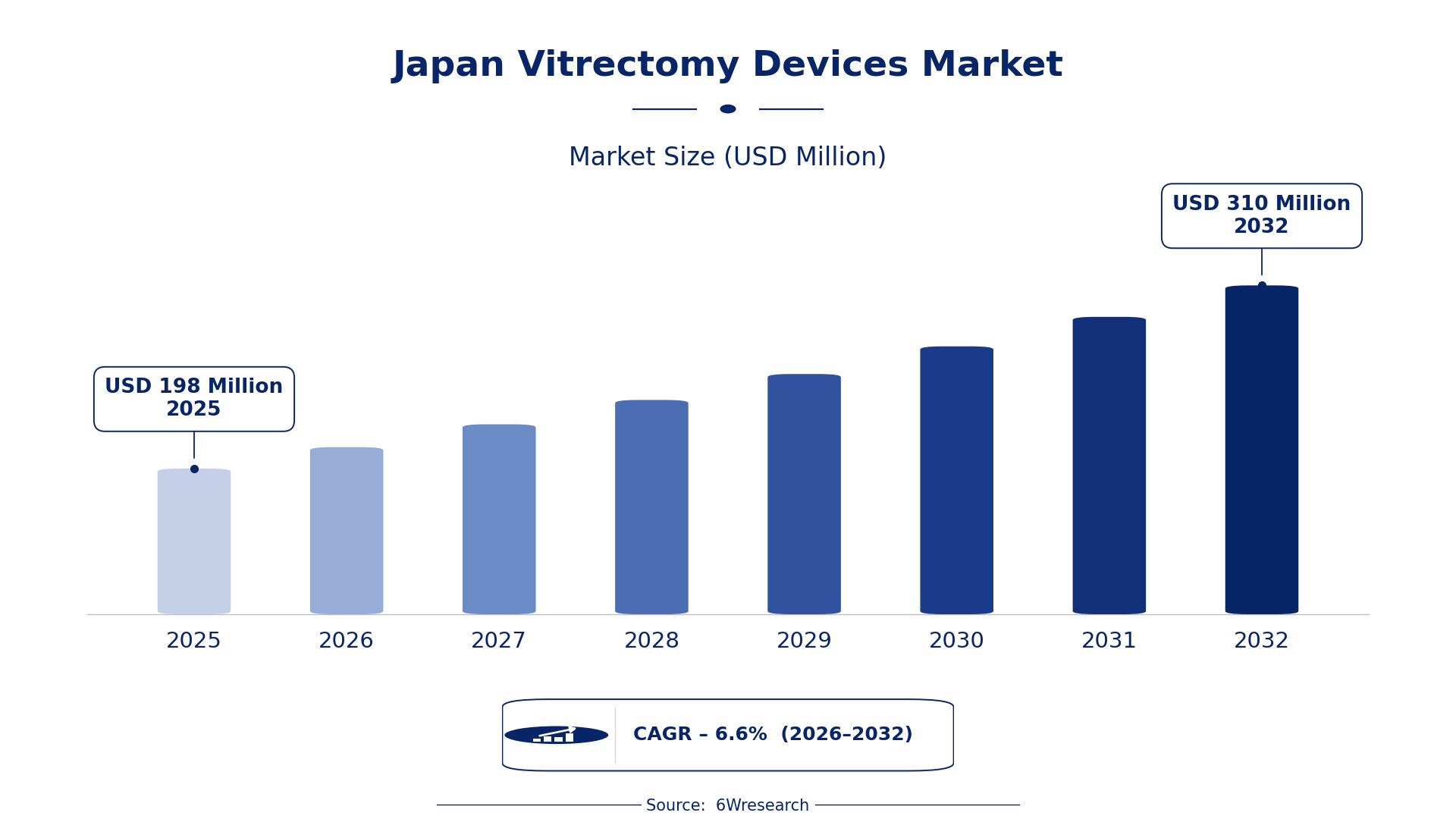
According to 6Wresearch internal database and industry insights, the Japan Vitrectomy Devices Market was valued at USD 198 Million in 2025 and is projected to reach USD 310 Million by 2032, growing at a CAGR of approximately 6.6% during 2026–2032.
Japan Vitrectomy Devices Market Highlights
| Report Metric | Details |
| Report Name | Japan Vitrectomy Devices Market (2026-2032) |
| Market Size 2025 | USD 198 Million |
| Market Size 2032 | USD 310 Million |
| Absolute Growth 2025–2032 | USD 112 Million |
| CAGR 2026–2032 | 6.6% |
| Peak Annual Growth | 7.4% in 2028 |
| Forecast Period | 2026–2032 |
| Historical Data | 2022–2025 |
| Base Year | 2025 |
| Leading Product Type, 2025 | Vitrectomy machines (37% share) |
| Leading Application, 2025 | Diabetic retinopathy (45% share) |
| Leading End User, 2025 | Hospitals (43% share) |
| Fastest-Growing Product Type | Vitrectomy packs (9.0% CAGR) |
| Fastest-Growing Application | Retinal detachment (8.6% CAGR) |
| Fastest-Growing End User | Ophthalmic clinics (8.1% CAGR) |
| Growing Sector | Ophthalmic surgery |
| Key End Users | Hospitals, ophthalmic clinics, ambulatory surgical centers |
Japan Vitrectomy Devices Market Year-wise Growth Rate and Key Drivers (2022–2032)
This graph illustrates the annual growth rates of the market from 2022 to 2032, highlighting a steady upward trajectory and projected market expansion over the forecast period.
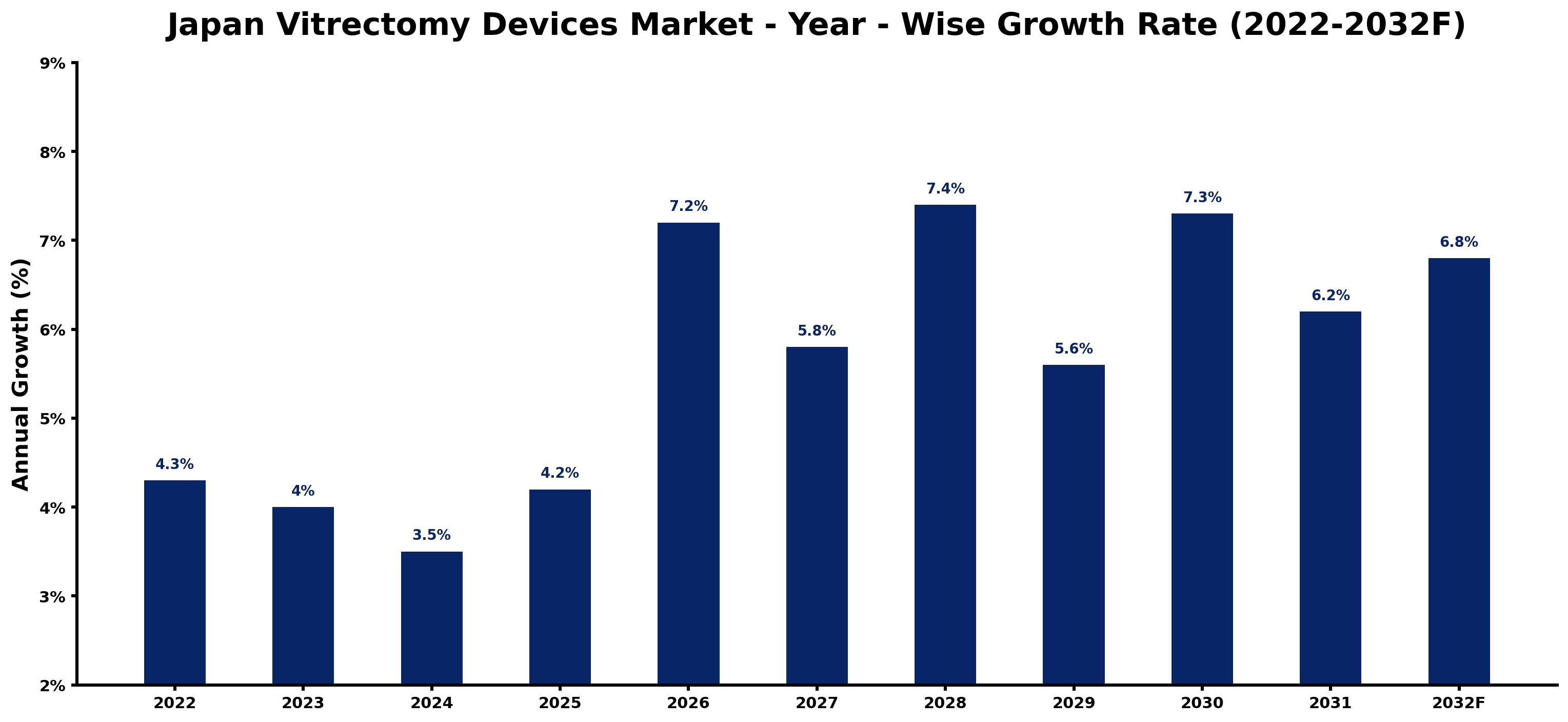
Annual growth estimates for each year appear below with the principal reason behind them, explaining the shifts that set the pace of the market.
| Year | Estimated Annual Growth (%) | Market Rationale |
| 2022 | 4.3 | The market experienced steady growth due to ongoing advancements in surgical techniques. |
| 2023 | 4.0 | Growth slowed as hospitals adjusted to new surgical standards and technologies. |
| 2024 | 3.5 | Market expansion continued to decelerate as hospitals faced resource allocation challenges. |
| 2025 | 4.2 | Growth accelerated again as hospitals increased investments in vitrectomy technologies. |
| 2026 | 7.2 | Demand is expected to surge as the adoption of advanced vitrectomy machines increases. |
| 2027 | 5.8 | Growth is projected to slow again as hospitals face staffing shortages impacting surgical capacity. |
| 2028 | 7.4 | The market is expected to peak with heightened demand for retinal surgeries and improved technologies. |
| 2029 | 5.6 | Growth is anticipated to decelerate as hospitals focus on optimising existing resources and technologies. |
| 2030 | 7.3 | Demand will rebound as new surgical guidelines are introduced, improving treatment options. |
| 2031 | 6.2 | Growth is projected to slow as hospitals face budget constraints affecting procurement decisions. |
| 2032 | 6.8 | The market is expected to grow as aging populations drive increased surgical needs. |
Note: Market size estimations and growth projections presented in this report are based on 6Wresearch's proprietary forecasting methodology, utilizing the latest available industry data, government publications, and primary research inputs.
Japan Vitrectomy Devices Market Synopsis
Vitrectomy devices are specialised surgical instruments used to treat various retinal conditions, including diabetic retinopathy and retinal detachment. Constructed from high-grade stainless steel, these instruments find primary use in hospitals and ophthalmic clinics throughout Japan. The Japan Vitrectomy Devices Market is growing due to an ageing population, rising healthcare expenditure, and advancements in surgical technologies. With around 1.2 million patients treated for diabetic retinopathy in 2022, demand is expected to increase as hospitals upgrade their surgical capabilities and technologies.
Market Dynamics Impact Analysis (2026–2032)
| Factor | Type | Impact | Primary Segment Affected |
| Aging population leading to increased prevalence of retinal diseases | Driver | High | Diabetic retinopathy |
| Rising healthcare expenditure facilitating technology upgrades | Driver | High | Vitrectomy machines |
| Growing number of ophthalmic clinics expanding surgical services | Opportunity | Medium | Ophthalmic clinics |
| Increased focus on outpatient procedures in ambulatory surgical centers | Opportunity | Medium | Ambulatory surgical centers |
| High costs associated with advanced surgical technologies | Restraint | High | Vitrectomy machines |
| Limited availability of trained surgical personnel | Restraint | Medium | Hospitals |
| Budget constraints affecting procurement decisions in hospitals | Challenge | High | Hospitals |
| Competition from alternative treatment methods for retinal diseases | Challenge | Medium | Ophthalmic clinics |
Evaluation of Drivers in Japan Vitrectomy Devices Market (2026–2032)
The following drivers explain most of the expected growth.
| Drivers | Primary Segment Affected | Why It Matters (Evidence) |
| Increasing incidence of diabetic retinopathy | Diabetic retinopathy | Approximately 1.2 million patients treated in 2022 drives demand for vitrectomy devices. |
| Technological advancements in vitrectomy machines | Vitrectomy machines | Adoption rate of new technologies is around 25% in major hospitals, boosting purchases. |
| Expansion of outpatient surgical services | Ambulatory surgical centers | Ambulatory surgical centers are projected to increase their share of procedures by 10% by 2025. |
| Rising healthcare expenditure in Japan | Hospitals | Japan's national medical care expenditure was about JPY 46.7 trillion in fiscal 2022, enabling investment. |
| Growing awareness of retinal disease treatments | Ophthalmic clinics | The Japanese Society of Retina Specialists promotes best practices, increasing demand for surgical interventions. |
Orders keep climbing as the aging population drives the incidence of retinal diseases, with the average age of patients undergoing vitrectomy being 65 years. Hospitals are investing in advanced vitrectomy machines, with a notable increase in the adoption of new technologies. The national healthcare expenditure reached JPY 46.7 trillion in fiscal 2022, facilitating these investments. The focus on improving surgical outcomes is further supported by the Japanese Society of Retina Specialists, driving demand for effective treatment solutions. Ambulatory surgical centers are increasingly performing vitrectomy procedures, reflecting the shift towards outpatient surgical services.
Evaluation of Restraints in Japan Vitrectomy Devices Market
The main factors holding the market back are set out below.
| Market Restraint | Primary Segment Affected | Why It Matters (Evidence) |
| High costs associated with advanced vitrectomy technologies | Vitrectomy machines | The high price of advanced machines limits procurement by hospitals, affecting surgery availability. |
| Limited availability of trained personnel for surgeries | Hospitals | Staff shortages in hospitals hinder the capacity to perform necessary vitrectomy procedures. |
| Budget constraints affecting hospital procurement decisions | Hospitals | Budget limitations restrict hospitals from upgrading or acquiring new vitrectomy devices. |
| Competition from alternative treatments for retinal diseases | Ophthalmic clinics | Emerging therapies may divert funds away from traditional surgical interventions. |
| Regulatory hurdles for new device approvals | Vitrectomy machines | The lengthy approval process can delay the introduction of new technologies. |
Japan Vitrectomy Devices Market Challenges
High costs pose challenges for hospitals due to the slow uptake of new vitrectomy technologies, with only 25% adoption in major hospitals. This reluctance arises from the substantial investment needed to integrate advanced equipment, resulting in an average wait time of three months for patients requiring surgery. Competition among suppliers intensifies as they strive to serve the 1.2 million patients treated for diabetic retinopathy in 2022, leading to price pressures. Strict adherence to JIS standards creates supply chain bottlenecks, causing production delays that ultimately increase costs for hospitals needing timely access to surgical instruments.
Trends in the Japan Vitrectomy Devices Market
Below are the shifts with the largest effect on the Japan Vitrectomy Devices Market.
- Ophthalmic Clinics Increasingly Adopting Advanced Technologies: Ophthalmic clinics are enhancing their surgical capabilities with new vitrectomy devices, as shown by a 15% increase in procedures reported in Osaka in 2023. This trend indicates a shift towards more efficient surgical practices.
- Shift Towards Outpatient Surgical Procedures: Ambulatory surgical centres are becoming more common for vitrectomy procedures, with their share expected to rise by 10% by 2025. This change allows for more efficient resource use and improved patient access.
- Growing Focus on Retinal Disease Research: In 2023, the government allocated ¥2 billion for research on retinal disease treatments, demonstrating a commitment to advancing surgical techniques and technologies. This funding is anticipated to support the development of new solutions.
- Increased Adoption of Photocoagulation Lasers in Surgeries: The Ministry of Health introduced guidelines for photocoagulation lasers in 2023, promoting their use in retinal surgeries. This standardisation is likely to improve surgical outcomes and patient safety.
Investment Opportunities in the Japan Vitrectomy Devices Market
Investors looking at the Japan Vitrectomy Devices Market should consider the following areas.
- Hospitals Seeking Advanced Surgical Solutions: Hospitals are increasingly in search of advanced vitrectomy devices to improve surgical outcomes, with the average age of patients being 65 years. Investing in new technologies can effectively meet this demand.
- Partnerships with Ophthalmic Clinics: Now presents an ideal opportunity to partner with ophthalmic clinics, which are expanding their services. Collaborating with these clinics can facilitate the introduction of advanced vitrectomy devices.
- Growing Demand for Outpatient Procedures: With the projected 10% increase in the share of procedures performed by ambulatory surgical centres by 2025, supplying equipment tailored for outpatient settings offers a significant opportunity.
- Investment in Research and Development: The government's ¥2 billion allocation for retinal disease research opens avenues for suppliers to develop new vitrectomy technologies, enhancing market entry potential.
Government Initiatives in the Japan Vitrectomy Devices Market
The PMD Act regulates the approval and quality of vitrectomy devices, ensuring they meet safety standards for hospitals and clinics. Compliance with this law is essential for manufacturers aiming to enter the market and maintain quality assurance. Additionally, the Act against Unjustifiable Premiums and Misleading Representations prohibits misleading advertising of medical devices, protecting consumers and ensuring informed choices.
In 2023, the Pharmaceuticals and Medical Devices Agency (PMDA) approved numerous new vitrectomy technologies, improving treatment options for patients. This agency ensures that innovative devices are accessible to hospitals and clinics, enhancing surgical outcomes and patient care.
Future Insight of the Japan Vitrectomy Devices Market
The investment pipeline for retinal disease treatments will expand, driven by a government allocation of ¥2 billion in 2023. By 2032, the number of ambulatory surgical centres is projected to increase, capturing a larger share of vitrectomy procedures. New guidelines for surgical practices will streamline operations and improve patient outcomes. As Japan's ageing population continues to increase the prevalence of retinal diseases, suppliers will need to innovate and diversify their product offerings to meet growing demand.
Market Segmentation Analysis
Japan Vitrectomy Devices Market report covers a detailed analysis of the following market segments:
By Product Type – Vitrectomy machines Lead, Vitrectomy packs Expected to Grow Fastest
According to Summon Dutta, Assistant Manager at 6Wresearch, in 2025, Vitrectomy machines led the product type split with a 37% share. Vitrectomy machines dominate the market as they are indispensable for conducting vitrectomy procedures in Japan's healthcare facilities. Their widespread use across approximately 8,100 hospitals underscores their critical importance in ophthalmic surgery. The quickest growth will come from Vitrectomy packs, forecast to expand at a CAGR of 9.0% between 2026 and 2032. The rapid growth of vitrectomy packs is fuelled by the increasing volume of surgeries, evidenced by a 15% surge in procedures reported in Osaka. This trend highlights a rising need for all-inclusive surgical kits that facilitate efficient operations. This indicates that suppliers must prioritise the availability of vitrectomy packs to align with the escalating demand for surgical interventions.
By Application – Diabetic retinopathy Leads, Retinal detachment Expected to Grow Fastest
The largest application category in 2025 was Diabetic retinopathy, at 45% of revenue. Diabetic retinopathy represents the largest share as it is a common condition treated with vitrectomy devices, with approximately 1.2 million patients treated annually in Japan. This high prevalence ensures consistent demand for related surgical interventions. Over 2026–2032, Retinal detachment is expected to post the fastest growth, at a CAGR of 8.6%. Retinal detachment is experiencing rapid growth as it is a critical condition requiring immediate surgical intervention, which is increasingly emphasised in recent health guidelines. The focus on timely treatment is likely to drive further adoption of vitrectomy solutions. Buyers must prepare for increased availability of solutions targeting retinal detachment to ensure timely patient care.
By End User – Hospitals Lead, Ophthalmic clinics Expected to Grow Fastest
With 43% of end user revenue in 2025, Hospitals was the largest category. Hospitals dominate the market as the primary users of vitrectomy devices, utilising them extensively for various surgical procedures. The presence of over 8,100 hospitals in Japan ensures a steady demand for these critical instruments. Ophthalmic clinics are set to record the highest CAGR in this split, 8.1% over 2026–2032. Ophthalmic clinics are rapidly increasing their share of vitrectomy procedures, reflecting a shift towards specialised care in retinal surgeries. This trend is likely to continue as more clinics adopt advanced surgical technologies. Suppliers should consider targeting ophthalmic clinics to capitalise on their growing role in the vitrectomy market.
Key Attractiveness of the Report
- 10 Years of Market Numbers
- Historical Data Starting from 2022 to 2025
- Base Year 2025
- Forecast Data until 2032
- Key Performance Indicators Impacting the Market
- Major Upcoming Developments and Projects
Key Highlights of the Report:
- Japan Vitrectomy Devices Market Outlook
- Market Size of Japan Vitrectomy Devices Market, 2025
- Forecast of Japan Vitrectomy Devices Market, 2032
- Historical Data and Forecast of Japan Vitrectomy Devices Revenues & Volume for the Period 2022-2032
- Japan Vitrectomy Devices Market Trend Evolution
- Japan Vitrectomy Devices Market Drivers and Challenges
- Japan Vitrectomy Devices Price Trends
- Japan Vitrectomy Devices Porter's Five Forces
- Japan Vitrectomy Devices Industry Life Cycle
- Historical Data and Forecast of Japan Vitrectomy Devices Market Revenues & Volume By Product Type for the Period 2022-2032
- Historical Data and Forecast of Japan Vitrectomy Devices Market Revenues & Volume By Vitrectomy machines for the Period 2022-2032
- Historical Data and Forecast of Japan Vitrectomy Devices Market Revenues & Volume By Vitrectomy packs for the Period 2022-2032
- Historical Data and Forecast of Japan Vitrectomy Devices Market Revenues & Volume By Photocoagulation lasers for the Period 2022-2032
- Historical Data and Forecast of Japan Vitrectomy Devices Market Revenues & Volume By Illumination devices for the Period 2022-2032
- Historical Data and Forecast of Japan Vitrectomy Devices Market Revenues & Volume By Application for the Period 2022-2032
- Historical Data and Forecast of Japan Vitrectomy Devices Market Revenues & Volume By Diabetic retinopathy for the Period 2022-2032
- Historical Data and Forecast of Japan Vitrectomy Devices Market Revenues & Volume By Retinal detachment for the Period 2022-2032
- Historical Data and Forecast of Japan Vitrectomy Devices Market Revenues & Volume By Macular hole for the Period 2022-2032
- Historical Data and Forecast of Japan Vitrectomy Devices Market Revenues & Volume By Vitreous hemorrhage for the Period 2022-2032
- Historical Data and Forecast of Japan Vitrectomy Devices Market Revenues & Volume By Others for the Period 2022-2032
- Historical Data and Forecast of Japan Vitrectomy Devices Market Revenues & Volume By End User for the Period 2022-2032
- Historical Data and Forecast of Japan Vitrectomy Devices Market Revenues & Volume By Hospitals for the Period 2022-2032
- Historical Data and Forecast of Japan Vitrectomy Devices Market Revenues & Volume By Ophthalmic clinics for the Period 2022-2032
- Historical Data and Forecast of Japan Vitrectomy Devices Market Revenues & Volume By Ambulatory surgical centers for the Period 2022-2032
- Japan Vitrectomy Devices Import Export Trade Statistics
- Market Opportunity Assessment By Product Type
- Market Opportunity Assessment By Application
- Market Opportunity Assessment By End User
- Japan Vitrectomy Devices Top Companies Market Share
- Japan Vitrectomy Devices Competitive Benchmarking By Technical and Operational Parameters
- Japan Vitrectomy Devices Company Profiles
- Japan Vitrectomy Devices Key Strategic Recommendations
Market Covered
This report examines the market across the segments below.
By Product Type
- Vitrectomy machines
- Vitrectomy packs
- Photocoagulation lasers
- Illumination devices
By Application
- Diabetic retinopathy
- Retinal detachment
- Macular hole
- Vitreous hemorrhage
- Others
By End User
- Hospitals
- Ophthalmic clinics
- Ambulatory surgical centers































