Japan Wall Art Market Size & Growth Rate
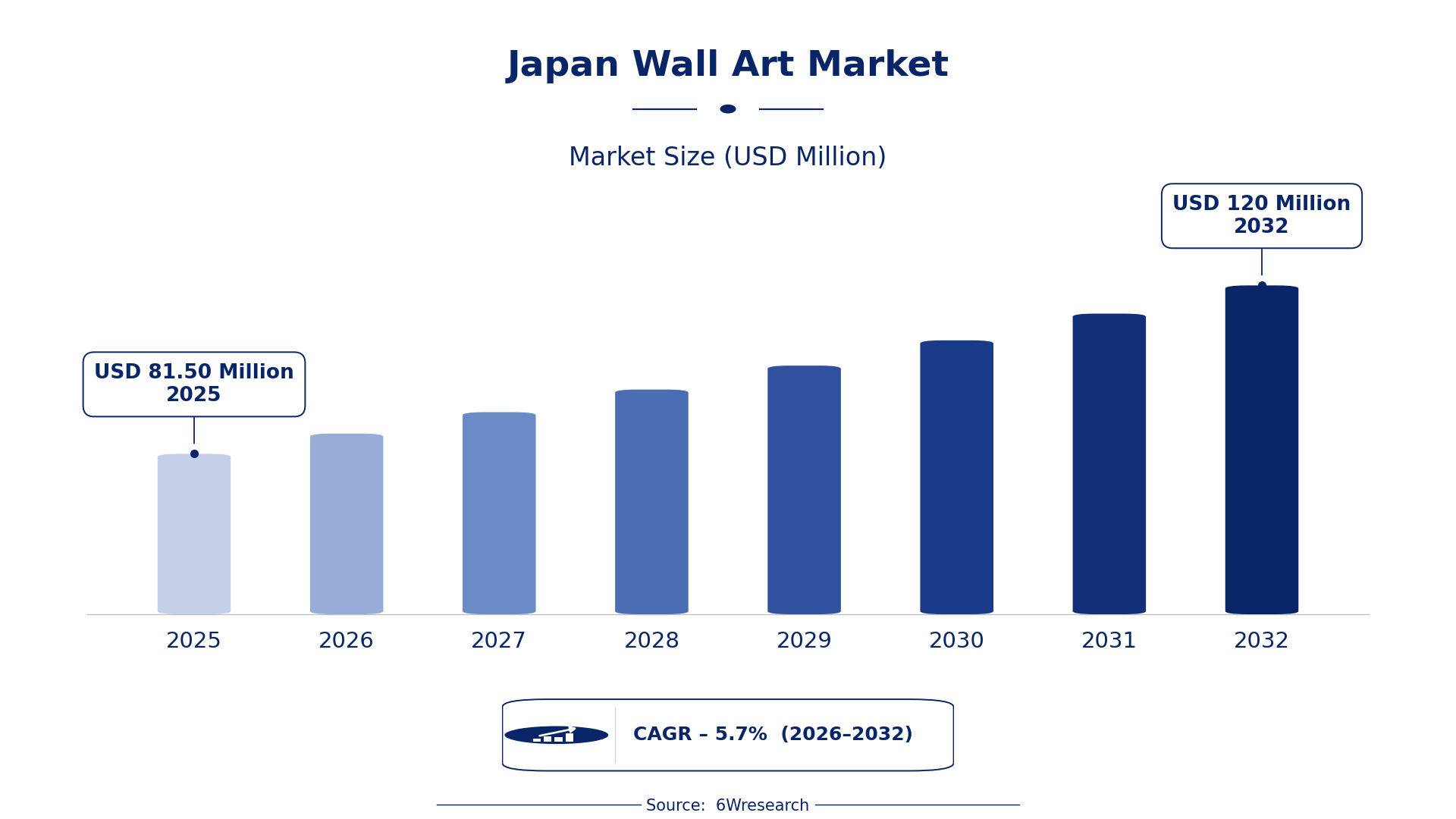
According to 6Wresearch internal database and industry insights, the Japan Wall Art Market was valued at USD 81.50 Million in 2025 and is projected to reach USD 120 Million by 2032, growing at a CAGR of approximately 5.7% during 2026–2032.
Japan Wall Art Market Highlights
| Report Metric | Details |
| Report Name | Japan Wall Art Market (2026-2032) |
| Market Size 2025 | USD 81.50 Million |
| Market Size 2032 | USD 120 Million |
| Absolute Growth 2025–2032 | USD 38.50 Million |
| CAGR 2026–2032 | 5.7% |
| Peak Annual Growth | 7.4% in 2032 |
| Forecast Period | 2026–2032 |
| Historical Data | 2022–2025 |
| Base Year | 2025 |
| Leading Type, 2025 | Wallpapers/Stickers/Wall Coverings (39% share) |
| Leading Application, 2025 | Residential (57% share) |
| Fastest-Growing Type | Hangings (8.4% CAGR) |
| Fastest-Growing Application | Commercial (7.5% CAGR) |
| Growing Sector | Residential |
| Key End Users | Homeowners, commercial property owners, interior designers |
Japan Wall Art Market Year-wise Growth Rate and Key Drivers (2022–2032)
This graph illustrates the annual growth rates of the market from 2022 to 2032, highlighting a steady upward trajectory and projected market expansion over the forecast period.
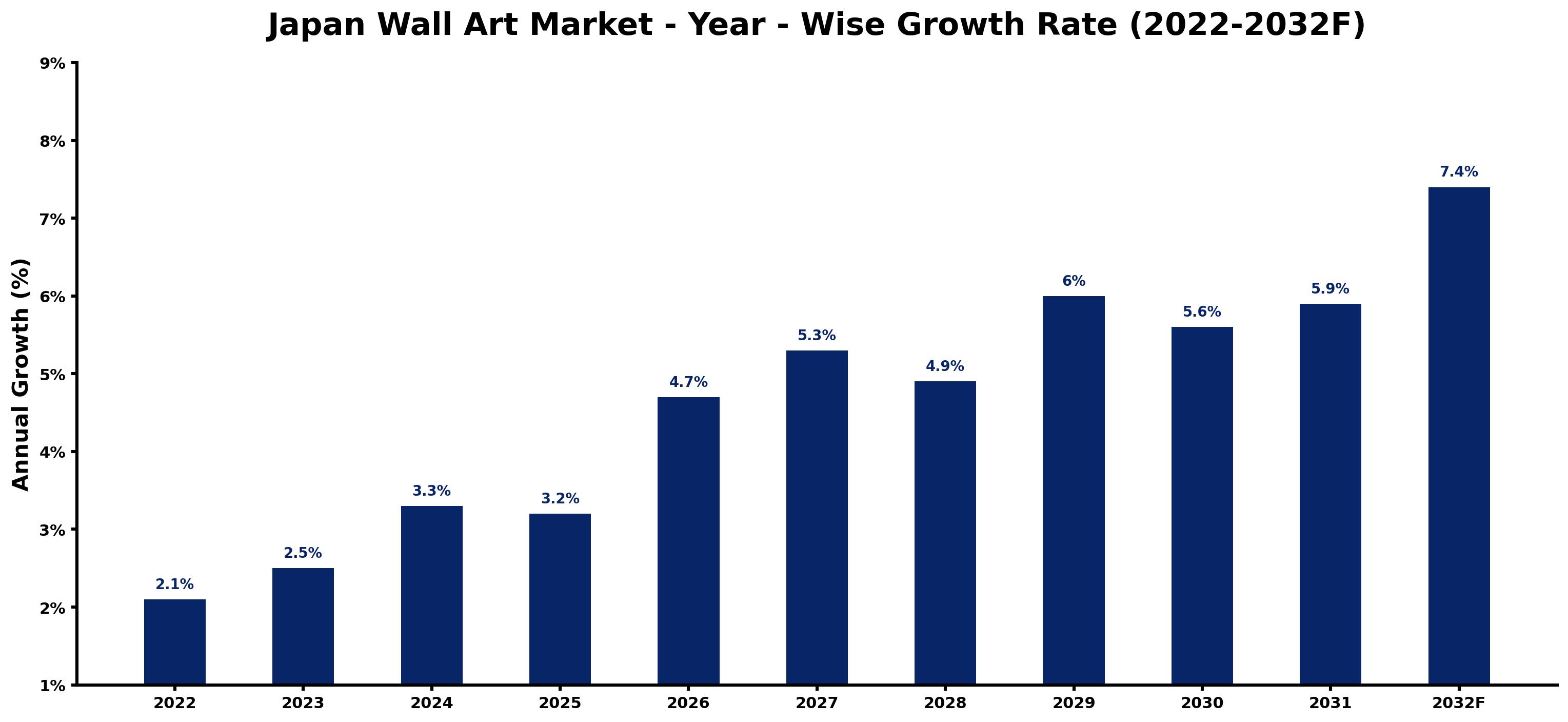
Each row of the following table gives one year's estimated growth and the event or demand shift that explains it.
| Year | Estimated Annual Growth (%) | Market Rationale |
| 2022 | 2.1 | The market showed steady activity with a notable number of households purchasing wall art. |
| 2023 | 2.5 | Growth accelerated as consumer interest in home decoration increased. |
| 2024 | 3.3 | Demand continued to rise, driven by urban interior design trends and events. |
| 2025 | 3.2 | Growth slowed slightly as market conditions stabilised after rapid expansion. |
| 2026 | 4.7 | A resurgence in demand is anticipated as commercial applications gain traction. |
| 2027 | 5.3 | Continued interest in wall art is expected, especially in urban areas. |
| 2028 | 4.9 | Growth is projected to moderate as the market adjusts to previous peaks. |
| 2029 | 6.0 | Demand is set to rise as commercial spaces increasingly adopt wall art. |
| 2030 | 5.6 | A slight slowdown is expected as market conditions normalise after rapid growth. |
| 2031 | 5.9 | Growth will accelerate again as consumer preferences shift towards unique designs. |
| 2032 | 7.4 | The market is projected to peak, driven by heightened interest in local art. |
Note: Market size estimations and growth projections presented in this report are based on 6Wresearch's proprietary forecasting methodology, utilizing the latest available industry data, government publications, and primary research inputs.
Japan Wall Art Market Synopsis
Wall art in Japan includes decorative elements such as wallpapers, hangings, and frameworks, primarily made from vinyl, fabric, and paper. The Japan Wall Art Market is growing due to increased consumer spending on home decoration, urbanisation, and a heightened interest in local art. In 2023, the government allocated 1 billion yen to support local artists, stimulating market growth and encouraging businesses to incorporate unique art into their designs.
Market Dynamics Impact Analysis (2026–2032)
| Factor | Type | Impact | Primary Segment Affected |
| Increasing consumer interest in home decoration | Driver | High | Residential |
| Growth in commercial applications of wall art | Driver | High | Commercial |
| Rising demand for unique decorative elements | Opportunity | High | Hangings |
| Expansion of local art initiatives | Opportunity | Medium | Commercial |
| High costs of quality materials | Restraint | High | Wallpapers/Stickers/Wall Coverings |
| Limited awareness of wall art benefits | Restraint | Medium | Hangings |
| Competition from alternative decoration methods | Challenge | High | Wallpapers/Stickers/Wall Coverings |
| Fluctuations in consumer spending | Challenge | Medium | Commercial |
Evaluation of Drivers in Japan Wall Art Market (2026–2032)
The factors lifting demand, and the evidence behind each, are summarised below.
| Drivers | Primary Segment Affected | Why It Matters (Evidence) |
| Rising consumer spending on home decoration | Residential | In 2022, the average Japanese household spent about 15,000 yen on wall decorations, driving demand for various wall art products. |
| Growth in commercial space enhancements | Commercial | Tokyo accounts for over 30% of national demand, with businesses increasingly investing in wall art for aesthetic appeal. |
| Popularity of local art | Hangings | The Tokyo Art Fair 2023 showcased over 500 artists, increasing interest in unique wall hangings. |
| Urbanisation trends | Wallpapers/Stickers/Wall Coverings | Urban areas are seeing a surge in wall art purchases, with over 10 million households involved. |
| Quality standards for wall coverings | Wallpapers/Stickers/Wall Coverings | Compliance with JIS Z 8401 ensures quality, boosting consumer confidence and purchases. |
Purchasing is picking up as consumers increasingly invest in home decoration, with the average household spending about 15,000 yen annually on wall art. Urbanisation trends are also driving demand, particularly in Tokyo, which accounts for over 30% of national purchases. The popularity of local art is rising, as evidenced by the Tokyo Art Fair 2023, showcasing over 500 artists and their creations. Compliance with JIS Z 8401 standards builds consumer confidence, encouraging more purchases. Urban areas are seeing a surge in wall art purchases, with over 10 million households involved, contributing to overall market growth.
Evaluation of Restraints in Japan Wall Art Market
The following restraints limit how fast demand can grow.
| Market Restraint | Primary Segment Affected | Why It Matters (Evidence) |
| High costs of quality materials | Wallpapers/Stickers/Wall Coverings | The average cost of quality wallpapers can be prohibitive, limiting purchases for some consumers. |
| Limited awareness of wall art benefits | Hangings | Many consumers remain unaware of the aesthetic and emotional benefits of wall art, hindering market growth. |
| Competition from alternative decoration methods | Wallpapers/Stickers/Wall Coverings | Consumers may choose cheaper alternatives, such as paint or other wall treatments, impacting sales. |
| Economic fluctuations affecting consumer spending | Commercial | Economic downturns can lead to reduced budgets for decoration in commercial spaces, slowing demand. |
| Supply chain disruptions | Hangings | Disruptions can delay product availability, affecting retailers' ability to meet consumer demand. |
Japan Wall Art Market Challenges
Strict regulations for wall coverings create lengthy approval processes, causing delays of up to six months for suppliers. Supply chain issues, particularly in sourcing materials like vinyl, have resulted in increased costs, with some producers facing a 20% rise in input prices. Intense competition in urban markets compels smaller suppliers to lower prices, impacting their profit margins by around 15%. Rapid advancements in design technology necessitate ongoing investments, straining budgets and delaying product launches for many manufacturers, which can take an additional three months for completion.
Trends in the Japan Wall Art Market
The shifts below are changing how Japan Wall Art Market products are bought and supplied.
- Shift towards Local Art: A growing preference for local art is emerging among consumers, particularly in urban areas like Tokyo. In 2023, the government allocated 1 billion yen to support local artists, encouraging unique wall art offerings.
- Transition from Traditional to Modern Designs: Consumers are moving away from traditional designs towards modern, minimalist aesthetics. This trend is particularly noticeable in urban residential areas, where contemporary wall art is increasingly popular.
- Emergence of Eco-Friendly Materials: The use of eco-friendly materials in wall art is rising, driven by consumer demand for sustainable products. In 2023, the GX Basic Policy aims for substantial public-private investment in decarbonisation, influencing material choices.
- Growth in Commercial Applications: Commercial spaces are increasingly incorporating wall art to enhance customer experience. In 2023, commercial applications accounted for a notable share of wall art usage, driven by urbanisation.
Investment Opportunities in the Japan Wall Art Market
The openings below show where demand in the Japan Wall Art Market is visible and how suppliers can enter.
- Timing for Unique Wall Art: With rising consumer interest in unique designs, there is a strong opportunity to supply custom wall art. Local artists in urban areas are particularly keen to collaborate, offering potential partnerships.
- Demand for Commercial Enhancements: Commercial spaces are actively seeking unique wall art to attract customers. Urban centres like Tokyo are ideal for suppliers looking to enter this growing market segment.
- Investment in Sustainable Products: Now is the time to invest in eco-friendly wall art materials, as consumers increasingly prefer sustainable options. Local art initiatives in urban areas support this shift.
- Expansion of Online Sales Channels: The growing trend towards online shopping presents an opportunity to supply wall art through digital platforms. Urban consumers are increasingly purchasing decorative items online.
Government Initiatives in the Japan Wall Art Market
The Industrial Standardization Act, enacted in 1949 and amended in 2019, governs product and test standards for wall coverings, ensuring quality and safety for consumers. This law helps maintain market integrity and consumer trust, benefiting producers and buyers alike.
In 2023, the Ministry of Economy, Trade and Industry launched a program with a budget of 1 billion yen to promote local artists and art installations. This initiative aims to increase the visibility of local art in commercial spaces, encouraging businesses to invest in wall art.
Future Insight of the Japan Wall Art Market
Buyers seeking unique wall art will drive demand for local artists and custom designs by 2032. The government's programme, which allocates 1 billion yen to support local artists, will enhance supplier offerings and expand buyer choices. Improvements in digital printing technology will enable more intricate designs, aligning with consumer preferences for personalization. Urban areas will evolve into vibrant art hubs, creating fresh opportunities for producers and enriching buyer experiences.
Market Segmentation Analysis
Japan Wall Art Market report covers a detailed analysis of the following market segments:
By Type – Wallpapers/Stickers/Wall Coverings Lead, Hangings Expected to Grow Fastest
According to Vasudha, AM at 6Wresearch, the largest type category in 2025 was Wallpapers/Stickers/Wall Coverings, at 39% of revenue. Wallpapers, stickers, and wall coverings dominate the market due to their widespread use in both residential and commercial settings, appealing to a broad range of buyers. For instance, over 10 million households in Japan purchased wall art, highlighting the extensive installed base of these products. The quickest growth will come from Hangings, forecast to expand at a CAGR of 8.4% between 2026 and 2032. Hangings are experiencing rapid growth as they serve as popular decorative pieces in living spaces and offices, reflecting current interior design trends. The Tokyo Art Fair 2023 showcased over 500 artists, indicating a rising interest in unique hanging art. Suppliers should focus on expanding their offerings in hangings to capitalise on this growing trend.
By Application – Residential Leads, Commercial Expected to Grow Fastest
In 2025, Residential led the application split with a 57% share. The residential sector leads the market, accounting for 60% of wall art usage as homeowners seek to improve their living spaces. With over 10 million households purchasing wall art, this segment reflects a strong consumer commitment to home decoration. Over 2026–2032, Commercial is expected to post the fastest growth, at a CAGR of 7.5%. The commercial sector is witnessing rapid growth, especially in urban areas where businesses are investing in wall art to enhance their environments. The government's 2023 programme to promote local artists in commercial spaces is expected to accelerate this trend. Suppliers should prioritise the commercial sector to take advantage of the rising demand for wall art in business settings.
Key Attractiveness of the Report
- 10 Years of Market Numbers
- Historical Data Starting from 2022 to 2025
- Base Year 2025
- Forecast Data until 2032
- Key Performance Indicators Impacting the Market
- Major Upcoming Developments and Projects
Key Highlights of the Report:
- Japan Wall Art Market Outlook
- Market Size of Japan Wall Art Market, 2025
- Forecast of Japan Wall Art Market, 2032
- Historical Data and Forecast of Japan Wall Art Revenues & Volume for the Period 2022-2032
- Japan Wall Art Market Trend Evolution
- Japan Wall Art Market Drivers and Challenges
- Japan Wall Art Price Trends
- Japan Wall Art Porter's Five Forces
- Japan Wall Art Industry Life Cycle
- Historical Data and Forecast of Japan Wall Art Market Revenues & Volume By Type for the Period 2022-2032
- Historical Data and Forecast of Japan Wall Art Market Revenues & Volume By Wallpapers/Stickers/Wall Coverings for the Period 2022-2032
- Historical Data and Forecast of Japan Wall Art Market Revenues & Volume By Hangings for the Period 2022-2032
- Historical Data and Forecast of Japan Wall Art Market Revenues & Volume By Frameworks for the Period 2022-2032
- Historical Data and Forecast of Japan Wall Art Market Revenues & Volume By Dcor Shelves for the Period 2022-2032
- Historical Data and Forecast of Japan Wall Art Market Revenues & Volume By Others for the Period 2022-2032
- Historical Data and Forecast of Japan Wall Art Market Revenues & Volume By Application for the Period 2022-2032
- Historical Data and Forecast of Japan Wall Art Market Revenues & Volume By Residential for the Period 2022-2032
- Historical Data and Forecast of Japan Wall Art Market Revenues & Volume By Commercial for the Period 2022-2032
- Japan Wall Art Import Export Trade Statistics
- Market Opportunity Assessment By Type
- Market Opportunity Assessment By Application
- Japan Wall Art Top Companies Market Share
- Japan Wall Art Competitive Benchmarking By Technical and Operational Parameters
- Japan Wall Art Company Profiles
- Japan Wall Art Key Strategic Recommendations
Market Covered
The study includes the following segmentation.
By Type
- Wallpapers/Stickers/Wall Coverings
- Hangings
- Frameworks
- Dcor Shelves
- Others
By Application
- Residential
- Commercial































