Japan Walnut Based Spreads Market Size & Growth Rate
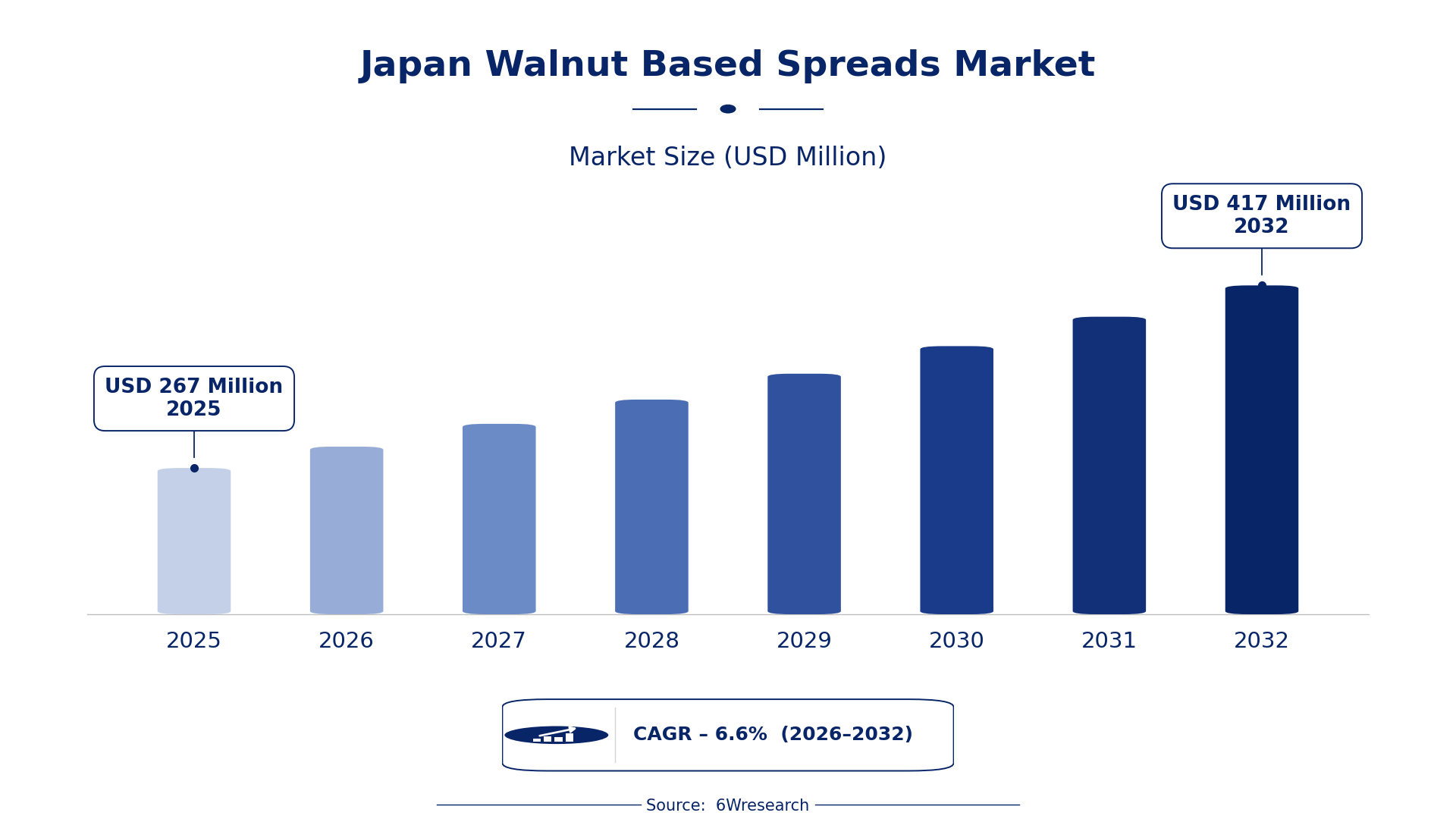
According to 6Wresearch internal database and industry insights, the Japan Walnut Based Spreads Market was valued at USD 267 Million in 2025 and is projected to reach USD 417 Million by 2032, growing at a CAGR of approximately 6.6% during 2026–2032.
Japan Walnut Based Spreads Market Highlights
| Report Metric | Details |
| Report Name | Japan Walnut Based Spreads Market (2026-2032) |
| Market Size 2025 | USD 267 Million |
| Market Size 2032 | USD 417 Million |
| Absolute Growth 2025–2032 | USD 150 Million |
| CAGR 2026–2032 | 6.6% |
| Peak Annual Growth | 7.4% in 2028 |
| Forecast Period | 2026–2032 |
| Historical Data | 2022–2025 |
| Base Year | 2025 |
| Leading Type, 2025 | Walnut Based Spread (49% share) |
| Leading Application, 2025 | Supermarket (47% share) |
| Fastest-Growing Type | Almond Based Spread (9.3% CAGR) |
| Fastest-Growing Application | Online Store (9.2% CAGR) |
| Growing Sector | Health Food Products |
| Key End Users | Health-conscious consumers, specialty food markets, urban retailers, online shoppers |
Japan Walnut Based Spreads Market Year-wise Growth Rate and Key Drivers (2022–2032)
This graph illustrates the annual growth rates of the market from 2022 to 2032, highlighting a steady upward trajectory and projected market expansion over the forecast period.
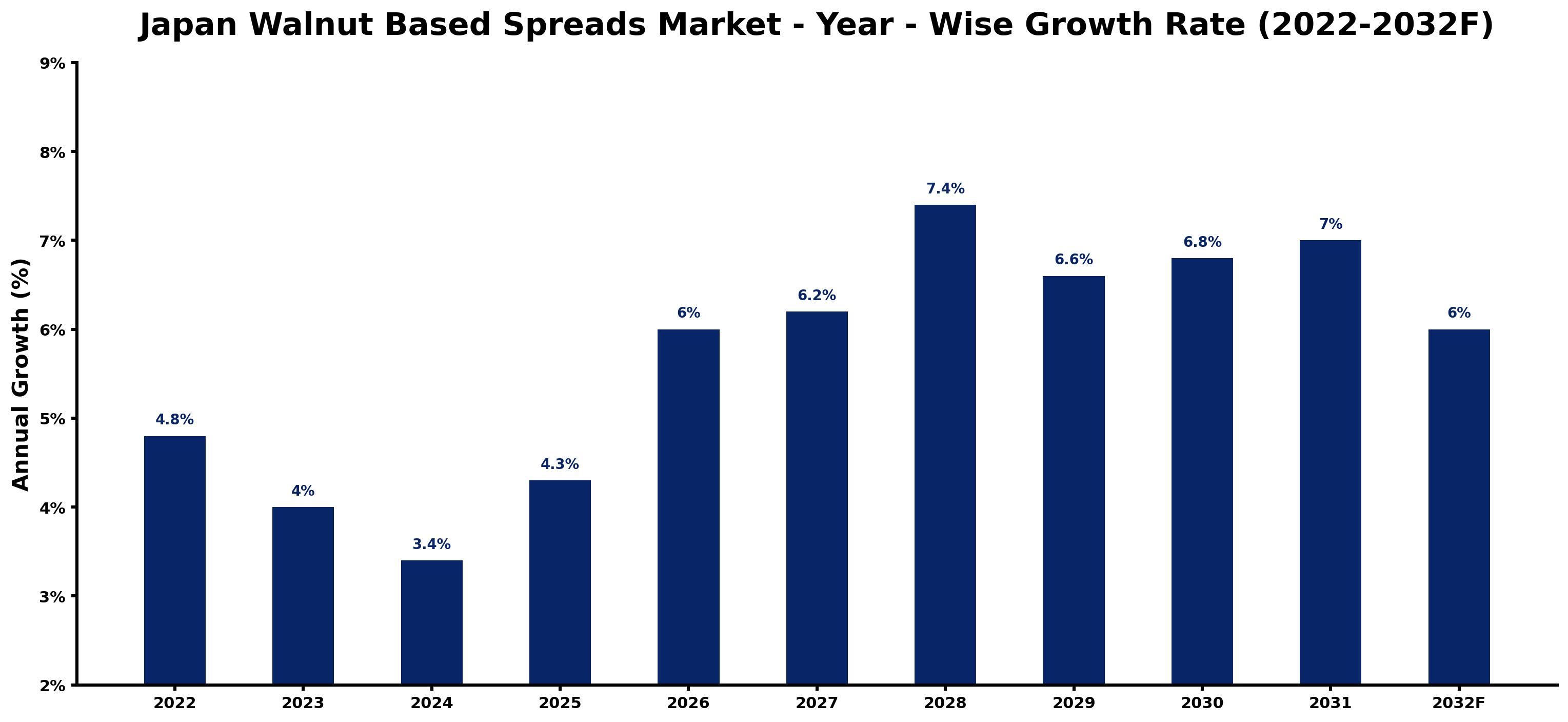
The table below sets out the estimated growth rate for each year and the main factor behind it.
| Year | Estimated Annual Growth (%) | Market Rationale |
| 2022 | 4.8 | The market experienced strong consumer interest in healthy spreads and gourmet food options. |
| 2023 | 4.0 | Demand growth slowed as consumers adjusted to rising prices and economic uncertainties. |
| 2024 | 3.4 | Market growth continued to decelerate due to increased competition from alternative spreads. |
| 2025 | 4.3 | A resurgence in health trends boosted walnut spread consumption among urban buyers. |
| 2026 | 6.0 | The introduction of new product varieties is expected to stimulate higher sales. |
| 2027 | 6.2 | Consumer awareness of health benefits is expected to drive increased purchases of walnut spreads. |
| 2028 | 7.4 | Peak growth is anticipated as local production initiatives gain traction and attract buyers. |
| 2029 | 6.6 | Growth will moderate as market saturation begins to affect demand. |
| 2030 | 6.8 | Rising health consciousness among consumers will continue to support walnut spread sales. |
| 2031 | 7.0 | Innovations in product formulations are expected to sustain consumer interest and purchases. |
| 2032 | 6.0 | Demand will stabilise as market maturity sets in, with steady consumer preferences. |
Note: Market size estimations and growth projections presented in this report are based on 6Wresearch's proprietary forecasting methodology, utilizing the latest available industry data, government publications, and primary research inputs.
Japan Walnut Based Spreads Market Synopsis
Walnut based spreads are creamy food products made from ground walnuts, often blended with oils and sweeteners. They are primarily used as spreads, in baking, and in various culinary dishes. The Japan Walnut Based Spreads Market is valued at approximately 5 billion yen, driven by a growing consumer base and increasing health awareness. The Kanto region leads in consumption, while online sales surged by 15% last year, reflecting a shift towards specialty food products.
Market Dynamics Impact Analysis (2026–2032)
| Factor | Type | Impact | Primary Segment Affected |
| Growing health consciousness among consumers | Driver | High | Walnut Based Spread |
| Expansion of online retail channels | Driver | High | Walnut Based Spread |
| Rising demand for gourmet and health-oriented products | Opportunity | High | Walnut Based Spread |
| Increasing interest in local walnut production | Opportunity | High | Walnut Based Spread |
| Competition from alternative nut spreads | Restraint | Medium | Walnut Based Spread |
| Price sensitivity among consumers due to economic conditions | Restraint | Medium | Walnut Based Spread |
| Supply chain disruptions affecting walnut availability | Challenge | High | Walnut Based Spread |
| Fluctuating raw material prices impacting production costs | Challenge | High | Walnut Based Spread |
Evaluation of Drivers in Japan Walnut Based Spreads Market (2026–2032)
The factors lifting demand, and the evidence behind each, are summarised below.
| Drivers | Primary Segment Affected | Why It Matters (Evidence) |
| Health benefits associated with walnut consumption | Walnut Based Spread | The increasing awareness of walnuts' nutritional value has raised demand among health-conscious consumers. |
| Rise in gourmet food trends | Walnut Based Spread | The expansion of specialty food markets has led to higher sales of walnut based spreads in urban areas. |
| Increased online shopping for specialty foods | Walnut Based Spread | Online sales have increased by 15%, attracting new buyers seeking unique food products. |
| Local production initiatives supported by government programs | Walnut Based Spread | The Ministry of Agriculture's program aims to boost walnut cultivation by 20% by 2025. |
| Diverse product offerings appealing to various consumer preferences | Walnut Based Spread | Availability of different jar sizes, such as 200g and 400g, caters to diverse consumer needs. |
A wider customer base explains much of the growth, as health-conscious consumers increasingly seek walnut based spreads for their nutritional benefits. The Kanto region, being the largest consumer area, drives demand, with urban buyers favouring gourmet options. Online sales surged by 15% last year, reflecting a shift towards specialty food products. The introduction of diverse product offerings, including various jar sizes, caters to a broader audience, encouraging overall purchasing activity.
Evaluation of Restraints in Japan Walnut Based Spreads Market
Below are the constraints most often cited by buyers and suppliers, with the segment each affects.
| Market Restraint | Primary Segment Affected | Why It Matters (Evidence) |
| Intense competition from alternative nut spreads | Walnut Based Spread | The popularity of almond and peanut based spreads limits walnut spread market share. |
| Economic pressures leading to price sensitivity | Walnut Based Spread | Consumers are becoming more cautious with spending, affecting premium product purchases. |
| Supply chain disruptions impacting walnut availability | Walnut Based Spread | Logistical challenges have caused delays in walnut sourcing, impacting production schedules. |
| Fluctuating prices of raw materials | Walnut Based Spread | Rising costs of walnuts and oils can lead to increased retail prices, deterring buyers. |
| Limited consumer awareness of walnut spread benefits | Walnut Based Spread | Some consumers remain unaware of the health advantages, affecting overall demand. |
Japan Walnut Based Spreads Market Challenges
Retailers struggle to find skilled workers for walnut processing, leading to production delays that hinder stock availability for consumers. Competition from alternative spreads forces manufacturers to lower prices, which can erode profit margins for suppliers. Increased raw walnut costs have raised prices by 15%, making spreads less affordable and limiting purchasing power for buyers. Adhering to ISO 22000 standards requires extensive quality checks, which can prolong product development timelines and inflate costs for new entrants in the market.
Trends in the Japan Walnut Based Spreads Market
These developments are changing demand patterns in the Japan Walnut Based Spreads Market.
- Shift towards Online Shopping for Specialty Foods: Consumer purchasing habits are evolving, with online sales of walnut based spreads increasing by 15% last year. This trend highlights the growing preference for convenience among younger demographics.
- Growing Preference for Health-Conscious Products: Health-conscious consumers are prioritising walnut based spreads due to their nutritional benefits. This shift is particularly strong in urban areas, where specialty food markets are rapidly expanding.
- Increase in Local Walnut Production Initiatives: The Ministry of Agriculture's program aims to boost walnut cultivation by 20% by 2025. This initiative supports local farmers and strengthens the supply chain for walnut based spreads.
- Rising Popularity of Gourmet Food Products: Consumers are gravitating towards gourmet walnut based spreads, motivated by a desire for unique flavours and premium quality. This trend is especially strong in metropolitan regions.
Investment Opportunities in the Japan Walnut Based Spreads Market
Where to invest in the Japan Walnut Based Spreads Market: the main openings are set out below.
- Health-Conscious Consumers Seeking Nutritious Options: Urban health-focused consumers are increasingly interested in walnut based spreads, with the market valued at approximately 5 billion yen. Suppliers can target this demographic through tailored marketing campaigns.
- Expansion of Online Retail Channels: With online sales increasing by 15%, there is a strong opportunity for suppliers to improve their online presence. Collaborating with e-commerce platforms can facilitate market entry.
- Local Farmers Looking for Sustainable Practices: The government initiative to boost walnut cultivation provides an opportunity for suppliers to partner with local farmers. Investing in sustainable practices can enhance product appeal.
- Growing Specialty Food Stores in Urban Areas: As more health food stores feature walnut based spreads, suppliers can expand their distribution networks. Engaging with health food retailers can drive sales.
Government Initiatives in the Japan Walnut Based Spreads Market
The GX Basic Policy, adopted in 2023, aims for approximately JPY 150 trillion in public-private decarbonisation investment over the next decade, enhancing sustainability in walnut production. Additionally, the Industrial Standardization Act governs the quality and safety standards for walnut based spreads, ensuring compliance with regulations that protect consumers and promote fair competition among producers.
In 2023, the Ministry of Agriculture launched a programme to increase walnut cultivation by 20% by 2025, supporting local farmers and producers. The Japan Nut Association plays a crucial role in promoting walnut products, facilitating initiatives that enhance market visibility and consumer awareness.
Future Insight of the Japan Walnut Based Spreads Market
Investment in local walnut cultivation will increase by 20% by 2025, strengthening the supply chain for producers. Online sales of walnut based spreads have surged by 15% in the last year, driving consumer demand and market activity. Adoption of ISO 22000 standards will enhance food safety and quality, benefiting both buyers and suppliers. As convenience stores account for 30% of sales, expanding distribution networks will improve accessibility for consumers.
Market Segmentation Analysis
Japan Walnut Based Spreads Market report covers a detailed analysis of the following market segments:
By Type – Walnut Based Spread Leads, Almond Based Spread Expected to Grow Fastest
According to Vasudha, AM at 6Wresearch, in 2025, Walnut Based Spread led the type split with a 49% share. Walnut based spreads hold the largest share due to their specific marketing towards health-conscious consumers who appreciate the nutritional benefits of walnuts. The Kanto region, with its dense population and culinary appreciation, significantly contributes to the demand for these spreads. The quickest growth will come from Almond Based Spread, forecast to expand at a CAGR of 9.3% between 2026 and 2032. Almond based spreads are experiencing rapid growth as consumers increasingly seek alternatives perceived as healthier, which is reflected in the rising popularity of these products. The 15% increase in online sales of walnut based spreads indicates a broader trend towards nut-based products, reinforcing walnut's market presence. Suppliers should explore opportunities to expand their offerings to include diverse nut spreads in response to shifting consumer preferences.
By Application – Supermarket Leads, Online Store Expected to Grow Fastest
Supermarket accounted for 47% of the market by application in 2025. Supermarkets dominate the walnut based spreads market as they serve as the primary retail channel for consumers seeking a variety of options. With an average price of 800 yen per jar, supermarkets effectively cater to the purchasing power of the Japanese population. Online Store is projected to grow fastest, at a CAGR of 9.2% during 2026–2032. Online stores are the fastest-growing channel, reflecting a shift in consumer behaviour towards convenient shopping options for specialty food products. The increase in online sales by 15% highlights the potential for further growth in this segment. Suppliers must invest in online presence to capture the growing demand for walnut based spreads in digital marketplaces.
Key Attractiveness of the Report
- 10 Years of Market Numbers
- Historical Data Starting from 2022 to 2025
- Base Year 2025
- Forecast Data until 2032
- Key Performance Indicators Impacting the Market
- Major Upcoming Developments and Projects
Key Highlights of the Report:
- Japan Walnut Based Spreads Market Outlook
- Market Size of Japan Walnut Based Spreads Market, 2025
- Forecast of Japan Walnut Based Spreads Market, 2032
- Historical Data and Forecast of Japan Walnut Based Spreads Revenues & Volume for the Period 2022-2032
- Japan Walnut Based Spreads Market Trend Evolution
- Japan Walnut Based Spreads Market Drivers and Challenges
- Japan Walnut Based Spreads Price Trends
- Japan Walnut Based Spreads Porter's Five Forces
- Japan Walnut Based Spreads Industry Life Cycle
- Historical Data and Forecast of Japan Walnut Based Spreads Market Revenues & Volume By Type for the Period 2022-2032
- Historical Data and Forecast of Japan Walnut Based Spreads Market Revenues & Volume By Peanut Based Spread for the Period 2022-2032
- Historical Data and Forecast of Japan Walnut Based Spreads Market Revenues & Volume By Almond Based Spread for the Period 2022-2032
- Historical Data and Forecast of Japan Walnut Based Spreads Market Revenues & Volume By Walnut Based Spread for the Period 2022-2032
- Historical Data and Forecast of Japan Walnut Based Spreads Market Revenues & Volume By Cashews Based Spread for the Period 2022-2032
- Historical Data and Forecast of Japan Walnut Based Spreads Market Revenues & Volume By Other for the Period 2022-2032
- Historical Data and Forecast of Japan Walnut Based Spreads Market Revenues & Volume By Application for the Period 2022-2032
- Historical Data and Forecast of Japan Walnut Based Spreads Market Revenues & Volume By Supermarket for the Period 2022-2032
- Historical Data and Forecast of Japan Walnut Based Spreads Market Revenues & Volume By Convenience Store for the Period 2022-2032
- Historical Data and Forecast of Japan Walnut Based Spreads Market Revenues & Volume By Online Store for the Period 2022-2032
- Historical Data and Forecast of Japan Walnut Based Spreads Market Revenues & Volume By Other for the Period 2022-2032
- Japan Walnut Based Spreads Import Export Trade Statistics
- Market Opportunity Assessment By Type
- Market Opportunity Assessment By Application
- Japan Walnut Based Spreads Top Companies Market Share
- Japan Walnut Based Spreads Competitive Benchmarking By Technical and Operational Parameters
- Japan Walnut Based Spreads Company Profiles
- Japan Walnut Based Spreads Key Strategic Recommendations
Market Covered
The study includes the following segmentation.
By Type
- Peanut Based Spread
- Almond Based Spread
- Walnut Based Spread
- Cashews Based Spread
- Other
By Application
- Supermarket
- Convenience Store
- Online Store
- Other






































