Japan Wearable Diabetes Devices Market Size & Growth Rate
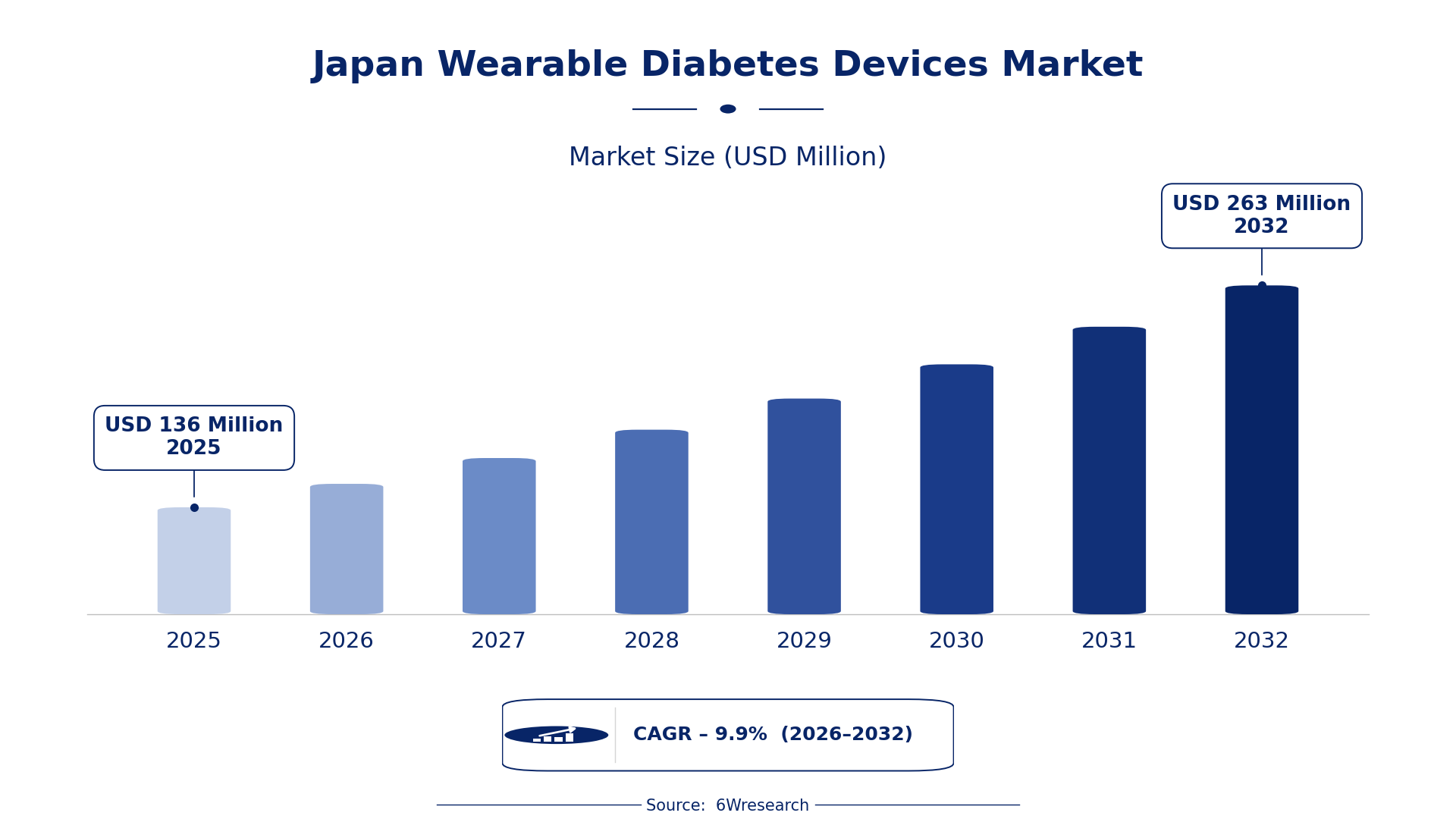
According to 6Wresearch internal database and industry insights, the Japan Wearable Diabetes Devices Market was valued at USD 136 Million in 2025 and is projected to reach USD 263 Million by 2032, growing at a CAGR of approximately 9.9% during 2026–2032.
Japan Wearable Diabetes Devices Market Highlights
| Report Metric | Details |
| Report Name | Japan Wearable Diabetes Devices Market (2026-2032) |
| Market Size 2025 | USD 136 Million |
| Market Size 2032 | USD 263 Million |
| Absolute Growth 2025–2032 | USD 127 Million |
| CAGR 2026–2032 | 9.9% |
| Peak Annual Growth | 12.2% in 2026 |
| Forecast Period | 2026–2032 |
| Historical Data | 2022–2025 |
| Base Year | 2025 |
| Leading Device, 2025 | Continuous Glucose Monitoring Devices (66% share) |
| Leading Type, 2025 | Non-Invasive Glucose Monitoring Devices (61% share) |
| Fastest-Growing Device | Insulin Pumps (11.9% CAGR) |
| Fastest-Growing Type | Invasive Glucose Monitoring Devices (12.9% CAGR) |
| Growing Sector | Healthcare |
| Key End Users | Healthcare providers, diabetes patients, hospitals, research institutions |
Japan Wearable Diabetes Devices Market Year-wise Growth Rate and Key Drivers (2022–2032)
This graph illustrates the annual growth rates of the market from 2022 to 2032, highlighting a steady upward trajectory and projected market expansion over the forecast period.
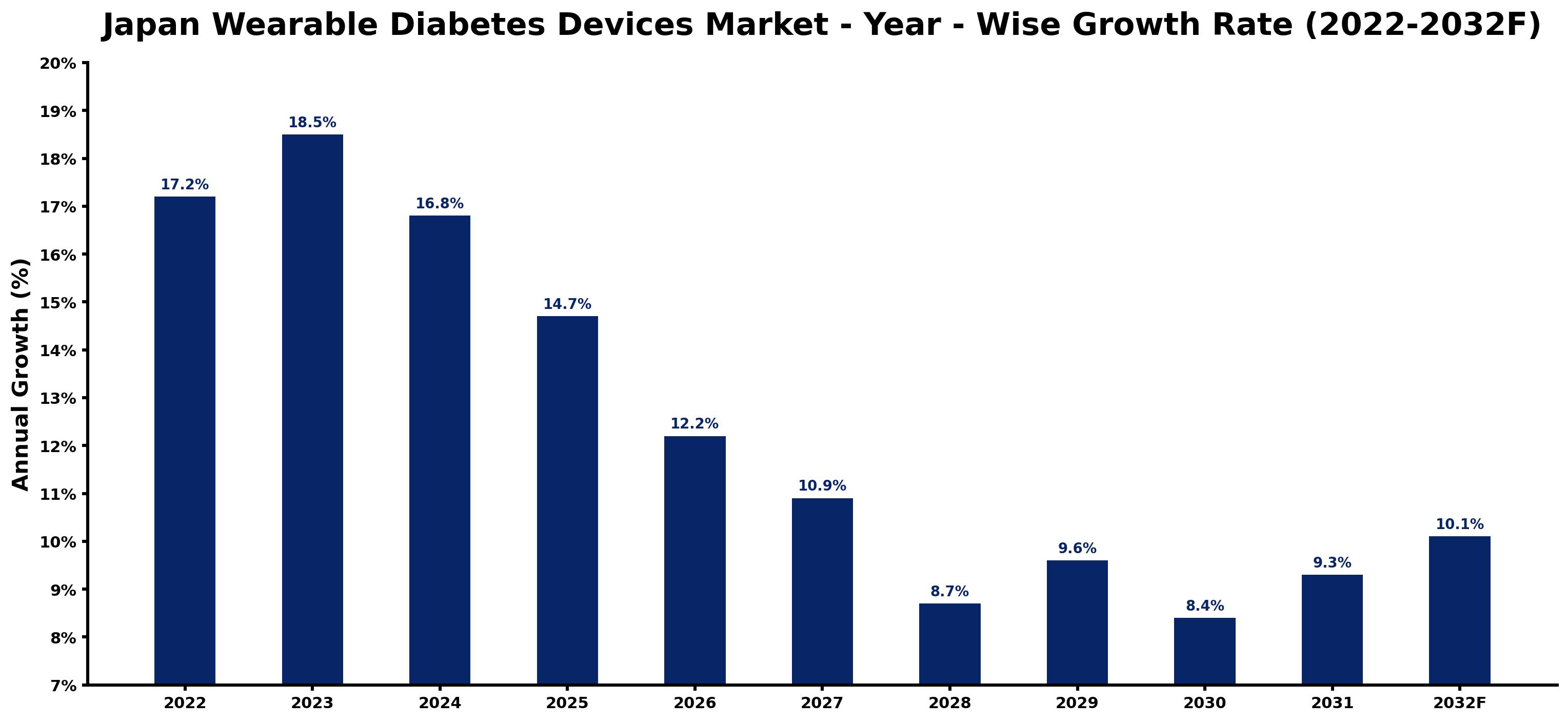
Each row of the following table gives one year's estimated growth and the event or demand shift that explains it.
| Year | Estimated Annual Growth (%) | Market Rationale |
| 2022 | 17.2 | The market experienced growth due to rising diabetes awareness and technology adoption. |
| 2023 | 18.5 | Demand surged as continuous glucose monitoring devices gained traction among patients. |
| 2024 | 16.8 | Growth slowed as market saturation began to affect new device sales. |
| 2025 | 14.7 | Demand continued to rise, albeit at a slower pace, as healthcare providers expanded their offerings. |
| 2026 | 12.2 | The market is projected to stabilise as competition increases among device manufacturers. |
| 2027 | 10.9 | Growth is expected to slow further as the market matures and consumer choices diversify. |
| 2028 | 8.7 | The market will see a continued slowdown as buyers become more selective in device purchases. |
| 2029 | 9.6 | Demand is anticipated to increase again as new technologies emerge in diabetes management. |
| 2030 | 8.4 | Growth is expected to decelerate as the market reaches a more stable phase. |
| 2031 | 9.3 | Demand is projected to rise as healthcare systems enhance diabetes management strategies. |
| 2032 | 10.1 | The market will continue to grow steadily with advancements in wearable technology. |
Note: Market size estimations and growth projections presented in this report are based on 6Wresearch's proprietary forecasting methodology, utilizing the latest available industry data, government publications, and primary research inputs.
Japan Wearable Diabetes Devices Market Synopsis
Wearable diabetes devices are advanced technologies that monitor blood glucose levels and administer insulin, utilising sensors and wireless communication. The primary users include diabetes patients and healthcare providers, with approximately 7 million diabetes patients in Japan driving demand. Market growth is supported by the government's 2023 initiative promoting diabetes management technologies, which encourages further adoption of these devices and improves patient care.
Market Dynamics Impact Analysis (2026–2032)
| Factor | Type | Impact | Primary Segment Affected |
| Rising diabetes prevalence drives demand for monitoring solutions. | Driver | High | Continuous Glucose Monitoring Devices |
| Government initiatives promote awareness and accessibility of diabetes management technologies. | Driver | High | Insulin Pumps |
| Growing demand for continuous glucose monitoring devices presents investment opportunities. | Opportunity | High | Continuous Glucose Monitoring Devices |
| Emerging non-invasive glucose monitoring technologies are gaining interest from healthcare providers. | Opportunity | Medium | Non-Invasive Glucose Monitoring Devices |
| Market saturation limits growth potential for existing products. | Restraint | High | Insulin Pumps |
| High costs associated with advanced wearable devices restrict access for some patients. | Restraint | Medium | Continuous Glucose Monitoring Devices |
| Technological advancements require continuous investment from manufacturers. | Challenge | High | Insulin Pumps |
| Competition among manufacturers may lead to price wars, affecting profitability. | Challenge | Medium | Continuous Glucose Monitoring Devices |
Evaluation of Drivers in Japan Wearable Diabetes Devices Market (2026–2032)
Demand rests on the following drivers, each shown with the segment it touches most.
| Drivers | Primary Segment Affected | Why It Matters (Evidence) |
| Increasing diabetes prevalence necessitates effective monitoring solutions. | Continuous Glucose Monitoring Devices | Approximately 7 million diabetes patients in Japan require continuous monitoring. |
| Government initiatives are promoting diabetes management awareness. | Insulin Pumps | The Ministry of Health, Labour and Welfare supports diabetes education programs, reaching thousands of patients. |
| Technological advancements are creating new device capabilities. | Continuous Glucose Monitoring Devices | In 2023, over 500,000 continuous glucose monitors were sold in Japan, reflecting heightened demand. |
| Healthcare providers are expanding their offerings to include advanced devices. | Insulin Pumps | Insulin pumps are widely used in hospitals across urban areas like Osaka, improving patient management. |
| Research into non-invasive monitoring technologies is increasing. | Non-Invasive Glucose Monitoring Devices | Multiple universities in Japan are conducting research on these devices, potentially leading to new solutions. |
Behind the steady rise in orders sits a growing diabetes patient population, with approximately 7 million individuals requiring monitoring solutions. Five years ago, awareness of diabetes management technologies was limited, but now, accessibility has improved significantly. In 2023, over 500,000 continuous glucose monitors were sold, reflecting heightened demand. Hospitals in urban areas have widely adopted insulin pumps, further driving orders. Research into non-invasive monitoring technologies is gaining traction, with multiple universities exploring new solutions, which will likely expand the market further.
Evaluation of Restraints in Japan Wearable Diabetes Devices Market
These are the pressures that could keep growth below its potential.
| Market Restraint | Primary Segment Affected | Why It Matters (Evidence) |
| Market saturation limits growth potential for existing products. | Insulin Pumps | As the market matures, fewer new users are adopting these devices, impacting sales. |
| High costs associated with advanced wearable devices restrict access for some patients. | Continuous Glucose Monitoring Devices | Patients may find it difficult to afford the latest technologies, limiting uptake. |
| Regulatory hurdles can delay the introduction of new devices. | Non-Invasive Glucose Monitoring Devices | Manufacturers face lengthy approval processes that can slow market entry. |
| Limited awareness of non-invasive options among healthcare providers affects adoption. | Non-Invasive Glucose Monitoring Devices | Many providers continue to rely on traditional methods, hindering growth. |
| Intense competition among manufacturers can lead to pricing pressures. | Continuous Glucose Monitoring Devices | As companies compete for market share, profit margins may decline. |
Japan Wearable Diabetes Devices Market Challenges
Regulatory hurdles from the Pharmaceuticals and Medical Devices Agency lead to prolonged approval times for new wearable devices, costing suppliers an estimated 15% increase in development expenses. Supply chain issues, particularly in acquiring critical components like sensors, have caused product shortages, delaying hospitals' ability to provide timely diabetes care to patients. Technological advancements often exceed existing standards, creating confusion for buyers regarding compliance with the Japan Diabetes Society's guidelines, which can stall investment decisions. High costs for advanced wearable diabetes technologies limit access for many patients, with around 7 million individuals facing affordability issues.
Trends in the Japan Wearable Diabetes Devices Market
Four trends stand out in the Japan Wearable Diabetes Devices Market.
- Shift from Traditional to Wearable Monitoring: In 2023, the Japanese government launched a program to promote diabetes management technologies, resulting in a rise in wearable device adoption. Continuous glucose monitoring devices are now preferred over traditional methods, with sales exceeding 500,000 units.
- Emergence of Non-Invasive Technologies: Research into non-invasive glucose monitoring devices is gaining momentum, with multiple universities in Japan actively developing new solutions. This trend is expected to reshape diabetes management, making monitoring more accessible and comfortable for patients.
- Increased Integration of Technology in Diabetes Care: Healthcare providers are increasingly integrating advanced technologies into diabetes care. For instance, hospitals in urban areas are adopting insulin pumps, which improve patient management and treatment outcomes.
- Growing Demand for Real-Time Monitoring: The rising prevalence of diabetes is driving demand for real-time monitoring solutions. Continuous glucose monitoring devices are becoming essential tools for effective diabetes management, with a notable increase in their use among Type 1 diabetes patients.
Investment Opportunities in the Japan Wearable Diabetes Devices Market
The openings below show where demand in the Japan Wearable Diabetes Devices Market is visible and how suppliers can enter.
- Healthcare Providers Seeking Advanced Solutions: Healthcare providers are increasingly looking for advanced diabetes management solutions, with a market gap for new devices. The Tokyo region, with its high concentration of diabetes care facilities, presents a prime opportunity for suppliers.
- Investment in Non-Invasive Technologies: With ongoing research into non-invasive glucose monitoring devices, there is a clear opportunity for investment. Universities in Japan are exploring these technologies, which could lead to new product offerings and increased market share.
- Timing for New Product Launches: Now is an opportune time for launching new diabetes management products, given the government's push for technology adoption. Suppliers can benefit by partnering with healthcare providers in urban areas.
- Entry through Local Partnerships: Establishing joint ventures with local healthcare facilities can facilitate market entry. Collaborating with diabetes care providers in regions like Tokyo can enhance distribution and acceptance of new devices.
Government Initiatives in the Japan Wearable Diabetes Devices Market
The regulatory framework for wearable diabetes devices in Japan is shaped by several key laws. The Industrial Standardization Act, established in 1949 and amended in 2019, governs product standards, ensuring quality and safety. The PMD Act, renamed in 2014, regulates the approval and manufacture of medical devices, including wearable diabetes technologies. These laws ensure that products meet rigorous standards before reaching consumers, benefiting both producers and patients.
Healthcare providers rely on the PMDA's review process to ensure that wearable diabetes devices meet safety and efficacy standards. The Pharmaceuticals and Medical Devices Agency monitors post-market safety and provides guidance on device usage. This oversight ensures that healthcare providers can confidently recommend approved devices to patients, improving diabetes management and health outcomes.
Future Insight of the Japan Wearable Diabetes Devices Market
Advancements in wearable diabetes monitoring technology will reshape demand by 2032, driven by breakthroughs in research from universities focusing on non-invasive solutions. The government's diabetes management program will streamline the integration of these devices into healthcare, enhancing patient outcomes. By 2030, the goal to reduce diabetes prevalence by 25% will boost the adoption of wearable devices nationwide. The evolution of the ISO 15197 standard will improve product accuracy and reliability, benefiting both buyers and suppliers.
Market Segmentation Analysis
Japan Wearable Diabetes Devices Market report covers a detailed analysis of the following market segments:
By Device – Continuous Glucose Monitoring Devices Lead, Insulin Pumps Expected to Grow Fastest
According to Sumit Sagar, AM at 6Wresearch, Continuous Glucose Monitoring Devices accounted for 66% of the market by device in 2025. Continuous glucose monitoring devices hold the largest share as they are essential for real-time glucose tracking, which is critical for effective diabetes management. In 2022, over 500,000 units were sold, highlighting their widespread use among patients who require consistent monitoring. Insulin Pumps are set to record the highest CAGR in this split, 11.9% over 2026–2032. Insulin pumps are experiencing rapid growth due to their effectiveness in delivering insulin therapy, particularly in urban hospitals that serve a high volume of diabetes patients. This trend is expected to continue as healthcare providers increasingly incorporate these devices into diabetes care protocols. Suppliers should focus on enhancing the availability of insulin pumps to align with the growing demand in urban healthcare settings.
By Type – Non-Invasive Glucose Monitoring Devices Lead, Invasive Glucose Monitoring Devices Expected to Grow Fastest
Non-Invasive Glucose Monitoring Devices took 61% of type revenue in 2025, more than any other category. Non-invasive glucose monitoring devices currently lead the market as they represent a promising advancement in diabetes care, despite being in the research phase. Their potential for widespread adoption is highlighted by ongoing studies at various universities in Japan. The quickest growth will come from Invasive Glucose Monitoring Devices, forecast to expand at a CAGR of 12.9% between 2026 and 2032. Invasive glucose monitoring devices are growing quickly as they are increasingly recognised for their accuracy in blood glucose measurement, particularly among healthcare professionals. Their growth is spurred by the rising number of diabetes patients requiring reliable monitoring solutions. Buyers may benefit from exploring both non-invasive and invasive options as advancements continue to emerge in diabetes monitoring technologies.
Key Attractiveness of the Report
- 10 Years of Market Numbers
- Historical Data Starting from 2022 to 2025
- Base Year 2025
- Forecast Data until 2032
- Key Performance Indicators Impacting the Market
- Major Upcoming Developments and Projects
Key Highlights of the Report:
- Japan Wearable Diabetes Devices Market Outlook
- Market Size of Japan Wearable Diabetes Devices Market, 2025
- Forecast of Japan Wearable Diabetes Devices Market, 2032
- Historical Data and Forecast of Japan Wearable Diabetes Devices Revenues & Volume for the Period 2022-2032
- Japan Wearable Diabetes Devices Market Trend Evolution
- Japan Wearable Diabetes Devices Market Drivers and Challenges
- Japan Wearable Diabetes Devices Price Trends
- Japan Wearable Diabetes Devices Porter's Five Forces
- Japan Wearable Diabetes Devices Industry Life Cycle
- Historical Data and Forecast of Japan Wearable Diabetes Devices Market Revenues & Volume By Device for the Period 2022-2032
- Historical Data and Forecast of Japan Wearable Diabetes Devices Market Revenues & Volume By Continuous Glucose Monitoring Devices for the Period 2022-2032
- Historical Data and Forecast of Japan Wearable Diabetes Devices Market Revenues & Volume By Insulin Pumps for the Period 2022-2032
- Historical Data and Forecast of Japan Wearable Diabetes Devices Market Revenues & Volume By Type for the Period 2022-2032
- Historical Data and Forecast of Japan Wearable Diabetes Devices Market Revenues & Volume By Non-Invasive Glucose Monitoring Devices for the Period 2022-2032
- Historical Data and Forecast of Japan Wearable Diabetes Devices Market Revenues & Volume By Invasive Glucose Monitoring Devices for the Period 2022-2032
- Japan Wearable Diabetes Devices Import Export Trade Statistics
- Market Opportunity Assessment By Device
- Market Opportunity Assessment By Type
- Japan Wearable Diabetes Devices Top Companies Market Share
- Japan Wearable Diabetes Devices Competitive Benchmarking By Technical and Operational Parameters
- Japan Wearable Diabetes Devices Company Profiles
- Japan Wearable Diabetes Devices Key Strategic Recommendations
Market Covered
Segments analysed in this report are listed below.
By Device
- Continuous Glucose Monitoring Devices
- Insulin Pumps
By Type
- Non-Invasive Glucose Monitoring Devices
- Invasive Glucose Monitoring Devices































