Japan Wood Heating Stoves Market Size & Growth Rate
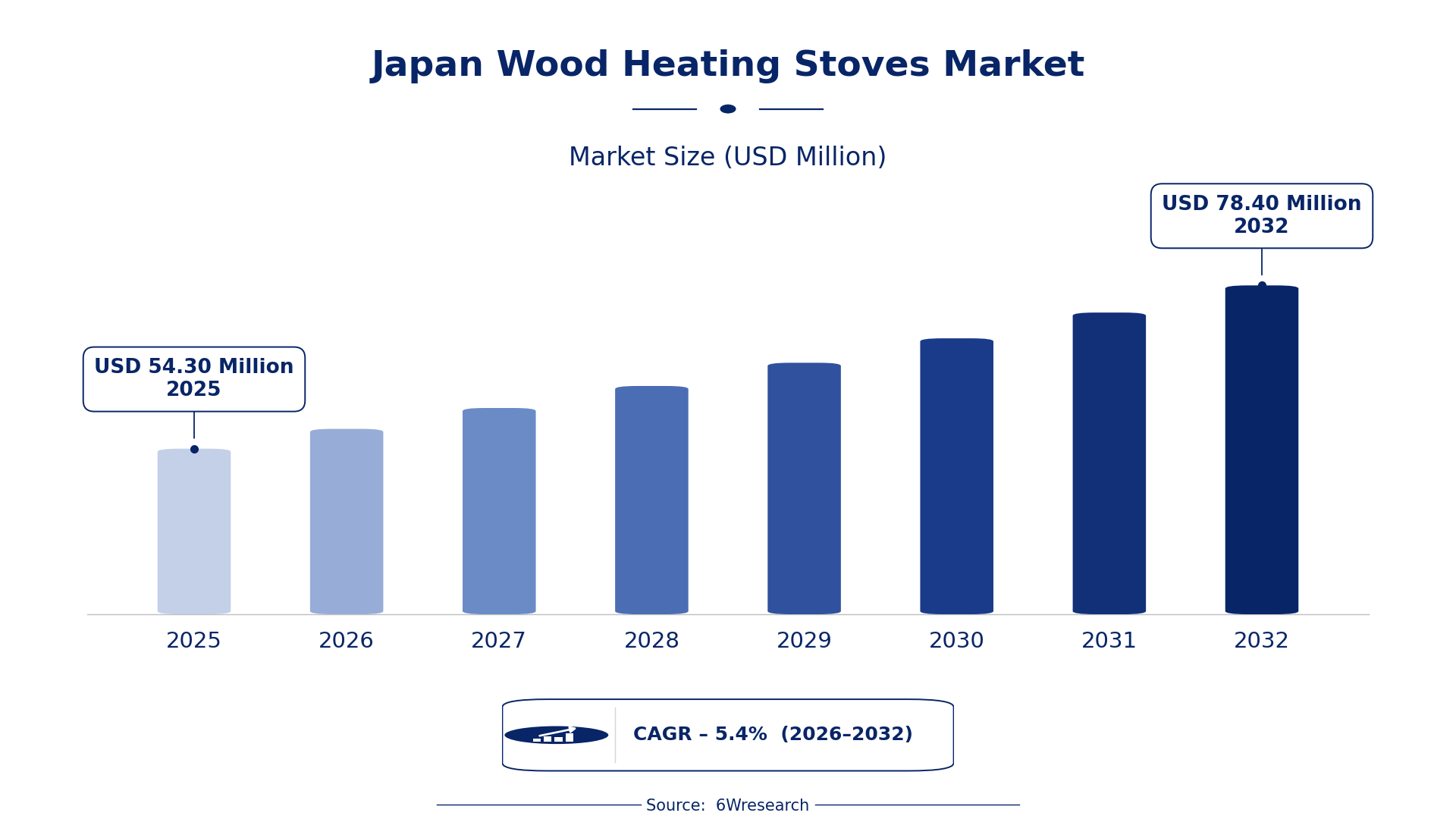
According to 6Wresearch internal database and industry insights, the Japan Wood Heating Stoves Market was valued at USD 54.30 Million in 2025 and is projected to reach USD 78.40 Million by 2032, growing at a CAGR of approximately 5.4% during 2026–2032.
Japan Wood Heating Stoves Market Highlights
| Report Metric | Details |
| Report Name | Japan Wood Heating Stoves Market (2026-2032) |
| Market Size 2025 | USD 54.30 Million |
| Market Size 2032 | USD 78.40 Million |
| Absolute Growth 2025–2032 | USD 24.10 Million |
| CAGR 2026–2032 | 5.4% |
| Peak Annual Growth | 6.2% in 2028 |
| Forecast Period | 2026–2032 |
| Historical Data | 2022–2025 |
| Base Year | 2025 |
| Leading Type, 2025 | Metal Stove (38% share) |
| Leading Application, 2025 | Living Room (38% share) |
| Fastest-Growing Type | Ceramic Stove (7.5% CAGR) |
| Fastest-Growing Application | Family Room (8.0% CAGR) |
| Growing Sector | Residential Heating |
| Key End Users | Households, Rural Users, Eco-Conscious Consumers |
Japan Wood Heating Stoves Market Year-wise Growth Rate and Key Drivers (2022–2032)
This graph illustrates the annual growth rates of the market from 2022 to 2032, highlighting a steady upward trajectory and projected market expansion over the forecast period.
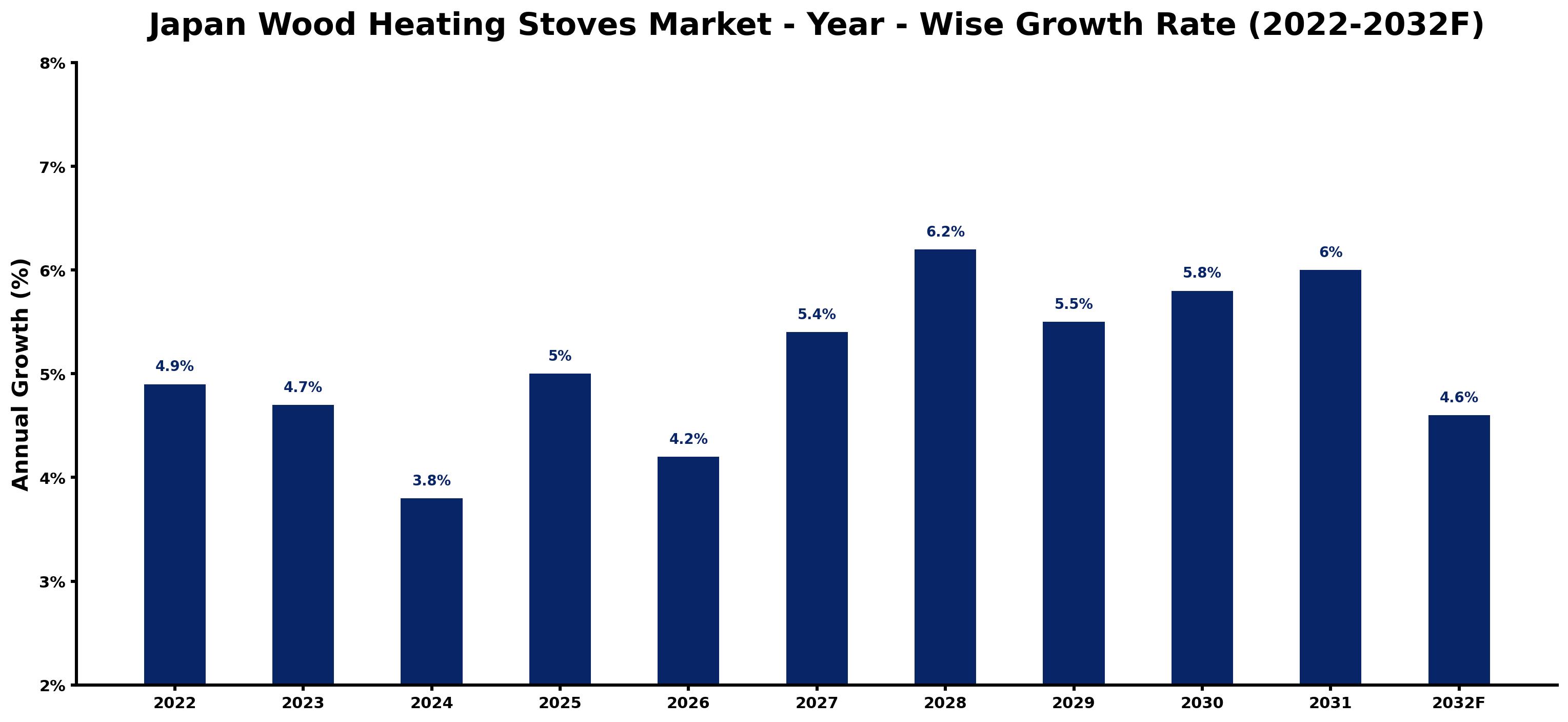
Below, each year's estimated growth is shown next to the factor that most influenced it.
| Year | Estimated Annual Growth (%) | Market Rationale |
| 2022 | 4.9 | Households increasingly relied on wood heating stoves for efficient heating solutions. |
| 2023 | 4.7 | Demand growth slowed as consumers faced rising prices for wood heating stoves. |
| 2024 | 3.8 | Market expansion continued but at a slower pace due to supply chain challenges. |
| 2025 | 5.0 | Consumer interest surged as the installed base of wood heating stoves reached 1.5 million units. |
| 2026 | 4.2 | Growth is expected to moderate as buyers adjust to price fluctuations in heating appliances. |
| 2027 | 5.4 | Demand is projected to increase with rising awareness of eco-friendly heating solutions. |
| 2028 | 6.2 | The market is expected to peak as consumers seek efficient heating options amid colder winters. |
| 2029 | 5.5 | Growth is anticipated to decelerate slightly as market saturation begins to set in. |
| 2030 | 5.8 | Demand will rebound as households upgrade to more efficient wood heating stoves. |
| 2031 | 6.0 | Interest in eco-friendly heating solutions will continue to drive market growth. |
| 2032 | 4.6 | Growth is expected to slow as the market stabilises after several years of rapid expansion. |
Note: Market size estimations and growth projections presented in this report are based on 6Wresearch's proprietary forecasting methodology, utilizing the latest available industry data, government publications, and primary research inputs.
Japan Wood Heating Stoves Market Synopsis
Wood heating stoves are appliances designed for burning wood to provide space heating in residential buildings. Constructed from materials like metal, stone, or ceramic, these stoves are particularly popular in rural areas where wood is readily available. According to the Japan Wood Heating Stoves Market, demand is rising among households, especially in the Tohoku region, known for its forestry resources. The government's recent initiative to promote eco-friendly heating solutions, along with established JIS standards for safety and efficiency, is driving further market growth.
Market Dynamics Impact Analysis (2026–2032)
| Factor | Type | Impact | Primary Segment Affected |
| Increased household adoption of wood heating stoves | Driver | High | Metal Stove |
| Growing interest in eco-friendly heating solutions | Driver | High | Ceramic Stove |
| Rural households looking for efficient heating options | Opportunity | High | Stone Stove |
| Expansion of subsidies for eco-friendly appliances | Opportunity | Medium | Metal Stove |
| Rising prices of wood heating stoves | Restraint | High | Ceramic Stove |
| Supply chain disruptions affecting availability | Restraint | Medium | Stone Stove |
| Competition from alternative heating solutions | Challenge | High | Metal Stove |
| Limited awareness of benefits among urban consumers | Challenge | Medium | Ceramic Stove |
Evaluation of Drivers in Japan Wood Heating Stoves Market (2026–2032)
Below are the drivers that matter most for revenue growth, with supporting evidence.
| Drivers | Primary Segment Affected | Why It Matters (Evidence) |
| Increased household adoption of wood heating stoves | Metal Stove | Approximately 1.2 million households in Japan use wood heating stoves, indicating a strong market presence. |
| Growing interest in eco-friendly heating solutions | Ceramic Stove | The government aims to reduce carbon emissions by 26% by 2030, encouraging renewable heating sources. |
| Rising awareness of energy efficiency | Stone Stove | JIS standards ensure safety and efficiency, prompting consumers to choose compliant products. |
| Popularity of rural living | Metal Stove | The Tohoku region's forestry resources support a high concentration of wood stove users. |
| Government subsidies for eco-friendly appliances | Ceramic Stove | In 2023, 500 million yen was allocated for subsidies, boosting consumer purchases. |
A wider customer base explains much of the growth, as approximately 1.2 million households in Japan are using wood heating stoves. The target to reduce carbon emissions by 26% by 2030 promotes the adoption of renewable heating sources. Established JIS standards increase consumer confidence in product safety and efficiency, leading to increased purchases.
Evaluation of Restraints in Japan Wood Heating Stoves Market
The following restraints limit how fast demand can grow.
| Market Restraint | Primary Segment Affected | Why It Matters (Evidence) |
| Rising prices of wood heating stoves | Ceramic Stove | The average price of wood heating stoves ranges from 100,000 to 300,000 yen, limiting affordability. |
| Supply chain disruptions affecting availability | Stone Stove | Supply chain issues have led to delays in product availability, impacting sales. |
| Competition from alternative heating solutions | Metal Stove | The availability of cheaper heating alternatives has drawn consumers away from wood stoves. |
| Limited awareness of benefits among urban consumers | Ceramic Stove | Urban households often lack knowledge about the advantages of wood heating stoves. |
| High maintenance costs for wood heating stoves | Metal Stove | Ongoing maintenance requirements can deter potential buyers from investing in wood stoves. |
Japan Wood Heating Stoves Market Challenges
High prices for wood heating stoves, ranging from 100,000 to 300,000 yen, restrict many buyers in rural areas from investing in efficient heating solutions, forcing them to rely on less effective alternatives. In the Tohoku region, where demand is highest, limited availability of affordable options can delay purchases for buyers, impacting their comfort during colder months. A lack of skilled technicians for the installation and maintenance of wood stoves hampers producers' ability to meet market demand, resulting in longer wait times for consumers. Increased competition from alternative heating solutions, driven by government programmes, pressures wood stove producers to innovate or risk losing market share.
Trends in the Japan Wood Heating Stoves Market
These developments are changing demand patterns in the Japan Wood Heating Stoves Market.
- Government Initiative Promoting Eco-Friendly Heating Solutions: The Ministry of the Environment's 2023 program promotes eco-friendly heating solutions, encouraging households to adopt wood heating stoves. This initiative aims to support the target of reducing carbon emissions by 26% by 2030.
- Growing Popularity of Ceramic Stoves: Ceramic stoves are gaining traction due to their aesthetic appeal and efficiency. In 2022, they accounted for a growing share of the market as consumers seek both functionality and design in heating appliances.
- Shift from Traditional to Modern Designs: Consumers are transitioning from traditional wood stoves to modern designs that offer better efficiency and aesthetics. This trend is reflected in the rising popularity of ceramic stoves, projected to grow at a CAGR of 7.5%.
- Increased Focus on Energy Efficiency Standards: The establishment of JIS standards for wood heating stoves has heightened consumer interest in energy-efficient models. This has led to increased sales as buyers seek compliant products that meet safety and efficiency criteria.
Investment Opportunities in the Japan Wood Heating Stoves Market
The opportunities below stand out in the Japan Wood Heating Stoves Market for new entrants and existing suppliers.
- Expansion in the Tohoku Region: The Tohoku region, with its abundant forestry resources, presents a notable opportunity for wood heating stove suppliers. With 1.2 million households using these stoves, local partnerships can enhance market penetration.
- Government Funding for Eco-Friendly Heating Solutions: The allocation of 500 million yen for eco-friendly heating appliance subsidies opens avenues for suppliers. Collaborating with local manufacturers can facilitate entry into this growing market.
- Targeting Rural Households: Rural households are increasingly looking for efficient heating options, creating demand for wood heating stoves. Suppliers can focus on marketing strategies tailored to these consumers to boost sales.
- Development of Innovative Wood Heating Stoves: Investing in the design and production of innovative wood heating stoves can attract environmentally conscious buyers. The growing interest in aesthetic and functional benefits presents a lucrative opportunity.
Government Initiatives in the Japan Wood Heating Stoves Market
The Economic Security Promotion Act, enacted in 2022, supports supply-chain resilience for critical products, including wood heating stoves. This law builds on existing regulations by ensuring that manufacturers can maintain production levels during disruptions, ultimately benefiting consumers with more reliable access to products.
In 2023, the government allocated 500 million yen for subsidies on eco-friendly heating appliances, administered by the Ministry of the Environment. This funding supports households in purchasing wood heating stoves, promoting sustainable heating solutions across the country.
Future Insight of the Japan Wood Heating Stoves Market
The launch of eco-friendly heating programmes will reshape the market by 2032, encouraging buyers to pursue sustainable solutions. The government's target to reduce carbon emissions by 2030 will drive demand for wood heating stoves that meet established safety standards. With 1.5 million units already installed, suppliers can expect increased sales as consumers seek efficient heating options. As consumer preferences evolve towards aesthetic and functional benefits, producers will need to diversify their stove designs to remain competitive.
Market Segmentation Analysis
Japan Wood Heating Stoves Market report covers a detailed analysis of the following market segments:
By Type – Metal Stove Leads, Ceramic Stove Expected to Grow Fastest
According to Ravi Bhandari, Research Head at 6Wresearch, with 38% of type revenue in 2025, Metal Stove was the largest category. Metal stoves dominate the market due to their efficiency and durability, making them a preferred choice for many households. With approximately 1.5 million units installed, they effectively serve the heating needs of users across various regions in Japan. Over 2026–2032, Ceramic Stove is expected to post the fastest growth, at a CAGR of 7.5%. Ceramic stoves are experiencing rapid growth as they combine aesthetic appeal with efficient heating, attracting consumers who appreciate both form and function. The trend towards visually appealing heating solutions is evident as more buyers opt for ceramic options in their homes. This trend indicates that suppliers should focus on enhancing the aesthetic features of their wood heating stoves to meet evolving consumer preferences.
By Application – Living Room Leads, Family Room Expected to Grow Fastest
Living Room took 38% of application revenue in 2025, more than any other category. The living room serves as the main area for heating, establishing it as the leading application for wood heating stoves. This segment benefits from the need for warmth in spaces where families gather, making it essential for comfort during colder months. Family Room is set to record the highest CAGR in this split, 8.0% over 2026–2032. The family room is witnessing the fastest growth as it becomes increasingly central to family interactions, driving demand for effective heating solutions. As more households prioritise comfort in shared areas, the need for heating in family rooms is likely to expand further. Suppliers should adjust their product offerings to cater to family-oriented heating needs, capitalising on the growing importance of comfort in shared living spaces.
Key Attractiveness of the Report
- 10 Years of Market Numbers
- Historical Data Starting from 2022 to 2025
- Base Year 2025
- Forecast Data until 2032
- Key Performance Indicators Impacting the Market
- Major Upcoming Developments and Projects
Key Highlights of the Report:
- Japan Wood Heating Stoves Market Outlook
- Market Size of Japan Wood Heating Stoves Market, 2025
- Forecast of Japan Wood Heating Stoves Market, 2032
- Historical Data and Forecast of Japan Wood Heating Stoves Revenues & Volume for the Period 2022-2032
- Japan Wood Heating Stoves Market Trend Evolution
- Japan Wood Heating Stoves Market Drivers and Challenges
- Japan Wood Heating Stoves Price Trends
- Japan Wood Heating Stoves Porter's Five Forces
- Japan Wood Heating Stoves Industry Life Cycle
- Historical Data and Forecast of Japan Wood Heating Stoves Market Revenues & Volume By Type for the Period 2022-2032
- Historical Data and Forecast of Japan Wood Heating Stoves Market Revenues & Volume By Metal Stove for the Period 2022-2032
- Historical Data and Forecast of Japan Wood Heating Stoves Market Revenues & Volume By Stone Stove for the Period 2022-2032
- Historical Data and Forecast of Japan Wood Heating Stoves Market Revenues & Volume By Ceramic Stove for the Period 2022-2032
- Historical Data and Forecast of Japan Wood Heating Stoves Market Revenues & Volume By Others for the Period 2022-2032
- Historical Data and Forecast of Japan Wood Heating Stoves Market Revenues & Volume By Application for the Period 2022-2032
- Historical Data and Forecast of Japan Wood Heating Stoves Market Revenues & Volume By Living Room for the Period 2022-2032
- Historical Data and Forecast of Japan Wood Heating Stoves Market Revenues & Volume By Family Room for the Period 2022-2032
- Historical Data and Forecast of Japan Wood Heating Stoves Market Revenues & Volume By Kitchen for the Period 2022-2032
- Historical Data and Forecast of Japan Wood Heating Stoves Market Revenues & Volume By Home Office for the Period 2022-2032
- Historical Data and Forecast of Japan Wood Heating Stoves Market Revenues & Volume By Bedroom for the Period 2022-2032
- Historical Data and Forecast of Japan Wood Heating Stoves Market Revenues & Volume By Others for the Period 2022-2032
- Japan Wood Heating Stoves Import Export Trade Statistics
- Market Opportunity Assessment By Type
- Market Opportunity Assessment By Application
- Japan Wood Heating Stoves Top Companies Market Share
- Japan Wood Heating Stoves Competitive Benchmarking By Technical and Operational Parameters
- Japan Wood Heating Stoves Company Profiles
- Japan Wood Heating Stoves Key Strategic Recommendations
Market Covered
This report examines the market across the segments below.
By Type
- Metal Stove
- Stone Stove
- Ceramic Stove
- Others
By Application
- Living Room
- Family Room
- Kitchen
- Home Office
- Bedroom
- Others































