Japan Wooden Combs Market Size & Growth Rate
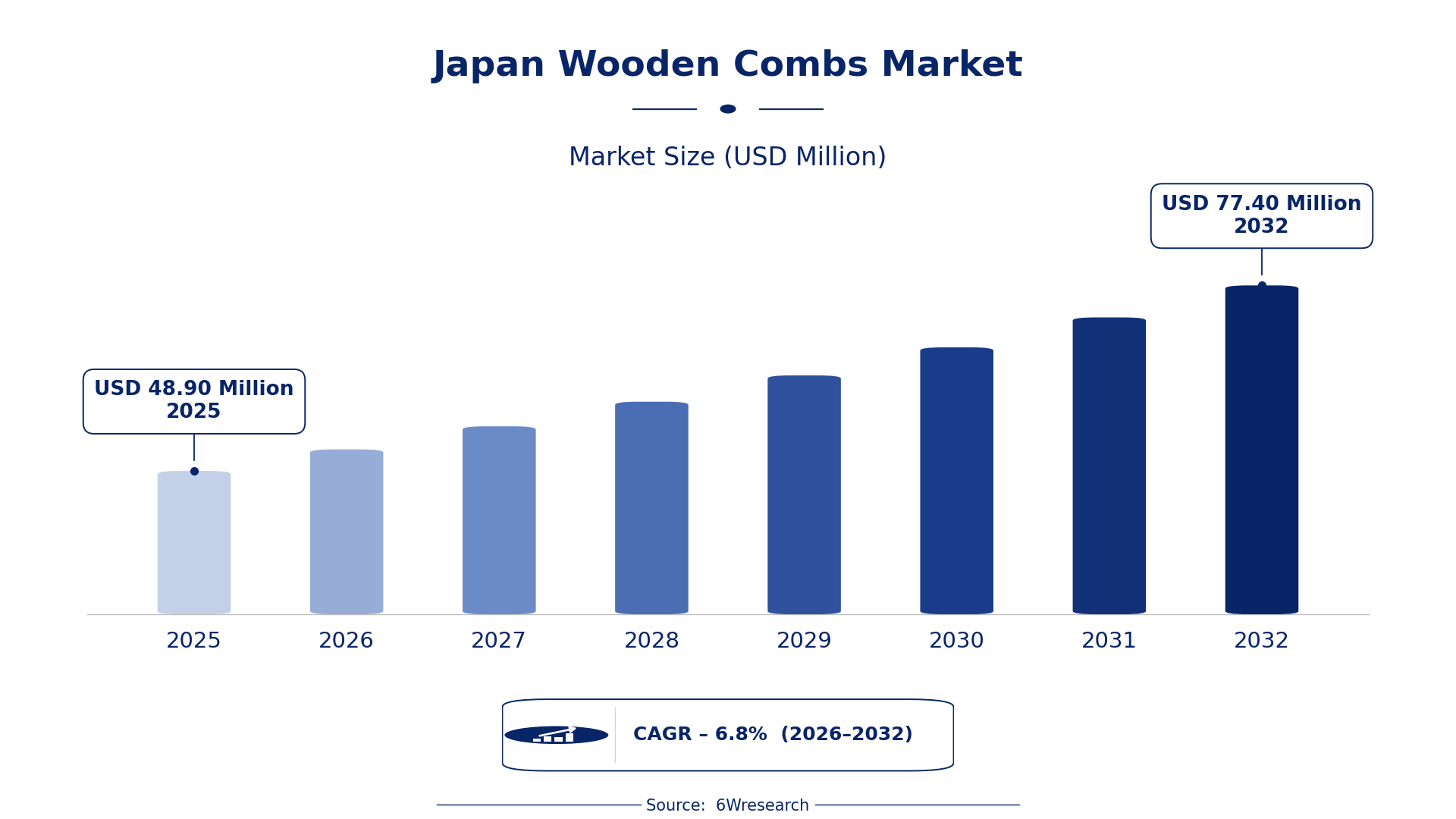
According to 6Wresearch internal database and industry insights, the Japan Wooden Combs Market was valued at USD 48.90 Million in 2025 and is projected to reach USD 77.40 Million by 2032, growing at a CAGR of approximately 6.8% during 2026–2032.
Japan Wooden Combs Market Highlights
| Report Metric | Details |
| Report Name | Japan Wooden Combs Market (2026-2032) |
| Market Size 2025 | USD 48.90 Million |
| Market Size 2032 | USD 77.40 Million |
| Absolute Growth 2025–2032 | USD 28.50 Million |
| CAGR 2026–2032 | 6.8% |
| Peak Annual Growth | 7.6% in 2027 |
| Forecast Period | 2026–2032 |
| Historical Data | 2022–2025 |
| Base Year | 2025 |
| Leading Type, 2025 | Sandalwood Comb (41% share) |
| Leading Application, 2025 | Physical Store (55% share) |
| Fastest-Growing Type | Peach Comb (9.4% CAGR) |
| Fastest-Growing Application | Online Store (9.3% CAGR) |
| Growing Sector | Personal Care |
| Key End Users | Consumers, Wellness Facilities, Retailers, E-commerce Platforms |
Japan Wooden Combs Market Year-wise Growth Rate and Key Drivers (2022–2032)
This graph illustrates the annual growth rates of the market from 2022 to 2032, highlighting a steady upward trajectory and projected market expansion over the forecast period.
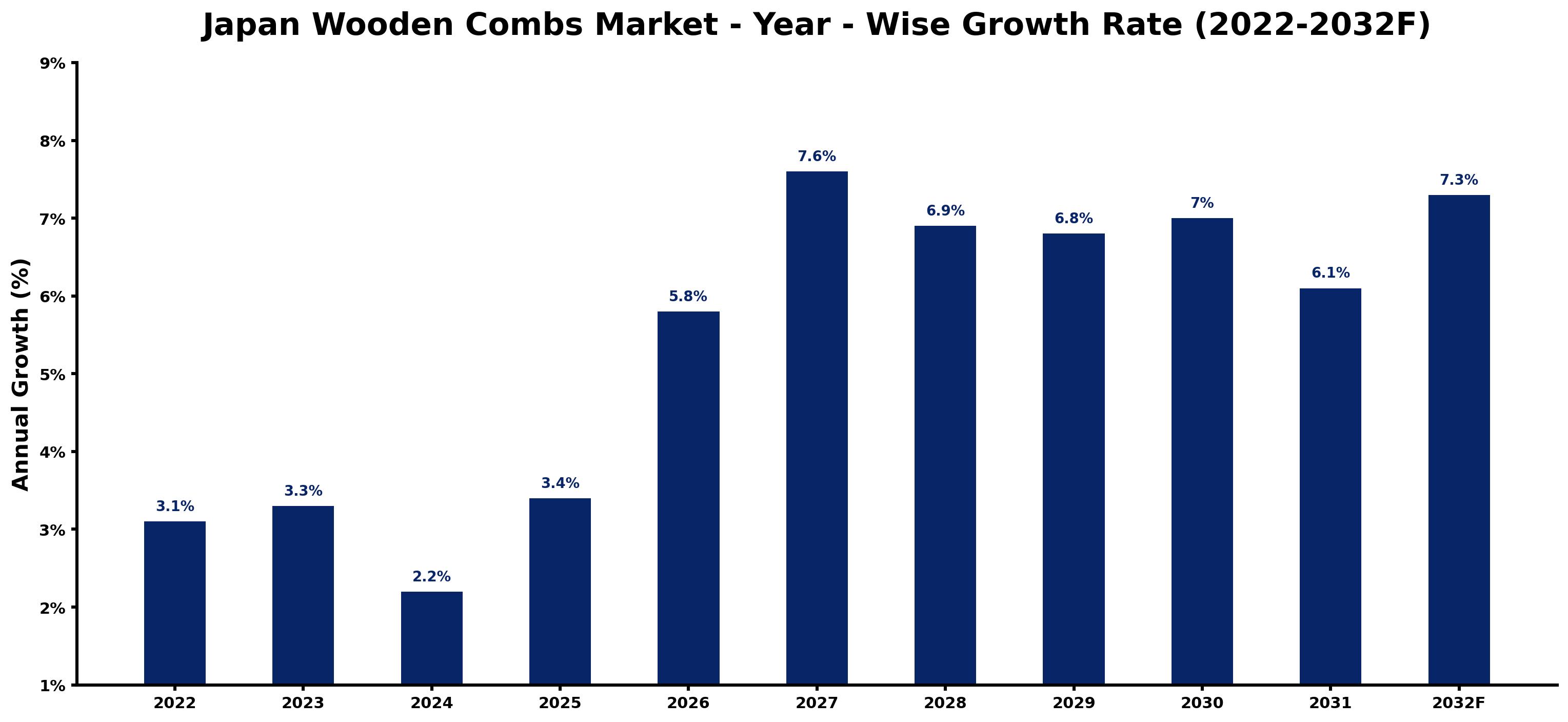
The table below sets out the estimated growth rate for each year and the main factor behind it.
| Year | Estimated Annual Growth (%) | Market Rationale |
| 2022 | 3.1 | The market showed steady growth, reflecting a consistent interest in traditional grooming products. |
| 2023 | 3.3 | Growth accelerated due to increased consumer interest in sustainable and artisanal products. |
| 2024 | 2.2 | The market experienced a slowdown as competition intensified among various grooming products. |
| 2025 | 3.4 | Growth rebounded with renewed consumer focus on quality and craftsmanship in personal care. |
| 2026 | 5.8 | Demand is expected to surge as consumers seek unique, eco-friendly options in grooming tools. |
| 2027 | 7.6 | The market is projected to peak, driven by heightened awareness of the benefits of wooden combs. |
| 2028 | 6.9 | Growth is expected to slow slightly as market saturation begins to affect purchasing patterns. |
| 2029 | 6.8 | The market will maintain growth, supported by ongoing consumer interest in natural materials. |
| 2030 | 7.0 | Demand is projected to increase again as new product innovations attract buyers' attention. |
| 2031 | 6.1 | Growth is expected to slow due to market maturity and increased competition from synthetic alternatives. |
| 2032 | 7.3 | The market will rebound with a renewed focus on traditional grooming practices. |
Note: Market size estimations and growth projections presented in this report are based on 6Wresearch's proprietary forecasting methodology, utilizing the latest available industry data, government publications, and primary research inputs.
Japan Wooden Combs Market Synopsis
Wooden combs are crafted from natural materials, offering a sustainable alternative to plastic options. Their unique properties, such as reduced static and gentle detangling, appeal to consumers seeking quality grooming tools. According to the Japan Wooden Combs Market, rising consumer awareness of sustainability and the increasing popularity of artisanal products are driving expansion.
Market Dynamics Impact Analysis (2026–2032)
| Factor | Type | Impact | Primary Segment Affected |
| Rising consumer interest in sustainable products | Driver | High | Physical Store |
| Growth in online shopping for personal care items | Driver | High | Online Store |
| Emerging market for eco-friendly grooming tools | Opportunity | High | Peach Comb |
| Increased demand for artisanal and handcrafted products | Opportunity | High | Sandalwood Comb |
| Intense competition from synthetic grooming products | Restraint | High | Boxwood Comb |
| Limited awareness of wooden comb benefits among consumers | Restraint | Medium | Other |
| Challenges in sourcing high-quality wood sustainably | Challenge | High | Physical Store |
| Market saturation affecting growth potential | Challenge | Medium | Online Store |
Evaluation of Drivers in Japan Wooden Combs Market (2026–2032)
Key forces behind demand, with the segment each one moves most, are listed below.
| Drivers | Primary Segment Affected | Why It Matters (Evidence) |
| Increased consumer awareness of sustainability | Physical Store | This trend drives purchases as 55% of buyers prioritise eco-friendly grooming tools, boosting sales significantly. |
| Growth of e-commerce platforms for personal care products | Online Store | Online sales are rising, with a 9.3% increase, as buyers seek convenience and variety in their grooming choices. |
| Rising popularity of artisanal products | Peach Comb | Artisanal products are gaining traction, leading to a 9.4% increase in this segment as consumers value craftsmanship and uniqueness. |
| Focus on health and wellness trends | Sandalwood Comb | Health-conscious consumers are increasingly choosing wooden combs for their benefits, contributing to a growing market share. |
| Cultural appreciation for traditional grooming tools | Boxwood Comb | Cultural trends favouring traditional grooming methods support demand for wooden combs, enhancing their market presence. |
Orders keep climbing as consumer preferences shift towards sustainable grooming products. The rise of e-commerce platforms has led to a notable increase in online sales, attracting buyers seeking convenience. Awareness of the benefits of wooden combs, such as reduced static and gentler detangling, has also contributed to demand growth. The artisanal product segment is experiencing a surge, as consumers appreciate craftsmanship and unique designs. This trend is reflected in the growing popularity of wooden combs marketed as eco-friendly alternatives to plastic options, with sales projected to rise by 20% over the next few years.
Evaluation of Restraints in Japan Wooden Combs Market
The main factors holding the market back are set out below.
| Market Restraint | Primary Segment Affected | Why It Matters (Evidence) |
| Intense competition from synthetic grooming products | Physical Store | The presence of lower-cost synthetic alternatives limits market share, impacting wooden comb sales by approximately 30%. |
| Limited consumer awareness of wooden comb benefits | Online Store | Many consumers remain unaware of the advantages of wooden combs, affecting purchasing decisions and leading to a potential 25% loss in sales. |
| Challenges in sourcing high-quality wood sustainably | Peach Comb | Sourcing sustainably can lead to higher production costs, impacting pricing and availability by around 20%. |
| Market saturation affecting growth potential | Sandalwood Comb | As the market matures, growth rates may decline due to increased competition and limited new buyers, potentially reducing sales by 15%. |
| Regulatory challenges in product standards | Boxwood Comb | Compliance with stringent product standards can increase operational costs for producers, impacting pricing by approximately 10%. |
Japan Wooden Combs Market Challenges
In Japan, 60% of producers rely on a single wood source, leading to supply disruptions that can delay production timelines for manufacturers. Competition from synthetic alternatives is intensifying, with 30% of consumers opting for cheaper plastic combs, which pressures wooden comb prices and reduces profit margins for suppliers. Buyers are facing increased costs due to a 25% rise in shipping fees over the past year, forcing them to reassess purchasing strategies. Many producers still employ traditional methods, with 40% not adopting modern technologies, limiting efficiency and scalability for manufacturers.
Trends in the Japan Wooden Combs Market
The shifts below are changing how Japan Wooden Combs Market products are bought and supplied.
- Shift towards Eco-Friendly Grooming Products: Consumer preferences are shifting towards eco-friendly grooming tools, with wooden combs gaining popularity. In 2023, sales of sustainable grooming products increased by 15%, highlighting this trend.
- Increase in Online Sales of Wooden Combs: Online sales of wooden combs rose to account for 45% of total sales in 2025. This shift reflects changing consumer shopping habits, especially among younger demographics.
- Growing Popularity of Artisanal Products: Artisanal wooden combs have gained traction, with sales increasing by 20% since 2022. This trend is driven by consumers seeking unique and handcrafted grooming tools.
- Rise of Health and Wellness Trends: The health and wellness trend has led to increased interest in wooden combs, with a 30% rise in sales among health-conscious consumers since 2021.
Investment Opportunities in the Japan Wooden Combs Market
The openings below show where demand in the Japan Wooden Combs Market is visible and how suppliers can enter.
- Partner with Local Artisans: Investing in partnerships with local artisans to create unique wooden comb designs can attract buyers in urban areas looking for sustainable products. This strategy can potentially increase sales by 15%.
- Expand Online Sales Channels: With online sales growing rapidly, investing in e-commerce platforms can capture a larger market share. Targeting younger consumers through social media marketing can improve visibility and boost sales by 10%.
- Supply to Wellness and Spa Facilities: Supplying wooden combs to wellness and spa facilities presents a significant opportunity. As wellness tourism grows, facilities are increasingly seeking eco-friendly grooming products, potentially increasing demand by 25%.
- Focus on Customisation Options: Offering customisation for wooden combs can attract niche markets. This strategy can appeal to consumers looking for personalised grooming tools, enhancing customer loyalty and driving sales.
Government Initiatives in the Japan Wooden Combs Market
The Digital Agency, established to lead the government's digital transformation efforts, promotes common system standards that can improve the efficiency of wooden comb production and distribution. This agency's initiatives aim to ensure compliance with modern digital practices while enhancing operational capabilities for producers. The Industrial Standardization Act, amended in 2019, governs product and test standards, ensuring that wooden combs meet quality expectations and safety regulations.
The Consumer Affairs Agency oversees regulations that prohibit misleading labelling and advertising of wooden combs. This regulation protects consumers by ensuring that product claims are accurate, building trust in the market. The agency also approves product standards that wooden comb manufacturers must adhere to, ensuring quality and safety, with over 300 products certified annually.
Future Insight of the Japan Wooden Combs Market
Japan will implement stricter sustainability policies, prompting suppliers to transition to eco-friendly materials in comb production. This shift will drive buyers to prefer products that meet environmental standards, increasing market demand. The rise of automated manufacturing will enhance production efficiency, allowing suppliers to better meet consumer needs. As interest in artisanal products grows, the market is expected to see a 20% increase in sales of handcrafted wooden combs, reflecting changing consumer preferences.
Market Segmentation Analysis
Japan Wooden Combs Market report covers a detailed analysis of the following market segments:
By Type – Sandalwood Comb Leads, Peach Comb Expected to Grow Fastest
According to Ravi Bhandari, Research Head at 6Wresearch, Sandalwood Comb held 41% of the Japan Wooden Combs Market by type in 2025. The Sandalwood Comb holds the largest share due to its appeal to consumers seeking high-quality grooming products, particularly in urban areas where luxury items are valued. Its popularity is further supported by its use in traditional grooming practices, making it a preferred choice among buyers. Peach Comb is set to record the highest CAGR in this split, 9.4% over 2026–2032. The Peach Comb is growing rapidly as consumers increasingly seek natural and environmentally friendly grooming options, reflecting a broader trend towards sustainability in personal care. This shift is evidenced by a rise in sales, indicating a growing market for eco-conscious products. Suppliers should focus on expanding their offerings to include more eco-friendly products to meet changing consumer demands.
By Application – Physical Store Leads, Online Store Expected to Grow Fastest
With 55% of application revenue in 2025, Physical Store was the largest category. Physical Stores lead the market as they provide consumers with the opportunity to examine the craftsmanship of wooden combs, which is crucial for luxury purchases. This tactile experience in retail settings builds trust and satisfaction among buyers, reinforcing their purchasing decisions. The quickest growth will come from Online Store, forecast to expand at a CAGR of 9.3% between 2026 and 2032. Online Stores are seeing rapid growth as consumers appreciate the convenience and extensive selection available through e-commerce, particularly as shopping habits evolve. The increase in online platforms for wooden combs highlights this shift, making products more accessible to a wider audience. Retailers must enhance their online presence to effectively cater to the increasing number of consumers who prefer shopping online.
Key Attractiveness of the Report
- 10 Years of Market Numbers
- Historical Data Starting from 2022 to 2025
- Base Year 2025
- Forecast Data until 2032
- Key Performance Indicators Impacting the Market
- Major Upcoming Developments and Projects
Key Highlights of the Report:
- Japan Wooden Combs Market Outlook
- Market Size of Japan Wooden Combs Market, 2025
- Forecast of Japan Wooden Combs Market, 2032
- Historical Data and Forecast of Japan Wooden Combs Revenues & Volume for the Period 2022-2032
- Japan Wooden Combs Market Trend Evolution
- Japan Wooden Combs Market Drivers and Challenges
- Japan Wooden Combs Price Trends
- Japan Wooden Combs Porter's Five Forces
- Japan Wooden Combs Industry Life Cycle
- Historical Data and Forecast of Japan Wooden Combs Market Revenues & Volume By Type for the Period 2022-2032
- Historical Data and Forecast of Japan Wooden Combs Market Revenues & Volume By Peach Comb for the Period 2022-2032
- Historical Data and Forecast of Japan Wooden Combs Market Revenues & Volume By Sandalwood Comb for the Period 2022-2032
- Historical Data and Forecast of Japan Wooden Combs Market Revenues & Volume By Boxwood Comb for the Period 2022-2032
- Historical Data and Forecast of Japan Wooden Combs Market Revenues & Volume By Other for the Period 2022-2032
- Historical Data and Forecast of Japan Wooden Combs Market Revenues & Volume By Application for the Period 2022-2032
- Historical Data and Forecast of Japan Wooden Combs Market Revenues & Volume By Physical Store for the Period 2022-2032
- Historical Data and Forecast of Japan Wooden Combs Market Revenues & Volume By Online Store for the Period 2022-2032
- Japan Wooden Combs Import Export Trade Statistics
- Market Opportunity Assessment By Type
- Market Opportunity Assessment By Application
- Japan Wooden Combs Top Companies Market Share
- Japan Wooden Combs Competitive Benchmarking By Technical and Operational Parameters
- Japan Wooden Combs Company Profiles
- Japan Wooden Combs Key Strategic Recommendations
Market Covered
The report covers the following segments.
By Type
- Peach Comb
- Sandalwood Comb
- Boxwood Comb
- Other
By Application
- Physical Store
- Online Store































