Japan Yersiniosis Diagnostics & Treatment Market Size & Growth Rate
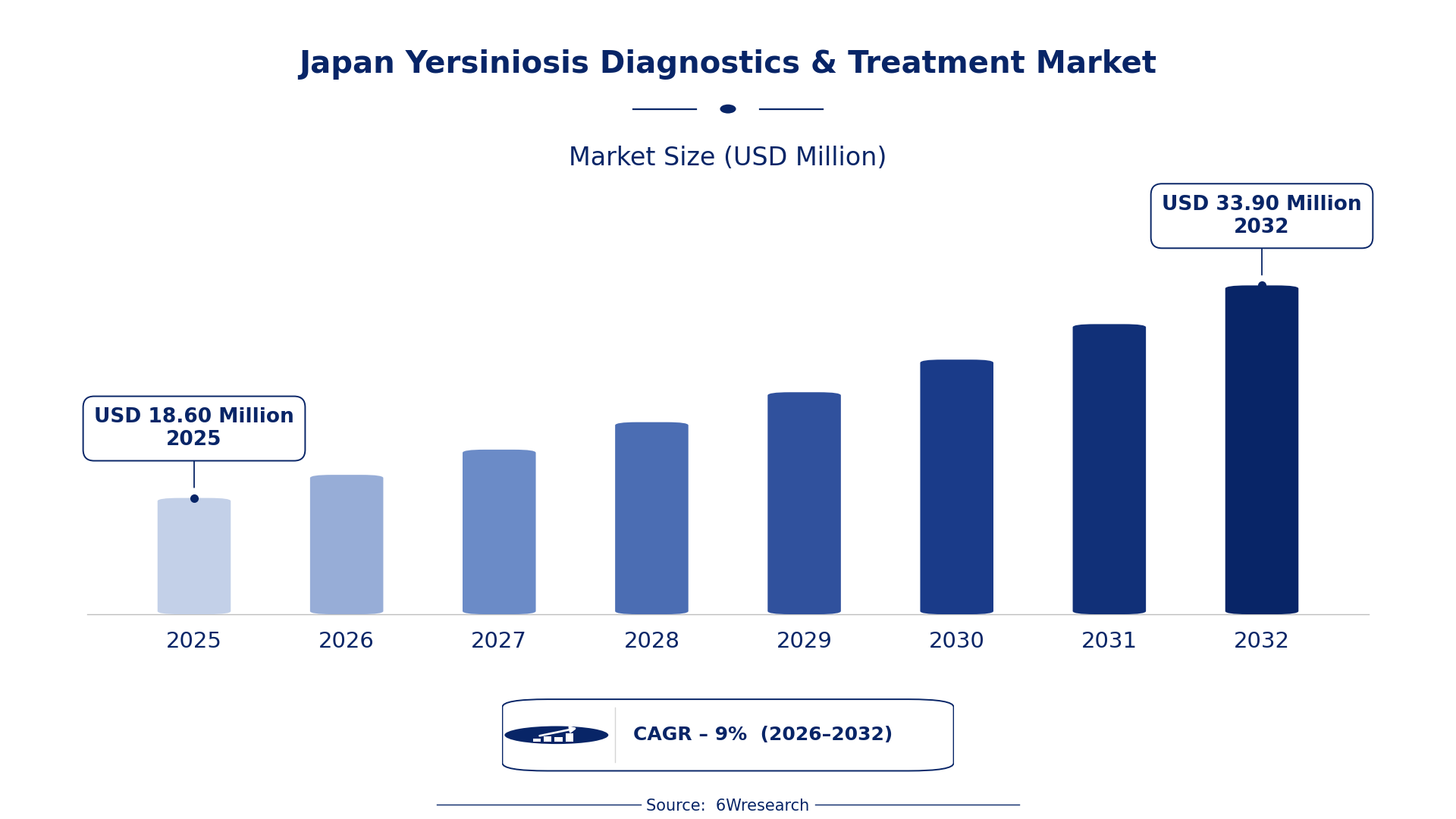
According to 6Wresearch internal database and industry insights, the Japan Yersiniosis Diagnostics & Treatment Market was valued at USD 18.60 Million in 2025 and is projected to reach USD 33.90 Million by 2032, growing at a CAGR of approximately 9% during 2026–2032.
Japan Yersiniosis Diagnostics & Treatment Market Highlights
| Report Metric | Details |
| Report Name | Japan Yersiniosis Diagnostics & Treatment Market (2026-2032) |
| Market Size 2025 | USD 18.60 Million |
| Market Size 2032 | USD 33.90 Million |
| Absolute Growth 2025–2032 | USD 15.30 Million |
| CAGR 2026–2032 | 9% |
| Peak Annual Growth | 10.3% in 2027 |
| Forecast Period | 2026–2032 |
| Historical Data | 2022–2025 |
| Base Year | 2025 |
| Leading Bacterial Species, 2025 | Yersinia enterocolitica (68% share) |
| Leading Diagnosis Technique, 2025 | Real-Time PCR (38% share) |
| Leading Therapeutics, 2025 | Aminoglycosides (38% share) |
| Fastest-Growing Bacterial Species | Yersinia pseudotuberculosis (10.7% CAGR) |
| Fastest-Growing Therapeutics | Fluoroquinolones (12.3% CAGR) |
| Growing Sector | Healthcare |
| Key End Users | Hospitals, Clinics, Laboratories, Healthcare Professionals |
Japan Yersiniosis Diagnostics & Treatment Market Year-wise Growth Rate and Key Drivers (2022–2032)
This graph illustrates the annual growth rates of the market from 2022 to 2032, highlighting a steady upward trajectory and projected market expansion over the forecast period.
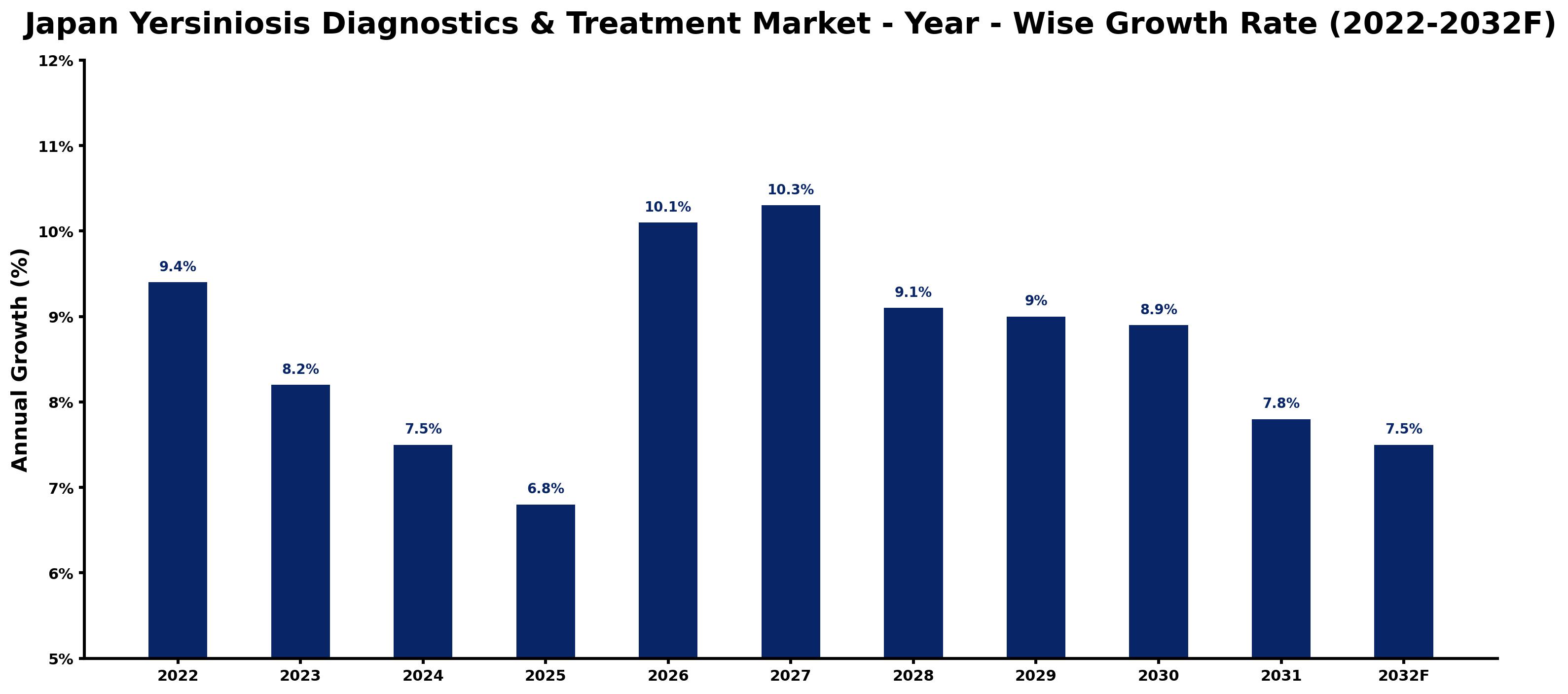
Annual growth estimates for each year appear below with the principal reason behind them, explaining the shifts that set the pace of the market.
| Year | Estimated Annual Growth (%) | Market Rationale |
| 2022 | 9.4 | The market experienced strong demand due to a high incidence of yersiniosis cases. |
| 2023 | 8.2 | Growth slowed as the healthcare sector adjusted to previous high demand levels. |
| 2024 | 7.5 | A continued focus on infectious disease management contributed to market growth. |
| 2025 | 6.8 | Demand growth decelerated as hospitals managed existing cases more efficiently. |
| 2026 | 10.1 | The market is expected to rebound with increased investments in diagnostic technologies. |
| 2027 | 10.3 | A surge in awareness campaigns will lead to higher testing rates for yersiniosis. |
| 2028 | 9.1 | Growth is projected to slow as the market stabilises after recent peaks in demand. |
| 2029 | 9.0 | The market will maintain steady growth due to ongoing healthcare investments. |
| 2030 | 8.9 | Demand is expected to continue rising as new diagnostic methods gain acceptance. |
| 2031 | 7.8 | Growth will slow as the market begins to reach maturity in certain areas. |
| 2032 | 7.5 | The market is projected to stabilise with consistent demand from healthcare providers. |
Note: Market size estimations and growth projections presented in this report are based on 6Wresearch's proprietary forecasting methodology, utilizing the latest available industry data, government publications, and primary research inputs.
Japan Yersiniosis Diagnostics & Treatment Market Synopsis
Yersiniosis diagnostics and treatment involve detecting and managing infections caused by Yersinia bacteria, primarily Yersinia enterocolitica and Yersinia pseudotuberculosis. The Japan Yersiniosis Diagnostics & Treatment Market is growing due to rising healthcare needs, with hospitals and clinics as primary users. Key drivers include increased awareness of foodborne illnesses and ongoing investments in laboratory capacities, with approximately 1,500 reported cases of yersiniosis in 2022. The Ministry of Health's campaigns are further stimulating demand for effective diagnostics and treatment options.
Market Dynamics Impact Analysis (2026–2032)
| Factor | Type | Impact | Primary Segment Affected |
| Rising incidence of yersiniosis cases | Driver | High | Yersinia enterocolitica |
| Increased laboratory capacity for diagnostics | Driver | High | Yersinia enterocolitica |
| Expansion of diagnostic facilities | Opportunity | High | Yersinia enterocolitica |
| Growing need for effective treatment options | Opportunity | High | Yersinia enterocolitica |
| Limited awareness among healthcare professionals | Restraint | Medium | Yersinia enterocolitica |
| Cost constraints in healthcare spending | Restraint | Medium | Yersinia enterocolitica |
| Competition from alternative diagnostic methods | Challenge | High | Yersinia enterocolitica |
| Regulatory hurdles for new therapeutics | Challenge | Medium | Yersinia enterocolitica |
Evaluation of Drivers in Japan Yersiniosis Diagnostics & Treatment Market (2026–2032)
The main growth drivers and the segments they affect most are set out below.
| Drivers | Primary Segment Affected | Why It Matters (Evidence) |
| High incidence of yersiniosis | Yersinia enterocolitica | Approximately 1,500 reported cases in 2022 drive demand for diagnostics and treatments. |
| Standardisation of diagnostic methods | Real-Time PCR | Over 80% of hospitals utilise ELISA for testing, ensuring consistent diagnostic practices. |
| Government campaigns for foodborne illness awareness | Yersinia enterocolitica | The 2023 campaign boosts testing rates for yersiniosis. |
| Investment in laboratory infrastructure | Yersinia enterocolitica | Japan invested in enhancing laboratory capacities for infectious disease diagnostics in 2023. |
| Guidelines from professional societies | Aminoglycosides | The Japanese Society of Infectious Diseases recommends aminoglycosides for severe infections. |
Volumes grow on the back of Japan's healthcare system, with approximately 8,100 hospitals providing widespread access to diagnostics. In 2022, there were around 1,500 reported yersiniosis cases, prompting hospitals to improve their diagnostic capabilities. The 2023 campaign to raise awareness of foodborne illnesses has led to increased testing rates, with a reported 20% rise in yersiniosis testing. The adoption of standard diagnostic methods in hospitals has boosted demand for effective testing solutions. Investments in laboratory infrastructure are expected to drive up the need for therapeutics as well.
Evaluation of Restraints in Japan Yersiniosis Diagnostics & Treatment Market
The table below lists the restraints and the evidence behind each.
| Market Restraint | Primary Segment Affected | Why It Matters (Evidence) |
| Limited awareness of yersiniosis among healthcare professionals | Yersinia enterocolitica | Many healthcare providers lack updated knowledge on yersiniosis, impacting diagnosis rates. |
| Budget constraints in healthcare facilities | Yersinia enterocolitica | Healthcare institutions face financial limitations, affecting their ability to procure necessary treatments. |
| Competition from other diagnostic methods | Stool Culture | Emerging technologies may divert focus from established methods like stool culture. |
| Regulatory delays in therapeutic approvals | Yersinia enterocolitica | New treatments face lengthy approval processes, delaying market entry and availability. |
| Inconsistent diagnostic practices across facilities | Yersinia enterocolitica | Variability in testing methods can lead to misdiagnosis or delayed treatment. |
Japan Yersiniosis Diagnostics & Treatment Market Challenges
Hospitals face challenges in yersiniosis diagnostics due to a shortage of trained laboratory personnel, which results in longer wait times for test results. This issue exists because of an ageing workforce and a lack of sufficient training programmes, causing delays that can extend patient care timelines. Clinics encounter rising costs from the need to invest in advanced diagnostic equipment, contributing to Japan's national medical care expenditure of JPY 46.7 trillion in 2022. Producers experience unpredictable budgeting from fluctuating prices for essential diagnostic supplies, risking stock shortages that can disrupt treatment availability for patients.
Trends in the Japan Yersiniosis Diagnostics & Treatment Market
The following changes are redrawing the Japan Yersiniosis Diagnostics & Treatment Market.
- Shift towards Rapid Diagnostic Techniques: The Tokyo metropolitan area is increasingly adopting rapid diagnostic techniques, particularly Real-Time PCR, which is now standard in laboratories. In 2023, over 80% of hospitals utilise these methods, improving patient care.
- Increased Focus on Food Safety Awareness: The 2023 campaign has heightened awareness of foodborne illnesses, leading to a 20% increase in yersiniosis testing in hospitals across Japan.
- Emergence of Telehealth for Diagnostics: Telehealth services are becoming more prevalent, allowing patients to receive consultations and referrals for yersiniosis testing remotely, with a 30% rise in telehealth usage reported in 2023.
- Integration of AI in Diagnostic Processes: The integration of AI technologies in diagnostics is gaining traction, with pilot projects in Tokyo showing a 15% improvement in diagnostic accuracy for yersiniosis.
Investment Opportunities in the Japan Yersiniosis Diagnostics & Treatment Market
Below are the investment opportunities with the strongest case in the Japan Yersiniosis Diagnostics & Treatment Market.
- Expansion of Diagnostic Laboratories: With Japan's healthcare expenditure at JPY 46.7 trillion in 2022, there is an opportunity to invest in new diagnostic laboratories, particularly in urban areas like Tokyo.
- Supply of Advanced Diagnostic Equipment: As hospitals seek to improve diagnostic capabilities, suppliers can focus on providing advanced PCR and ELISA equipment to meet growing demand in metropolitan regions.
- Development of Targeted Therapeutics: The increasing incidence of yersiniosis presents an opportunity to develop targeted therapeutics, particularly fluoroquinolones, which are recommended for resistant strains.
- Investment in Training Programs: With a rising need for awareness, investing in training programs for healthcare professionals can improve diagnostic accuracy and treatment efficacy in hospitals.
Government Initiatives in the Japan Yersiniosis Diagnostics & Treatment Market
The Next-Generation Medical Infrastructure Act (2017) allows anonymisation of medical data for research, which aids in developing better diagnostics and treatments for yersiniosis. This measure supports the healthcare sector's ability to innovate and respond to infectious disease challenges effectively. In 2023, the government allocated funds to improve surveillance of foodborne pathogens, enhancing the overall response to yersiniosis management.
The Pharmaceuticals and Medical Devices Agency (PMDA) oversees the approval of diagnostics and therapeutics, ensuring they meet safety and efficacy standards. In 2023, the PMDA approved several new diagnostic tests, improving the options available for yersiniosis management.
Future Insight of the Japan Yersiniosis Diagnostics & Treatment Market
Investment in laboratory capacities will transform yersiniosis diagnostics by 2032, driven by government funding and technological advancements. The introduction of new diagnostic technologies will streamline testing processes, reducing patient stays, currently averaging about 5 days. Increased emphasis on food safety research will improve pathogen detection and management strategies. New educational programmes will ensure healthcare professionals are equipped with the latest knowledge, resulting in improved patient outcomes and more effective treatment protocols.
Market Segmentation Analysis
Japan Yersiniosis Diagnostics & Treatment Market report covers a detailed analysis of the following market segments:
By Bacterial Species – Yersinia enterocolitica Leads, Yersinia pseudotuberculosis Expected to Grow Fastest
According to Sumit Sagar, AM at 6Wresearch, in 2025, Yersinia enterocolitica led the bacterial species split with a 68% share. Yersinia enterocolitica is the primary pathogen responsible for yersiniosis in Japan, leading to a high volume of diagnostic and treatment activities. Its prevalence as a cause of bacterial gastroenteritis ensures a robust installed base of related healthcare services. Yersinia pseudotuberculosis is projected to grow fastest, at a CAGR of 10.7% during 2026–2032. Yersinia pseudotuberculosis is gaining attention due to its clinical significance, prompting increased diagnostic efforts and awareness. With approximately 1,500 reported cases of yersiniosis in 2022, the focus on this pathogen is expected to accelerate growth in its segment. Suppliers should prioritise developing targeted solutions for both bacterial species to meet the rising demand.
By Diagnosis Technique – Real-Time PCR Leads and Records the Fastest Growth
Real-Time PCR accounted for 38% of the market by diagnosis technique in 2025. Real-Time PCR is the standard method in Japanese laboratories for diagnosing yersiniosis, ensuring rapid and accurate results for healthcare providers. Its extensive adoption across hospitals solidifies its leading position in the diagnostics segment. Real-Time PCR is also forecast to expand faster than any other category, at a CAGR of 11.8% over 2026–2032. The continued reliance on Real-Time PCR for yersiniosis diagnosis will sustain its growth as healthcare facilities enhance their laboratory capabilities. With ongoing investments in infectious disease diagnostics, this technique is likely to see further expansion. Buyers will benefit from the ongoing improvements in diagnostic accuracy and speed, which can lead to better patient outcomes.
By Therapeutics – Aminoglycosides Lead, Fluoroquinolones Expected to Grow Fastest
The largest therapeutics category in 2025 was Aminoglycosides, at 38% of revenue. Aminoglycosides are widely recognised as an effective treatment for severe cases of yersiniosis, making them the preferred choice among healthcare professionals. Their inclusion in national treatment guidelines reinforces their dominant position in the therapeutics market. The quickest growth will come from Fluoroquinolones, forecast to expand at a CAGR of 12.3% between 2026 and 2032. Fluoroquinolones are increasingly utilised for treating resistant Yersinia strains, reflecting a shift in therapeutic strategies. As antibiotic resistance becomes a growing concern, the demand for these alternatives is expected to rise significantly. Suppliers must focus on developing and promoting effective antibiotic options to address the evolving treatment landscape.
Key Attractiveness of the Report
- 10 Years of Market Numbers
- Historical Data Starting from 2022 to 2025
- Base Year 2025
- Forecast Data until 2032
- Key Performance Indicators Impacting the Market
- Major Upcoming Developments and Projects
Key Highlights of the Report:
- Japan Yersiniosis Diagnostics & Treatment Market Outlook
- Market Size of Japan Yersiniosis Diagnostics & Treatment Market, 2025
- Forecast of Japan Yersiniosis Diagnostics & Treatment Market, 2032
- Historical Data and Forecast of Japan Yersiniosis Diagnostics & Treatment Revenues & Volume for the Period 2022-2032
- Japan Yersiniosis Diagnostics & Treatment Market Trend Evolution
- Japan Yersiniosis Diagnostics & Treatment Market Drivers and Challenges
- Japan Yersiniosis Diagnostics & Treatment Price Trends
- Japan Yersiniosis Diagnostics & Treatment Porter's Five Forces
- Japan Yersiniosis Diagnostics & Treatment Industry Life Cycle
- Historical Data and Forecast of Japan Yersiniosis Diagnostics & Treatment Market Revenues & Volume By Bacterial Species for the Period 2022-2032
- Historical Data and Forecast of Japan Yersiniosis Diagnostics & Treatment Market Revenues & Volume By Yersinia enterocolitica for the Period 2022-2032
- Historical Data and Forecast of Japan Yersiniosis Diagnostics & Treatment Market Revenues & Volume By Yersinia pseudotuberculosis for the Period 2022-2032
- Historical Data and Forecast of Japan Yersiniosis Diagnostics & Treatment Market Revenues & Volume By Diagnosis Technique for the Period 2022-2032
- Historical Data and Forecast of Japan Yersiniosis Diagnostics & Treatment Market Revenues & Volume By Real-Time PCR for the Period 2022-2032
- Historical Data and Forecast of Japan Yersiniosis Diagnostics & Treatment Market Revenues & Volume By ELISA for the Period 2022-2032
- Historical Data and Forecast of Japan Yersiniosis Diagnostics & Treatment Market Revenues & Volume By Immunoassay for the Period 2022-2032
- Historical Data and Forecast of Japan Yersiniosis Diagnostics & Treatment Market Revenues & Volume By Protein Microarray for the Period 2022-2032
- Historical Data and Forecast of Japan Yersiniosis Diagnostics & Treatment Market Revenues & Volume By Stool Culture for the Period 2022-2032
- Historical Data and Forecast of Japan Yersiniosis Diagnostics & Treatment Market Revenues & Volume By Other Diagnosis Technique for the Period 2022-2032
- Historical Data and Forecast of Japan Yersiniosis Diagnostics & Treatment Market Revenues & Volume By Therapeutics for the Period 2022-2032
- Historical Data and Forecast of Japan Yersiniosis Diagnostics & Treatment Market Revenues & Volume By Aminoglycosides for the Period 2022-2032
- Historical Data and Forecast of Japan Yersiniosis Diagnostics & Treatment Market Revenues & Volume By Sulfonamides for the Period 2022-2032
- Historical Data and Forecast of Japan Yersiniosis Diagnostics & Treatment Market Revenues & Volume By Cephalosporins for the Period 2022-2032
- Historical Data and Forecast of Japan Yersiniosis Diagnostics & Treatment Market Revenues & Volume By Fluoroquinolones for the Period 2022-2032
- Historical Data and Forecast of Japan Yersiniosis Diagnostics & Treatment Market Revenues & Volume By Tetracyclines for the Period 2022-2032
- Historical Data and Forecast of Japan Yersiniosis Diagnostics & Treatment Market Revenues & Volume By Other Therapeutics for the Period 2022-2032
- Japan Yersiniosis Diagnostics & Treatment Import Export Trade Statistics
- Market Opportunity Assessment By Bacterial Species
- Market Opportunity Assessment By Diagnosis Technique
- Market Opportunity Assessment By Therapeutics
- Japan Yersiniosis Diagnostics & Treatment Top Companies Market Share
- Japan Yersiniosis Diagnostics & Treatment Competitive Benchmarking By Technical and Operational Parameters
- Japan Yersiniosis Diagnostics & Treatment Company Profiles
- Japan Yersiniosis Diagnostics & Treatment Key Strategic Recommendations
Market Covered
The study includes the following segmentation.
By Bacterial Species
- Yersinia enterocolitica
- Yersinia pseudotuberculosis
By Diagnosis Technique
- Real-Time PCR
- ELISA
- Immunoassay
- Protein Microarray
- Stool Culture
- Other Diagnosis Technique
By Therapeutics
- Aminoglycosides
- Sulfonamides
- Cephalosporins
- Fluoroquinolones
- Tetracyclines
- Other Therapeutics































