Japan Zygomatic and Pterygoid Implants Market Size & Growth Rate
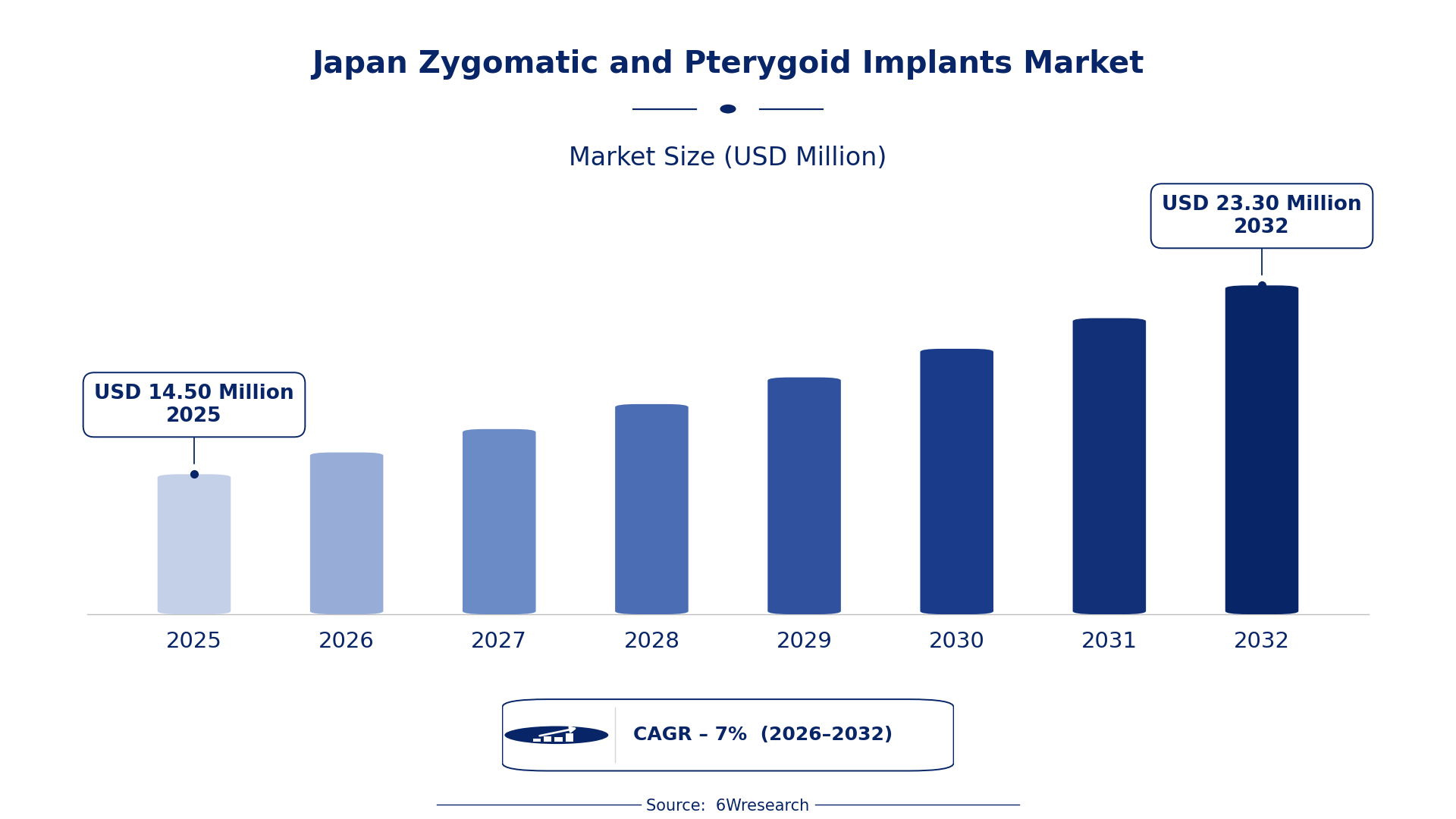
According to 6Wresearch internal database and industry insights, the Japan Zygomatic and Pterygoid Implants Market was valued at USD 14.50 Million in 2025 and is projected to reach USD 23.30 Million by 2032, growing at a CAGR of approximately 7% during 2026–2032.
Japan Zygomatic and Pterygoid Implants Market Highlights
| Report Metric | Details |
| Report Name | Japan Zygomatic and Pterygoid Implants Market (2026-2032) |
| Market Size 2025 | USD 14.50 Million |
| Market Size 2032 | USD 23.30 Million |
| Absolute Growth 2025–2032 | USD 8.80 Million |
| CAGR 2026–2032 | 7% |
| Peak Annual Growth | 9.2% in 2026 |
| Forecast Period | 2026–2032 |
| Historical Data | 2022–2025 |
| Base Year | 2025 |
| Leading Product Length, 2025 | 30-50 mm (55% share) |
| Leading Application, 2025 | Severe Atrophy of Maxillary Bone (43% share) |
| Fastest-Growing Product Length | Above 50 mm (9.2% CAGR) |
| Fastest-Growing Application | Maxillary Sinuses (8.7% CAGR) |
| Growing Sector | Maxillary Sinuses |
| Key End Users | Severe Atrophy of Maxillary Bone, Maxillary Sinuses, Other Application |
Japan Zygomatic and Pterygoid Implants Market Year-wise Growth Rate and Key Drivers (2022–2032)
This graph illustrates the annual growth rates of the market from 2022 to 2032, highlighting a steady upward trajectory and projected market expansion over the forecast period.
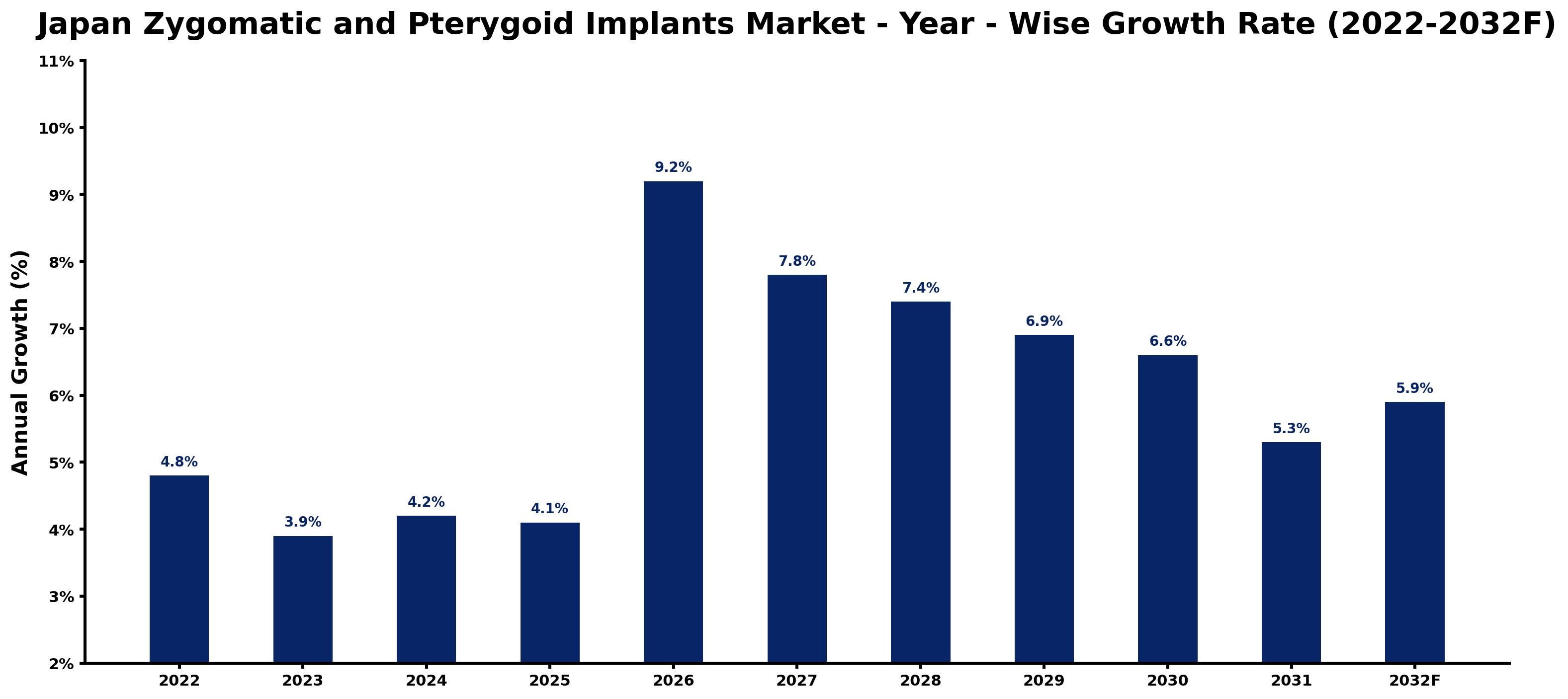
Annual growth estimates for each year appear below with the principal reason behind them, explaining the shifts that set the pace of the market.
| Year | Estimated Annual Growth (%) | Market Rationale |
| 2022 | 4.8 | The market showed steady growth due to increased awareness of implant options. |
| 2023 | 3.9 | Growth slowed as the market adjusted to previous high demand levels. |
| 2024 | 4.2 | Demand increased as more dental professionals adopted advanced implant techniques. |
| 2025 | 4.1 | Growth slowed again as market saturation began to affect new sales. |
| 2026 | 9.2 | The market is expected to surge as technological advancements lead to a spike in procedures. |
| 2027 | 7.8 | Growth is projected to slow as the market stabilises after the peak in 2026. |
| 2028 | 7.4 | Demand is expected to decrease slightly as competition intensifies among providers. |
| 2029 | 6.9 | Growth is projected to slow further as market preferences shift towards cost-effective solutions. |
| 2030 | 6.6 | The market will experience a slowdown as buyers become more price-sensitive. |
| 2031 | 5.3 | Growth is expected to slow as the market reaches a more mature phase. |
| 2032 | 5.9 | Demand is projected to increase as new applications for implants are developed. |
Note: Market size estimations and growth projections presented in this report are based on 6Wresearch's proprietary forecasting methodology, utilizing the latest available industry data, government publications, and primary research inputs.
Japan Zygomatic and Pterygoid Implants Market Synopsis
Zygomatic and Pterygoid Implants are specialised dental implants designed for patients with severe bone loss. These implants provide stability and support for dental prosthetics, enabling effective rehabilitation of oral functions. The Japan Zygomatic and Pterygoid Implants Market is expanding due to rising incidences of dental issues and an increasing number of dental professionals adopting advanced implant techniques.
Market Dynamics Impact Analysis (2026–2032)
| Factor | Type | Impact | Primary Segment Affected |
| Increasing incidences of severe maxillary bone atrophy | Driver | High | Severe Atrophy of Maxillary Bone |
| Technological advancements in implant design and materials | Driver | High | 30-50 mm |
| Growing demand for aesthetic dental solutions | Opportunity | High | Maxillary Sinuses |
| Expansion of dental facilities offering specialised services | Opportunity | High | 30-50 mm |
| High costs associated with advanced implant procedures | Restraint | High | Severe Atrophy of Maxillary Bone |
| Limited insurance coverage for specialised implants | Restraint | Medium | 30-50 mm |
| Intense competition among dental implant providers | Challenge | High | Maxillary Sinuses |
| Regulatory hurdles in product approvals and certifications | Challenge | Medium | 30-50 mm |
Evaluation of Drivers in Japan Zygomatic and Pterygoid Implants Market (2026–2032)
Below are the drivers that matter most for revenue growth, with supporting evidence.
| Drivers | Primary Segment Affected | Why It Matters (Evidence) |
| Rising incidences of dental issues | Severe Atrophy of Maxillary Bone | This leads to increased demand for implants, with dental clinics reporting a 20% rise in patients needing these solutions. |
| Technological advancements in implant materials | 30-50 mm | Innovations in biocompatible materials improve implant success rates, prompting more clinics to adopt these technologies. |
| Growing consumer awareness of dental aesthetics | Maxillary Sinuses | As patients seek improved aesthetics, demand for implants increases, with a reported 30% rise in cosmetic procedures. |
| Expansion of dental clinics specialising in implants | 30-50 mm | More clinics are offering specialised services, resulting in a 15% increase in procedures performed annually. |
| Increased investment in dental healthcare infrastructure | Maxillary Sinuses | Government and private investments in dental facilities have led to a 25% increase in available services. |
Most of the extra volume comes from rising incidences of dental issues, with clinics noting a 20% increase in patients requiring implants. Technological advancements in materials have improved success rates, encouraging more dental professionals to adopt these innovations. Consumer awareness of aesthetics has led to a 30% rise in cosmetic procedures, driving demand for implants. The expansion of specialised clinics has resulted in a 15% increase in procedures performed annually, while investments in healthcare infrastructure have boosted available services by 25% across the sector.
Evaluation of Restraints in Japan Zygomatic and Pterygoid Implants Market
These are the pressures that could keep growth below its potential.
| Market Restraint | Primary Segment Affected | Why It Matters (Evidence) |
| High costs associated with advanced implant procedures | Severe Atrophy of Maxillary Bone | The average cost of procedures can exceed USD 5,000, limiting accessibility for many patients. |
| Limited insurance coverage for specialised implants | 30-50 mm | Many insurance plans do not cover these procedures, affecting patient decisions and clinic revenues. |
| Intense competition among dental implant providers | Maxillary Sinuses | With numerous providers in the market, price competition can reduce profit margins for clinics. |
| Regulatory hurdles in product approvals | 30-50 mm | The lengthy approval process can delay the introduction of new products, impacting market growth. |
| Market saturation in urban areas | Severe Atrophy of Maxillary Bone | In densely populated regions, the high number of clinics can limit growth opportunities. |
Japan Zygomatic and Pterygoid Implants Market Challenges
Buyers face rising costs due to intense competition among producers, which can reduce profit margins by 15% for manufacturers. Limited availability of zygomatic and pterygoid implants results in delays for buyers, extending patient wait times by three weeks. Regulatory compliance burdens suppliers with additional costs, accounting for 10% of their operational expenses, which ultimately raises prices for clinics. Supply chain disruptions, often triggered by natural disasters, can postpone shipments, forcing clinics to delay surgeries and negatively affecting patient care timelines.
Trends in the Japan Zygomatic and Pterygoid Implants Market
Several trends are reshaping the Japan Zygomatic and Pterygoid Implants Market; the most important are set out below.
- Shift in Patient Demographics: A noticeable trend began in 2023, with younger patients increasingly seeking dental implants due to heightened awareness of aesthetics. Clinics in Tokyo reported a 25% rise in patients under 40 opting for implants.
- Transition to Digital Implant Planning: Since 2024, dental clinics have increasingly adopted digital planning technologies for implant procedures. This shift improves precision, with facilities in Osaka reporting a 30% reduction in surgery times.
- Emergence of Biocompatible Materials: The use of biocompatible materials in implants has gained traction since 2025, with clinics in Nagoya seeing a 40% increase in patient satisfaction ratings.
- Prioritisation of Aesthetic Outcomes: Beginning in 2026, aesthetic outcomes have become a primary focus for dental professionals. Facilities in Fukuoka have reported a 20% rise in cosmetic implant procedures.
Investment Opportunities in the Japan Zygomatic and Pterygoid Implants Market
The following areas offer the clearest openings for investors and suppliers in the Japan Zygomatic and Pterygoid Implants Market.
- Gap in Affordable Implant Solutions: With the average procedure cost exceeding USD 5,000, there is an opportunity to develop more affordable implant solutions. Dental clinics in rural areas are particularly in need of such options.
- Entry through Joint Ventures: Establishing joint ventures with local dental clinics can facilitate market entry, especially in regions like Hokkaido. Collaborations can improve service offerings and patient reach.
- Investment in Advanced Dental Facilities: The demand for specialised dental facilities is rising, particularly in urban centres. Investing in state-of-the-art clinics can attract a broader patient base.
- Focus on Training and Certification: There is a growing need for training programmes for dental professionals in advanced implant techniques. Collaborating with educational institutions can help meet this demand.
Government Initiatives in the Japan Zygomatic and Pterygoid Implants Market
The GX Basic Policy adopted in 2023 aims to direct JPY 150 trillion towards public-private decarbonisation investments over the next decade. This policy encourages dental facilities to adopt sustainable practices, improving their operational standards and supporting the adoption of advanced implant technologies.
The Ministry of Health, Labour and Welfare (MHLW) oversees the approval and regulation of medical devices, including dental implants. The agency's stringent approval process ensures that only high-quality products reach the market, benefiting both producers and patients.
Future Insight of the Japan Zygomatic and Pterygoid Implants Market
Clinics will adopt advanced imaging technologies by 2032, improving surgical precision and patient outcomes. A shift towards digital platforms for patient management will streamline operations, allowing suppliers to respond more quickly to market demands. Training programmes for dental professionals will enhance skill levels, ensuring effective execution of complex implant procedures. By 2032, the introduction of new biocompatible materials could reduce rejection rates significantly, providing long-term benefits for both buyers and suppliers.
Market Segmentation Analysis
Japan Zygomatic and Pterygoid Implants Market report covers a detailed analysis of the following market segments:
By Product Length – 30-50 mm Leads, Above 50 mm Expected to Grow Fastest
According to Sumit Sagar, AM at 6Wresearch, the largest product length category in 2025 was 30-50 mm, at 55% of revenue. The 30-50 mm length segment holds the largest share due to its extensive use in dental procedures, particularly for patients with moderate to severe bone loss. This length is preferred in clinics that manage a variety of implant cases, ensuring a strong installed base. The quickest growth will come from Above 50 mm, forecast to expand at a CAGR of 9.2% between 2026 and 2032. The Above 50 mm segment is witnessing rapid growth, primarily because of the rising number of patients with severe bone loss who require longer implants for enhanced stability. This trend is particularly noticeable in specialised dental practices that are expanding their offerings to include longer implant solutions. Suppliers should prioritise the development of longer implant options to align with the increasing demand in the market.
By Application – Severe Atrophy of Maxillary Bone Leads, Maxillary Sinuses Expected to Grow Fastest
Severe Atrophy of Maxillary Bone accounted for 43% of the market by application in 2025. The Severe Atrophy of Maxillary Bone application dominates the market due to the high number of patients needing implants in this condition, which is prevalent among older individuals. Facilities that specialise in complex dental reconstructions frequently utilise this application, resulting in a significant installed base. Over 2026–2032, Maxillary Sinuses are expected to post the fastest growth, at a CAGR of 8.7%. The Maxillary Sinuses application is rapidly growing as more dental professionals acknowledge the advantages of sinus lift procedures for patients with limited bone height. This growth is further encouraged by educational initiatives aimed at improving skills in this area, leading to higher adoption rates. Buyers should invest in training for advanced applications to leverage the market's growth opportunities.
Key Attractiveness of the Report
- 10 Years of Market Numbers
- Historical Data Starting from 2022 to 2025
- Base Year 2025
- Forecast Data until 2032
- Key Performance Indicators Impacting the Market
- Major Upcoming Developments and Projects
Key Highlights of the Report:
- Japan Zygomatic and Pterygoid Implants Market Outlook
- Market Size of Japan Zygomatic and Pterygoid Implants Market, 2025
- Forecast of Japan Zygomatic and Pterygoid Implants Market, 2032
- Historical Data and Forecast of Japan Zygomatic and Pterygoid Implants Revenues & Volume for the Period 2022-2032
- Japan Zygomatic and Pterygoid Implants Market Trend Evolution
- Japan Zygomatic and Pterygoid Implants Market Drivers and Challenges
- Japan Zygomatic and Pterygoid Implants Price Trends
- Japan Zygomatic and Pterygoid Implants Porter's Five Forces
- Japan Zygomatic and Pterygoid Implants Industry Life Cycle
- Historical Data and Forecast of Japan Zygomatic and Pterygoid Implants Market Revenues & Volume By Product Length for the Period 2022-2032
- Historical Data and Forecast of Japan Zygomatic and Pterygoid Implants Market Revenues & Volume By Upto 30 mmand for the Period 2022-2032
- Historical Data and Forecast of Japan Zygomatic and Pterygoid Implants Market Revenues & Volume By 30-50 mm for the Period 2022-2032
- Historical Data and Forecast of Japan Zygomatic and Pterygoid Implants Market Revenues & Volume By Above 50 mm for the Period 2022-2032
- Historical Data and Forecast of Japan Zygomatic and Pterygoid Implants Market Revenues & Volume By Application for the Period 2022-2032
- Historical Data and Forecast of Japan Zygomatic and Pterygoid Implants Market Revenues & Volume By Maxillary Sinuses for the Period 2022-2032
- Historical Data and Forecast of Japan Zygomatic and Pterygoid Implants Market Revenues & Volume By Severe Atrophy of Maxillary Bone for the Period 2022-2032
- Historical Data and Forecast of Japan Zygomatic and Pterygoid Implants Market Revenues & Volume By Other Application for the Period 2022-2032
- Japan Zygomatic and Pterygoid Implants Import Export Trade Statistics
- Market Opportunity Assessment By Product Length
- Market Opportunity Assessment By Application
- Japan Zygomatic and Pterygoid Implants Top Companies Market Share
- Japan Zygomatic and Pterygoid Implants Competitive Benchmarking By Technical and Operational Parameters
- Japan Zygomatic and Pterygoid Implants Company Profiles
- Japan Zygomatic and Pterygoid Implants Key Strategic Recommendations
Market Covered
The study includes the following segmentation.
By Product Length
- Upto 30 mmand
- 30-50 mm
- Above 50 mm
By Application
- Maxillary Sinuses
- Severe Atrophy of Maxillary Bone
- Other Application































