Jordan Nylon Market Size Growth Rate
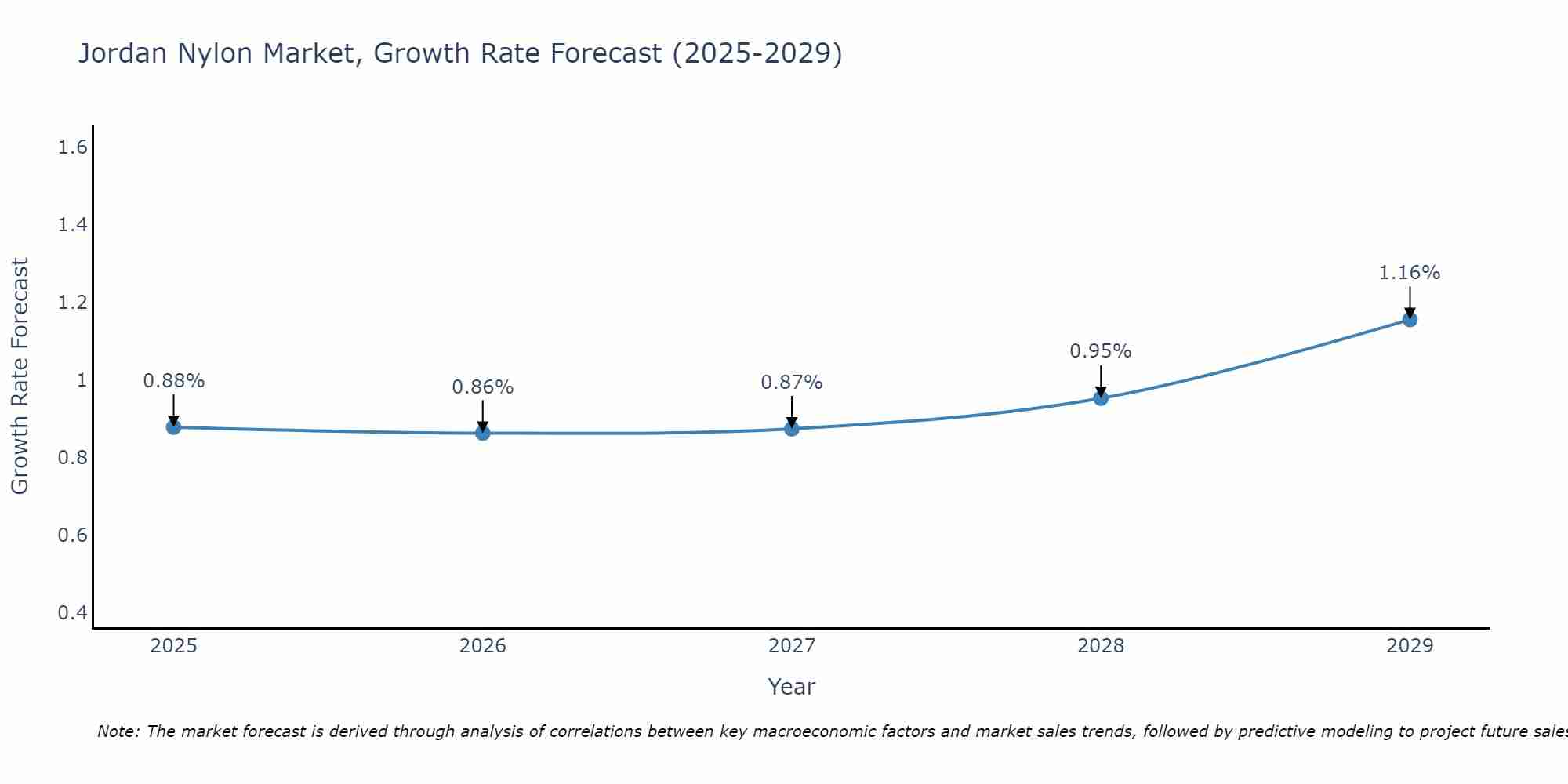
The Jordan Nylon Market is projected to witness mixed growth rate patterns during 2025 to 2029. Commencing at 0.88% in 2025, growth builds up to 1.16% by 2029.
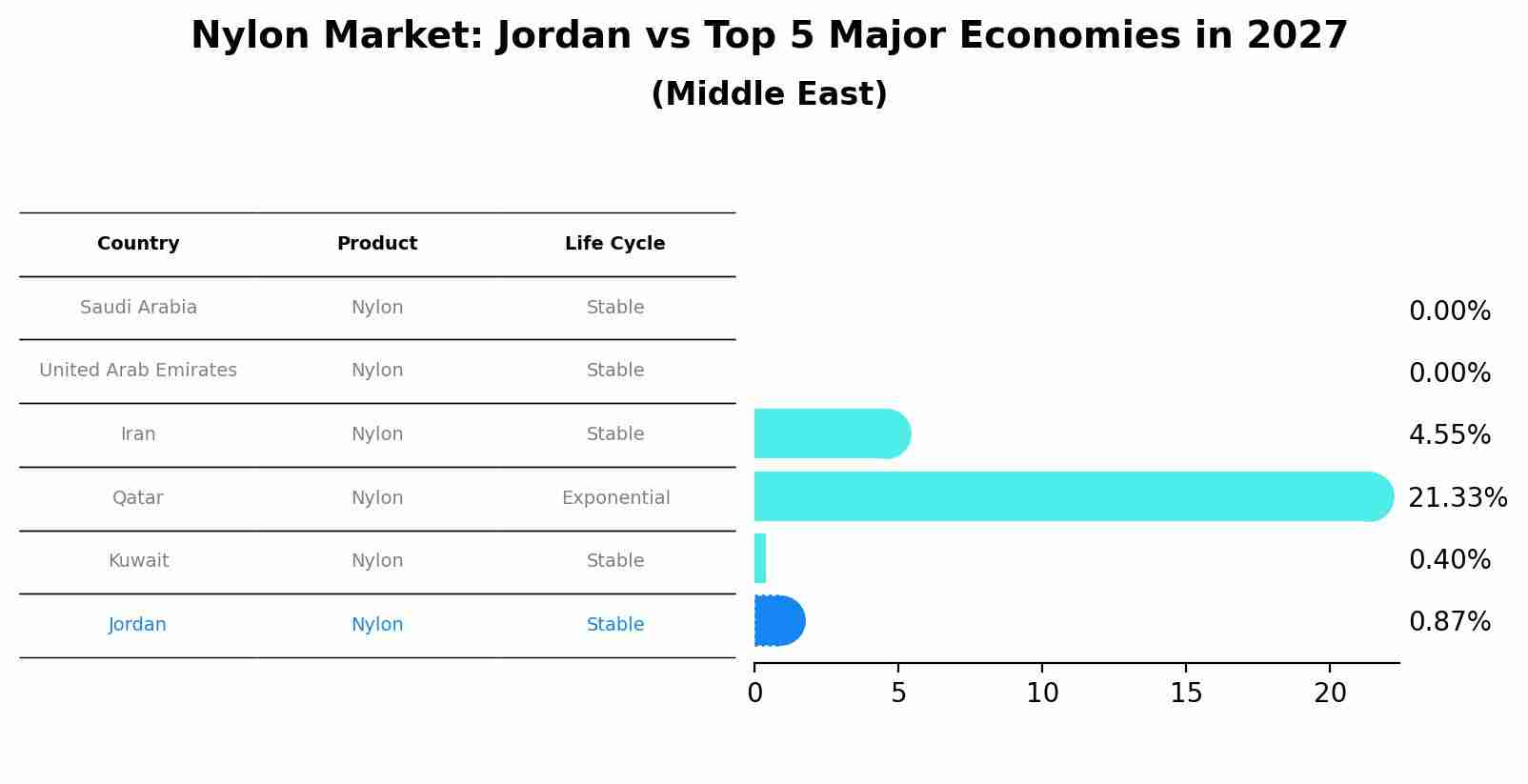
Nylon Market: Jordan vs Top 5 Major Economies in 2027 (Middle East)
By 2027, Jordan's Nylon market is forecasted to achieve a stable growth rate of 0.87%, with Saudi Arabia leading the Middle East region, followed by United Arab Emirates, Iran, Qatar and Kuwait.
Jordan Nylon Market Overview
The Jordan Nylon Market is experiencing steady growth driven by increasing demand from various industries such as automotive, textiles, and packaging. The market is characterized by a competitive landscape with key players including local manufacturers and international brands competing for market share. Factors contributing to the growth of the Jordan Nylon Market include the material`s durability, versatility, and cost-effectiveness. Additionally, advancements in technology leading to the development of innovative nylon products are expected to further propel market growth. The rising awareness about sustainable practices and the shift towards eco-friendly materials are also influencing market trends. Overall, the Jordan Nylon Market is poised for continued expansion in the coming years, driven by diverse applications and evolving consumer preferences.
Jordan Nylon Market Trends
The Jordan Nylon Market is currently experiencing a shift towards sustainable and eco-friendly practices, with an increasing demand for recycled nylon materials. Consumers are becoming more conscious of the environmental impact of nylon production and are seeking products that are made from recycled or upcycled nylon. Additionally, there is a growing interest in innovative applications of nylon in the fashion and automotive industries, driving the market towards new product developments and collaborations. Companies in the Jordan Nylon Market are focusing on enhancing the durability, performance, and sustainability of nylon products to meet the evolving needs of consumers and stay competitive in the market.
Jordan Nylon Market Challenges
In the Jordan Nylon Market, some challenges include fluctuations in raw material prices, increasing competition from alternative materials like polyester, and the impact of global economic conditions on consumer demand. Additionally, environmental concerns and regulations regarding the sustainability of nylon production processes pose a challenge for manufacturers in the market. Market players need to adapt quickly to changing consumer preferences towards eco-friendly products and invest in research and development to create innovative nylon solutions that are both cost-effective and environmentally sustainable. Developing effective marketing strategies to differentiate their products in a crowded market and navigating trade policies and tariffs also present challenges for companies operating in the Jordan Nylon Market.
Jordan Nylon Market Investment Opportunities
Investment opportunities in the Jordan Nylon Market include potential growth in the textile industry, particularly in the production of nylon-based products such as garments, bags, and ropes. With increasing urbanization and disposable income levels in Jordan, there is a growing demand for durable and versatile nylon materials. Investors could consider opportunities in establishing or expanding nylon manufacturing facilities to cater to this demand. Additionally, advancements in technology and sustainable practices in nylon production present opportunities for innovative and environmentally friendly investments in the market. Collaborating with local textile manufacturers or suppliers to integrate nylon materials into their product lines could also be a promising investment strategy in the Jordan Nylon Market.
Jordan Nylon Market Government Policy
The Jordanian government has implemented various policies to support the nylon market in the country. These policies include providing subsidies and incentives to promote the growth of the nylon industry, reducing trade barriers to facilitate the import of raw materials needed for nylon production, and implementing regulations to ensure quality standards and environmental sustainability within the sector. Additionally, the government has focused on investing in research and development initiatives to enhance the competitiveness of the nylon market and encourage innovation in the industry. Overall, these policies aim to boost the growth of the nylon market in Jordan, create employment opportunities, and contribute to the country`s economic development.
Jordan Nylon Market Future Outlook
The future outlook for the Jordan Nylon Market appears promising, driven by increasing demand for nylon products across various industries such as textiles, automotive, and consumer goods. The market is expected to witness steady growth due to the versatile properties of nylon, including durability, strength, and resistance to abrasion. The growing emphasis on sustainability and eco-friendly materials is likely to drive the adoption of bio-based nylons in the market. Additionally, technological advancements in the production of nylon materials and increasing investments in research and development are anticipated to further fuel market growth. Overall, the Jordan Nylon Market is poised for expansion in the coming years, offering opportunities for manufacturers to innovate and cater to evolving consumer preferences.
Key Highlights of the Report:
- Jordan Nylon Market Outlook
- Market Size of Jordan Nylon Market, 2024
- Forecast of Jordan Nylon Market, 2031
- Historical Data and Forecast of Jordan Nylon Revenues & Volume for the Period 2021 - 2031
- Jordan Nylon Market Trend Evolution
- Jordan Nylon Market Drivers and Challenges
- Jordan Nylon Price Trends
- Jordan Nylon Porter's Five Forces
- Jordan Nylon Industry Life Cycle
- Historical Data and Forecast of Jordan Nylon Market Revenues & Volume By Product for the Period 2021 - 2031
- Historical Data and Forecast of Jordan Nylon Market Revenues & Volume By Nylon 6 for the Period 2021 - 2031
- Historical Data and Forecast of Jordan Nylon Market Revenues & Volume By Nylon 66 for the Period 2021 - 2031
- Historical Data and Forecast of Jordan Nylon Market Revenues & Volume By Application for the Period 2021 - 2031
- Historical Data and Forecast of Jordan Nylon Market Revenues & Volume By Automobile for the Period 2021 - 2031
- Historical Data and Forecast of Jordan Nylon Market Revenues & Volume By Electrical & Electronics for the Period 2021 - 2031
- Historical Data and Forecast of Jordan Nylon Market Revenues & Volume By Engineering Plastics for the Period 2021 - 2031
- Historical Data and Forecast of Jordan Nylon Market Revenues & Volume By Textiles for the Period 2021 - 2031
- Historical Data and Forecast of Jordan Nylon Market Revenues & Volume By Others for the Period 2021 - 2031
- Jordan Nylon Import Export Trade Statistics
- Market Opportunity Assessment By Product
- Market Opportunity Assessment By Application
- Jordan Nylon Top Companies Market Share
- Jordan Nylon Competitive Benchmarking By Technical and Operational Parameters
- Jordan Nylon Company Profiles
- Jordan Nylon Key Strategic Recommendations






































