Jordan Phenol Market Size Growth Rate
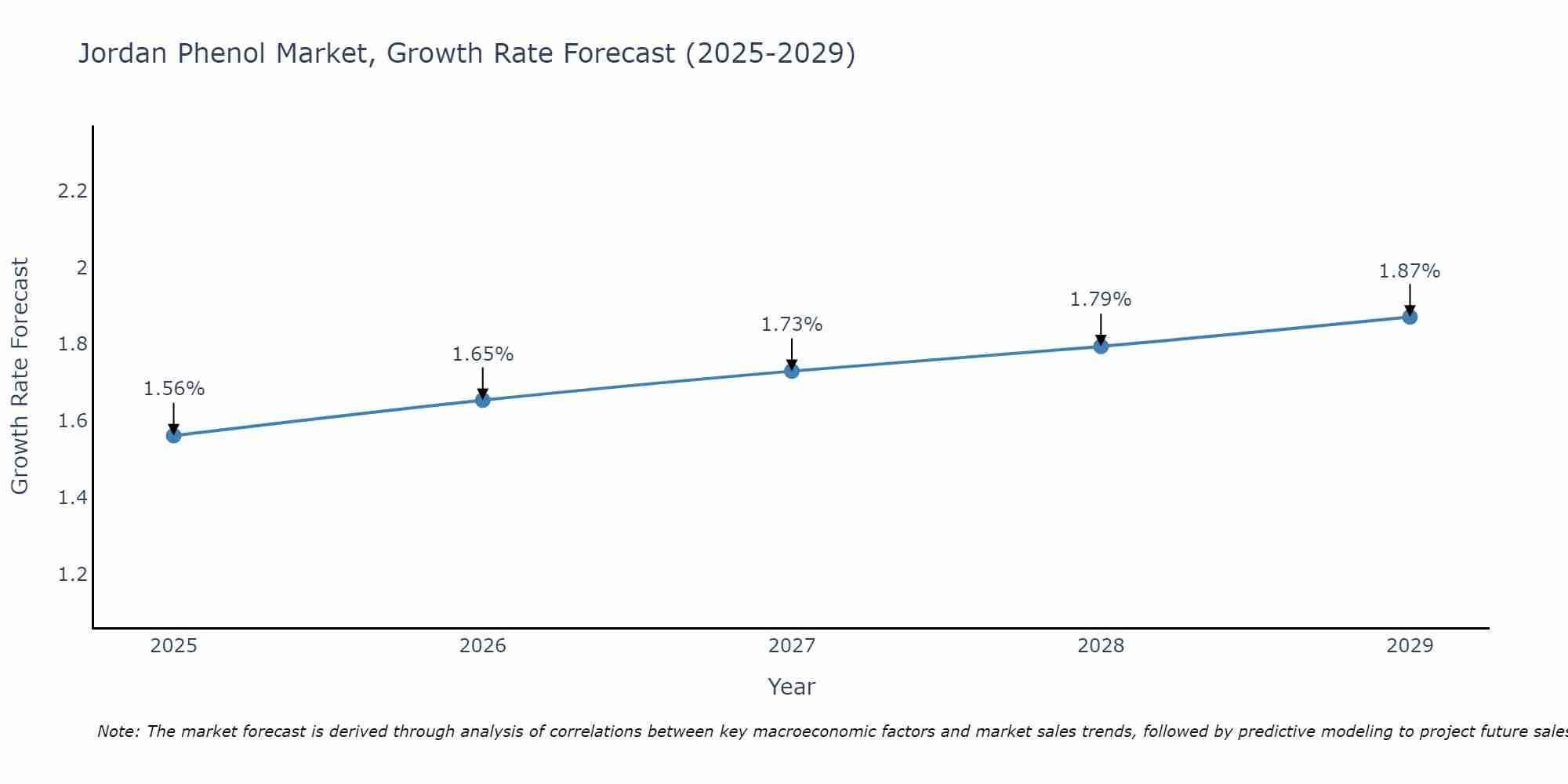
The Jordan Phenol Market is likely to experience consistent growth rate gains over the period 2025 to 2029. The growth rate starts at 1.56% in 2025 and reaches 1.87% by 2029.
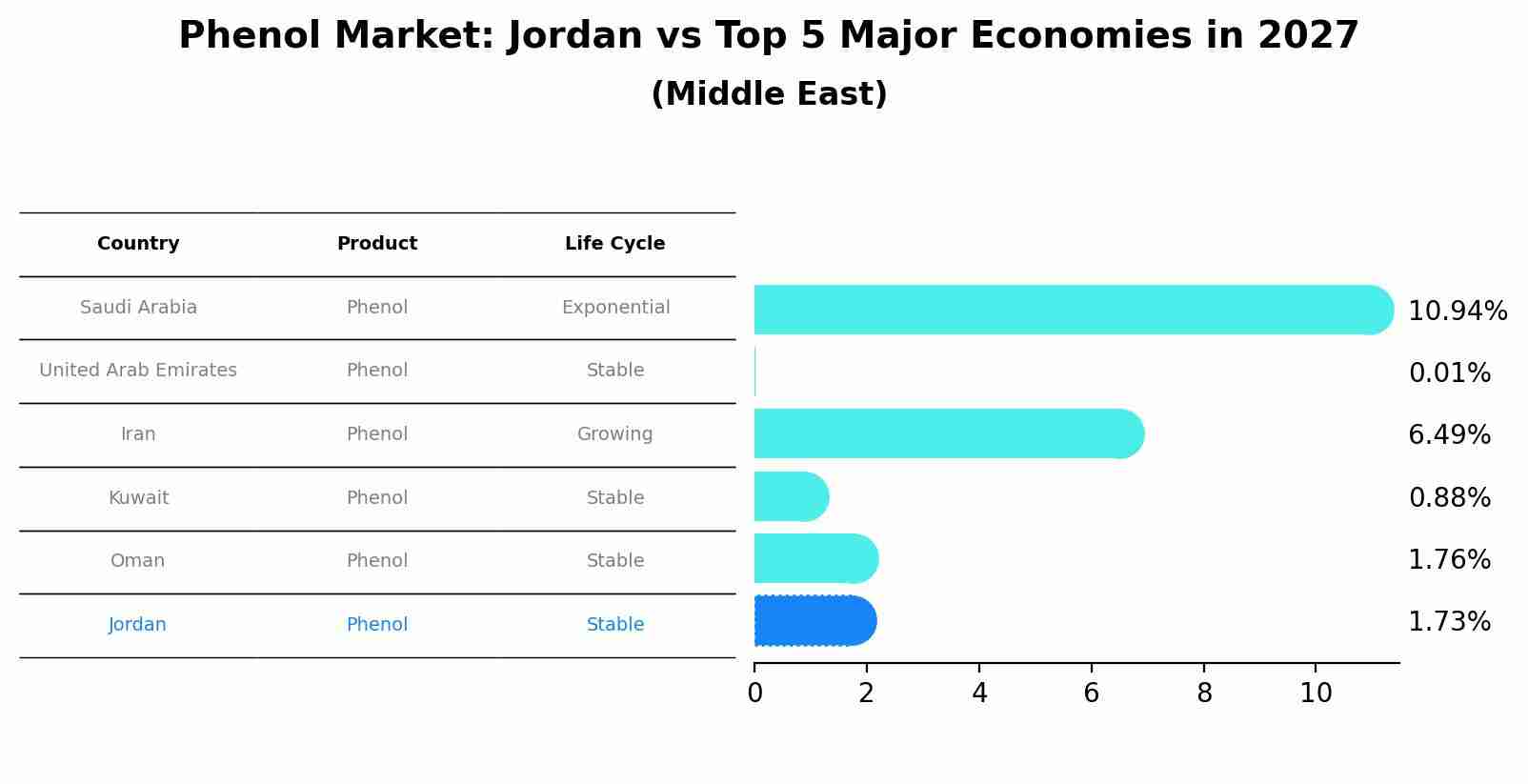
Phenol Market: Jordan vs Top 5 Major Economies in 2027 (Middle East)
In the Middle East region, the Phenol market in Jordan is projected to expand at a stable growth rate of 1.73% by 2027. The largest economy is Saudi Arabia, followed by United Arab Emirates, Iran, Kuwait and Oman.
Jordan Phenol Market Overview
The Jordan Phenol Market is experiencing steady growth driven by increasing demand from various industries such as automotive, construction, and electronics. Phenol, a key chemical compound used in the production of plastics, resins, and pharmaceuticals, is witnessing rising usage in Jordan due to its versatile applications. The market is also benefiting from the country`s growing industrial sector and the expansion of manufacturing activities. Key players in the Jordan Phenol Market are focusing on strategic partnerships, product innovations, and capacity expansions to meet the escalating demand and gain a competitive edge. However, challenges such as fluctuating raw material prices and environmental regulations pose potential constraints to market growth. Overall, the Jordan Phenol Market presents opportunities for further development and investment in the coming years.
Jordan Phenol Market Trends
The Jordan Phenol Market is experiencing growth due to the rising demand from various industries such as pharmaceuticals, plastics, and electronics. The increased use of phenol in the production of bisphenol-A (BPA) and phenolic resins is driving the market growth. The growing awareness about the benefits of phenol-based products, such as durability and heat resistance, is also contributing to the market expansion. Additionally, the emphasis on sustainable practices and environmentally friendly production methods is shaping the market trends, leading to the introduction of bio-based phenol products. The market is expected to continue growing in the coming years as industries seek innovative solutions and sustainable alternatives in their manufacturing processes.
Jordan Phenol Market Challenges
In the Jordan Phenol market, one of the key challenges faced is the volatility in raw material prices. Phenol is primarily derived from crude oil or benzene, both of which are subject to price fluctuations in the global market. This can lead to unpredictable production costs for phenol manufacturers in Jordan, impacting their profitability and pricing strategies. Another challenge is the limited domestic production capacity, which can result in supply shortages and reliance on imports to meet local demand. Additionally, regulatory constraints and environmental concerns surrounding the production and use of phenol can pose challenges for market players in terms of compliance and sustainability efforts. Overall, navigating these challenges requires strategic planning, risk management, and innovation within the Jordan Phenol market.
Jordan Phenol Market Investment Opportunities
The Jordan Phenol Market offers promising investment opportunities due to the country`s strategic location, growing chemical industry, and increasing demand for phenol in various applications such as plastics, pharmaceuticals, and personal care products. With a stable political environment and government support for industrial development, investing in phenol production facilities or distribution channels in Jordan could yield favorable returns. Additionally, the country`s proximity to key markets in the Middle East and Europe provides a competitive advantage for investors looking to capitalize on the growing demand for phenol in the region. Collaborating with local manufacturers or forming joint ventures could also offer opportunities for market penetration and expansion in the Jordan Phenol Market.
Jordan Phenol Market Government Policy
Government policies related to the Jordan Phenol Market primarily focus on promoting local production to reduce reliance on imports and boost the country`s self-sufficiency in the chemical sector. The government has implemented measures such as providing financial incentives and support to domestic phenol producers, as well as imposing tariffs and restrictions on imported phenol products to protect local industries. Additionally, there are regulations in place to ensure environmental sustainability and safety standards in phenol production facilities. The government aims to enhance the competitiveness of the Jordan Phenol Market by fostering innovation, investment, and technological advancements in the industry while also addressing any challenges related to market fluctuations and global demand.
Jordan Phenol Market Future Outlook
The Jordan Phenol Market is projected to witness steady growth in the coming years due to increasing demand from various end-use industries such as automotive, construction, and electronics. The market is expected to be driven by the growing construction activities in the region, as well as the expanding automotive sector. Additionally, the rising awareness regarding the benefits of using phenol in the production of various consumer goods is likely to further boost market growth. However, challenges such as fluctuating raw material prices and environmental concerns related to phenol production processes may hinder market expansion. Overall, with increasing industrialization and economic development in Jordan, the phenol market is expected to show positive growth trends in the foreseeable future.
Key Highlights of the Report:
- Jordan Phenol Market Outlook
- Market Size of Jordan Phenol Market, 2021
- Forecast of Jordan Phenol Market, 2031
- Historical Data and Forecast of Jordan Phenol Revenues & Volume for the Period 2021 - 2031
- Jordan Phenol Market Trend Evolution
- Jordan Phenol Market Drivers and Challenges
- Jordan Phenol Price Trends
- Jordan Phenol Porter's Five Forces
- Jordan Phenol Industry Life Cycle
- Historical Data and Forecast of Jordan Phenol Market Revenues & Volume By End-users for the Period 2021 - 2031
- Historical Data and Forecast of Jordan Phenol Market Revenues & Volume By Bisphenol A for the Period 2021 - 2031
- Historical Data and Forecast of Jordan Phenol Market Revenues & Volume By Phenolic Resins for the Period 2021 - 2031
- Historical Data and Forecast of Jordan Phenol Market Revenues & Volume By Caprolactam for the Period 2021 - 2031
- Historical Data and Forecast of Jordan Phenol Market Revenues & Volume By Alkyl Phenyls for the Period 2021 - 2031
- Historical Data and Forecast of Jordan Phenol Market Revenues & Volume By Others for the Period 2021 - 2031
- Jordan Phenol Import Export Trade Statistics
- Market Opportunity Assessment By End-users
- Jordan Phenol Top Companies Market Share
- Jordan Phenol Competitive Benchmarking By Technical and Operational Parameters
- Jordan Phenol Company Profiles
- Jordan Phenol Key Strategic Recommendations






































