Kenya Apiculture Market Size, Share & Growth Rate
The Kenya Apiculture Market was estimated at USD 1114 Million in 2025 and is projected to reach USD 1630 Million by 2032, growing at a CAGR of 5.6% from 2026 to 2032. This growth trajectory is primarily fueled by the rising demand for honey both locally and internationally, coupled with the increasing popularity of organic and sustainably sourced products. The diverse climatic conditions and rich floral biodiversity in Kenya further enhance the viability of beekeeping, providing a solid foundation for market expansion.
Kenya Apiculture Market Year-wise Growth Rate and Key Drivers
This graph highlights how the Kenya Apiculture Market has steadily grown over the years, supported by major growth factors.
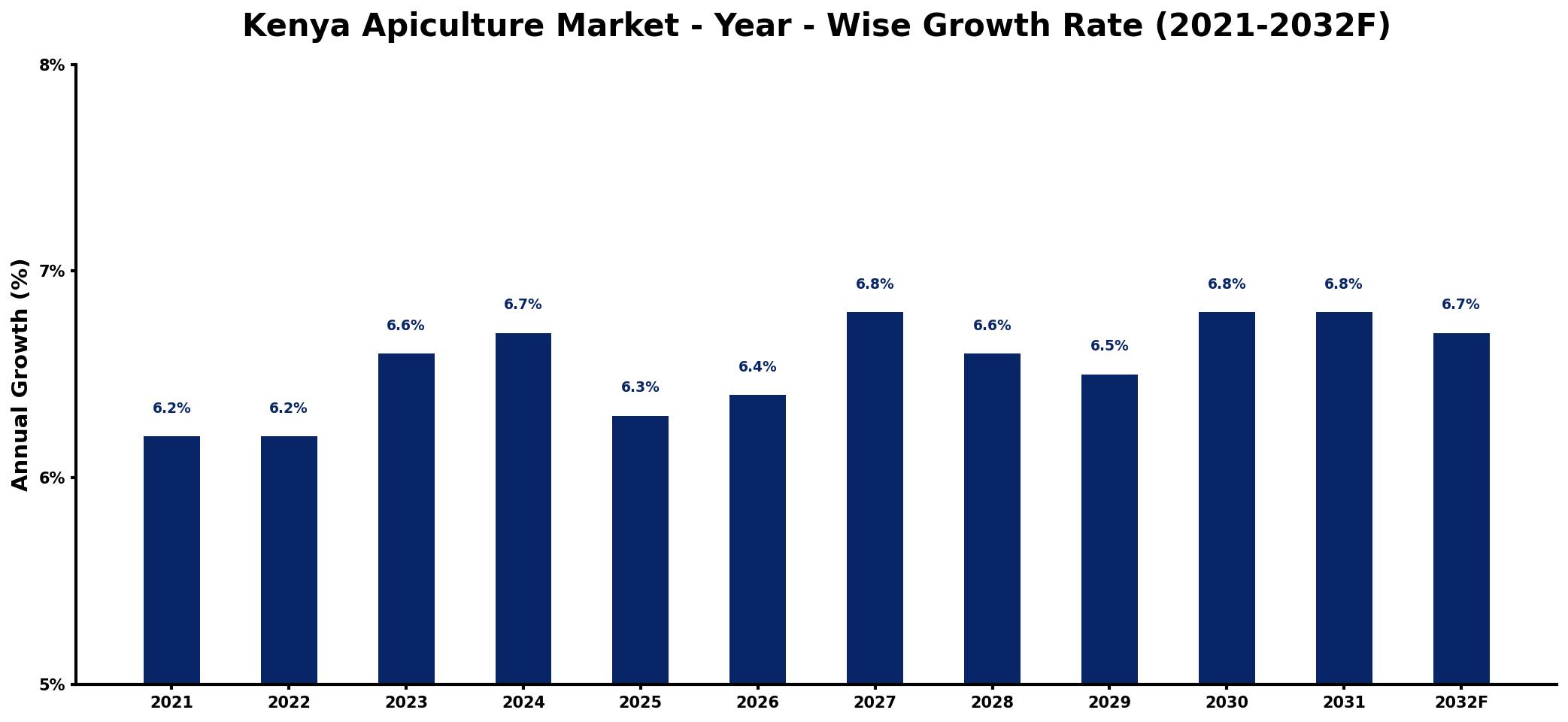
The table below presents the year‑wise growth rates along with the key drivers influencing the market
| Year | Growth Rate | Major Drivers |
| 2021 | 6.2% | Rising consumer health awareness |
| 2022 | 6.2% | Increased export opportunities emerging |
| 2023 | 6.6% | Growing organic product demand |
| 2024 | 6.7% | Investment in sustainable practices |
| 2025 | 6.3% | Expansion of local markets |
| 2026 | 6.4% | Technological advancements in production |
| 2027 | 6.8% | Government support for farmers |
| 2028 | 6.6% | Increased urbanization trends noted |
| 2029 | 6.5% | Emerging online retail platforms |
| 2030 | 6.8% | Strengthened value chain partnerships |
| 2031 | 6.8% | Diversification of agricultural products |
| 2032 | 6.7% | Enhanced education and training programs |
Note: Market size estimations and growth projections presented in this report are based on 6Wresearch's proprietary forecasting methodology, utilizing the latest available industry data, government publications, and primary research inputs.
Kenya Apiculture Market Synopsis
Kenya's apiculture market is marked by a significant focus on honey production, which serves as the primary output for many small-scale and commercial beekeepers alike. Local consumption is on the rise, while export potential continues to expand due to the growing appreciation for Kenyan honey in international markets.
In addition to honey, various value-added products such as beeswax, propolis, and royal jelly are being explored. These products present unique opportunities for diversification, allowing beekeepers to enhance their revenue streams while catering to a wider array of consumer interests.
Kenya Apiculture Market Key Takeaways
- Honey production remains the cornerstone of Kenyas apiculture market, with increasing local and international demand.
- There is a marked shift towards organic and sustainable beekeeping practices among producers.
- Value-added products such as flavored honey and cosmetics derived from bee products are gaining traction.
- Government policies are actively supporting the sector through training, regulation, and investment incentives.
- Technological advancements are improving beekeeping efficiency and honey quality across the market.
Evaluation of Restraints in Kenya Apiculture Market
The Kenya Apiculture Market faces several key challenges that limit its growth potential. A critical issue is the limited access to modern beekeeping technologies, which hampers efficiency and productivity among many local beekeepers. Additionally, inadequate training and resources often lead to inconsistent quality standards in honey production, making it difficult for producers to compete, especially in export markets. The adverse effects of climate change, along with pests and diseases affecting bee populations, further complicate the landscape, necessitating targeted interventions and sustainable practices to bolster the industry's resilience.
Kenya Apiculture Market Trends
Emerging trends in the Kenya Apiculture Market highlight a growing consumer demand for organic and sustainably sourced honey, aligning with global shifts towards environmentally conscious consumption. This is driving beekeepers to adopt eco-friendly practices and explore organic certification processes. Furthermore, the advent of modern beekeeping technologies is fostering improved efficiency, while innovations in product development, such as honey-based skincare items and mead, are expanding market opportunities and appealing to diverse consumer segments.
Kenya Apiculture Market Opportunities
The Kenya Apiculture Market presents various avenues for growth and investment. Stakeholders can capitalize on the increasing demand for honey and bee-derived products by investing in production, processing facilities, and value-added product development. Opportunities also exist in manufacturing advanced beekeeping equipment and in establishing eco-conscious apiaries that promote sustainable practices. With a burgeoning consumer awareness of health benefits linked to honey, coupled with government support initiatives, the potential for financial returns remains promising.
Government Initiatives in the Kenya Apiculture Market
The Kenyan government is committed to fostering the growth of the apiculture sector through various supportive policies. Initiatives such as the National Beekeeping Policy and the Beekeeping Act aim to enhance honey quality and promote best practices in the industry. These policies also focus on providing necessary training and financial incentives to local beekeepers, thereby improving their capacity to participate in both domestic and export markets. Such support is essential for cultivating a sustainable and competitive apiculture environment in the region.
Future Insights of the Kenya Apiculture Market
Looking ahead to 2026-2032, the Kenya Apiculture Market is poised for significant expansion. The combination of increasing local consumption, growing export potential, and the rising health consciousness among consumers are all pivotal drivers of this growth. With continued government support and advancements in beekeeping practices, there is considerable scope for innovation and sustainability in the sector. Furthermore, as technological adoption becomes more widespread, the potential for productivity gains and enhanced product quality will likely position Kenya as a key player in the global apiculture landscape.
Kenya Apiculture Market Latest Developments (2025 - 2026)
In the recent months leading to mid-2026, the Kenya Apiculture Market has witnessed a notable shift towards adopting organic and sustainable practices. Collaborative efforts between government entities and NGOs have been instrumental in facilitating training programs for local beekeepers, emphasizing quality control and better market access. Moreover, an increase in research and development initiatives is aimed at improving bee health and productivity, further enhancing the competitiveness of the industry.
Kenya Apiculture Market - Key Attractiveness of the Report
- 10 Years of Market Numbers
- Historical Data Starting from 2022 to 2025
- Base Year: 2025
- Forecast Data until 2032
- Key Performance Indicators Impacting the Market
- Major Upcoming Developments and Projects
Key Highlights of the Report:
- Kenya Apiculture Market Outlook
- Market Size of Kenya Apiculture Market, 2025
- Forecast of Kenya Apiculture Market, 2032
- Historical Data and Forecast of Kenya Apiculture Revenues & Volume for the Period 2022-2032F
- Kenya Apiculture Market Trend Evolution
- Kenya Apiculture Market Drivers and Challenges
- Kenya Apiculture Price Trends
- Kenya Apiculture Porter's Five Forces
- Kenya Apiculture Industry Life Cycle
- Historical Data and Forecast of Kenya Apiculture Market Revenues & Volume By Product Type for the Period 2022-2032F
- Historical Data and Forecast of Kenya Apiculture Market Revenues & Volume By Honey for the Period 2022-2032F
- Historical Data and Forecast of Kenya Apiculture Market Revenues & Volume By Beeswax for the Period 2022-2032F
- Historical Data and Forecast of Kenya Apiculture Market Revenues & Volume By Live-bees for the Period 2022-2032F
- Historical Data and Forecast of Kenya Apiculture Market Revenues & Volume By Others for the Period 2022-2032F
- Historical Data and Forecast of Kenya Apiculture Market Revenues & Volume By Application for the Period 2022-2032F
- Historical Data and Forecast of Kenya Apiculture Market Revenues & Volume By Medical for the Period 2022-2032F
- Historical Data and Forecast of Kenya Apiculture Market Revenues & Volume By Food Beverages for the Period 2022-2032F
- Historical Data and Forecast of Kenya Apiculture Market Revenues & Volume By Cosmetics for the Period 2022-2032F
- Historical Data and Forecast of Kenya Apiculture Market Revenues & Volume By Others for the Period 2022-2032F
- Kenya Apiculture Import Export Trade Statistics
- Market Opportunity Assessment By Product Type
- Market Opportunity Assessment By Application
- Kenya Apiculture Top Companies Market Share
- Kenya Apiculture Competitive Benchmarking By Technical and Operational Parameters
- Kenya Apiculture Company Profiles
- Kenya Apiculture Key Strategic Recommendations






































