Kenya Two Wheeler Market Summary
The kenya two wheeler market was estimated at USD 364 Million in 2025 and is projected to reach USD 514 Million by 2032, growing at a CAGR of 6.2% from 2026 to 2032.
Kenya Two Wheeler Market Year-wise Growth Rate and Key Drivers
This graph highlights how the Kenya Two Wheeler Market has steadily grown over the past five years, supported by major growth factors.
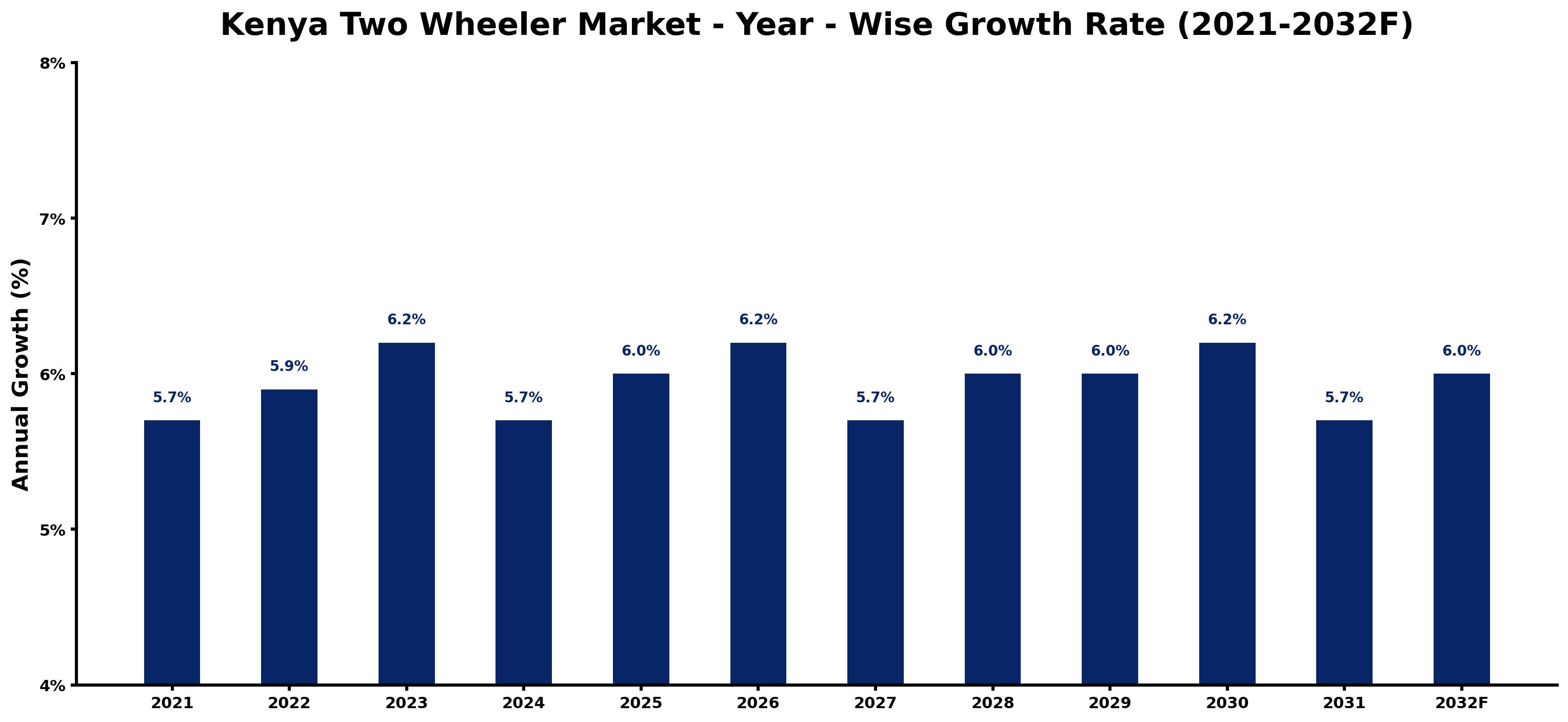
The table below presents the year wise growth rates along with the key drivers influencing the market
| Year | Growth Rate | Major Drivers |
| 2021 | 5.7% | Unsustainable urban congestion has prompted consumers to consider two-wheelers as viable solutions. |
| 2022 | 5.9% | Fuel price fluctuations have shifted preferences towards more economical transportation options. |
| 2023 | 6.2% | Youthful demographics increasingly favor two-wheelers for their affordability and convenience in commuting. |
| 2024 | 5.7% | Local manufacturing capabilities are improving, reducing costs and making bikes more accessible. |
| 2025 | 6.0% | E-commerce growth encourages fast deliveries, leading businesses to invest in two-wheeler fleets. |
| 2026 | 6.2% | Urban planning initiatives integrate two-wheeler lanes, enhancing their appeal for commuters. |
| 2027 | 5.7% | Technological innovations in electric two-wheelers align with sustainability trends in urban transport. |
| 2028 | 6.0% | International partnerships foster knowledge transfer, enhancing local bike manufacturing capabilities. |
| 2029 | 6.0% | Insurance products tailored for two-wheelers are beginning to emerge, boosting consumer confidence. |
| 2030 | 6.2% | Ride-sharing platforms are incorporating two-wheelers, promoting their usage in urban centers. |
| 2031 | 5.7% | Climate awareness campaigns push consumers towards more eco-friendly two-wheeler options. |
| 2032 | 6.0% | Financial institutions introduce tailored financing options, further incentivizing two-wheeler purchases. |
Note - Market size estimations and growth projections presented in this report are based on 6Wresearch's advanced forecasting approach, validated with industry datasets as of June 2026.
Kenya Two Wheeler Market Synopsis
The Kenya Two Wheeler Market is projected to reach 6.2% and witness significant growth during the forecast period (2026-2032). This growth trajectory is supported by various factors, including an increasing demand for motorcycles, favorable government policies, and rising disposable income among the population. Affordable and convenient, two-wheelers have gained popularity among commuters in both urban and rural settings, thereby reshaping transportation dynamics across the nation. Furthermore, the low maintenance costs associated with two-wheelers as compared to cars and buses make them an appealing choice for budget-conscious consumers, promoting broader adoption in the market.
Kenya Two Wheeler Market Growth Drivers
Several key drivers are propelling the growth of the Kenya Two Wheeler Market. The following factors illustrate the market's expansion:
- Rising Urbanization: Rapid urbanization in Kenya has led to increased congestion in cities, prompting many commuters to opt for two-wheelers that offer greater maneuverability and convenience.
- Government Support: The Kenyan government has implemented various policies aimed at promoting the use of two-wheelers, including tax incentives and infrastructure development that support two-wheeler usage.
- Economic Growth: With a steady increase in disposable incomes, more individuals are willing to invest in personal transportation, boosting the demand for motorcycles and scooters.
- Affordability: As two-wheelers generally have lower upfront costs compared to cars, they present a more accessible option for a larger segment of the population, particularly first-time buyers.
- Advancements in Technology: Technological innovations such as the introduction of electric two-wheelers have invigorated interest in the market, aligning with global sustainability trends.
Kenya Two Wheeler Market Trends and Opportunities
Current trends in the Kenya Two Wheeler Market are indicative of a transformative landscape. Opportunities abound as the market evolves, driven by various factors:
- Shift Towards Electric Models: The increasing environmental awareness among consumers is leading to a growing interest in electric two-wheelers, which are perceived as a sustainable alternative.
- Integration of Technology: Features such as GPS navigation and connectivity options are becoming more prevalent, catering to the tech-savvy population seeking enhanced riding experiences.
- Increased Collaboration: Partnerships between local governments and technology firms to bring innovative solutions to the market are paving the way for new product introductions and service enhancements.
- Health and Safety Awareness: A greater focus on safety and health is prompting consumers to seek two-wheelers equipped with better safety features, expanding market opportunities.
- Expansion of Distribution Channels: The rise of e-commerce platforms is facilitating easier access to purchasing motorcycles and scooters, further broadening consumer reach.
Kenya Two Wheeler Market Challenges and Restraints
Despite the promising growth trajectory, the Kenya Two Wheeler Market faces several challenges that could hinder its expansion:
- Infrastructure Deficiencies: Inadequate road infrastructure in certain areas can pose risks to two-wheeler users, affecting overall adoption rates.
- Regulatory Hurdles: Compliance with varying local regulations can complicate market entry and impact operational efficiencies for manufacturers.
- Market Saturation: Increasing competition among two-wheeler manufacturers may lead to market saturation, affecting pricing strategies and profitability.
- Consumer Safety Concerns: High accident rates associated with motorcycle usage can deter potential buyers, posing a significant challenge for the market.
- Economic Fluctuations: Economic instability or downturns can adversely affect consumer spending power and overall market demand.
Kenya Two Wheeler Market Government Investment and Initiatives
The Kenyan government has recognized the potential of the two-wheeler market and is investing in initiatives to foster its growth. Key government policies include:
- Infrastructure Development: Investment in road infrastructure specifically designed for two-wheelers aims to enhance safety and accessibility.
- Tax Incentives: The government has introduced tax breaks for electric two-wheelers to encourage environmentally friendly transportation options.
- Public Awareness Campaigns: Programs aimed at educating consumers about the benefits of two-wheelers and safe riding practices are helping to increase market acceptance.
- Partnership with Private Sector: Collaborative initiatives with private companies are focused on developing charging stations for electric two-wheelers across urban areas.
- Promotion of Local Manufacturing: Incentives for local manufacturing seek to build capacity within the country, reducing reliance on imported vehicles.
Kenya Two Wheeler Market Latest Developments (May 2025 - June 2026)
In the period from May 2025 to June 2026, the Kenya Two Wheeler Market has seen notable developments shaping its future direction. Trends include a marked increase in the adoption of electric two-wheelers, driven by consumer demand for eco-friendly options. Government initiatives aimed at enhancing road safety and infrastructure tailored for two-wheelers are gaining traction, contributing to improved commuter experiences. Additionally, partnerships between local government entities and technology firms have emerged, focusing on innovative solutions to improve the riding experience and efficiency of two-wheelers. Overall, this period is characterized by significant momentum in market growth, driven by collaboration and innovation.
Kenya Two Wheeler Market - Key Attractiveness of the Report
- 10 Years of Market Numbers
- Historical Data Starting from 2022 to 2025
- Base Year: 2025
- Forecast Data until 2032
- Key Performance Indicators Impacting the Market
- Major Upcoming Developments and Projects
Key Highlights of the Report:
- Kenya Two Wheeler Market Outlook
- Market Size of Kenya Two Wheeler Market, 2025
- Forecast of Kenya Two Wheeler Market, 2032F
- Historical Data and Forecast of Kenya Two Wheeler Revenues & Volume for the Period 2022-2032F
- Kenya Two Wheeler Market Trend Evolution
- Kenya Two Wheeler Market Drivers and Challenges
- Kenya Two Wheeler Price Trends
- Kenya Two Wheeler Porter's Five Forces
- Kenya Two Wheeler Industry Life Cycle
- Historical Data and Forecast of Kenya Two Wheeler Market Revenues & Volume By Vehicle Type for the Period 2022-2032F
- Historical Data and Forecast of Kenya Two Wheeler Market Revenues & Volume By Motorcycle for the Period 2022-2032F
- Historical Data and Forecast of Kenya Two Wheeler Market Revenues & Volume By Scooter/Moped for the Period 2022-2032F
- Historical Data and Forecast of Kenya Two Wheeler Market Revenues & Volume By Engine Capacity for the Period 2022-2032F
- Historical Data and Forecast of Kenya Two Wheeler Market Revenues & Volume By Up to 125cc for the Period 2022-2032F
- Historical Data and Forecast of Kenya Two Wheeler Market Revenues & Volume By 126-250cc for the Period 2022-2032F
- Historical Data and Forecast of Kenya Two Wheeler Market Revenues & Volume By 251-500cc for the Period 2022-2032F
- Historical Data and Forecast of Kenya Two Wheeler Market Revenues & Volume By Above 500cc for the Period 2022-2032F
- Kenya Two Wheeler Import Export Trade Statistics
- Market Opportunity Assessment By Vehicle Type
- Market Opportunity Assessment By Engine Capacity
- Kenya Two Wheeler Top Companies Market Share
- Kenya Two Wheeler Competitive Benchmarking By Technical and Operational Parameters
- Kenya Two Wheeler Company Profiles
- Kenya Two Wheeler Key Strategic Recommendations






































