Kuwait Edge Computing Market Size & Growth Rate (2026-2032)
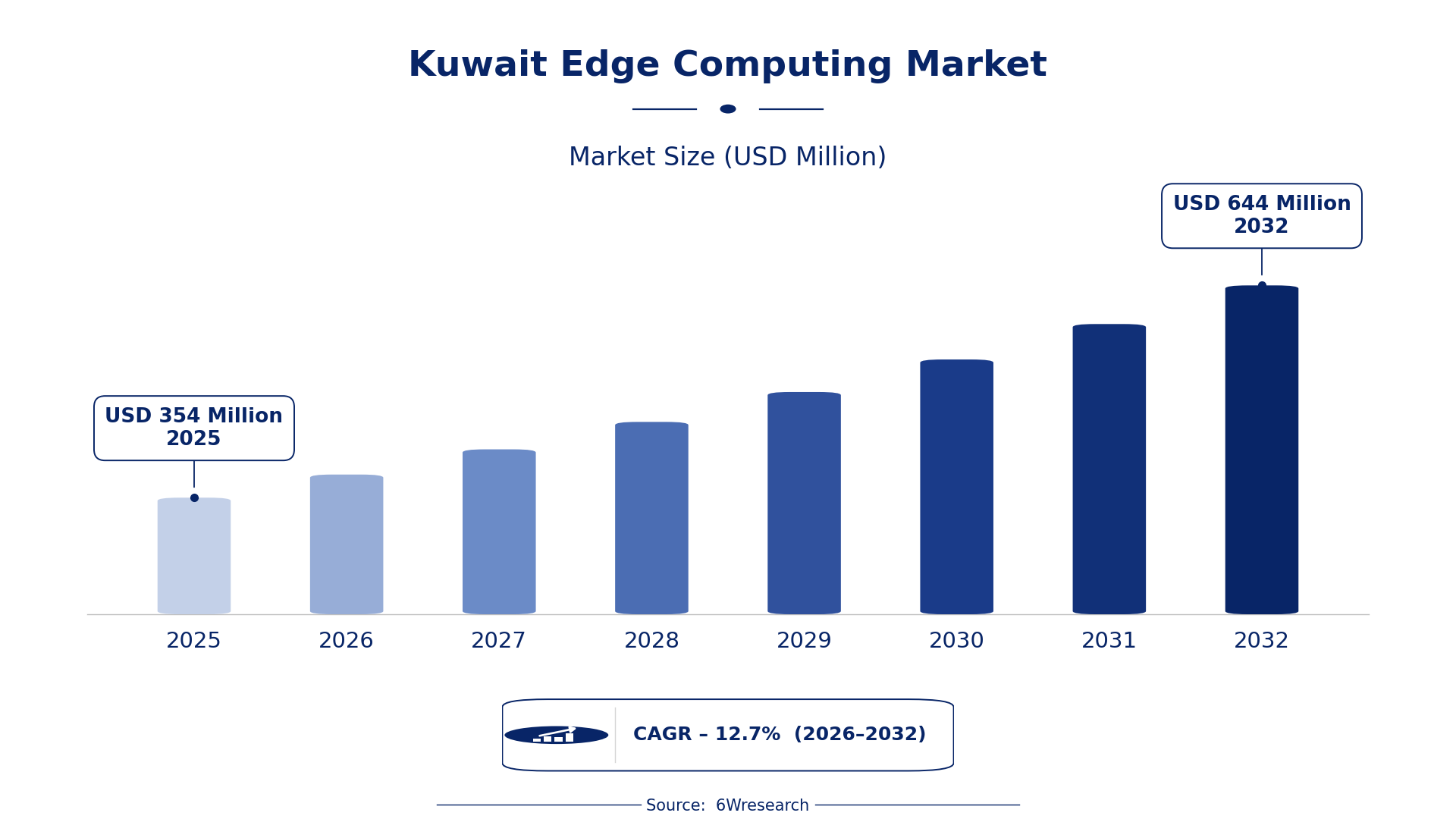
The Kuwait Edge Computing Market was estimated at USD 354 Million in 2025 and is projected to reach USD 644 Million by 2032, growing at a CAGR of 12.7% from 2026 to 2032.
Kuwait Edge Computing Market Synopsis
The surge in IoT device adoption in Kuwait is reshaping the Edge Computing market, with businesses eager to capitalize on real-time data processing. Companies across sectors such as oil & gas, healthcare, and manufacturing are increasingly integrating edge computing to enhance operational efficiency and data security.
The need for low-latency processing and the ability to make faster decisions is propelling organizations to seek tailored edge computing solutions. This demand is not just a trend; it’s a strategic necessity for staying competitive in a rapidly digitizing economy.
Kuwait Edge Computing Market Year-wise Growth Rate and Key Drivers
This graph illustrates the annual growth rates of the Kuwait Edge Computing Market from 2021 to 2032, highlighting a steady upward trajectory and projected expansion over the forecast period.
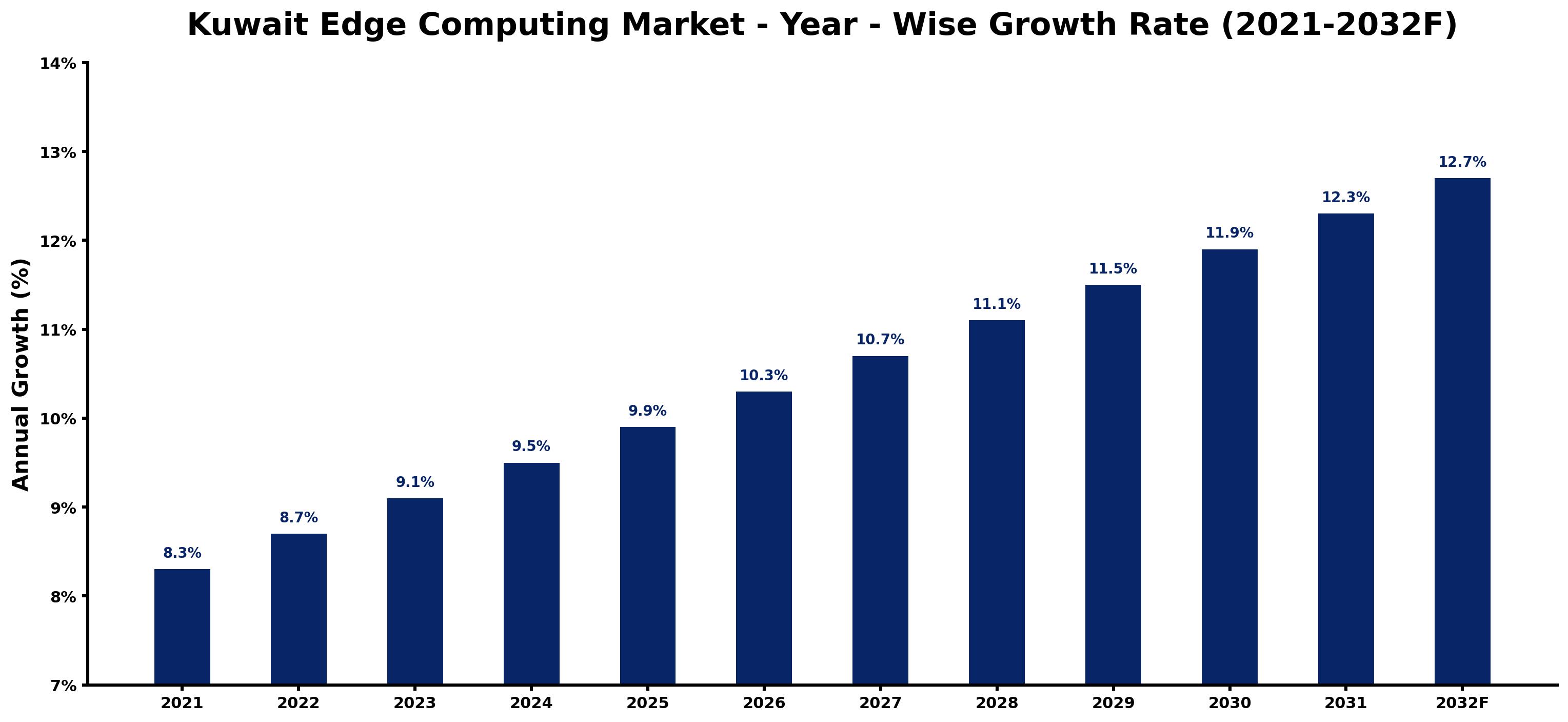
The table below presents the year‑wise growth rates along with the key drivers influencing the market
| Year | Growth Rate | Major Drivers |
| 2021 | 8.3% | Kuwait's Vision 2035 promotes technology innovation initiatives. |
| 2022 | 8.7% | Increased demand for real-time data processing in telecom. |
| 2023 | 9.1% | Emergence of localized data regulations encourages edge computing. |
| 2024 | 9.5% | Government investment in smart city solutions boosts demand. |
| 2025 | 9.9% | Rising IoT adoption rates among local businesses drive growth. |
| 2026 | 10.3% | Kuwait’s oil sector implements edge solutions for data efficiency. |
| 2027 | 10.7% | Partnerships with global cloud providers enhance local capabilities. |
| 2028 | 11.1% | Education sector's digitization drives demand for edge solutions. |
| 2029 | 11.5% | Growing local tech startups accelerating edge computing applications. |
| 2030 | 11.9% | Major sporting events spur infrastructure upgrades for connectivity. |
| 2031 | 12.3% | Increased cybersecurity threats drive demand for localized processing. |
| 2032 | 12.7% | Government incentives for green technology favor efficient computing. |
Note: Market size estimations and growth projections presented in this report are based on 6Wresearch's proprietary forecasting methodology, utilizing the latest available industry data, government publications, and primary research inputs.
Kuwait Edge Computing Market Key Takeaways
Below are some of the specific key takeaways from the market, including:
- Growing demand for real-time data processing is a primary driver of market expansion.
- Key industries utilizing edge computing include oil & gas, healthcare, and manufacturing.
- The market is witnessing a surge in IoT device adoption, enhancing the need for localized data processing.
- Government initiatives are actively promoting digital transformation, supporting market growth.
- Challenges such as skill shortages and infrastructure needs must be addressed to fully capitalize on opportunities.
Evaluation of Restraints in Kuwait Edge Computing Market
Despite the promising outlook, the Kuwait Edge Computing market faces notable restraints. A critical shortage of skilled professionals familiar with edge computing technologies hampers widespread adoption. Additionally, the relatively slow pace of adoption compared to other regions reflects broader hesitations among businesses. The absence of standardized regulations specific to edge computing further complicates implementation efforts. Without robust infrastructure, including high-speed networks and reliable data centers, the full potential of edge computing remains untapped. Addressing these challenges will require concerted investments in training, regulatory frameworks, and infrastructure development.
Kuwait Edge Computing Market Trends
The landscape of the Kuwait Edge Computing market is evolving, influenced by several emerging trends. Organizations are increasingly recognizing the importance of low-latency processing and data security, pushing them towards edge solutions. The rise of smart city initiatives is also fueling demand, as interconnected devices require efficient data handling. on top of that, there's a growing awareness of the benefits of edge computing in enhancing customer experiences and operational efficiencies. As digital transformation efforts gain momentum, the trend toward integrating edge computing will likely accelerate.
Kuwait Edge Computing Market Opportunities
There are several promising opportunities for growth within the Kuwait Edge Computing market. Businesses are seeking innovative solutions to improve their operational efficiencies across various sectors. The healthcare industry, for example, is ripe for edge computing applications that can provide timely patient data processing. Additionally, as Kuwait enhances its digital infrastructure, technology providers have the chance to deliver tailored solutions that address the unique challenges faced by local enterprises. With ongoing digital transformation initiatives, the potential for investment and expansion in this space is substantial.
Government Initiatives in the Kuwait Edge Computing Market
Kuwait's government is actively shaping the Edge Computing market through various initiatives aimed at fostering innovation and digital transformation. The focus on building a robust digital infrastructure is paramount, as it underpins the growth of edge computing technologies. A favorable regulatory environment is being created to attract investments, ensuring collaboration among government bodies, private companies, and research institutions. These policies are crucial for positioning Kuwait as a competitive player in the regional tech ecosystem.
- A national digital infrastructure upgrade program recently completed its initial phase, enhancing connectivity across urban areas.
- Current efforts include an initiative focused on developing cybersecurity policies to protect data integrity in edge computing applications.
- A planned public-private partnership aims to expand access to telecom infrastructure, scheduled for rollout in 2026.
- The government is currently reviewing regulations to streamline edge computing implementations, expected to be finalized by 2025.
- Ongoing workshops and training programs aim to build a skilled workforce capable of supporting the edge computing sector.
Future Insights of the Kuwait Edge Computing Market
Looking ahead to 2026-2032, the Kuwait Edge Computing market is set to witness substantial growth as businesses accelerate their digital transformation strategies. The demand for real-time data processing will intensify, particularly as industries like oil & gas and healthcare increasingly rely on low-latency solutions. As organizations optimize their IT infrastructures, edge computing will become integral to enhancing application performance. This trend will not only drive market growth but also encourage the development of innovative solutions tailored to the specific needs of Kuwaiti enterprises.
Kuwait Edge Computing Market Latest Developments
Recent activity in the Kuwait Edge Computing market highlights a surge in industry engagement, reflecting a collective push towards adopting advanced technologies. As organizations recognize the necessity of edge computing, we see a flurry of initiatives aimed at enhancing operational efficiencies. This momentum suggests a growing commitment to integrating edge solutions across various sectors.
- A major technology vendor launched a new edge computing platform in Q2 2025, aiming to streamline operations for manufacturing clients.
- An initiative that began in early 2025 is currently underway, focusing on implementing edge computing solutions in healthcare facilities to improve patient care.
- Upcoming projects include a rollout planned for late 2026, which will enhance data processing capabilities in transportation systems.
- In mid-2025, a regional operator announced a partnership to develop edge computing applications tailored to local market needs.
- Currently, an ongoing training program is being conducted to equip professionals with the skills necessary for the edge computing sector.
Kuwait Edge Computing Market - Key Attractiveness of the Report
- 10 Years of Market Numbers
- Historical Data Starting from 2022 to 2025
- Base Year: 2025
- Forecast Data until 2032
- Key Performance Indicators Impacting the Market
- Major Upcoming Developments and Projects
Key sectors such as oil & gas, healthcare, and manufacturing are driving the demand for edge computing solutions due to their need for efficient data processing and real-time decision-making.
Key Highlights of the Report:
- Kuwait Edge Computing Market Outlook
- Market Size of Kuwait Edge Computing Market, 2025
- Forecast of Kuwait Edge Computing Market, 2032
- Historical Data and Forecast of Kuwait Edge Computing Revenues & Volume for the Period 2022-2032F
- Kuwait Edge Computing Market Trend Evolution
- Kuwait Edge Computing Market Drivers and Challenges
- Kuwait Edge Computing Price Trends
- Kuwait Edge Computing Porter's Five Forces
- Kuwait Edge Computing Industry Life Cycle
- Historical Data and Forecast of Kuwait Edge Computing Market Revenues & Volume By Component for the Period 2022-2032F
- Historical Data and Forecast of Kuwait Edge Computing Market Revenues & Volume By Hardware for the Period 2022-2032F
- Historical Data and Forecast of Kuwait Edge Computing Market Revenues & Volume By Software for the Period 2022-2032F
- Historical Data and Forecast of Kuwait Edge Computing Market Revenues & Volume By Services for the Period 2022-2032F
- Historical Data and Forecast of Kuwait Edge Computing Market Revenues & Volume By Organization Size for the Period 2022-2032F
- Historical Data and Forecast of Kuwait Edge Computing Market Revenues & Volume By Large Enterprises for the Period 2022-2032F
- Historical Data and Forecast of Kuwait Edge Computing Market Revenues & Volume By SMEs for the Period 2022-2032F
- Historical Data and Forecast of Kuwait Edge Computing Market Revenues & Volume By Application for the Period 2022-2032F
- Historical Data and Forecast of Kuwait Edge Computing Market Revenues & Volume By Smart Cities for the Period 2022-2032F
- Historical Data and Forecast of Kuwait Edge Computing Market Revenues & Volume By Industrial Internet of Things (IIoT) for the Period 2022-2032F
- Historical Data and Forecast of Kuwait Edge Computing Market Revenues & Volume By Remote Monitoring for the Period 2022-2032F
- Historical Data and Forecast of Kuwait Edge Computing Market Revenues & Volume By Content Delivery for the Period 2022-2032F
- Historical Data and Forecast of Kuwait Edge Computing Market Revenues & Volume By Augmented Reality (AR) and Virtual Reality (VR) for the Period 2022-2032F
- Historical Data and Forecast of Kuwait Edge Computing Market Revenues & Volume By Others (Autonomous Vehicles, Drones, And Gaming) for the Period 2022-2032F
- Historical Data and Forecast of Kuwait Edge Computing Market Revenues & Volume By Vertical for the Period 2022-2032F
- Historical Data and Forecast of Kuwait Edge Computing Market Revenues & Volume By Manufacturing for the Period 2022-2032F
- Historical Data and Forecast of Kuwait Edge Computing Market Revenues & Volume By Energy and Utilities for the Period 2022-2032F
- Historical Data and Forecast of Kuwait Edge Computing Market Revenues & Volume By Government and Defense for the Period 2022-2032F
- Historical Data and Forecast of Kuwait Edge Computing Market Revenues & Volume By Telecommunications for the Period 2022-2032F
- Historical Data and Forecast of Kuwait Edge Computing Market Revenues & Volume By Media and Entertainment for the Period 2022-2032F
- Historical Data and Forecast of Kuwait Edge Computing Market Revenues & Volume By Retail and Consumer Goods for the Period 2022-2032F
- Historical Data and Forecast of Kuwait Edge Computing Market Revenues & Volume By Transportation and Logistics for the Period 2022-2032F
- Historical Data and Forecast of Kuwait Edge Computing Market Revenues & Volume By Healthcare and Life Sciences for the Period 2022-2032F
- Kuwait Edge Computing Import Export Trade Statistics
- Market Opportunity Assessment By Component
- Market Opportunity Assessment By Organization Size
- Market Opportunity Assessment By Application
- Market Opportunity Assessment By Vertical
- Kuwait Edge Computing Top Companies Market Share
- Kuwait Edge Computing Competitive Benchmarking By Technical and Operational Parameters
- Kuwait Edge Computing Company Profiles
- Kuwait Edge Computing Key Strategic Recommendations






































