Kuwait Energy Security Market Size & Growth Rate (2026-2032)
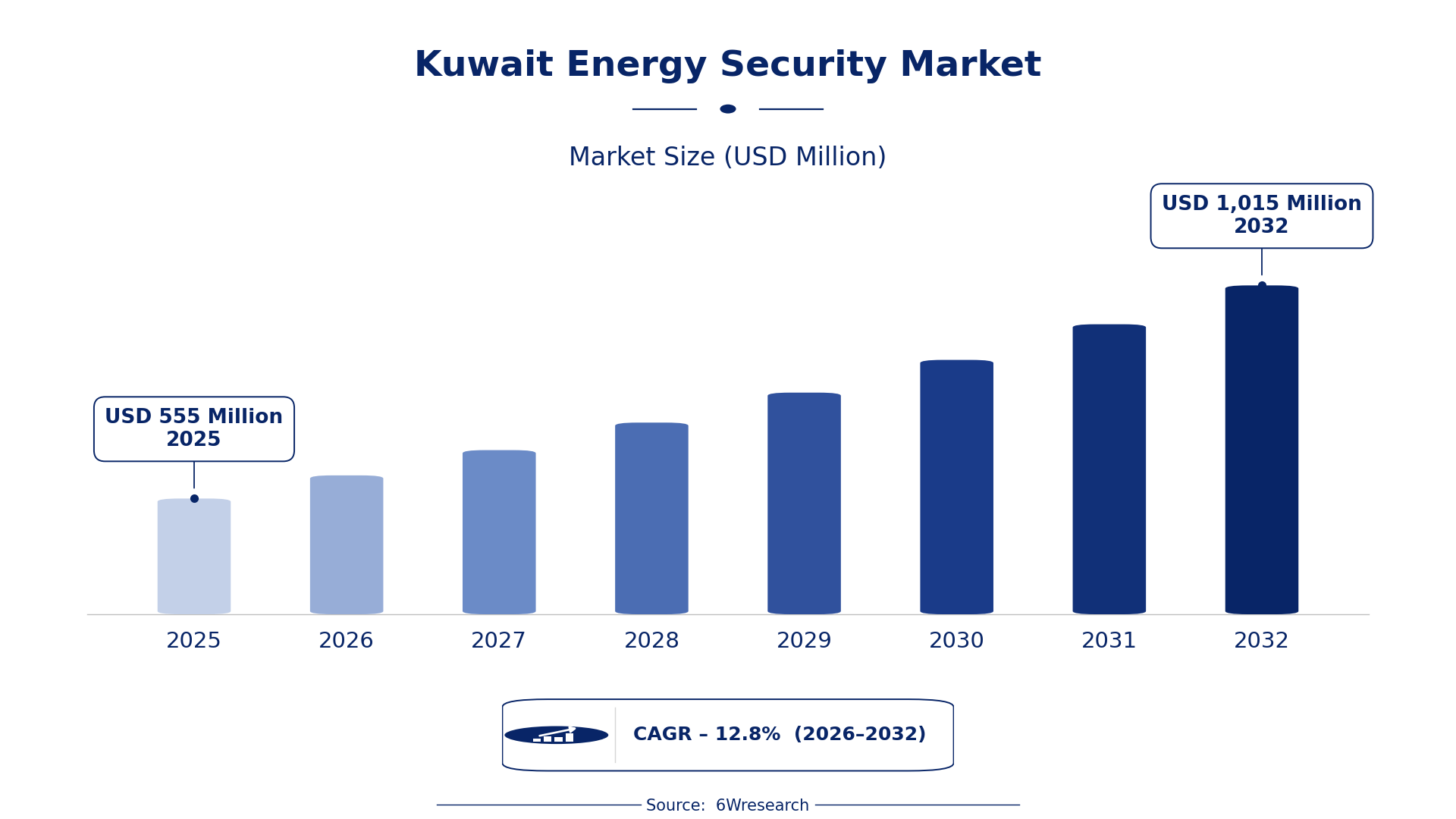
The Kuwait Energy Security Market was estimated at USD 555 Million in 2025 and is projected to reach USD 1015 Million by 2032, growing at a CAGR of 12.8% from 2026 to 2032.
Kuwait Energy Security Market Synopsis
The current strongest force influencing the Kuwait Energy Security Market is the government's shift towards diversifying energy sources. This strategy is not just about sustainability but also about enhancing the nation’s economic resilience in the face of fluctuating oil prices.
Kuwait's commitment to increasing renewable energy adoption, especially solar power, signals a significant transformation within the sector. These initiatives are crucial as they address both domestic consumption demands and global energy trends.
Kuwait Energy Security Market Year-wise Growth Rate and Key Drivers
This graph illustrates the annual growth rates of the Kuwait Energy Security Market from 2021 to 2032, highlighting a steady upward trajectory and projected expansion over the forecast period.
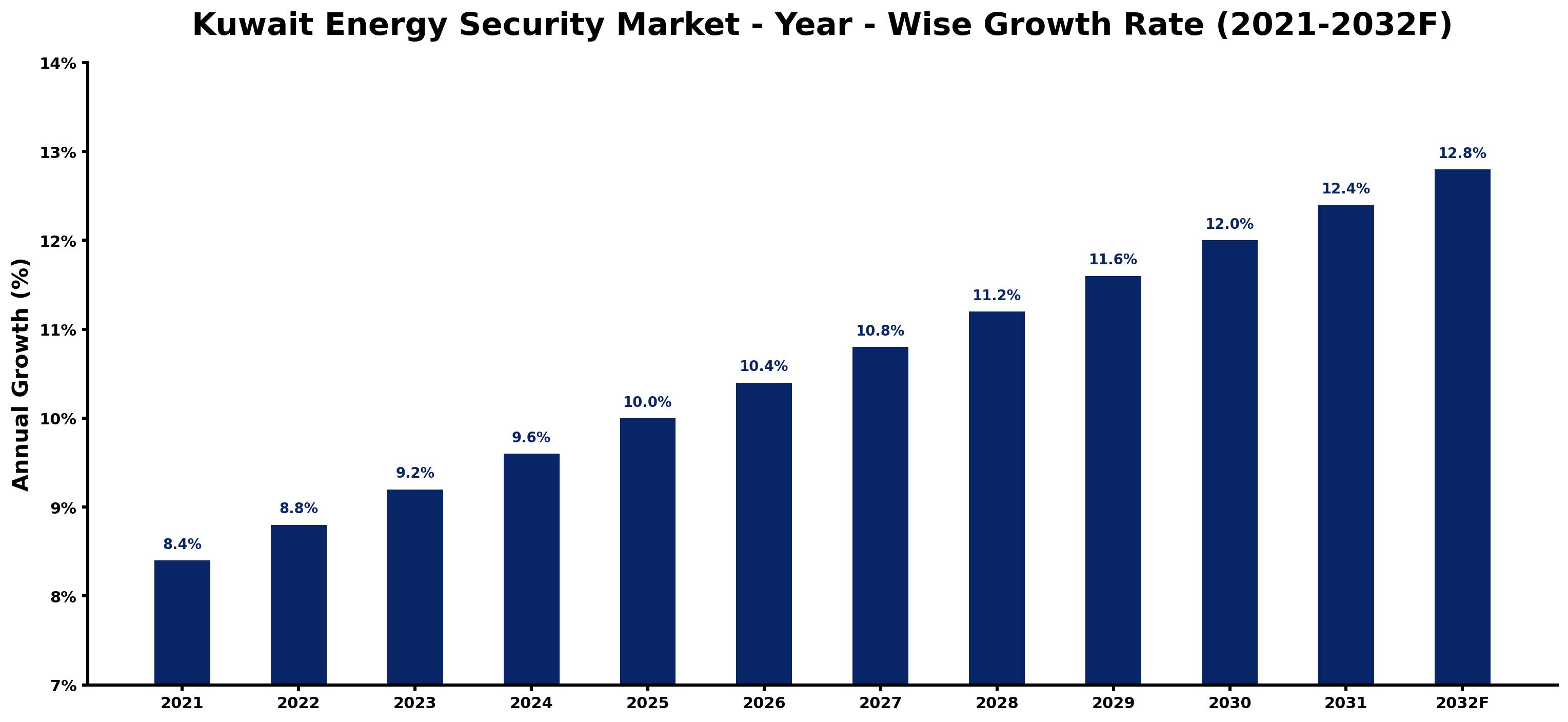
The table below presents the year‑wise growth rates along with the key drivers influencing the market
| Year | Growth Rate | Major Drivers |
| 2021 | 8.4% | Kuwait's National Development Plan prioritizes energy diversification. |
| 2022 | 8.8% | Increased investment in renewable energy projects by government. |
| 2023 | 9.2% | Kuwait's oil reserves incentivize enhanced security measures. |
| 2024 | 9.6% | New regulations promote foreign direct investment in energy tech. |
| 2025 | 10.0% | Government's initiatives support local energy innovation hubs. |
| 2026 | 10.4% | Demand for energy resilience amid climate change concerns. |
| 2027 | 10.8% | Local companies develop advanced energy storage solutions. |
| 2028 | 11.2% | Kuwait's Vision 2035 emphasizes sustainable energy sources. |
| 2029 | 11.6% | Public support for energy efficiency technologies grows significantly. |
| 2030 | 12.0% | Strategic partnerships with global tech firms boost local R&D. |
| 2031 | 12.4% | Energy transition policies drive more sustainable project funding. |
| 2032 | 12.8% | Rising public awareness of energy conservation efforts. |
Note: Market size estimations and growth projections presented in this report are based on 6Wresearch's proprietary forecasting methodology, utilizing the latest available industry data, government publications, and primary research inputs.
Kuwait Energy Security Market Key Takeaways
Below are some of the specific key takeaways from the market, including:
- Investment in renewable energy sources is accelerating, particularly in solar infrastructure.
- Cybersecurity in the energy sector is gaining attention, with increasing allocations for protective technologies.
- Government initiatives aim to attract foreign investment, providing new avenues for market players.
- Energy efficiency technologies are becoming integral to new projects, enhancing overall system resilience.
- Ongoing collaboration with international stakeholders is expected to bolster technological advancements in the market.
Evaluation of Restraints in Kuwait Energy Security Market
Despite its promising outlook, the Kuwait Energy Security Market faces notable restraints. The primary challenge lies in the nation’s heavy dependence on oil and gas, making it vulnerable to global market fluctuations and geopolitical instability. Additionally, while there is a push towards renewable sources, transitioning away from fossil fuels requires overcoming significant infrastructure and investment hurdles.
The limited availability of water for energy production further complicates the situation. To truly diversify and secure its energy future, Kuwait must invest in alternative energy solutions while addressing these existing barriers head-on.
Kuwait Energy Security Market Trends
The market is experiencing a pronounced trend towards renewable energy investments, particularly in solar and wind. This shift is driven by governmental policies aimed at promoting energy diversification. Another notable trend is the increased adoption of smart grid technologies, which facilitate energy management and efficiency.
on top of that, as global cybersecurity threats loom larger, the energy sector is responding by integrating advanced technologies to safeguard critical infrastructure. This is not just a reactive measure; it reflects a strategic approach to fortifying energy security.
Kuwait Energy Security Market Opportunities
Kuwait's push for renewable energy creates a myriad of opportunities for investors and companies specializing in solar technology and infrastructure development. The government's commitment to enhancing energy efficiency also opens doors for firms offering smart grid solutions.
Additionally, the increasing need for cybersecurity measures presents a lucrative market for technology providers focused on protecting energy assets. The confluence of these factors makes the Kuwait Energy Security Market ripe for innovation and investment.
Government Initiatives in the Kuwait Energy Security Market
The Kuwaiti government is actively shaping the energy security market through various initiatives aimed at diversification and efficiency. This proactive stance is crucial as the country seeks to balance its traditional energy roles with modern demands for sustainability and resilience.
- A recently completed initiative included the launch of a national solar energy program designed to increase renewable energy capacity significantly.
- Currently ongoing is a government-led project to upgrade energy infrastructure, enhancing both production and distribution capabilities.
- A planned public-private partnership is set to roll out in early 2026, focusing on energy management systems and smart grid technologies.
- The introduction of regulations in 2025 aimed at promoting energy efficiency standards across new projects reflects the government's commitment to sustainable development.
- Future initiatives include a proposed investment scheme targeting foreign companies interested in collaborating on renewable energy projects.
Future Insights of the Kuwait Energy Security Market
Looking ahead to 2026-2032, the Kuwait Energy Security Market is on a path of substantial growth and transformation. The government's ongoing initiatives to expand renewable energy sources are anticipated to shape the market significantly, allowing for a gradual reduction in reliance on fossil fuels.
Investment in infrastructure upgrades will play a crucial role in this transition. As domestic consumption continues to rise, market players who adapt to these changes and focus on innovation will be well-positioned for success.
Kuwait Energy Security Market Latest Developments
In the past year, the Kuwait Energy Security Market has seen a flurry of activity reflecting the nation’s strategic focus on energy security. These developments underscore Kuwait's commitment to evolving its energy infrastructure and enhancing efficiency amidst global challenges.
- A major technology vendor rolled out a new cybersecurity solution in Q2 2025 aimed at enhancing the resilience of energy infrastructure.
- An initiative that began in early 2025 and remains underway is the integration of advanced energy management systems across key facilities.
- A national awareness campaign launched in late 2025 focuses on promoting energy conservation among consumers and businesses alike.
- Plans for a new renewable energy training program are slated to start in early 2026, aimed at building local expertise in solar technology.
- A partnership agreement was signed in late 2024 between Kuwait and an international consortium to accelerate solar project deployments across the country.
Kuwait Energy Security Market - Key Attractiveness of the Report
- 10 Years of Market Numbers
- Historical Data Starting from 2022 to 2025
- Base Year: 2025
- Forecast Data until 2032
- Key Performance Indicators Impacting the Market
- Major Upcoming Developments and Projects
Key Highlights of the Report:
- Kuwait Energy Security Market Outlook
- Market Size of Kuwait Energy Security Market, 2025
- Forecast of Kuwait Energy Security Market, 2032
- Historical Data and Forecast of Kuwait Energy Security Revenues & Volume for the Period 2022-2032F
- Kuwait Energy Security Market Trend Evolution
- Kuwait Energy Security Market Drivers and Challenges
- Kuwait Energy Security Price Trends
- Kuwait Energy Security Porter's Five Forces
- Kuwait Energy Security Industry Life Cycle
- Historical Data and Forecast of Kuwait Energy Security Market Revenues & Volume By Power Plants for the Period 2022-2032F
- Historical Data and Forecast of Kuwait Energy Security Market Revenues & Volume By Nuclear for the Period 2022-2032F
- Historical Data and Forecast of Kuwait Energy Security Market Revenues & Volume By Thermal for the Period 2022-2032F
- Historical Data and Forecast of Kuwait Energy Security Market Revenues & Volume By Hydro for the Period 2022-2032F
- Historical Data and Forecast of Kuwait Energy Security Market Revenues & Volume By Oil for the Period 2022-2032F
- Historical Data and Forecast of Kuwait Energy Security Market Revenues & Volume By Gas for the Period 2022-2032F
- Historical Data and Forecast of Kuwait Energy Security Market Revenues & Volume By Renewable Energy for the Period 2022-2032F
- Historical Data and Forecast of Kuwait Energy Security Market Revenues & Volume By Technologies for the Period 2022-2032F
- Historical Data and Forecast of Kuwait Energy Security Market Revenues & Volume By Physical for the Period 2022-2032F
- Historical Data and Forecast of Kuwait Energy Security Market Revenues & Volume By Network Security for the Period 2022-2032F
- Kuwait Energy Security Import Export Trade Statistics
- Market Opportunity Assessment By Power Plants
- Market Opportunity Assessment By Technologies
- Kuwait Energy Security Top Companies Market Share
- Kuwait Energy Security Competitive Benchmarking By Technical and Operational Parameters
- Kuwait Energy Security Company Profiles
- Kuwait Energy Security Key Strategic Recommendations






































