Kuwait Mineral Oil Market: Import Trend Analysis
Kuwait mineral oil market witnessed a notable import trend from 2020 to 2024, with a Compound Annual Growth Rate (CAGR) of 11.7%. This growth in imports reflects a strong import momentum, indicating sustained demand for mineral oil products and stable market conditions during the period analyzed.
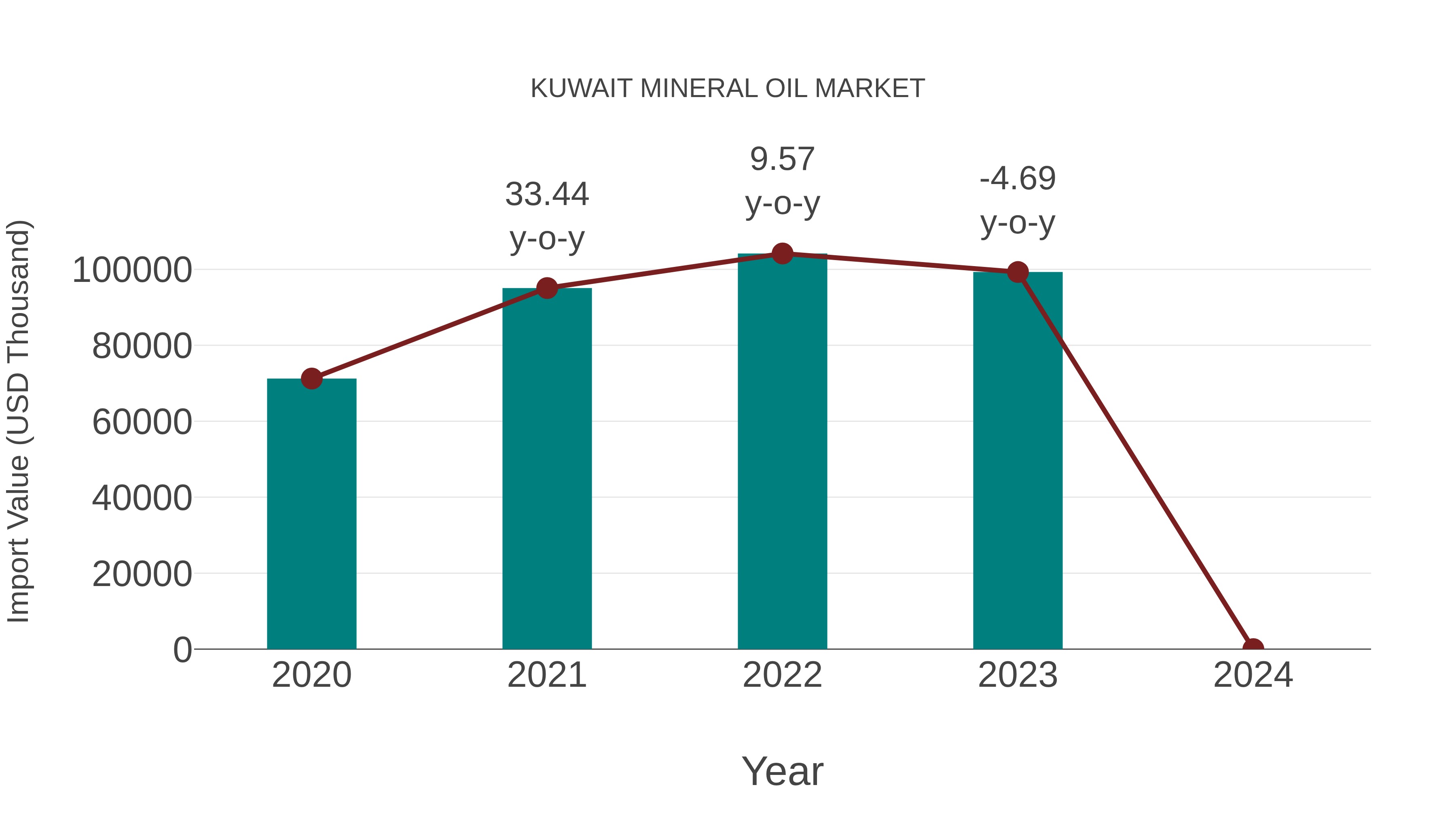
Kuwait Mineral Oil Market
The Mineral Oil market in Kuwait is expanding, driven by its applications in cosmetics, pharmaceuticals, and industrial lubricants. Mineral oil offers properties such as stability, purity, and versatility. The market is supported by the demand for high-quality raw materials in various industries, the growth of the cosmetics and pharmaceutical sectors, and advancements in mineral oil processing.
Drivers of the market
The mineral oil market in Kuwait is primarily driven by the country`s robust industrial sector, which requires mineral oils for various applications such as lubrication, hydraulic fluids, and insulation. Additionally, the growing automotive industry and increasing demand for mineral oil-based products in construction and manufacturing sectors contribute to the market`s growth. Kuwait strategic location in the Middle East also facilitates trade and export opportunities, further fueling the expansion of the mineral oil market.
Challenges of the market
Challenges in the Kuwait mineral oil market include fluctuations in crude oil prices and geopolitical tensions impacting supply chains. Additionally, increasing environmental regulations and the shift towards renewable energy sources pose long-term challenges for the mineral oil industry.
Government Policy of the market
Kuwait mineral oil market is regulated to ensure quality standards and promote sustainable extraction and production practices.
Key Highlights of the Report:
- Kuwait Mineral Oil Market Outlook
- Market Size of Kuwait Mineral Oil Market, 2025
- Forecast of Kuwait Mineral Oil Market, 2032
- Historical Data and Forecast of Kuwait Mineral Oil Revenues & Volume for the Period 2022-2032F
- Kuwait Mineral Oil Market Trend Evolution
- Kuwait Mineral Oil Market Drivers and Challenges
- Kuwait Mineral Oil Price Trends
- Kuwait Mineral Oil Porter's Five Forces
- Kuwait Mineral Oil Industry Life Cycle
- Historical Data and Forecast of Kuwait Mineral Oil Market Revenues & Volume By Grade for the Period 2022-2032F
- Historical Data and Forecast of Kuwait Mineral Oil Market Revenues & Volume By Technical Oil for the Period 2022-2032F
- Historical Data and Forecast of Kuwait Mineral Oil Market Revenues & Volume By White Oil for the Period 2022-2032F
- Historical Data and Forecast of Kuwait Mineral Oil Market Revenues & Volume By Application for the Period 2022-2032F
- Historical Data and Forecast of Kuwait Mineral Oil Market Revenues & Volume By Baby Oil for the Period 2022-2032F
- Historical Data and Forecast of Kuwait Mineral Oil Market Revenues & Volume By Cosmetics for the Period 2022-2032F
- Historical Data and Forecast of Kuwait Mineral Oil Market Revenues & Volume By Skin Care Products for the Period 2022-2032F
- Historical Data and Forecast of Kuwait Mineral Oil Market Revenues & Volume By Hair Care Products for the Period 2022-2032F
- Historical Data and Forecast of Kuwait Mineral Oil Market Revenues & Volume By Consumer Goods for the Period 2022-2032F
- Historical Data and Forecast of Kuwait Mineral Oil Market Revenues & Volume By Others for the Period 2022-2032F
- Kuwait Mineral Oil Import Export Trade Statistics
- Market Opportunity Assessment By Grade
- Market Opportunity Assessment By Application
- Kuwait Mineral Oil Top Companies Market Share
- Kuwait Mineral Oil Competitive Benchmarking By Technical and Operational Parameters
- Kuwait Mineral Oil Company Profiles
- Kuwait Mineral Oil Key Strategic Recommendations






































