Kuwait Nylon Market: Import Trend Analysis
In the Kuwait nylon market, import trends experienced a significant decline with a Compound Annual Growth Rate (CAGR) of -42.26% from 2020 to 2024. This sharp contraction in imports suggests a notable shift in demand dynamics or market stability, impacting trade performance within the sector.
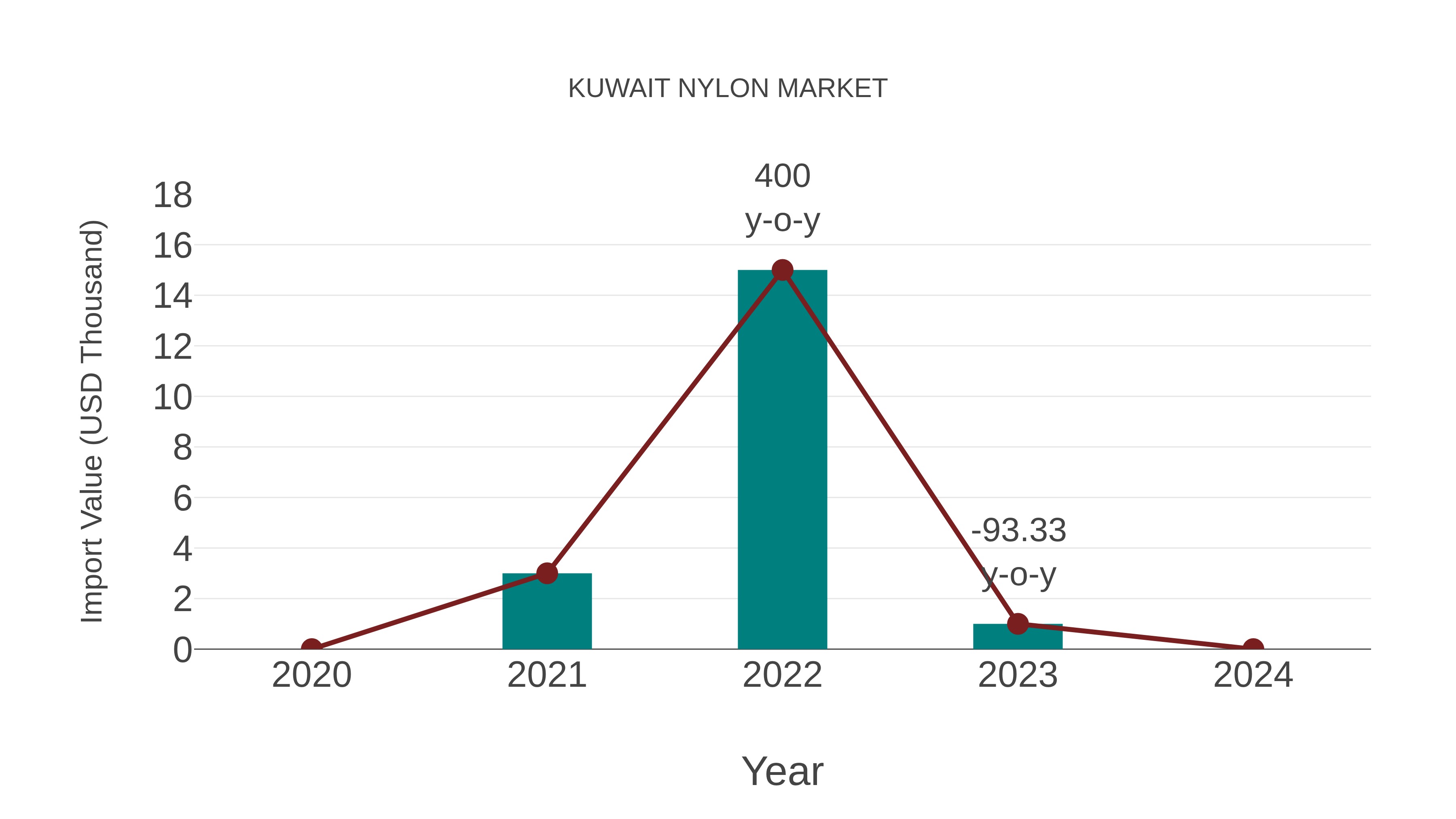
Kuwait Nylon Market Overview
The Kuwait Nylon Market is witnessing steady growth driven by increasing demand from various sectors such as automotive, construction, textiles, and packaging. The market is primarily dominated by imports due to limited local production capacity. The demand for nylon in Kuwait is driven by its versatile properties such as high strength, durability, and resistance to heat and chemicals. Key players in the market include global nylon manufacturers and distributors who cater to the diverse needs of the Kuwaiti market. The market is expected to continue its growth trajectory in the coming years as industrial activities in Kuwait expand and consumer preferences for nylon products remain strong. However, challenges such as fluctuating raw material prices and environmental concerns regarding nylon production processes may impact the market`s growth potential.
Kuwait Nylon Market Trends
The Kuwait Nylon Market is experiencing steady growth driven by increasing demand from various industries such as automotive, packaging, and textiles. One of the prominent trends in the market is the shift towards sustainable and eco-friendly nylon products, as consumers and businesses become more environmentally conscious. This has led to an increased focus on the development of bio-based and recycled nylon materials. Additionally, technological advancements in nylon production processes have resulted in improved performance characteristics, leading to a wider range of applications in diverse sectors. The market is also witnessing a rise in collaborations and partnerships among key players to expand their product portfolios and reach a broader customer base. Overall, the Kuwait Nylon Market is poised for further expansion and innovation in the coming years.
Kuwait Nylon Market Challenges
In the Kuwait Nylon Market, some of the challenges faced include intense competition from other synthetic materials like polyester and polypropylene, which offer similar properties at potentially lower costs. Additionally, fluctuations in raw material prices can impact production costs and profitability for nylon manufacturers. Limited domestic production capabilities in Kuwait may also result in dependence on imports, leading to supply chain disruptions and potential price volatility. Furthermore, the market may face regulatory challenges and trade barriers that could hinder the growth of the nylon industry in the region. Overall, navigating these challenges requires market players to stay agile, innovate in product development, and establish strong partnerships to ensure sustainable growth in the Kuwait Nylon Market.
Kuwait Nylon Market Investment Opportunities
Potential investment opportunities in the Kuwait Nylon Market include expanding production capacity to meet growing demand, investing in research and development for innovative nylon products, and exploring export opportunities to regional and international markets. With the increasing adoption of nylon in various industries such as automotive, construction, and textiles, there is a promising outlook for investment in this sector. Additionally, focusing on sustainability and eco-friendly practices can be a strategic investment approach to cater to the rising demand for environmentally conscious products. Collaborating with local manufacturers and suppliers to streamline the supply chain and reduce production costs can also enhance the competitiveness of investments in the Kuwait Nylon Market.
Kuwait Nylon Market Government Policy
Government policies related to the Kuwait Nylon Market primarily focus on promoting domestic production and reducing dependence on imports. The government has implemented measures such as providing subsidies and incentives to local manufacturers to enhance the competitiveness of the domestic nylon industry. Additionally, there are regulations in place to ensure quality standards are met to protect consumers and promote sustainable practices within the industry. The government also aims to diversify the economy by encouraging investments in the nylon sector and supporting research and development initiatives to drive innovation and technological advancements. Overall, the government`s policies in Kuwait aim to strengthen the domestic nylon market, create job opportunities, and contribute to the country`s economic growth and self-sufficiency.
Kuwait Nylon Market Future Outlook
The future outlook for the Kuwait Nylon Market appears promising due to increasing demand from various industries such as automotive, construction, and textiles. The market is expected to witness steady growth driven by factors such as the country`s focus on infrastructure development, rising disposable income, and growing population. Furthermore, advancements in nylon production technology and increasing awareness about the benefits of nylon materials are likely to contribute to market expansion. However, challenges such as fluctuating raw material prices and environmental regulations may impact market growth to some extent. Overall, the Kuwait Nylon Market is anticipated to experience positive growth in the coming years, presenting opportunities for manufacturers and investors to capitalize on the increasing demand for nylon products in the country.
Key Highlights of the Report:
- Kuwait Nylon Market Outlook
- Market Size of Kuwait Nylon Market, 2025
- Forecast of Kuwait Nylon Market, 2032
- Historical Data and Forecast of Kuwait Nylon Revenues & Volume for the Period 2022 - 2032F
- Kuwait Nylon Market Trend Evolution
- Kuwait Nylon Market Drivers and Challenges
- Kuwait Nylon Price Trends
- Kuwait Nylon Porter's Five Forces
- Kuwait Nylon Industry Life Cycle
- Historical Data and Forecast of Kuwait Nylon Market Revenues & Volume By Product for the Period 2022 - 2032F
- Historical Data and Forecast of Kuwait Nylon Market Revenues & Volume By Nylon 6 for the Period 2022 - 2032F
- Historical Data and Forecast of Kuwait Nylon Market Revenues & Volume By Nylon 66 for the Period 2022 - 2032F
- Historical Data and Forecast of Kuwait Nylon Market Revenues & Volume By Application for the Period 2022 - 2032F
- Historical Data and Forecast of Kuwait Nylon Market Revenues & Volume By Automobile for the Period 2022 - 2032F
- Historical Data and Forecast of Kuwait Nylon Market Revenues & Volume By Electrical & Electronics for the Period 2022 - 2032F
- Historical Data and Forecast of Kuwait Nylon Market Revenues & Volume By Engineering Plastics for the Period 2022 - 2032F
- Historical Data and Forecast of Kuwait Nylon Market Revenues & Volume By Textiles for the Period 2022 - 2032F
- Historical Data and Forecast of Kuwait Nylon Market Revenues & Volume By Others for the Period 2022 - 2032F
- Kuwait Nylon Import Export Trade Statistics
- Market Opportunity Assessment By Product
- Market Opportunity Assessment By Application
- Kuwait Nylon Top Companies Market Share
- Kuwait Nylon Competitive Benchmarking By Technical and Operational Parameters
- Kuwait Nylon Company Profiles
- Kuwait Nylon Key Strategic Recommendations






































