Latvia Conductive Yarn Market Size (2020-2030)
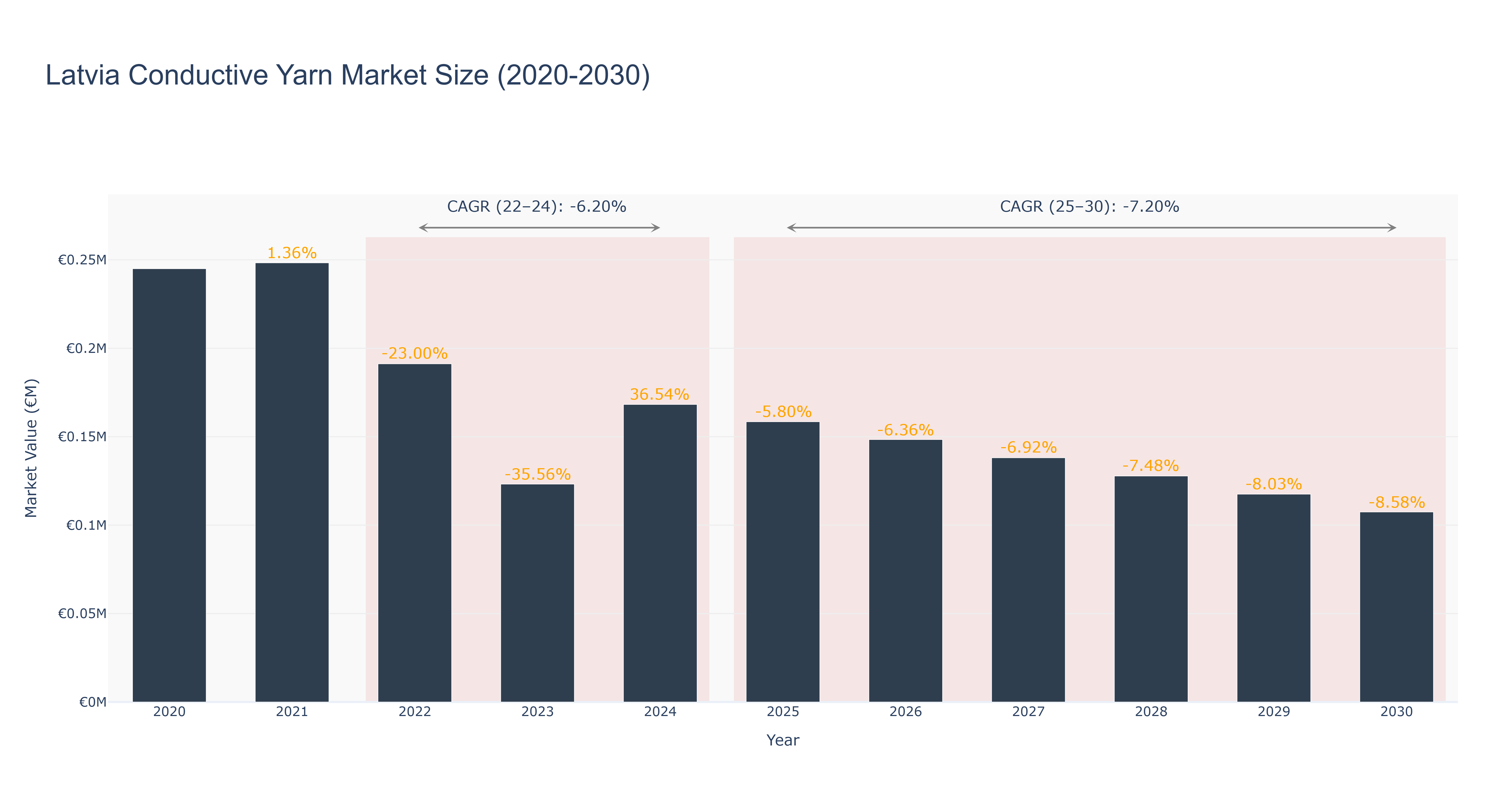
Latvia's Conductive Yarn Market witnessed a peak size of €0.25 million in 2021, followed by a decline to €0.17 million in 2024. The market is forecasted to continue shrinking, reaching €0.11 million by 2030, with CAGR values of -6.20% (2022-24) and -7.20% (2025-30). The downward trend can be attributed to factors such as changing consumer preferences towards alternative materials and reduced demand due to economic uncertainties. Despite the challenging market conditions, recent developments in sustainable conductive yarn production methods are expected to drive innovation and potentially revive market growth in the future. Additionally, upcoming collaborations between local textile manufacturers and technology firms aim to introduce advanced conductive yarn applications, positioning Latvia as a key player in the evolving textile industry landscape.
Latvia Conductive Yarn Market: Production & Trade Performance (2019-2025)
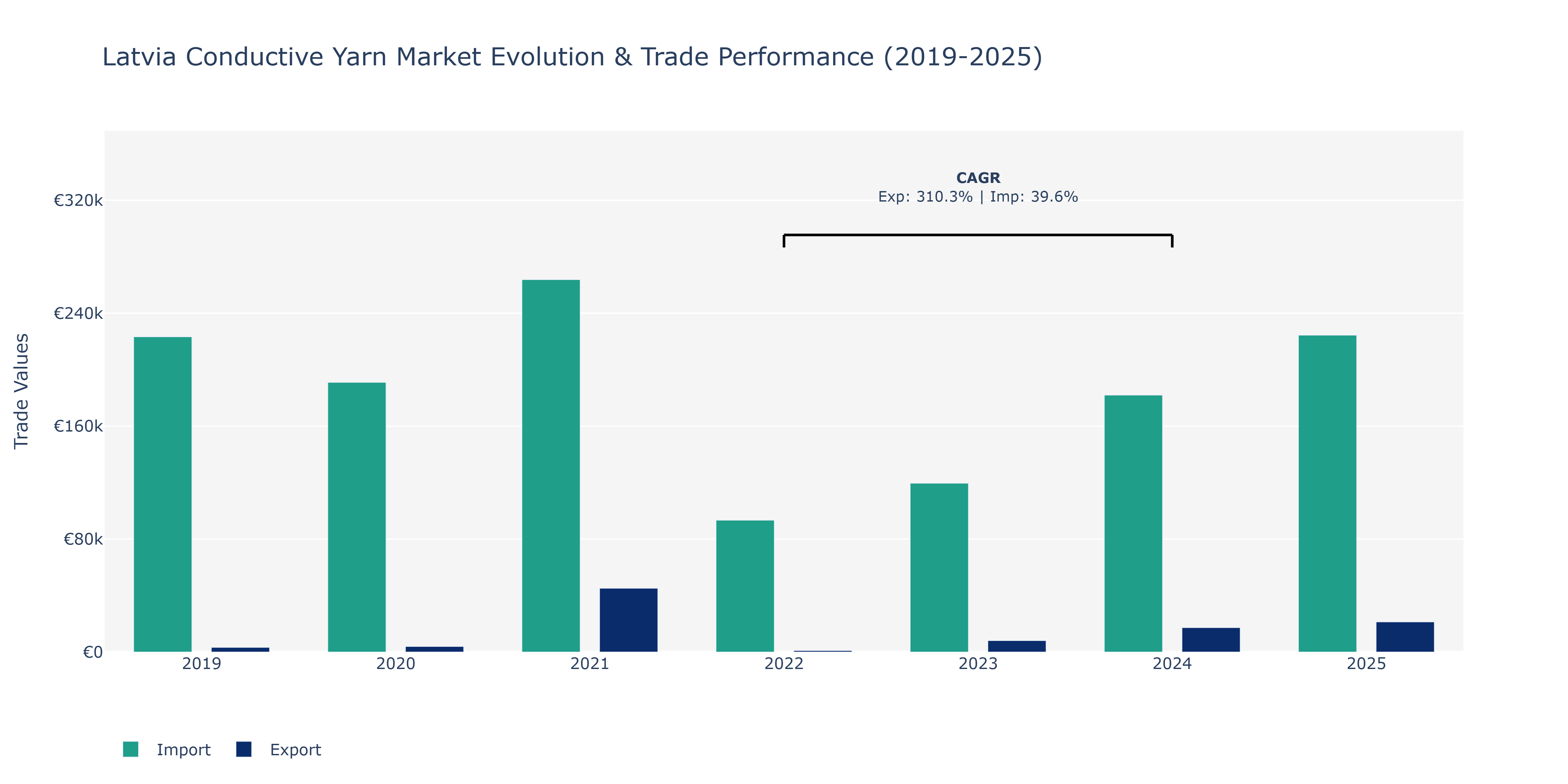
In the Latvia Conductive Yarn Market, exports and imports experienced notable fluctuations from 2019 to 2025. Exports steadily increased from €3.3 thousand in 2019 to €21.34 thousand in 2025, with peaks observed in 2021 and 2025. On the other hand, imports fluctuated, reaching a peak of €263.77 thousand in 2021 after a slight decline in 2020. The significant increase in exports can be attributed to the growing demand for conductive yarn in industries like electronics and healthcare, where Latvia has a competitive advantage in production quality and cost-effectiveness. The fluctuations in imports might reflect changes in global market dynamics or shifts in sourcing strategies. The market’s robust export growth aligns with the rising global demand for conductive textiles driven by technological advancements and the increasing adoption of smart fabrics in various applications.
Key Highlights of the Report:
- Latvia Conductive Yarn Market Outlook
- Market Size of Latvia Conductive Yarn Market, 2025
- Forecast of Latvia Conductive Yarn Market, 2032
- Historical Data and Forecast of Latvia Conductive Yarn Revenues & Volume for the Period 2022 - 2032F
- Latvia Conductive Yarn Market Trend Evolution
- Latvia Conductive Yarn Market Drivers and Challenges
- Latvia Conductive Yarn Price Trends
- Latvia Conductive Yarn Porter`s Five Forces
- Latvia Conductive Yarn Industry Life Cycle
- Historical Data and Forecast of Latvia Conductive Yarn Market Revenues & Volume By ProductType for the Period 2022 - 2032F
- Historical Data and Forecast of Latvia Conductive Yarn Market Revenues & Volume By Metallic Type for the Period 2022 - 2032F
- Historical Data and Forecast of Latvia Conductive Yarn Market Revenues & Volume By Carbon-Based Type for the Period 2022 - 2032F
- Historical Data and Forecast of Latvia Conductive Yarn Market Revenues & Volume By Metal Compound Type for the Period 2022 - 2032F
- Historical Data and Forecast of Latvia Conductive Yarn Market Revenues & Volume By Application for the Period 2022 - 2032F
- Historical Data and Forecast of Latvia Conductive Yarn Market Revenues & Volume By Anti-Static Fabric for the Period 2022 - 2032F
- Historical Data and Forecast of Latvia Conductive Yarn Market Revenues & Volume By Signal Transmission for the Period 2022 - 2032F
- Historical Data and Forecast of Latvia Conductive Yarn Market Revenues & Volume By Cellphone Protective Cover for the Period 2022 - 2032F
- Latvia Conductive Yarn Import Export Trade Statistics
- Market Opportunity Assessment By ProductType
- Market Opportunity Assessment By Application
- Latvia Conductive Yarn Top Companies Market Share
- Latvia Conductive Yarn Competitive Benchmarking By Technical and Operational Parameters
- Latvia Conductive Yarn Company Profiles
- Latvia Conductive Yarn Key Strategic Recommendations






































