Lebanon Wine Market Summary
The lebanon wine market was estimated at USD 369 Million in 2025 and is projected to reach USD 501 Million by 2032, growing at a CAGR of 5.1% from 2026 to 2032.
Lebanon Wine Market Year-wise Growth Rate and Key Drivers
This graph highlights how the Lebanon Wine Market has steadily grown over the past five years, supported by major growth factors.
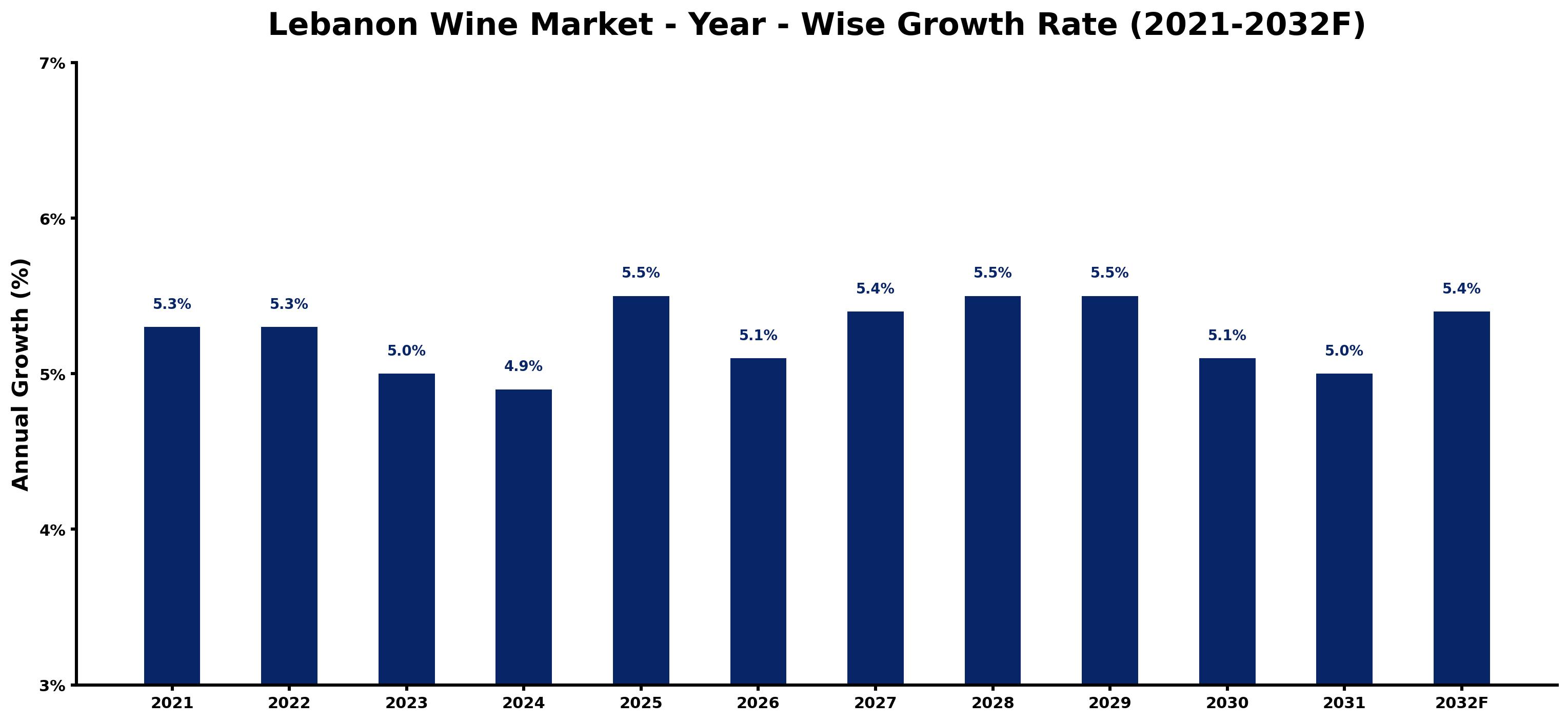
The table below presents the year wise growth rates along with the key drivers influencing the market
| Year | Growth Rate | Major Drivers |
| 2021 | 5.3% | Lebanon's wine industry sees a resurgence due to renewed international interest. |
| 2022 | 5.3% | Local vineyards improve production techniques, enhancing quality and consistency in wines. |
| 2023 | 5.0% | Tourism initiatives highlight Lebanon's unique wine culture, attracting global wine enthusiasts. |
| 2024 | 4.9% | Increased collaboration among winemakers fosters innovation and diverse product offerings. |
| 2025 | 5.5% | Emergence of boutique wineries captures young consumers seeking unique experiences. |
| 2026 | 5.1% | Lebanese wines gain recognition in international competitions, boosting export opportunities. |
| 2027 | 5.4% | Digital marketing strategies enhance brand visibility, engaging a broader audience online. |
| 2028 | 5.5% | Sustainable practices adopted by vineyards resonate with environmentally conscious consumers. |
| 2029 | 5.5% | Culinary tourism grows, integrating wine tastings with gastronomic experiences in Lebanon. |
| 2030 | 5.1% | Local grape varieties gain popularity, promoting cultural heritage within the wine sector. |
| 2031 | 5.0% | Investment in wine tourism infrastructure supports the growing number of international visitors. |
| 2032 | 5.4% | Innovative wine festivals emerge, celebrating Lebanon's diverse wine industry and traditions. |
Note - Market size estimations and growth projections presented in this report are based on 6Wresearch's advanced forecasting approach, validated with industry datasets as of June 2026.
Lebanon Wine Market Synopsis
The Lebanon Wine Market is projected to reach 5.1% and witness significant growth during the forecast period (2026-2032). This projected growth is underpinned by several key factors, including a rise in tourism, enhanced winemaking infrastructure, and increasing disposable incomes among consumers. Over recent years, Lebanon's wine production has been bolstered by investments from various stakeholders, aiming to elevate both domestic and export markets. The confluence of these elements is expected to cultivate a fertile environment for the Lebanon Wine Market to flourish in the years ahead.
Lebanon Wine Market Growth Drivers
The growth of the Lebanon Wine Market is primarily driven by an uptick in tourism, which fosters greater wine consumption. The following are pivotal growth drivers shaping this market:
- The influx of international tourists has led to increased sales of Lebanese wines, as visitors often seek to sample local products.
- Investments by both local and foreign companies have resulted in the establishment of new vineyards and upgrades to existing winemaking facilities, enhancing production capabilities.
- Growing disposable incomes among the Lebanese population are encouraging consumers to explore premium wine options, thereby boosting domestic consumption.
- Lebanon's distinctive terroir offers unique varietals that appeal to both local and international wine enthusiasts, driving demand for its wines.
- The improvement of distribution networks has facilitated better access to wine retailers and consumers, further enhancing market reach.
Lebanon Wine Market Trends and Opportunities
Several key trends and opportunities are emerging within the Lebanon Wine Market. These factors present promising avenues for growth and development:
- There is a growing interest in organic and biodynamic wines, creating opportunities for producers to differentiate their offerings and cater to health-conscious consumers.
- With the increasing popularity of wine tourism, more wineries are designing experiential offerings that entice visitors and create brand loyalty.
- Social media and digital marketing are becoming essential tools for winemakers to engage with consumers and promote their products, significantly affecting purchasing decisions.
- Strategic collaborations with restaurants and hotels to feature local wines can enhance brand visibility and drive sales.
- As global wine consumption continues to rise, there is a potential for Lebanese wines to carve a niche in international markets, enhancing export potential.
Lebanon Wine Market Challenges and Restraints
Despite the favorable outlook for the Lebanon Wine Market, several challenges could impede its growth trajectory:
- Stringent government regulations regarding the taxation of imported alcoholic beverages may deter foreign competition while impacting local producers adversely.
- The social stigma surrounding alcohol consumption in certain segments of Lebanese society could hinder broader market acceptance and growth.
- Political instability in the region presents risks that could affect tourism and, consequently, wine sales.
- Climate change poses potential threats to grape cultivation, necessitating adaptive practices that may not be immediately viable for all producers.
- Market saturation in certain segments may lead to heightened competition, creating price pressures that could affect profitability.
Lebanon Wine Market Government Investment and Initiatives
The government of Lebanon has recognized the potential of the wine sector as a vital component of the national economy and is actively implementing supportive initiatives. These include:
- Development plans focused on enhancing agricultural practices related to viticulture, aimed at improving grape quality and yield.
- Public spending initiatives directed towards infrastructure improvements that support the entire wine production process, from vineyard establishment to distribution.
- Incentives for winemakers to adopt sustainable practices, which align with global trends and enhance the appeal of Lebanese wines in international markets.
- Promotion of wine tourism as part of broader tourism strategies, which includes marketing campaigns to attract both local and international visitors.
- Collaboration with educational institutions to provide training and resources for aspiring winemakers and vineyard managers, ensuring a skilled workforce in the sector.
Lebanon Wine Market Latest Developments (May 2025 - June 2026)
In the period from May 2025 to June 2026, the Lebanon Wine Market has witnessed several noteworthy developments. The global appreciation for Lebanese wines has been bolstered by increased participation in international wine competitions, garnering accolades that enhance the country's reputation on the world stage. Additionally, various wineries have reported positive trends in their export activities, indicating a growing interest from overseas markets. Furthermore, numerous initiatives promoting wine tourism have emerged, with new vineyard tours and tasting experiences designed to engage both local and international visitors. Infrastructure improvements aimed at streamlining production and distribution processes have also been implemented, laying the groundwork for future growth in the sector. These developments underscore a dynamic landscape for the Lebanon Wine Market as stakeholders strive to capitalize on emerging opportunities.
Lebanon Wine Market - Key Attractiveness of the Report
- 10 Years of Market Numbers
- Historical Data Starting from 2022 to 2025
- Base Year: 2025
- Forecast Data until 2032
- Key Performance Indicators Impacting the Market
- Major Upcoming Developments and Projects
Key Highlights of the Report:
- Lebanon Wine Market Outlook
- Market Size of Lebanon Wine Market, 2025
- Forecast of Lebanon Wine Market, 2032F
- Historical Data and Forecast of Lebanon Wine Revenues & Volume for the Period 2022-2032F
- Lebanon Wine Market Trend Evolution
- Lebanon Wine Market Drivers and Challenges
- Lebanon Wine Price Trends
- Lebanon Wine Porter's Five Forces
- Lebanon Wine Industry Life Cycle
- Historical Data and Forecast of Lebanon Wine Market Revenues & Volume By Product Types for the Period 2022-2032F
- Historical Data and Forecast of Lebanon Wine Market Revenues & Volume By Still Wine for the Period 2022-2032F
- Historical Data and Forecast of Lebanon Wine Market Revenues & Volume By Sparkling Wine for the Period 2022-2032F
- Historical Data and Forecast of Lebanon Wine Market Revenues & Volume By Dessert Wine for the Period 2022-2032F
- Historical Data and Forecast of Lebanon Wine Market Revenues & Volume By Fortified Wine for the Period 2022-2032F
- Historical Data and Forecast of Lebanon Wine Market Revenues & Volume By Colors for the Period 2022-2032F
- Historical Data and Forecast of Lebanon Wine Market Revenues & Volume By Red Wine for the Period 2022-2032F
- Historical Data and Forecast of Lebanon Wine Market Revenues & Volume By Rose Wine for the Period 2022-2032F
- Historical Data and Forecast of Lebanon Wine Market Revenues & Volume By White Wine for the Period 2022-2032F
- Historical Data and Forecast of Lebanon Wine Market Revenues & Volume By Other Colors for the Period 2022-2032F
- Historical Data and Forecast of Lebanon Wine Market Revenues & Volume By Distribution Channel for the Period 2022-2032F
- Historical Data and Forecast of Lebanon Wine Market Revenues & Volume By Offline for the Period 2022-2032F
- Historical Data and Forecast of Lebanon Wine Market Revenues & Volume By Online for the Period 2022-2032F
- Lebanon Wine Import Export Trade Statistics
- Market Opportunity Assessment By Product Types
- Market Opportunity Assessment By Colors
- Market Opportunity Assessment By Distribution Channel
- Lebanon Wine Top Companies Market Share
- Lebanon Wine Competitive Benchmarking By Technical and Operational Parameters
- Lebanon Wine Company Profiles
- Lebanon Wine Key Strategic Recommendations






































