Malaysia Dental Sterilization Market Size, Share & Growth Rate
The Malaysia Dental Sterilization Market was estimated at USD 316 Million in 2025 and is projected to reach USD 409 Million by 2032, growing at a CAGR of 3.8% from 2026 to 2032. This growth trajectory is primarily fueled by the heightened emphasis on infection control in dental clinics, reflecting a broader trend within the healthcare sector. As dental clinics proliferate and the focus on patient safety intensifies, the demand for advanced sterilization solutions is increasingly essential.
Malaysia Dental Sterilization Market Year-wise Growth Rate and Key Drivers
This graph highlights how the Malaysia Dental Sterilization Market has steadily grown over the years, supported by major growth factors.
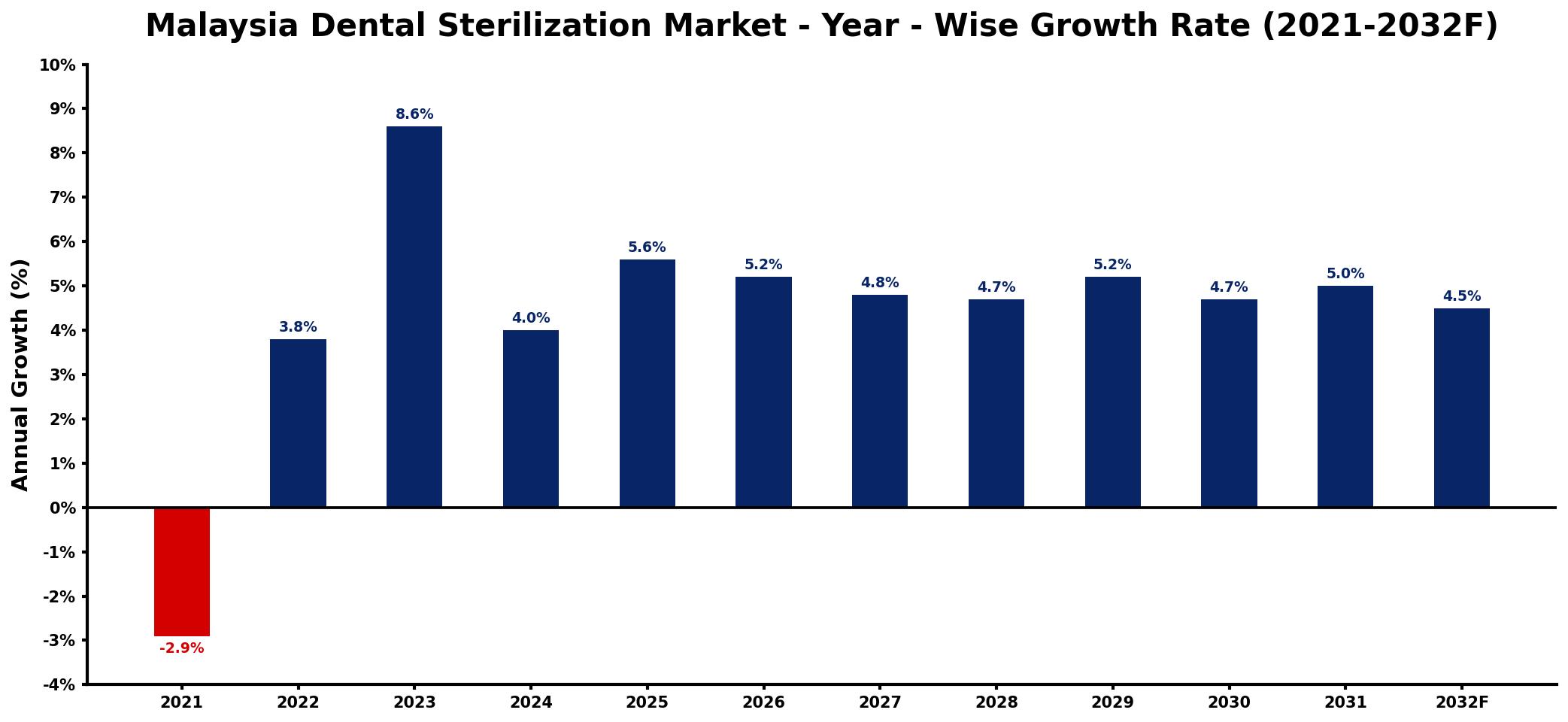
The table below presents the year‑wise growth rates along with the key drivers influencing the market
| Year | Growth Rate | Major Drivers |
| 2021 | -2.9% | decreased healthcare facility investments |
| 2022 | 3.8% | increased focus on infection control |
| 2023 | 8.6% | growing awareness of hygiene standards |
| 2024 | 4.0% | expansion of healthcare infrastructure projects |
| 2025 | 5.6% | rise in preventive healthcare services |
| 2026 | 5.2% | increased government healthcare funding |
| 2027 | 4.8% | growth in private clinic establishments |
| 2028 | 4.7% | enhanced training for healthcare professionals |
| 2029 | 5.2% | surge in technological advancements |
| 2030 | 4.7% | expanding manufacturing base activity |
| 2031 | 5.0% | increased patient safety regulations |
| 2032 | 4.5% | increased overall sector activity |
Note: Market size estimations and growth projections presented in this report are based on 6Wresearch's proprietary forecasting methodology, utilizing the latest available industry data, government publications, and primary research inputs.
Malaysia Dental Sterilization Market Synopsis
In recent years, the Malaysia dental sterilization market has experienced notable momentum, primarily due to increased awareness surrounding infection control practices. As dental care standards rise, clinics are more motivated to adopt rigorous sterilization protocols to safeguard patient health. The market is transitioning towards a future where innovative sterilization technologies become standard practice.
Looking ahead, the demand for dental sterilization equipment is expected to escalate, driven by both domestic needs and the rising influx of dental tourists seeking quality services. Consequently, manufacturers are positioning themselves to provide state-of-the-art sterilization solutions that address evolving market needs while ensuring compliance with strict regulatory standards.
Malaysia Dental Sterilization Market Key Takeaways
- The market is expected to grow significantly, driven by increasing awareness of infection control among dental professionals.
- The influx of dental tourism is catalyzing demand for high-quality sterilization solutions.
- Innovations in sterilization technology are anticipated to shape future market dynamics.
- Regulatory compliance remains a significant factor influencing equipment adoption.
- The post-pandemic environment will further heighten the focus on hygiene and sterilization protocols.
Evaluation of Restraints in Malaysia Dental Sterilization Market
Despite promising growth prospects, the Malaysia dental sterilization market faces notable restraints. A stringent regulatory environment poses challenges for manufacturers, as compliance can require extensive time and financial investment. Smaller dental clinics may also find the high initial costs of advanced sterilization equipment prohibitive. Furthermore, the need for continuous training and education among dental practitioners to adhere to proper sterilization protocols adds another layer of complexity. The ongoing effects of the COVID-19 pandemic have also introduced supply chain challenges, which could further impact market stability.
Malaysia Dental Sterilization Market Trends
Current trends indicate a shift towards more sophisticated sterilization technologies, including automated systems that enhance efficiency and efficacy. The use of eco-friendly sterilization methods is also gaining traction, reflecting broader environmental concerns. Additionally, the incorporation of advanced monitoring systems that provide real-time feedback on sterilization processes is on the rise. These technological advancements are set to play a pivotal role in shaping the future of the dental sterilization market in Malaysia.
Malaysia Dental Sterilization Market Opportunities
There are genuine growth opportunities within the Malaysia dental sterilization market, particularly in the development and implementation of innovative sterilization solutions that are both effective and user-friendly. The rising trend of dental tourism presents a unique chance for manufacturers to cater to a growing demand for high-quality dental care services. Furthermore, investing in research and development of cost-effective sterilization equipment may allow manufacturers to penetrate the market more deeply, particularly among smaller clinics that are currently deterred by high initial costs.
Government Initiatives in the Malaysia Dental Sterilization Market
The Malaysian government has implemented various initiatives aimed at enhancing healthcare standards, which indirectly benefit the dental sterilization market. Public spending on healthcare infrastructure and dental services has increased, promoting the adoption of modern sterilization techniques. Additionally, government programs focusing on public health awareness and infection control create a supportive environment for the growth of the dental sterilization market.
Future Insights of the Malaysia Dental Sterilization Market
Looking towards 2026-2032, the Malaysia dental sterilization market is expected to evolve significantly, driven by ongoing advancements in technology and an unrelenting focus on infection prevention. The emphasis on high-quality, hygienic services, especially in the context of dental tourism, will continue to push demand for state-of-the-art sterilization solutions. Additionally, as regulatory frameworks become increasingly rigorous, market players will need to adapt quickly to maintain compliance and remain competitive.
Malaysia Dental Sterilization Market Latest Developments (2025 - 2026)
Recent developments in the Malaysia dental sterilization market highlight a growing interest in advanced sterilization technologies and equipment. The ongoing focus on maintaining high standards of hygiene has prompted manufacturers to innovate and improve their offerings. Additionally, the market has seen an increase in collaborative efforts among dental clinics to share best practices in sterilization protocols, contributing to overall market growth and efficiency.
Malaysia Dental Sterilization Market - Key Attractiveness of the Report
- 10 Years of Market Numbers
- Historical Data Starting from 2022 to 2025
- Base Year: 2025
- Forecast Data until 2032
- Key Performance Indicators Impacting the Market
- Major Upcoming Developments and Projects
Key Highlights of the Report:
- Malaysia Dental Sterilization Market Outlook
- Market Size of Malaysia Dental Sterilization Market, 2025
- Forecast of Malaysia Dental Sterilization Market, 2032
- Historical Data and Forecast of Malaysia Dental Sterilization Revenues & Volume for the Period 2022-2032F
- Malaysia Dental Sterilization Market Trend Evolution
- Malaysia Dental Sterilization Market Drivers and Challenges
- Malaysia Dental Sterilization Price Trends
- Malaysia Dental Sterilization Porter's Five Forces
- Malaysia Dental Sterilization Industry Life Cycle
- Historical Data and Forecast of Malaysia Dental Sterilization Market Revenues & Volume By Product for the Period 2022-2032F
- Historical Data and Forecast of Malaysia Dental Sterilization Market Revenues & Volume By Instruments for the Period 2022-2032F
- Historical Data and Forecast of Malaysia Dental Sterilization Market Revenues & Volume By Consumables and Accessories for the Period 2022-2032F
- Historical Data and Forecast of Malaysia Dental Sterilization Market Revenues & Volume By End-use for the Period 2022-2032F
- Historical Data and Forecast of Malaysia Dental Sterilization Market Revenues & Volume By Hospital for the Period 2022-2032F
- Historical Data and Forecast of Malaysia Dental Sterilization Market Revenues & Volume By Dental Clinics for the Period 2022-2032F
- Historical Data and Forecast of Malaysia Dental Sterilization Market Revenues & Volume By Dental Laboratories for the Period 2022-2032F
- Malaysia Dental Sterilization Import Export Trade Statistics
- Market Opportunity Assessment By Product
- Market Opportunity Assessment By End-use
- Malaysia Dental Sterilization Top Companies Market Share
- Malaysia Dental Sterilization Competitive Benchmarking By Technical and Operational Parameters
- Malaysia Dental Sterilization Company Profiles
- Malaysia Dental Sterilization Key Strategic Recommendations






































