Mexico Phenol Market Size Growth Rate
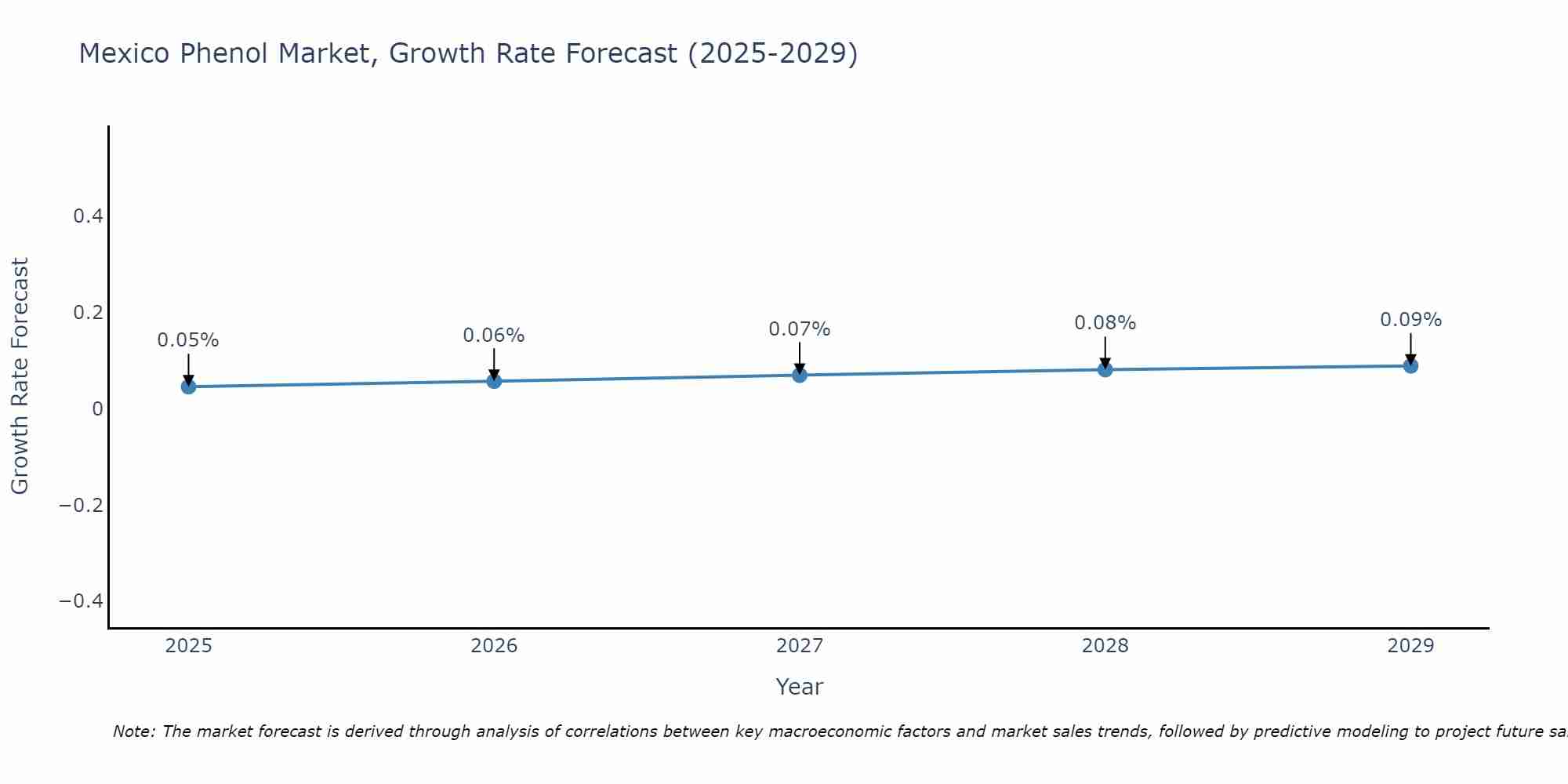
The Mexico Phenol Market is likely to experience consistent growth rate gains over the period 2025 to 2029. The growth rate starts at 0.05% in 2025 and reaches 0.09% by 2029.
Mexico Phenol Market Overview
The Phenol market in Mexico has witnessed steady growth driven by its widespread use in the production of resins, plastics, and pharmaceuticals. Phenol`s versatility makes it a key ingredient in the manufacturing of various products, from household items to industrial materials. The demand for phenolic resins in construction and automotive industries has significantly propelled the market. Moreover, the pharmaceutical sector relies on Phenol for the production of certain drugs and medications. As Mexico`s industrial landscape evolves, the Phenol market is expected to play a pivotal role in meeting the demand for diverse applications.
Trends of the market
In Mexico, the Phenol market is undergoing a transformative phase, driven by the escalating demand from the automotive, construction, and healthcare sectors. Phenol, a versatile chemical, is a crucial raw material for the production of resins, plastics, and pharmaceuticals. The construction boom in the country has led to increased demand for phenol-based products in adhesives and laminates. Additionally, the automotive sector`s growth, fueled by rising disposable incomes, is boosting the demand for phenol in the production of polycarbonates and other engineering plastics. With the Mexican economy gaining momentum, the Phenol market is witnessing an upward trajectory, poised for further expansion.
Challenges of the market
In Mexico, the Phenol market confronts challenges related to feedstock procurement, regulatory compliance, and evolving end-user demands. With phenol being a key ingredient in the production of plastics, pharmaceuticals, and chemicals, securing a stable supply of raw materials, such as benzene and propylene, is crucial. Moreover, stringent environmental regulations and health concerns associated with phenol production and usage necessitate continuous adaptation by market participants.
Government Policy of the market
In Mexico, the government regulates the phenol market with policies aimed at ensuring product safety, environmental protection, and industrial standards compliance. Regulatory agencies establish guidelines for the production, usage, and disposal of phenol to minimize risks associated with its handling and processing. Additionally, measures may be implemented to promote the adoption of cleaner production technologies and waste treatment methods to reduce environmental pollution from phenol manufacturing. Moreover, the government may enforce regulations on emissions and discharge from facilities involved in phenol production to prevent air and water contamination. By implementing these policies, the government aims to protect public health, safeguard the environment, and promote responsible industrial practices within the phenol market.
Key Highlights of the Report:
- Mexico Phenol Market Outlook
- Market Size of Mexico Phenol Market, 2024
- Forecast of Mexico Phenol Market, 2031
- Historical Data and Forecast of Mexico Phenol Revenues & Volume for the Period 2021-2031
- Mexico Phenol Market Trend Evolution
- Mexico Phenol Market Drivers and Challenges
- Mexico Phenol Price Trends
- Mexico Phenol Porter's Five Forces
- Mexico Phenol Industry Life Cycle
- Historical Data and Forecast of Mexico Phenol Market Revenues & Volume By End-users for the Period 2021-2031
- Historical Data and Forecast of Mexico Phenol Market Revenues & Volume By Bisphenol A for the Period 2021-2031
- Historical Data and Forecast of Mexico Phenol Market Revenues & Volume By Phenolic Resins for the Period 2021-2031
- Historical Data and Forecast of Mexico Phenol Market Revenues & Volume By Caprolactam for the Period 2021-2031
- Historical Data and Forecast of Mexico Phenol Market Revenues & Volume By Alkyl Phenyls for the Period 2021-2031
- Historical Data and Forecast of Mexico Phenol Market Revenues & Volume By Others for the Period 2021-2031
- Mexico Phenol Import Export Trade Statistics
- Market Opportunity Assessment By End-users
- Mexico Phenol Top Companies Market Share
- Mexico Phenol Competitive Benchmarking By Technical and Operational Parameters
- Mexico Phenol Company Profiles
- Mexico Phenol Key Strategic Recommendations






































