Turkiye Phenol Market Size Growth Rate
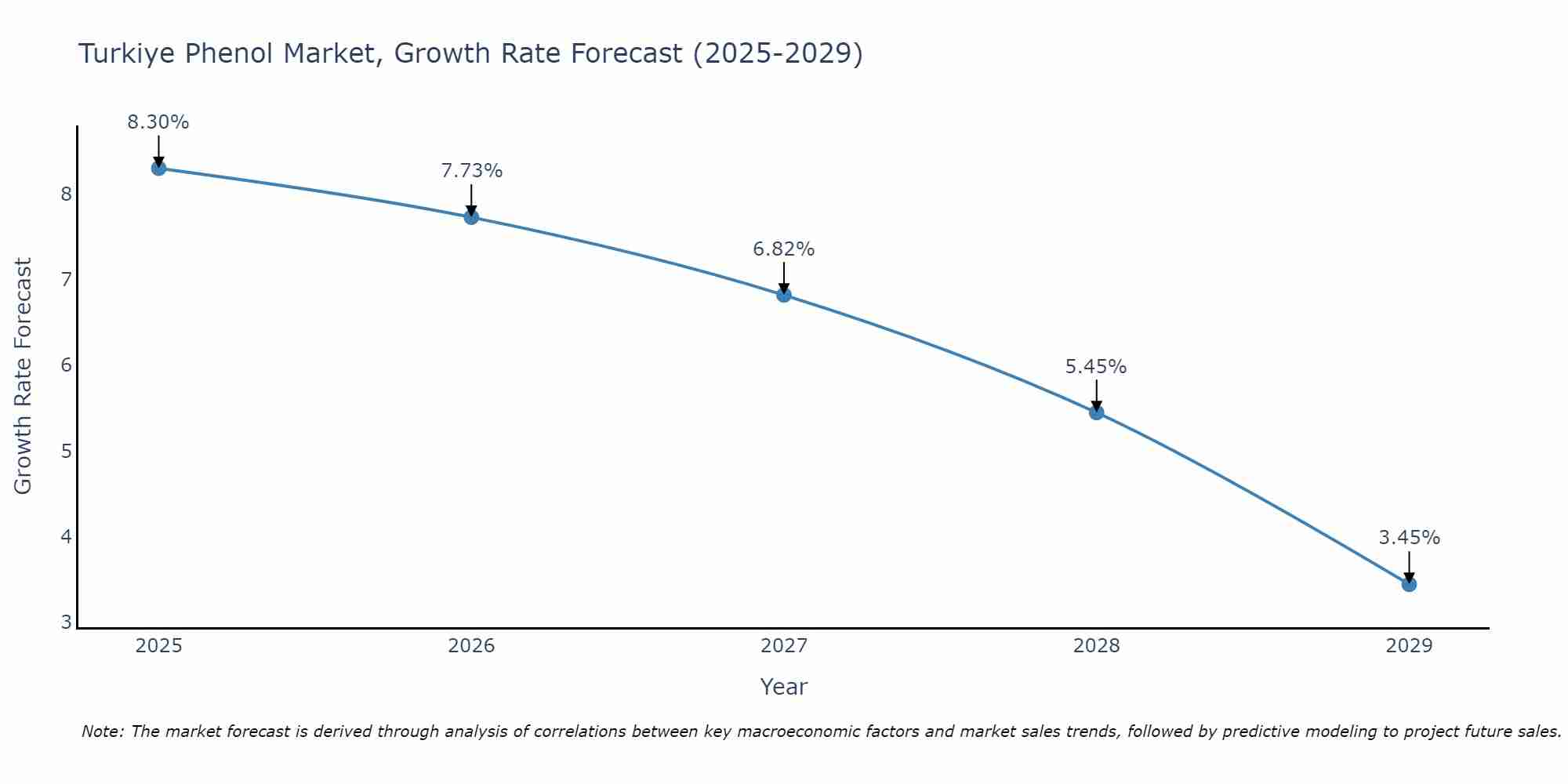
The Turkiye Phenol Market could see a tapering of growth rates over 2025 to 2029. Starting high at 8.30% in 2025, the market steadily declines to 3.45% by 2029.
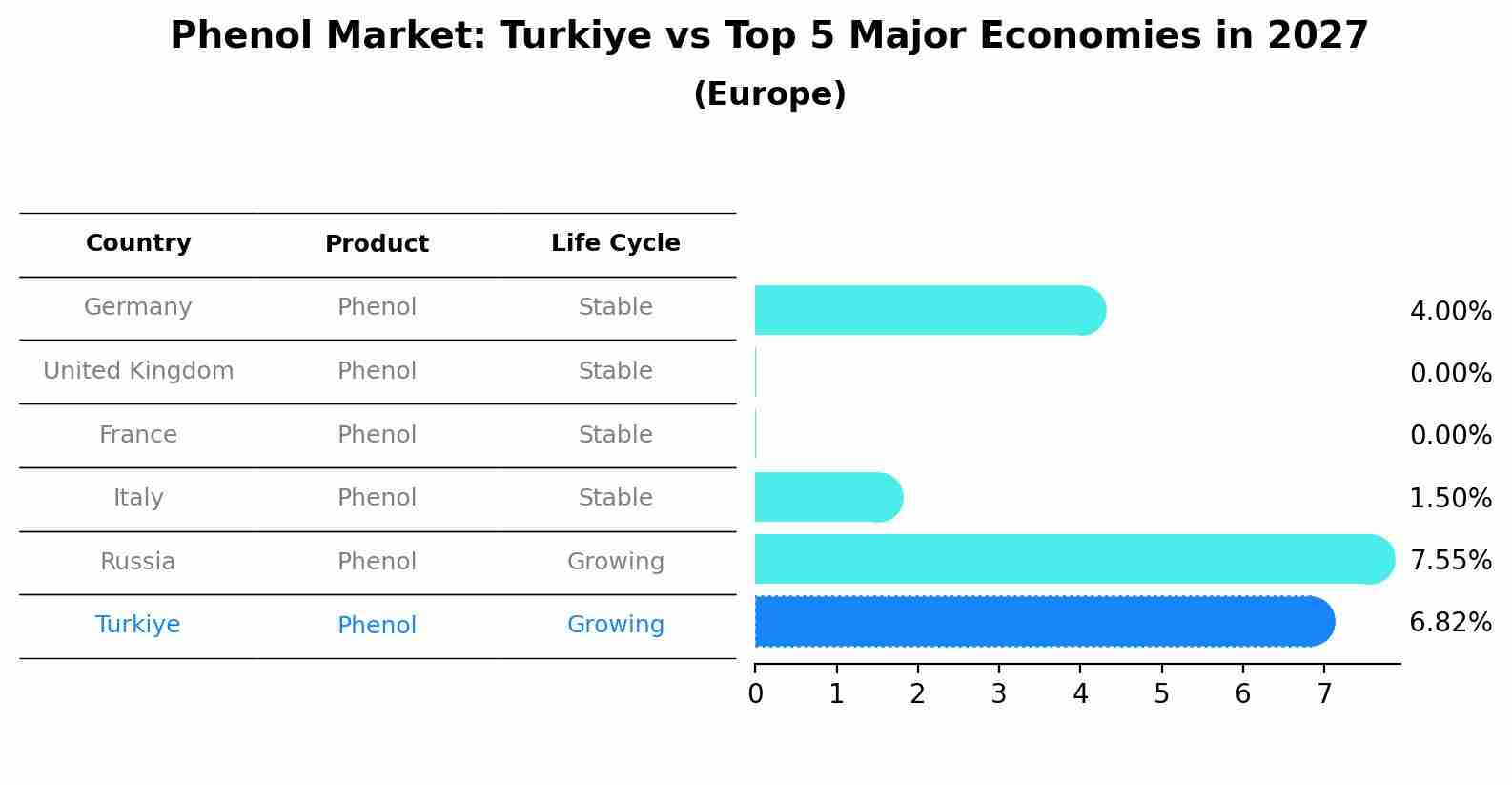
Phenol Market: Turkiye vs Top 5 Major Economies in 2027 (Europe)
By 2027, the Phenol market in Turkiye is anticipated to reach a growth rate of 6.82%, as part of an increasingly competitive Europe region, where Germany remains at the forefront, supported by United Kingdom, France, Italy and Russia, driving innovations and market adoption across sectors.
Turkey Phenol Market Overview
The Turkey phenol market is witnessing steady growth fueled by various industries such as automotive, construction, electronics, and healthcare. Phenol is primarily used in the production of resins, adhesives, and polycarbonates, which are essential components in these industries. The increasing demand for phenol-based products like Bisphenol-A (BPA) and phenolic resins is driving market growth. The automotive sector, in particular, is a key consumer of phenol for manufacturing lightweight and durable components. Additionally, the construction industry`s growth in Turkey is boosting the demand for phenol-based materials for applications such as insulation and coatings. The market is also influenced by factors like technological advancements in production processes and increasing investments in research and development to enhance product quality and sustainability.
Turkey Phenol Market Trends
The Turkey Phenol Market is witnessing several key trends. One significant trend is the increasing demand for phenol in the production of Bisphenol A (BPA), which is used extensively in the manufacturing of polycarbonates and epoxy resins. Another notable trend is the growing preference for phenol derivatives such as phenolic resins, caprolactam, and alkylphenols due to their wide-ranging applications in industries like automotive, construction, and electronics. Additionally, there is a shift towards sustainable practices in the production of phenol, with a focus on eco-friendly manufacturing processes and the development of bio-based phenol alternatives. These trends are driving the growth of the Turkey Phenol Market and are expected to continue shaping the industry in the coming years.
Turkey Phenol Market Challenges
The Turkey Phenol Market faces several challenges, including fluctuating raw material prices, competition from imported phenol products, and environmental regulations. The volatility of raw material prices, such as benzene, directly impacts the production cost of phenol, leading to uncertain profit margins for manufacturers. Additionally, the presence of imported phenol products in the market poses a threat to domestic producers, as they often come with competitive pricing due to economies of scale. Compliance with stringent environmental regulations also adds to the challenges faced by the industry, as ensuring sustainable production practices can require significant investments in technology and resources. Overall, navigating these challenges requires Turkey`s phenol market players to maintain cost competitiveness, innovate in production processes, and adapt to evolving regulatory requirements.
Turkey Phenol Market Investment Opportunities
The Turkey Phenol market presents several investment opportunities due to the growing demand for phenol in various industries such as automotive, construction, electronics, and healthcare. With Turkey`s strategic location as a bridge between Europe and Asia, there is potential for increased exports of phenol to neighboring countries. Additionally, the government`s focus on industrial development and infrastructure projects further boosts the demand for phenol in the country. Investing in phenol production facilities or establishing partnerships with local manufacturers can be lucrative opportunities in the Turkey Phenol market. Moreover, investing in research and development for innovative applications of phenol, such as in green chemistry or renewable energy, can also lead to long-term growth and sustainability in the market.
Turkey Phenol Market Government Policy
The Turkish government has implemented various policies affecting the phenol market. One notable regulation is the ban on Bisphenol-A (BPA) in baby bottles and infant feeding cups, aiming to protect public health and the environment. Additionally, Turkey has increased efforts to promote sustainable practices in the chemical industry, including the phenol sector, through incentives for eco-friendly production methods and waste management. The government also continues to monitor and regulate the import and export of phenol to ensure compliance with international standards and safeguard domestic producers. Overall, these policies reflect Turkey`s commitment to environmental sustainability, consumer safety, and the growth of its chemical industry, including the phenol market.
Turkey Phenol Market Future Outlook
The future outlook for the Turkey Phenol Market appears promising with steady growth expected in the coming years. This growth can be attributed to the increasing demand for phenol in various industries such as automotive, construction, electronics, and healthcare. Additionally, the rising awareness about the benefits of phenol in the production of resins, polycarbonates, and pharmaceuticals is driving market expansion. Furthermore, the growing focus on sustainable practices and the shift towards bio-based phenol production methods are likely to create new opportunities for market players. Overall, the Turkey Phenol Market is anticipated to experience robust growth supported by technological advancements, expanding applications, and increasing investments in the chemical industry.
Key Highlights of the Report:
- Turkey Phenol Market Outlook
- Market Size of Turkey Phenol Market, 2021
- Forecast of Turkey Phenol Market, 2027
- Historical Data and Forecast of Turkey Phenol Revenues & Volume for the Period 2018 - 2027
- Turkey Phenol Market Trend Evolution
- Turkey Phenol Market Drivers and Challenges
- Turkey Phenol Price Trends
- Turkey Phenol Porter's Five Forces
- Turkey Phenol Industry Life Cycle
- Historical Data and Forecast of Turkey Phenol Market Revenues & Volume By End-users for the Period 2018 - 2027
- Historical Data and Forecast of Turkey Phenol Market Revenues & Volume By Bisphenol A for the Period 2018 - 2027
- Historical Data and Forecast of Turkey Phenol Market Revenues & Volume By Phenolic Resins for the Period 2018 - 2027
- Historical Data and Forecast of Turkey Phenol Market Revenues & Volume By Caprolactam for the Period 2018 - 2027
- Historical Data and Forecast of Turkey Phenol Market Revenues & Volume By Alkyl Phenyls for the Period 2018 - 2027
- Historical Data and Forecast of Turkey Phenol Market Revenues & Volume By Others for the Period 2018 - 2027
- Turkey Phenol Import Export Trade Statistics
- Market Opportunity Assessment By End-users
- Turkey Phenol Top Companies Market Share
- Turkey Phenol Competitive Benchmarking By Technical and Operational Parameters
- Turkey Phenol Company Profiles
- Turkey Phenol Key Strategic Recommendations






































