Morocco Precious Metals Market Size Growth Rate
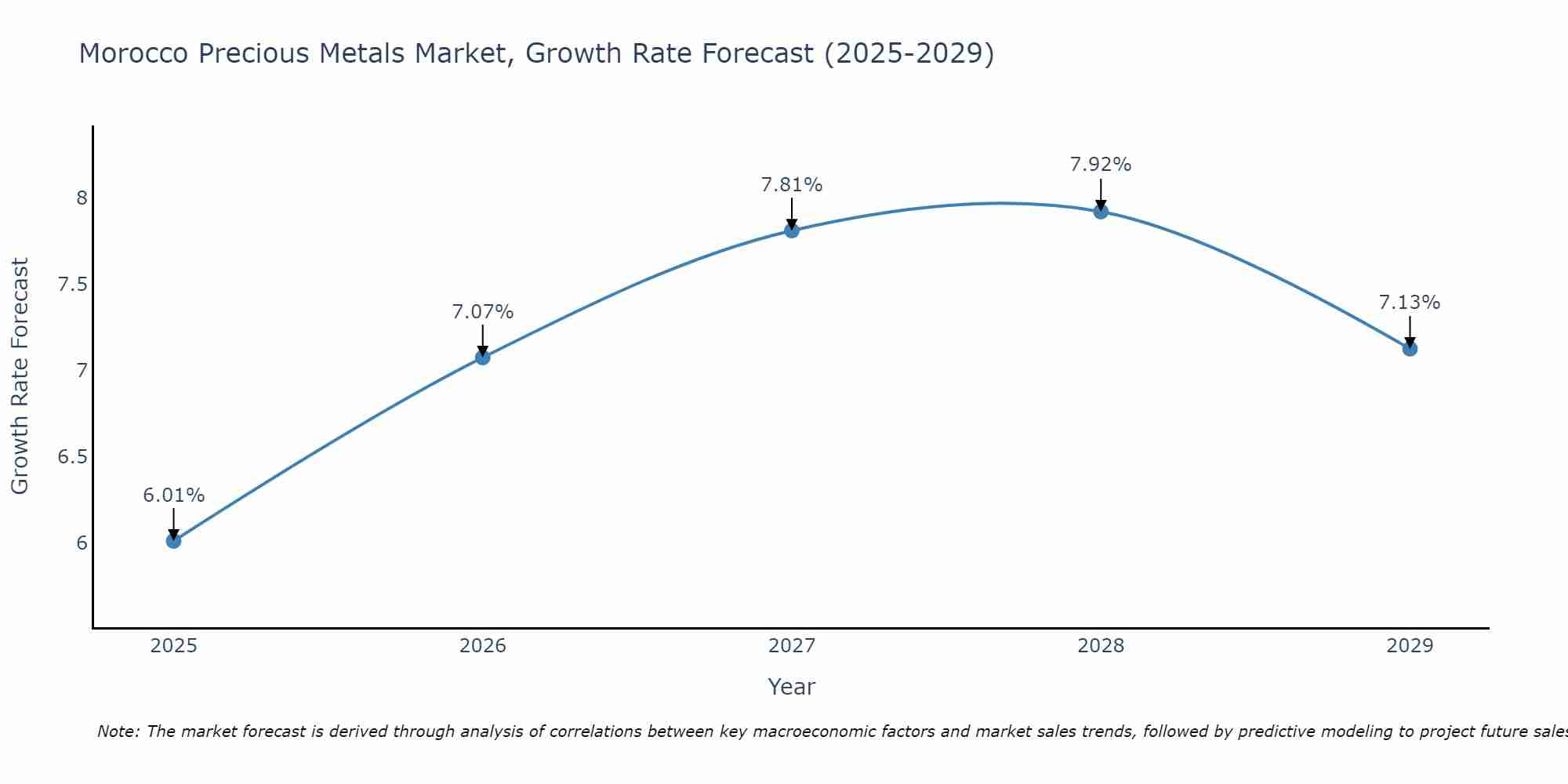
The Morocco Precious Metals Market is projected to witness mixed growth rate patterns during 2025 to 2029. Starting at 6.01% in 2025, the market peaks at 7.92% in 2028, and settles at 7.13% by 2029.
Morocco Precious Metals Market Synopsis
The Morocco precious metals market encompasses a wide range of metals including gold, silver, platinum, and palladium. The market is influenced by global market trends, industrial demand, and investment preferences. Morocco mining sector plays a crucial role in the supply chain, with the market characterized by fluctuating prices and evolving regulatory frameworks.
Drivers of the market
The Morocco precious metals market encompasses a range of metals including gold, silver, platinum, and palladium. Market growth is driven by diverse applications across industries such as jewelry, electronics, and automotive sectors. Additionally, these metals serve as a store of value and hedge against inflation, influencing investor demand.
Challenges of the market
The precious metals market in Morocco faces challenges in terms of supply chain disruptions and geopolitical uncertainties. Dependence on imports for raw materials exposes the market to risks such as trade barriers and export restrictions imposed by supplier countries. Moreover, fluctuations in currency exchange rates impact the cost of imported metals, affecting market competitiveness.
Government Policy of the market
The Morocco government has implemented policies to bolster the precious metals market, leveraging the country`s mineral resources. These policies prioritize sustainable mining practices and environmental conservation. The government supports exploration and extraction activities through incentives, ensuring adherence to international standards for responsible mining. Regulatory frameworks promote transparency and accountability in the precious metals sector, fostering partnerships between local and international stakeholders. Moreover, the government encourages research and development in precious metals processing technologies to enhance industrial capabilities and market competitiveness. These policies aim to attract investments, create job opportunities, and foster economic development in Morocco.
Key Highlights of the Report:
- Morocco Precious Metals Market Outlook
- Market Size of Morocco Precious Metals Market, 2024
- Forecast of Morocco Precious Metals Market, 2031
- Historical Data and Forecast of Morocco Precious Metals Revenues & Volume for the Period 2021-2031
- Morocco Precious Metals Market Trend Evolution
- Morocco Precious Metals Market Drivers and Challenges
- Morocco Precious Metals Price Trends
- Morocco Precious Metals Porter's Five Forces
- Morocco Precious Metals Industry Life Cycle
- Historical Data and Forecast of Morocco Precious Metals Market Revenues & Volume By Product for the Period 2021-2031
- Historical Data and Forecast of Morocco Precious Metals Market Revenues & Volume By Gold for the Period 2021-2031
- Historical Data and Forecast of Morocco Precious Metals Market Revenues & Volume By Silver for the Period 2021-2031
- Historical Data and Forecast of Morocco Precious Metals Market Revenues & Volume By Platinum Group Metals (PGM) for the Period 2021-2031
- Historical Data and Forecast of Morocco Precious Metals Market Revenues & Volume By Application for the Period 2021-2031
- Historical Data and Forecast of Morocco Precious Metals Market Revenues & Volume By Jewelry for the Period 2021-2031
- Historical Data and Forecast of Morocco Precious Metals Market Revenues & Volume By Industrial for the Period 2021-2031
- Historical Data and Forecast of Morocco Precious Metals Market Revenues & Volume By Investment for the Period 2021-2031
- Morocco Precious Metals Import Export Trade Statistics
- Market Opportunity Assessment By Product
- Market Opportunity Assessment By Application
- Morocco Precious Metals Top Companies Market Share
- Morocco Precious Metals Competitive Benchmarking By Technical and Operational Parameters
- Morocco Precious Metals Company Profiles
- Morocco Precious Metals Key Strategic Recommendations






































