New Zealand Candles Market Growth Rate Analysis (2025 - 2031)
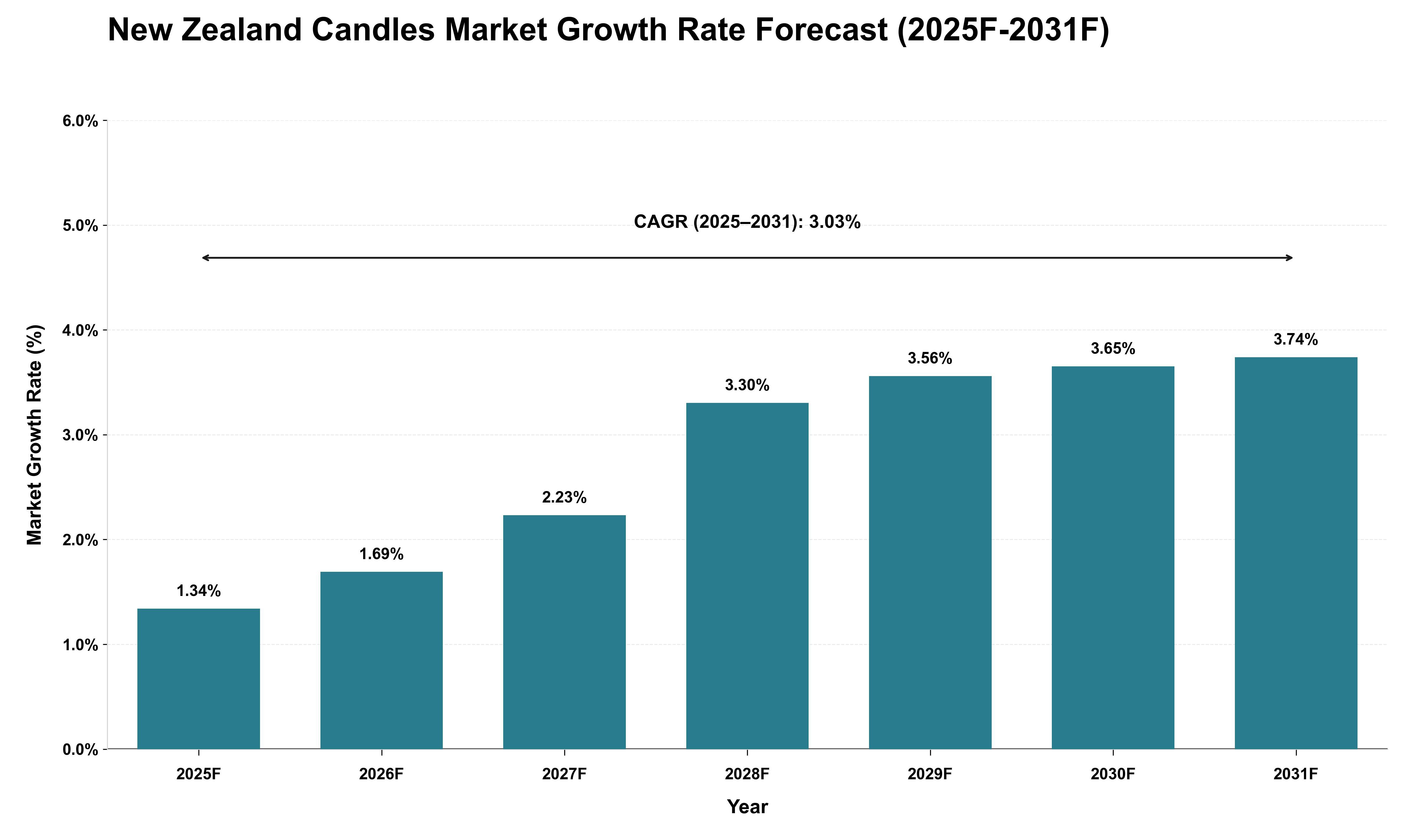
The New Zealand candles market will experience a steady growth trajectory driven by evolving consumer preferences and regulatory frameworks that favor sustainable products. As the market anticipates a compound annual growth rate (CAGR) of 3.03% from 2025 to 2031, the annual growth rates will reflect increasing demand for eco-friendly and artisanal candles, particularly as consumers become more environmentally conscious. Import dependencies may influence pricing dynamics, especially if trade policies shift towards stricter regulations on imported materials or if tariffs are adjusted, impacting cost structures. Additionally, cyclical trends in discretionary spending will likely play a role; as economic conditions improve post-pandemic, consumers may allocate more resources toward home ambiance products like candles. This combination of regulatory influences and changing consumer behavior will shape the market's performance throughout the forecast period.
Key Highlights of the Report:
- New Zealand Candles Market Outlook
- Market Size of New Zealand Candles Market, 2024
- Forecast of New Zealand Candles Market, 2031
- Historical Data and Forecast of New Zealand Candles Revenues & Volume for the Period 2021-2031
- New Zealand Candles Market Trend Evolution
- New Zealand Candles Market Drivers and Challenges
- New Zealand Candles Price Trends
- New Zealand Candles Porter's Five Forces
- New Zealand Candles Industry Life Cycle
- Historical Data and Forecast of New Zealand Candles Market Revenues & Volume By Product Type for the Period 2021-2031
- Historical Data and Forecast of New Zealand Candles Market Revenues & Volume By Scented Candles for the Period 2021-2031
- Historical Data and Forecast of New Zealand Candles Market Revenues & Volume By Unscented Candles for the Period 2021-2031
- Historical Data and Forecast of New Zealand Candles Market Revenues & Volume By Application for the Period 2021-2031
- Historical Data and Forecast of New Zealand Candles Market Revenues & Volume By Aromatherapy for the Period 2021-2031
- Historical Data and Forecast of New Zealand Candles Market Revenues & Volume By Lighting for the Period 2021-2031
- Historical Data and Forecast of New Zealand Candles Market Revenues & Volume By Material for the Period 2021-2031
- Historical Data and Forecast of New Zealand Candles Market Revenues & Volume By Paraffin Wax for the Period 2021-2031
- Historical Data and Forecast of New Zealand Candles Market Revenues & Volume By Soy Wax for the Period 2021-2031
- Historical Data and Forecast of New Zealand Candles Market Revenues & Volume By Scent Type for the Period 2021-2031
- Historical Data and Forecast of New Zealand Candles Market Revenues & Volume By Lavender, Rose for the Period 2021-2031
- Historical Data and Forecast of New Zealand Candles Market Revenues & Volume By Unscented for the Period 2021-2031
- New Zealand Candles Import Export Trade Statistics
- Market Opportunity Assessment By Product Type
- Market Opportunity Assessment By Application
- Market Opportunity Assessment By Material
- Market Opportunity Assessment By Scent Type
- New Zealand Candles Top Companies Market Share
- New Zealand Candles Competitive Benchmarking By Technical and Operational Parameters
- New Zealand Candles Company Profiles
- New Zealand Candles Key Strategic Recommendations






































