New Zealand Canned Tuna Market Top 5 Importing Countries and Market Competition (HHI) Analysis
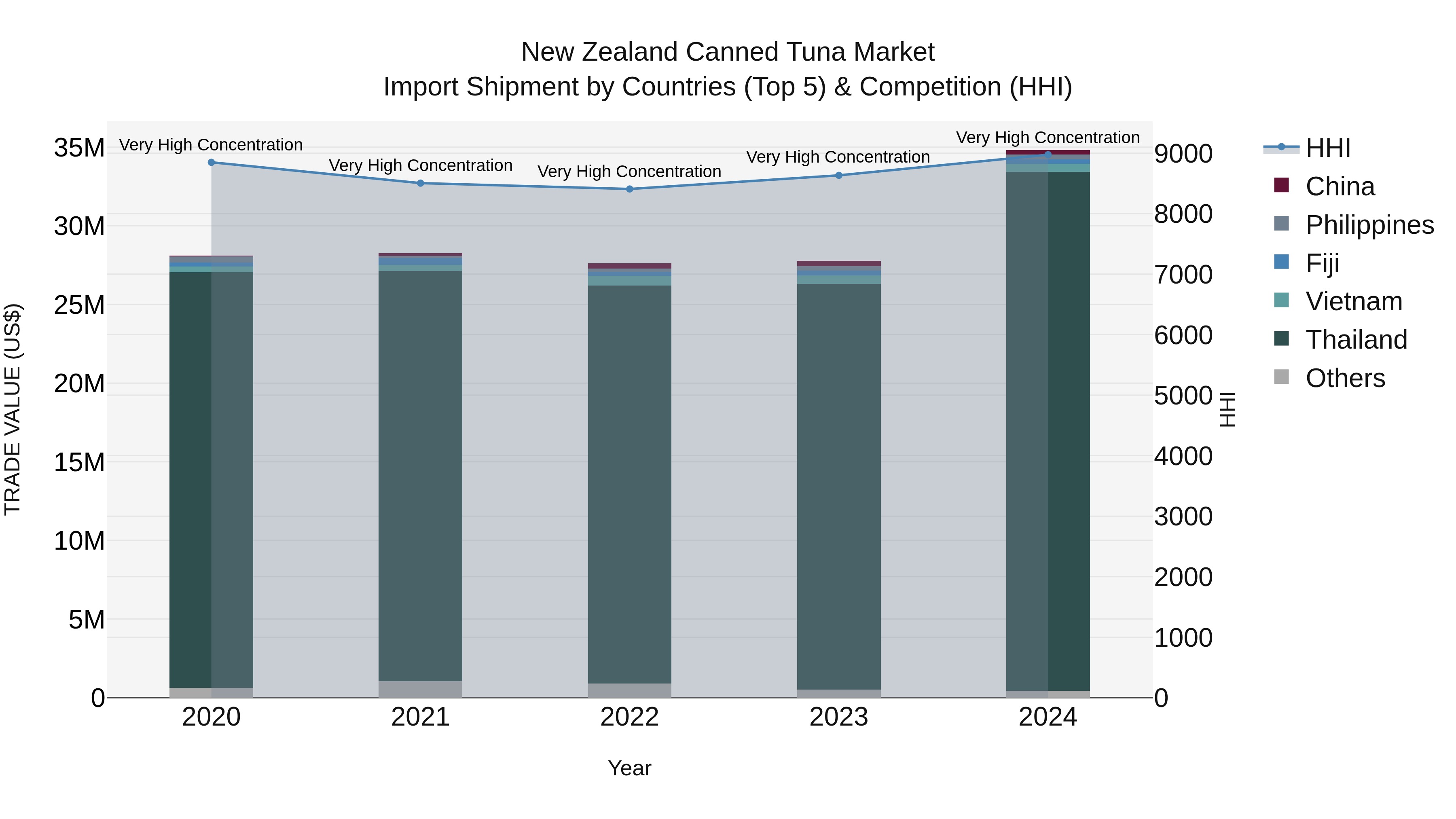
The New Zealand canned tuna import market continues to thrive with top exporting countries including Thailand, Vietnam, Philippines, Fiji, and China. The high Herfindahl-Hirschman Index (HHI) indicates a concentrated market in 2024. With a robust compound annual growth rate (CAGR) of 5.5% from 2020 to 2024 and an impressive growth rate of 25.37% in 2023-24, the future looks promising for the canned tuna import industry in New Zealand. Market players should closely monitor trends and opportunities to capitalize on this upward trajectory.
Canned Tuna Market: New Zealand vs Top 5 Major Economies in 2027 (Asia)
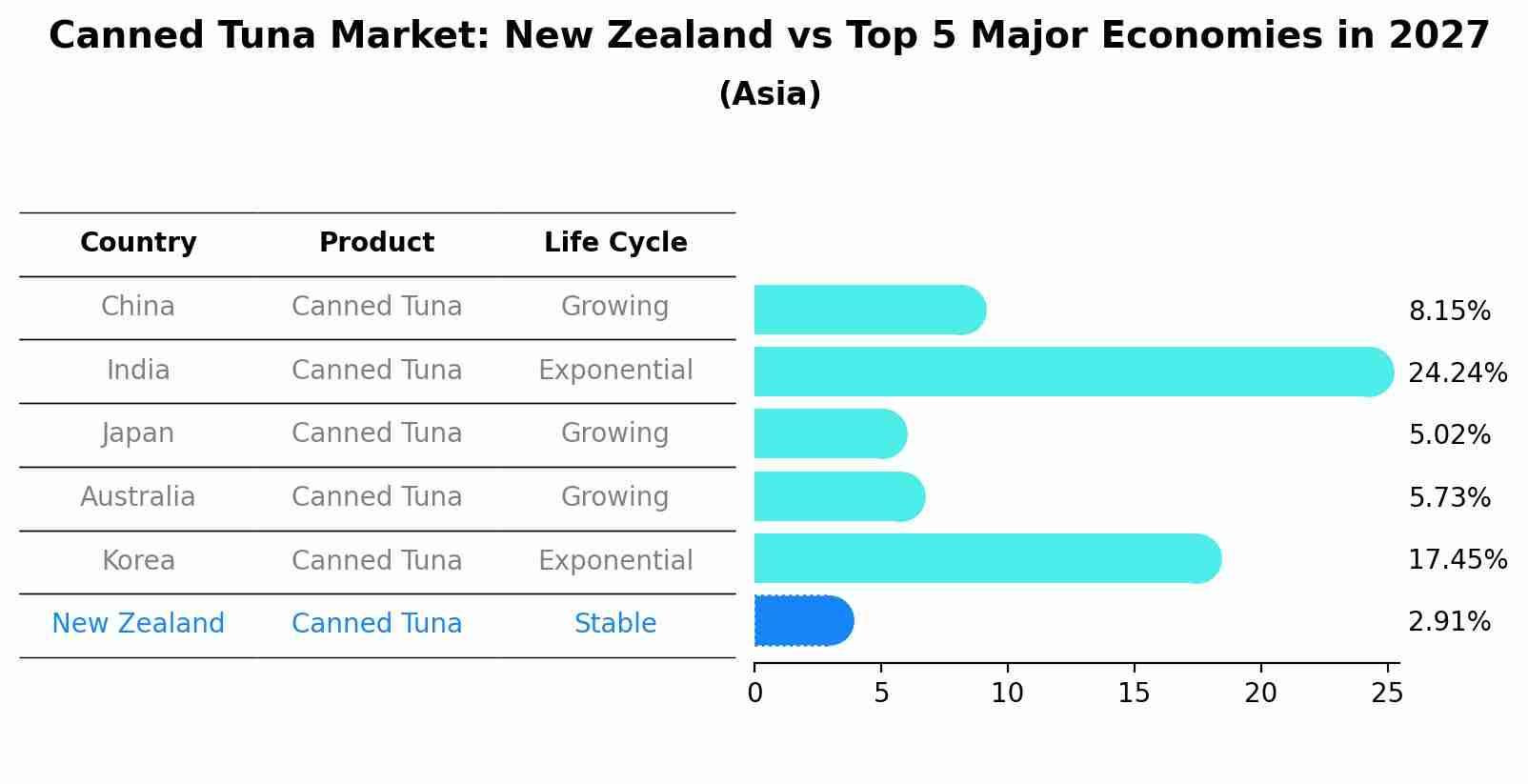
The Canned Tuna market in New Zealand is projected to grow at a stable growth rate of 2.91% by 2027, highlighting the country's increasing focus on advanced technologies within the Asia region, where China holds the dominant position, followed closely by India, Japan, Australia and South Korea, shaping overall regional demand.
New Zealand Canned Tuna Market Overview
In the New Zealand Canned Tuna Market, the demand is driven by the popularity of tuna as a healthy, high-protein food. Canned tuna is a staple in many households, valued for its versatility and long shelf life.
Drivers of the market
Canned tuna is a popular seafood product consumed widely in New Zealand. The market for canned tuna is driven by factors such as its affordability, convenience, and nutritional value. Canned tuna is a rich source of protein, omega-3 fatty acids, and various vitamins and minerals, making it a popular choice among health-conscious consumers in New Zealand. The market is characterized by the presence of various brands offering different tuna species, flavors, and packaging formats to cater to diverse consumer preferences.
Challenges of the market
The New Zealand Canned Tuna market deals with competition from fresh and frozen alternatives. Ensuring product quality and meeting regulatory standards for food safety and sustainability is crucial. Fluctuating raw material prices and supply chain disruptions further complicate market dynamics.
Government Policy of the market
Food safety standards and sustainable fishing regulations impact the canned tuna market. Government policies ensuring the safe processing of tuna and promoting sustainable fishing practices guide market operations and consumer demand.
Key Highlights of the Report:
- New Zealand Canned Tuna Market Outlook
- Market Size of New Zealand Canned Tuna Market, 2024
- Forecast of New Zealand Canned Tuna Market, 2031
- Historical Data and Forecast of New Zealand Canned Tuna Revenues & Volume for the Period 2021-2031
- New Zealand Canned Tuna Market Trend Evolution
- New Zealand Canned Tuna Market Drivers and Challenges
- New Zealand Canned Tuna Price Trends
- New Zealand Canned Tuna Porter`s Five Forces
- New Zealand Canned Tuna Industry Life Cycle
- Historical Data and Forecast of New Zealand Canned Tuna Market Revenues & Volume By Product for the Period 2021-2031
- Historical Data and Forecast of New Zealand Canned Tuna Market Revenues & Volume By Skipjack for the Period 2021-2031
- Historical Data and Forecast of New Zealand Canned Tuna Market Revenues & Volume By Yellowfin for the Period 2021-2031
- Historical Data and Forecast of New Zealand Canned Tuna Market Revenues & Volume By Others for the Period 2021-2031
- Historical Data and Forecast of New Zealand Canned Tuna Market Revenues & Volume By Distribution Channel for the Period 2021-2031
- Historical Data and Forecast of New Zealand Canned Tuna Market Revenues & Volume By Hypermarket & Supermarket for the Period 2021-2031
- Historical Data and Forecast of New Zealand Canned Tuna Market Revenues & Volume By Specialty Stores for the Period 2021-2031
- Historical Data and Forecast of New Zealand Canned Tuna Market Revenues & Volume By Online for the Period 2021-2031
- New Zealand Canned Tuna Import Export Trade Statistics
- Market Opportunity Assessment By Product
- Market Opportunity Assessment By Distribution Channel
- New Zealand Canned Tuna Top Companies Market Share
- New Zealand Canned Tuna Competitive Benchmarking By Technical and Operational Parameters
- New Zealand Canned Tuna Company Profiles
- New Zealand Canned Tuna Key Strategic Recommendations






































